























Curaçao lies in the southern Caribbean, close enough to the South American coast that the trade winds arriving in the first half of the year come in dry. The climate is hot and semi-arid, the annual rainfall total is low by regional standards, and the wet months fall at the end of the year rather than through the summer. That single fact reverses much of what a contractor learns about paving elsewhere in the region. Ground that is baked and slow to absorb water for three quarters of the year has to swallow a whole season of rain in a matter of weeks, and occasionally in a matter of hours.
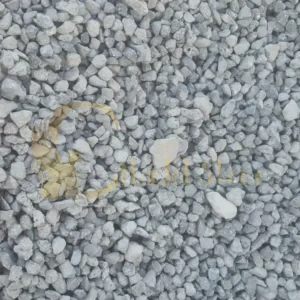
The supply side is unusual too. Curacao is a constituent country within the Kingdom of the Netherlands, it is not a CARICOM member state and it is not inside the EU customs union, so it runs its own tariff and its own turnover tax. Willemstad takes ocean freight directly onto its own quays. The island produces the aggregate, the sand and the base material that sit under a paving job, but it does not produce a finished paving unit, so imported dimension stone arrives as the wearing course laid over Curacao’s own base course. This page follows that chain end to end: the port, the clearance, the landed cost, the permit route, the two exposure zones and the formats that belong in each.
Willemstad Takes Ocean Freight Without A Hand-Off
On some Caribbean islands a container of stone is handed off at a hub port before it reaches its final destination. Curacao does not work that way. The Port of Willemstad is run by Curacao Ports Authority N.V., with the cargo terminals operated under concession by Curacao Port Services, and it takes ocean freight directly. Willemstad is itself a transshipment hub, sitting on the routes between North and South America and between Europe and the Panama Canal, and Curacao Port Services publishes its own transshipment rates for containers and for break-bulk. For a paving order the practical meaning is one less handling event, one less place for a crate to be dropped, and one less schedule to align.
- The Curacao Container Terminal handles in the region of 100,000 TEU a year, with two gantry cranes, roughly 1,000 m of total berth length and a maximum single berth of 460 m.
- Maximum depth at the container terminal is 12.2 m, and the terminal runs a 24-hour service handling both lift-on lift-off and roll-on roll-off cargo.
- Brion Wharves take bulk cargo, vehicles and other non-containerized freight, with berth lengths between 100 m and 275.5 m and a maximum depth of 10.2 m.
- Grote Werf handles break-bulk for vessels under 100 MT and has a weighbridge on site, which matters when your stone is charged by weight.
- The Curacao Harbor Free Zone covers 91,000 m2 immediately beside the container terminal, giving you somewhere to stage or consolidate a shipment before duty is triggered.
Willemstad’s cargo quays are generally understood to sit inside the Schottegat, the inner harbor reached through the Sint Annabaai channel at the city; your forwarder will confirm which quay your container is worked over. One further berth is worth knowing about even though your stone will never use it. Fuik Bay, outside the port and privately owned by the Mining Company, is where phosphate rock is loaded out and where cement is discharged. It is a useful reminder that the island’s own minerals trade has its own quay, and that the base materials under your paving travel a much shorter distance than the surface you lay on top of them.
What Douane Curacao Needs From The Shipment
Curacao is not in CARICOM, so there is no Common External Tariff to look up. It is an EU Overseas Country and Territory, and the European Commission is explicit that such territories are neither part of EU territory nor of the EU single market. Curacao runs its own national tariff, published as the Tarief van invoerrechten under the customs authority’s laws and regulations. Anyone importing goods must file a declaration with Douane Curacao, and import duty (invoerrechten), turnover tax (omzetbelasting, usually shortened to OB) and excise (accijnzen) are all assessed at that point.
- Declarations are filed electronically, and Douane Curacao states that it prefers clearance through ASYCUDA World.
- The customs value is the value of the goods plus costs such as freight and insurance, so a low stone price sitting on an expensive freight leg does not shelter you from the duty base.
- The tariff runs on Harmonized System headings, so agree the HS code for your stone with your agent before the container sails rather than after it lands.
- Turnover tax applies on import. The published general rate is 6%, with a 7% band for insurance and short-term lodging and a 9% band covering a listed group of luxury goods and services; confirm the rate that applies to your HS code with your customs agent.
- An importer of trade goods may apply to the Inspector for permission to deduct 50% of the OB paid on imported trade goods from the OB owed for that period, an arrangement known as the anticumulatieregeling.
Two cautions are worth stating plainly. Natural stone does not appear on the published luxury list, which covers motor vehicles, yachts, prepared foods, alcoholic beverages, tobacco, mobile phones, weapons and paid entry to entertainment. Published sources do not agree on the rate charged on imports generally, so treat any single figure you find online as something to verify with your agent rather than something to budget from. Second, do not confuse the island’s waste tax with a landed cost. The afvalstoffenbelasting is a household charge collected through the Aqualectra utility bill at a fixed monthly amount, not a surcharge on a container of building material. If you are registered for OB, filing frequency follows turnover: annual below XCG 30,000, quarterly between XCG 30,000 and XCG 75,000, and monthly above that.
Landed Cost, Currency And Free-Zone Staging
Because the customs value is built on the CIF figure, freight is not a separate problem from tax; it is part of the tax base. Stone is heavy, and a paving order is nearly always charged by weight rather than by volume, so the decisions that move landed cost the most are made at specification stage: unit thickness, format mix, and how much of the order genuinely needs to be stone at all. A 30 mm terrace slab and a 60 mm driveway unit are not two versions of the same order. The second weighs roughly twice as much per covered square meter and prices accordingly on every line from the loading dock to your site gate.
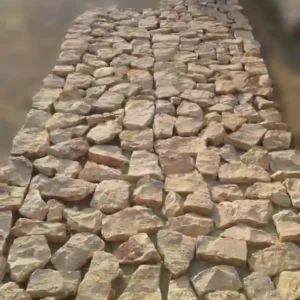
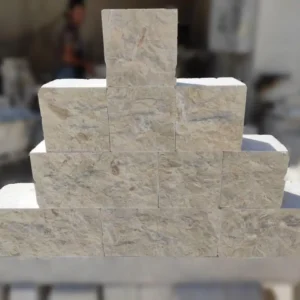
The currency question is worth settling early. The Caribbean guilder (XCG) has been the official currency of Curacao since 31 March 2025, pegged at USD 1 to XCG 1.79, and since 1 July 2025 it is the only currency accepted for cash payments. Ask for a quote that separates the stone, the packing, the ocean freight, the insurance and the local charges rather than one blended number, because only the separated version shows you what a change in thickness or a change in Incoterm actually saves. If you want to see how the underlying ranges are built before duty and freight enter the picture, our paving units for Curacao sites are published by stone type and by format.
The Curacao Harbor Free Zone beside the container terminal is a genuine planning tool on a phased job. Staging a large order there and drawing it down as the site becomes ready keeps material off a live construction area, which matters wherever the plot is tight. Confirm the cost and the paperwork of that route with your agent before assuming it beats a straight import; it suits a long program far better than it suits a single delivery.
Permits, Program Timing And Site Access
No construction works may be carried out on Curacao without a building permit. The governing legislation is the Bouw- en Woningverordening Curacao, the island’s Building and Housing Ordinance, and the permit is handled by Ruimtelijke Ordening en Planning, the Department of Spatial Planning and Development, formerly known as DROV. Its counter is at Plasa Horacio Hoyer 19 in Scharloo, Willemstad, open in the morning from 07:45 to 11:45. The statutory decision period is expressed as being as soon as possible but no later than a month after filing; in practice the process runs six to eight weeks.
- Order stone against the permit date rather than the design date; a container that lands before consent is granted becomes a storage bill.
- Hardscape inside Punda, Otrobanda, Pietermaai or Scharloo sits within a World Heritage area and goes through the Monuments Office as well as the planning department.
- Confirm access for a forty-foot container and a forklift before committing to full-size crates, because older streets and walled villa plots do not always take one.
- Curacao is a compact island, so the road leg from the port is short, but ask for haulage as its own line on the quote rather than letting it disappear into the freight figure.
- Agree who unloads, who supplies the machine and where crates will stand, because bare stone left in a busy site compound picks up chips and staining before it is ever laid.
Sequencing is the quiet skill on an island program. The stone has to arrive after the base is built and before the trade that follows it is standing idle, and on a route where a replacement crate is not a same-week purchase, the margin for error is thinner than on a mainland job. Build a float into the delivery date, order the awkward items such as steps, copings and thresholds in the same shipment as the field material, and keep a small reserve on site rather than ordering to the exact take-off.
Reading The Island As Two Exposure Zones
Curacao is small enough to feel like one climate and is not. The east and north-east trade winds blow at roughly fifteen to twenty-five knots for most of the year, and from February to August the south-easterlies arrive off the South American landmass dry. From October to January the north-easterlies are less intense and can carry rain. The consequence is that the windward east and north coasts live in a permanent wash of salt aerosol and wind-blown grit, while the leeward west and south-west coasts are comparatively calm. That is precisely why the resorts and marinas sit on the leeward side, and it is why a specification that performs perfectly in a sheltered Willemstad courtyard can disappoint on an exposed north-coast terrace.
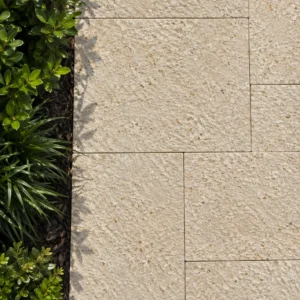
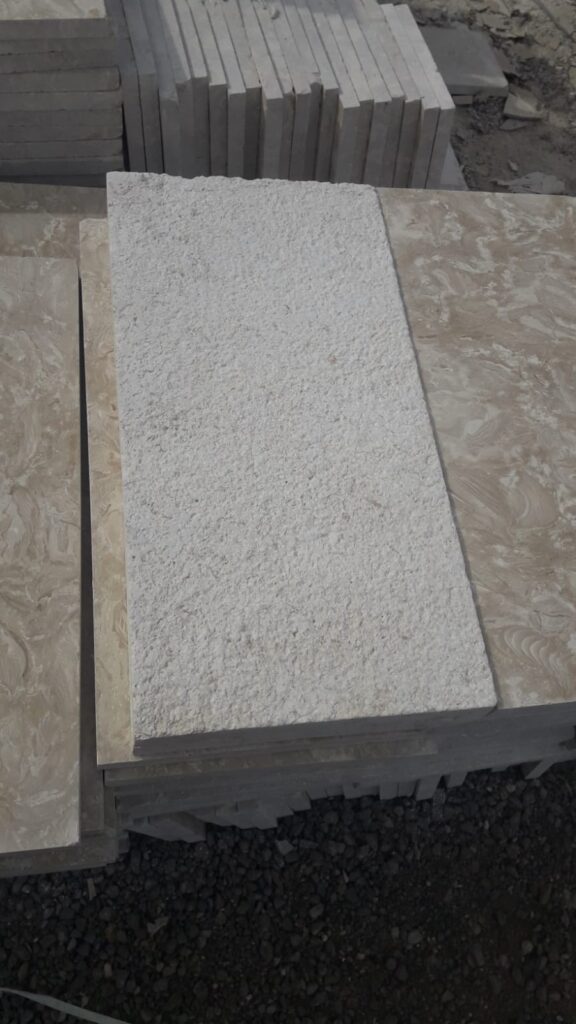
- Windward frontage: assume continuous salt deposition and airborne grit. Specify dense, low-absorption units, textured rather than polished faces, and a jointing detail that tolerates salt.
- Leeward frontage: calmer air and less abrasion leave more scope for a refined finish, but the sun load is no gentler and pool decks still need grip.
- Inland plots away from both coasts see less salt and the same intense sun, and they still face the same wet-season cloudbursts, so drainage remains the governing problem.
- There is no frost anywhere on Curacao, so freeze-thaw is not the durability mechanism to design against here; salt crystallization inside the pore structure is.
- Seismic detailing is a real but secondary consideration, and the reference document for the region is KNMI Technical Report TR25-03, which assesses Curacao’s hazard as lower than that of Sint Maarten, Saba and Sint Eustatius.
Zone the site before you choose anything. A large villa plot can easily contain two zones at once: a sheltered internal courtyard behind the house and an open frontage taking the full trade wind. Specifying one paver for both is how a job ends up with half a terrace that still looks new and half that has aged five years in one.
Formats And Thicknesses By Duty
Once the exposure zone is settled, format follows duty. The useful discipline is to divide the site into the areas people walk on, the areas water sits on and the areas wheels turn on, then specify each separately instead of running one slab everywhere and hoping.
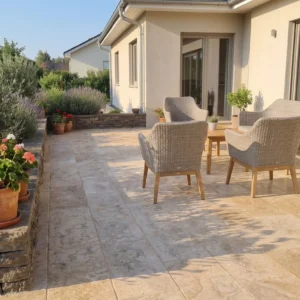
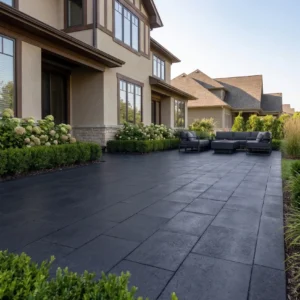
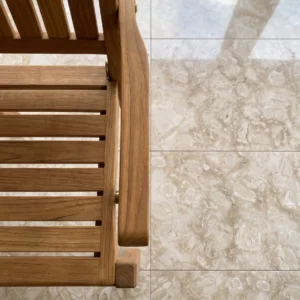
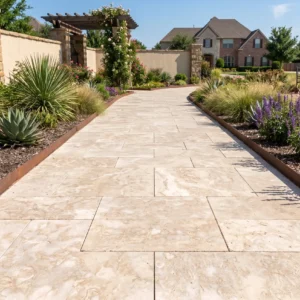
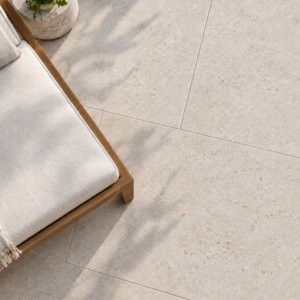
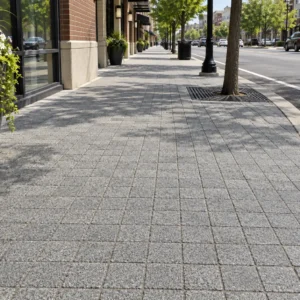
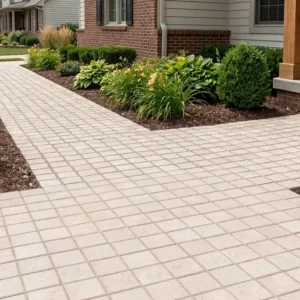
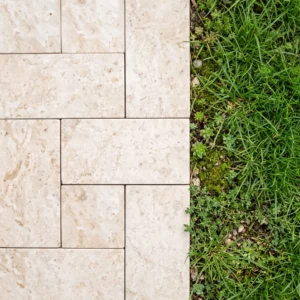
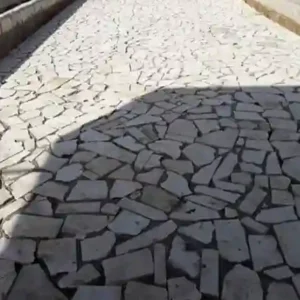
- Foot traffic on terraces and galleries: larger modular slabs at a thinner gauge, laid on a bound bed, with the joint pattern chosen to suit the room the terrace extends from.
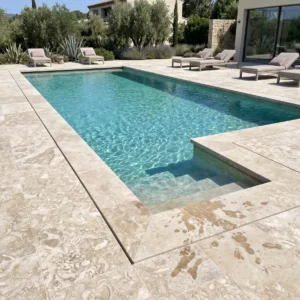
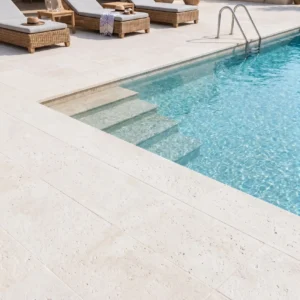
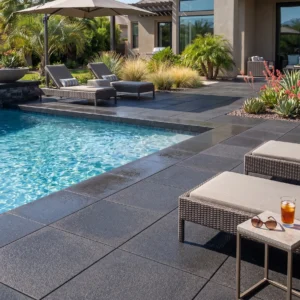
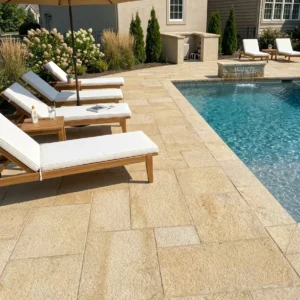
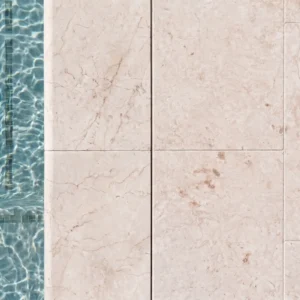
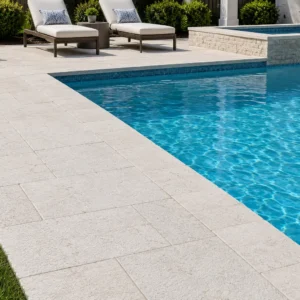
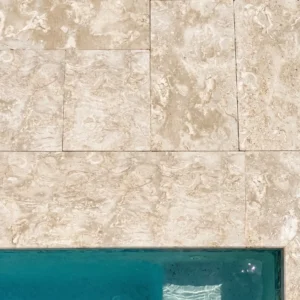
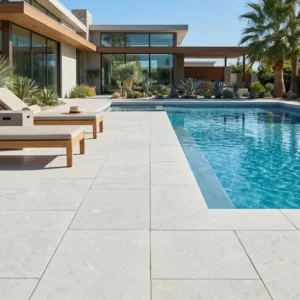
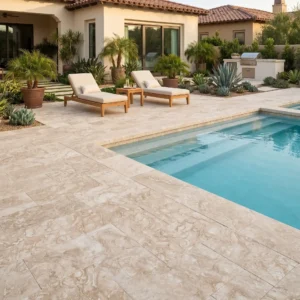
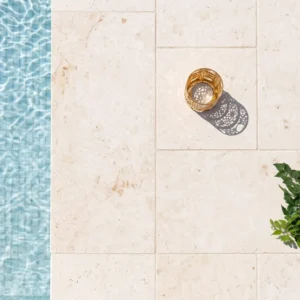
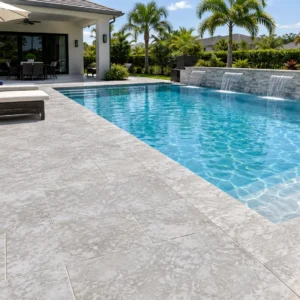
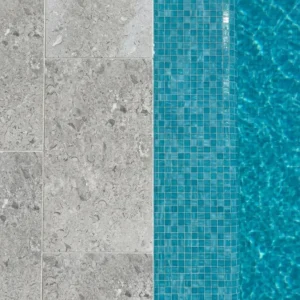
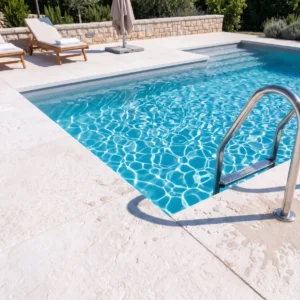
- Pool surrounds and wet margins: textured faces, tighter formats near the edge so falls can be set accurately, and coping detailed to throw water clear rather than run it back.
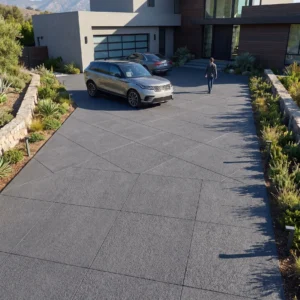
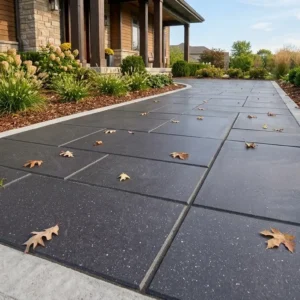
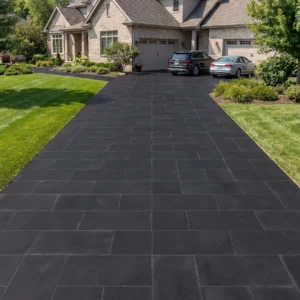
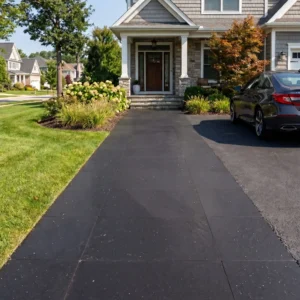
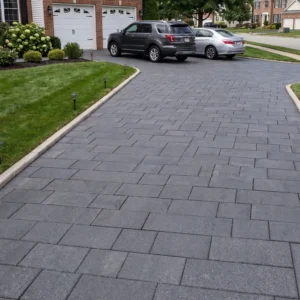
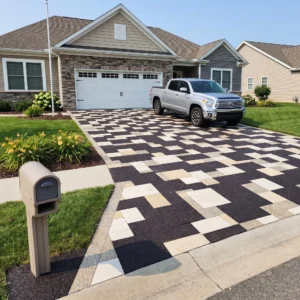
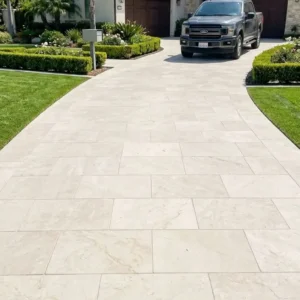
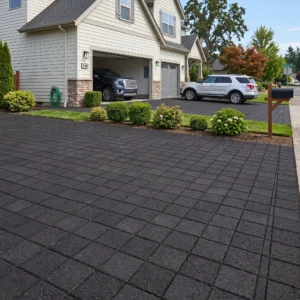
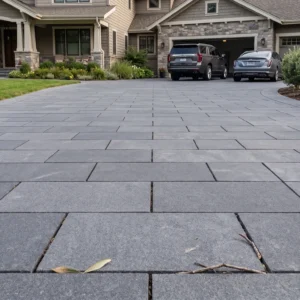
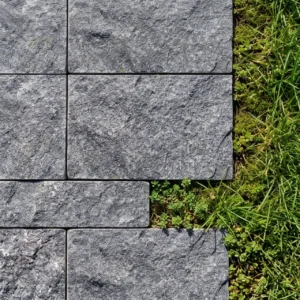
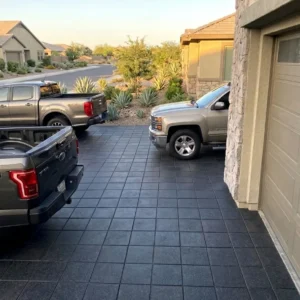
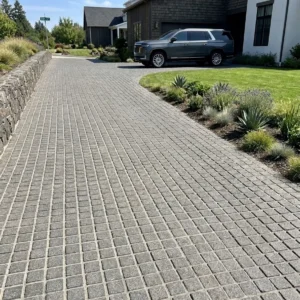
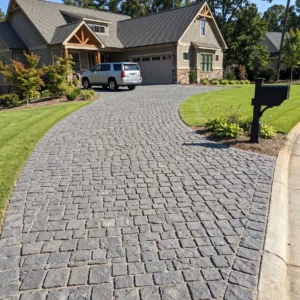
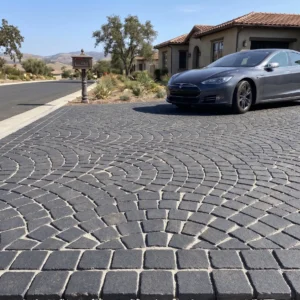
- Driveways and turning areas: thicker units, smaller plan size, and an edge restraint that will not creep under a turning wheel.
- Service and delivery yards: the heaviest duty on most villa sites, where plan size drops again, depth rises again, and a denser stone earns its freight.
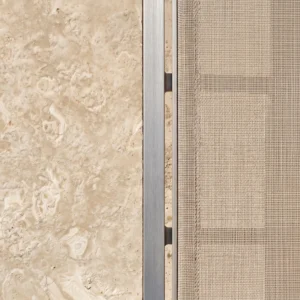
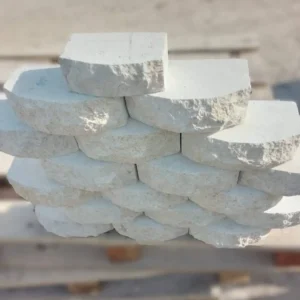
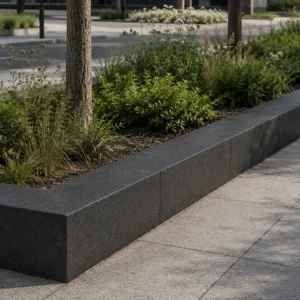
- Steps, thresholds and level changes: specify these as their own items with the nosing detail agreed in advance, because they are the pieces that hold up an installation when they arrive wrong.
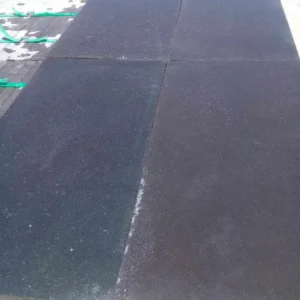
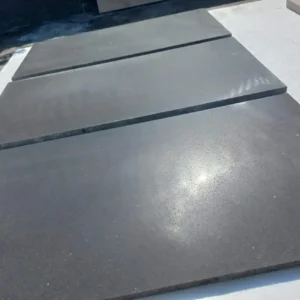
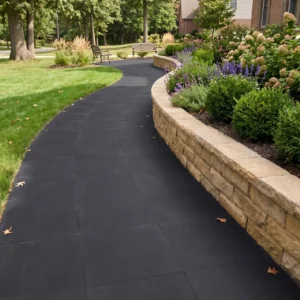
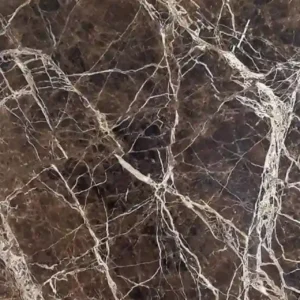
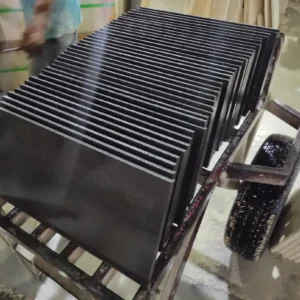
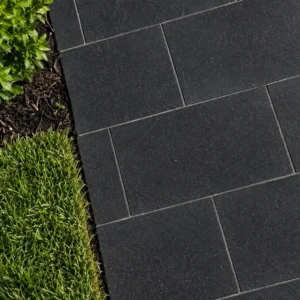
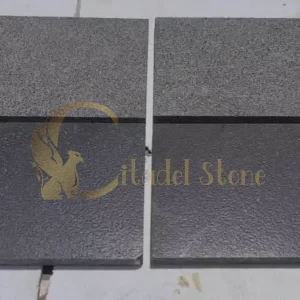
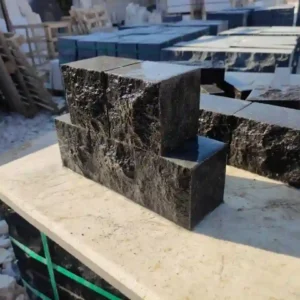
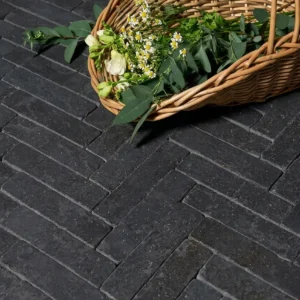
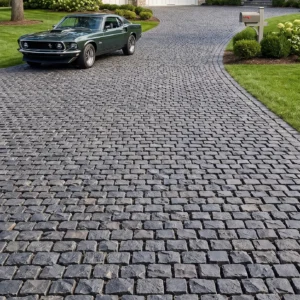
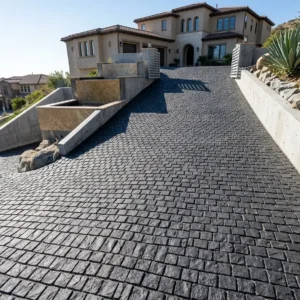
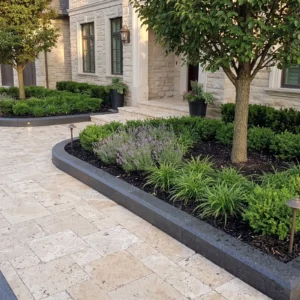
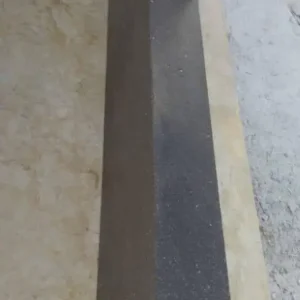
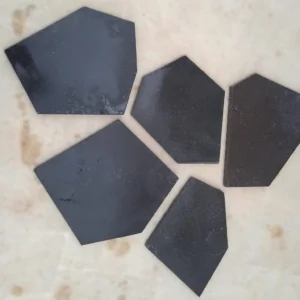
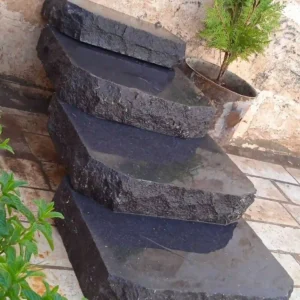
Where wheels turn hardest, or where a client wants a surface that reads dark against pale plastered walls, our basalt units for trade-wind coasts are the usual alternative to limestone. Basalt takes abrasion well and holds a dark tone, though it will run hotter underfoot in open sun than a pale limestone will. Curacao’s own bedrock includes basalt within the Curacao Lava Formation, a thick sequence of pillow lavas with basalt intrusions, which is a pleasing coincidence rather than a supply route: the island’s minerals industry produces aggregate, sand, fill and boulders for marine defense rather than cut paving units.
Getting A Quote That Survives The Port
The information that makes a Curacao quote accurate is not complicated, but it is specific. Send the areas broken down by duty, the exposure zone for each area, the finish wanted on each, the access constraints at the site and the permit status. From that we can build a quote that separates stone, packing, freight and insurance, so you can see the CIF figure your agent will declare and test whether a thickness change or a format change is worth making before anything is committed.
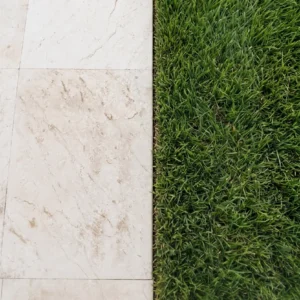
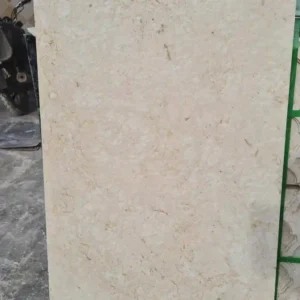
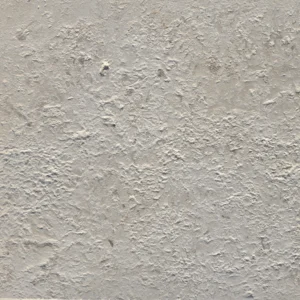
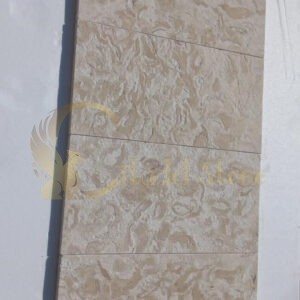
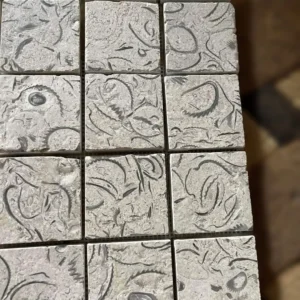
Samples are small hand pieces rather than full slabs, which is all you need to see a face, feel a texture and test a cleaner against the water you actually have. Look at them outdoors in Curacao light rather than under a showroom lamp, and look again in the afternoon, because a face that reads soft at ten in the morning can be a sheet of glare at three. Order samples early enough that the decision is not sitting on the critical path behind a six-to-eight-week permit.
One last piece of advice for a first order into this island: keep the first shipment simple. Fewer formats, fewer finishes and one clear pattern will teach you more about the route, the agent and the crew than a complex order will, and the second shipment can carry the complexity once the chain is proven. Tell us the exposure, the duty and the permit date, and the rest of the specification follows.