





































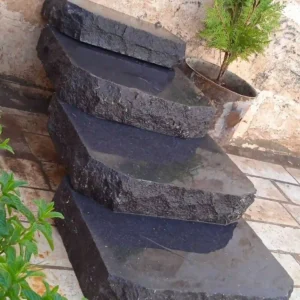


Bermuda is not a Caribbean island, and specifying for it as though it were is the quickest way to get a paving job wrong. It sits in the North Atlantic, roughly on a line with the Carolinas, and it has four genuine seasons: humid summers, mild springs and autumns, and cool damp winters. Ground-level stone here spends part of the year wetting and drying at low temperature rather than baking under constant heat, and the pool season is compressed into a handful of months instead of running the full twelve. Layer on periodic hurricane exposure – Fabian in 2003, Gonzalo in 2014, Nicole in 2016, Humberto in 2019 – and the specification problem is its own, not a milder version of somebody else’s.
What Bermuda also has, uniquely among the markets we serve, is the shortest supply line we run and, since 1 July 2025, a materially lighter duty burden on building materials than it carried for decades. This page takes the broad view of paving supply to the island: how a container reaches Hamilton and on what schedule, what duty is charged and on what basis, how a pallet moves once it is off the dock and down a Bermuda lane, which thicknesses suit which duty, and how the planning process shapes a finished surface long before a format is chosen. Material behavior, interior work and small-unit paving are handled on the pages that follow, so nothing here repeats them. If you read only one section, read the one on access, because access is the constraint most likely to change a paving budget after the order is placed.
How a container reaches Hamilton, and on what day
Hamilton handles Bermuda’s commercial cargo, and the island is unusual in how schedulable its freight is. Rather than waiting for space on an opportunistic sailing, a buyer can work backwards from a published rotation and put a fairly firm date on when stone will be available for collection. That single fact changes how a paving program is sequenced, because the base course, the bedding and the laying crew can all be booked against a known week rather than against a hope.
- Bermuda Container Line operates a weekly service from Port Elizabeth, New Jersey to Hamilton, with the vessel leaving Friday evening, arriving Sunday afternoon and cargo generally collectable from 8:00 a.m. on Monday.
- A second weekly service sails from Salem, New Jersey, with Meyer Freight acting as agent.
- Somers Isles Shipping runs Fernandina Beach, Florida to Hamilton on a published rotation of around 26 voyages a year, across 880 nautical miles and roughly three and a half days port to port.
- The Florida service handles container and break bulk, which is useful when a job needs a part load rather than a full box of a single format.
- Carriers and rotations do change. Confirm current sailing days with the line or your broker before you commit to a pour date or a client handover.
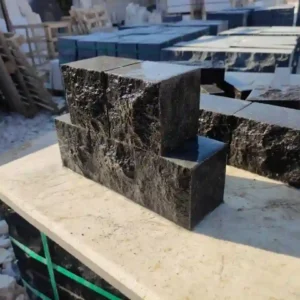
Because the loading point is the United States east coast, stone is not sitting waiting for a relay through a distant hub port, and it does not accumulate the handling damage that repeated lifts cause. Crated and strapped paving lifted twice arrives in better condition than paving lifted five times, and on an island where replacement stock is a week away rather than an afternoon, breakage costs more than it does on the mainland. We build crates to survive this specific journey rather than to a generic export standard, and we would rather over-protect an edge than argue about it later.
Duty since 1 July 2025, and what it does to a paving budget
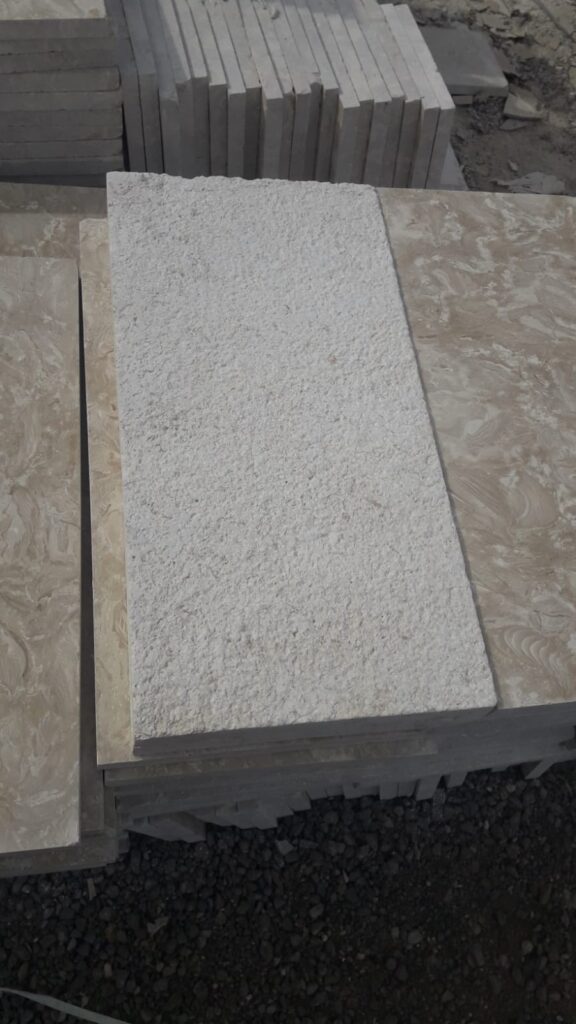
Bermuda has no VAT and no income tax. Customs duty is the government’s principal source of revenue, which historically meant a standard rate of 25 percent and a landed cost line that could dominate a materials budget. Anyone who priced imported paving here before the summer of 2025 will remember that arithmetic, and a good deal of published advice about building in Bermuda still quietly assumes it.
From 1 July 2025 the duty on building materials and supplies was reduced to 10 percent. The reduction explicitly covers goods that had previously been charged above 10 percent, with tile named alongside paint, steel, rebar, drywall, doors, windows and air conditioners. For anyone comparing markets, that now puts Bermuda building materials at a lighter duty rate than Grand Cayman’s 15 percent concessionary rate on the same class of goods.
- No consumption tax is stacked behind the duty line, unlike markets that add VAT or a general consumption tax after clearance.
- The Bermuda dollar is pegged one to one with the US dollar, so a quote in dollars needs no conversion and carries no exchange exposure.
- Duty is charged on value, so any specification decision that raises the invoice raises the duty proportionally – a point that bites hardest on small-unit paving.
- Freight, handling and clearance sit outside the stone price, so compare quotes on a delivered basis rather than on the unit rate alone.
- Ask your customs broker to confirm which tariff line your particular goods fall under before you fix a budget, because classification decides the rate.
The practical effect is that the stone itself now carries far more of the landed cost than the duty line does. It is worth setting the ex-works figure against the price index we publish before freight, duty and handling are added, so you can see which part of the landed cost you actually have leverage over and which part is fixed by geography.
Narrow lanes, small trucks and the last mile
Getting stone to Hamilton is the easy half. Island distribution is constrained by vehicle size limits and genuinely narrow lanes, so deliveries move on smaller trucks and have to be planned rather than simply dispatched. A pallet configuration that is routine in a mainland yard can be undeliverable to a hillside lot or a lane in Sandys, and discovering that on the day costs far more than designing around it costs in advance.
- Measure the approach, the gate width, the turning space and any overhanging trees before the container is booked, not after it lands.
- Tell us the maximum crate weight your site handling can accept so we build the packing to that limit rather than to ours.
- Identify a staging area that is dry, level and out of the working line, because stone moved twice on site gets chipped twice.
- Book site delivery against the Monday collection window so material is not sitting on demurrage while a crew waits.
- Allow for edge protection and re-wrapping, since paving destined for a tight site is handled more times than paving going to an open plot.
Format choice and site access are linked more tightly here than in most markets. A large-format slab that two people carry easily on a level driveway becomes a three-person lift down a flight of steps, and on a constrained lot the labor saved by covering more area quickly can be given straight back at the handling stage. Where access is genuinely difficult, a smaller module will often finish faster despite the higher piece count, simply because every unit can be carried by one person along a route no machine can follow. This is not a theoretical trade-off on Bermuda; it decides the specification wherever access on a Bermuda site is tight, and it is worth resolving before a format is chosen rather than after a container is booked.
Four seasons, salt and a real storm record
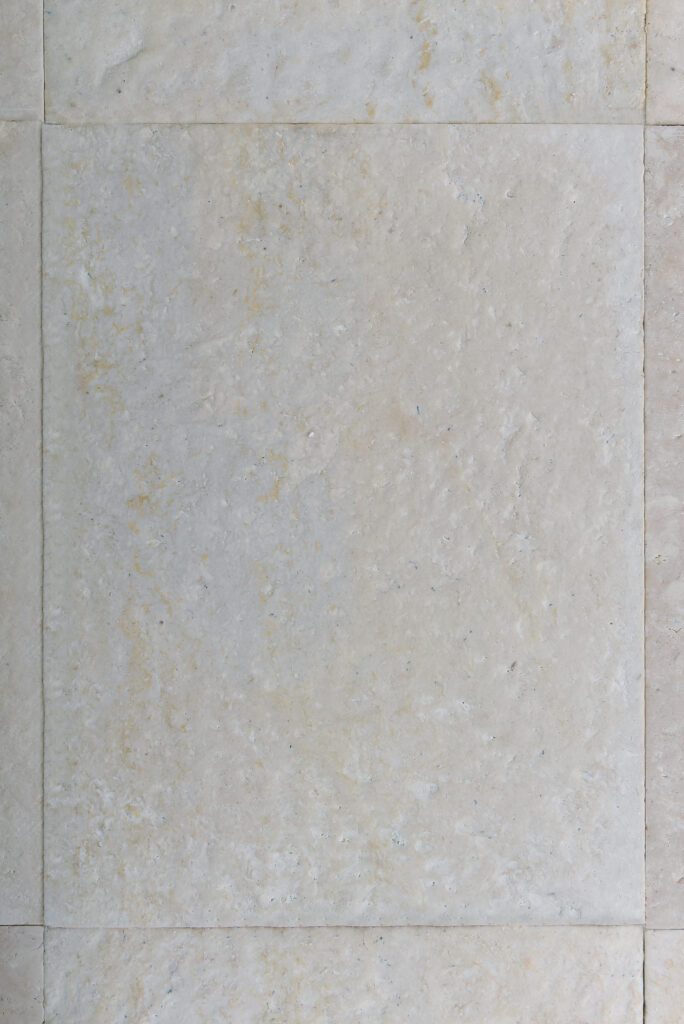
Bermuda’s climate is subtropical rather than tropical, and the difference shows up in the detailing. Summer is humid and bright, but winter is cool and damp, which means ground-level stone goes through repeated wetting and drying at low temperature rather than the constant warm cycle of an island nearer the equator. Surfaces stay wet longer in January than in July, and anything that holds water – a shallow fall, a blocked outlet, a bedding layer with nowhere to drain – has more time to cause trouble.
The storm record is real and periodic rather than annual. Fabian in 2003, Gonzalo in 2014, Nicole in 2016 and Humberto in 2019 are the reference points in the island’s recent storm record, and they set the standard for how a paved surface should be restrained and drained. Wind-driven rain and salt spray reach further inland than the map suggests, and a terrace that looks sheltered on a calm day is not necessarily sheltered when a system passes over.
- Bed and restrain edges properly; a loose perimeter unit is the first thing a scouring downpour will take.
- Design falls generously, then check them again after the base is compacted rather than trusting the drawing.
- Expect a compressed pool season, which concentrates a year of barefoot traffic and chemical splash into a few months.
- Assume salt reaches surfaces that are nowhere near the water, and choose fixings and restraint accordingly.
- Schedule installation with the seasons in mind, because a damp winter week is a poor time to be curing a jointing mortar.
None of this makes Bermuda a difficult market to pave. It makes it a specific one, and the specification that suits it will not be the specification a supplier hands out for somewhere warm all year.
Thickness and format matched to what the surface carries
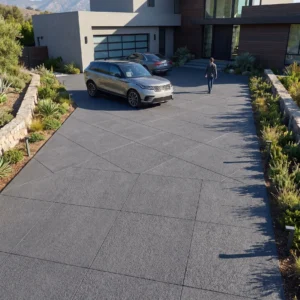
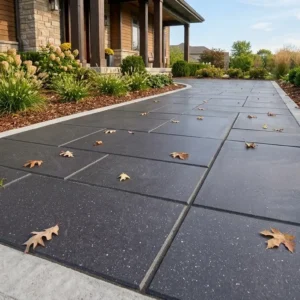
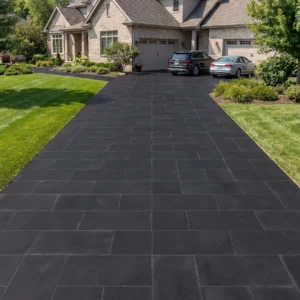
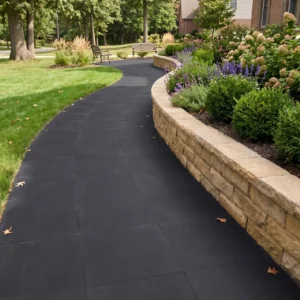
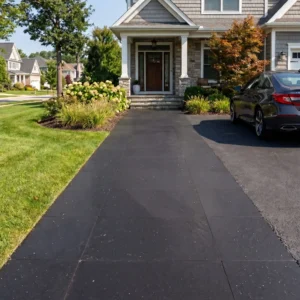
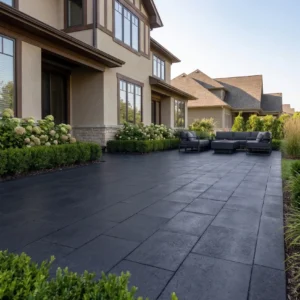
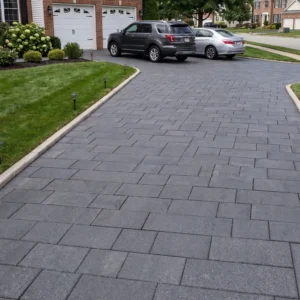
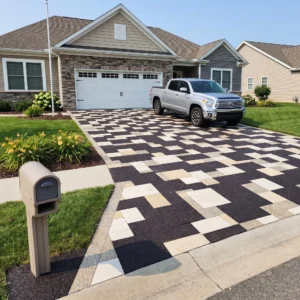
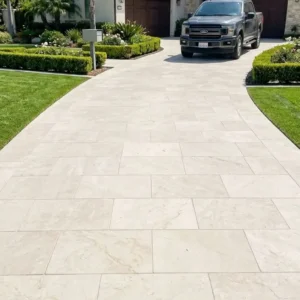
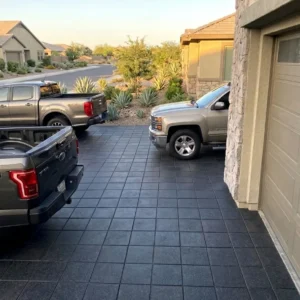
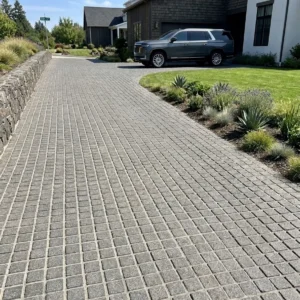
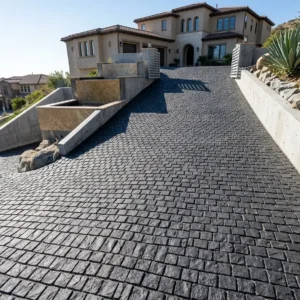
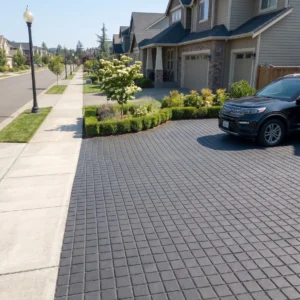
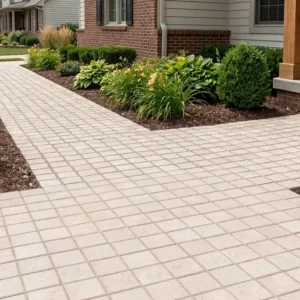
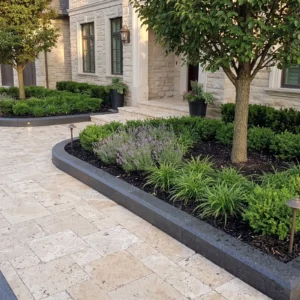
We work to a straightforward set of thickness conventions, and they are worth following because they map onto how surfaces actually fail. Under cover, where the stone never sees a wheel and never sees driving rain, 2 cm is sufficient and keeps weight down on a route that charges for weight. Outdoors, 3 cm is the standard for terraces, walkways and pool surrounds. Anywhere a vehicle turns, parks or reverses, 5 cm and above is the honest answer, and no bedding detail will rescue a thin unit under a turning load.
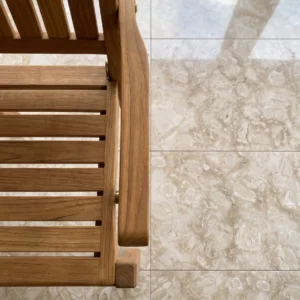
- 2 cm for loggias, covered terraces and interior-adjacent runs where continuity of appearance matters more than load.
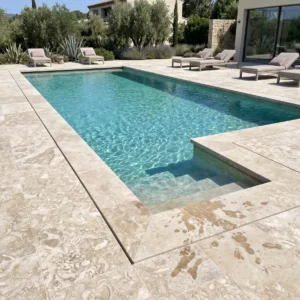
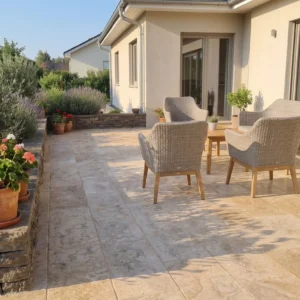
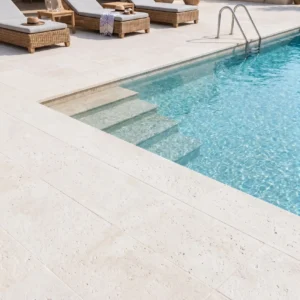
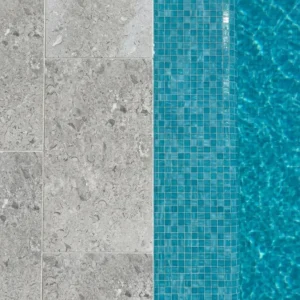
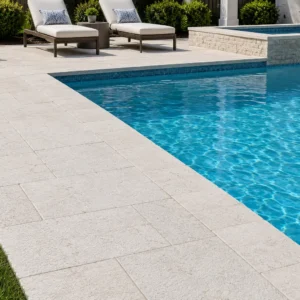
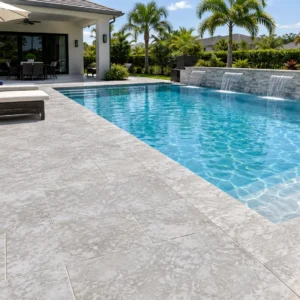
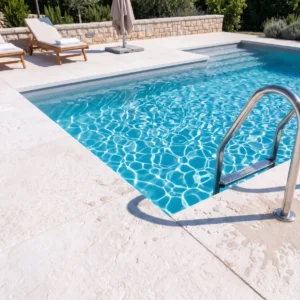
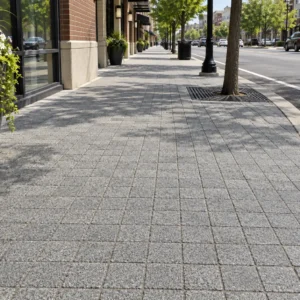
- 3 cm as the exterior default for foot traffic, terraces, steps and pool decks.
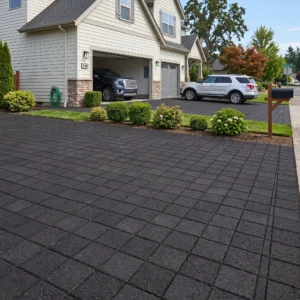
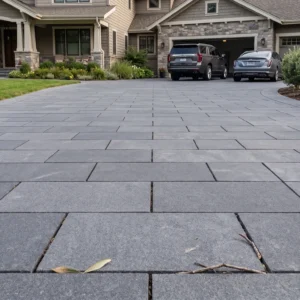
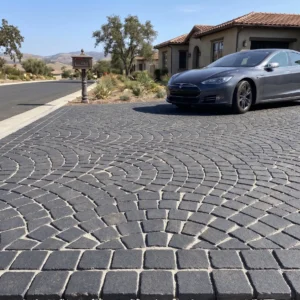
- 5 cm and above for driveways, aprons, turning areas and any surface that takes a service vehicle.
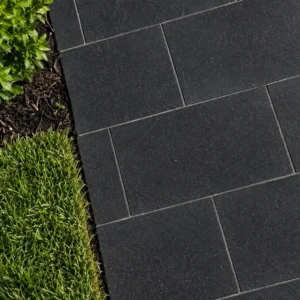
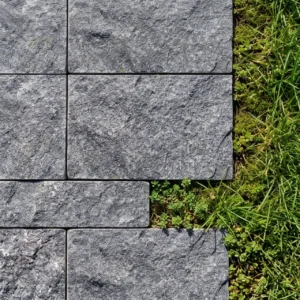
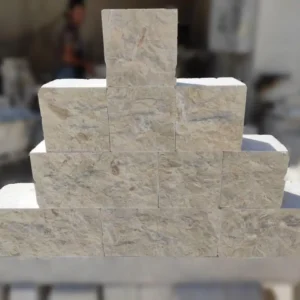
- Large formats read calm and quiet but need a flatter base, a heavier lift and more careful handling on a tight site.
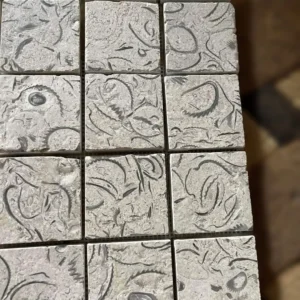
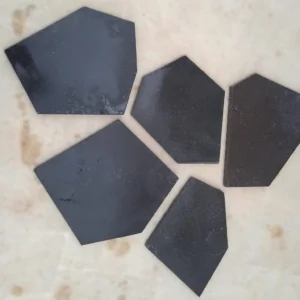
- Modular ranges let one pallet serve several areas and cut waste where the shapes are awkward.
Because everything is cut to order, format is a design decision rather than a stock constraint, and it is worth resolving before the base is set out rather than after. Walk through the paver range by format with the areas of your site in front of you, and assign a thickness to each one on the basis of what will actually cross it. A terrace, a path and a driveway apron on the same property will rarely want the same unit, and pretending otherwise is how a driveway ends up paved in terrace stone and lifted again three seasons later.
Planning consent shapes the surface before you choose it
Bermuda operates one of the strictest planning regimes anywhere. The Department of Planning and the Development Applications Board assess applications against the Bermuda Plan, and the level of scrutiny applied to external finishes is higher than most overseas specifiers expect. St. George’s and its related fortifications carry UNESCO World Heritage status, and work in and around that setting attracts the closest attention on the island.
In practice that means finish, tone and format are worth settling at application stage rather than at delivery. Keep physical samples, record the format and finish you intend to use, and be ready to explain why a surface reads the way it does in its setting. Drainage belongs in the same conversation: where a terrace sheds its water, and what it sheds toward, is a genuine specification question here rather than a detail left to the installer. Bermuda has no rivers, streams or freshwater lakes, and rainwater collection is regulated, so a terrace is graded either to feed collection or to be deliberately excluded from it. What that implies for sealers and cleaning products is set out in full alongside our Bermuda limestone tile guidance.
- Agree the finish and the format before the application rather than after consent.
- Hold a labeled sample of the approved stone on site for the duration of the job.
- Draw the falls and the discharge point, and state where the water ends up.
- Treat heritage settings and the St. George’s area as a separate conversation from a new-build terrace.
- Expect external surfaces to be looked at as carefully as elevations.
How an order runs, and what we need from you
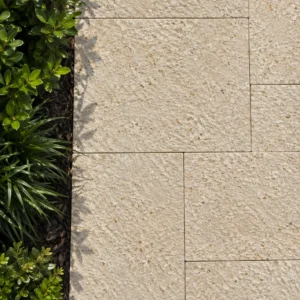
An order begins with the site rather than the stone. Tell us the parish, the access, the areas and what crosses each one, and we will come back with formats, thicknesses and a delivered figure rather than a bare unit rate. Samples are small hand pieces meant for judging tone, texture and grip; they are not a substitute for a dry-laid panel, and on a job of any size we would rather you set out a few units before the full order is cut.
Lead time is the sum of cutting, finishing, crating and the sailing, and the sailing is the part you can plan around most precisely. Because the rotation from the New Jersey ports is weekly, a week gained or lost at the cutting stage translates directly into a week at the other end, which is why we would rather agree the schedule of areas once than revise it twice. Cut-to-size work, edge details, step treads and curbstone runs all sit inside the same cutting window if they are specified together, and they cost more in both time and money when they are added afterwards.
- Send the areas, the traffic on each and the access constraints in one message.
- Ask for a delivered figure that separates stone, freight, handling and the duty line.
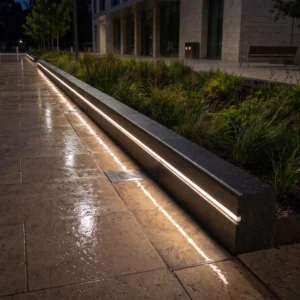
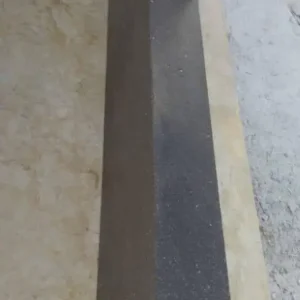
- Specify treads, edges and curbstones with the main order so they are cut from the same batch.
- Agree crate weights against what your site handling can lift.
- Confirm the sailing week before you book a laying crew.
Send us the site, the seasons you are working around and the areas you need covered, and we will build the paving package and the delivery week around them.