












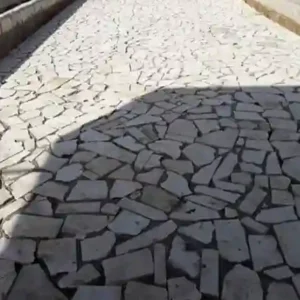

Barbados asks harder questions of a paving specification than its brochures suggest. This is a coral island – a limestone cap raised out of the Atlantic, quarried by Barbadians for three hundred years – so stone is not an exotic import here but a familiar material with local benchmarks and local opinions. It is also the most easterly of the Caribbean islands, which buys it a measure of hurricane luck and costs it a permanent exposure to Atlantic wind. And it runs a serious construction economy: a west coast of villas where the terrace is the room that matters, a south coast of hotels turning over surfaces on a commercial cycle, and an interior of Barbadian homes built to last generations rather than seasons. A paver that suits one of those does not automatically suit the others, and none of them are served by a catalog written for a temperate mainland.
This page covers what actually governs the choice of pavers and natural paving stones on the island: how stone arrives and what it costs to land, how the two coasts differ enough to need different specifications, where imported dimension stone belongs alongside the island’s own coral limestone, and which formats and thicknesses hold up under Barbadian conditions.
Landing Stone at Bridgetown
Bridgetown is a deep-water port. It takes ocean freight directly, which can spare a consignment the extra transshipment leg, and the extra handling, that shipments to smaller islands often face. Whether a given sailing calls direct depends on the carrier and the port of origin, so the routing and the lead time are confirmed on each quote rather than promised in advance.
What arrives still has to clear. A Barbadian customs broker files the entry, and the Common External Tariff line for the stone sets the duty rate: natural-stone paving falls under HS headings 6801 and 6802, which the Barbados tariff schedule lists at 15 to 20 percent depending on the exact line, and your broker confirms the current line. VAT is then charged at 17.5 percent on the customs value plus duty, and the broker confirms any environmental levy or service charge that applies. None of that is unusual, and none of it is difficult – but it should be visible. Before you commit to a quote:
- Ask for the stone, the crating and the freight as separate lines
- Ask which tariff line the supplier expects the stone to clear under
- Confirm who files the entry and who pays the broker
- Ask which costs the quote covers and which your broker will add at entry
Knowing which costs sit in the quote and which arrive at entry is what lets you compare quotes honestly. Deliveries beyond the Bridgetown area then travel by road, which on an island of this size means hours rather than days – but parish roads narrow quickly, and a full trailer that cannot reach a hillside site in St Joseph needs staging arranged before it sails, not after it lands.
Coral Limestone and Imported Stone: A Working Division
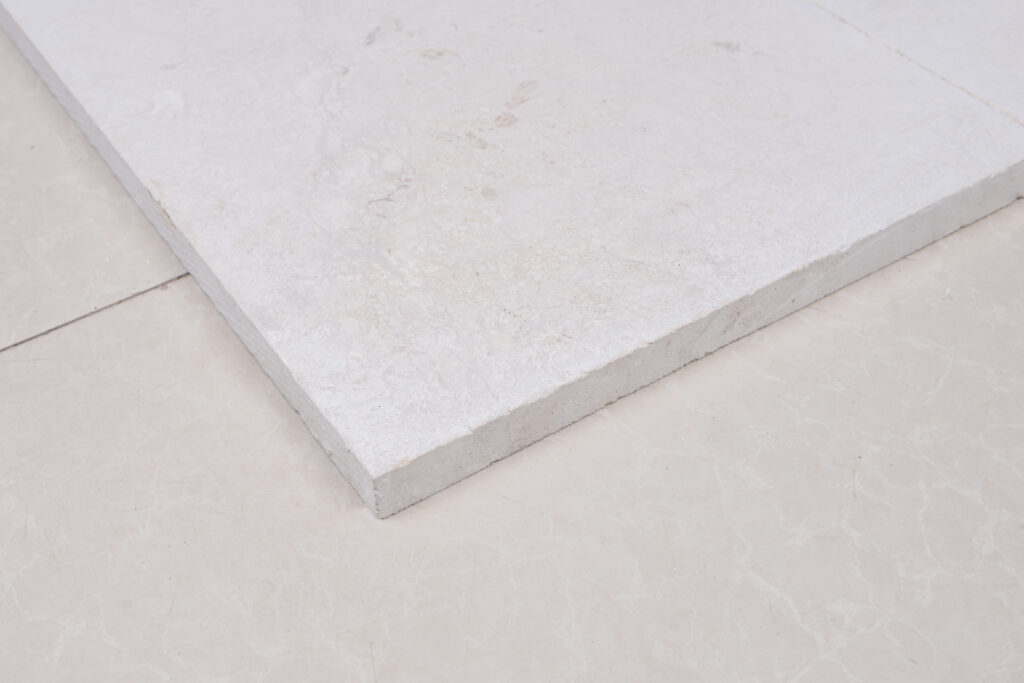
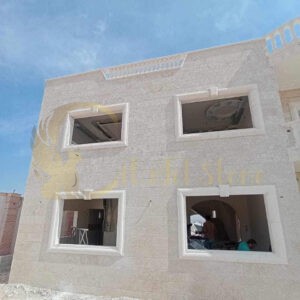
Barbados quarries coral limestone commercially, and has built with it since the seventeenth century. The great houses, the older churches, the boundary walls that outlive the properties they enclose – that is Barbadian coral stone, and it carries a weight of national association no imported material should presume to challenge. Any supplier who arrives arguing that imported stone is simply better has misread both the geology and the room.
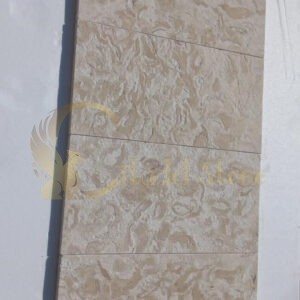
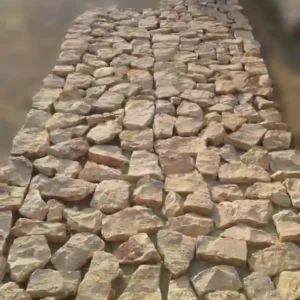
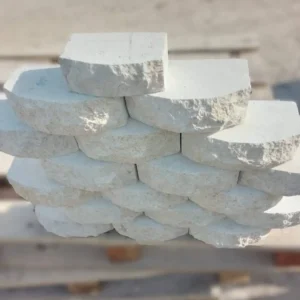
The honest division is by task rather than quality. Local coral limestone brings character, provenance and a color that belongs to the landscape; it is the natural choice for walling, for heritage repair and for anywhere the island’s own texture is the point. Imported dimension stone answers a narrower brief:
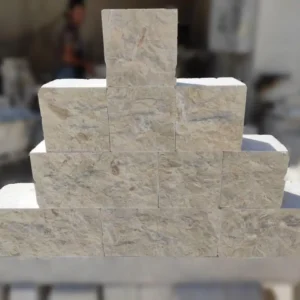
- Calibrated thickness across an entire order, so a large terrace lays flush without shimming
- Repeatable color batch to batch when a project runs in phases over months
- Formats cut to a drawing – modules, large planks, precise borders
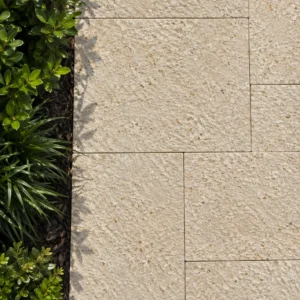
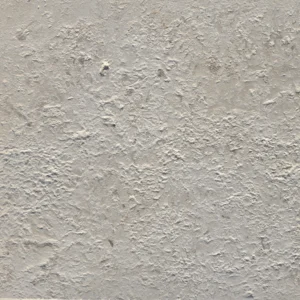
- Textured finishes – brushed and bush-hammered – chosen for the exposure on the windward side, compared in our stone finishes guide
Most well-built Barbadian projects use both, and the best specifications say so explicitly. A courtyard of local coral stone with an imported calibrated border is not a compromise; it is a reading of what each material does best.
Two Coasts, Two Specifications
The distance from Speightstown to Bathsheba is under an hour by road and roughly a century of weathering in specification terms. Barbados sits at the eastern edge of the archipelago, taking Atlantic weather on one flank and sheltered Caribbean water on the other, and paving written for one coast fails on the other in predictable ways.
On the Atlantic east coast the constants are wind, salt and airborne sand. Salt arrives as a permanent film rather than an occasional splash, and fine sand abrades any surface it crosses. That drives three decisions: density over decoration, a texture that can be refreshed rather than a polish that cannot, and jointing that stays sound so salt cannot work beneath the units. The west and south coasts – the villa and hotel coasts – face a gentler brief where color, comfort underfoot and finish lead, and where the real enemies are chlorinated splash-out around pools and the wear of constant foot traffic.
The hurricane calculation is genuinely different here too. Barbados sits far enough east that many systems pass north of it, and Barbadians will tell you so – but Elsa in 2021 and Beryl in 2024 both made the point that reduced frequency is not immunity. Paving survives storms mostly through what lies beneath it: bedding that drains, edges properly restrained, and units heavy enough not to move. Those are cheap decisions taken at build time and expensive ones taken afterwards.
Formats That Suit Barbadian Building
Barbadian construction speaks British in its dimensions and its vocabulary – paving slabs rather than pavers in older conversation, kerbs rather than curbs on drawings – and the formats that sell here reflect building traditions with British roots and Caribbean adaptations:
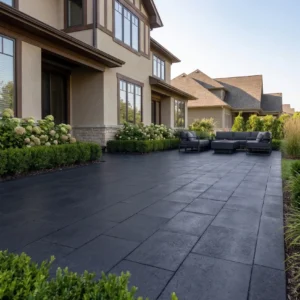
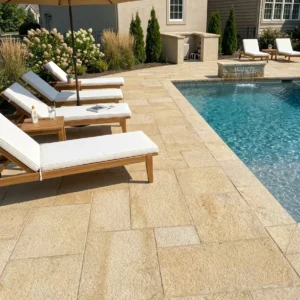
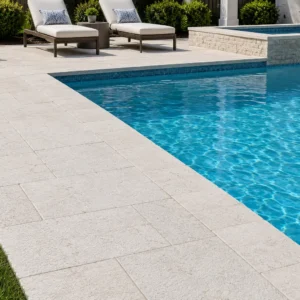
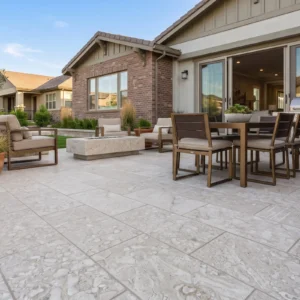
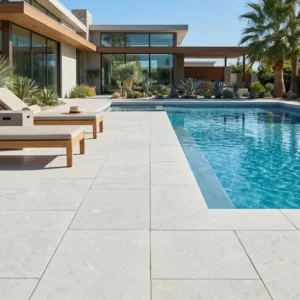
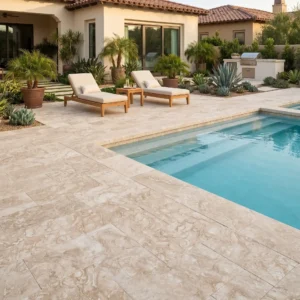
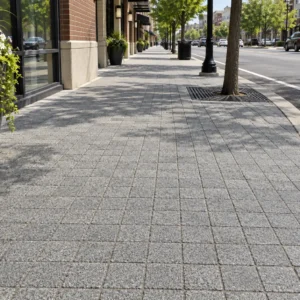
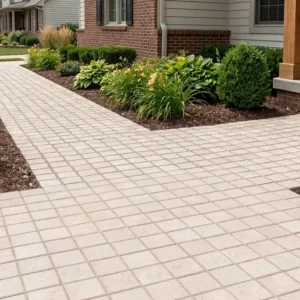
- Large-format slabs for west coast terraces, where fewer joints read calmer beside a pool
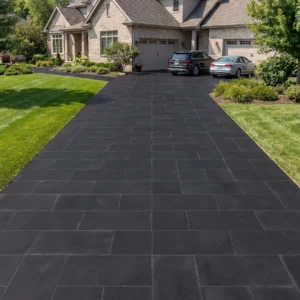
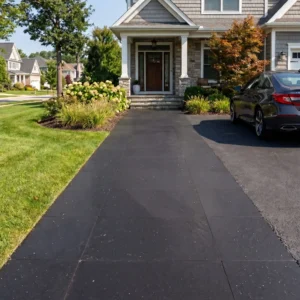
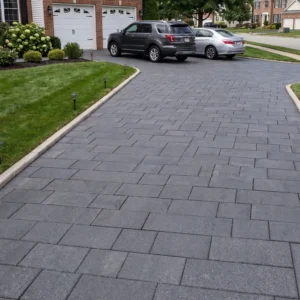
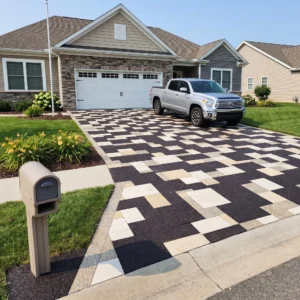
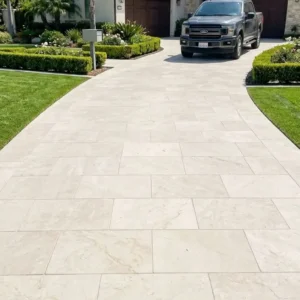
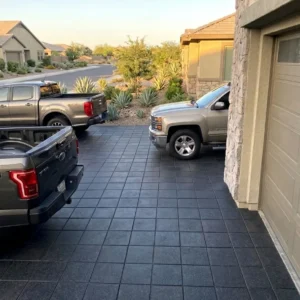
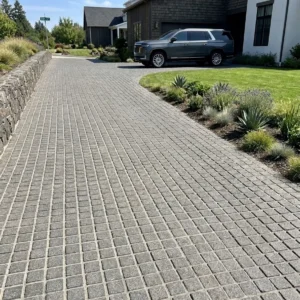
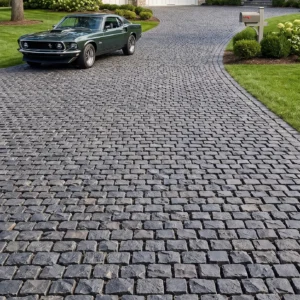
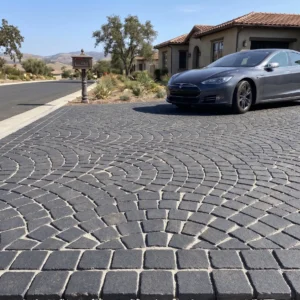
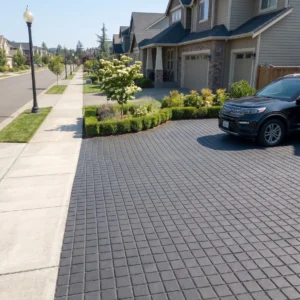
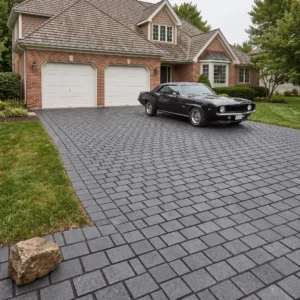
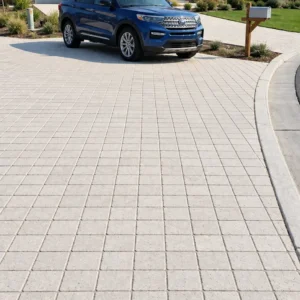
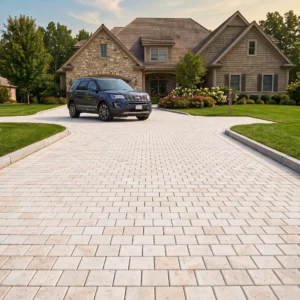
- Rectangular pavers in two-to-one proportions for driveways, which lay in the interlocking patterns that carry vehicle loads
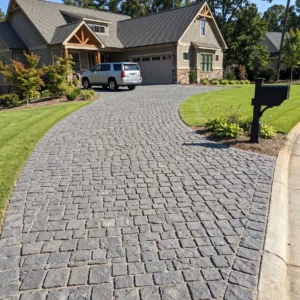
- Smaller units and setts for the curved paths and level changes that hillside plots demand
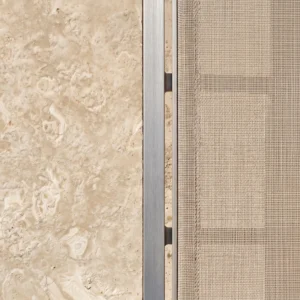
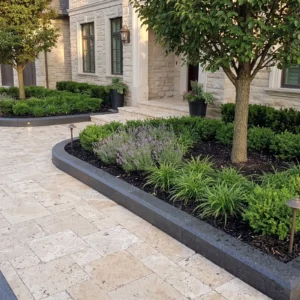
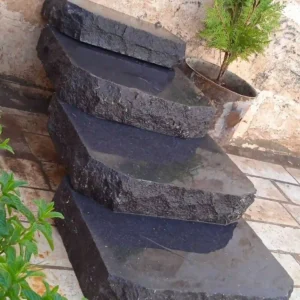
- Coping and step treads cut to match the terrace they serve rather than ordered separately
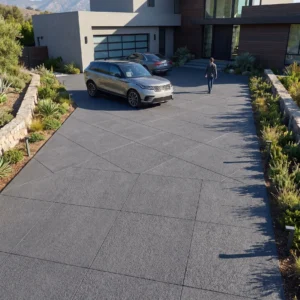
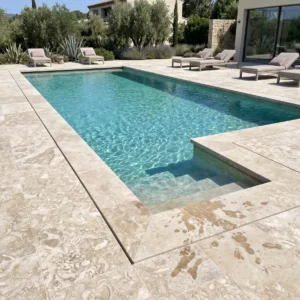
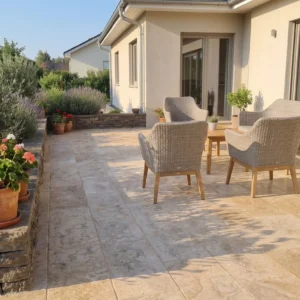
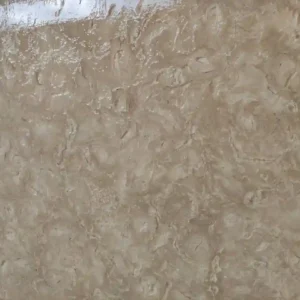
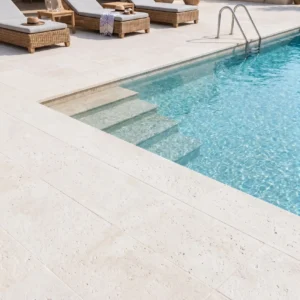
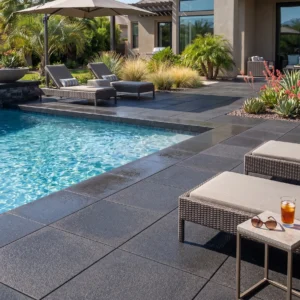
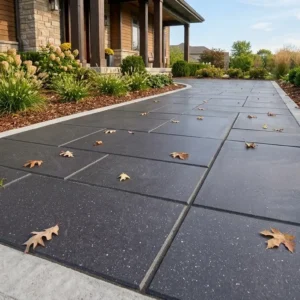
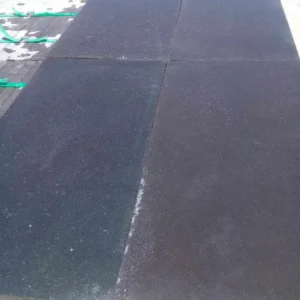
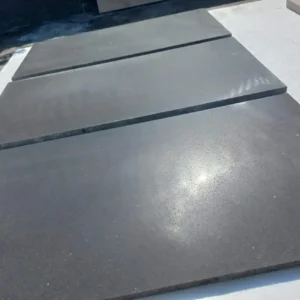
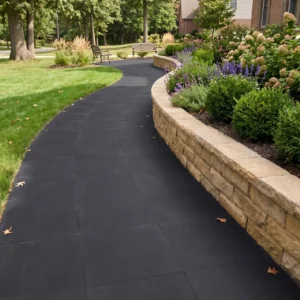
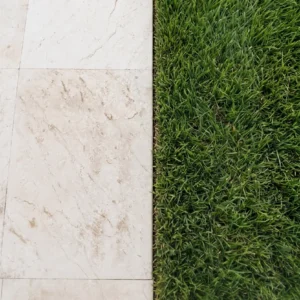
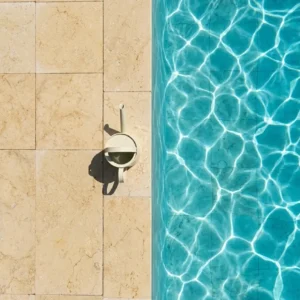
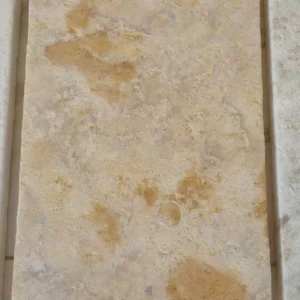
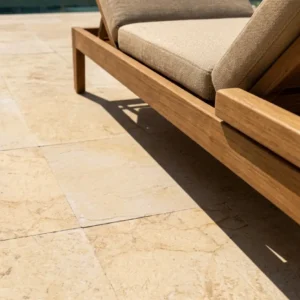
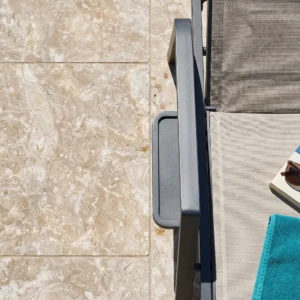
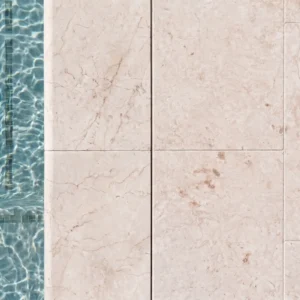
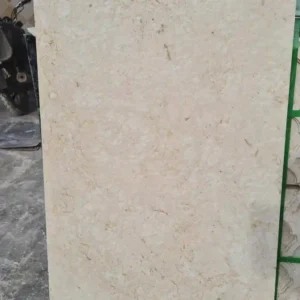
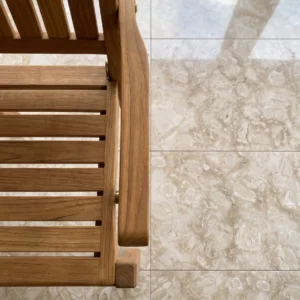
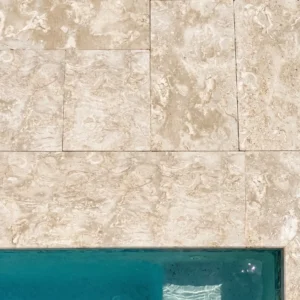
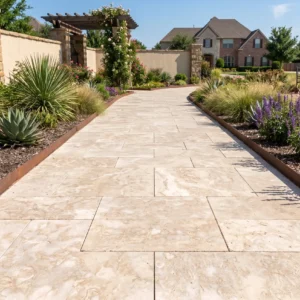
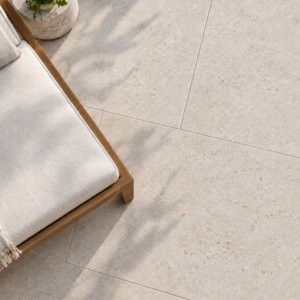
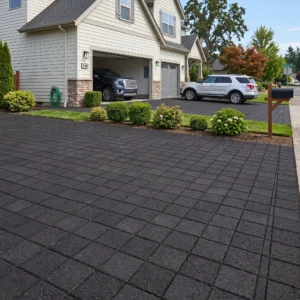
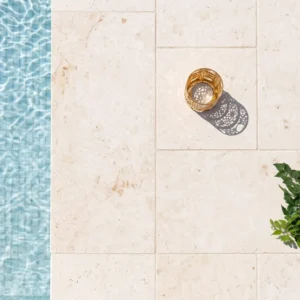
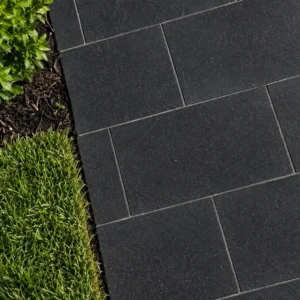
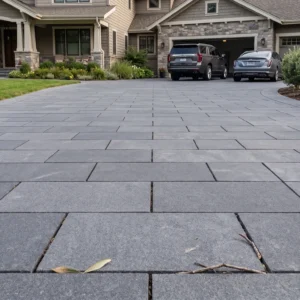
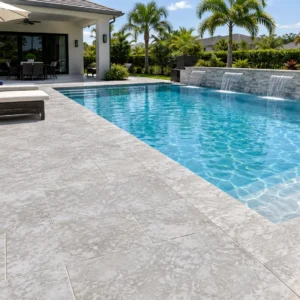
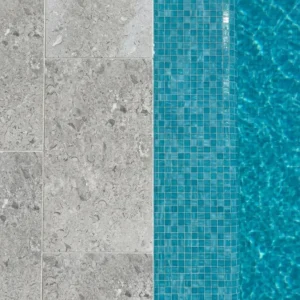
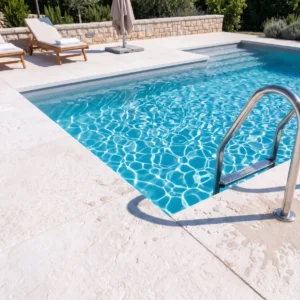
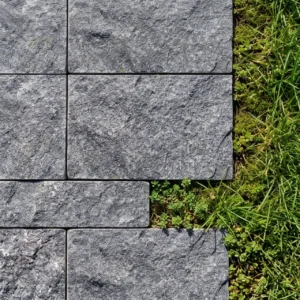
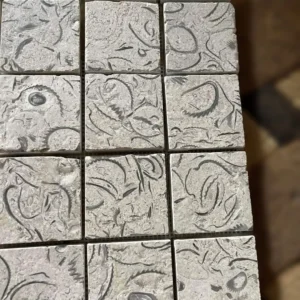
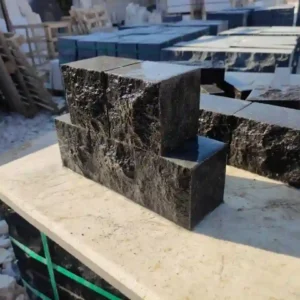
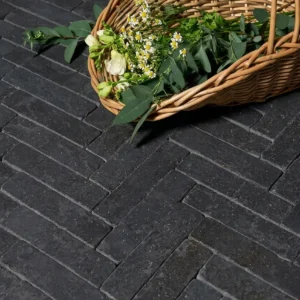
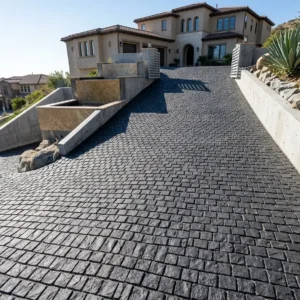
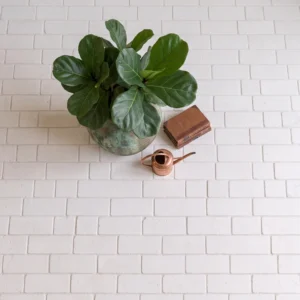
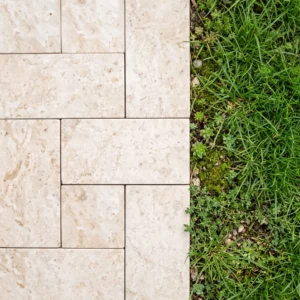
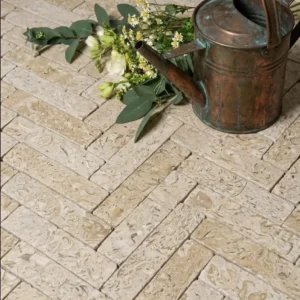
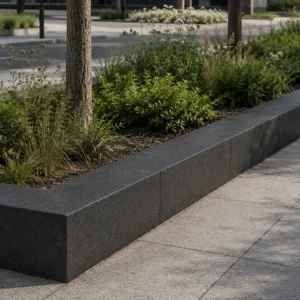
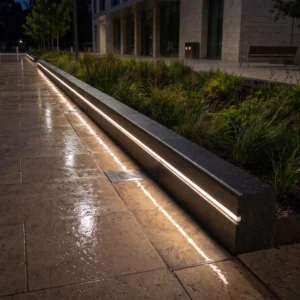
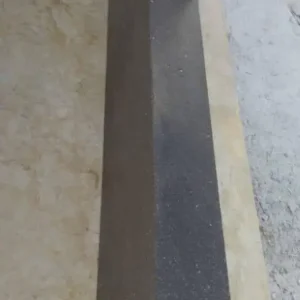
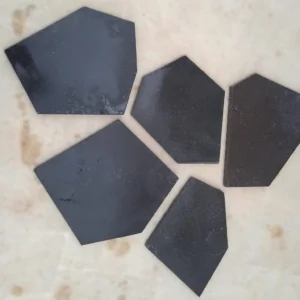
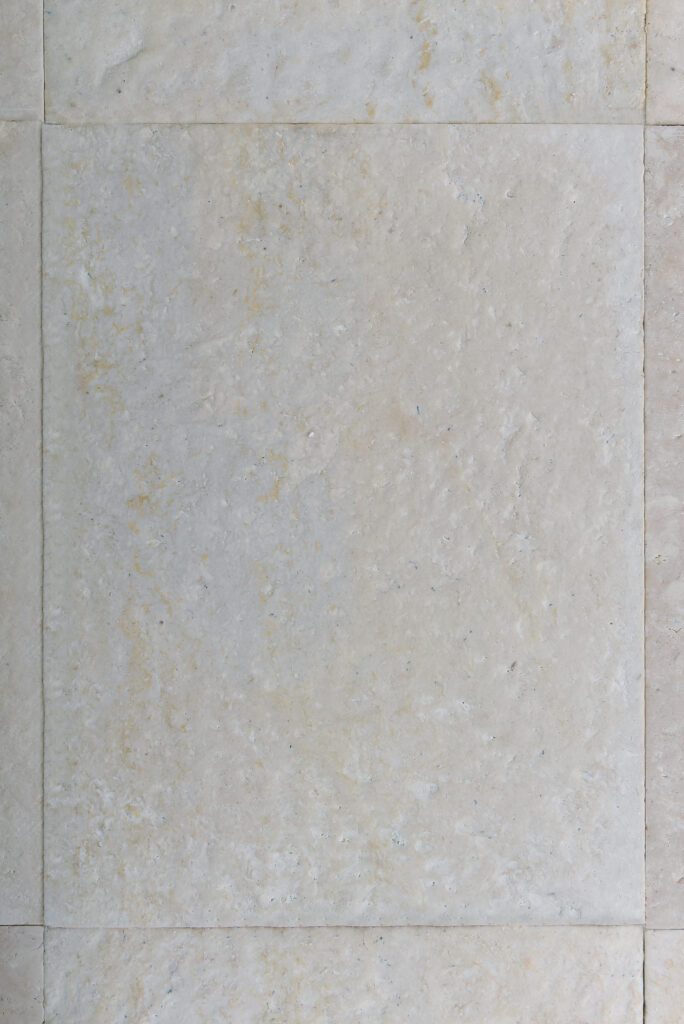
Material choice follows exposure more than taste. Pale stone keeps pool surrounds walkable at midday, which is why white limestone pavers in slab formats and Ocean Reef shellstone pavers suit so much west coast work. Dense black basalt pavers carry driveways and service courts and serve terraces and patios too; where bare feet cross open sun at midday, choose the tone and finish with that in mind and test a sample in the sun first.
Thickness follows duty rather than fashion: 30mm serves terraces, paths and pool decks; driveways take pavers of 50mm or more mortar-bonded to a reinforced concrete slab, or setts and cobbles of 3.5 inches or more laid on a compacted base. Because so much Barbadian building happens on sloping ground, the level-change details – steps, thresholds, retaining edges – often consume more thought than the field itself. Getting those cut as part of one order, in one thickness and one batch, is what separates a terrace that looks designed from one that looks assembled.
Planning, Levels and the Paperwork That Precedes Paving
Development in Barbados runs through the Planning and Development Department, under the Planning and Development Act and the General Development Order that accompanies it. For most private paving the planning question is straightforward, but two adjacent requirements catch buyers out and both bear on hardscaping:
- On-lot water storage obligations shape where hard surfaces can drain to, and a terrace that sheds into the wrong place creates a problem the drawings should have solved
- Coastal setbacks and the zone of influence near the shoreline constrain what can be built and how close, which matters on exactly the west coast plots where terraces are most valuable
Two further Barbadian realities belong on the drawing before stone is ordered. Ground conditions vary sharply across the parishes: the coral cap that underlies most of the island drains well but sits over clays in places, and a terrace bedded without regard for what is beneath it will telegraph the difference within two wet seasons. And access is a genuine constraint on an island of narrow parish roads and steep coastal plots – the question of whether a full trailer can physically reach the site, or whether pallets must be broken and shuttled, changes the freight quote and belongs in the conversation early rather than on delivery day.
None of this is a supplier decision – your architect or agent handles it. It matters to the stone order only in sequence: confirm the permitted extent and the drainage strategy before the cutting list is finalised, because a terrace redrawn after the stone is cut is an expensive lesson in island logistics.
What Pavers Actually Cost, Landed
The stone is rarely the largest line in a Barbadian paving budget, and buyers who compare only the per-square-foot price of the material make poor decisions. A realistic comparison holds four things together: the stone, the freight, the duty and tax burden, and the installation labour a given format demands. A cheaper stone in an awkward format that needs more cutting, more bedding and more time on a hillside site is not cheaper when the invoices are added up.
Two economies are available to buyers who plan early. Ordering the whole scheme in one consignment – field, borders, coping, steps – spreads freight across more square footage and guarantees a single batch. And choosing a laying pattern with modest cutting waste can save more than a discount on the stone itself; the layout guide with waste factors sets out what each pattern costs in offcuts before anyone quotes labour. For current per-square-foot ranges across our own catalog, the published price index is a sanity check you can run before any conversation.
Order Pavers for a Barbadian Site
Send the drawing, the parish and the exposure – windward or sheltered, pedestrian or vehicular – and the quote returns with formats, thickness matched to the load and the freight leg to Bridgetown, while your Barbadian broker confirms the duty, VAT and any levies at entry. Order samples first and test them the way Barbados will: wet one, leave one in the sun, and put a boot on the finish you plan to walk on barefoot. Then ask for the full quote, or email the drawing to kareem@citadelstone.us. New clients can pay through escrow. Citadel Stone supplies calibrated limestone, basalt and shellstone pavers into Barbados – cut to your drawing, landed at Bridgetown, and specified for the coast the project actually faces.