






































Anguilla measures roughly sixteen miles from end to end and never more than three miles across, with Crocus Hill at 240 feet the highest ground on the island. There are no mountain grades, no rivers and no long hauls; a truck can carry stone from Sandy Ground to almost any building site on the island in a single short run. That flatness makes the island easy to drive and deceptively hard to supply, because the real constraint on a paving project here is not the road network at all. It is the water between Anguilla and the hub port where the container was first landed.
Every serious paving decision on this island therefore starts with the same three questions: how does the stone arrive, what does it cost to bring across the counter at Anguilla Customs, and what condition will it be in when the crate is opened on site. Product choice, which is to say format, thickness, finish and unit weight, follows from those answers rather than preceding them. The sections below deal with the route first, the money second and the stone itself third, which is the order a contractor here actually experiences them in.
How Paving Stone Actually Reaches Road Bay
Road Bay, at Sandy Ground on the west coast, is Anguilla’s commercial cargo port. It is where a pallet of paving arrives, and it is the only place on the island where that conversation happens. Blowing Point on the south coast is a passenger and ferry terminal, a shallow harbor rated for a maximum vessel displacement of 100 tons and a maximum draft of 3.0 m. It is the gateway most visitors know and it is not a container port. Corito Bay, roughly 0.20 nautical miles offshore and about 2.5 nautical miles northeast of Blowing Point, is an offshore petroleum berth handling fuel only.
The structural route from the US mainland runs through Sint Maarten. Port St. Maarten publishes a feeder service to Anguilla, Montserrat, St. Barths and Antigua and Barbuda, and describes itself as the first port of call for inbound cargo. In practice a container of stone is landed at the Captain David Cargo Quay at Point Blanche, then moves onward on a short inter-island feeder or barge leg across the Anguilla Channel to Road Bay. Some direct calls do occur, but the feeder path is the one to plan around. It is a shipping relationship and nothing more: Anguilla runs its own customs service, its own tariff and its own clearance process, and the declaration is filed here.
- Road Bay at Sandy Ground is the commercial cargo port and the entry point for palletized stone.
- Blowing Point is a ferry and passenger terminal with a 100-ton maximum displacement and a 3.0 m maximum draft, and handles no containers.
- Corito Bay is an offshore petroleum berth about 0.20 nautical miles out, for fuel only.
- Clayton J. Lloyd International Airport is fine for a small sample box and is never a route for pallets of stone.
- The final sea leg is short, but it means the consignment is lifted, set down and lifted again before it reaches you.
Packing a Consignment That Will Be Handled Twice
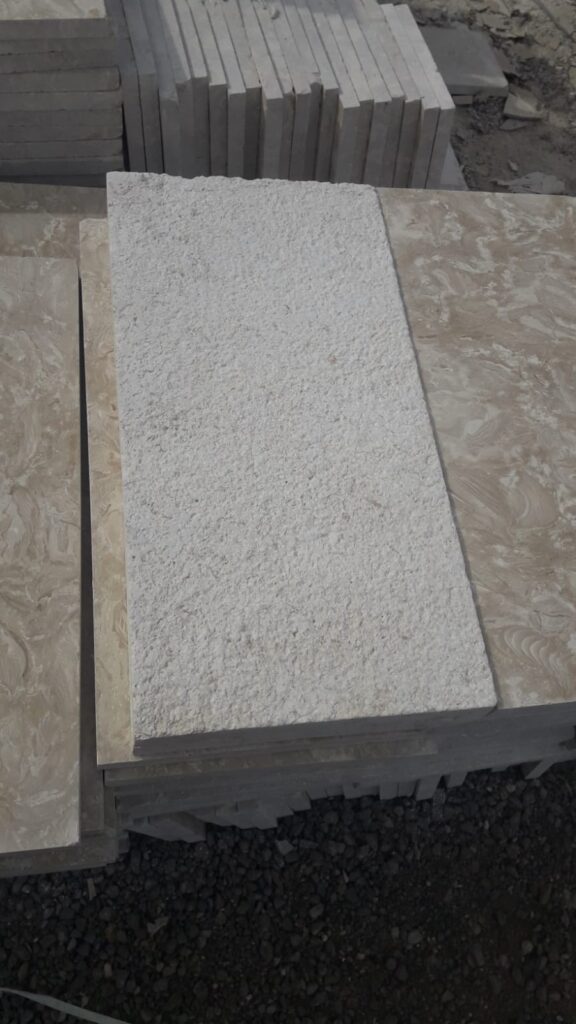
On a direct-call island a container is loaded once and opened once. Anguilla is not that island. The crate that leaves a selected quarry is set down on one quay and picked up again before it crosses the channel, and every extra lift is an opportunity for a corner to chip, a band to slacken or a pallet to rack out of square. The difference between a clean delivery and a claim is almost always the packing specification rather than luck, and it belongs in the purchase order rather than in a conversation after the fact.
We build loads for this route on the assumption of double handling: heavier crate framing than a mainland order would need, corner protection on every stack, and banding tensioned to survive being slung twice. Salt air is part of the journey as well, and wrapping that traps condensation against a pale stone can leave marks that take weeks of weathering to clear. Ventilated wrapping, dry timber and clear per-pallet labeling are cheap next to the cost of a replacement piece arriving on a later sailing, or worse, a hole in a terrace while a villa handover date approaches.
- Specify crated pallets rather than shrink-wrapped stacks for anything with a finished edge or a coping profile.
- Ask for corner protection and double banding, because the second lift is the one that finds a weak strap.
- Have every pallet labeled with contents, area of the job and lot reference, so a short delivery is identifiable on the quay.
- Build a small breakage allowance into the order up front; a replacement piece is a whole sailing away, not a truck ride.
- Keep the packing list and photographs of the loaded container, because that is what any claim will rest on.
Duty, the Import Goods Tax and the CIF Base
Anguilla is a British Overseas Territory with internal self-government, and an associate member of both CARICOM and the OECS. That associate status has a practical consequence which catches out a great many mainland suppliers: the CARICOM Common External Tariff does not govern imports here. Anguilla operates its own tariff, structured on HS classification and applied ad valorem on the CIF value of the goods under the Integrated Customs Tariff Regulations 2007. A quotation built on a generic regional duty rate is simply the wrong document for this island.
The second thing to get right is recent. The general sales tax that used to be charged on goods at the port was repealed with effect from 1 August 2025 and replaced by a 9 percent Import Goods Tax on the CIF value of imported goods, with a separate General Services Tax now applying to services rather than to goods crossing the quay. Any quotation still built on the old sales tax at the port is working from stale information, and that single detail tells a local buyer whether the person writing it has looked at Anguilla this year. Duty rates for specific stone tariff lines, and any customs service charge in force, should be confirmed with your broker rather than taken from a marketing page, including this one. Commercial consignments clear through Anguilla Customs using the ASYCUDA World system, normally through a registered broker, and a paving order sits well above the threshold of the simplified declaration used for small personal shipments.
- Anguilla applies its own tariff, not the CARICOM Common External Tariff, so never accept a regional rate as a proxy.
- Duty is ad valorem on CIF, which places freight and insurance inside the taxable value.
- A 9 percent Import Goods Tax on CIF has applied since 1 August 2025, replacing the former GST charged at the port.
- Confirm the current duty line and any service charge for your specific product with your broker before you fix a budget.
- Eastern Caribbean dollars are official at EC$2.70 to US$1, while villa construction is generally priced and settled in US dollars.
Formats and Thicknesses Under a CIF Tax Base
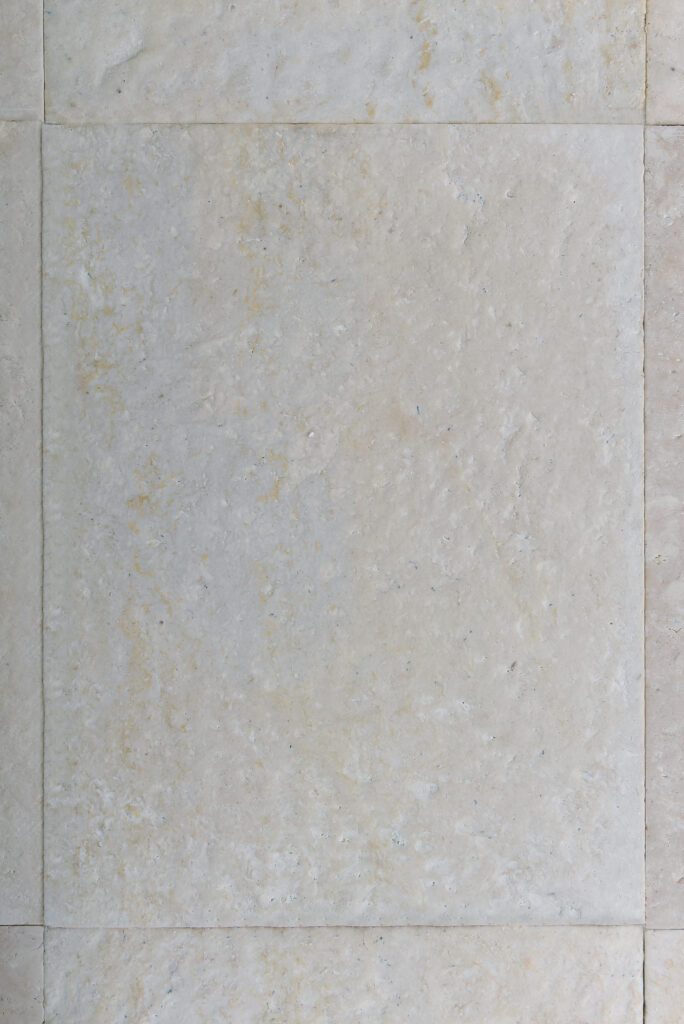
Because both duty and the Import Goods Tax are calculated on CIF, the freight and insurance you pay sit inside the number those percentages are applied to. That is arithmetic rather than a loophole, and it exerts a quiet influence on specification. A pallet carrying more finished square footage for the same weight lands cheaper twice over, once in the ocean freight and once in the tax computed on it. Thickness discipline, sensible unit sizes and a single consolidated load usually beat chasing a small difference in ex-quarry price.
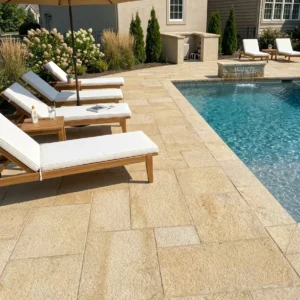
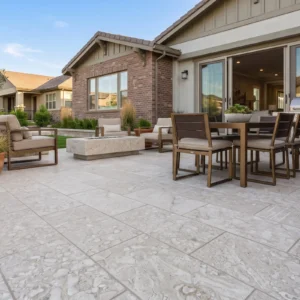
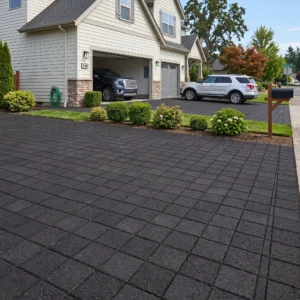
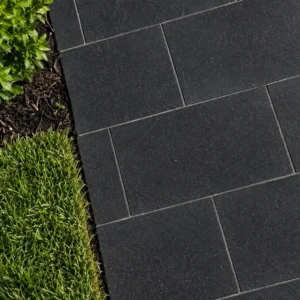
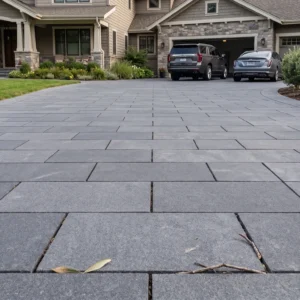
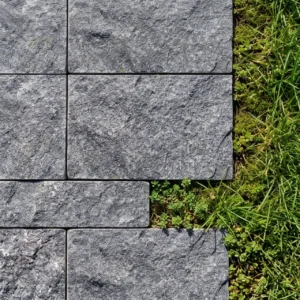
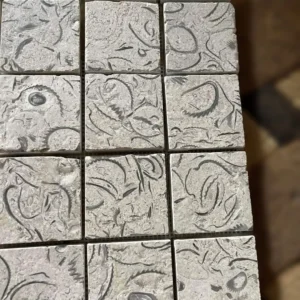
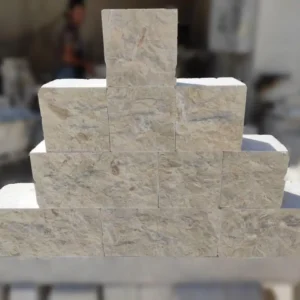
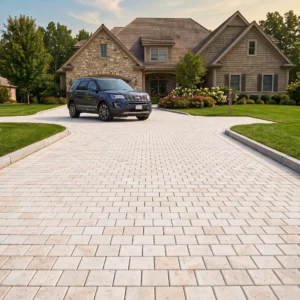
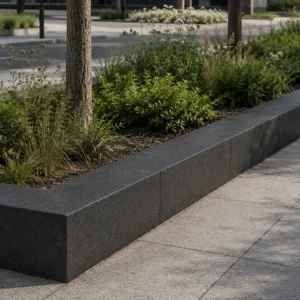
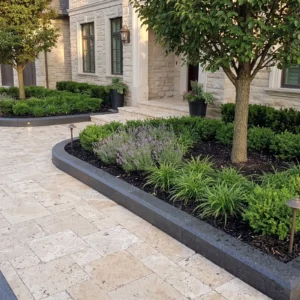
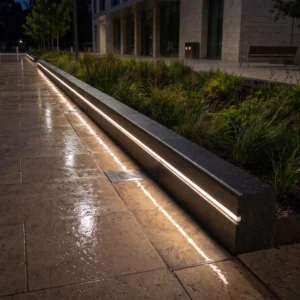
In practice that means matching thickness to load rather than to habit. Interior floors and covered terraces do not need the section that a vehicular apron needs, and specifying one heavy gauge across an entire villa is an expensive way to simplify a schedule. Consolidating interior tile, terrace paving, pool coping, steps and setts into one shipment also gives you one clearance, one broker file and one delivery window, which on an island supplied by a feeder leg is worth considerably more than it sounds. If you want to see the breadth of what can travel in a single load, the wider natural stone paver range is the place to start.
- Interior and covered areas: thinner gauges keep both weight and CIF value down without compromising the floor.
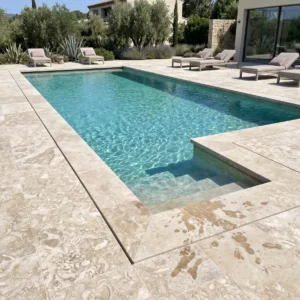
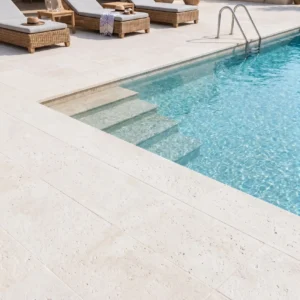
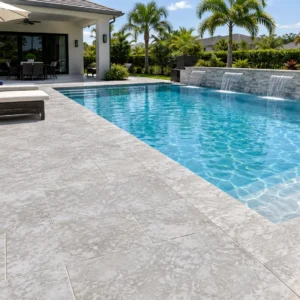
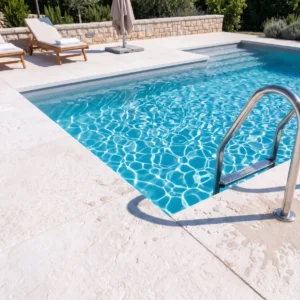
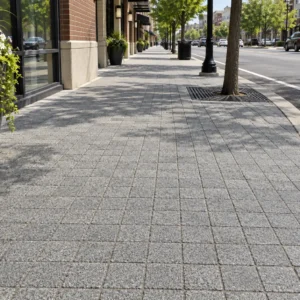
- Open terraces and pool surrounds: a mid gauge on a properly built base, with coping profiles ordered at the same time.
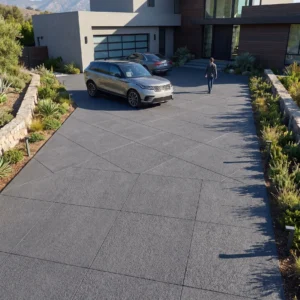
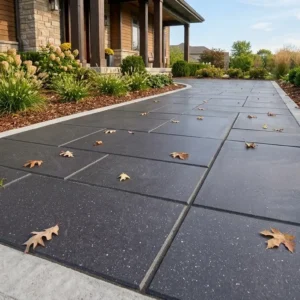
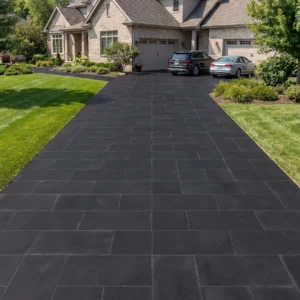
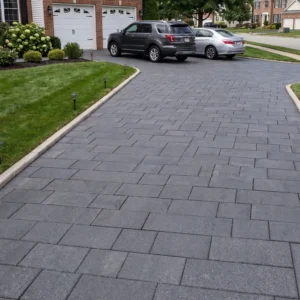
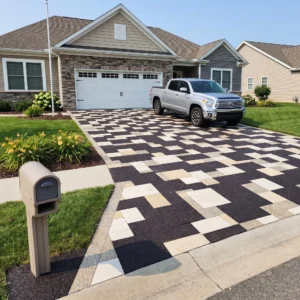
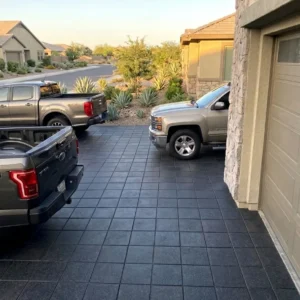
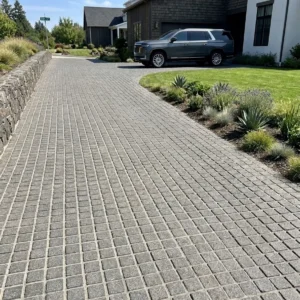
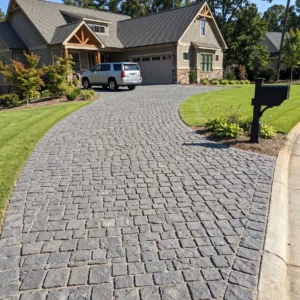
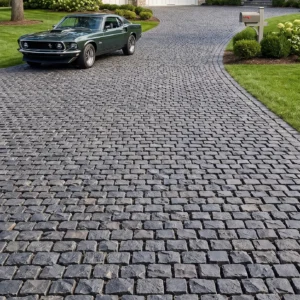
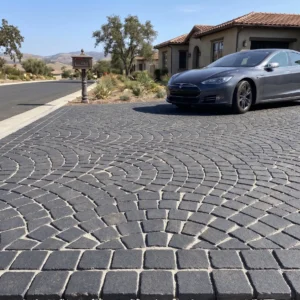
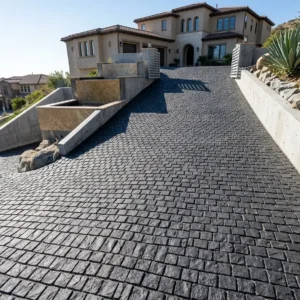
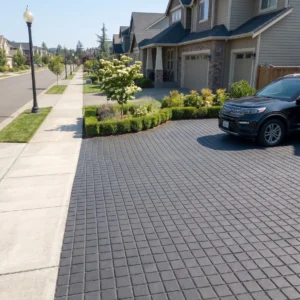
- Driveway aprons and turning areas: heavier sections, or small units on a bound base, specified separately from the field.
- One consolidated load per phase: a single clearance, a single broker file and a single delivery window.
- Order steps, treads, edging and special pieces with the main load, because a follow-up shipment for six pieces is painful here.
Site Access, Storage and the Last Three Hundred Feet
The island itself presents no haulage problem worth the name. Thirty-five square miles of low, flat limestone, a short road spine and no gradient of consequence mean a flatbed can reach The Valley, Sandy Ground, Blowing Point or any of the north coast bays without difficulty. The difficulty is the last stretch of private drive: soft shoulders on a sandy verge, gate posts set for a car rather than a truck, cistern and septic covers that will not take a loaded axle, and landscape planting that went in before the paving arrived.
Storage deserves the same thought, particularly between July and November. Pallets standing in the open for weeks collect wind-blown dust and salt film, and banding baked in the sun for a month is not the banding that left the quay. Stage deliveries to match the laying program rather than the shipping schedule, keep stock off bare ground on level bearers, and have a plan for securing or relocating pallets if a system is being tracked. On a site where the finished building is a multi-million-dollar object, a loose pallet of paving in the wrong place is a genuine hazard rather than an inconvenience.
- Check gate width, turning radius and overhead clearance before the container is booked, not afterwards.
- Identify cistern lids, service covers and soakaway positions, then keep loaded plant off them.
- Stage stone in phases matched to the laying crew rather than taking a whole villa in one drop.
- Store pallets on level bearers, clear of the ground and away from anything that could become airborne.
- Keep a marked reserve of each format for repairs, because replacements are a sailing away.
Exposure: There Is No Inland Site on This Island
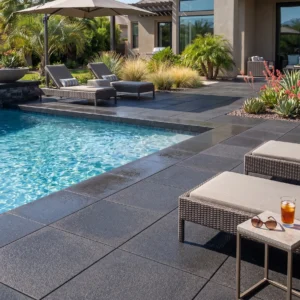
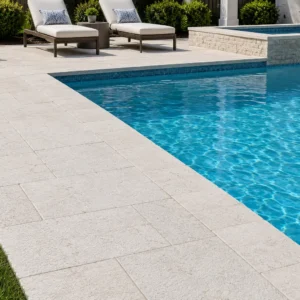
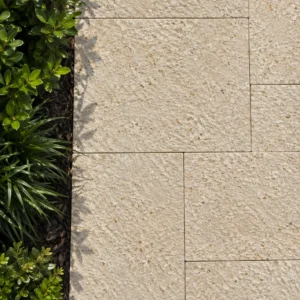
Anguilla is three miles across at its widest and has no relief to speak of, so trade-wind salt aerosol crosses the entire landmass. It is reasonable to treat every site here as a coastal site, whether it faces Barnes Bay or sits behind The Valley. That single assumption changes the specification: low absorption, dense material, fixings and fasteners chosen for salt exposure, and a surface texture that still grips when a dry, salt-dusted slab is suddenly wetted. Finish selection is a safety decision on this island, and our stone surface finishes page sets out what each texture does underfoot.
Rainfall is the fact that most surprises visiting specifiers. Anguilla receives the least rainfall in the Lesser Antilles, roughly 35 to 40 inches a year and highly erratic, because there is no high ground to trap cloud. February and March are the driest months, September and October the wettest, and there are no rivers at all; water comes from rainwater catchment, aquifer wells and desalination. Paving here does not have to fight chronic saturation. It has to shed a violent short burst without scouring, and its run-off has to go somewhere deliberate, because on an island that harvests its own water the question of where hard surfaces drain is part of the water strategy of the property.
Hurricane season runs from July to November and the reference events are well known here: Luis in 1995, Lenny in 1999, and above all Hurricane Irma, the Category 5 storm of 6 September 2017 that caused major damage to homes, public buildings and roads. Nothing is hurricane-proof, and Anguillians know that better than almost anyone. What paving can be instead is resilient and repairable: units that can be lifted and relaid, bases that survive saturation, and a small reserve of matching stone held back so a damaged area can be made good without a new order. Building work is designed to the Anguilla Building Code, which incorporates the Caribbean Uniform Building Code, with development consent running through the Land Development (Control) Act and the Land Development Control Committee.
Specifying, Sampling and Ordering From Anguilla
The sequence that works here is unglamorous and it saves money. Start with small samples so the material can be seen in Anguillian light, which is harder and brighter than any showroom. Move to a laid mock-up panel on site, a square yard or two, jointed and finished as the completed work will be, then wetted and walked on with bare feet. Confirm the lot, reserve it, and build the shipment around the laying program rather than around the first available sailing.
Lot control matters more on an island than it does on the mainland, because a second lot cannot simply be driven over from another yard. Where a villa is built in phases, reserving material from a single production run at the outset avoids a visible break between a terrace laid this season and one laid next. Ask for the quantity schedule to include a sensible overage, keep the surplus crated and labeled on site, and treat it as insurance rather than waste. Samples are small by design, a piece to handle and test rather than a pallet, and they are the cheapest part of the entire exercise.
Tell us the bay, the sailing window and the finish, and we will quote the stone, the packing and the route as a single piece of work. Anguilla rewards suppliers who plan the final feeder leg as carefully as the ocean crossing.