





























An interior floor in the Virgin Islands lives a different life from an interior floor almost anywhere on the mainland. There is no heating season, no frost, and only about five degrees Fahrenheit between the average summer and the average winter. What there is instead is near-constant warmth, air that carries salt, a wet season concentrated from May through October, and a way of living that keeps doors and galleries open so the boundary between inside and outside is a threshold rather than a wall. People walk in from a pool, off a beach, out of a downpour. The floor is wet several times a day and it dries again by itself. That is the actual design case, and it is not the one a tile specification written for a temperate climate is solving.
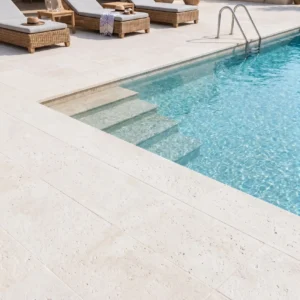
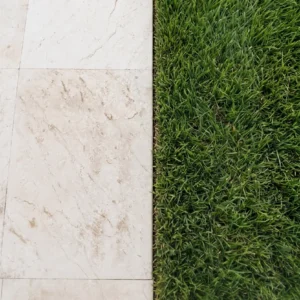
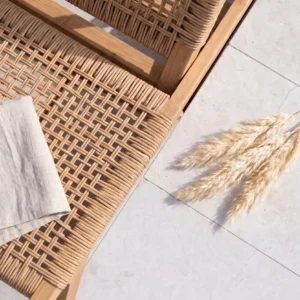
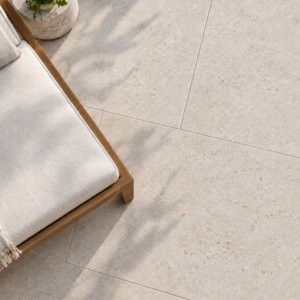
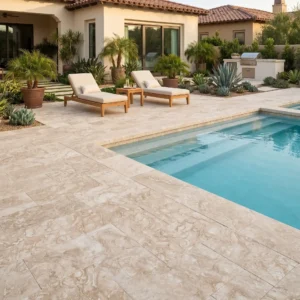
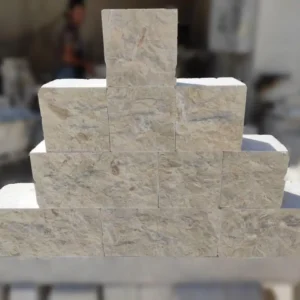
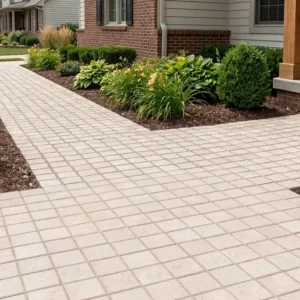
Cut limestone answers it well. It is a dense, dimensionally stable, naturally cool material that takes a slip-resistant texture without looking industrial, and it can run from a bedroom through a gallery and out onto a terrace with a single visual language. Citadel supplies calibrated limestone tile in pale and mid tones from selected quarries, loaded in the United States and shipped into St Thomas, St John and St Croix. This page is about the inside of the building specifically: how these rooms behave, which finishes survive wet feet, which formats suit the spaces you actually have, how to detail a threshold that will not trip anybody or leak, and how to clean and seal a stone floor in a place where water is stored on the roof rather than piped in from a river.
How a Virgin Islands room actually behaves
The first thing to understand is that the floor is rarely the coldest surface in the room, which is the assumption behind a lot of condensation guidance written elsewhere. Here the risk runs the other way. A room held at air-conditioned temperature with a warm, humid outdoors on the other side of a door will sweat when that door opens, and a very smooth floor finish becomes briefly and genuinely dangerous at exactly that moment. Anyone who has walked from a hot veranda into a chilled great room in August knows the feeling of the floor going slick underfoot for a few seconds.
The second thing is that salt arrives without an invitation. Windward rooms take a fine airborne deposit that settles on every horizontal surface, and a floor that is mopped with plain water leaves that salt behind as a faint bloom in the joints. It is not a defect in the stone and it is not a sealing failure. It is the location. Choosing a stone and a finish that tolerate frequent gentle washing, rather than one that needs to be babied, is what makes a floor livable over years rather than months.
- Design for a floor that is wet several times a day and dry within the hour, not for an occasional spill.
- Expect fine grit tracked in from unpaved drives and estate roads. Grit under a shoe is what actually scratches a soft finish, not the shoe itself.
- Keep the same stone through connected spaces where you can. A single material across a level plane reads far calmer than three materials meeting at door lines.
- Remember there is no heating cycle to dry the slab out seasonally. Anything trapped under the tile stays there.
- Ventilated, shaded rooms with thick masonry walls, common in older buildings, run cooler and damper than modern glazed rooms. Treat them as different micro-climates within the same house.
Occupancy patterns matter as much as physics. A good deal of housing here is used seasonally, shut up for weeks and reopened, and a floor that sulks after a period of neglect is the wrong floor. Dense limestone tolerates that pattern well: it does not cup, warp, harbor odor or delaminate the way engineered timber and some resilient products can when a building is closed with humid air inside it. Whoever opens the shutters after an absence should be able to sweep, mop and walk away.
Carrying the floor through the threshold
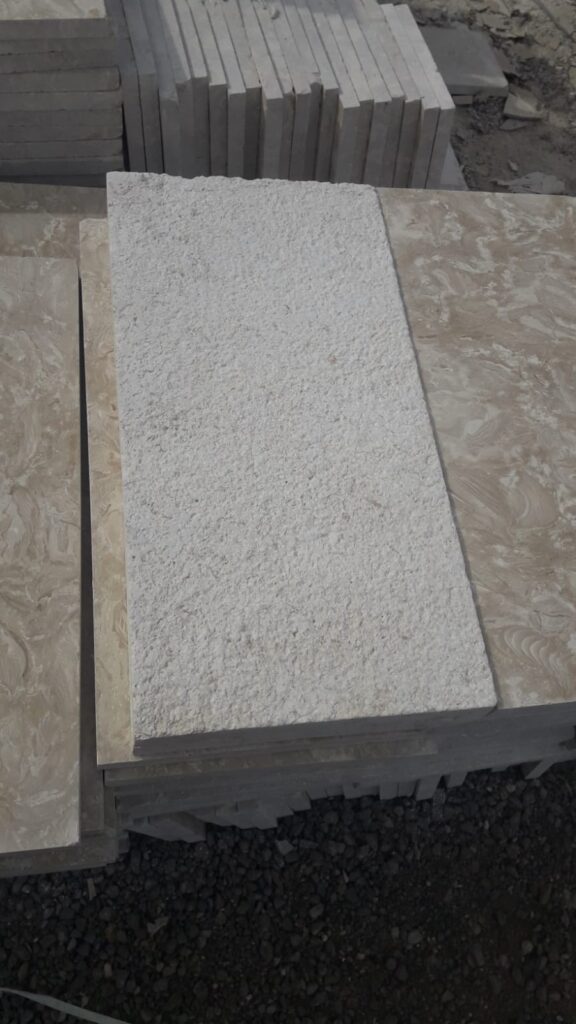
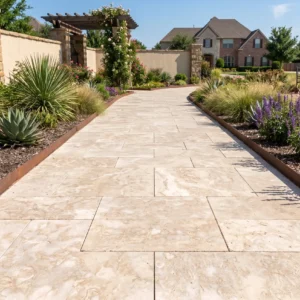
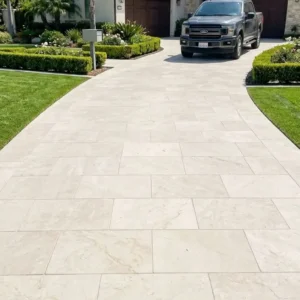
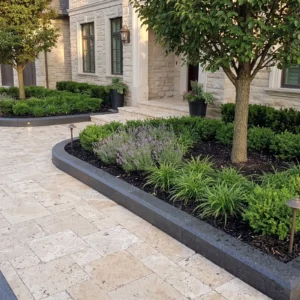
The most valuable detail on a Virgin Islands stone floor is the one nobody photographs: the twelve inches either side of a door. Getting inside and outside to read as one continuous plane is what makes a modest house feel generous and a villa feel resolved, and it is entirely achievable with the same limestone in two different finishes, a smoother face inside and a textured face outside. What it needs is a drainage decision made before the levels are set, because a flush threshold that has not been drained is a flush threshold that puts wind-driven rain into the room.
Flood and drainage requirements complicate this in a useful way. DPNR’s Division of Permits handles floodplain management and National Flood Insurance alongside building codes, and on many sites the finished floor level is set by that rather than by taste. Where the interior floor has to sit high, you have a choice between a step, a shallow ramped apron or a channel drain immediately outside the opening. All three work. What does not work is discovering the constraint after the tile has been ordered in a single thickness with no allowance for a transition piece.
- Set a fall away from the opening on the outside face, and drain it. A flush threshold without a channel drain will find its way indoors during a squall.
- Order threshold and step pieces at the same time as the field tile so they come from the same lot and the same delivery.
- Use a coarser texture on the outside face of the same stone rather than switching materials. The tone matches, the grip changes.
- Allow for the door track. Sliding and folding systems each want a slightly different sub-floor build-up and it is cheaper to know which before the screed goes down.
- Where the level difference is unavoidable, a generous single step reads better than two mean ones and is safer in the dark.
Finishes for wet feet and open doors
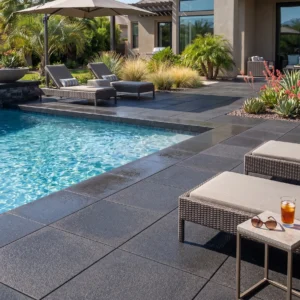
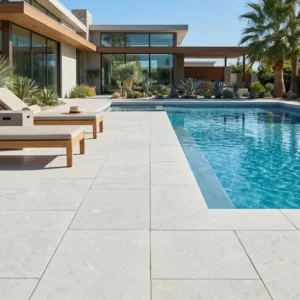
Finish is where most interior stone specifications go wrong in this climate, usually because the sample was chosen dry, indoors, under showroom lighting, by somebody wearing shoes. The test that matters is a wet foot on a wet tile. A honed surface is the sensible default for living areas and bedrooms: matte, easy to clean, kind on bare skin and free of the glare that a polished floor throws when the sun comes in low across a gallery. For bathrooms, shower floors, entry halls and anywhere adjoining a pool, honed is not enough on its own and a light textured face earns its place.
There is a balance to strike, because texture that is too aggressive holds dirt, feels harsh under a bare heel and is miserable to mop. The right answer is usually a fine brushed or lightly tumbled face rather than a heavily flamed one, sized down into smaller modules so the joints add grip of their own. Rather than accept a category claim, ask for a wet slip figure measured on the exact finish you are buying, and put a sample on the floor of the actual room with a bucket of water before the order closes. If you want to see how each surface treatment reads and behaves before deciding, start with the finish list we work from and narrow it down with a physical piece in hand.
- Honed for bedrooms, living rooms, galleries and covered verandas where feet are usually dry.
- Fine brushed or lightly tumbled for bathrooms, shower floors, entry halls, laundries and any room a pool door opens into.
- Avoid polished floors entirely in rooms that open to the outside. The glare is uncomfortable and the wet grip is poor.
- Smaller modules in wet rooms mean more joint length per square foot, and joint length is grip you get for free.
- Ask for the wet reading, not the dry one, and ask for it on the finish rather than on the stone type.
Cleaning and sealing where water is stored, not piped
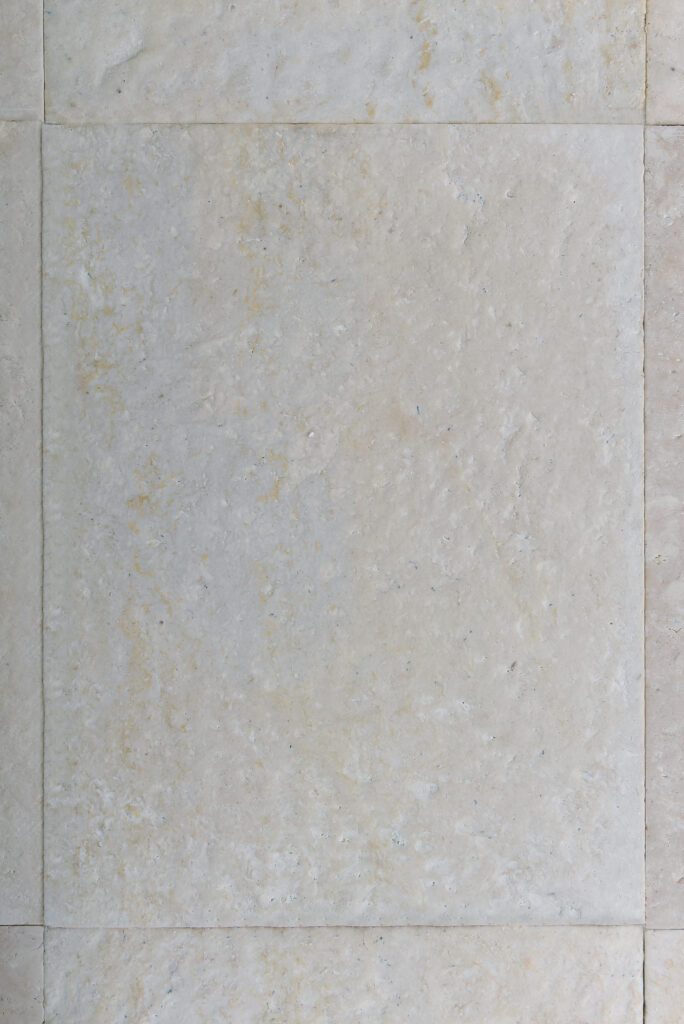
Water discipline shapes maintenance here in a way it does not elsewhere. Virgin Islands Code Title 29 section 308 ties required cistern capacity to roof area, with the requirement stepping up for taller buildings, and roof catchment into a cistern is a normal part of how a house works. Your architect will have the current figure for the building. What matters for the floor is the consequence: fresh water is a stored resource, and a maintenance routine that assumes a hose running for twenty minutes is not a routine anybody here will follow. A stone floor specified for this territory should be one that a damp mop and a neutral cleaner keep looking right.
Sealing follows from the same logic. An impregnating sealer that sits inside the stone rather than forming a film on top is the correct family of product, because a surface film in this humidity will eventually cloud, lift at the edges and need stripping, which is a far bigger job than resealing. Reseal on evidence rather than on a calendar: when water stops beading and starts darkening the stone for a few minutes, it is time. High-traffic entry halls and shower floors will want attention sooner than a guest bedroom that gets used six weeks a year.
- Use a pH-neutral stone cleaner. Acidic bathroom products, vinegar and citrus will etch a calcite stone, and the etch is a physical mark rather than a stain you can wash out.
- Choose an impregnating sealer over a topical coating, and test it on an offcut before it goes on the whole floor.
- Sweep or dust-mop before washing. Grit dragged around under a wet mop is the single biggest cause of dulling on a honed floor.
- Wipe salt bloom with clean fresh water rather than scrubbing it. It returns, and treating it gently costs nothing.
- Keep a small quantity of spare tile from the original lot for repairs. A replacement sourced years later will not match a floor that has aged in this light.
Formats that suit the rooms you actually have
Room proportions here are not standardized, and specifying a format from a mainland catalog often produces a floor with awkward cut margins on every wall. Modern villa great rooms and open galleries take large-format tile beautifully and benefit from the reduced joint count. Older buildings in the historic towns are a different proposition: thick masonry walls, deep window reveals, rooms that are rarely square and doorways that are narrower than a contemporary opening. Those rooms usually look correct in a medium format with a modest joint, and they look wrong in a very large one that has to be cut on three sides.
Bathrooms, corridors and stairs each have their own logic. Shower floors want small modules for fall and grip. Stairs want a consistent nosing detail and enough thickness to carry it. Corridors read best with the long dimension running away from the viewer. It is worth laying the schedule out on paper by room before ordering anything, because format is the cheapest decision to change on a drawing and one of the most expensive to change on a pallet. The pale ranges we hold, with the sizes and thicknesses available in each, are listed under pale tiles cut for interior floors if you want to match a room schedule against real stock.
- Large formats for open living space and galleries; medium formats for older rooms with thick walls and irregular geometry.
- Small modules for shower floors and wet rooms, where fall and grip beat visual scale every time.
- Match tile thickness across the job so a single screed level works from room to room.
- Plan the cut margin at the most visible wall, not the one behind the sofa. Somebody will notice.
- Where a floor runs outdoors, keep the module identical and change only the surface texture, so the joint lines carry through the threshold.
Ordering tile across three separate islands
Treating St Thomas, St John and St Croix as interchangeable is the outsider move that local contractors notice first. They have separate ports, separate terrain and separate economies. St Croix is the largest and flattest and is generally the easiest for a truck-and-forklift delivery. St Thomas and St John are steep, and a hillside villa above Charlotte Amalie or behind Cruz Bay may only be reachable by a road that a full trailer cannot use, which means transloading or breaking the pallets down before the last few miles.
Interior tile is more vulnerable in transit than exterior paving because it is thinner, so packing and handling deserve a conversation rather than an assumption. For anything landing on St John, agree the final leg with your carrier in writing before you book an installer, covering how the cargo reaches the island, what lifting equipment is available at the receiving end and who carries the cost. And remember that the islands drive on the left, so the offload side and the turning geometry are the reverse of what a mainland delivery note will assume.
- Give us the island, the town or estate, the access description and the offload equipment available on site.
- Ask for tile to be crated rather than simply banded where hand-balling is likely at the far end.
- Order all rooms in one lot. Natural stone varies between lots, and a bathroom ordered later will read as a different floor.
- Build in a breakage and cutting allowance of a sensible margin, plus attic stock on top of it.
- Book the delivery outside the heaviest rain if the access track is unmade. Wet, sloping ground stops a loaded truck faster than any hill.
One entry, one lot: why a short order hurts here
On the mainland, running short of tile is an inconvenience. In the Virgin Islands it is a second import. Because the territory sits outside the US customs territory and files its own entries, a follow-up shipment is a fresh customs declaration with its own duty assessment, its own excise position, its own brokerage file and its own freight minimum, and small shipments carry those fixed costs terribly. A few boxes of tile can end up costing several times their shelf value once the entry, the handling and the island haulage are counted.
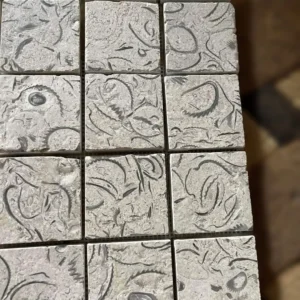
There is a second reason to buy the whole floor at once, and it has nothing to do with money. Natural limestone varies between beds, between blocks and between production runs. A single lot has been selected and cut together, so its tone, its veining and its fossil content sit within a consistent band. A quantity ordered eighteen months later comes from different material and will read as a visibly different floor when it meets the original across a doorway. That mismatch is obvious in a bathroom, glaring on a staircase and impossible to disguise in an open gallery where daylight rakes across the surface all afternoon.
The answer is unglamorous and it works: order once, order complete, and order slightly long. Include the field tile, the thresholds, the step and stair pieces, the shower trays and the attic stock in the same lot and the same container. Keep the spare boxes dry and flat somewhere on the property. The cost of storing a pallet of tile for five years is essentially nothing, and the cost of not having it when a plumber lifts a floor is a mismatched patch in the middle of a room you paid a great deal to get right. Order the whole floor once, in one lot, and a Virgin Islands stone floor stays a surface you can repair unit by unit rather than replace.