



























Houses in Saint Vincent and the Grenadines are built to breathe. Louvered openings, deep verandas, galleries that run the length of the plan and doors that stand open for most of the year mean the boundary between inside and outside is soft rather than sealed. The floor takes sand from the beach, salt off the wind, water from bare feet coming in from a pool, and periodically a fine gray dust that arrives from a direction nobody planned for. An interior tile specification written for an air-conditioned box on the mainland will disappoint in the first wet season, not because the stone is poor but because it was asked the wrong questions.
This page is about the inside of the building and the threshold where it meets the terrace. Citadel Stone supplies calibrated limestone tile in thin formats suited to concrete slabs and screeds, in finishes chosen for wet feet, and in module sizes that suit the proportions of real Vincentian rooms rather than a European showroom. We are a US wholesale supplier buying from selected quarries. The technical case for external limestone, absorption figures and grip around water, sits on its own page; here the questions are comfort, cleaning, continuity and getting fragile crates to Bequia, Mustique or Canouan in one piece.
Heat, Humidity and How a Pale Floor Behaves Indoors
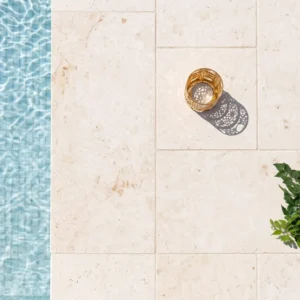
Thermal mass is the quiet advantage of a stone floor in a warm climate. A limestone floor laid on a concrete slab holds the night’s coolness well into the morning and gives it back slowly, which is why stone underfoot reads as comfortable in a house that is ventilated rather than chilled. In a room with fans and open louvers the effect is noticeable; in a room that is closed and cooled, it simply reduces how hard the cooling has to work. Neither case argues for a dark floor. Pale limestone reflects daylight deep into a plan, which matters in houses designed with deep overhangs and shaded verandas that deliberately keep direct sun off the glass.
Humidity is the other half of the story, and it works against careless detailing rather than against the stone. A house shut up behind shutters for a week in a humid spell, then opened suddenly on a cool morning, can drop condensation onto every hard surface in it. Stone handles that better than most floors because it is not damaged by cycles of wetting and drying, but the grout, the substrate and the sealer all have to be chosen with the same expectation. A young slab that has not finished releasing moisture will push that moisture up through the bed, and the symptoms appear at the joints first. Time on the slab is cheaper than a remedial lift.
The practical instruction is simple. Ask what the room does for most of the year, not what it does at Christmas. A gallery that is open to the veranda all day is an external floor with a roof over it, and it should be finished like one.
Finishes for Wet Feet, Open Doors and Bare Floors
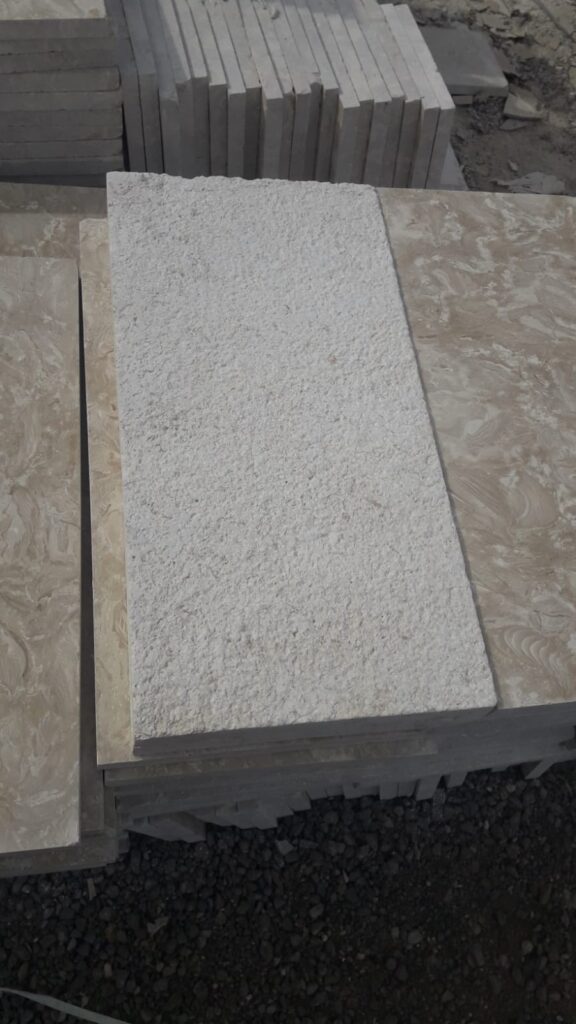
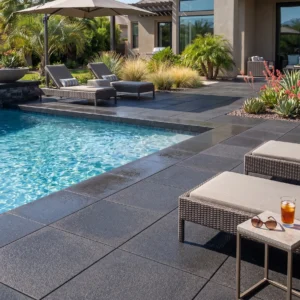
Finish is where interior stone in this country is either right or quietly wrong. The traditional showroom instinct is toward polish, and polish is the one finish that fails hardest in a house where people walk in wet from a pool or straight off a boat. The opposite mistake is also common: reaching for the most heavily textured surface available, which grips beautifully and then holds fine grit and dust in its texture, so every clean becomes a scrub. The useful range sits between those two.
- Honed matte is the workhorse for bedrooms, living rooms and galleries, giving a soft light and a floor that mops clean in one pass.
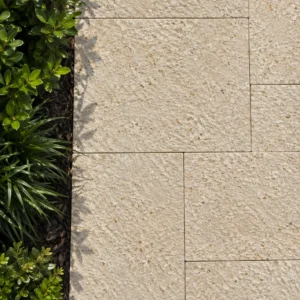
- A light brushed or antiqued surface adds enough micro-texture for a threshold or a kitchen without becoming a dirt trap.
- Sandblasted or fine bush-hammered surfaces belong in shower floors, wet rooms and the strip immediately inside an external door.
- Tumbled edges suit informal and older buildings, softening the joint line where walls are not perfectly true.
- Polished should be confined to dry, low-traffic areas such as a feature wall or a powder room, never a circulation route.
The decision worth spending real time on is the wet zone boundary. In a villa on Bequia or Canouan the wet zone is not just the bathroom; it is the door from the pool, the stair from the beach path, the corridor to the outdoor shower. Those runs deserve a grippier finish in the same stone, so the change is felt underfoot but barely seen. That is a specification choice, not a compromise, and it is the difference between a floor a family relaxes on and one they are told to be careful on.
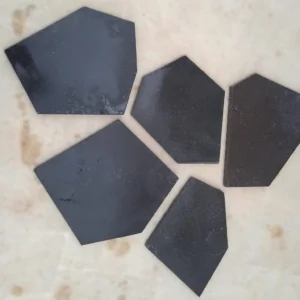
Shower floors deserve their own conversation. A large tile falls to a drain awkwardly, and the usual fix is to break the floor into small mosaic squares, which multiplies the joint length and gives mildew somewhere to live in a humid climate. A better answer is a single shaped piece cut from the same limestone, or a small number of large pieces cut to fall, in a sandblasted or fine bush-hammered surface. Fewer joints, better drainage, less cleaning, and the shower reads as part of the same floor rather than as a tiled box inserted into it.
Formats for Vincentian Room Proportions
Room shapes here are not neutral. Long galleries, verandas that run the width of a plan, narrow corridors serving bedrooms, and living spaces that open on two or three sides all respond differently to a tile module. Choosing one square size for the whole house is the fastest way to make a beautifully proportioned room look busy and a small room look smaller.
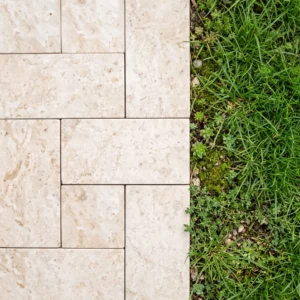
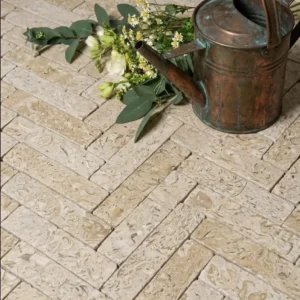
- Run a rectangular module lengthwise down a gallery or veranda to reinforce the length rather than chopping it into squares.
- Use a smaller module in bathrooms and small bedrooms so cuts fall sensibly and the joint grid stays in proportion.
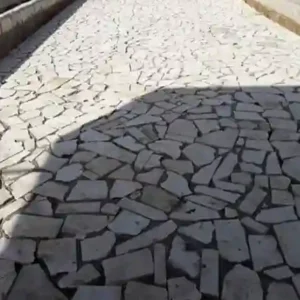
- Consider a multi-size pattern in a large open living space, which absorbs an irregular room shape without an awkward cut line.
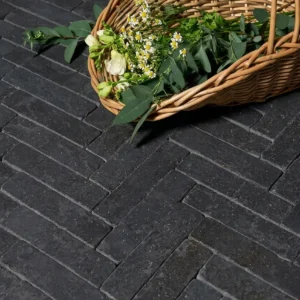
- Keep a plank or long format for corridors, where a single direction of joint makes a narrow space read as generous.
- Match the module across the threshold so the terrace outside continues the internal grid rather than restarting it.
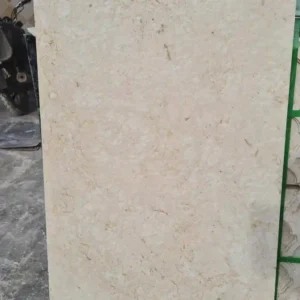
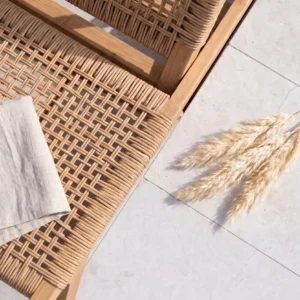
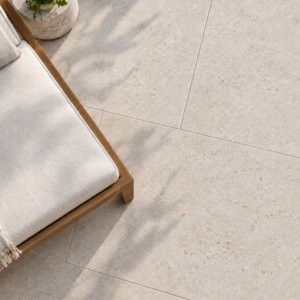
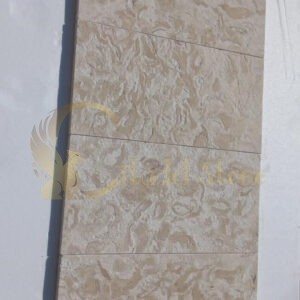
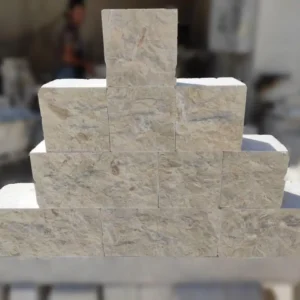
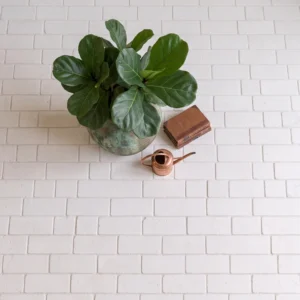
Thickness follows the substrate rather than the room. Interior tile bonded to a slab or screed is thin and calibrated; the same stone used outside on a bedding layer is thicker and heavier. We supply white limestone tiles for interiors in calibrated thicknesses for exactly that reason, so the tiler is working to a known tolerance and not shimming his way across a room. Ask for the calibration figure in writing. A floor laid from uncalibrated stock on a thin bed will show lipping under raking evening light through a louvered opening, which is precisely the light these houses are designed around.
Carrying One Stone Across the Threshold
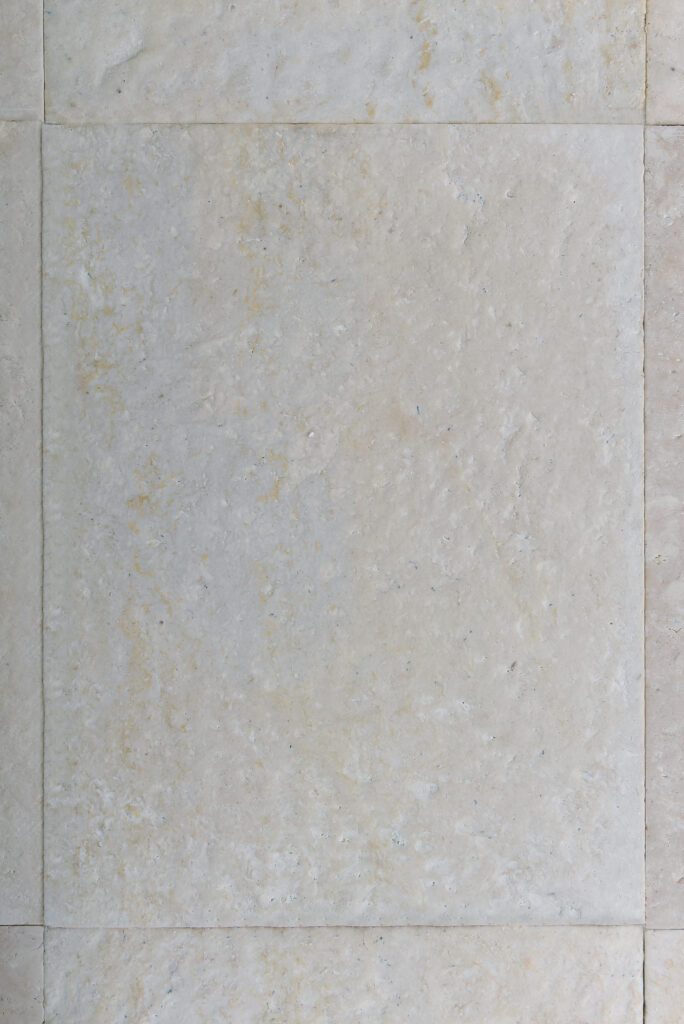
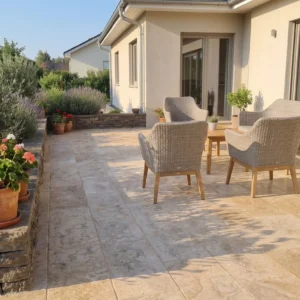
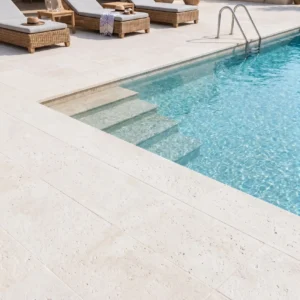
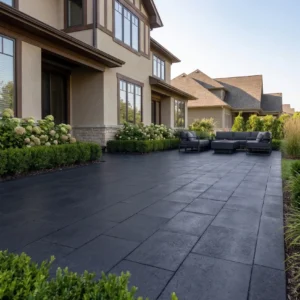
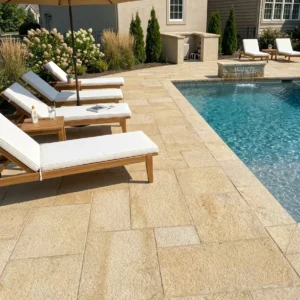
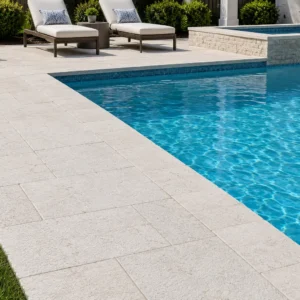
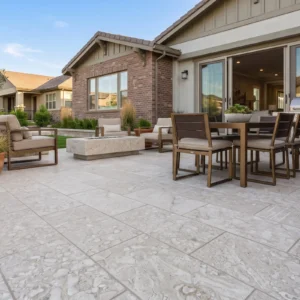
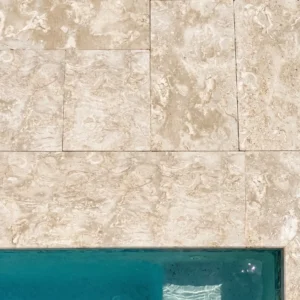
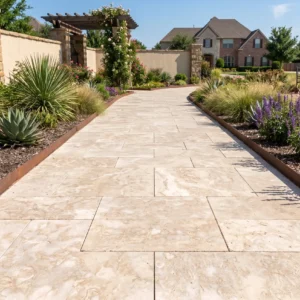
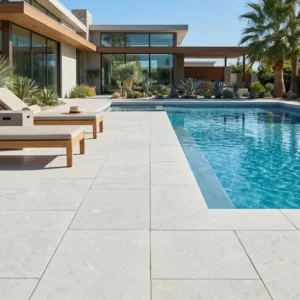
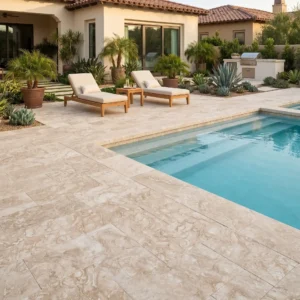
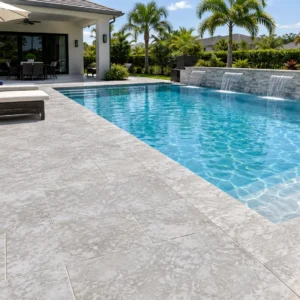
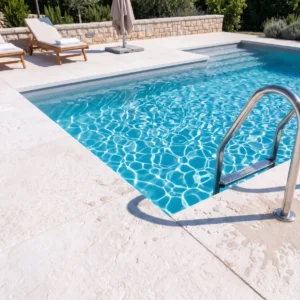
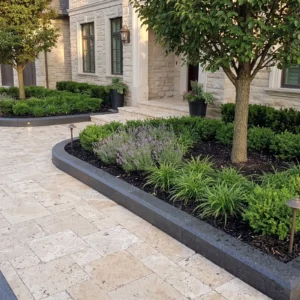
The most effective thing a designer can do with limestone in this country is refuse to change material at the door. When the same stone runs from a living room out to a veranda and on to a pool surround, the plan reads as one space and the eye follows it outward. The trick is that it should be one stone in two finishes and two thicknesses, not one product used carelessly in both places. Inside it is honed and thin; outside it is textured and thicker, laid to a fall, on a bedding layer that can drain.
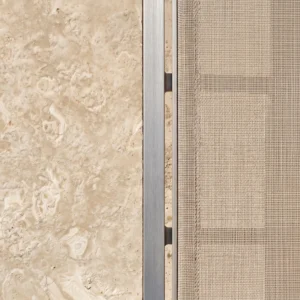
The threshold detail is where the idea is won or lost. A level or near-level threshold is what makes the continuity convincing, and it is also what invites water indoors if the fall and the drainage are not resolved. A slot drain, a discreet channel or a generous fall away from the opening carries the rain that blows under a veranda in a squall. The door track, the shutter track and the movement joint all want to land in the same line, which is easier to draw before the tile layout is set than after.
Batch matters more than people expect when a single stone runs across a threshold. Natural stone varies, and two deliveries months apart can differ enough to be visible where they meet in daylight. If the interior and exterior phases are separated by a season, order both at once and store the second phase properly, or accept that the join line will be the honest record of two batches. On a phased villa build the two-year bonded warehousing window is often the neater answer.
Setting Tile on a Tropical Concrete Slab
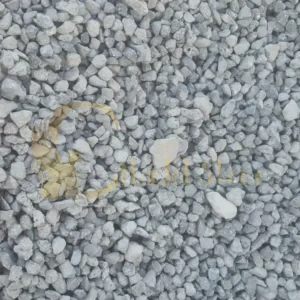
Most interior stone in Saint Vincent and the Grenadines goes down on concrete, and the concrete is usually made with local aggregate. Rabacca is the material every Vincentian builder knows: volcanic sand, gravel and crushed stone worked at the Rabacca Dry River in the Parish of Charlotte, screened and graded and delivered as the base of the country’s construction. It is the right material for the slab, the screed and the bedding. Imported limestone is not a rival to it and never has been; it is the finished surface that sits on top of the layers Rabacca builds.
- Give the slab time to release construction moisture before bonding stone to it, and test rather than assume.
- Screed to a true plane, because a calibrated tile will faithfully reproduce every hollow underneath it.
- Use full bed coverage under large formats; voids under a corner become cracks under a dropped chair leg.
- Set movement joints at room perimeters, at door lines and where a run changes direction or exceeds a long span.
- Keep mixing water and washing water clean and fresh; salt carried into a bed or a grout will find its way back to the surface.
Grout color deserves a decision rather than a default. A joint chosen close to the stone lets a floor read as a continuous plane, which flatters the pale limestone palette these houses favor. A contrasting joint emphasizes the grid, which suits a small formal room and overwhelms a large open one. Whichever you choose, specify a joint width the tiler can actually hold across a natural product and stick to it.
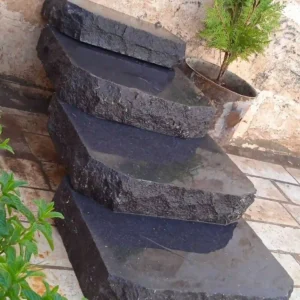
Edges and steps are where an interior stone floor is judged at close range. A skirting cut from the same limestone as the floor gives a clean junction with a plastered wall and survives mop and vacuum contact far better than timber in a humid house. Internal step nosings want either a bullnose or a small pencil round with a grip line, because a sharp arris on a stair chips and then becomes a hazard. Where a floor meets an external door frame, plan the cut line so no sliver piece is left at the threshold; a half-width tile there is the first thing to loosen once the door is used every day of the year.
Cleaning and Sealing Through Ash, Salt and Storm Shutters
Two housekeeping realities shape stone care in this country, and neither appears in a standard care leaflet. The first is volcanic ash. La Soufriere erupted in April 2021 and put gray ash across the north of the main island, and ash is abrasive and chemically aggressive. It should be swept or vacuumed dry before any water touches it, because washing it while it is dry-loose grinds it across the surface like a fine abrasive. The second is salt: doors open onto a sea breeze for months on end, and a fine salt film builds on everything, including the floor.
- Sweep or dry-vacuum first, always, before wet cleaning an interior floor after ash fall or a dusty spell.
- Use a pH-neutral stone cleaner; acidic bathroom products and vinegar will etch a limestone surface permanently.
- Rinse with clean water rather than letting cleaner dry on the stone, particularly in a room that is closed up afterward.
- Top up an impregnating sealer on the schedule the supplier states; it resists staining rather than making the stone waterproof.
- Air a shuttered house before and after storm season, because closed humid rooms grow mildew at the grout line first.
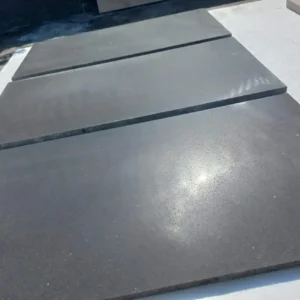
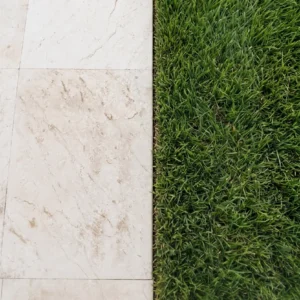
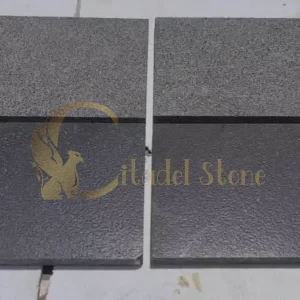
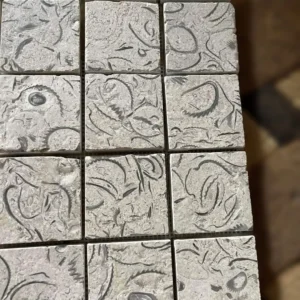
Texture and maintenance pull against each other, so it is worth choosing them together rather than separately. If you want to see how the same limestone behaves across the range, compare the surface finishes side by side before deciding, and ask for the finish you are considering as a sample you can wet, walk on with sandy feet and clean the way the household actually will.
Getting Tile Crates to Bequia, Mustique and Canouan Intact
Thin tile is more fragile than paving, and it makes a harder journey. A twenty millimeter interior tile that would arrive perfectly in a mainland truck can suffer on an open deck between Kingstown and the Southern Grenadines, where crates are handled more than once and lashed rather than racked. The answer is not thicker tile, which defeats the point of a bonded interior floor. The answer is crating, sequencing and a realistic allowance.
- Specify edge-protected crates sized for hand or pallet-truck handling at a small jetty, not for a forklift yard.
- Keep crate gross weights modest, and accept more crates rather than fewer heavy ones on the inter-island leg.
- Order a breakage and cutting allowance above the measured area, and treat it as normal rather than as waste.
- Set aside attic stock from the same batch and store it inside the house, dry and flat, for future repairs.
- Check and photograph condition on landing, before the crates leave the jetty, so any claim has a clear record.
Sequencing is the other half of a clean interior delivery. Tile should land when the building is weathertight and the slab is ready, not when the container happens to arrive, because crates stored in a half-finished house collect construction dust and get moved by every trade that passes. On a phased build the two-year bonded warehousing window is often the tidier answer than a covered corner of the site, and it keeps the whole batch together so the last room matches the first.
Order small samples first and live with them in the actual room for a week. Light on Bequia is not light in a showroom, and a stone that looked warm under artificial light can read cold against a white ceiling and green hillside. Samples cost a fraction of a rework and settle arguments that drawings cannot. Choose the interior stone by walking on a wet sample in the room it will live in, and the rest of the specification writes itself.