

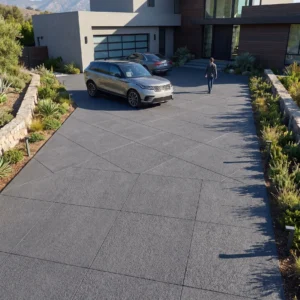
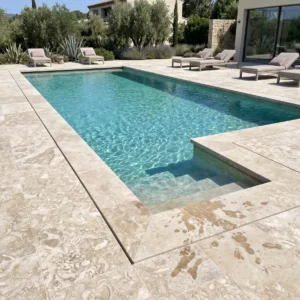

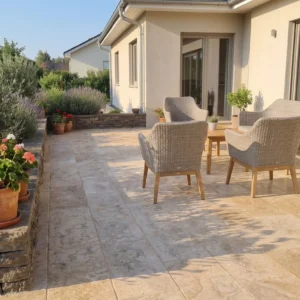



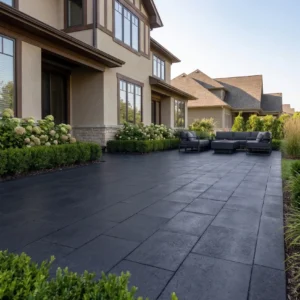

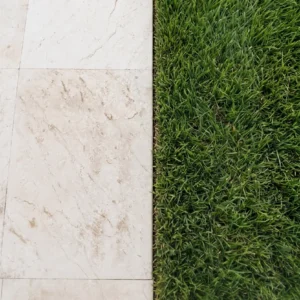


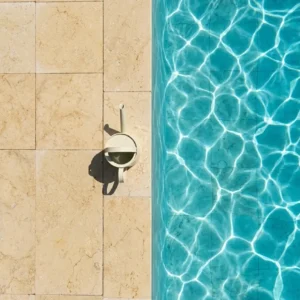

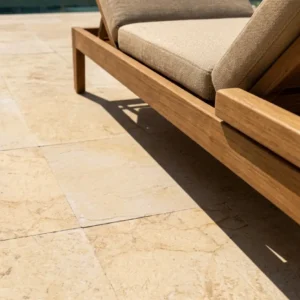

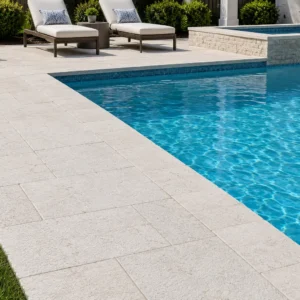
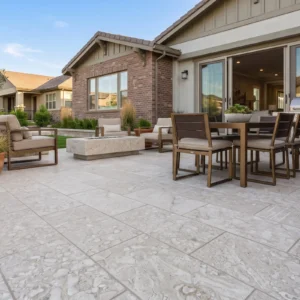
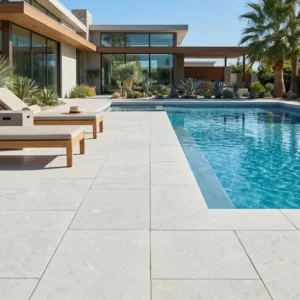










A Puerto Rican house is not laid out like a mainland one, and its floor has a different job. Doors stand open for the trade wind through much of the year. The sala flows into a comedor and then to a terraza with very little between them. Air conditioning runs in some rooms and not in others, so the same slab can be conditioned at one end and tropical at the other. People come in from a pool, a beach or a downpour without stopping to change, and the floor is expected to look composed anyway. That is a harder brief than a temperate interior, and it is why the finish matters more here than the color chart.
Limestone earns its place in that brief for reasons that are physical rather than decorative. A pale, dense limestone stays cooler underfoot than a dark surface in the same light. It takes a mechanical texture – honed, brushed, lightly sandblasted – that keeps its behavior when wet instead of relying on a coating that wears off in the traffic lane. It is dimensionally stable enough to hold a tight joint on a concrete slab, and it cuts cleanly for the thresholds, steps and reveals that a house full of sliding doors and shutter tracks demands. This page deals with the inside of the building and the line where inside becomes outside. The outdoor material argument is a separate conversation with different numbers in it.
Why a cool floor matters more than a cool color
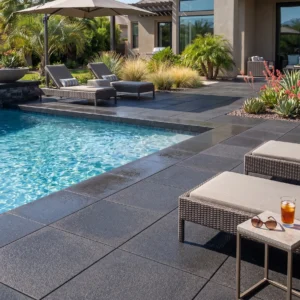
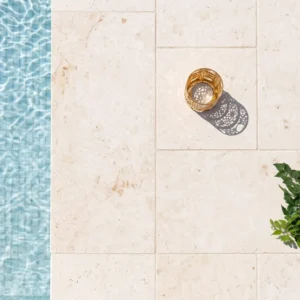
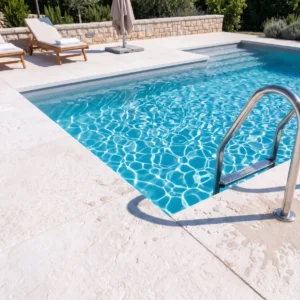
Surface temperature is the most under-specified property in tropical interiors. A floor that sits a few degrees cooler than skin is the difference between a room that feels calm and one that feels close, and it does far more work than the thermostat gets credit for. Pale limestone reflects rather than absorbs a large share of the light that reaches it, so a honed cream or ivory floor in a room with west-facing glass stays usable in the late afternoon when a dark floor in the same room does not.
Humidity is the second half of the problem. Puerto Rican interiors run high relative humidity for most of the year, and a cold air-conditioned room beside an open one produces condensation on any hard surface near the boundary. That is a specification issue, not a housekeeping one, and it should be answered when the finish is chosen rather than after the first guest slips.
- Keep the coolest, palest floors where afternoon sun lands: west and southwest exposures, and anywhere with a large glazed opening.
- Expect condensation at the threshold between an air-conditioned room and an open one, and choose a textured face there rather than a polished one.
- Avoid highly polished floors in rooms that open to the outside; they read as glare in strong light and turn slick under a damp foot.
- Use the same stone in two finishes rather than two different stones, so the room reads as one floor while the wet zones grip.
- Plan for ceiling fans and cross ventilation so the slab dries; a floor that never dries out is a cleaning problem waiting to start.
Finishes that behave when the floor is wet
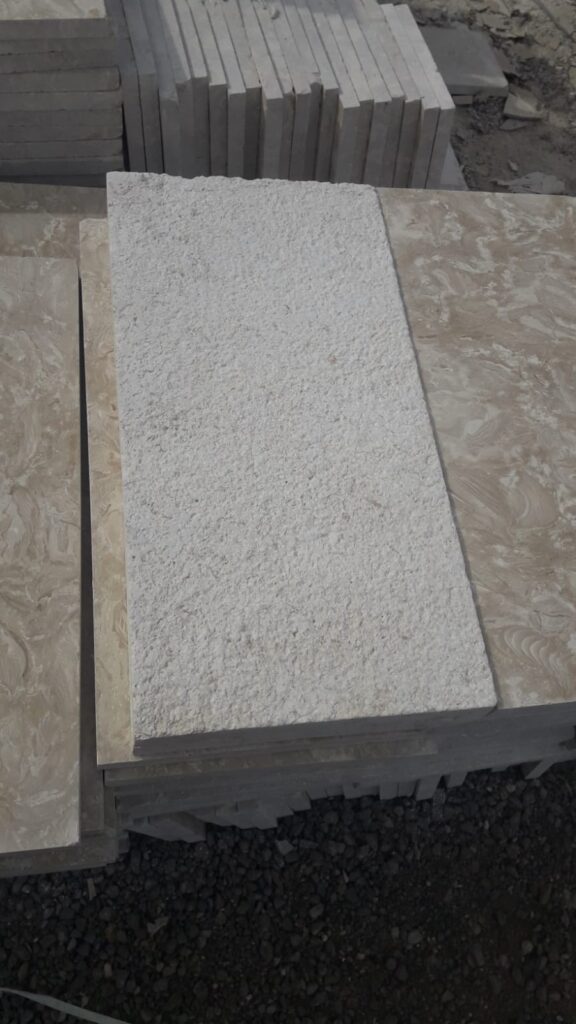
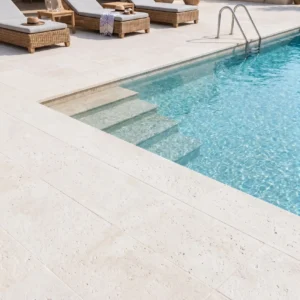
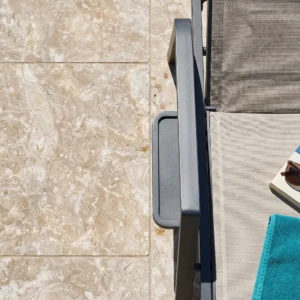
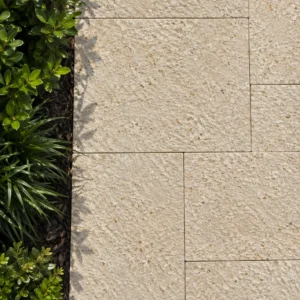
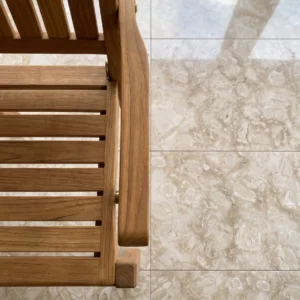
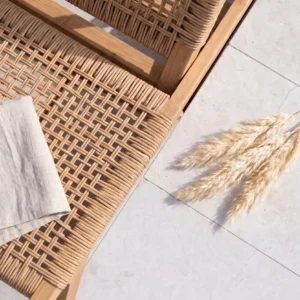
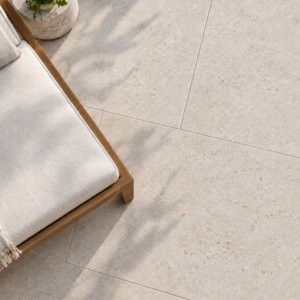
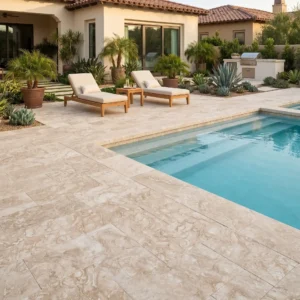
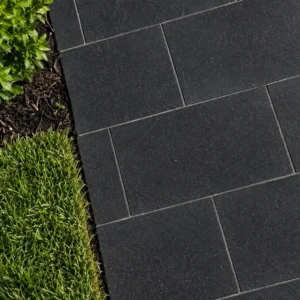
Finish is where interior limestone in the tropics is won or lost. A honed face gives an even, matte surface with a low sheen, comfortable underfoot and easy to keep, and it is the right default for bedrooms, halls and any room that stays reasonably dry. A brushed or antiqued face carries a fine mechanical texture that holds its grip character with water on it, which makes it the sensible choice for kitchens, bathrooms, laundry rooms and the strip of floor inside a sliding door. A light sandblast goes further again for shower floors and pool entries.
The important point is that all of these are mechanical textures cut into the stone itself. They do not wear away the way a topical anti-slip treatment does, and they do not change character after two years of sand being tracked across them. Sand is worth thinking about specifically: on the north and west coasts it arrives on every pair of feet and acts as an abrasive on any floor. A slightly textured face hides the micro-scratching that a mirror polish would display.
- Honed for living rooms, bedrooms, halls and offices – even, matte and forgiving.
- Brushed or antiqued for kitchens, bathrooms and the first few feet inside any door that opens outside.
- Sandblasted or heavily textured for shower trays, wet rooms and pool entry thresholds.
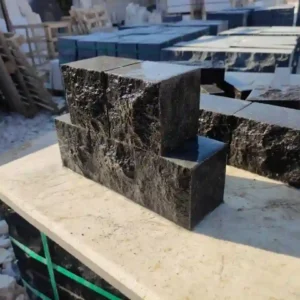
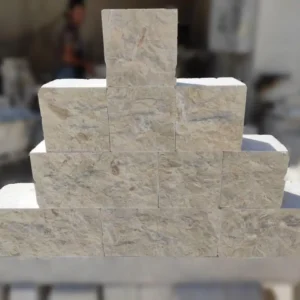
- Split or riven faces reserved for vertical work, because they collect dirt on a floor and are uncomfortable barefoot.
- Polished used sparingly, and never where strong daylight will turn it into a mirror.
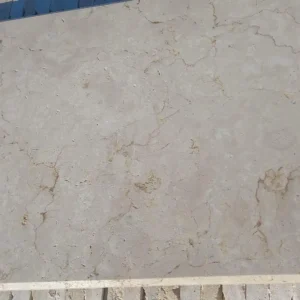
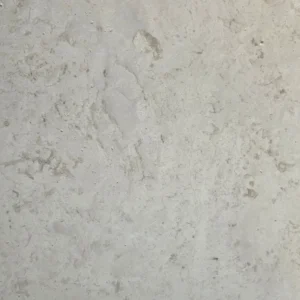
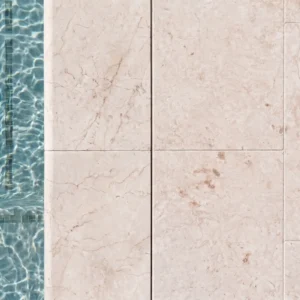
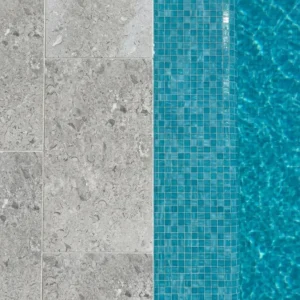
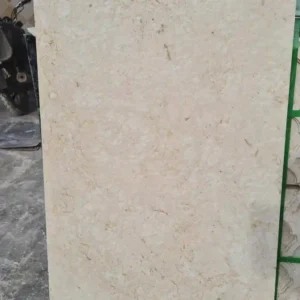
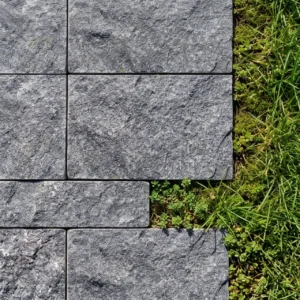
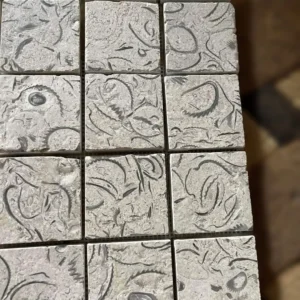
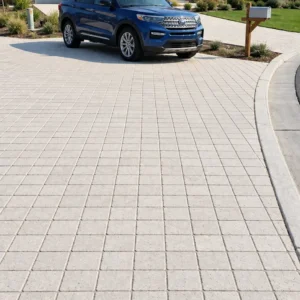
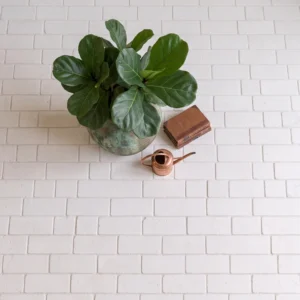
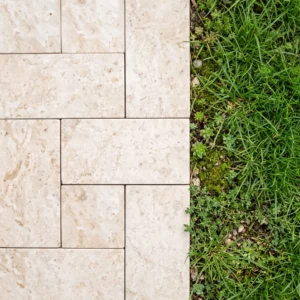
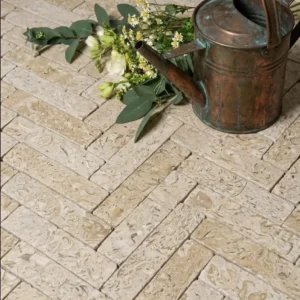
If you are still weighing options it helps to see them side by side, because photographs flatten texture. The practical route is to compare stone surface finishes against the light your own rooms actually get, at the hour you actually use them.
Formats for Puerto Rican room proportions
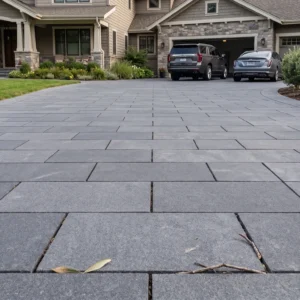
Room proportion drives format more than fashion does. Houses built in the island’s concrete tradition tend to have generous but defined rooms, frequent structural columns and long circulation runs from front door to terraza. Large-format losas suit those long runs and the open sala, because fewer joints mean a calmer floor and less to clean. Tight bathrooms, service areas and older San Juan apartments carved out of larger buildings often read better with a modular size that does not force an awkward sliver at every wall.
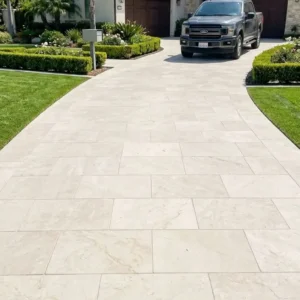
- Open sala, comedor and long halls: large-format rectangles, laid with the long dimension following the walking line.
- Bedrooms and studies: a mid-size square or rectangle keeps the room settled without a busy joint grid.
- Bathrooms and small service rooms: smaller modular formats cut waste and let the fall to the drain be built into the setting bed.
- Stairs and thresholds: dedicated pieces with a matching face, never field tile trimmed on site.
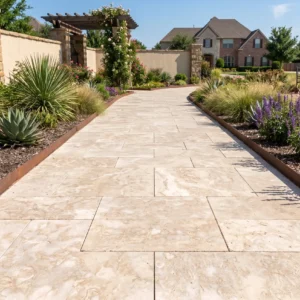
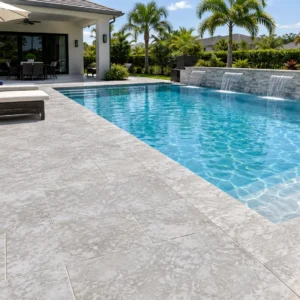
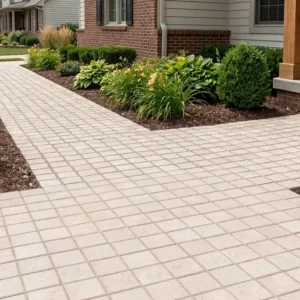
- Covered marquesina and roofed terrace bays: the same stone in the exterior finish, so the transition is a texture change rather than a material change.
Thickness for interior work is generally 2 cm bonded to a prepared concrete slab. That is thin enough to keep threshold heights sane against existing door tracks and thick enough to be honestly durable. Where a floor has to meet an existing level, it is far better to correct in the setting bed than to specify an unusual thickness that will be impossible to match if a piece ever needs replacing.
The threshold: sala to terraza without a change of material
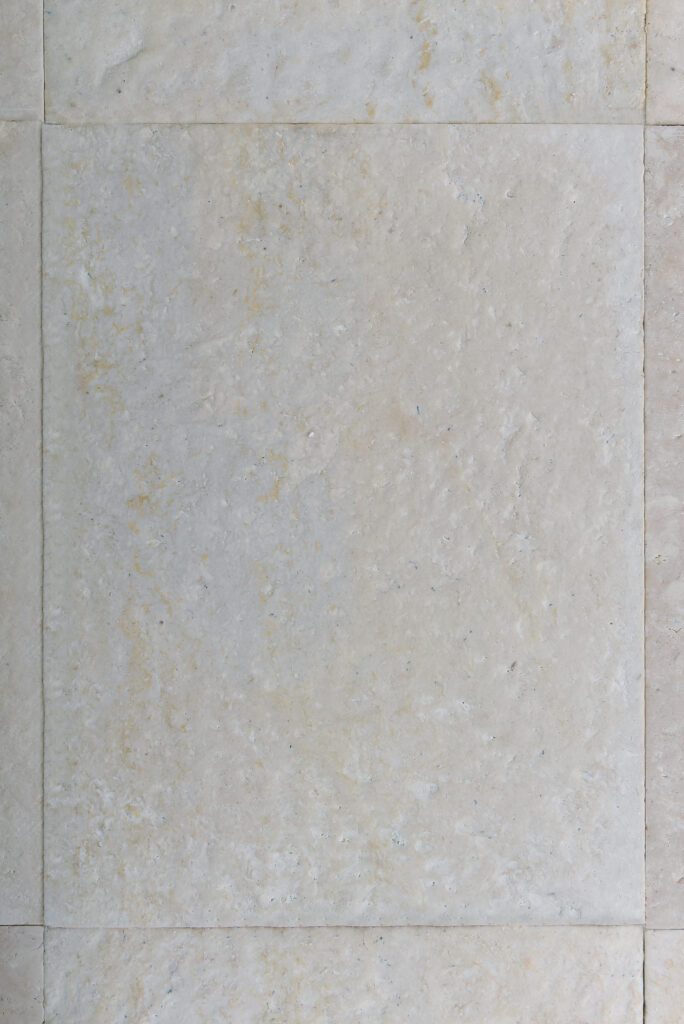
The line where the sala becomes the terraza is the most Puerto Rican detail in the whole house, and it usually gets the least attention on a drawing. Done well it disappears. Done badly it produces a trip edge, a water line across the living room floor after a squall, or a thin strip of a different material that announces itself every time you look at it.
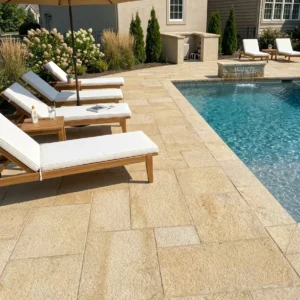
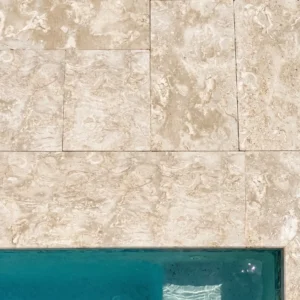
The principle is continuity of material with a change of finish. The same limestone runs from inside to outside; the interior face is honed, the exterior face brushed or sandblasted. The eye reads one floor. The foot reads two different amounts of grip. Level continuity is the other half: a shallow, deliberate fall away from the opening, a drainage line or channel outside it, and a threshold that is a purpose-made section rather than a cut tile.
- Set a fall away from the door line and give water somewhere to go before it reaches the track.
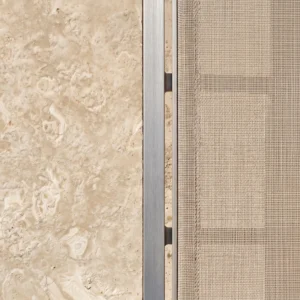
- Use a purpose-cut threshold piece with a drip detail where the terrace is elevated above the ground.
- Allow a movement joint at the door line, because inside and outside slabs move differently and that joint should be planned rather than discovered.
- Check the detail against shutter and storm-panel tracks before ordering, since those tracks are fixed and the floor is not.
- Keep the exterior finish grippy for a good arm’s length inside the opening, where wet feet actually land.
Setting losas on a reinforced-concrete slab
Nearly every tile floor in Puerto Rico goes onto concrete, either a slab on grade or a suspended structural slab. That is a good substrate and a demanding one. New concrete carries construction moisture far longer in high humidity than a mainland schedule assumes, and setting stone over a slab that is still releasing water is a reliable way to produce shadowing, efflorescence and bond failures that surface months later.
- Let the slab dry properly and test rather than assume; tropical humidity slows the process, it does not skip it.
- Use a setting system rated for natural stone, with full coverage under the tile, because voids under limestone become cracks under point loads.
- Honor the structural movement joints through the stone rather than tiling over them and hoping.
- Consider an uncoupling or crack-isolation layer over slabs with a history of movement, and over any rooftop terrace.
- In older coastal buildings, check the slab for salt contamination before bonding anything to it.
Grout choice matters more here than in a dry climate. A fine, well-compacted joint in an appropriate grout resists the biological growth that damp shaded areas invite, and a slightly wider joint in wet rooms gives the installer room to keep the fall true. If you are matching interior floor to threshold and terrace pieces, review the white limestone tile formats and confirm that the sizes you want exist in every thickness the job needs before the drawings are issued.
Cleaning and sealing in real Caribbean humidity
Limestone is a calcium carbonate stone and it reacts to acid. That single sentence resolves most maintenance questions in a Caribbean house, because a great many popular cleaning products are acidic. Vinegar, most bathroom descalers, citrus cleaners and anything sold for removing cement haze will etch a honed limestone floor, leaving dull patches that no amount of further cleaning restores. Neutral pH cleaner and water is the entire routine for the vast majority of floors.
- Neutral pH stone cleaner for routine work, and never acidic descalers, vinegar or citrus products.
- Dust and sand swept or dry-mopped before wet cleaning, because sand plus a mop is a grinding paste.
- An impregnating, breathable sealer rather than a film-forming coating, so trapped moisture can leave the stone.
- Extra attention where salt aerosol reaches, since a freshwater rinse on coastal thresholds stops salt building into the surface.
- Shaded, permanently damp corners checked and cleaned on a schedule, before biological growth establishes itself.
Sealing frequency depends on traffic and exposure rather than the calendar. A busy entry hall in a beach house wants attention far sooner than a guest bedroom. The honest test is simple: put a few drops of water on the floor in a traffic lane, wait a few minutes, and see whether the stone darkens. If it does, it is ready for another application. Write that test into the handover notes and most maintenance arguments disappear.
Ordering losas and losetas without a customs file
Buying interior stone for Puerto Rico is administratively simpler than almost anywhere else in the region, because there is no customs entry to manage. Stone ships from the mainland as domestic freight on scheduled weekly sailings into San Juan, and the tax that applies is IVU at a combined 11.5 percent on the landed cost rather than a customs duty – confirm the current rate with your tax advisor. That is effectively the whole story on paperwork, and it means the order can be planned around production and installation dates rather than clearance risk.
What still needs planning is quantity and continuity. Natural stone varies between production runs, and ordering the whole floor at once is the only way to guarantee that a repair in year three looks like the rest of the room. Add a genuine cutting allowance rather than a token one, especially with large formats and diagonal layouts, and set aside attic stock in a dry place before the crew starts work.
- Order the entire floor in one production run, including thresholds, steps and any exterior continuation.
- Add a realistic waste allowance, since large formats and complex room shapes consume more than small ones.
- Keep boxes of attic stock indoors and dry, labeled with the room and the batch.
- Dry-lay a section before fixing so the installer can distribute natural variation rather than concentrate it.
- Photograph the finished floor and record format, finish and thickness for whoever maintains the house next.
Send us a floor plan, the rooms that open to the outside and the finishes you are considering, and we will put a tile package together around them.