




























This page is deliberately narrow. It is not about freight routes or customs entries, which belong elsewhere. It is about the stone itself: what the numbers on a limestone data sheet actually mean once the material is sitting on an exposed terrace above the Caribbean, why some of those numbers matter far more in this territory than they would in Ohio, and where a good limestone paver stops being the right answer. Contractors and architects here work to the International Building Code and the International Residential Code as adopted by DPNR, and to ASTM test methods, and they expect a supplier to produce documentation rather than adjectives. That is a reasonable expectation and this page is written to it.
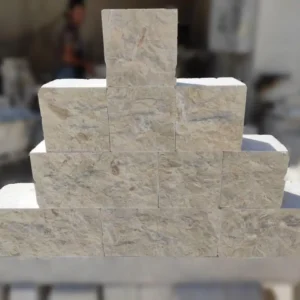
Limestone is a sedimentary calcite rock, and its behavior in a marine tropical setting is governed by three properties above all others: how much water it absorbs, how dense and well cemented it is, and how its surface is finished. Get those three right and a limestone terrace on St Thomas, St John or St Croix will weather gracefully instead of failing. Get them wrong, particularly by choosing a soft, high-absorption stone for a salt-exposed frontage, and the same material will spall, bloom and disappoint. The difference is not luck and it is not brand. It is specification.
Absorption and density, and why they decide the outcome
Water absorption is the master variable in a salt environment. Every time a porous stone wets and dries, dissolved salt travels into the pore structure with the water and stays behind when the water leaves. Crystals grow in the pores, they exert pressure, and over enough cycles the surface fatigues. This is salt crystallization, and it is the mechanism that does to Caribbean stone what freeze-thaw does to stone in a cold climate. The territory has no frost at all, so frost resistance is irrelevant here. What replaces it is a wet and dry cycle running hard from May through October and a constant supply of airborne salt for the rest of the year.
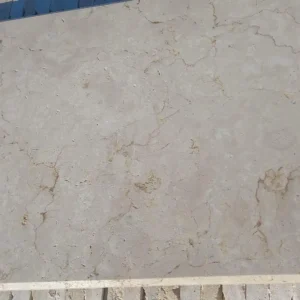
The practical response is to specify low absorption and high density, and then to verify both rather than assume them. ASTM C97 covers absorption and bulk specific gravity, ASTM C170 covers compressive strength, and ASTM C568 is the classification standard that separates low-, medium- and high-density limestone. What you want on the desk is a test report for the material you are actually buying, not a generic figure for the rock type, because two limestones from different beds can behave very differently. A dense, tightly cemented stone with a low absorption reading will shrug off a windward pool deck. A soft, open-textured one will not, whatever it costs.
- Ask for the ASTM C97 absorption figure on the specific lot, and treat the lowest available number as the safest choice for anything within reach of spray.
- Ask for bulk density alongside absorption. The two together tell you more about durability than either alone.
- Ask for the ASTM C568 classification, and know which class you have been quoted before you compare prices between suppliers.
- Match the class to the zone. A sheltered interior courtyard can carry a more open stone than a frontage that takes salt spray on the wind.
- Keep the test documents with the job file. Federally funded reconstruction work in this territory tends to generate paperwork requests long after the crew has gone home.
Pale stone in a place with a five degree season
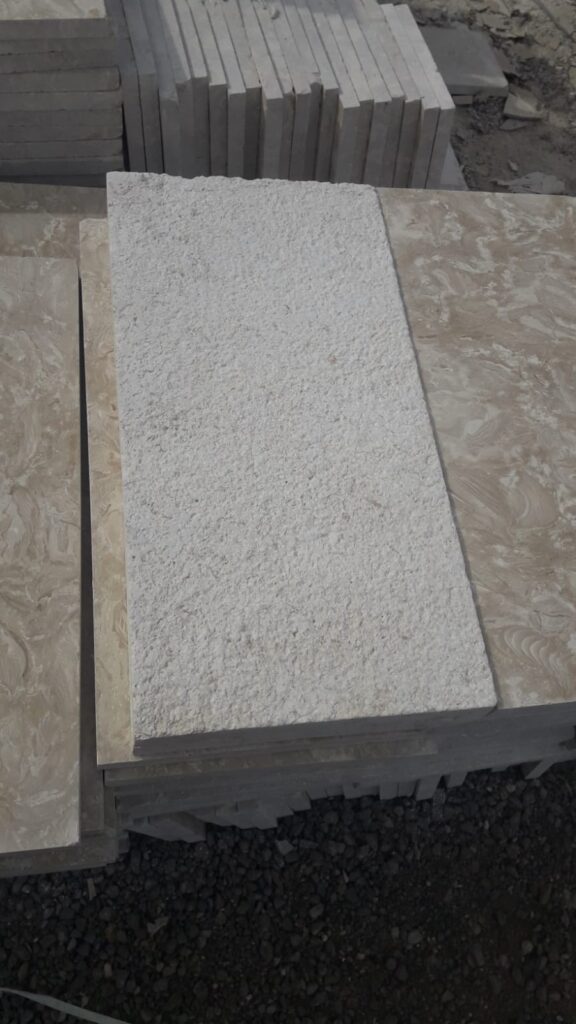
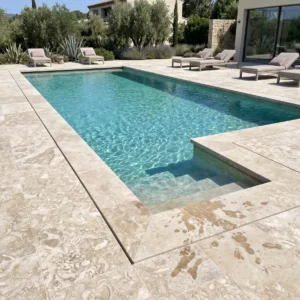
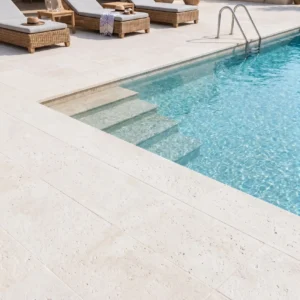
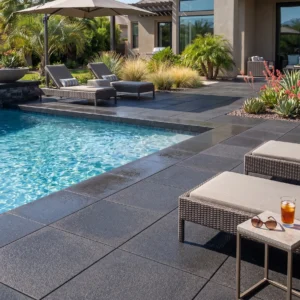
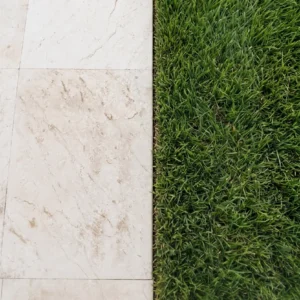
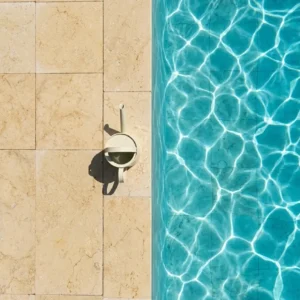
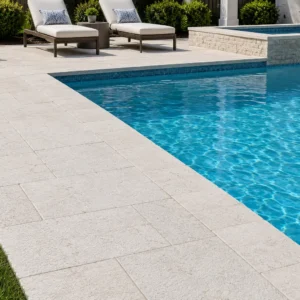
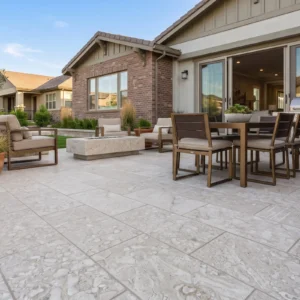
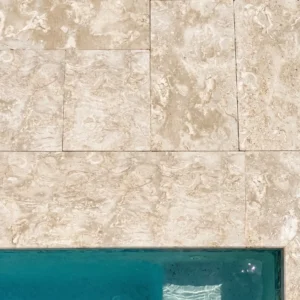
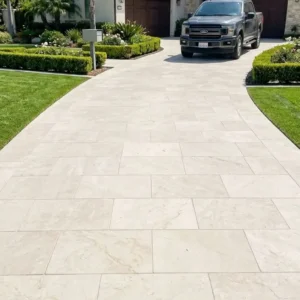
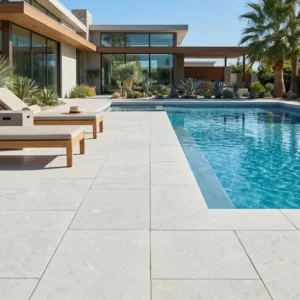
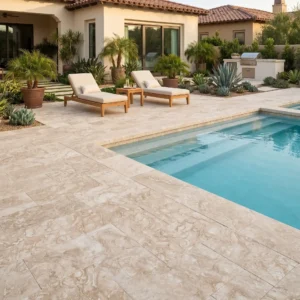
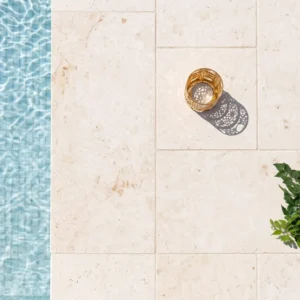
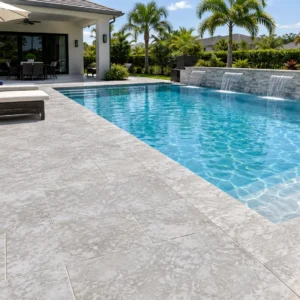
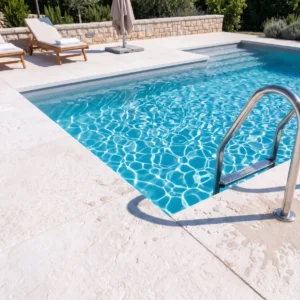
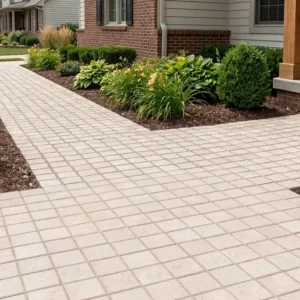
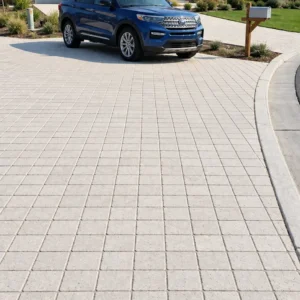
The Virgin Islands runs about five degrees Fahrenheit between average summer and average winter temperature, which means there is effectively one thermal condition to design for rather than four. Surface temperature is therefore about sun and shade, not season. Pale limestone reflects a substantial share of incident solar energy instead of storing it, and the difference between a pale limestone deck and a dark unit paver on the same afternoon is something a barefoot child will report to you within about four steps. On a pool surround, a poolside path or a terrace people cross from the water, that is not a comfort nicety. It determines whether the space gets used at midday.
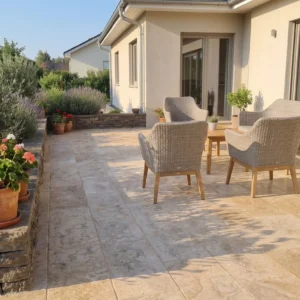
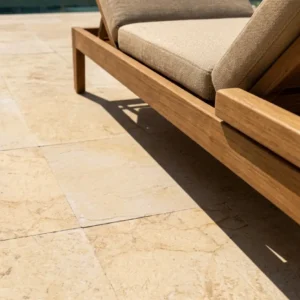
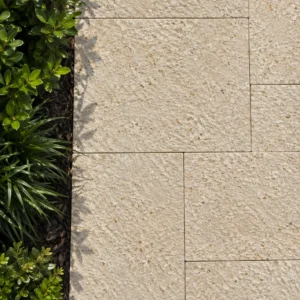
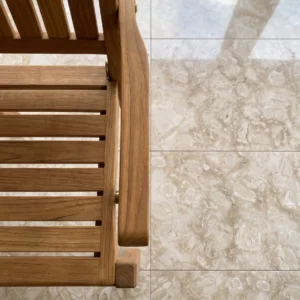
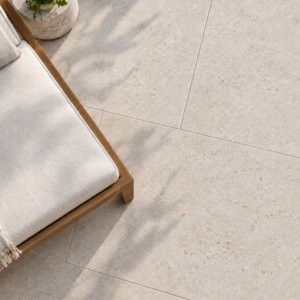
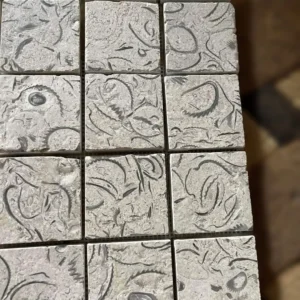
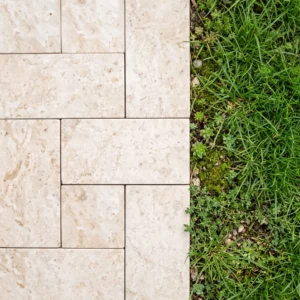
The counterpart is glare. A highly reflective pale surface next to a large area of glass will bounce light into the room behind it, and in a territory with intense overhead sun that can be genuinely tiring. The fix is texture, not tone. A honed, brushed or lightly tumbled face scatters reflected light rather than throwing it in a sheet, so it keeps the thermal benefit and removes the discomfort. Polished exterior limestone has no place on an island terrace on either count: it is hot with glare and slick when wet.
- Use pale stone where bare feet go, and accept darker units where feet are shod and loads are heavier.
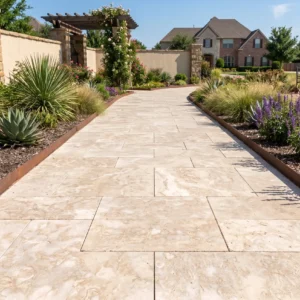
- Break up very large uninterrupted pale areas with planting, shade structures or a change of module, both for glare and for the look of the thing.
- Specify a matte texture on anything facing a glazed elevation. Reflected light off a smooth deck reaches a long way into a room.
- Remember there is no frost cycle here. Products sold on freeze-thaw performance are answering a question the Virgin Islands does not ask.
- Shade changes the calculation entirely. A covered gallery can take a finish and a tone that would be unpleasant in the open.
Grip where water is always present
Wet grip is a design requirement here rather than a bonus feature, because there is nearly always water on an exterior surface. Rain arrives hard and briefly through the wet months, sea spray reaches further inland than people expect on a windy day, and pool decks are wet from opening to dusk. The relevant number is a wet slip reading measured on the finish you are actually purchasing, not a claim attached to the stone type. Ask for it, and ask which method produced it, so that two quotations can be compared honestly.
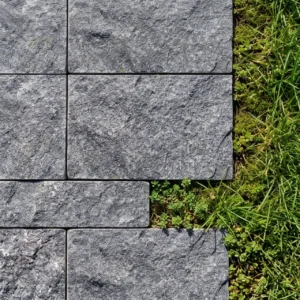
Texture alone will not save a badly detailed surface. Water has to be able to leave. A fall of roughly one in eighty to one in sixty away from the building is the working range for a paved terrace, with the run kept short enough that water is not sheeting across a walking route to get to a drain. Joint width and joint fill matter too, because a well-jointed surface with a slightly open texture gives a foot something to bite on. Where a terrace steps down to a pool or a path drops away toward a boundary wall, that is where a coarser face and a tighter module earn their money.
- Get the wet reading on the exact finish, and treat any dry-only figure as marketing rather than data.
- Set falls before the bedding depth is fixed. Correcting a level by packing the bed is how a paver starts rocking.
- Put the coarsest face you can tolerate on ramps, pool copings, step treads and anywhere a route turns downhill.
- Keep drainage outlets accessible for cleaning. Leaf litter and wind-blown grit block outlets fast during the wet season.
- Test the finish wet, on site, in shoes and barefoot, before the full order goes in. A sample costs nothing next to relaying a deck.
Where limestone should not be used
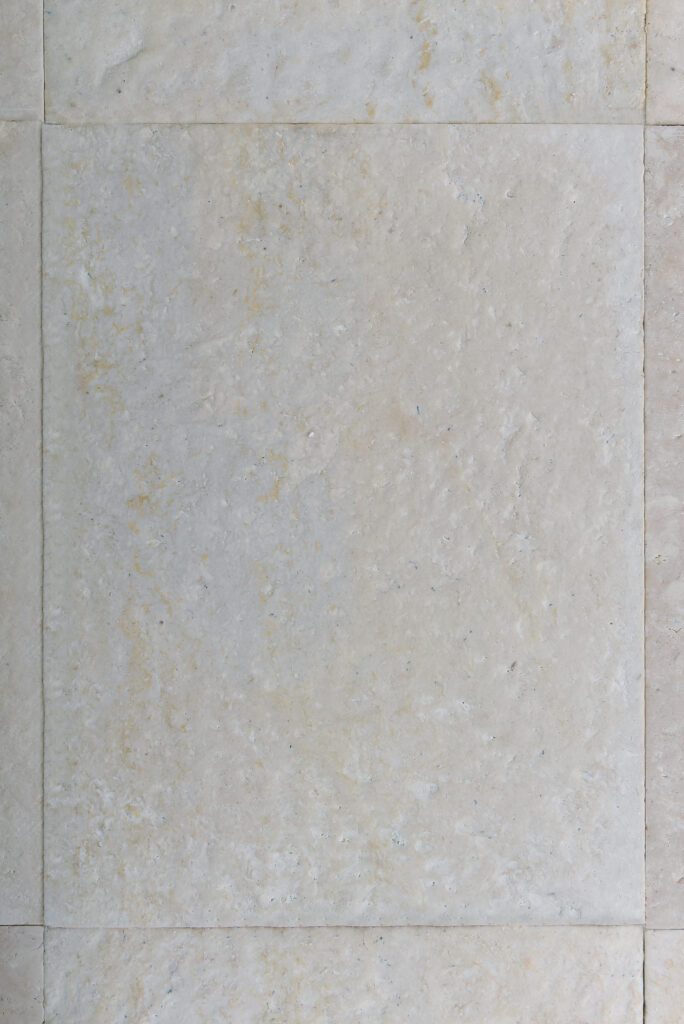
A supplier who tells you their stone is right for everything is telling you something about the supplier, not the stone. Limestone is a calcite rock. It is soft enough to work beautifully and to take a fine texture, and that same softness sets real limits. The honest list is short, but it is worth reading before a schedule is finalized, because every item on it is something we have seen specified anyway and regretted later. Where limestone does not belong, basalt, concrete or a properly engineered structural solution usually does, and we would rather say so at quotation stage.
The clearest exclusion is anything routinely exposed to acid. Pool chemical dosing points, outdoor kitchens where citrus and vinegar get spilled, and cleaning regimes built around acidic products will etch a calcite surface, and etching is a physical mark rather than a stain that washes out. The second is sustained heavy vehicle turning on point loads, where steel edges and scuffing wheels will chip almost any dimension stone. The third is the surf zone itself, which is a coastal engineering problem rather than a paving one. Beyond that, the full technical range, with classifications and thickness bands for each application, sits under limestone paving with test data attached.
- Not at pool chemical dosing points or under an outdoor kitchen prep area without a sacrificial surface or a clear cleaning protocol.
- Not as the wearing surface in an equipment yard, a dumpster pad or a service bay with constant turning loads on small contact areas.
- Not below the splash and scour line on an exposed shoreline, where the design case is impact and surge and belongs to an engineer.
- Not in a smooth finish on any slope where wheels can spin, and not at all where oil drip is expected without accepting a patina.
- Not in a high-absorption class anywhere within reach of regular salt spray, whatever the price advantage looks like on paper.
Limestone next to what the islands already produce
It would be wrong to write about paving in this territory as though stone had to be brought in for every purpose. It does not. St Croix has an active quarrying operation: Aggregate Inc. works the Ham’s Bluff Quarry, producing bluestone basalt construction aggregates that run from DOT-specification road base through to ASTM-certified aggregate for asphalt and ready-mixed concrete, and it moves material by tug and barge to neighboring islands as well as serving its own. That industry goes further back, too. USGS records list Devcon International Corp. working on St Croix and St Thomas and St Croix Stone and Sand Co. on St Croix producing crushed stone in 1990.
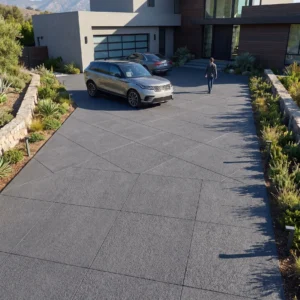
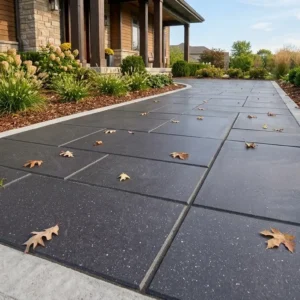
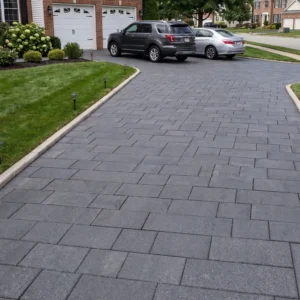
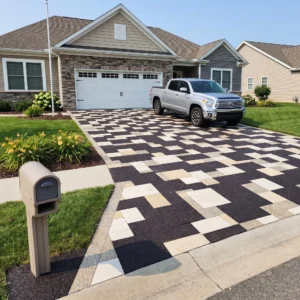
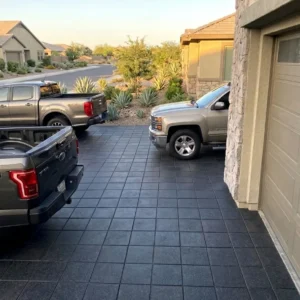
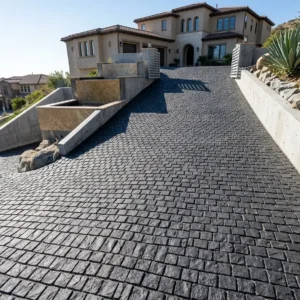
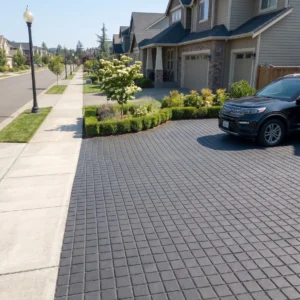
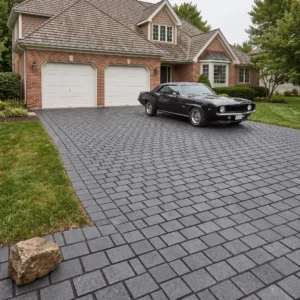
What that means in practice is that the two materials do different jobs in the same build. Local basalt aggregate is what your sub-base is compacted from and what your ready-mix concrete is batched with. It is the structure beneath the surface. Citadel supplies dimension-sawn, calibrated architectural paving that sits on top of that structure as the wearing course, in controlled thicknesses, square edges and specified finishes. These are different product categories from related rock families, not competing options, and a well-built Virgin Islands terrace normally contains both. The genuine comparison for a limestone paver here is not local aggregate at all: it is broom-finished poured concrete or a molded concrete paver, and against those the case for cut stone rests on how it wears, how it repairs and how it looks after a decade of sun.
- Local aggregate and ready-mix supply the base course, the sub-base and the concrete haunching. Imported dimension stone supplies the surface you walk on.
- Poured concrete cracks along its own lines and gets patched. A jointed stone surface is lifted and reset unit by unit, which matters on an island where demolition waste is expensive to move.
- Molded concrete pavers fade and their pigment wears at the surface. Natural stone has the same color all the way through, so wear reveals more stone rather than a different one.
- Cut stone carries a higher landed cost per square foot and a longer service expectation. Compare the two over the life of the terrace, not on the delivery note.
- Where a terrace meets a driveway or a service area, mixing the two intelligently is usually cheaper and better than forcing one material across the whole site.
Bedding, restraint and movement on a plate boundary
Seismic design is not a theoretical concern in the Virgin Islands. The islands sit on the North American and Caribbean plate boundary, and the reference event is the earthquake of 18 November 1867, magnitude 7.5, centered in the Anegada trough between St Croix and St Thomas, with two shocks about ten minutes apart and tsunamis exceeding 30 ft on some islands. Charlotte Amalie and Frederiksted were both heavily affected. That history gives a flexible paving system a real technical argument here that it does not have in most markets: a sand-set or drainage-mat assembly with proper edge restraint can absorb small movement, and individual units can be lifted and reset afterward instead of the whole surface being broken out.
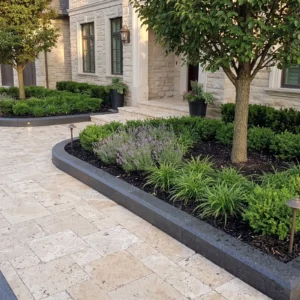
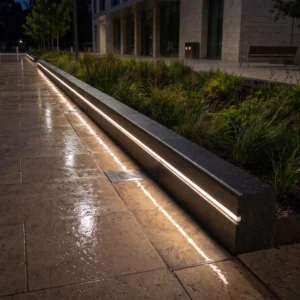
Restraint is the part that gets value-engineered out and should not be. Wind-driven rain and surge scour work on the perimeter of a paved area first, washing bedding material out from under the outer course until the edge units drop and the field begins to open up. A concrete haunch, a curbstone edge or a properly anchored restraint holds that line. Bedding and joint materials deserve equal attention, and they raise a local point of law and conscience: DPNR has publicly warned about illegal sand mining and beach sand is protected. Bedding and jointing sand must come from a documented commercial supply with a delivery ticket, every time.
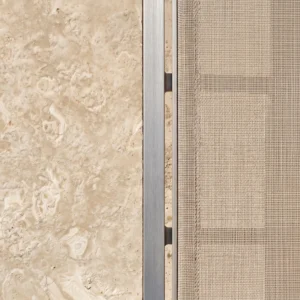
- Specify the full build-up on the drawing: sub-base, bedding layer, unit, joint and restraint, each with its own material description.
- Detail the perimeter first. An unrestrained edge is the failure that takes a whole terrace with it after a storm.
- Buy bedding and joint sand from a documented commercial source with paperwork. Never take beach sand, and never accept it from a subcontractor who cannot say where it came from.
- Size falls and outlets for a concentrated downpour, not an annual average, and keep roof catchment overflow away from bedded edges.
- Keep spare units from the original lot on site. A jointed system is repairable only if the replacement stone matches.
The data pack to ask for before you commit
A competent limestone specification in this territory is a short, boring document, and that is exactly the point. It names the stone and the bed or range it comes from. It states the ASTM C568 classification and attaches C97 absorption and density results and a C170 compressive strength figure. It names the finish per zone and attaches a wet slip reading measured on that finish. It fixes calibrated thickness per duty band. It describes the bedding, the joint and the restraint. It records the origin documentation, which in this territory carries a customs consequence as well as a technical one. Anything a supplier will not put in writing at quotation stage is unlikely to improve after the container sails.
The last item on the list is the cheapest and the most useful. Before any of it is signed off, get a small piece in your hand and put it on the site. Look at it wet. Look at it at noon and again at four o’clock. Walk on it barefoot. Leave it out for a few weeks and see what the salt does. We send a piece to test on site precisely so that decisions get made against the real light and the real exposure of a Virgin Islands property rather than against a photograph. Every claim on this page is one you should make us prove on paper before you buy a single pallet.