


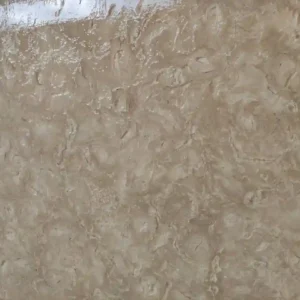
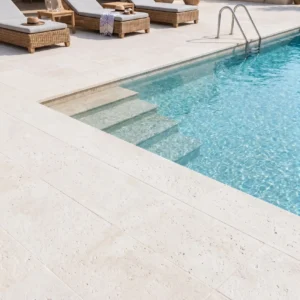

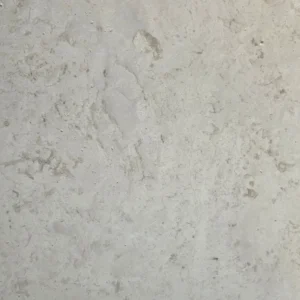





Limestone earns its place on a Turks and Caicos terrace for reasons a mainland specification sheet will not tell you. It stays cool underfoot in strong sun, it works barefoot, it cuts cleanly for pool coping, and it agrees visually with an island whose entire geology is limestone anyway. But it is a calcareous, porous stone sitting in the most aggressive combination this climate offers, which is salt plus evaporation, and the difference between a terrace that still looks good after a decade and one that starts powdering early is decided at specification stage, not at installation.
This page is the technical one. It deals with the material properties that matter here, how to read absorption and density figures without being sold a category name, how pale stone behaves thermally on a barefoot deck, what grip finishes do and do not achieve around water, where limestone genuinely should not be used on these islands, and what the local bedding and jointing materials mean for the build-up under the stone. It also sets out honestly how imported dimension stone relates to the islands’ own limestone, which is a different material doing a different job.
Salt Crystallization, Not Frost, Is the Governing Property
Almost every durability claim written about limestone paving is built around freeze-thaw cycling, because most of the industry writes for cold markets. In the Turks and Caicos Islands that entire body of advice is irrelevant. It does not freeze. Selling frost resistance here is selling a property nobody will ever use.
The mechanism that does damage pale stone on these islands is salt crystallization. Salt arrives in wind-driven spray, in splash-out from a saltwater pool, and simply in the air, which carries enough salt to corrode standard metals rapidly. Salt-laden water is drawn into the pore network. The water evaporates in strong sun and constant breeze, the salt stays behind, and crystals grow inside the pores. Each growth cycle exerts pressure from within the stone, and the surface eventually powders, blisters or spalls, usually first at the units nearest the water and nearest the prevailing wind.
- Pore structure matters more than headline hardness, because it decides how much salt solution the stone will draw in and hold.
- Evaporation drives the cycle, so surfaces that stay wet and shaded behave differently from surfaces that dry hard every afternoon.
- Fresh water rinsing is genuinely protective on sea-facing terraces, and a hose bib within reach is a durability detail.
- Full bonded bedding beats an open sand bed near the water, because salt solution held under a unit has nowhere to go.
- Damage concentrates at edges, corners and the first row from the water, so inspect there rather than in the middle of the terrace.
Exposure is also directional, which is easy to forget when a terrace is drawn in plan. The face of a property that takes the prevailing breeze off the water collects far more salt than the sheltered side of the same building, and the two elevations can age visibly differently over a decade even though they were laid on the same day from the same crate. It is worth walking the site on a windy afternoon before finalizing the specification, and it is worth spending the tighter, better-tested stone on the exposed elevation rather than spreading a compromise evenly across both.
Reading Absorption and Density Honestly
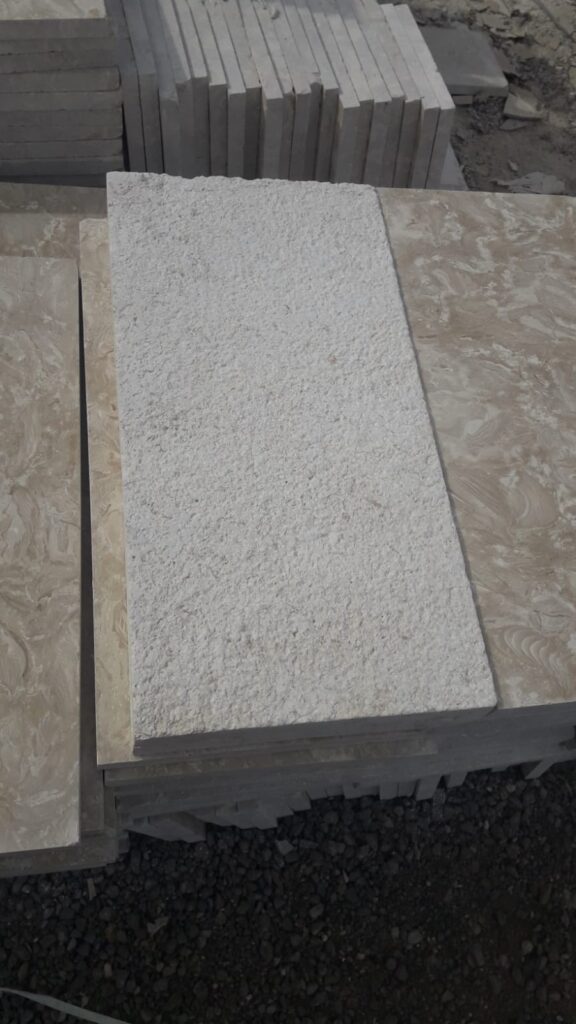
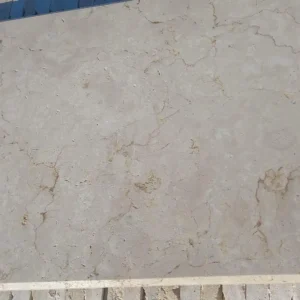
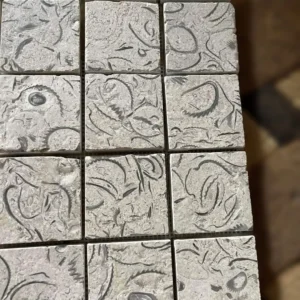
Category names are marketing. Numbers are a specification. Any limestone offered for a sea-facing position should come with test data from the actual batch, and the buyer should read it rather than accept a reassuring adjective. Absorption tested to the standard method tells you how much water, and therefore how much salt solution, the stone will take up. Bulk density gives you a proxy for how tight the stone is. Abrasion resistance tells you how the surface will hold up under sand and traffic, and flexural strength tells you whether the thickness you have chosen is right for the span and the load.
- Ask for the absorption result on the batch you are buying, not a range from a general brochure.
- Compare two candidate stones on the same test method, because results from different methods are not interchangeable.
- Match thickness to load and bedding: a bonded bed lets you use less stone than an unbonded one for the same duty.
- Ask for abrasion data if the terrace will carry sand every day, which on an island beach house it will.
- Keep the test report with the project record, because it is what settles any question years later.
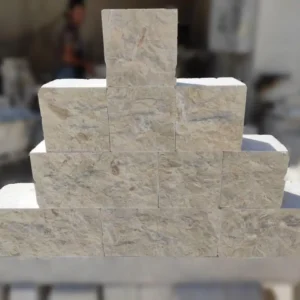
Density and absorption also drive the practical decisions that follow: how tight to keep the joints, whether to seal, and how close to the water the stone can reasonably go. A tighter stone tolerates a more exposed position; a more open stone belongs further back, under cover, or in a courtyard. Buyers comparing candidate materials on paper can review our published limestone paver technical specifications before requesting batch data for a specific job.
Pale Stone, Sun and Barefoot Comfort
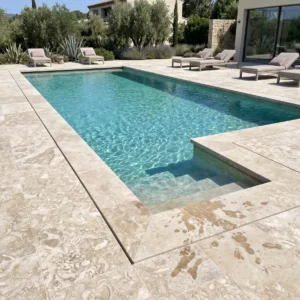
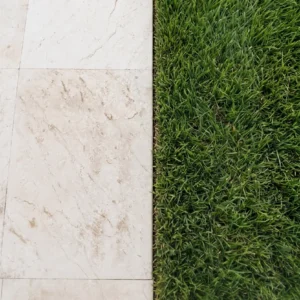
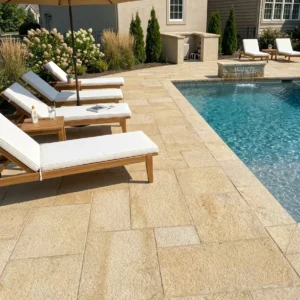
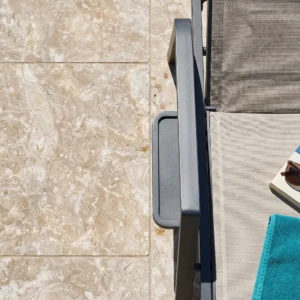
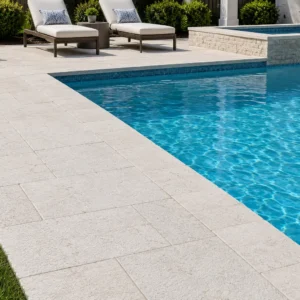
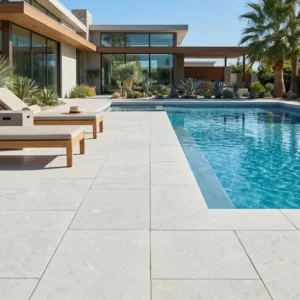
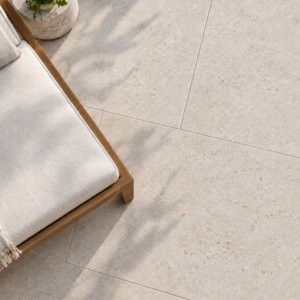
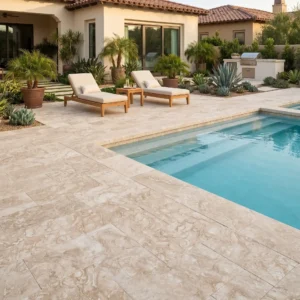
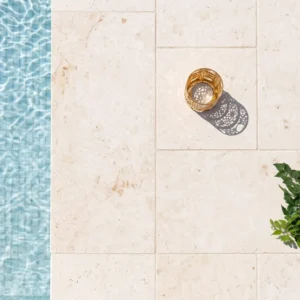
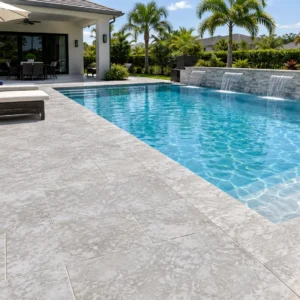
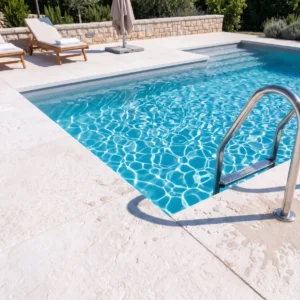
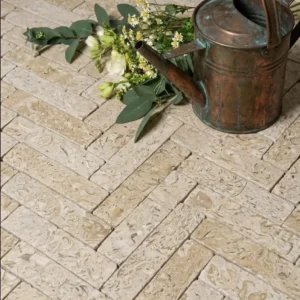
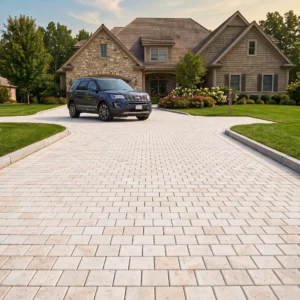
The reason pale limestone dominates island pool decks is thermal, not fashionable. A light surface reflects a large share of incoming solar energy instead of storing it, so it stays usable barefoot through the hottest part of the day. On a Provo pool deck in June that is not a comfort nicety, it is whether the deck gets used at all between eleven and four.
The trade-off is glare. A very light, very smooth surface in full island sun can be genuinely uncomfortable to look at, which is one of the quiet arguments for a honed or lightly textured face rather than a polished one outdoors. Texture scatters reflected light, softens glare and improves wet grip at the same time. It is rare in specification work that one decision improves three things at once, and this is one of them.
- Keep the palest, coolest material where bare feet spend time: pool surrounds, beach steps and the run from house to water.
- Use texture rather than color alone to control glare, since a honed face reads bright without dazzling.
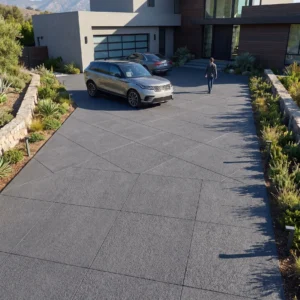
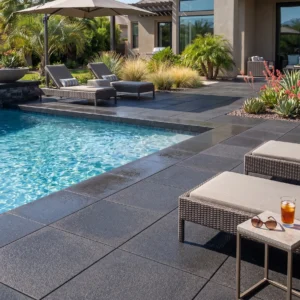
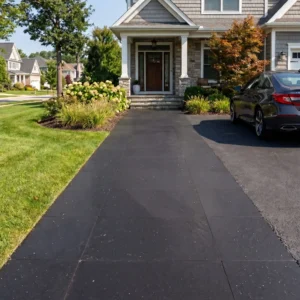
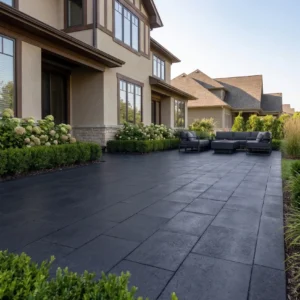
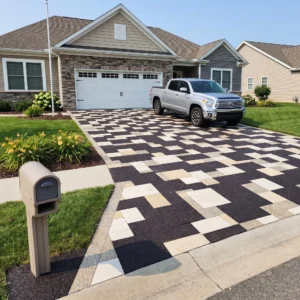
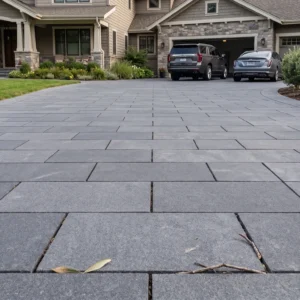
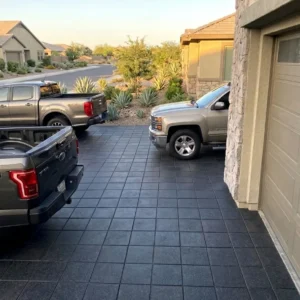
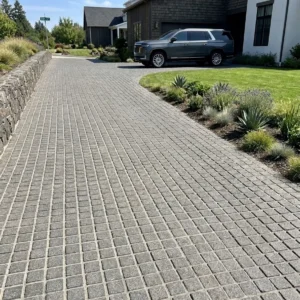
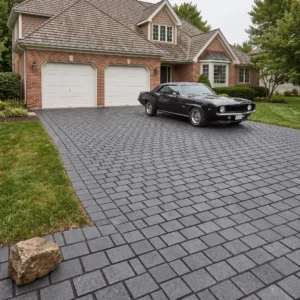
- Reserve dark stone for shaded areas, driveways, contrast bands and edging where nobody stands barefoot at midday.
- Remember that a shaded terrace changes the calculation entirely, and a dark stone under a deep gallery roof is perfectly comfortable.
- Test surface temperature on a sample laid in the sun on site rather than trusting a specification sheet.
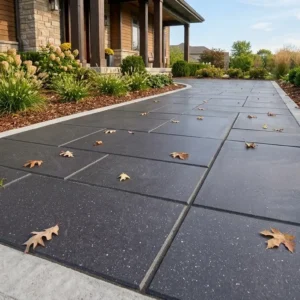
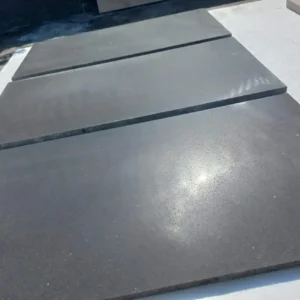
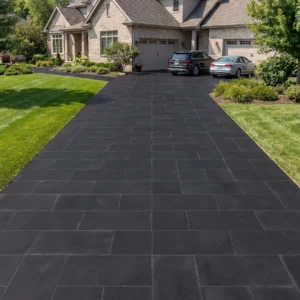
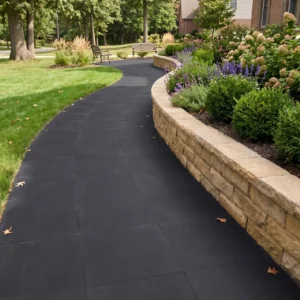
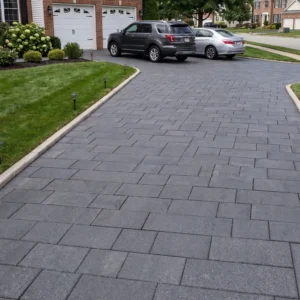
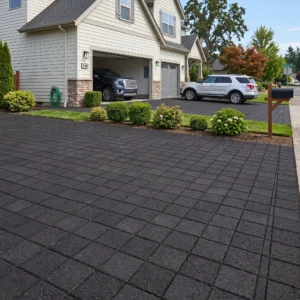
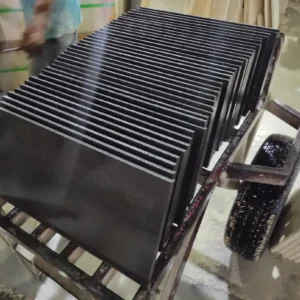
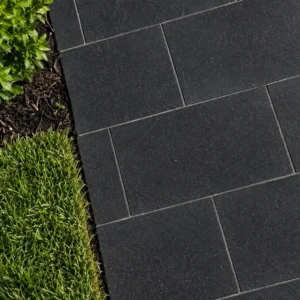
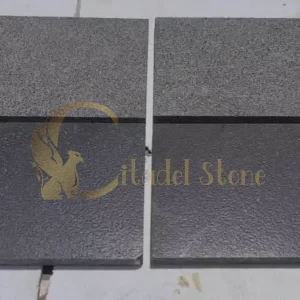
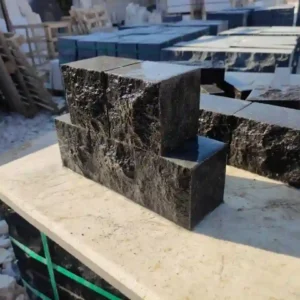
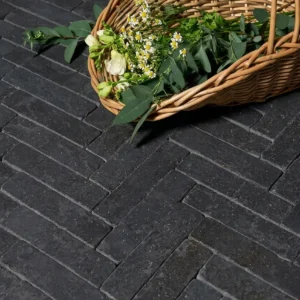
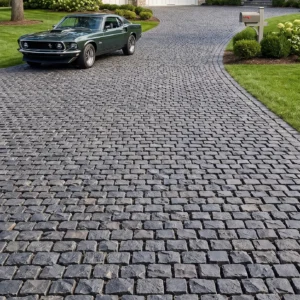
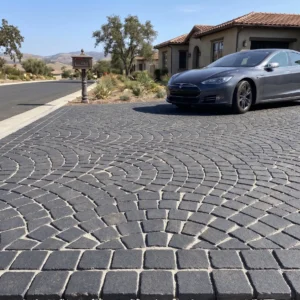
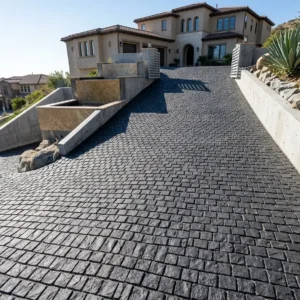
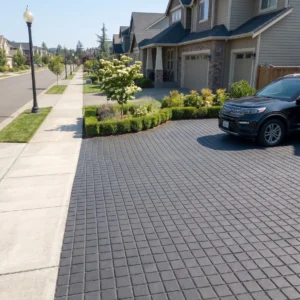
Where a project needs a genuinely dark, dense surface for a drive or a heavily loaded service area, a dense basalt paving alternative is the honest answer rather than pushing limestone into a role it does not suit.
Grip Around Water
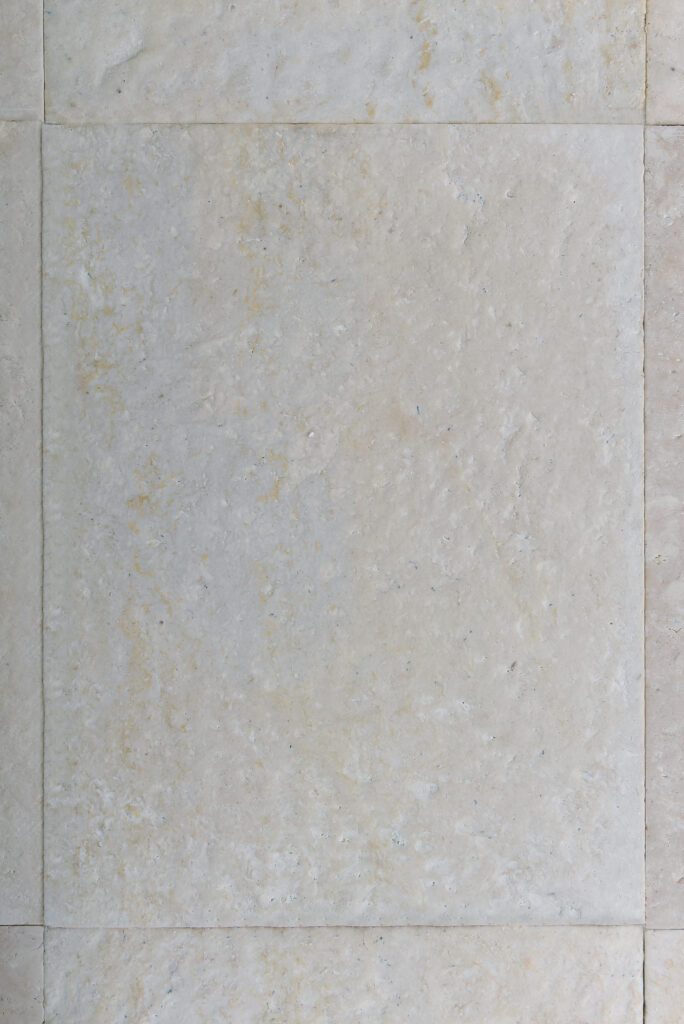
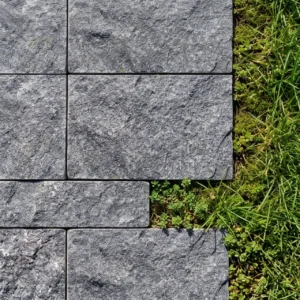
Grip is a wet-foot problem, not a dry-foot problem, and the only test that matters is one performed wet, with the sealer applied, on the finish you actually intend to buy. Sandblasted, brushed and bush-hammered faces all give useful texture on limestone. The choice between them is about how open the texture is, because open texture holds sand and grit, and a pool deck that traps sand becomes uncomfortable underfoot and harder to sweep.
- Sandblasted or lightly brushed faces suit pool surrounds, giving grip without a texture coarse enough to abrade skin.
- Bush-hammered faces suit ramps, slopes and steps down to the beach where the grade adds risk.
- Keep coping profiles simple, with a bullnose or a drop face that sheds water clear of the deck edge.
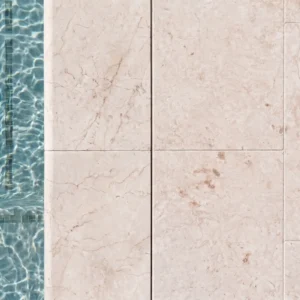
- Set coping on a full bed with the joints closed, since coping units are the most exposed pieces on the whole deck.
- Provide a fresh-water rinse point near saltwater pools and beach access so the deck can be washed down routinely.
Chlorine and salt behave differently. Chlorinated splash-out is mostly a cleaning and staining question. Saltwater splash-out is a durability question, and a saltwater pool deck deserves the tighter stone, the fuller bed and the rinse regime that a chlorinated one can get away without.
Steps down to a beach deserve their own thinking, because they combine everything difficult about an island site: a grade, bare wet feet, blown sand sitting on the tread, and the highest salt loading on the property. Specify a deeper texture there than on the terrace above, keep the nosing generous and rounded so it does not chip under sandy traffic, and give every tread a positive fall so water leaves rather than pooling in the middle. If the steps are the last thing between the house and the water, they will also be the first thing that shows wear, so treat them as a maintenance item from day one rather than as a finished detail.
Where Limestone Should Not Be Used Here
A supplier that never says no is not giving advice. There are positions on these islands where limestone is the wrong choice, and being direct about them is what keeps a project out of trouble.
- Direct wave-splash zones and seawall caps, where salt is deposited constantly and fresh water never rinses it away.
- Below grade in salt-saturated ground, where capillary movement feeds salt into the stone continuously from beneath.
- Any surface routinely washed with acidic products, since limestone is calcareous and acid etches it permanently.
- Heavy commercial turning and loading areas, where a dense igneous stone or small setts will serve better.
- Dry-laid on an exposed sea-facing terrace, where storm surge can lift unbonded units and salt sits under them.
The last of those deserves emphasis, because the Islands are in the hurricane belt and the recent record is instructive. Hurricane Ike in September 2008 damaged most homes on South Caicos, and Hurricane Irma in September 2017 caused severe damage nationwide, worst on South Caicos, Grand Turk and Salt Cay. Building codes were strengthened after Ike, and the outcome in 2017 was widely credited to those upgrades. The lesson for hardscape is straightforward: bedded and bonded rather than dry-laid, with proper edge restraint, on any terrace with real exposure.
Bedding, Jointing and the Local Sand Problem
What goes under the stone is as much an import decision as the stone itself, and this is where a lot of island projects quietly go wrong. Construction sand is readily available locally and sold by the cubic yard or the dump truck load, but the locally sourced white sand has inferior properties compared with imported black sand. Gravel exists mainly as a by-product of limestone screening and is soft, and it is not recommended for concrete use. Quality construction aggregates, including pea gravel and concrete gravel, are imported, as are the concrete blocks that most walls are built from.
So when a bedding mortar or a screed is being batched on site, ask what sand and what aggregate went into it. A perfectly specified paver bedded on weak mortar batched with soft local screening is a failure waiting for the first heavy rain, and it will look like a stone problem when it is not.
- Specify imported aggregate and sand for bedding mortar, screeds and any structural concrete under the paving.
- Use washed jointing sand or an appropriate jointing mortar, and keep joints filled so salt water cannot sit in the void.
- Use stainless or non-ferrous fixings throughout, and avoid galvanized fittings and cast zinc alloys entirely.
- Size drainage for burst rainfall, since about 43 inches falls each year in heavy concentrated periods on flat, poorly draining ground.
- Fall the terrace away from the building and toward a discharge that can handle a downpour, not toward a soakaway that cannot.
Efflorescence deserves a word. A white bloom appearing on new paving is usually salts migrating out of the bedding, not a defect in the stone, and it typically clears with time and rinsing. Diagnose it before treating it, and never reach for acid.
Imported Stone and the Island's Own Limestone
The Turks and Caicos Islands sit on a soft limestone platform. That limestone is the ground under every building, it is the reef and the beaches, and it is the fabric of the walls that historic construction was built from. It is landscape and it is heritage, and it is protected. Locally screened material from that platform is soft and is used as fill and screening rather than as a wearing surface, which is simply an accurate description of what the material does well.
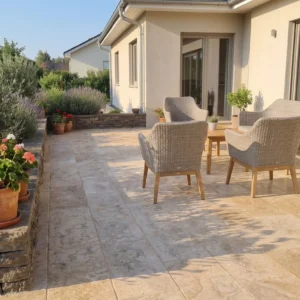
Imported dimension stone is not a rival to that. It is a finished surface laid on top of it, selected and tested for a job the island’s own soft material was never asked to do. The honest comparison for a villa terrace is not local stone against imported stone, it is broom-finished poured concrete or imported concrete block against imported natural stone, and that is a fair fight worth having on cost, on comfort and on how the surface looks after a decade in the sun.
That comparison also lands differently here than elsewhere. Because the block, the good aggregate, the lumber and the steel are all imported already, the step up from an imported concrete surface to an imported natural stone surface is a smaller step in the Turks and Caicos Islands than in almost any other market. The freight is already in the budget, so the specification question is simply which surface deserves the space in the container.