







Every limestone quarry produces a data sheet, and almost nobody reads one properly. That is a shame in Saint Vincent and the Grenadines, because this is a country where the numbers on that sheet map directly onto things a homeowner will notice: whether a pool surround is comfortable at two in the afternoon, whether a terrace goes slick in a downpour, whether salt works its way into the surface on a Grenadines headland, and whether gray volcanic dust washes off or settles in. Marketing photographs cannot answer any of those. Absorption, density, finish and detailing can.
This page is the material argument for external limestone paving in SVG, written as a technical brief rather than a brochure. It is deliberately separate from our freight and import page, and it includes the part most suppliers skip: where limestone is the wrong choice, and what to use instead. Citadel Stone is a US wholesale supplier buying from selected quarries, and we would rather lose a specification than see a terrace fail on an island where remedial work means another sailing.
Absorption and Density: Two Numbers That Decide Everything
Water absorption tells you what proportion of its own weight a stone will take up when saturated. Density tells you how tightly the stone is packed. Together they predict most of what an external paver will do over twenty years, and in a marine tropical climate they matter for reasons that have nothing to do with the freeze-thaw cycles those figures are usually quoted for. There is no frost here. What there is instead is salt, ash, intense episodic rain and heat.
- Salt crystallization: seawater drawn into an open pore structure evaporates and leaves crystals behind, and those crystals expand where the stone is weakest, which is why Grenadines headland projects want low absorption.
- Saturation weight and drying time: a porous paver that stays wet stays slippery, feeds biological growth and takes longer to look clean after rain.
- Staining: ash, leaf tannin, barbecue oil and sunscreen all travel into an open pore structure and stay there, and a dense stone gives the sealer far less to do.
- Abrasion resistance: repeated washing down of gritty volcanic ash is mechanically aggressive, and a denser stone loses its arris and its finish more slowly.
- Edge durability: dense stone holds a cut edge at steps and pool copings, where chipping is what people actually see and feel.
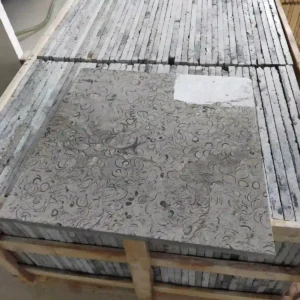
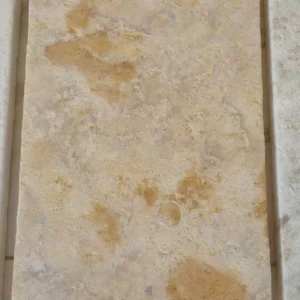
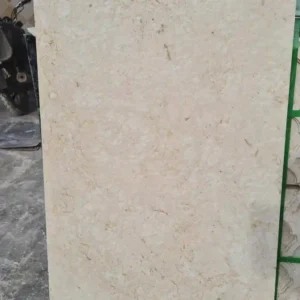
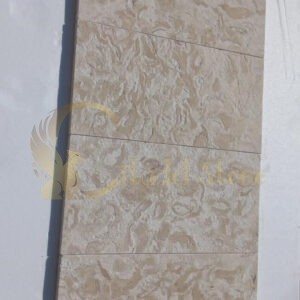
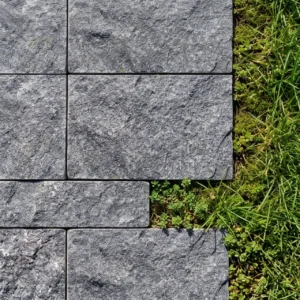
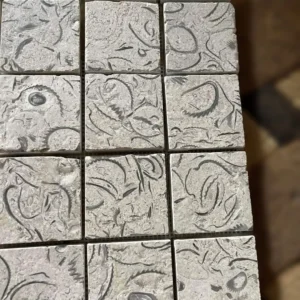
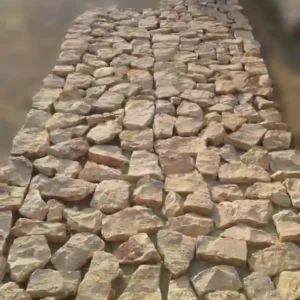
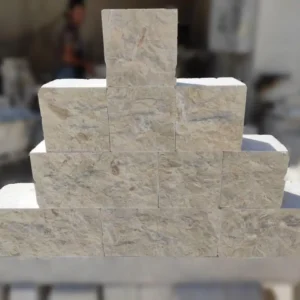
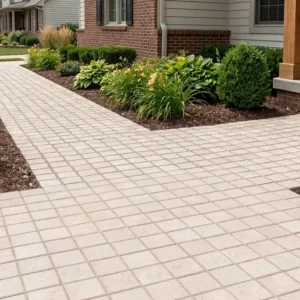
Not all limestones are alike, and the range within the family is wide. Some are dense and close-grained, cutting to a crisp arris and taking a fine texture. Others are open and shelly, full of visible structure, lighter in the hand and far more absorbent. Both have their place, but they are not interchangeable on a Grenadines headland where wind carries salt spray onto the terrace every day of the year. That is a case for the denser end of the range, or for accepting an open-textured stone in a sheltered courtyard where its character is the point and the exposure is mild.
We publish the quarry’s own absorption, density, compressive strength and slip test data for the stone you are considering, and we will send it before you order rather than after. Ask any supplier for the same. If the answer is a brochure adjective instead of a test result, that tells you something useful about how the material will be backed up when a question arises three years into the life of a terrace.
Pale Stone in Vincentian Sun: Temperature Underfoot
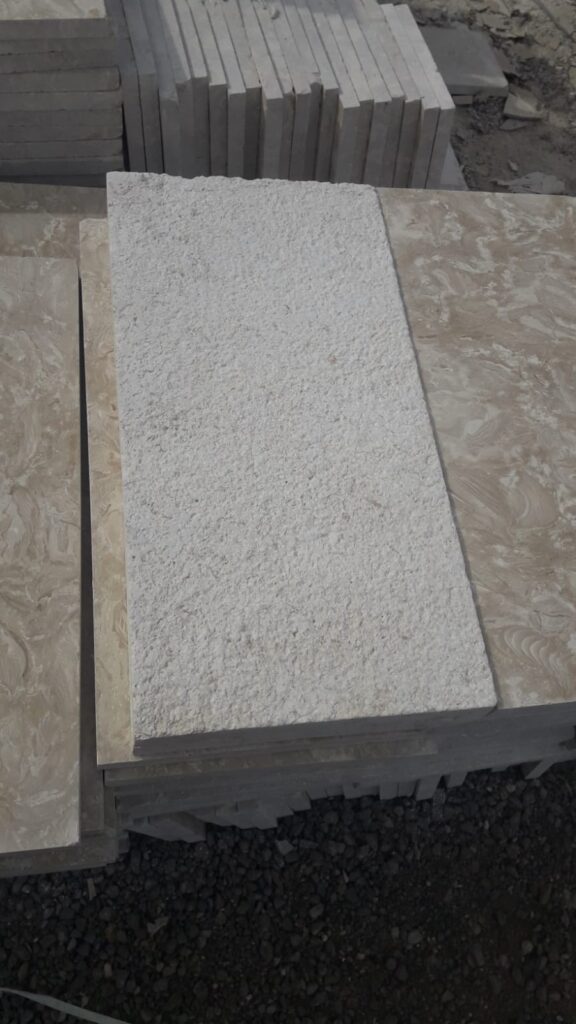
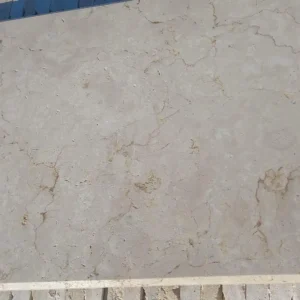
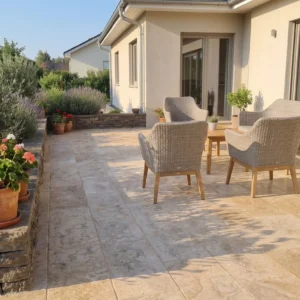
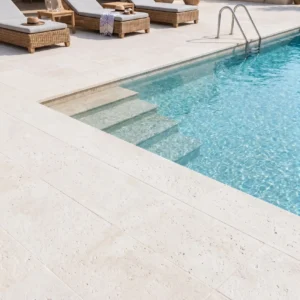
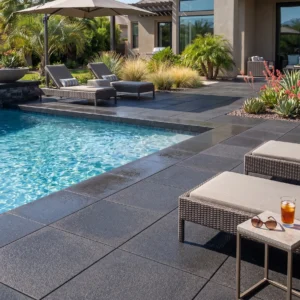
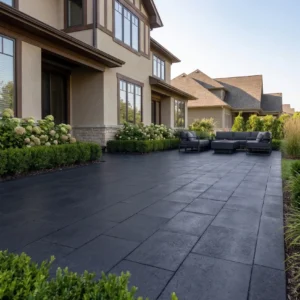
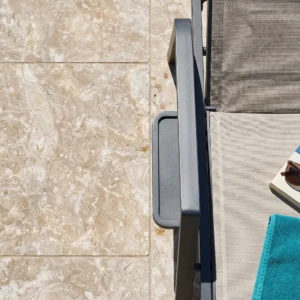
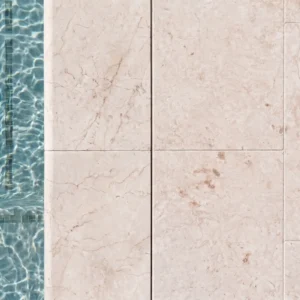
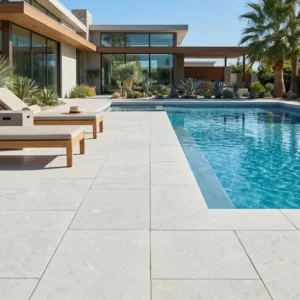
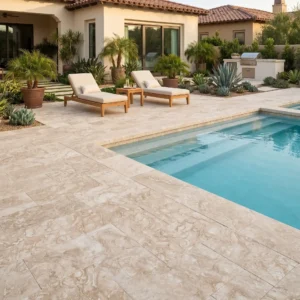
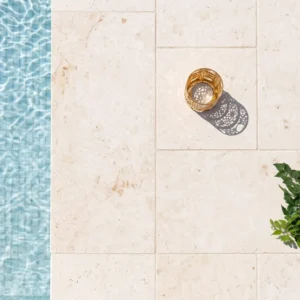
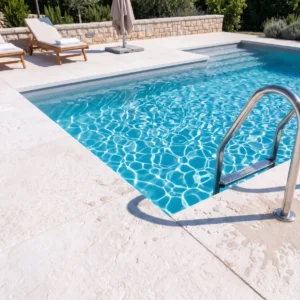
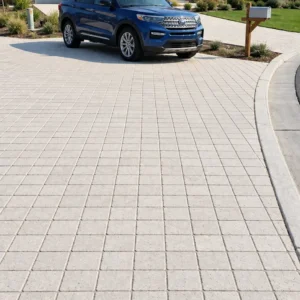
The single most persuasive practical argument for limestone in this part of the world has nothing to do with durability. It is that a pale, light-toned stone stays usable barefoot in the middle of the day, and a dark one often does not. Surface temperature on paving is driven overwhelmingly by how much solar energy the surface absorbs rather than reflects, which is why a white or cream limestone terrace and a dark basalt terrace, laid side by side on the same afternoon in the same place, are two completely different experiences for a child running from a pool.
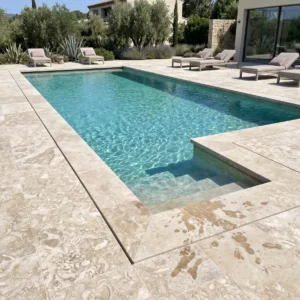
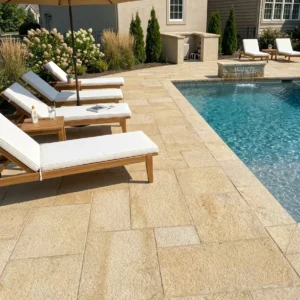
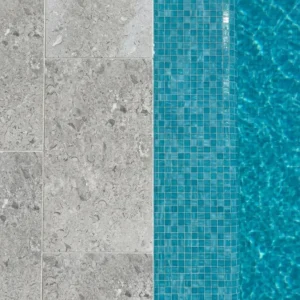
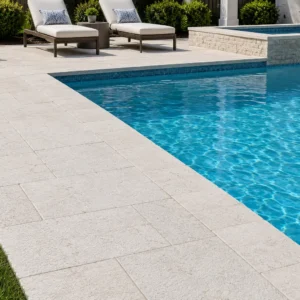
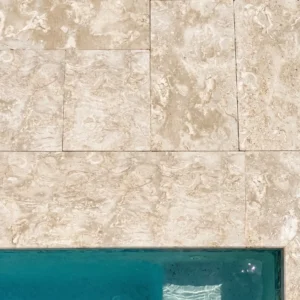
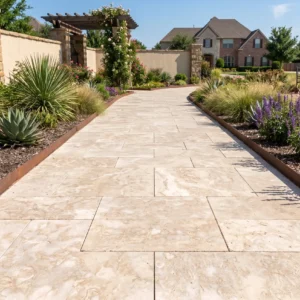
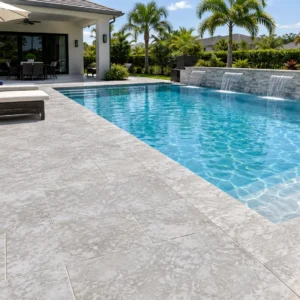
This is not an argument against dark stone, which has real uses. It is an argument for putting the pale stone where feet go without shoes: pool decks, the coping around the water, the path from the house to the beach, the shaded veranda that stops being shaded at four o’clock. On a Grenadines villa where the outdoor space is the point of the house, that decision does more for daily comfort than almost any other material choice on the drawings.
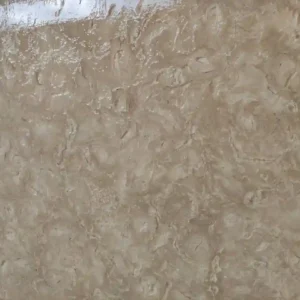
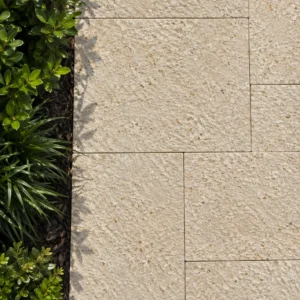
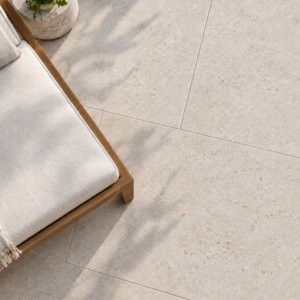
Reflectance has a second consequence worth planning for. A large expanse of very pale stone in full sun creates glare, and glare into a living space with wide openings is a genuine complaint. The usual remedy is texture rather than a darker stone: a brushed or bush-hammered surface scatters light, cuts the sheet-glare of a flat plane and adds grip at the same time. Two problems, one finish decision. Sample the finish outdoors, at midday, in the actual position, before committing a large area to it.
Grip Around Pools, Showers and Rain-Washed Terraces
Rain here arrives in intensity rather than in drizzle, and terraces go from dry to sheeting in minutes. Add a pool, an outdoor shower and bare wet feet and slip resistance stops being a compliance box and becomes the design driver for the whole external surface. The honest position is that finish, not stone type, determines grip, and that any limestone can be specified well or badly.
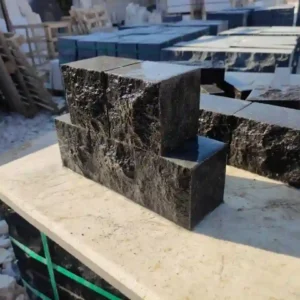
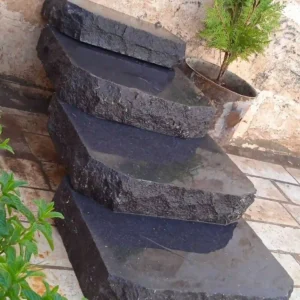
- Bush-hammered surfaces give the most reliable wet grip and hold up under repeated washing, which suits pool decks and stair treads.
- Sandblasted surfaces offer a finer, more even texture with good wet performance, and read as calmer than bush-hammering in a formal terrace.
- Brushed or antiqued surfaces suit informal spaces, softening the stone visually while keeping useful traction underfoot.
- Tumbled units work well on garden paths and secondary areas where a slightly irregular surface is part of the character.
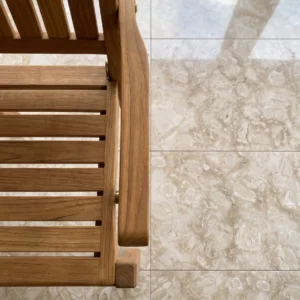
- Polished limestone belongs indoors and away from circulation routes; it has no place on an external terrace in this climate.
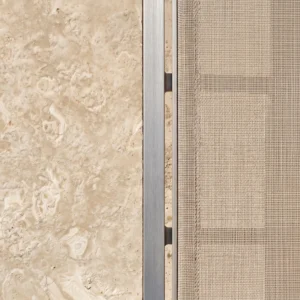
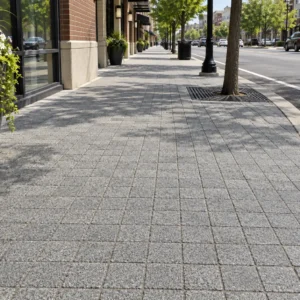
Detailing carries as much of the load as the finish. Falls need to be positive and continuous so water leaves the surface instead of sitting on it, joints need to be able to shed water rather than hold it, and copings around a pool want a bullnose or a soft arris that does not cut a shin. Around a saltwater pool, rinse the coping regularly rather than leaving splash to evaporate on it. That single habit does more for the long-term appearance of the stone than any product you can buy. You can review the technical formats in the limestone paver technical range and match a finish to each zone rather than specifying one surface for the whole plot.
Where We Tell Clients Not to Use Limestone
A supplier who says a stone works everywhere is telling you nothing. Limestone has real limits, and in Saint Vincent and the Grenadines a few of them come up often enough to be worth stating plainly before an order rather than after a complaint.
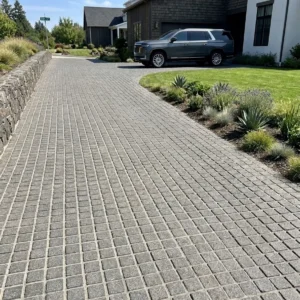
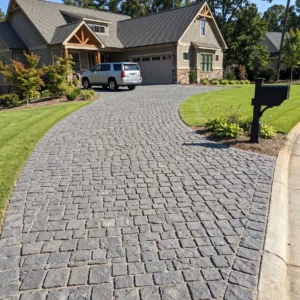
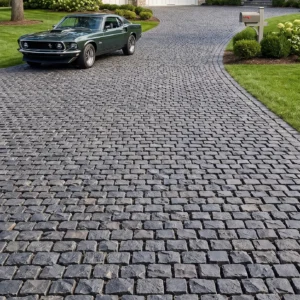
- Heavy or repeated vehicular turning on a thin section, where the honest answer is a thicker unit, a proper base, or a small-unit sett laid on a compacted bed.
- Anywhere acid cleaning is part of the maintenance routine, because acid etches limestone permanently and no sealer prevents it.
- Directly in a drainage or debris flow channel, where a hardscape surface is a siting question for an engineer rather than a material question for a supplier.
- Industrial yards and service areas taking dropped loads, where a dense igneous stone or an engineered surface earns its keep.
- Surfaces that will never be maintained at all, since limestone rewards a simple wash-down routine and slowly records the absence of one.
There is also a scale limit worth naming on this route. Very large-format limestone slabs are handsome and heavy, and the inter-island leg to the Grenadines punishes heavy single units. If the design depends on a large module, we will say so honestly and quote it, but we will also show what the same stone looks like in a smaller module, because breakage on a deck is nobody’s good outcome and repair means waiting for a sailing.
A word on saltwater pools, which are common here and are gentler on skin than they are on stone. Splash that dries on a coping leaves salt behind, and that salt goes on working at the surface long after the swimmers have gone in. Nothing about that makes limestone unsuitable; it makes rinsing part of the specification rather than part of the housekeeping. Design a hose point within reach of the pool surround, choose a denser stone for the coping course specifically even if a lighter one is used further back, and tell the owner in plain language what the routine is. A client who knows why they are rinsing will do it. One who was told the stone is maintenance free will not, and will be disappointed for reasons that were avoidable at specification stage.
Limestone, Basalt and the Rabacca Beneath Both
Saint Vincent is a young volcanic island and its own stone reflects that. The material every builder in the country knows is Rabacca: volcanic sand, gravel and cobbles worked from the Rabacca Dry River in the Parish of Charlotte, a channel carved by the 1902 eruption of La Soufriere and layered again with ash in 2021. It is harvested and screened through a dual-screen system that separates the sands from the gravel and cobbles, and a crushing plant commissioned at Rabacca in March 2025 produces graded aggregate at a hundred tons per hour. Aggregate harvesting there has been going on for generations, and it is worked by a state-owned authority for the country’s own construction.
That material is the base, the bedding and the concrete. It is not a competitor to an imported paver and should never be described as one. The correct picture is layered: Rabacca aggregate does the structural work below ground, and imported dimension stone provides the calibrated wearing surface above it. A well-built Vincentian terrace is both, and a specification that ignores the local layer is worse engineering, not better.
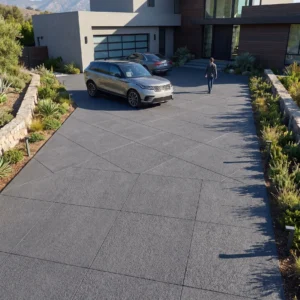
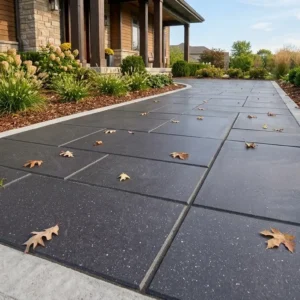
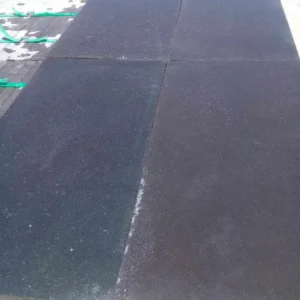
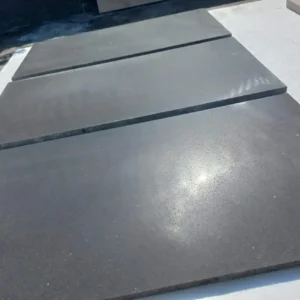
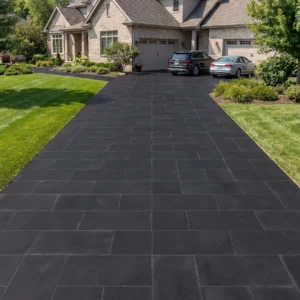
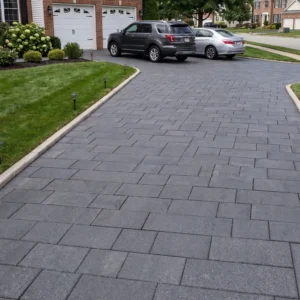
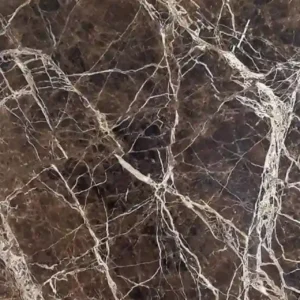
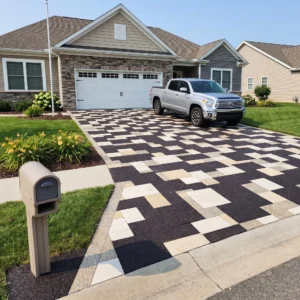
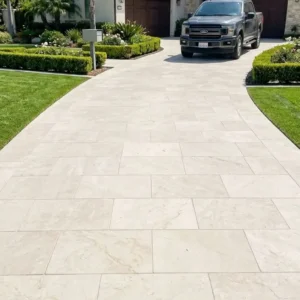
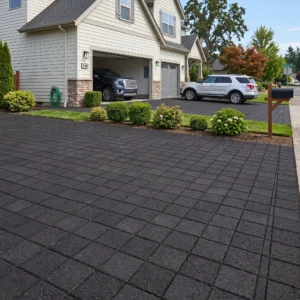
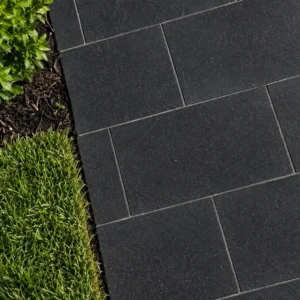
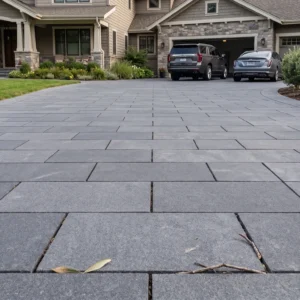
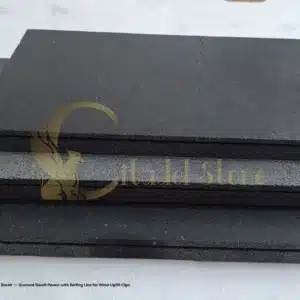
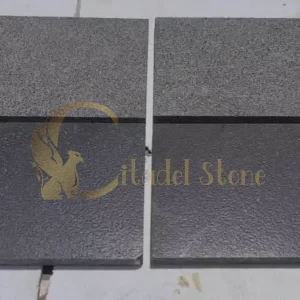
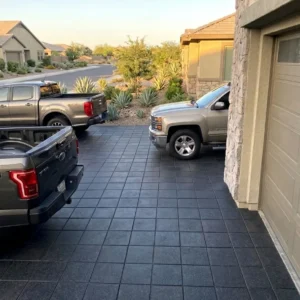
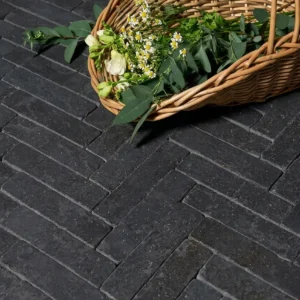
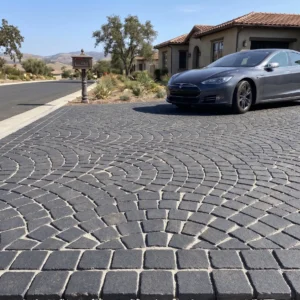
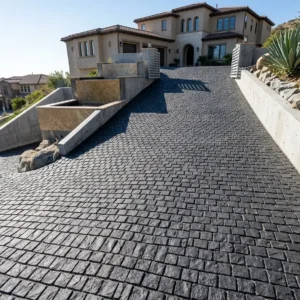
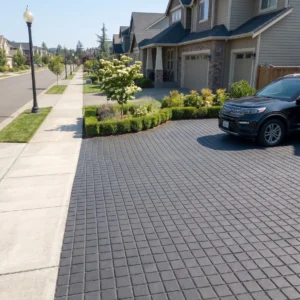
Within the imported layer there is a real choice to make. Basalt is dense, dark and extremely hard-wearing, and it is the right call for a driveway, a heavily used entrance or anywhere a stone will take punishment. Limestone is paler, kinder underfoot in sun and easier to work into copings and steps. Shellstone sits between them in character with a distinctive open texture. Most villa projects here end up using two of the three rather than one, splitting the plot by what each area actually has to do.
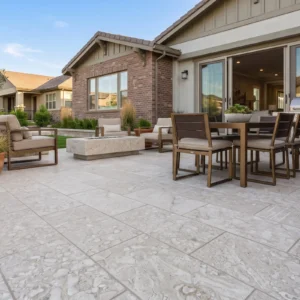
Splitting a plot by function rather than by taste is the single most useful planning decision available. Pale limestone goes where feet are bare and where sun is unavoidable: pool decks, coping, sun terraces, the path to the beach. A darker, denser stone goes where vehicles turn, where a service route crosses, or where a strong shadow line is wanted at an entrance. Steps and thresholds go to whichever stone holds the best cut edge, since that is the detail people touch. Written down that way, a specification stops being an argument about appearance and becomes a short list of decisions each with a defensible reason attached, which is also what an architect needs when a client asks why one material was chosen over another.
Bedding, Jointing and Edge Restraint for Storm Loads
Hurricane Beryl came through on 1 July 2024 as a Category 4 storm and did its worst in the Southern Grenadines, where Canouan, Mayreau and Union Island saw the overwhelming majority of homes affected and Union Island alone recorded damage estimated at US$93.9 million. Anyone rebuilding there is thinking about how a surface behaves under wind, water and surge, not only how it looks in June. Paving is a small part of that picture but it is not a trivial one, because a lifted paver becomes a projectile and an undermined edge takes the whole field with it.
- Use edge restraint that is designed and buried, not a decorative border relying on friction to stay put.
- Build positive falls and an escape route for water, so sheet flow leaves the surface instead of finding the joints.
- Specify jointing that can be flushed clean of volcanic ash and grit without breaking down under the hose.
- Keep bedding depth and compaction consistent, since a soft spot under one unit is where the first failure appears.
- Detail the transition between paving and soft landscape so a heavy rain event cannot scour behind the edge.
Ash is the argument that makes SVG different from every other market we write for. Volcanic ash is abrasive and chemically aggressive, and the correct response to it is to sweep it dry and then wash the surface thoroughly. That means a joint that survives being flushed and a stone that does not stain under repeated washing. A wide open-textured surface that traps fine gray dust in its pores looks tired within a season here, whatever it does elsewhere. If you would like to feel the difference in the hand before deciding, request a stone sample to compare in the finishes on your shortlist.
Reading a Test Report Before You Commit a Terrace
By the time a client is choosing between two pale limestones on a screen, the decision has usually already been made on appearance. It is worth backing up one step. Ask for the absorption result, the density, the compressive strength and a wet slip measurement for the exact finish you intend to lay, not for the polished version of the same stone that happens to be on the data sheet. Finish changes slip performance dramatically, so a slip figure quoted without a finish attached is close to meaningless.
Ask what the stone looks like after five years in a marine environment, and expect an honest answer rather than a claim of permanence. Natural stone changes. Pale limestone gains a patina, edges soften, and a terrace that is washed occasionally develops a depth of surface that new stone does not have. What should not happen is spalling at the arris, deep staining that will not lift, or a surface that has gone glassy underfoot in the wet.
Finally, ask the supplier what they would not sell you. Material specification for a permitted project in Saint Vincent and the Grenadines should be agreed with your own architect or engineer under the terms of the Town and Country Planning permit, and a supplier’s role is to give them accurate data and a stone that matches the sample. Specify the finish and the detailing with as much care as the stone itself, because in this climate those are what actually decide how a terrace ages.