


















Every specification argument about limestone outdoors comes down to two numbers and one climate. The numbers are water absorption and density. The climate, in Jamaica, is not a single climate at all: it is orographic rain falling hard on the windward slopes, salt air along both coasts, brilliant sun across the southern plain, and a wet season that turns any drainage shortcut into a defect within a year. This page is about how those two numbers behave in that climate, and about where limestone is genuinely the right material and where it is not.
It is deliberately technical rather than promotional, and it includes the limits. A supplier who tells you limestone works everywhere is telling you something untrue, and on an island where every material has crossed water, an expensive mistake is more expensive than usual. Jamaica has its own stone industry as well: quarrying is supervised by the Mines and Geology Division under the Mining Act and the Quarries Control Act, and the non-metallic sector covers limestone, silica sand, marble, marl and fill, and clay. Everything below assumes that context rather than arguing with it.
Absorption and density: the two numbers to ask for first
Water absorption is expressed as a percentage of the stone’s dry weight taken up when the stone is saturated, and it is the closest thing the trade has to a single index of durability for an outdoor floor. Density, usually given as weight per unit volume, tells you how much solid material is packed into that stone. The two are related, since a denser stone has less pore space to fill, and together they predict most of what a paving stone will do over a decade in the open air.
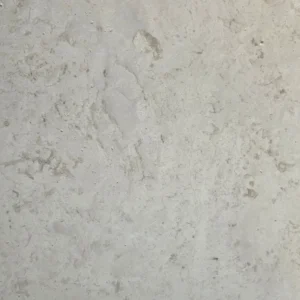
Limestone is a broad family and the range inside it is enormous. There are soft, highly porous limestones that will drink water, and there are dense, tight-grained limestones that behave much closer to a hard stone. The word on the invoice tells you almost nothing; the test report tells you everything. Ask for measured figures rather than adjectives, and then read them with the specific site in mind.
- Lower absorption means less water held in the stone, which means less capacity to carry salt inward, less to feed algae, and much faster drying after rain.
- Higher density generally means better resistance to abrasion under foot traffic, furniture and vehicle tires.
- Two stones sold under the same trade name from different sources can carry very different figures, so specify by tested property rather than by name.
- Wet-weather staining, mossing and darkening on shaded terraces track absorption more closely than any other single property.
- Ask whether the figures come from the material actually being supplied rather than from a general catalog entry written years ago.
Orographic rain, salt coasts and what water really does
Rain in Jamaica is neither gentle nor evenly distributed. Air forced upward over the Blue Mountains and the interior ranges drops its moisture on the windward side, so a terrace in Portland or upper St. Andrew sees rainfall of an intensity and frequency that a site in St. Elizabeth simply never experiences. That difference ought to change the specification, and in practice it usually does not.
Water damages paving in three ways here, and none of them is the one people expect. It carries salt into the surface on coastal sites, where evaporation leaves crystals behind that gradually work at the stone from within. It keeps shaded areas permanently damp so algae and moss establish, which is a slip problem long before it becomes a cosmetic one. And it moves through the bedding beneath the stone, bringing dissolved salts up out of mortar or a poorly chosen base into the joints and the surface as a white bloom. All three are addressed below the stone rather than on top of it.
- Design falls generously, because a slope that looks excessive on paper reads as flat underfoot and clears water in a genuine downpour.
- Never trap water beneath a terrace; provide a drained sub-base and a real route out at the low edge.
- On coastal sites, rinse hard surfaces with fresh water periodically, which is the single most effective salt control available.
- Keep shaded terraces open to air movement where you can, and expect to clean them more often than sunlit ones.
- Use bedding and jointing products made for external work, since the white bloom on a new terrace almost always came from underneath it.
Surface temperature: why pale limestone stays walkable at midday
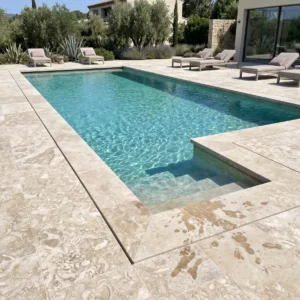
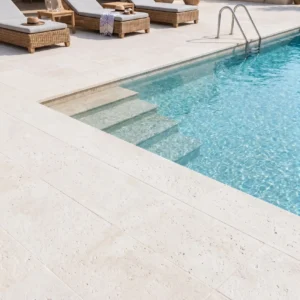
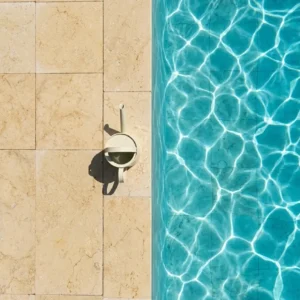
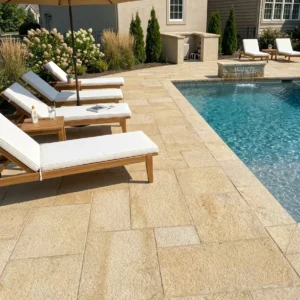
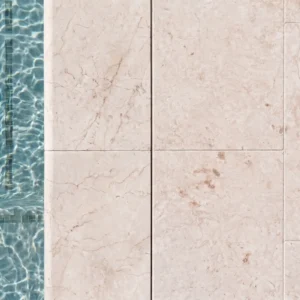
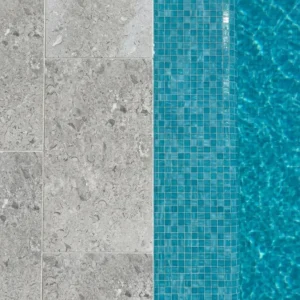
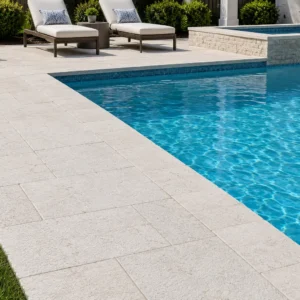
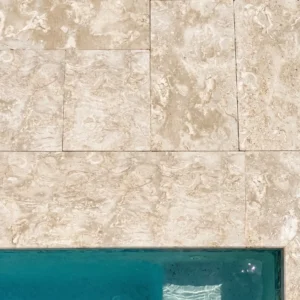
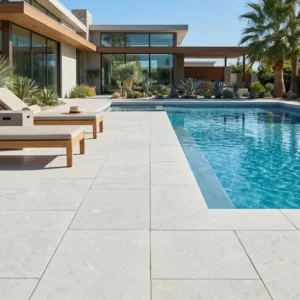
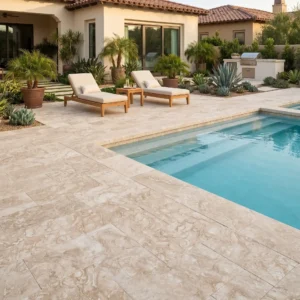
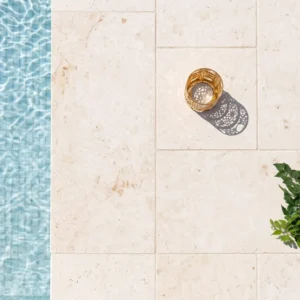
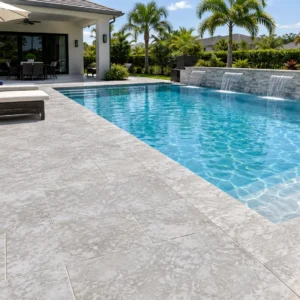
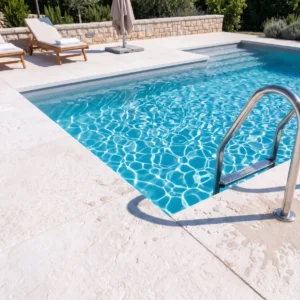
Barefoot comfort is a real specification requirement around a Jamaican pool, not a nicety. A dark, dense surface in full midday sun becomes genuinely painful to cross, and once it does the design has failed regardless of how good it looks in a photograph. Surface temperature is driven by how much of the incoming solar energy a surface absorbs rather than reflects, and pale stone reflects a great deal of it.
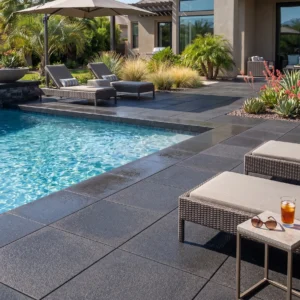
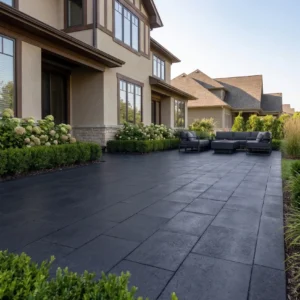
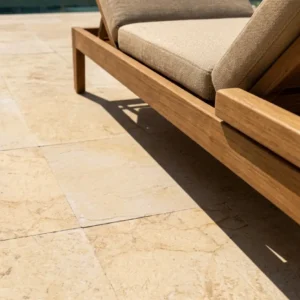
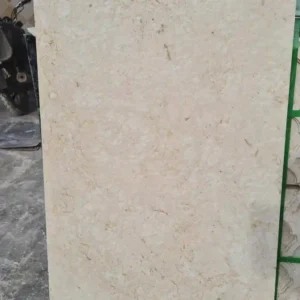
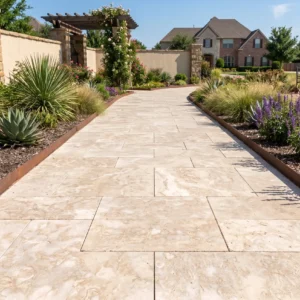
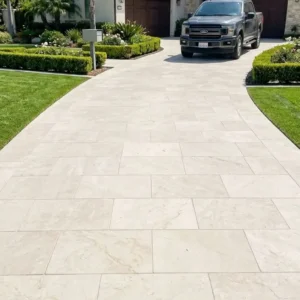
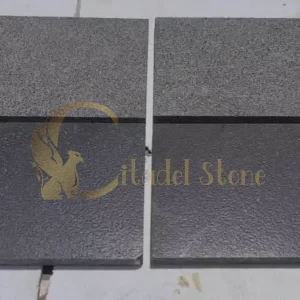
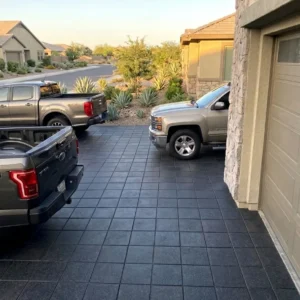
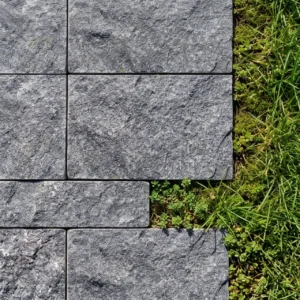
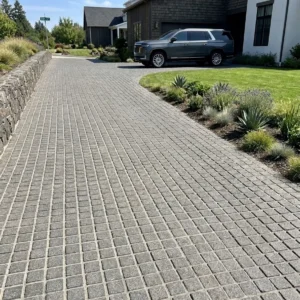
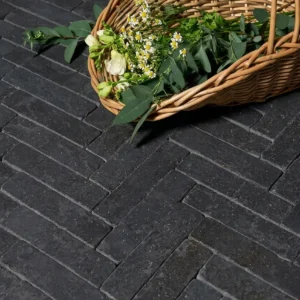
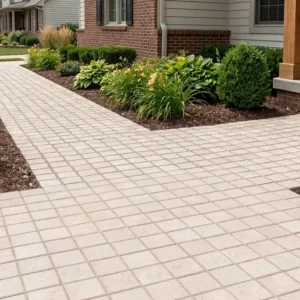
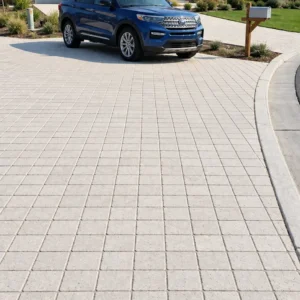
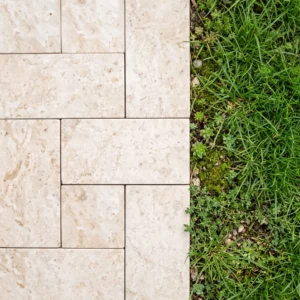
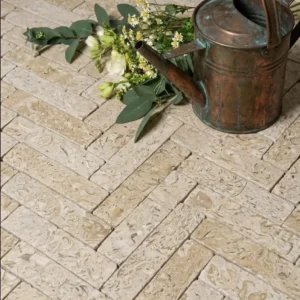
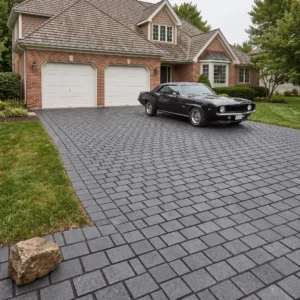
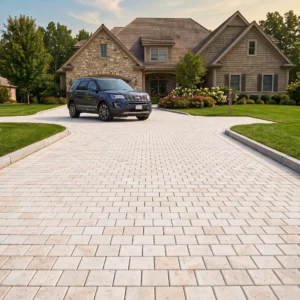
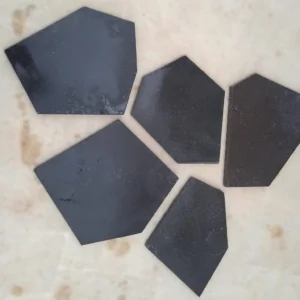
That is why pale limestone remains the default around water in hot climates worldwide, and why dark basalt, which is an excellent material in plenty of other roles, needs careful thought in a sun-exposed pool surround. The comparison is not marketing. Stand on a light terrace and then a dark one at two in the afternoon and the question is settled in about four seconds. If you want to see the pale range and the formats it is cut in, the limestone paving collection is the place to start.
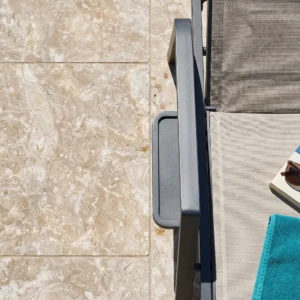
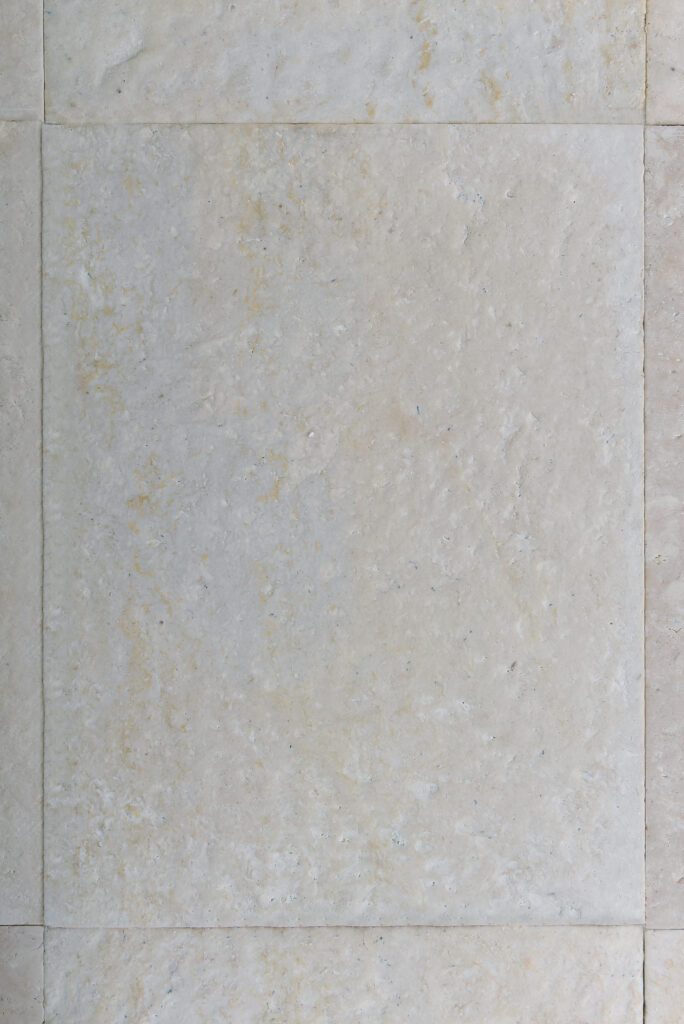
- Pale matte surfaces stay coolest, while polished pale surfaces reflect light into eyes instead and create glare problems.
- Shade structures, planting and pergolas change surface temperature far more than any material choice can.
- Coping and the first course out of the water matter most, because that is exactly where wet feet stand still.
- Dark accent bands are fine as detail, but dark fields in full sun around a pool are not.
- Test a sample on site at the hottest hour of the day before committing a large pool deck to any tone.
Grip around pools and rain-slick terraces
Slip resistance is a function of finish, cleanliness and drainage, in that order, and it is the property most often specified last. Around water in Jamaica it deserves to be specified first. A stone that is safe dry and treacherous wet is not a safe stone, because the relevant condition is always wet, and frequently wet with sunscreen suspended in the water film.
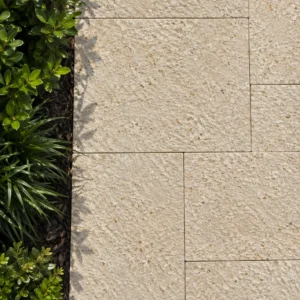
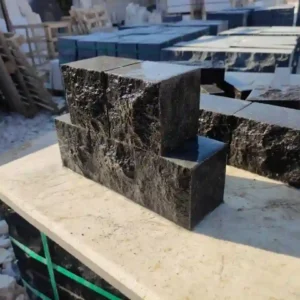
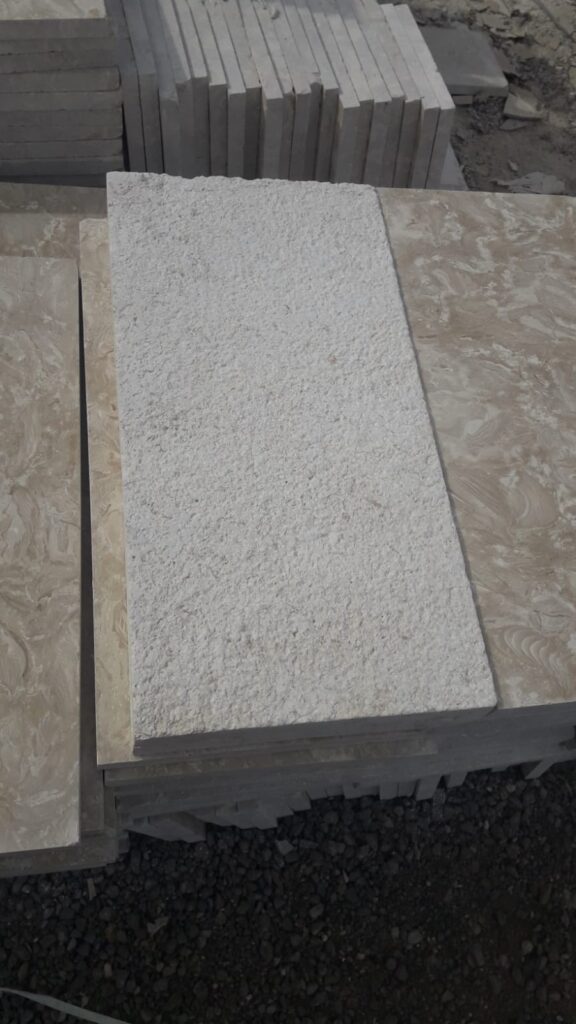
- Bush-hammered and sandblasted finishes give the most texture and are the honest choice for pool decks and ramps.
- Brushed finishes offer a good compromise for terraces walked barefoot but not constantly wet.
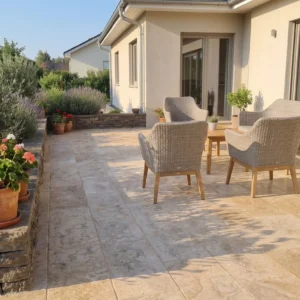
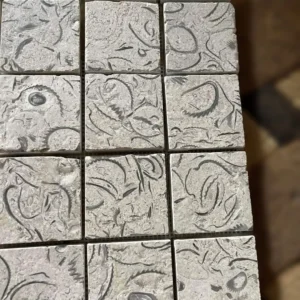
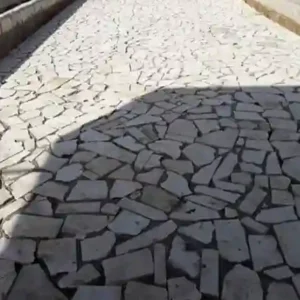
- Tumbled units add grip through their softened, slightly irregular faces and suit informal garden terraces well.
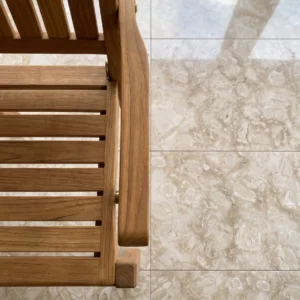
- Honed surfaces belong under cover or in low-traffic decorative areas, not around a swimming pool.
- Sawn and polished faces should not be used on any horizontal surface people cross while wet.
Two things quietly destroy grip after installation. The first is a film, whether algae, sunscreen residue or a badly chosen coating, which turns a textured surface into a smooth one without changing its appearance much. The second is standing water, because no finish is reliable under a millimeter of water that never drains away. Neither problem is solved by choosing a rougher stone; both are solved by a cleaning routine and by falls that genuinely work. Specify the texture, then protect it.
Where limestone is the wrong choice in Jamaica
Limestone is a calcium carbonate stone and it reacts to acid. That single chemical fact defines its limits, and no finish, sealer or grade changes it. There are places on a Jamaican property where another material is simply the better engineering answer, and saying so plainly is more useful than selling stone into a situation it is going to lose.
- Heavy commercial vehicle yards and truck turning areas, where point loads and steering scuff exceed what a bedded stone terrace is designed to take.
- Anywhere an acidic cleaning regime is fixed and non-negotiable, such as some commercial kitchen exteriors and washdown areas.
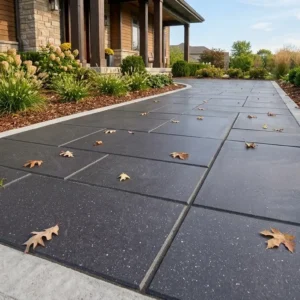
- Directly beneath citrus, ackee and mango trees on a formal terrace, where falling fruit leaves acidic marks unless somebody sweeps daily.
- Splash zones taking direct wave impact on exposed coast, where the mechanical energy rather than the salt is the real problem.
- Around planters fed with acidic fertilizers and watered so that run-off crosses the stone repeatedly for years.
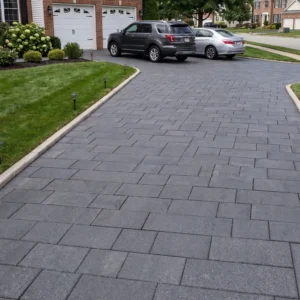
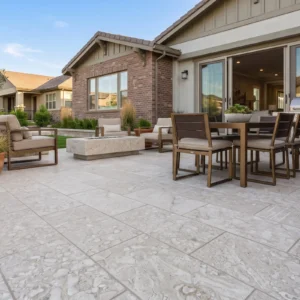
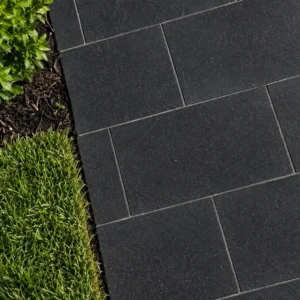
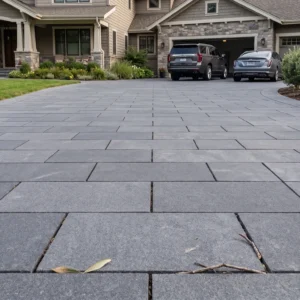
None of these rule limestone out of a project. They rule it out of a zone. The usual answer is to switch material for that area alone: basalt handles vehicle duty and acid exposure far better, and it is the stone we would specify for a service yard or a working forecourt while keeping limestone for the terrace and the pool surround. A good specification uses two or three materials wherever the duty changes, and it does so on purpose rather than by accident.
Limestone measured against the local alternatives
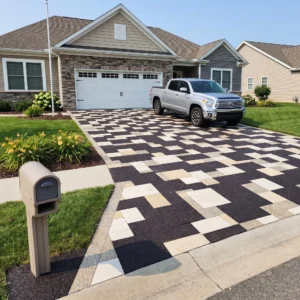
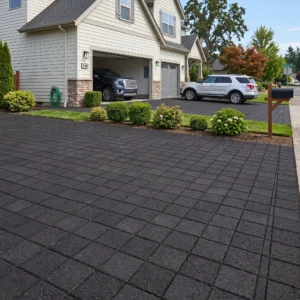
The realistic alternative on most Jamaican sites is not another imported stone. It is a poured or precast concrete surface, or concrete block paving, made locally from Jamaican limestone aggregate and marl. That is a perfectly good product doing a job imported stone cannot do on price, and the comparison worth making is honest and narrow rather than sweeping.
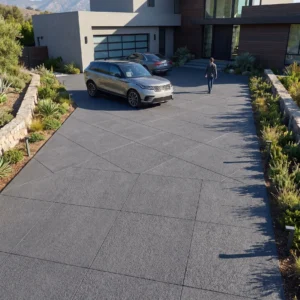
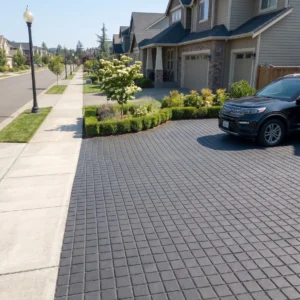
Concrete paving is cheaper delivered, available immediately, and manufactured a short drive from most sites. It also carries pigment rather than tone, which means the surface fades unevenly under strong ultraviolet exposure and cannot be restored, and it wears through to a different material underneath. Natural limestone is the same stone all the way through, so a scratch reveals more limestone, a worn surface can be cleaned back, and thirty-year-old stone looks like old stone rather than like tired concrete. On a resort terrace that gets photographed for a decade, that difference is the entire argument.
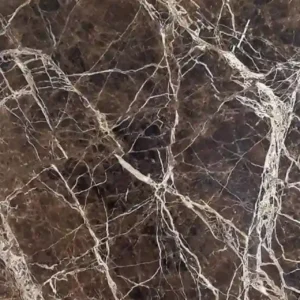
Jamaica also produces marble, listed alongside limestone, silica sand, marl and clay in the non-metallic sector overseen by the Mines and Geology Division. Jamaican marble is a genuine national material and deserves to be treated as one. Nothing on this page argues against it, because our stone competes on calibration, documented absorption and repeatable supply of large paving quantities rather than on being better rock. If you want to compare our material against whatever you are already considering, order a small hand sample and put the two side by side outdoors.
- Compare wet rather than dry, because almost every surface looks similar dry and completely different wet.
- Compare at midday for surface temperature and again at four in the afternoon for tone.
- Compare a cut edge as well as a face, since that is where a manufactured product shows its core.
- Compare after a week outdoors rather than on the day the samples arrive in the office.
Setting details that make the numbers hold
A stone with excellent absorption and density figures will still fail if it is laid badly, and most of the failures seen on Caribbean terraces are installation failures wearing a material’s name. The stone is rarely the problem. The bed underneath it, the water that cannot escape, and the edge that was never restrained are the problem, and all three are decided before a single unit is placed.
- Build a compacted, free-draining base of the right depth for the duty, and do not allow it to hold water beneath the stone.
- Use full bedding rather than spot bedding or dabs, so there are no voids for water to sit in and no unsupported corners to crack.
- Restrain every edge, because unrestrained perimeters are where a laid area begins to creep, especially on any slope.
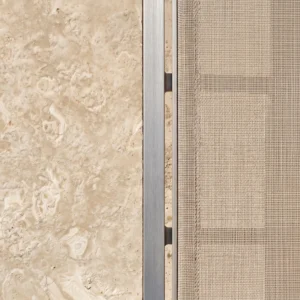
- Provide movement joints on large areas and at every abutment to a building, since sun-heated stone expands and something has to give.
- Choose external-grade adhesives, mortars and jointing products, and keep them out of the rain while they cure.
Falls deserve a sentence of their own. Water has to leave a terrace by design rather than by luck, and on a Jamaican site the design condition is a downpour rather than a drizzle. Set the falls, prove them with a hose before the client ever sees the terrace, and correct them then instead of after the first serious storm. Send us the site conditions and the drainage plan and we will tell you which of our stones the numbers actually support.