















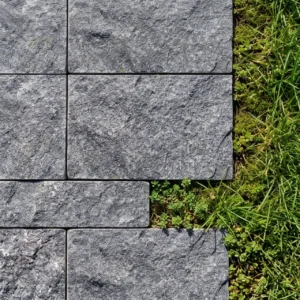
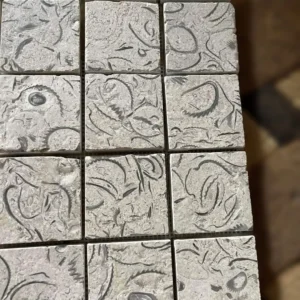
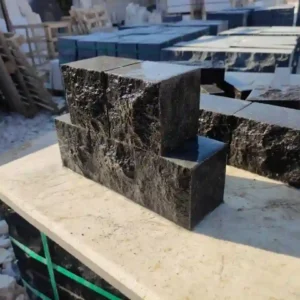
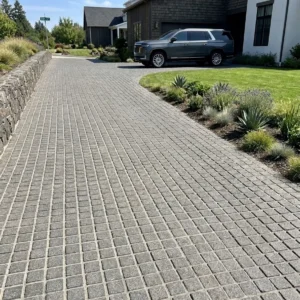



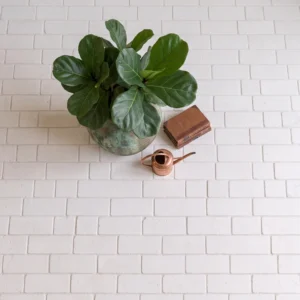
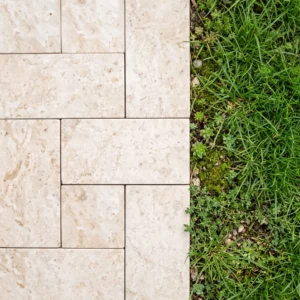
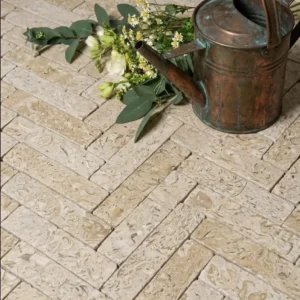
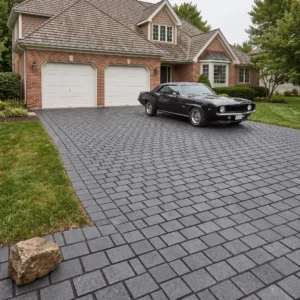


Limestone is an excellent outdoor paving material in Grenada and a poor one in certain specific places, and a supplier who will not tell you which is which is not much use to you. This page is the technical case rather than the commercial one. It covers what absorption and density figures actually mean on a wet, steep, salt-exposed island, how pale stone behaves in strong sun, what grip you need around water, where limestone should be ruled out, and how it sits alongside the island’s own basalt within a paving build-up.
The climate does most of the arguing. Coastal rainfall around 1,500 mm a year rising toward 3,800 mm in the central highlands, a wet season from June to December, steep ground that turns every terrace into a drainage exercise, and an Atlantic coast carrying a permanent salt load. Freeze-thaw, the durability test that dominates stone selection in northern markets, is simply irrelevant here and should be ignored in any specification written for this island. The tests that matter are wet slip resistance, resistance to biological growth, and behavior through repeated saturation and drying under strong ultraviolet light.
Absorption And Density, And Why They Matter Here
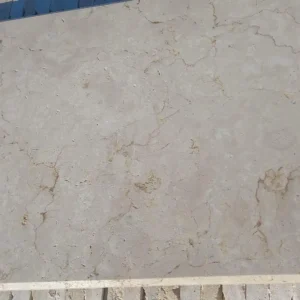
Two numbers describe most of what a limestone will do outdoors. Water absorption, expressed as a share of dry weight, tells you how much water the stone takes up, and therefore how long it stays wet, how much heavier it becomes, and how much dissolved salt or soil it can carry into itself. Bulk density tells you how tightly the stone is packed, which correlates with how it wears under traffic and how much it weighs on a truck. A dense, low-absorption limestone is the right starting point for a Grenadian terrace; an open, thirsty one belongs indoors or in a dry climate.
Do not accept these figures as marketing adjectives. Ask for the test data covering the material actually being quoted, and ask when the testing was done.
- Absorption governs drying time, and a surface that stays damp for hours after rain is a surface that grows algae reliably.
- Absorption also governs staining, because a thirsty stone drinks sunscreen, cooking oil and iron-rich runoff from planters.
- Density and flexural strength together decide whether a slab can bridge minor bedding imperfections without cracking under load.
- Abrasion resistance matters most at entrances, steps and pool edges, where grit and concentrated traffic do their work.
- Salt tolerance is the coastal question: on the Atlantic side the stone must survive repeated wetting with salt-laden spray followed by drying in full sun.
Numbers vary by quarry and by block, which is the honest reason a serious supplier quotes ranges taken from real test reports rather than one flattering figure. Match the stone to the zone. The wettest, most trafficked and most exposed area in the project should set the specification, and the calmer areas can follow it down rather than the reverse.
Weight is the practical consequence that people forget until delivery day. A denser stone in a thicker section is heavier per covered square meter, which changes how much area a container carries, how many pallets a truck can take up a steep access, and how the material is handled at the work face. Those are not reasons to under-specify, but they are reasons to decide zone by zone instead of applying the heaviest specification uniformly across a project that does not need it everywhere.
How Pale Stone Behaves In Grenadian Sun
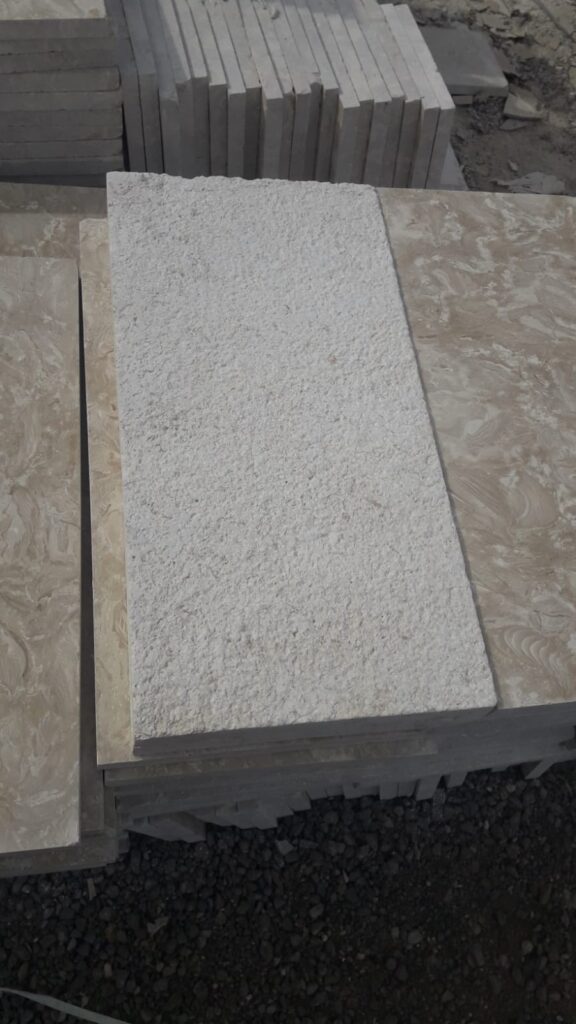
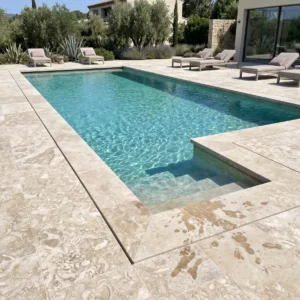
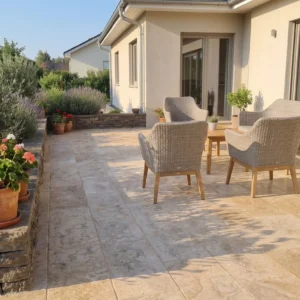
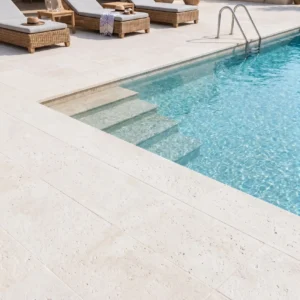
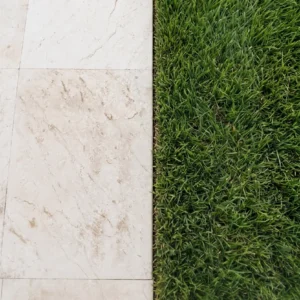
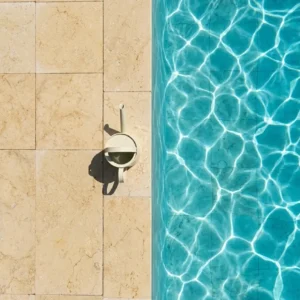
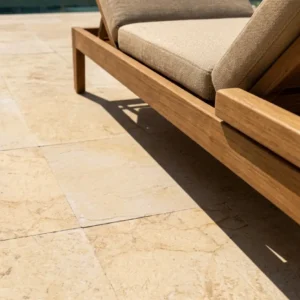
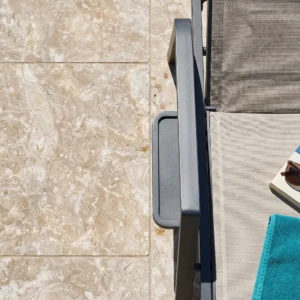
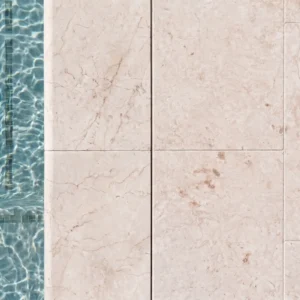
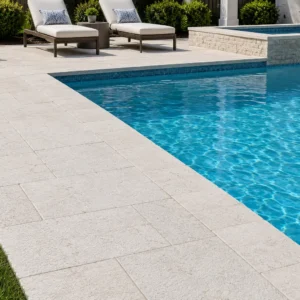
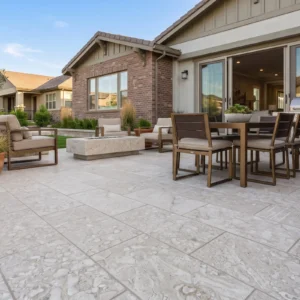
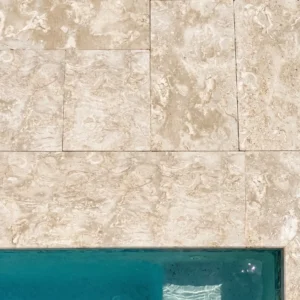
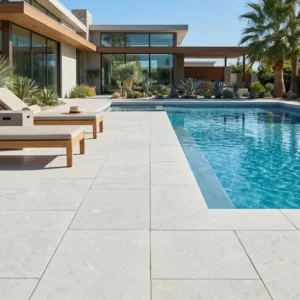
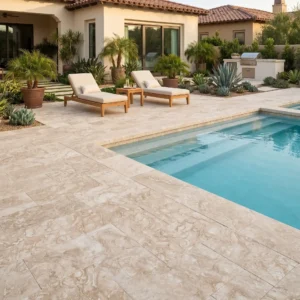
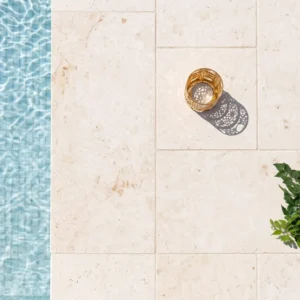
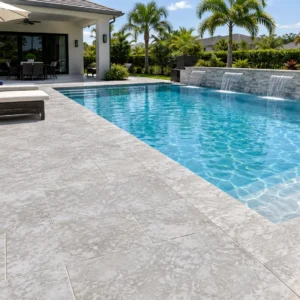
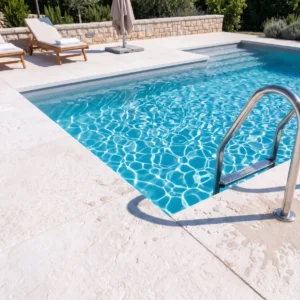
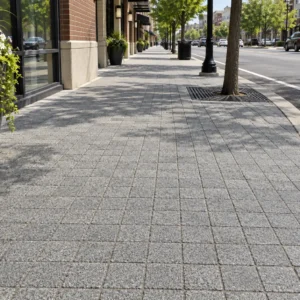
Surface temperature is a comfort specification in a country where people walk barefoot from the pool to the shade and back again all afternoon. Light-colored stone reflects a large share of incoming solar radiation and therefore runs cooler underfoot than a dark surface sitting in the same position. On a pool deck at Grand Anse or a villa terrace at Lance aux Epines, that difference decides whether the terrace gets used at two in the afternoon or stands empty until the sun drops behind the hill.
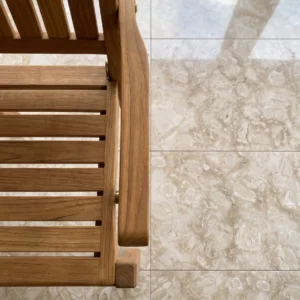
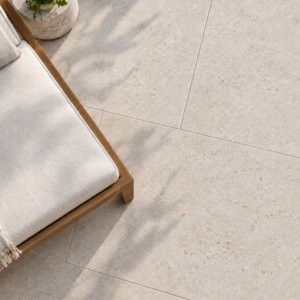
There is more to it than temperature. Pale stone under strong tropical light also controls glare when the finish is right, because a honed or lightly textured surface diffuses light while a polished one throws it back into the room behind. Color interacts with planting too. A terrace under an almond or mango canopy reads several shades darker, stays damp longer and needs the grip specification of a wet area even though the photographs show it dry.
- Reserve the palest, coolest stone for surfaces walked barefoot: pool surrounds, steps into the water and outdoor shower bases.
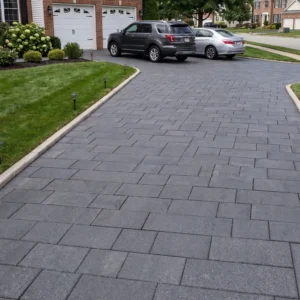
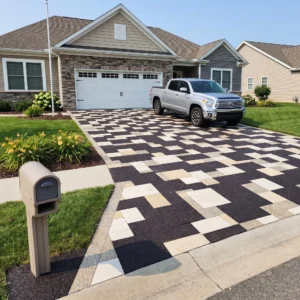
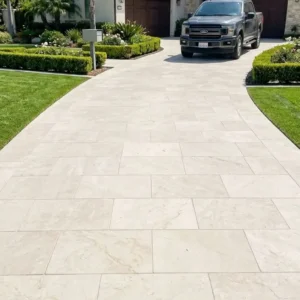
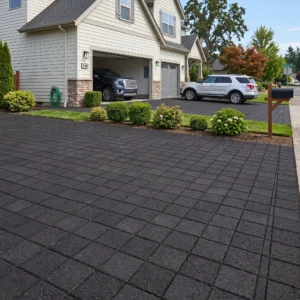
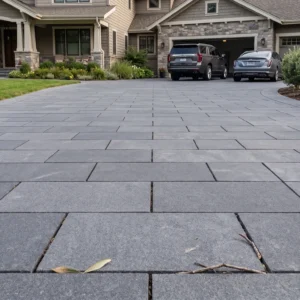
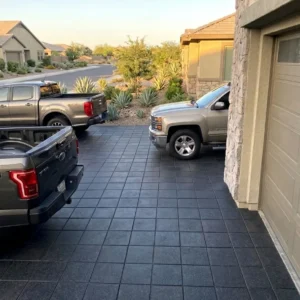
- Accept some heat gain on driveways and service areas, where footwear is a given and load capacity matters more than comfort.
- Test the actual finish in the sun before committing, since two finishes of the same stone can feel quite different underfoot.
- Remember that shaded, slow-drying sections need wet-area treatment regardless of how they look on a bright day.
- Check how far the stone darkens when wet, because during the wet season that darker appearance is its normal state for months.
Orientation deserves a moment of thought as well. A west-facing terrace at Morne Rouge takes the full late-afternoon sun exactly when people want to be outside, while an east-facing deck warms early and sits in shade by mid-afternoon. The same stone in the same finish delivers a different experience on those two aspects, which is another argument for looking at a sample in position on your own site rather than trusting a specification written for a general Caribbean condition.
Grip Around Pools, Showers And Wet Slopes
On this island slip resistance is a first-order requirement rather than a footnote at the end of the specification. Grenada is steep. Terraces step down hillsides, paths link levels, drives climb hard from the road, and for seven months of the year those surfaces are wet regularly and without warning. The correct approach is to specify the finish for the wet condition and let appearance follow, rather than choosing a look and hoping the grip is adequate.
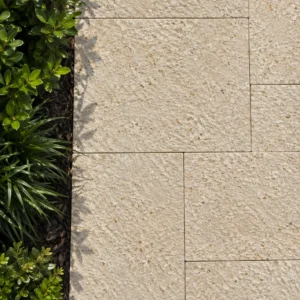
- Choose a textured, brushed, bush-hammered or shot-blast finish for any sloping path, ramp or pool surround.
- Ask for wet slip data on the specific stone and the specific finish, and treat dry-condition figures as irrelevant to this climate.
- Keep falls generous, because a surface that sheds water quickly is safer in practice than a flatter one with a better laboratory number.
- Break long falls with channels or level changes so runoff does not build speed and volume across a walking surface.
- Use a coarser texture on steps and nosings than on the flat areas around them, since steps are where a slip does real damage.
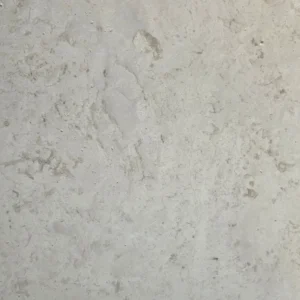
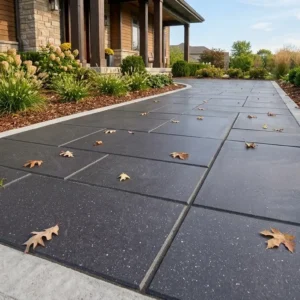
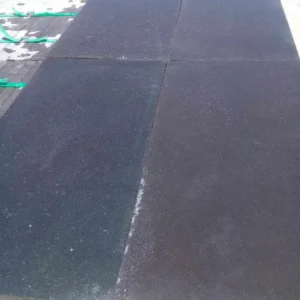
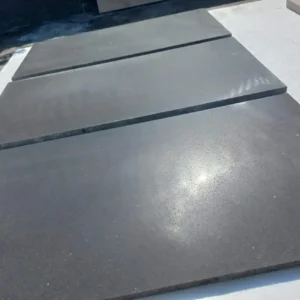
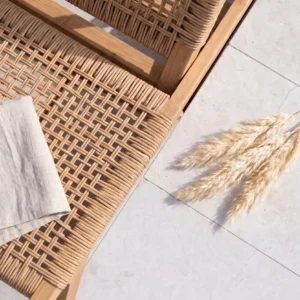
Finish choice interacts with cleaning, and it is worth being honest about the trade. A deep texture grips better and holds more dirt, so it wants a brush and water more often than a honed surface would. Around water that is a trade worth making. The sample stage settles it quickly; our limestone paving slabs collection lists which finishes are available in each format so the schedule can be written zone by zone instead of applying one texture everywhere.
Algae, Moss And Seven Months Of Rain
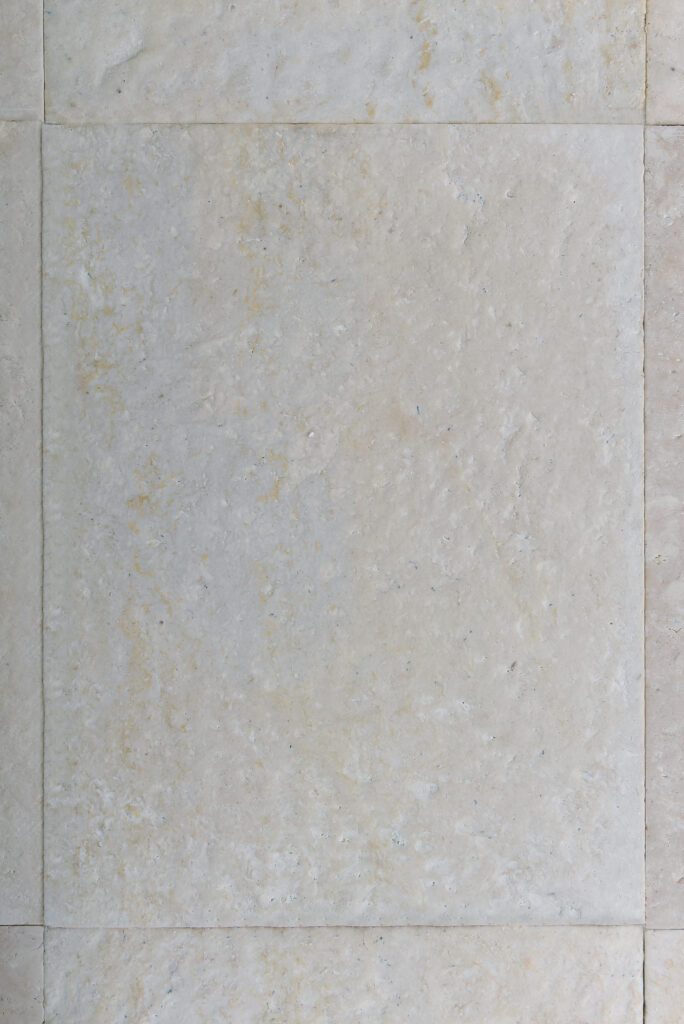
Biological growth is what actually ages paving in Grenada. Algae, moss, lichen and mold colonize any surface that stays damp, and the wet season gives them months of uninterrupted opportunity. This is not a defect in the stone and it is not evidence of a bad choice. It is a maintenance regime that should be designed in from the beginning, because the alternative is a slippery green terrace by October and an argument about who is to blame.
- Sunlight and airflow are the cheapest controls available, so prune back the canopy that keeps a terrace permanently damp.
- Make certain water leaves the surface. Standing water in a shallow depression will be a green patch within one season.
- Wash down with water and a stiff brush before growth establishes, rather than attacking a mature colony with chemicals later.
- Avoid acidic cleaners on limestone entirely, and use high-pressure washing carefully, since it can open the surface and speed up the next colonization.
- Keep an impregnating sealer current on areas under trees or in permanent shade, and re-treat those zones more often than the open deck.
Repeated saturation and drying under strong ultraviolet light is the other cycle worth designing for. Natural stone handles it far better than most manufactured surfaces, which chalk, fade or delaminate after a few years of it, but the bedding and jointing have to handle it too. Rigid mortar joints over a flexible base will crack whatever the stone above them is made of, while a properly detailed joint on a properly built base will simply keep working.
Where Limestone Is The Wrong Choice
Being straight about limits is the fastest route to a specification that lasts. There are places on a Grenadian site where limestone paving is not the right answer, and saying so plainly is more useful than selling into them and returning for the complaint two years later.
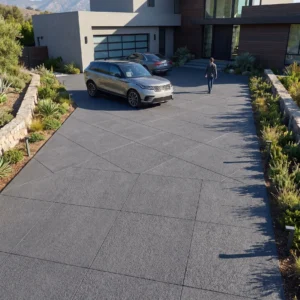
- Heavy vehicle areas such as delivery yards, service bays and anywhere a loaded truck turns regularly want a heavier-duty solution rather than a limestone slab.
- Road surfaces and structural pavement are a different discipline altogether and are properly served by local asphalt and concrete.
- Chemical dosing points at pools should not sit on limestone, because chlorine tablets and acidic dosing will etch the surface quickly.
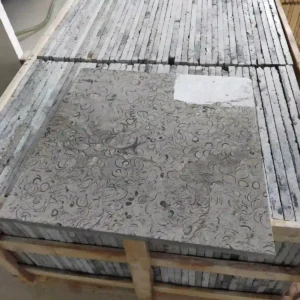
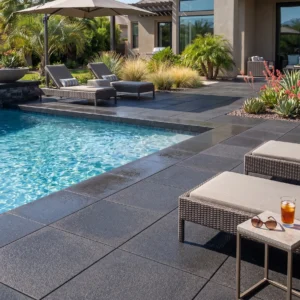
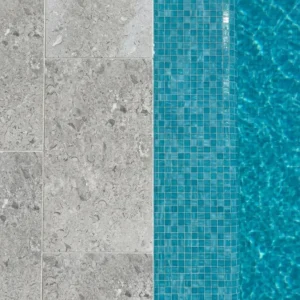
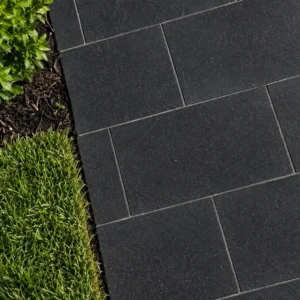
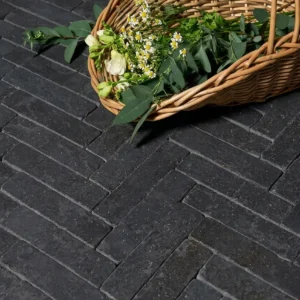
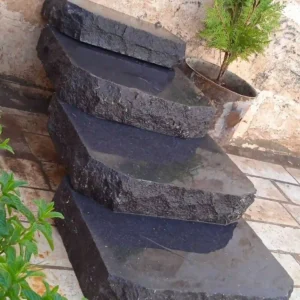
- Areas that stay permanently wet and permanently shaded, with no realistic prospect of drying or maintenance, are better served by a heavily textured dense stone such as basalt.
- Unrinsed splash zones on the exposed Atlantic side, where salt concentrates and never washes off, need a denser stone and a finish that tolerates the cycle.
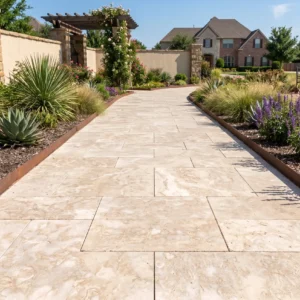
Everywhere else, and that is most of a typical project, a dense low-absorption limestone in the correct finish is an excellent, comfortable and durable surface for this climate. Terraces, pool surrounds, garden paths, entrance courts, thresholds, coping and steps all suit it. Knowing the exceptions is exactly what makes the rule reliable, and a schedule that names them is a schedule a contractor can build from.
Limestone, Basalt And What Goes Where In The Build-Up
A paving section on a Grenadian site is a stack of materials, and most of that stack is local. The formation is cut and compacted, a granular sub-base is placed and compacted, a base or bedding layer is laid, and the wearing surface goes on last. In Grenada the aggregate in that sub-base very often comes from the state-owned quarry at Telescope in St Andrew, whose basalt is a high-quality, durable rock used for high-strength concrete and asphalt road surfaces. That is crushed aggregate work, and it is what holds the island’s roads and buildings together.
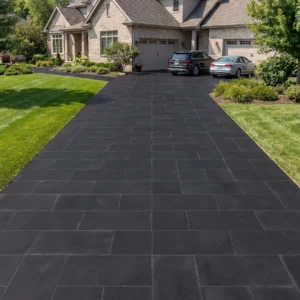
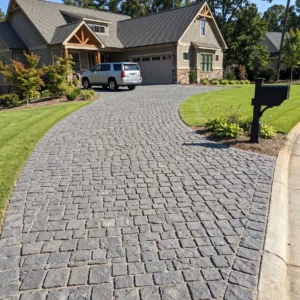
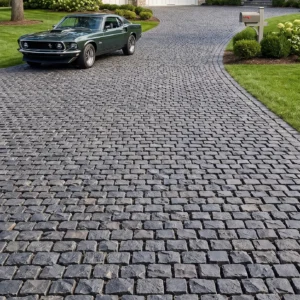
Dimension stone is the layer above it: sawn, calibrated units of consistent thickness chosen for appearance, grip and comfort underfoot. Limestone and basalt paving both belong in that top layer, doing a job a crushed product was never intended to do. On most projects the two levels work together, with imported limestone across the terrace where bare feet and reflected light matter, a denser dark stone at the driveway and the splash zones, and Grenadian aggregate underneath all of it.
Specify the layers separately and buy each from the people who make it best. That is not a compromise, it is how a paving section is supposed to be assembled, and it keeps the local supply chain doing the work it is genuinely good at while the imported component does the part that requires calibration and finish range. A section drawing that shows both, clearly labeled, tends to move through review faster than one that pretends the surface is the whole construction.
Specifying, Sampling And Buying With Confidence
A good limestone specification for Grenada names five things: the stone, the finish, the thickness, the format, and the zone each of them applies to. Anything less and the decision gets made on site by whoever opens the first pallet, which is not where you want a durability judgment being taken on a wet Tuesday morning.
- Split the schedule by zone: pool surround, open terrace, shaded path, steps, driveway apron and threshold.
- State the finish per zone, with wet areas defined explicitly rather than left to be inferred from the room name.
- Set thickness by loading rather than appearance, and keep vehicular areas on a separate line from pedestrian ones.
- Ask for test data covering absorption, density, flexural strength and abrasion for the material being supplied, not a similar one.
- Add wastage for cuts and hold a small reserve for repairs after service trenching or storm damage.
Then look at the stone itself. A small sample seen wet, in Grenadian light, on the actual site answers questions no specification sheet can, and we will confirm the dispatch and delivery window when you request one. You can get samples sent out before any quantity is committed, then hold it against the render, the joinery and the pool tile in the position where the paving will actually sit. Specify limestone for what it is genuinely good at here, be honest about where it is not, and you get a terrace that still looks considered after a decade of rain and sun.