





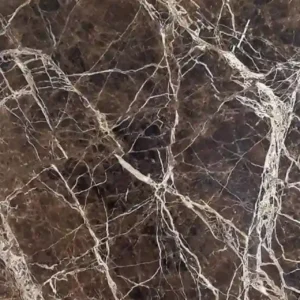
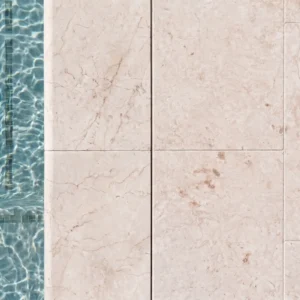
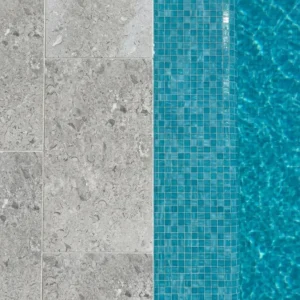
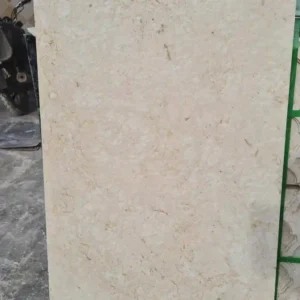

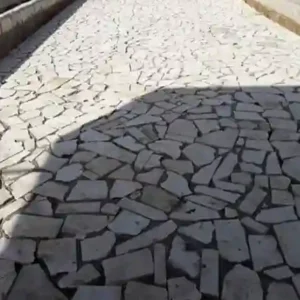
Most limestone specifications a Cayman designer will find online were written for climates that freeze. They lead on frost resistance, on freeze-thaw cycling, on de-icing salt attack and on winter drying rates, and almost none of that is relevant here. These islands do not freeze. What they do instead is hold a stone in warm salt-laden air every day of the year, wet it with driven spray and heavy rain, dry it under strong sun, and repeat that cycle without a pause. The durability question is genuinely different, and so are the numbers that answer it.
This page takes the material seriously. What absorption and density actually mean for a paved surface in a marine climate, why pale stone behaves the way it does underfoot in Caribbean sun, which surface textures give real grip around water, where limestone should honestly not be specified on these islands, and how it compares with the alternatives Cayman builders already use. Freight, duty and formats are handled on our broader Cayman paving page; this one is about the stone.
Absorption and density, and what the numbers mean here
Absorption is the figure to ask about first, and the reason is not the one most specification sheets give. In a freezing climate, absorption matters because water inside the pore network expands when it turns to ice and breaks the stone apart from within. That mechanism does not exist in the Cayman Islands. What matters here instead is salt. Salt-laden water enters the pore structure, the surface dries under strong sun, and the salt crystallizes inside the stone rather than on it. Repeat that cycle for years and a very open, very absorbent stone will show surface fatigue, while a dense one with a tight pore network will not.
Density and the associated strength figures matter for a different reason: they govern how thin a slab can safely go, how it behaves under point loads from furniture legs and vehicle wheels, and how well a cut edge survives handling through a lighterage port and across a site. The honest advice is to ask for the quarry’s test data on the specific stone you are considering rather than accepting a generic material description. Two stones both correctly called limestone can behave very differently in a marine climate, and the paperwork is what separates them.
- Ask for water absorption by weight on the specific batch, not a general figure for the material type.
- Ask for bulk density, along with compressive and flexural strength data, and read them against your thickness.
- Ask for an abrasion figure where the surface will take heavy pedestrian or vehicular traffic.
- Tighter pore structure means slower salt ingress and a longer service life in coastal exposure.
- Ignore frost-resistance claims here; they answer a question these islands never ask.
Salt, not frost, is the real durability question
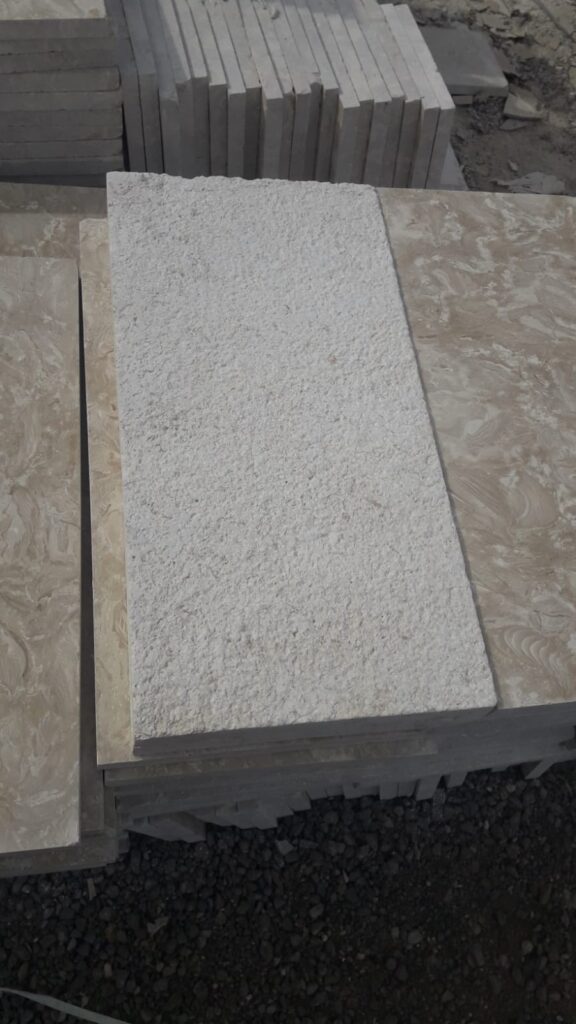
Every exterior surface on these islands lives in salt. On the windward eastern coast that arrives as driven spray. On the sheltered leeward side it arrives as haze, which is subtler and, because it goes unnoticed, often worse for maintenance discipline. Salt is why freshwater rinsing is a routine part of looking after outdoor surfaces in Cayman and not an occasional deep clean. A hose down after a stretch of strong onshore wind removes the salt before it has a chance to work into the surface, and it costs nothing.
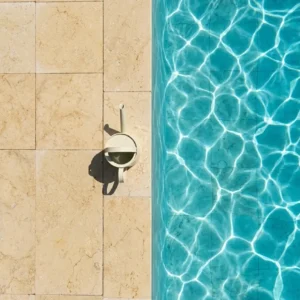
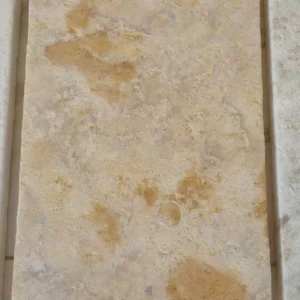
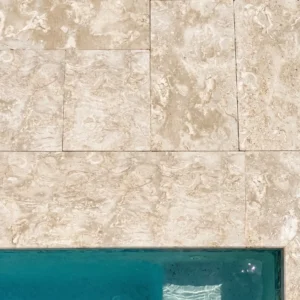
Two related effects are worth separating, because they are often confused. Salt crystallization damage happens inside the stone and is a genuine material question, answered by choosing a dense, low-absorption stone and rinsing it. Efflorescence, the white bloom that appears on new paving, usually comes from the bedding mortar and the substrate rather than from the stone, migrates to the surface as the installation dries out, and generally fades over the first months with normal washing. Knowing which one you are looking at determines whether you have a maintenance task or a specification problem. Pool chemistry adds a third factor: salt-chlorinated water splashing repeatedly onto the same coping run is a harder environment than rain, and that zone deserves the densest stone on the project.
- Rinse exterior stone with fresh water after periods of strong onshore wind, not only when it looks dirty.
- Choose the lowest-absorption stone available for coping and splash zones around salt-chlorinated pools.
- Expect some efflorescence on new work; it usually comes from the bed, not the stone, and fades.
- Avoid acid washing to remove bloom, because it etches limestone and creates a permanent dull patch.
- Keep irrigation spray off paving where possible, since repeated wetting with hard water leaves mineral marks.
Pale stone underfoot in Caribbean sun
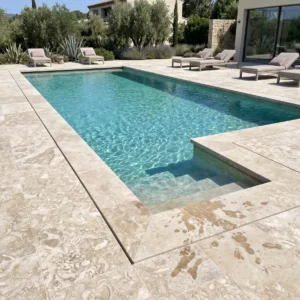
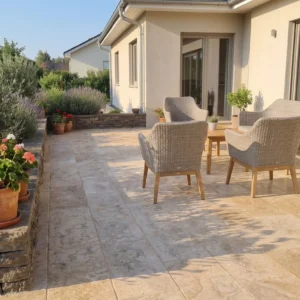
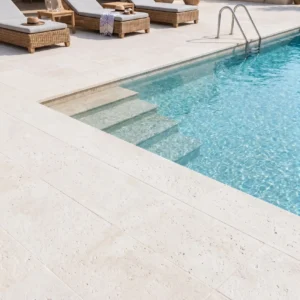
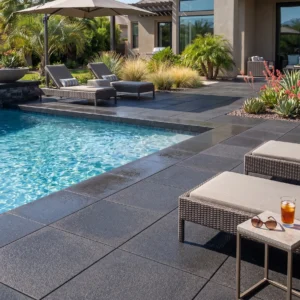
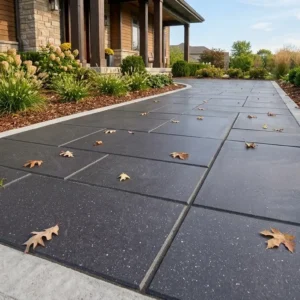
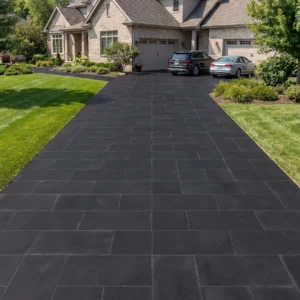
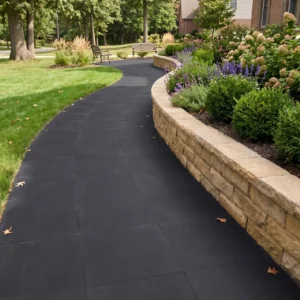
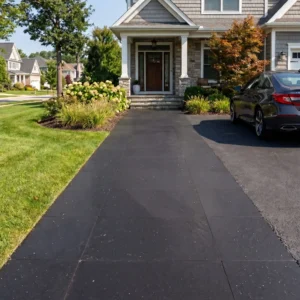
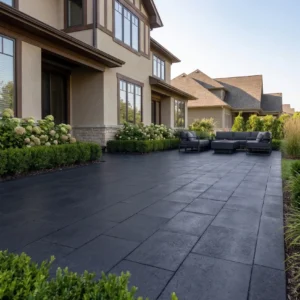
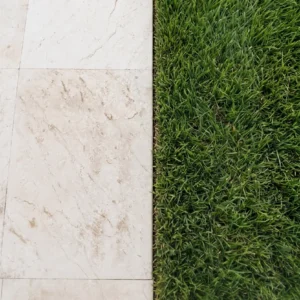
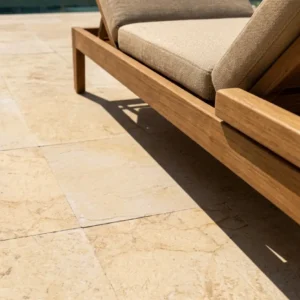
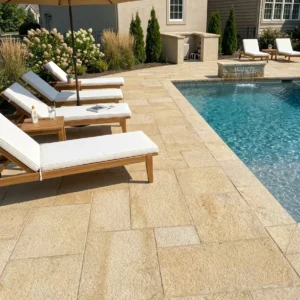
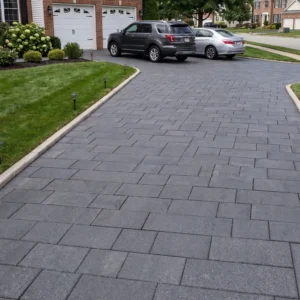
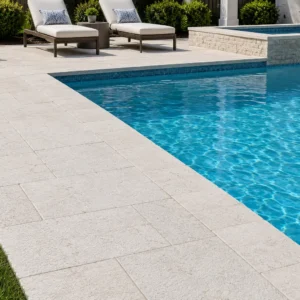
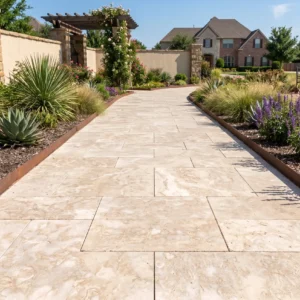
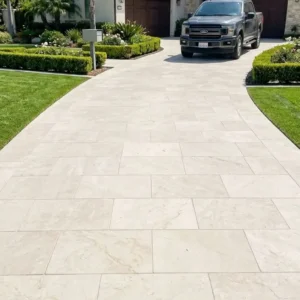
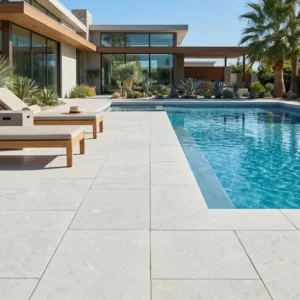
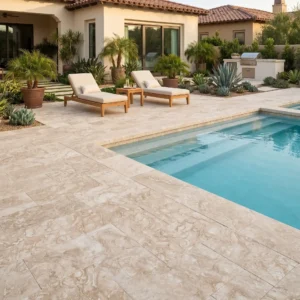
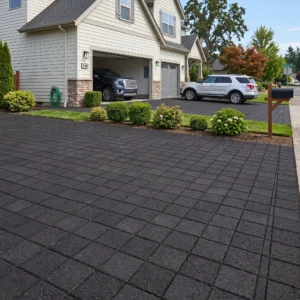
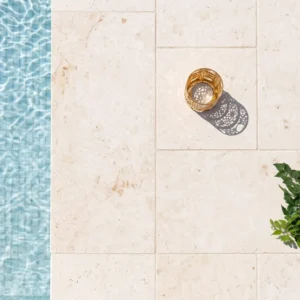
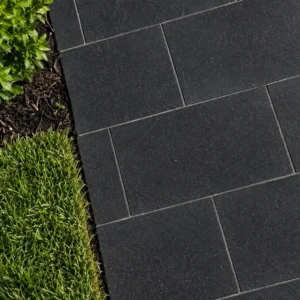
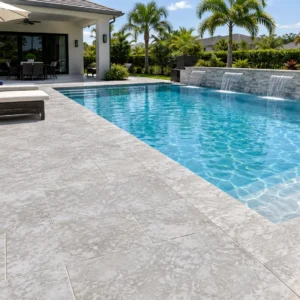
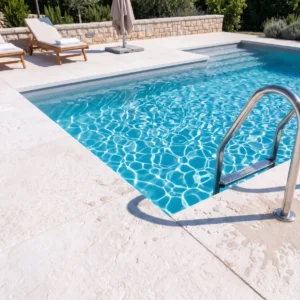
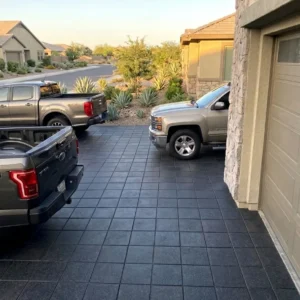
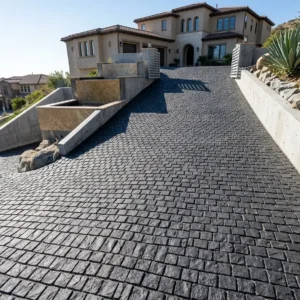
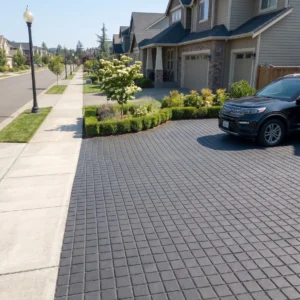
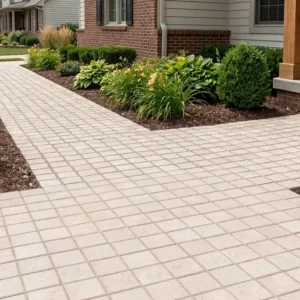
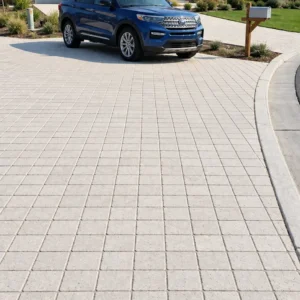
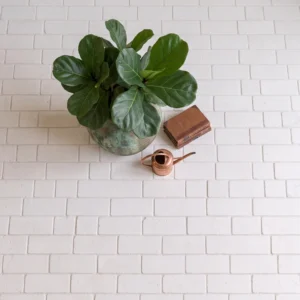
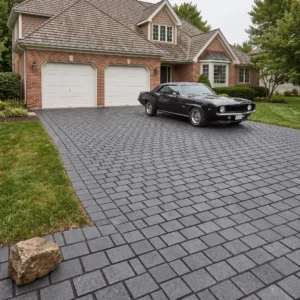
This is the practical argument for pale limestone on these islands and it is worth stating plainly. Light-colored stone reflects a large share of the solar radiation that falls on it, so it runs meaningfully cooler underfoot than a dark surface in the same position. On a pool deck where people walk barefoot between water and shade in the middle of the day, that difference decides whether an area is genuinely usable at two in the afternoon or is quietly avoided until evening. Dark charcoal paving looks superb in a rendering and can be uncomfortable in real Cayman sun.
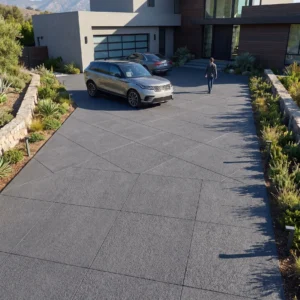
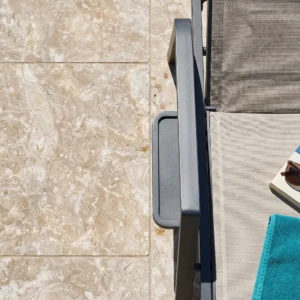
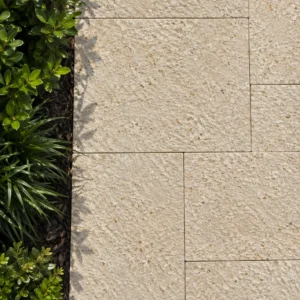
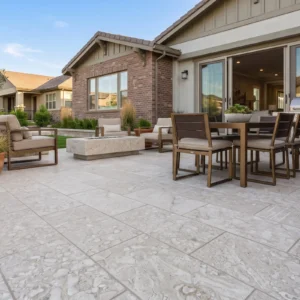
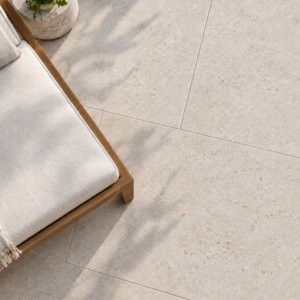
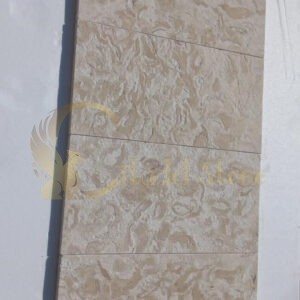
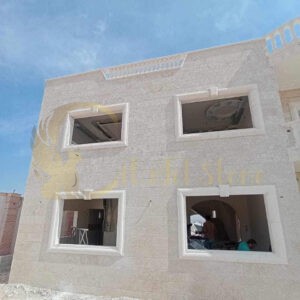
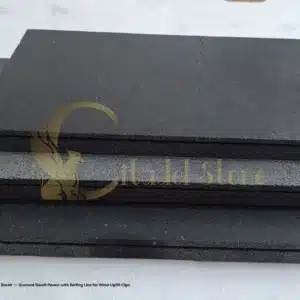
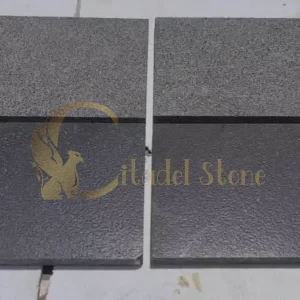
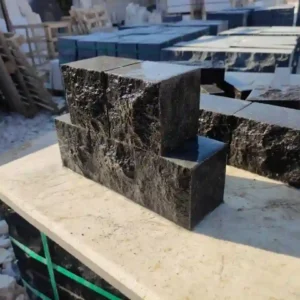
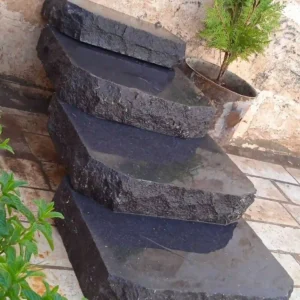
The trade-off is glare. A very smooth, very pale surface in strong overhead light throws back a lot of brightness, which is tiring to sit beside and unflattering next to a glazed facade. The answer is texture rather than a darker stone. A bush-hammered, sandblasted or lightly brushed surface breaks up the reflection, scatters the light and reads as softer, while keeping the thermal advantage that made pale stone the right choice in the first place. Darker stones such as basalt still have their place in shaded courtyards, covered walkways and vehicular areas where surface temperature is not the governing concern.
- Pale limestone runs cooler barefoot than dark paving in the same position and orientation.
- Texture, not a darker stone, is the correct answer to glare around pools and glazed facades.
- Keep the palest, smoothest surfaces out of unshaded seating areas facing west.
- Consider darker stone for shaded walkways, service courts and vehicle areas where heat matters less.
- Pergolas, planting and canopy shade change surface temperature more than any change of stone color will.
Grip finishes around water
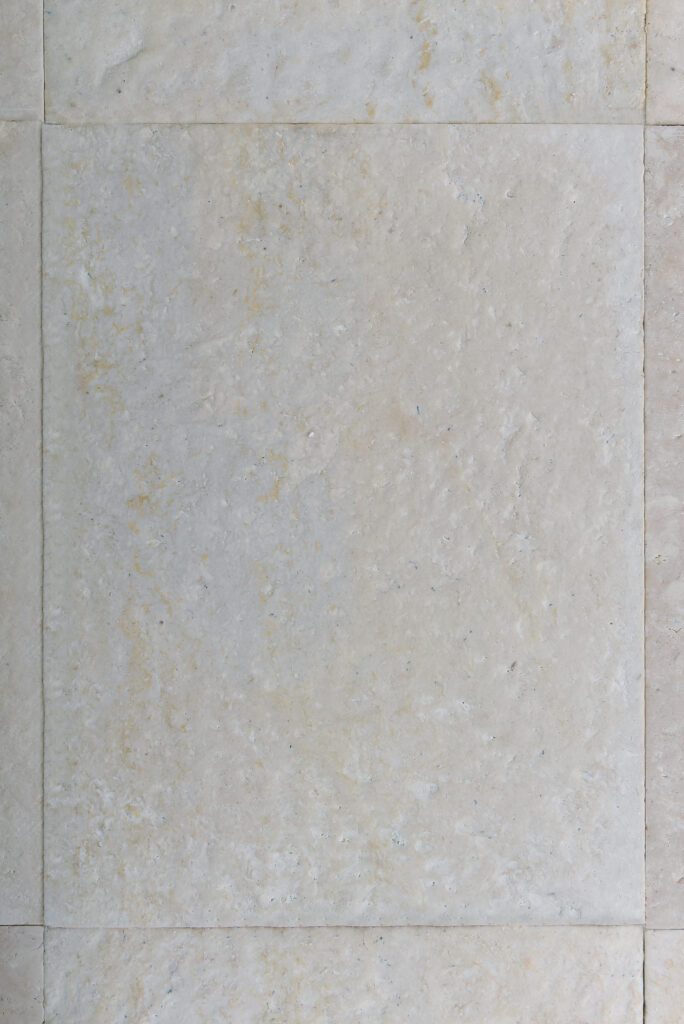
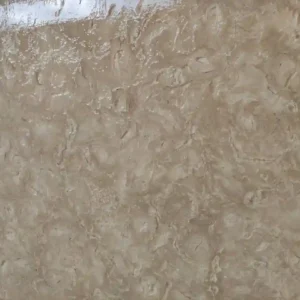
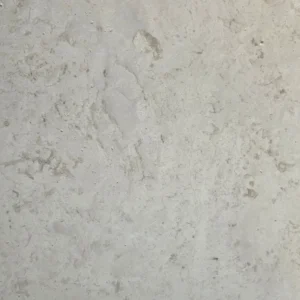
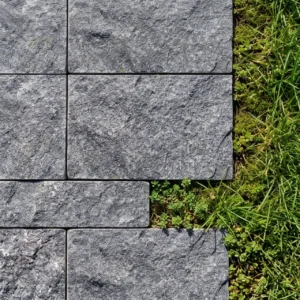
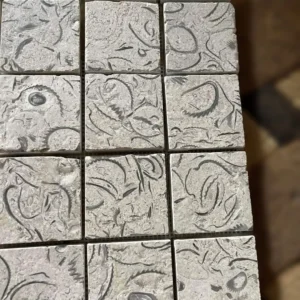
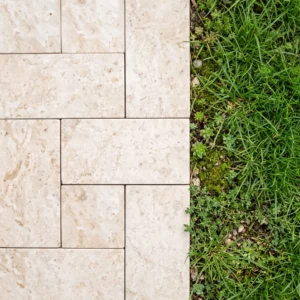
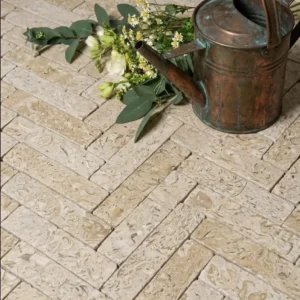
Around a pool, grip is a specification requirement rather than a preference, and finish is how you deliver it. Bush-hammering gives a strongly textured, hard-wearing surface that grips well when wet and hides light wear. Sandblasting produces a finer, more even texture that suits contemporary work where a heavily worked look would be too rustic. Brushing softens a honed surface just enough to help without changing the appearance much. All three keep the pale color that makes limestone worth specifying here in the first place.
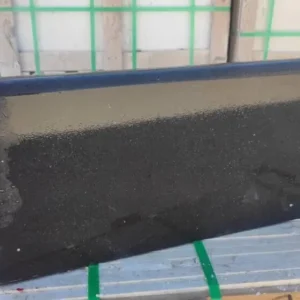
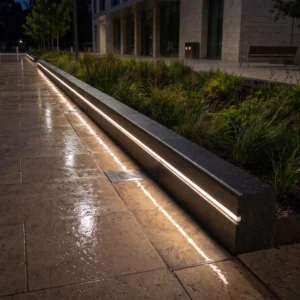
Coping is where the detail earns its money. A drop-face or bullnose profile pulls water away from the edge instead of letting it run back across the deck, and a tumbled or eased arris is far kinder to shins and to the stone itself than a sharp sawn edge that will chip in the first season. Do not put a polished surface anywhere outside on these islands. It is dangerous when wet, it dulls quickly under sand abrasion, and it never looks the way it did on delivery. Our limestone paving specifications and sizes set out which finishes each format is available in.
- Bush-hammered: the most textured option, excellent grip, well suited to busy public and resort decks.
- Sandblasted: an even, fine texture with good wet grip and a cleaner contemporary appearance.
- Brushed: a subtle improvement over honed, good for transitional zones and covered terraces.
- Drop-face or bullnose coping with an eased arris sheds water and resists edge chipping.
- Never specify a polished surface outdoors; it fails on grip, on wear and on appearance.
Where limestone should not be used on these islands
An honest supplier tells you the limits. There are places on these islands where limestone is not the right material, and specifying it there does nobody any favors. The clearest case is the direct splash zone at an exposed ironshore edge, where the stone is saturated with sea water more or less continuously and takes real wave energy in heavy weather. That is an environment for a very dense igneous stone or for engineered concrete, not for a pale sedimentary paving slab, and the setback rules that reference the ironshore exist partly because that edge is a genuinely severe place to build.
There are other cases worth naming. Heavy commercial vehicle turning areas, waste-collection pads and loading yards subject limestone to point loading and dragging that will chip and scar it. Areas under mature trees that drop heavy tannin-bearing fruit and leaves will stain a pale surface, and the staining is stubborn. Any surface that will routinely be cleaned with acid or with a high-pressure lance at close range will lose its finish. In each of these situations the right answer is a different material in that area, with limestone used everywhere else. A project that mixes materials sensibly outlasts one that insists on a single surface throughout.
- Direct ironshore splash zones with continuous saturation and wave energy: specify a denser material.
- Heavy commercial vehicle turning, waste pads and loading yards: point loads and dragging will damage it.
- Under heavily fruiting or tannin-dropping trees, unless the client accepts a program of cleaning.
- Anywhere acid cleaning or close-range high-pressure washing is part of the maintenance routine.
- Thin unbonded paving over poorly compacted fill, where the substrate rather than the stone will fail.
Limestone against the alternatives Cayman already uses
The realistic comparison here is not limestone against another imported stone. It is limestone against broomed poured concrete, precast concrete pavers and porcelain, because those are what most Cayman terraces are actually built from. Broomed concrete is inexpensive and honest, but it cracks and patches visibly, and a repair never matches. Precast pavers are consistent and readily available, though the pigment fades under intense ultraviolet and the surface texture wears smooth in traffic. Porcelain is dimensionally perfect and stain resistant, but it is a manufactured product, the edges chip to a pale core, and large-format porcelain outdoors demands a very disciplined bed.
Natural limestone earns its place on longevity and on the way it ages. It weathers rather than degrades, it can be re-honed or re-textured decades later, and its color comes from the stone itself so nothing fades. It is worth saying clearly what local material does and does not do: the Ironshore Formation and the Bluff Formation dolostone quarried across these islands supply the fill, aggregate and base course that essentially everything here is built on, and they are hard, useful rock. What no local operation produces is factory-flat, thickness-consistent, finish-controlled dimension paving with documented absorption, and that is precisely the gap imported limestone fills rather than competing with anything. If you want to judge the comparison with your own eyes, request a small stone sample and leave it outside in real conditions for a month.
- Broomed concrete: lowest cost, but cracking and patch repairs stay visible for the life of the surface.
- Precast concrete pavers: consistent and available, though pigment fades and texture polishes under traffic.
- Porcelain: stain resistant and dimensionally exact, but edges chip to a pale core and beds must be perfect.
- Natural limestone: weathers rather than degrades, can be refinished later, and holds its color throughout.
- Local quarried rock supplies the base and aggregate layers that sit beneath any of these surfaces.
Bedding, jointing and the lesson Ivan taught
How limestone is laid on these islands matters as much as which limestone it is. Hurricane Ivan in September 2004 reset local expectations about what a building and its surroundings need to survive, and the visible result is a build culture that favors bonded systems. Mortar-set paving on a properly designed reinforced slab, with restrained edges and pointed joints, does not lift, does not migrate and does not become a supply of projectiles in a serious storm. Loose-laid paving on sand has its uses in sheltered inland courtyards, but on an exposed terrace it is the wrong choice here and most experienced local contractors will say so.
Thickness follows the setting method rather than the other way round. Twenty millimeter material is for interior and well-protected covered areas on a bonded bed. Thirty millimeter is the general exterior standard for terraces, pool surrounds and pedestrian courtyards. Fifty millimeter and above belongs anywhere vehicles run, turn or stand. Joints need a pointing mortar with enough flexibility to accommodate the daily thermal movement a dark-to-bright cycle imposes, falls need to be positive and generous because the land is flat and offers nowhere lower to send water, and movement joints must be planned into large fields instead of appearing later as cracks. Send us the exposure, the setting method and the use, and we will specify the stone, the finish and the thickness that will still be doing its job when the next generation of owners takes over.