

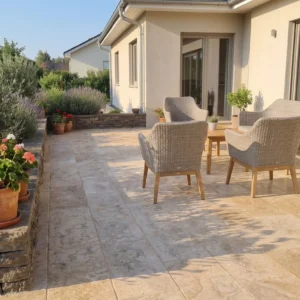
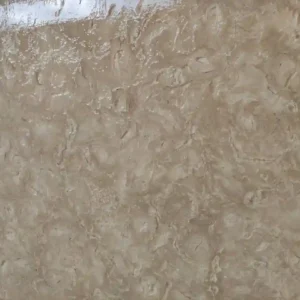
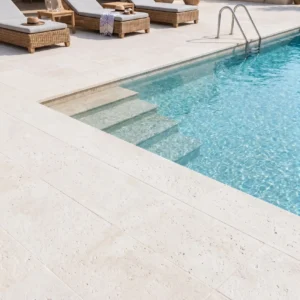


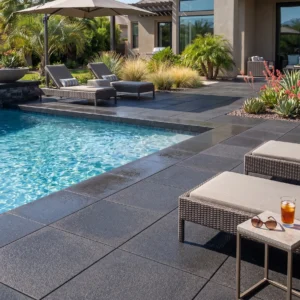





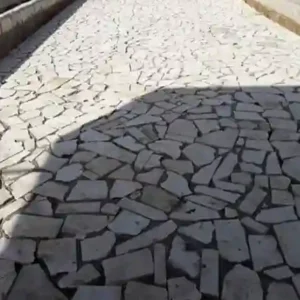
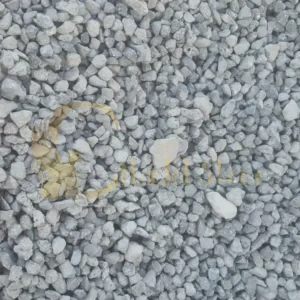
There is a version of limestone specification written for rainy places, and it is largely about saturation, staining and freeze-thaw. None of that is Aruba’s problem. This is an arid island where rainfall is not the thing shaping a paved surface. What shapes it is a steady, salt-carrying wind and a sun that works every day of the year with no seasonal relief. Those two forces act on stone through mechanisms that a wet-climate specification never has to consider, and a paving decision made on the wrong mechanism will look fine for a while and then stop looking fine.
This page is the material argument. It covers what absorption and density actually mean in a dry salt environment, how a pale stone behaves thermally when the sun is a constant rather than a season, what grip requires at a pool edge, and where limestone should not be used at all. The freight route, the border charges and the site logistics are set out separately, and small-unit sett work has its own page. Here the subject is the stone itself and how to hold a supplier to a number.
Absorption matters here for a different reason than rain
In a wet market, low absorption is asked for because saturated stone stains, holds water and suffers in freeze-thaw cycling. On Aruba the pathway is different and rather more interesting. Salt arrives continuously on the wind, dissolves in whatever moisture is present, whether that is spray, irrigation overspray, pool splash-out or an occasional rain shower, and is drawn into the pore structure of the stone. Then the sun does what it does here every day, the moisture evaporates, and the salt is left behind inside the pore space as crystals.
Salt crystallization is a slow expansive process. Repeated over years, in a place where the resupply of salt never stops, it works at the surface of a porous stone from the inside. A denser, tighter-grained limestone gives that process less room to operate, which is why absorption is the first number to ask for on this island, and why it should be a tested figure on a document rather than a reassuring adjective in a sales conversation.
- Water absorption by weight, as a tested value, so candidate stones can be compared on the same basis.
- Bulk density, which travels alongside absorption and gives a useful sanity check on it.
- Flexural strength, which governs how a given thickness behaves over its support.
- Abrasion resistance, which matters more here than in most markets because the abrasive is delivered daily by the wind.
- Slip resistance measured on the actual finish you are buying, not on a different face of the same stone.
Our limestone pavers cut for outdoor duty come with those figures available on request, and the reason we push them is simple. A number lets you compare two quotations honestly. A description does not.
How a pale stone behaves under an all-year sun
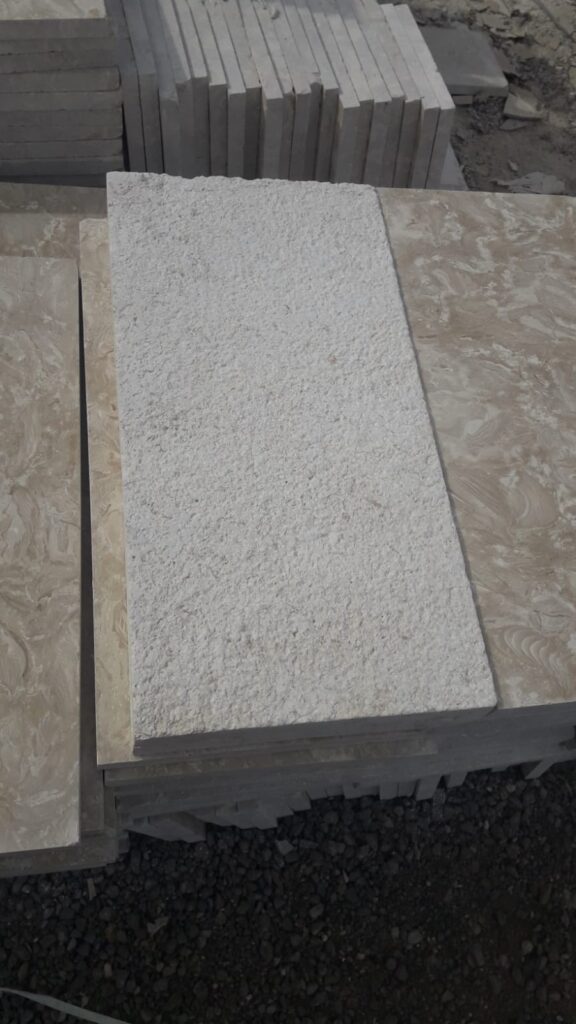
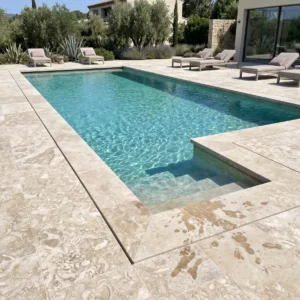
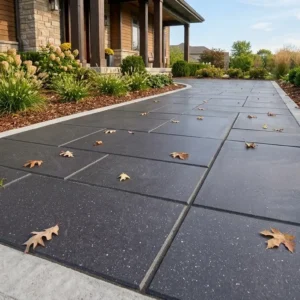
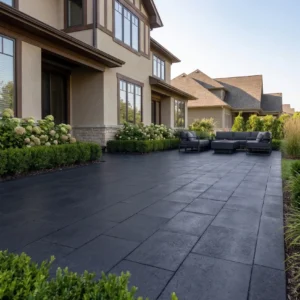
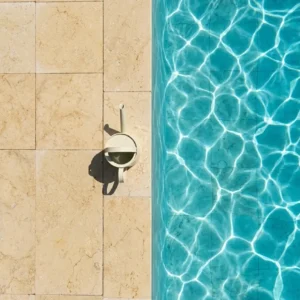
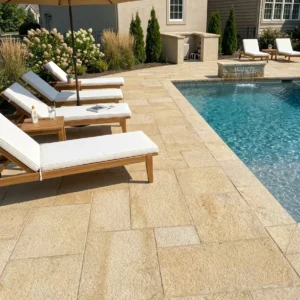
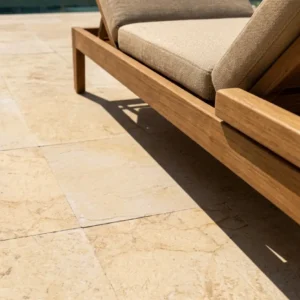
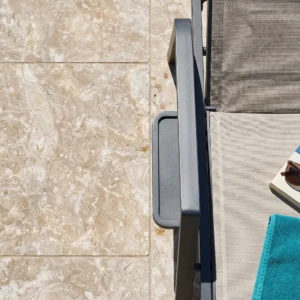
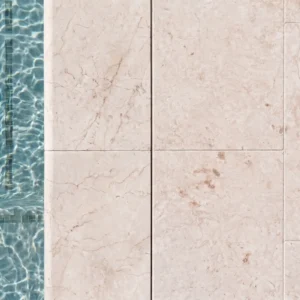
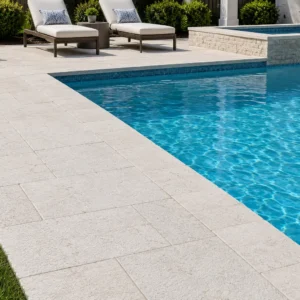
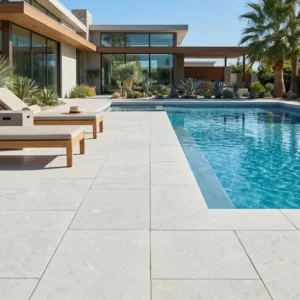
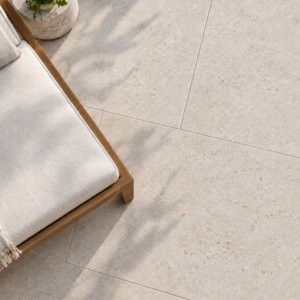
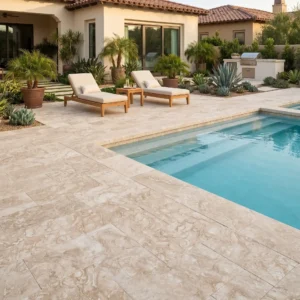
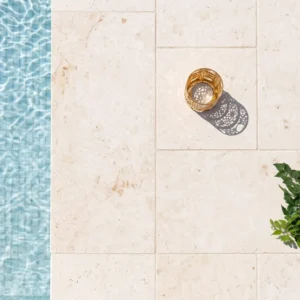
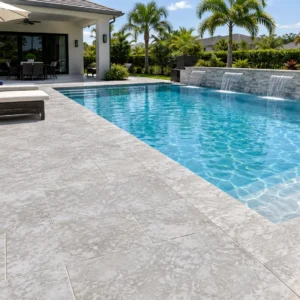
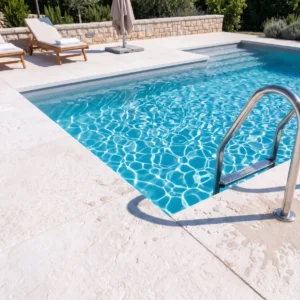
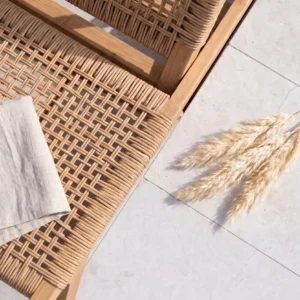
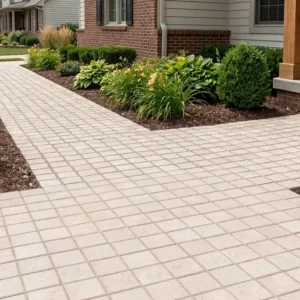
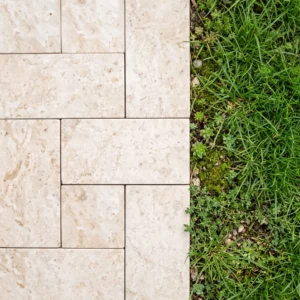
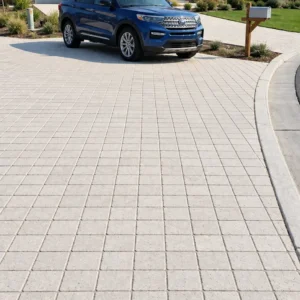
Surface temperature is a comfort issue and a durability issue at once. A light-toned stone reflects a substantial share of incoming solar radiation instead of converting it to heat, so it runs cooler in direct sun than a dark surface in the same position. On a pool deck used barefoot by children and guests through the middle of the day, that is the difference between a usable surface and one everyone hops across. It is also why pale stone is so often chosen for poolside work in hot, bright places.
Cooler is not cool, and it is worth being straight about that. Nothing left in full Aruban sun all afternoon is cold. What a pale stone does is stay within a range that bare feet tolerate, and it recovers quickly once shade moves across it. Shade planning, whether from structures or planting, remains part of the specification rather than something the stone alone can solve.
The second thermal consideration is movement. Stone expands and contracts with temperature, and on Aruba the daily cycle is reliable and the annual cycle is mild. That is actually a gentler regime than a market with cold winters and hot summers, but long uninterrupted runs of paving still need the movement to go somewhere. Joint width, bedding type and properly located movement joints are the mechanism, and they are worth agreeing with the installer at the layout stage rather than discovering later at a crack. A pale surface also shows the grime and dark staining that gathers at the edges of a deck sooner than a dark one does, which keeps maintenance visible rather than letting it build up unnoticed.
- Tone chosen for the position, with the lightest stone where the sun lands longest and nothing shades it.
- Joint widths agreed at layout stage rather than assumed, so the daily thermal cycle has somewhere to go.
- Movement joints located deliberately across long uninterrupted runs of paving.
- Bedding chosen for the substrate beneath it, since a rigid bed on a moving slab inherits every crack that slab takes.
- Shade from structure or planting treated as part of the comfort design rather than as something the stone can solve alone.
Roof-level and podium decks in the Palm Beach corridor deserve a specific mention, because they combine the strongest sun available on a property with a structural slab that has movement of its own to accommodate. Those decks repay the extra half hour spent on the build-up drawing more reliably than any other area of a resort project, and they are the areas most expensive to revisit later.
Grip at the pool edge and in salt-laden damp
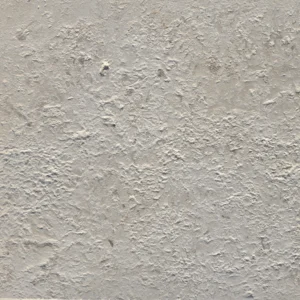
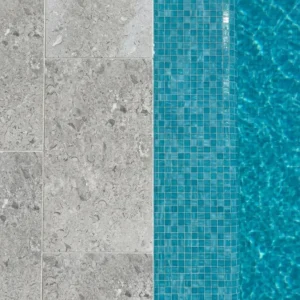
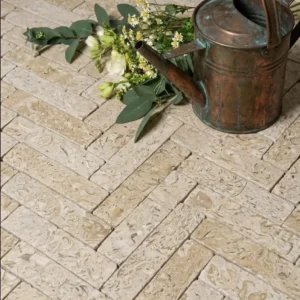
Wet stone is the risk, and around a pool the stone is wet by definition. There is no chemical solution to this and no coating that outperforms a correctly chosen texture, so grip is a decision made when the finish is selected and not afterward. A brushed, bush-hammered, flamed or otherwise textured face gives water somewhere to go and gives a bare foot something to hold. A smooth sawn or honed face outdoors, however handsome, is asking for trouble at the exact points where people are wettest.
Aruba adds a second layer to this. Salt film on a dry surface is not slippery in the way water is, but it does change how a surface feels and it holds fine dust in place. The practical response is a texture with enough depth that a rinse actually clears it, rather than a fine surface pattern that traps grit and gradually fills. That is a real distinction between finishes and it is one of the reasons a physical sample is worth more than a specification sheet in this decision.
Falls matter as much as finish. Water needs to leave a pool surround quickly and in a planned direction, both for grip and to reduce the standing moisture that carries salt into the stone. A deck laid dead level looks immaculate on drawings and holds a film after every splash. Build the fall, put the drainage where the water is actually going, and let the texture handle the rest.
Where limestone is the wrong answer on an Aruban site
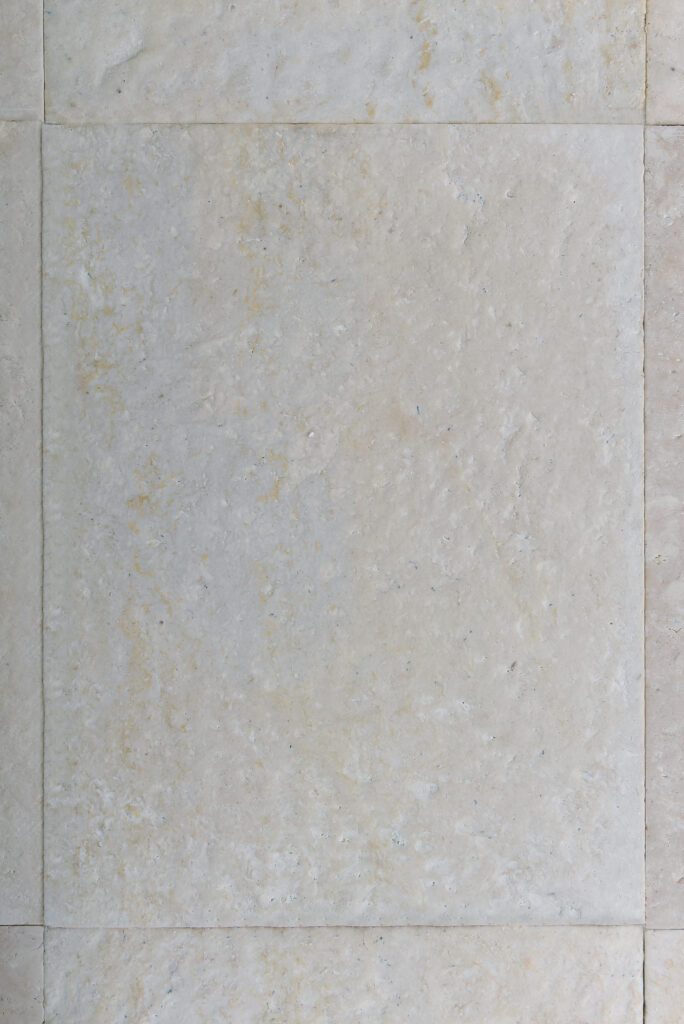
An honest supplier tells you where a material stops. Limestone is a fine outdoor paving stone across much of a project on this island, and there are positions where it should not be the choice. Naming them protects the specification, and it protects the parts of the job where limestone genuinely is the right call.
- Service yards, back-of-house routes and delivery bays, where heavy vehicles turn repeatedly and wheel scrub concentrates on a small area.
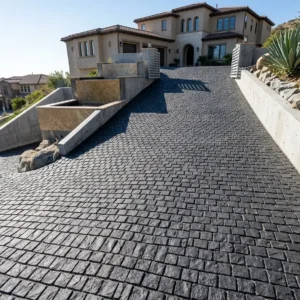
- Ramps and steep vehicle approaches, where torque and braking load work on the surface rather than simply resting on it.
- Areas washed regularly with harsh or acidic chemicals, such as certain kitchen exteriors and plant enclosures, since acid attacks calcium carbonate stone.
- Positions taking constant point loading from dragged furniture or dropped equipment without protective feet or pads.
- Any surface where the client’s real requirement is a dark tone that will not lighten, which is a specification limestone was never going to meet.
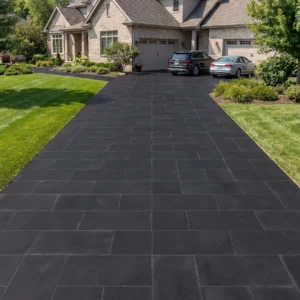
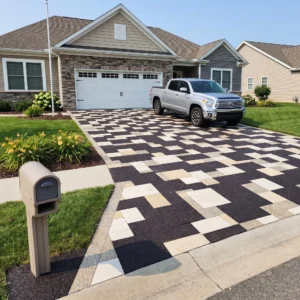
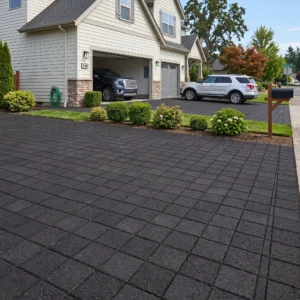
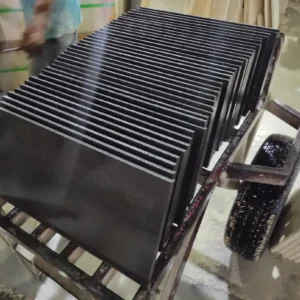
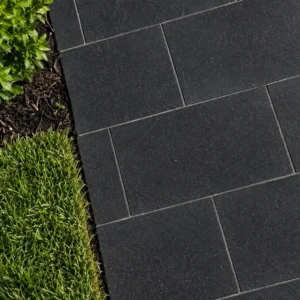
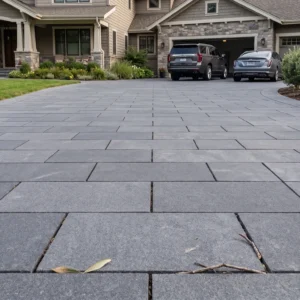
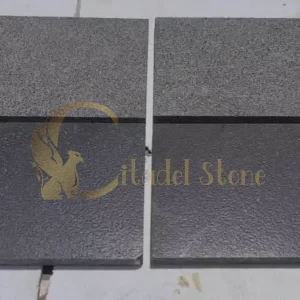
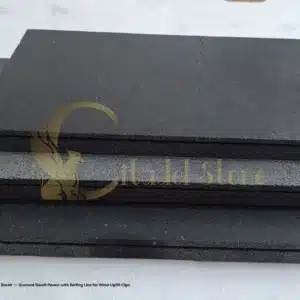
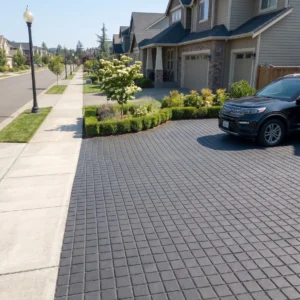
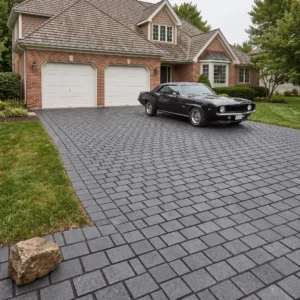
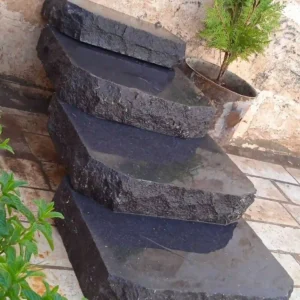
For most of those, the sensible move is a harder stone in the same project rather than a different project. We supply basalt where limestone would struggle, so a design can run pale limestone across the terraces, pool surround and guest-facing areas while the service yard, the ramp and the turning apron take a denser, darker unit that is built for that duty. Mixing materials by function is normal, defensible engineering, and it reads as deliberate design when the transition is drawn rather than improvised on site.
Limestone against the concrete the island already builds with
The realistic alternative for an Aruban paved surface is concrete: a poured slab, or manufactured concrete units. That comparison deserves a straight answer rather than a sales pitch, because concrete is a legitimate choice and there are plenty of places where it is the right one.
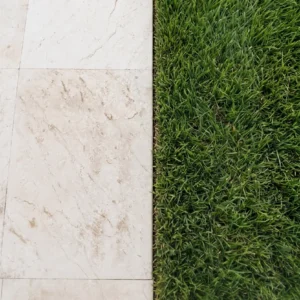
Local aggregate and ready-mixed concrete do the structural work underneath almost any paving job here. The base course, the sub-base and the bedding are local materials, and they should be. What imported dimension stone contributes is the wearing surface on top of that structure, and the case for it rests on three things rather than on any claim of superiority. Its color runs through the unit instead of being applied to the surface, so wear exposes more of the same stone rather than a different substrate. It is calibrated to a consistent thickness, so a fitter can hold a level line across a long deck. And individual units can be lifted and replaced years later, because the material is a natural stone in production rather than a discontinued product line.
There is also a heritage note worth making without overstating it. Aruba’s inherited building fabric drew on caliche from the hills in the southeast and on dry-laid coral rock walls, and the island does not carry a modern dimension-stone industry producing calibrated paving. That is a description of what exists rather than a judgment about it. The base under your terrace can and should come from the island. The wearing course is the part that has to be imported, and the argument is calibration, not quality.
Depths, bedding and joints for an outdoor stone floor
The best stone in the world laid on a poor build-up fails at the build-up. Aruba is not a freeze-thaw market and not a saturated one, so the bedding decisions here are driven by load, movement and drainage rather than by water management.
- Three centimeters on a properly prepared bed for pedestrian terraces, walkways and pool surrounds.
- Five centimeters and above for any vehicle-bearing surface, with the base designed for the load rather than for the paving.
- Full mortar bedding with no voids under vehicle-bearing units, since a void becomes a point load the first time a wheel finds it.
- Joint widths agreed with the installer at layout stage, wide enough to accept movement and to be refilled cleanly later.
- Edge restraint at every free edge, because an unrestrained edge migrates and takes the pattern with it.
Joint filling deserves a moment of thought on this island specifically. Fine wind-carried material finds open joints and settles into them, so a joint that was designed to be swept clean will not stay clean by itself. That is not a reason to avoid a jointing method, it is a reason to choose one knowing the maintenance it implies and to tell the client what it implies. Decide it deliberately, write it into the handover notes, and nobody is surprised eighteen months later.
Specifying from numbers instead of from photographs
Disappointing stone projects very often trace back to a decision made from an image. A photograph shows tone under one light at one moment and tells you nothing about absorption, density, abrasion resistance or how the finish behaves when wet. On Aruba, where the light is intense and the wear mechanism is constant, that gap between image and performance is wider than usual.
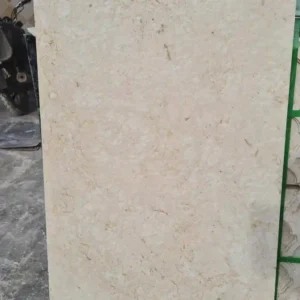
So build the specification the other way around. Start from the tested figures and the finish, confirm them against a physical sample seen on the actual site in the actual light, and only then worry about how it photographs. Ask each supplier for the same data on the same basis, and be suspicious of any quotation that answers a request for absorption with a paragraph of description.
We would rather lose a job to a better-documented stone than win one on a photograph and be argued with in two years. Small hand samples go out before any order is placed, the tested figures come with them, and where limestone is the wrong material for a particular area we will say so and quote the right one instead. Numbers travel, adjectives do not, and on an island this hard on surfaces the numbers are the only part of a quotation that will still matter a decade from now.