



















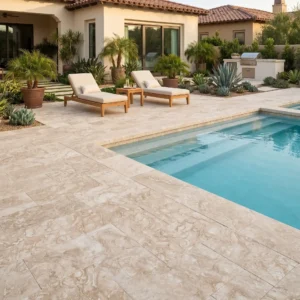

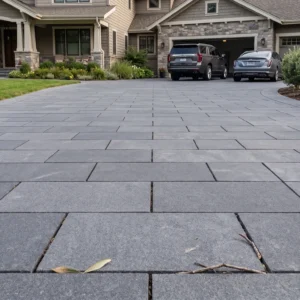
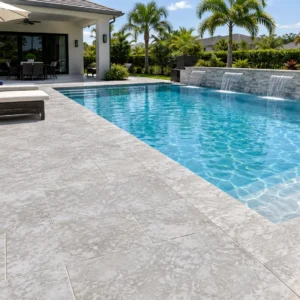

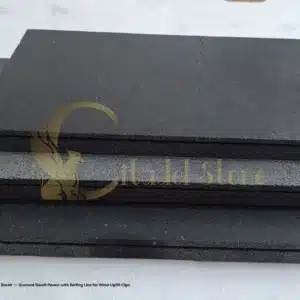
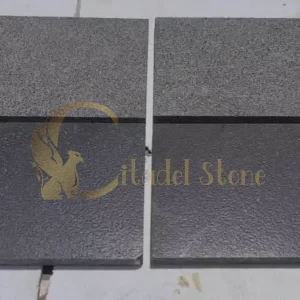

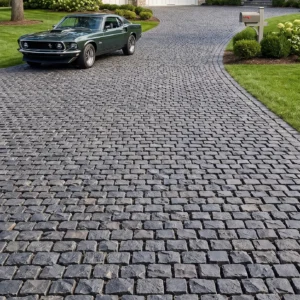
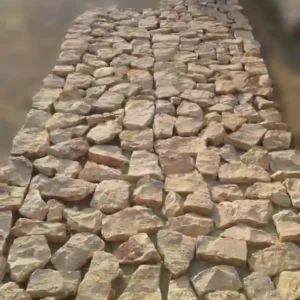
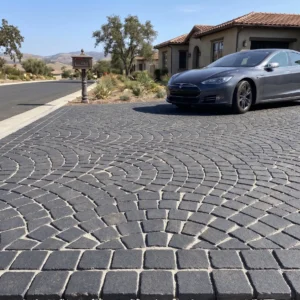
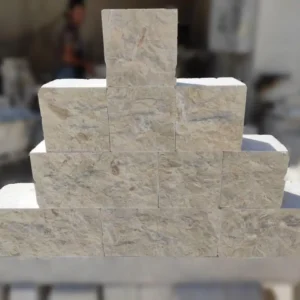



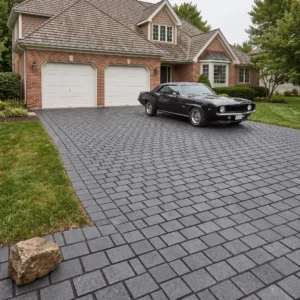
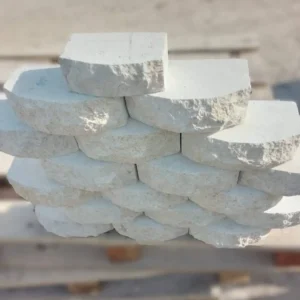

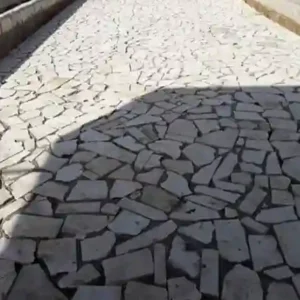
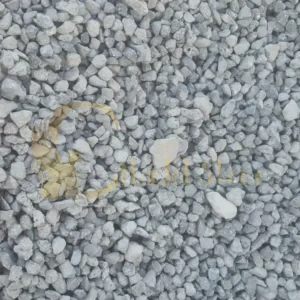
Cobblestone setts are the oldest paving idea still in daily use, and on these islands they solve a set of problems that larger units simply cannot. A sett is small enough to follow a fall, turn a curve, wrap a tree or ramp into a threshold without a single cut. It is heavy enough for its size to stay put under a turning wheel. It is cheap to replace, easy to lift and relay for a service run, and almost impossible to waste, because an offcut of a sett is still a sett. On ground that rises and falls the way a Providenciales ridge site does, that flexibility is worth more than any datasheet.
This page is about small-unit work specifically: where setts beat slabs, why they travel better on a barge, how to build a driveway apron that survives turning loads, which patterns actually do structural work rather than decoration, how to behave around heritage fabric on these islands, and the cost inversion that catches out anyone applying mainland pricing logic to a Turks and Caicos job. It deliberately does not repeat the freight and duty mechanics covered on our broad paving page, or the material testing detail on the limestone paver page.
Small Units Win on Ground That Will Not Cooperate
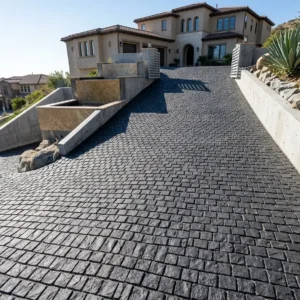
Turks and Caicos sites are rarely as flat as the marketing photography suggests. The islands sit on a limestone platform, plots run up ridges and down toward the water, and villa approaches curve to keep the view hidden until the last moment. Large-format paving hates all of that. Every curve becomes a raking cut, every change of fall becomes a lipped joint, and the setter spends the week on a saw instead of on the ground.
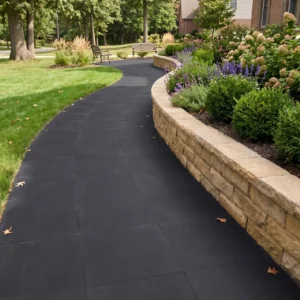
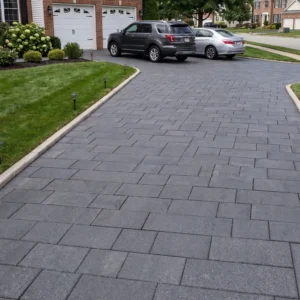
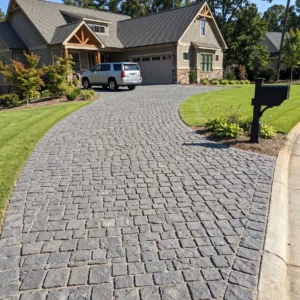
Setts absorb the geometry instead of fighting it. A curved driveway is laid as a series of arcs. A cross-fall is taken up joint by joint across the surface. A ramp into a garage or a threshold happens gradually rather than in a step. And because the modules are small, an installer can chase a level with the bedding rather than needing a slab base perfect to the last fraction.
- Curved approaches and turning circles, where an arc pattern eliminates raking cuts entirely.
- Sloping drives from road level down to a house set below, where grip and drainage both matter.
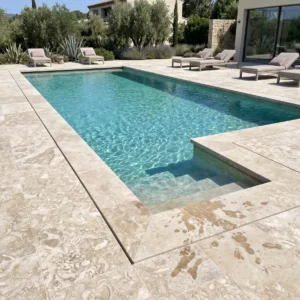
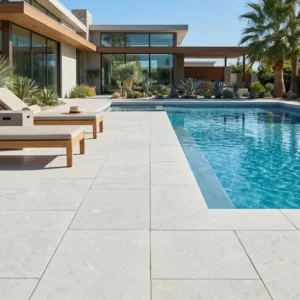
- Transitions between levels, garages, thresholds and pool terraces where a gradual ramp beats a step.
- Around mature trees, planters and rock outcrops that the design should work with rather than remove.
- Service strips, drainage channels and wheel tracks that need lifting occasionally and relaying without a scar.
There is a second, quieter benefit that only shows up years later. Because the units are small and the joints are frequent, a sett surface tolerates minor ground movement without cracking the way a rigid poured surface does. Ground on these islands settles, roots lift, and drainage runs get opened up for repair. A sett surface takes all of that and can be made good invisibly. That matters most on properties that sit empty between owner visits, where small problems go unnoticed for months and the repair happens long after the cause.
Why Setts Travel Better to These Islands
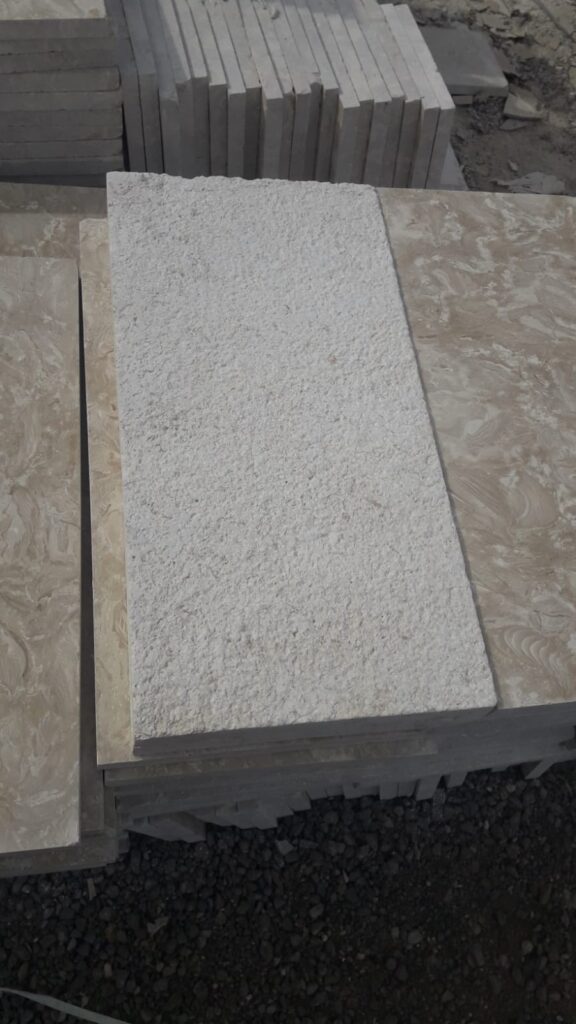
Here is an argument that only makes sense in a market like this one. The draft at South Dock on Providenciales is only about eleven feet and berthing is limited to vessels of roughly 110 TEU, so everything arrives on shallow-draft feeders and barges, and anything bound for Grand Turk, South Caicos, North Caicos or Salt Cay is loaded again onto a second, smaller vessel for the last leg. That is two or three handling operations at sea level, in the open, often with a swell running.
Small units come through that far better than large ones. A sett that takes a knock on the edge is still a perfectly usable sett, and the setter will place it where the mark does not show. A large-format slab that takes the same knock is scrap, and its replacement is a sailing away. On an outer-island job, where you cannot call for two more pieces on Thursday, that difference in breakage tolerance is a genuine risk reduction rather than a talking point.
- Setts pack densely into crates with less void space, so the freight you buy is mostly stone rather than air.
- Breakage tolerance is high, since a chipped unit remains usable and a partial unit still fills a cut line.
- Crates break down for hand carry where a villa gate or a beach path will not take a forklift.
- Waste is close to zero, which matters when every pound in the crate has already paid ocean freight and duty.
- Reordering risk falls, because a shade variation across a sett surface reads as character rather than as a visible patch.
Contractors sizing an entrance or apron usually start from the granite and limestone cobble setts range and work back to the pattern once the grade and the turning geometry are settled.
Driveway Aprons and Turning Loads
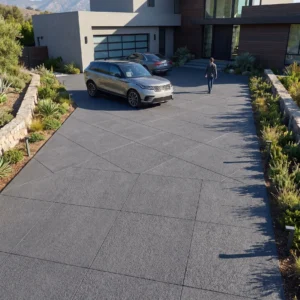
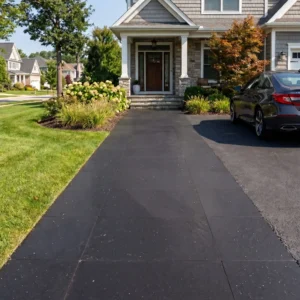
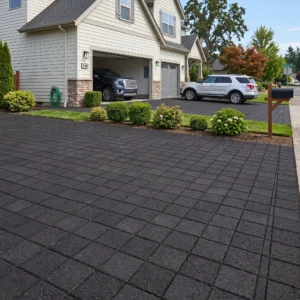
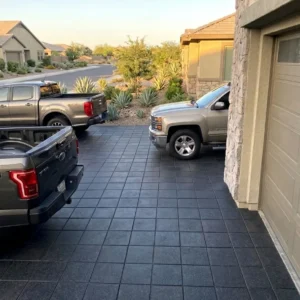
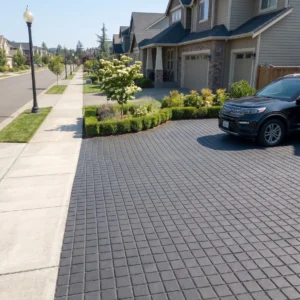
The hardest-worked square yards on any villa property are the apron where the drive meets the public road and the area where vehicles turn to park. Straight running does relatively little to a paved surface. Turning is what destroys it, because a steered wheel applies a shearing force sideways across the surface rather than a rolling load along it, and it applies that force in the same place every single day.
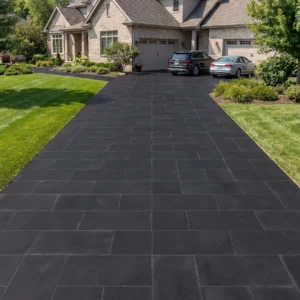
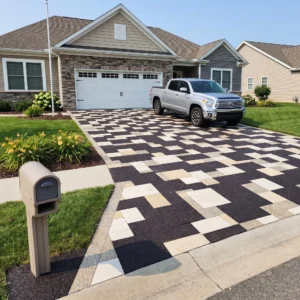
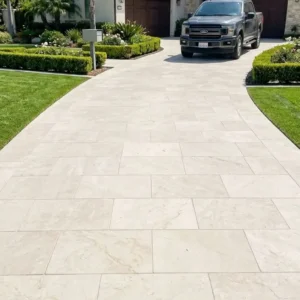
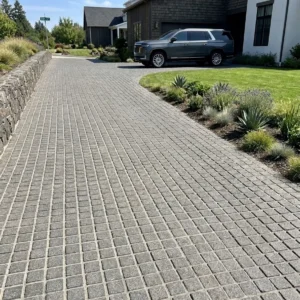
Setts handle shear about as well as any unit paving available, provided the build-up is right. On a driveway in the Turks and Caicos Islands that means a bound construction rather than a sand-set one: a proper concrete base, a bedding mortar batched with imported aggregate rather than soft local screening, joints filled with mortar rather than left open, and concrete haunching to every free edge so the outermost course cannot creep.
- Bind the whole build-up on a drive, because sand-set construction migrates under repeated turning.
- Haunch every free edge in concrete, including where the apron meets the road and where the drive meets planting.
- Give the delivery truck a thought, since building material arrives by truck at every villa and the apron carries it.
- Fall the apron so water leaves it fast, sizing the drainage for burst rainfall rather than an annual average.
- Use stainless or non-ferrous fixings for gate hardware and channel gratings, because salt air corrodes standard metals rapidly.
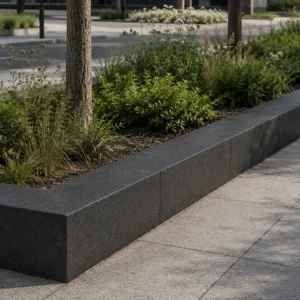
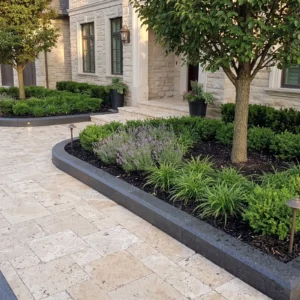
Where a formal edge is needed, a cut curb unit set on concrete gives a cleaner line and a stronger restraint than a soldier course of setts on its own, and it is worth the extra freight on any drive that heavy vehicles will use.
Gradient is the other variable to settle early. A sloping approach that rises from the road toward a house on a ridge concentrates braking and traction forces at the steepest section, and water runs down the same line looking for somewhere to go. A textured sett face gives the tires something to work against, and a channel cut across the drive at the change of grade intercepts the run before it reaches the garage threshold. Both details are cheap while the drive is being built and awkward to retrofit afterward.
Patterns That Do Structural Work
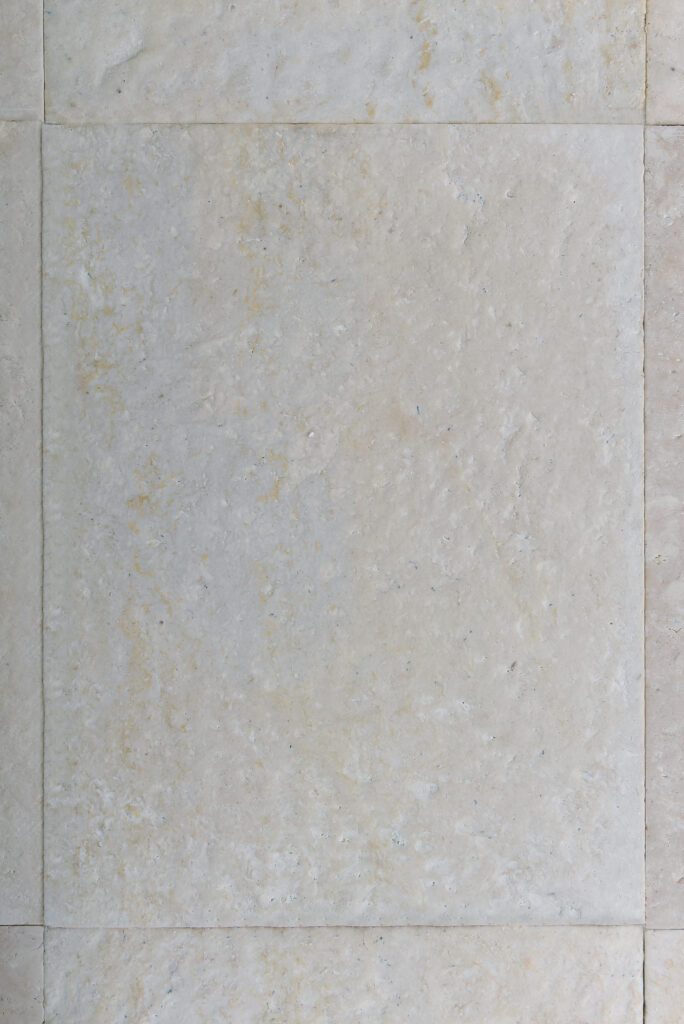
Sett patterns are usually discussed as decoration. On a working driveway they are structural, because the pattern decides how load is shared between units and which direction the joints run relative to the traffic. Getting it right costs nothing at design stage and pays for itself in the first few years.
- Fan and arc patterns absorb changes of width and direction, which makes them the natural choice for curved island approaches.
- Herringbone interlocks strongly against shear, so it belongs anywhere vehicles brake, turn or park.
- Running bond suits narrow paths and service strips where the run is straight and the loads are light.
- Radial courses around a turning circle keep joints roughly perpendicular to wheel travel instead of parallel to it.
- Banding in a contrasting stone marks parking bays and edges without needing paint that salt air will strip.
Pattern also affects labor. A simple running bond goes down fastest, herringbone is slower but stronger, and fan work is the slowest and the most skilled of the three. On an island where skilled setting time is a real constraint, that is a decision worth taking with the setter in the room rather than presenting to them as finished. Designers working through arc layouts often reference our guidance on fan pattern sett laying before finalizing the entrance geometry.
Working Near Heritage Fabric
Local limestone rubble was the historic building material of these islands, and the surviving stonework is held carefully. Cheshire Hall Plantation on Providenciales, a late-1700s cotton plantation that once ran to some 5,000 acres, survives as stone ruins including a Great House, a cotton-press base, a kitchen, a cistern and a well, and it is managed by the Turks and Caicos National Trust, established in 1992. The salt industry populated Salt Cay, Grand Turk and South Caicos, and the salinas remain part of that record.
These are sites connected to enslavement, held in trust and interpreted for a reason. They are not scenery and they are not a design reference to be borrowed casually. The right posture for a contractor working anywhere near them is restraint: keep new work legible as new work, avoid pastiche of historic rubble walling, and take advice before anything happens within sight of protected fabric.
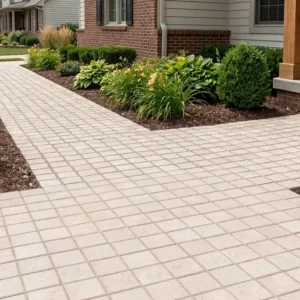
That said, small-unit paving does sit more comfortably in a historic setting than large calibrated slabs, because the scale of the module is closer to what the older surfaces used. Muted tones, a softened or tumbled face, and a slightly wider joint will read as respectful rather than as an imported grid dropped onto an old site. Where a property adjoins anything of heritage interest, plan early, because approvals take time and the material has to be on a boat well before the setter is booked.
The Cost Inversion Nobody Warns You About
On the mainland, the rule of thumb for setts is simple: the material is cheap and the labor is expensive, so setts get used sparingly and only where the look justifies the hours. Apply that logic unchanged to a Turks and Caicos job and you will price it wrong, because the two halves of the equation have moved in opposite directions.
Shipping a container from the Port of Miami to Providenciales costs on a par with shipping one from the United States to Asia, and building supplies land in the Islands at 60% to 100% above the average United States cost once duty, freight and utilities are included. The material half of the equation is therefore the expensive, volatile, hard-to-control half. Labor is on-island, quoted locally, and known.
- Waste costs more here, because every wasted piece has already paid ocean freight and duty before it hit the saw.
- Setts generate almost no waste, since offcuts, partial units and chipped pieces all still find a place in the surface.
- Repairs are cheap, because a damaged area is lifted, cleaned and relaid using the same units rather than replaced.
- Service access is cheap, since a trench through setts closes invisibly where a slab surface never quite does.
- Setting labor is real and skilled, so budget sett work in days on the ground rather than in square yards an hour.
The comparison worth putting in front of a client is not setts against slabs, it is setts against poured concrete over the life of the surface. Concrete on these islands is also an imported product in every meaningful sense, since the block, the good aggregate and the reinforcement all arrive by ship.
Specifying and Ordering Setts for TCI
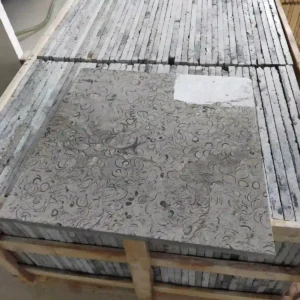
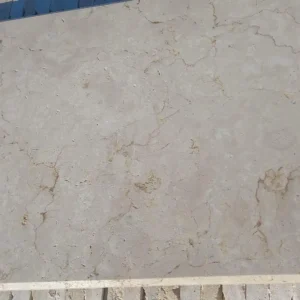
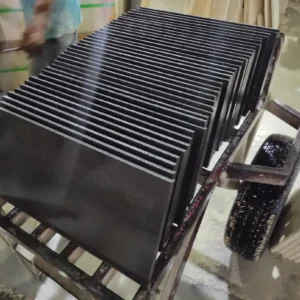
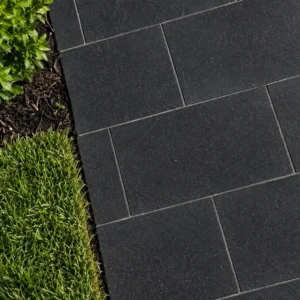
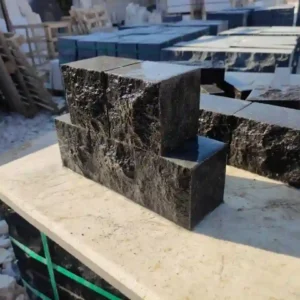
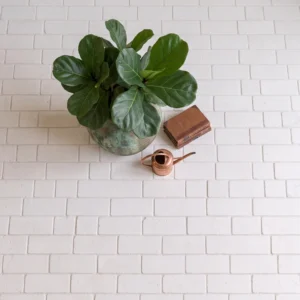
Specify setts by what they have to do. For pedestrian courtyards and garden paths a shallower unit is fine. For a drive, an apron or anywhere a vehicle turns, go deeper and set the units on a bound bed, since depth plus binding is what resists shear. Decide early between a sawn six-sided unit, which gives tight joints and a crisp modern surface, and a tumbled or split unit, which gives a softer, older look and a more forgiving joint on uneven ground.
Order in one shipment, with a working allowance included rather than added later. A sett order that arrives complete lets the setter lay continuously, and continuous laying is where the labor savings on this product actually live. Ask for small hand samples first and lay them out on site in sunlight, because setts read very differently in a crate than they do as a laid surface with joints and shadow.
Finally, sequence the paperwork ahead of the pallets. Planning permission takes roughly three months, a building permit is required before construction begins, an occupancy certificate follows inspection, and a locally licensed architect is part of the process. Get the consents settled before the container sails so the crates are not sitting at the dock accruing storage while an approval catches up. Setts reward planning more than any other paving product, because the flexibility is on the ground and the deadlines are at sea.