

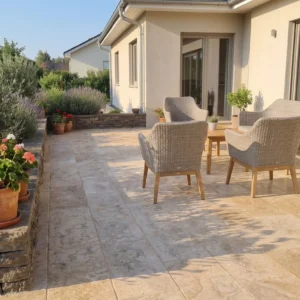

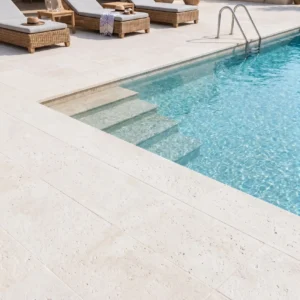



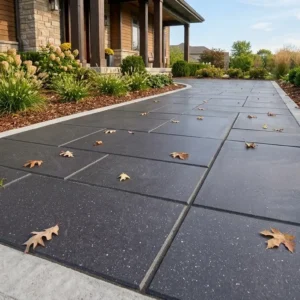
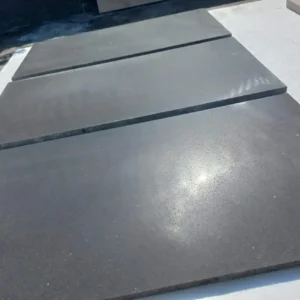
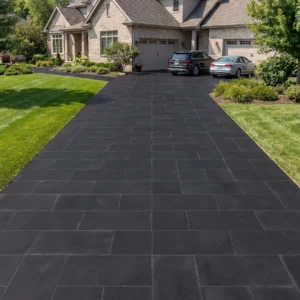
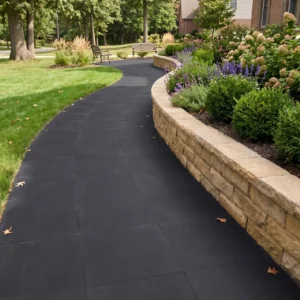
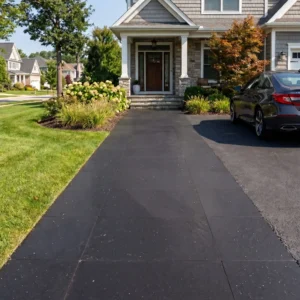








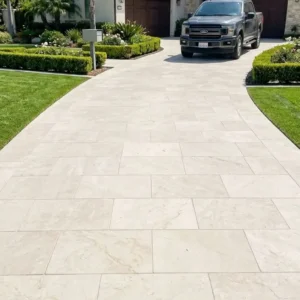
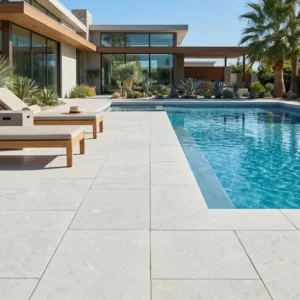
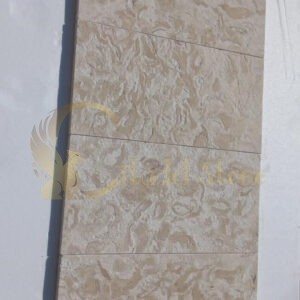
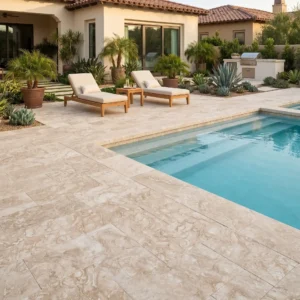
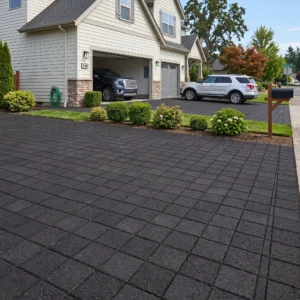





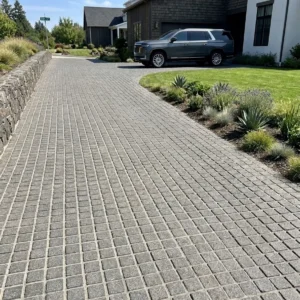
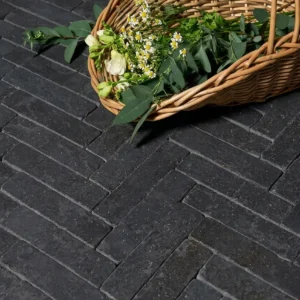
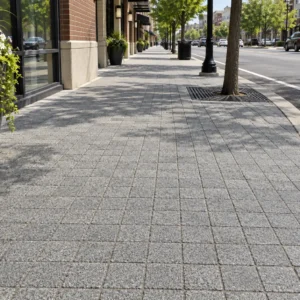
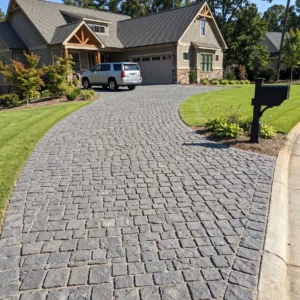
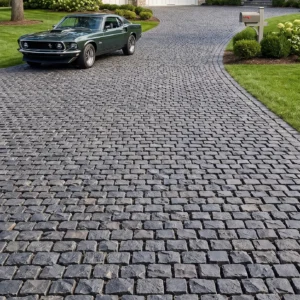
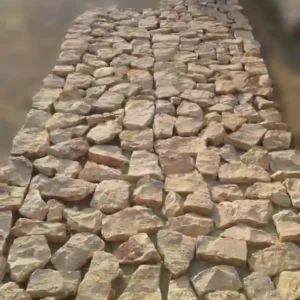
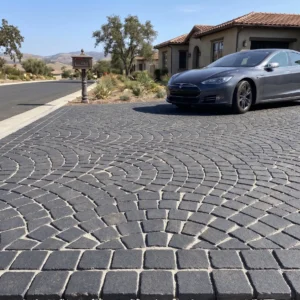
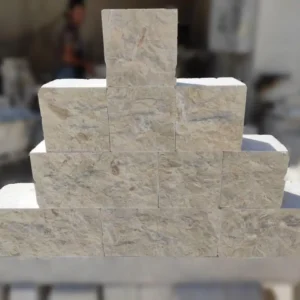
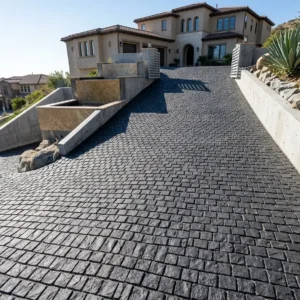
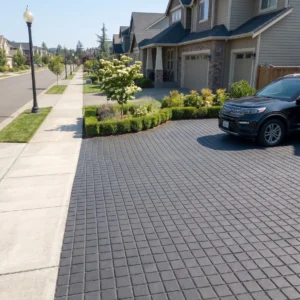
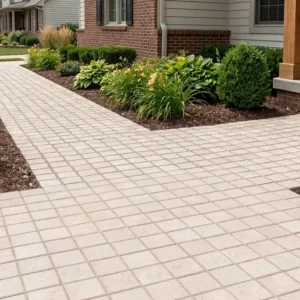
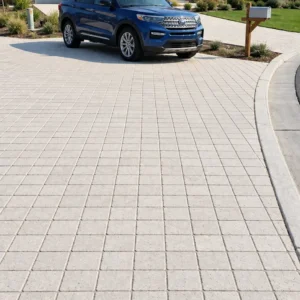
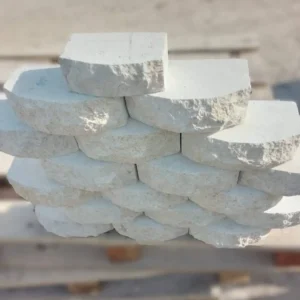
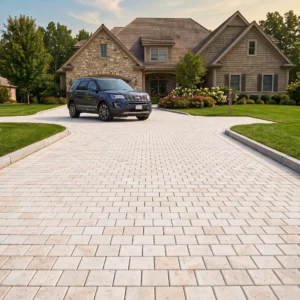
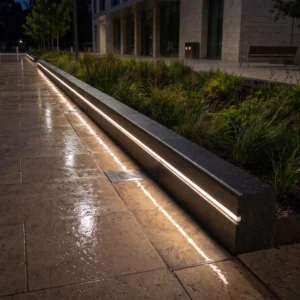
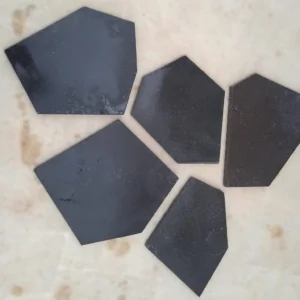
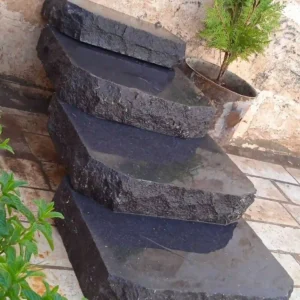
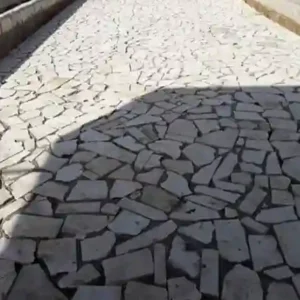

Cobblestones solve a problem that slabs cannot. A slab wants a flat plane and a straight edge, and Jamaican ground offers neither with any reliability. Driveways climb, gates sit on a skew, courtyards were laid out by eye two centuries ago, and a coastal site settles slightly year after year. Small units go around curves, follow a fall in two directions at once, and tolerate ground that moves a little without telegraphing every millimeter of that movement across a finished surface.
They also change the economics of a job in a way that surprises people the first time they price one. With slabs, the stone dominates the bill. With cobblestones, the hands dominate it, because the material is often the cheaper half and a skilled setter laying by eye is the expensive half. Understanding that inversion before you price a project is the difference between a cobbled entrance that actually gets built and one that gets value-engineered out of the drawings in week three.
Why small units win on Jamaican slopes and curves
Geometry is the honest reason to choose setts over slabs, and it applies with unusual force in Jamaica because so much buildable land sits on a grade. A large slab can only occupy one plane. Put it on a surface that falls two ways at once, which is exactly what a driveway approaching a gate on a hillside does, and it either rocks, sits proud at one corner, or forces the installer to fudge the levels with bedding thickness that will not last a season.
A sett handles this by being small enough that each unit finds its own plane. A hundred small planes approximate a curved surface convincingly, while four large ones never will. That is why cobbles appear wherever ground is difficult, from an Italian hill town to a driveway in Portland, and it is why they are still there a century later.
- Compound falls, meaning a surface draining in two directions at once, are routine for setts and awkward for slabs.
- Curves, radii and turning circles can be laid without cutting a single unit, which keeps every edge honest.
- Ground that settles slightly can be lifted and reset locally, one square yard at a time, without leaving a visible patch.
- Awkward junctions around gate posts, drain covers, tree roots and old walls close up neatly with small units.
- Steep approaches gain grip from the joint pattern itself, which breaks up what would otherwise be a continuous smooth plane.
Great houses, courtyards and heritage settings
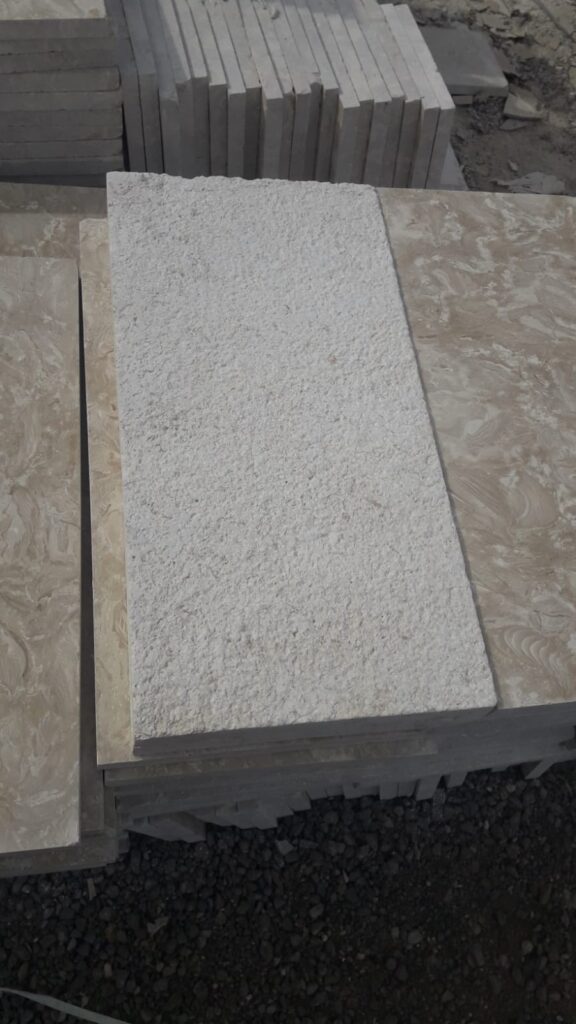
Jamaica has an architectural memory that setts belong to. Great-house forecourts, carriage circles, stable yards, estate courtyards and old town streets were all surfaced in small units laid by hand, and the visual language is instantly legible to anybody who has driven through Falmouth or stood in a courtyard in Spanish Town. Restoring or extending that language with new setts is a far more sympathetic move than laying a modern slab format across a historic forecourt and hoping it reads as respectful.
The heritage argument is also intensely practical. Small units respect existing levels around old buildings, where thresholds, steps and door sills are rarely square and cannot be altered without permission. They can be laid up to an irregular stone wall without a line of ugly cut pieces along it. And when a service trench eventually has to cross a courtyard, which it always does, setts are lifted, stacked and reset with the repair invisible afterwards, which is not true of any continuous poured surface.
- Carriage circles and forecourts, where a radial or fan layout matches the geometry of the approach itself.
- Courtyards between old buildings, where levels vary from corner to corner and thresholds cannot be moved.
- Boutique hotel entrances on the north coast that want a sense of age rather than a sense of newness.
- Garden paths and steps in the hill parishes, where the surface has to follow the land rather than flatten it.
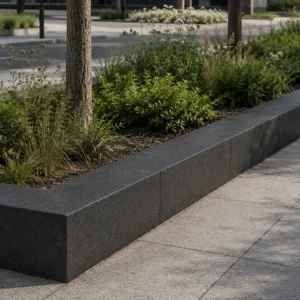
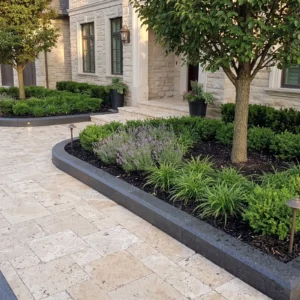
- Edging, banding and aprons that frame a larger slab terrace and give it a defined, deliberate boundary.
Driveway aprons, gate thresholds and turning loads
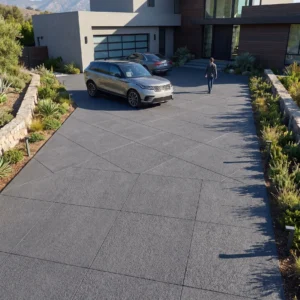
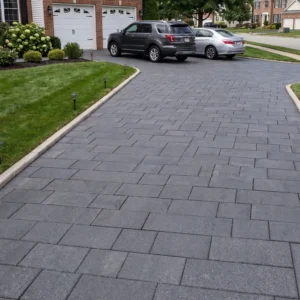
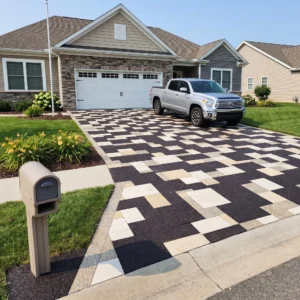
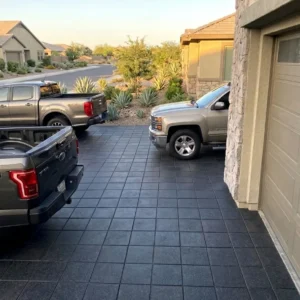
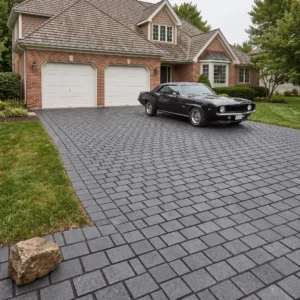
The apron, meaning the stretch of ground between the gate and the garage or between the road and the parking court, takes more punishment than any other paved area on a residential property, and it is the classic place for setts. Cars do not simply drive over it. They stop, turn the wheel while stationary, reverse, and drip. Power steering scuff is a shearing force applied to one spot repeatedly, and a small, deeply bedded unit resists it far better than a thin slab, which can only crack.
Depth is the whole point. A sett is thick relative to its face area, which means it behaves more like a small block set into the ground than like a plate resting on it. Load spreads downward through the unit into the bed instead of trying to bend the stone across its width. That is why setts survive service vehicles, delivery trucks and a decade of turning on the same square yard, and it is why unit depth deserves a deliberate decision. Look at cobblestone sizes and sorting to see what the format range looks like before you fix a specification.
- Specify a deeper unit for the apron and turning area than for a garden path, even when the stone itself is the same.
- Bed vehicle areas on a compacted engineered base rather than on soil, and restrain the perimeter properly on all sides.
- Run the joint pattern across the direction of travel where you can, which locks the units against one another under load.
- Use a bound or mortared joint on steep vehicular approaches, where a loose joint will wash out in the first heavy rain.
- Detail the transition to the public road carefully, since that lip is the single most abused inch of the whole job.
The cost inversion: cheap stone, expensive hands
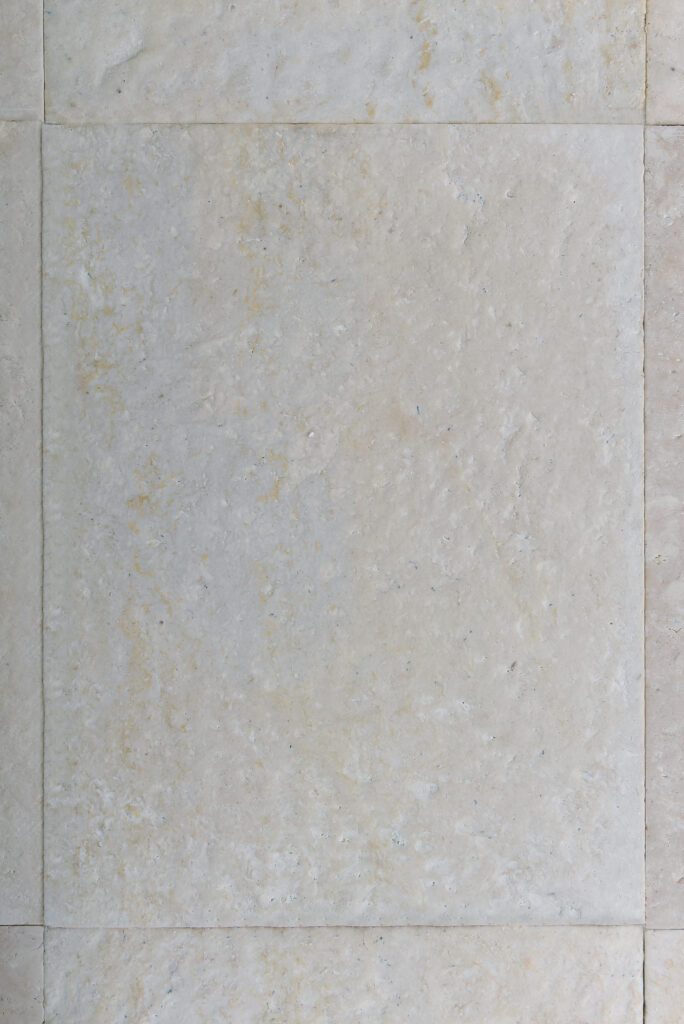
On a slab terrace the material is usually the larger number and the labor is the smaller one. On a cobbled area the ratio flips, and it flips hard. A skilled setter places every unit by hand, adjusts it, checks the line, taps it down and moves on, and a square yard of setts contains a great many units. That is craft time, and craft time does not compress no matter how the program is drawn.
Three consequences follow, and they are worth internalizing before a client ever sees a price.
- Cobbled areas are priced by area laid and by geometry rather than by stone value, so a complicated shape costs more in the same stone.
- Saving money by buying a cheaper sett barely moves the total, because you are still paying for exactly the same hands.
- Upgrading to a better stone is unusually affordable in a cobbled area, since the labor component does not change at all.
- Fan and radial patterns take longer than straight courses and should be priced as a genuinely different operation.
- Small feature areas such as an apron, a band or a courtyard deliver most of the effect for a fraction of a full-driveway budget.
The strategic reading of this is simple. If a fully cobbled driveway is out of reach, cobble the parts that carry the meaning: the apron at the gate, a band framing a slab terrace, the turning circle at the front door, the strip across a threshold. Those are the areas people photograph and walk over slowly, and they are where hand-set stone earns its money. The long straight run between them can be a larger, faster format without anybody feeling shortchanged by the result.
Patterns that hold on uneven ground
Pattern is not decoration in setts. It is structure. The way units interlock decides how load spreads, where movement goes and how forgiving the surface will be when the ground beneath it is not perfectly true. Some patterns are far more tolerant of an imperfect subgrade than others, and on Jamaican ground that tolerance is worth choosing for deliberately.
- Fan and arc layouts spread load radially and absorb small level changes better than any straight-coursed pattern, which is why they were the traditional choice for carriage circles.
- Running bond in courses across the direction of travel is simple, fast and locks well under vehicle loads.
- Herringbone interlocks strongly and resists creep on slopes, but it needs accurate setting out and generates cut units at every edge.
- Random coursed layouts suit garden paths and heritage courtyards where strict regularity would look wrong against an old building.
- Banding and edging in a contrasting course frames an area and gives the setter a datum to work from as the job progresses.
Fan layouts deserve particular attention on a Jamaican site because they combine the two things this ground asks for: radial geometry for curved approaches and tolerance of a surface falling in more than one direction. They are slower to lay and they need a setter who has done them before, but on a forecourt or a turning circle nothing else looks as settled into the land. If the geometry is new to you, our guide to fan pattern paving layouts covers the setting out in detail. Whichever pattern you choose, agree it before the base is built, because some patterns need far more accurate levels than others.
Bedding, joints and edge restraint when the rain comes hard
Setts fail at the joint and at the edge, almost never in the middle of the field and almost never in the stone itself. In a climate where rainfall arrives as a serious event rather than as drizzle, the joint has to be designed as a water detail and the edge has to be designed as a structural one. Get those two right and a cobbled surface will outlive everybody who worked on it.
- On slopes and vehicular areas, use a bound or mortared joint, because a loose sand joint will be excavated by run-off within a single season.
- On level garden areas a compacted sand or fine-aggregate joint is fine and lets the surface breathe and drain freely.
- Restrain every edge with a haunched concrete edge, a mortared edge course or a set curb, since unrestrained setts on a slope will migrate downhill.
- Compact in layers and check levels constantly as you go, because a sett surface is only ever as true as the bed beneath it.
- Let the surface settle and re-point after the first heavy rain rather than signing the work off during a dry week.
One further detail matters more in Jamaica than in most places: where the water goes once the joint has done its job. A cobbled surface on a slope becomes a channel in a downpour, and if the bottom of that slope is a garage door, a threshold or a neighbor’s boundary wall, the paving has just been designed as a delivery system for a flood. Put a channel drain, a cross-fall or a soakaway at the low point and size it for the storm rather than for the average week. It costs very little at the time and it is nearly impossible to add afterwards.
Sizes, sorting and how to order
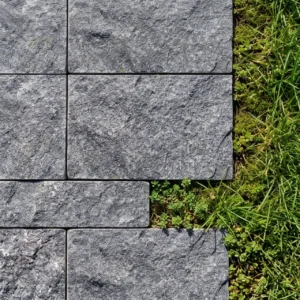
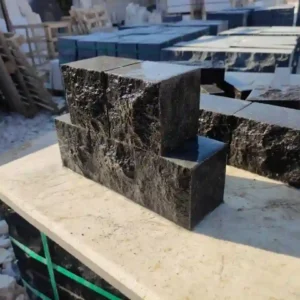
Cobblestones and setts are sold by nominal size, and the word nominal is doing real work in that sentence. Split and hand-dressed units vary, that variation is the character of the product, and it is precisely what makes a hand-set surface look hand-set. Sawn setts are far more regular, lay faster and give a tighter, more contemporary joint. Neither is better than the other; they are different products for different jobs, and you should decide which you want before ordering rather than being surprised by a pallet.
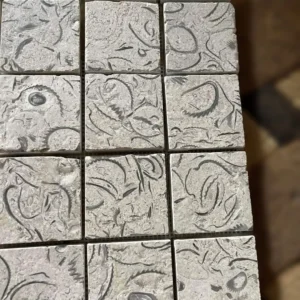
- Small square setts for tight radii, arcs, fans and detailed banding around a terrace edge.
- Larger rectangular setts for straight courses, driveways and areas that need covering efficiently.
- Deeper units where vehicles turn, and shallower units for paths and terraces on a bound bed.
- Sawn-face setts where a flat, even surface and a narrow joint are wanted for a contemporary building.
- Split or tumbled units where an aged, traditional appearance suits an older house or a heritage courtyard.
Order in one batch wherever it is possible. Sett tone varies naturally between production runs, and while that variation blends beautifully when it is mixed across a whole area, a later top-up laid as a distinct patch will always read as a patch. On site, work from three or four pallets at once rather than emptying one before opening the next, which distributes the natural variation evenly instead of banding it across the job in stripes. Allow a sensible overage for cuts, breakage and future repairs, and keep the spare stock somewhere dry and clearly labeled.
We supply setts and cobblestones in limestone, basalt and shellstone to contractors, landscape designers, hotels and private clients across Jamaica, sorted before shipping and packed so that a pallet arrives as a pallet rather than as a puzzle. Tell us the area, the geometry and the traffic it has to carry and we will specify the size, depth and pattern that will still be there in twenty years.