













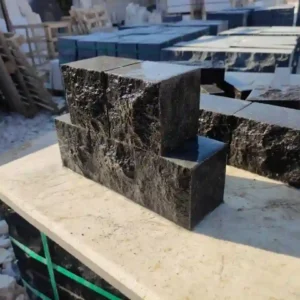
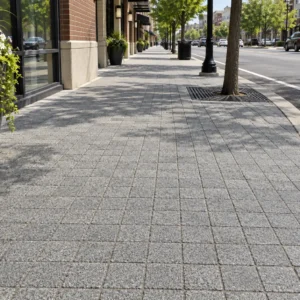
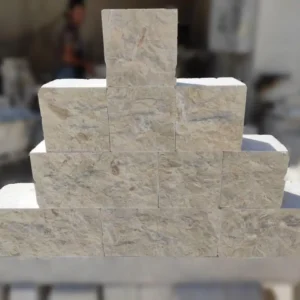
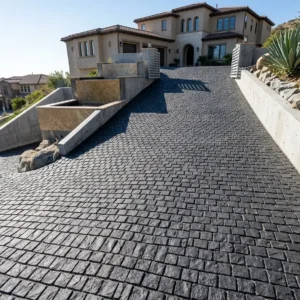
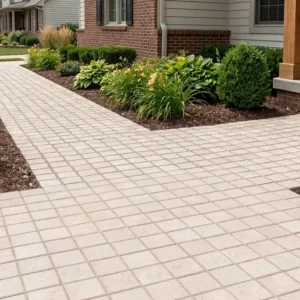
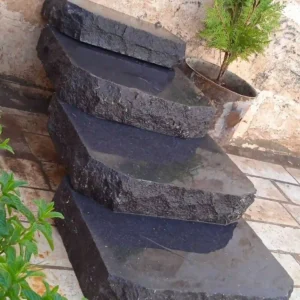
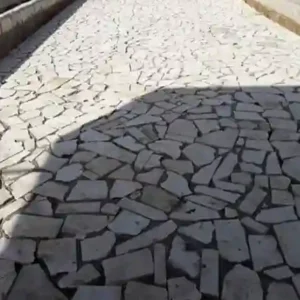
Barbados is not a flat island, and its building reflects that. Land rises from the west coast in terraces toward the interior, the parishes fold into gullies, and coastal plots step down toward the water in a series of level changes that any hard surface has to negotiate. Add narrow parish roads that force entrance courts into curves, and a heritage fabric in Bridgetown and the Garrison that predates the sawn slab entirely, and a pattern emerges: an enormous amount of Barbadian ground is easier to pave with small units than with large ones.
That is the case for cobbles and setts here. Not nostalgia, and not decoration – geometry. A stone the size of a fist follows a fall, turns a curve and absorbs ground movement by adjusting a joint at a time. This page covers where that capability pays on Barbadian sites, what to order, and how the work is priced and landed.
What Small Units Actually Solve
The advantages of setts are structural before they are visual, and they show up exactly where Barbadian sites are difficult:
- Falls and slopes – a sett field follows a gradient without cutting or regrading
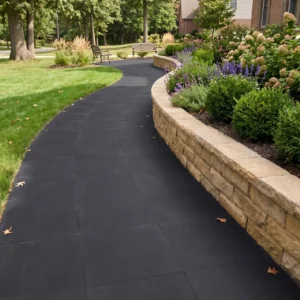
- Curves – entrance courts and turning circles resolve without wedge-shaped offcuts
- Ground movement – small units ride minor settlement that would crack a large slab
- Repair – a damaged stone lifts out and resets invisibly, which no slab does
- Heritage adjacency – split faces sit comfortably beside older Barbadian fabric
The cost is labor: every stone is placed by hand, and a sett court takes days where a slab terrace takes hours. On a difficult site that arithmetic still favors setts, because the groundwork they avoid often exceeds the laying time they add.
Driveways, Aprons and Turning Ground
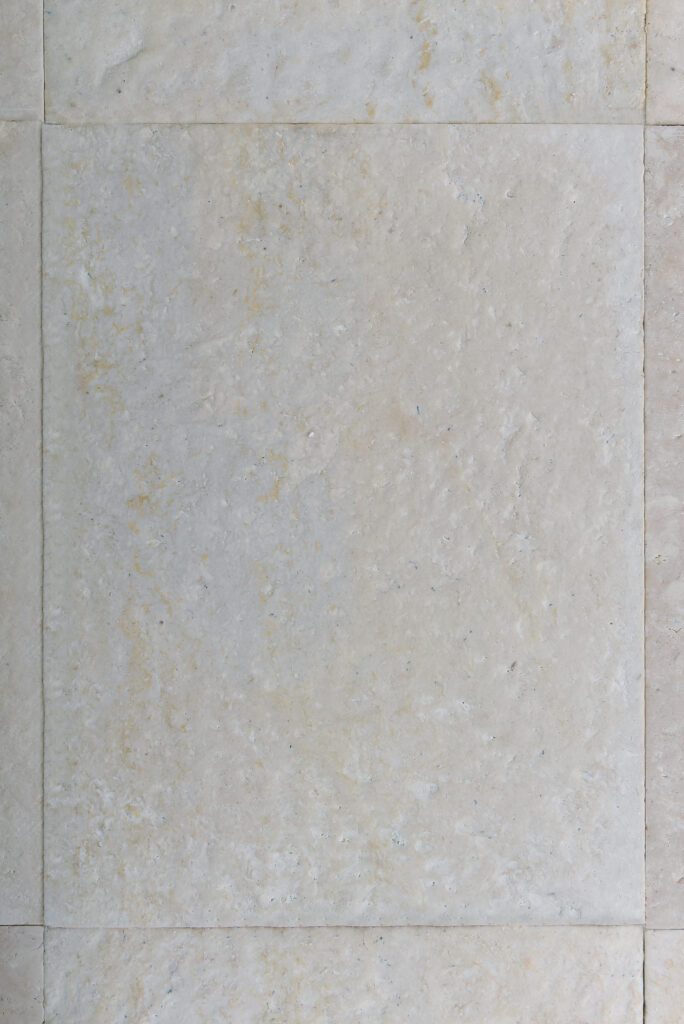
Cost behaves differently with small units than buyers expect, and it is worth setting out honestly before a quote lands. The stone itself is among the cheapest formats per ton in the catalog – cubes are efficient to cut and to pack, and a pallet carries a lot of coverage. What costs is the laying, because each stone is placed by hand and selected by shape as the field turns. So a sett project inverts the usual arithmetic: material is a modest line and labor is the large one, where a large-format slab terrace is the reverse. That inversion has two useful consequences. It means upgrading the stone quality on a sett job barely moves the total, so there is rarely a reason to specify down. And it means phasing works well – a sett apron and entrance court, with simpler paving beyond, delivers most of the visual return for a fraction of the laying time.
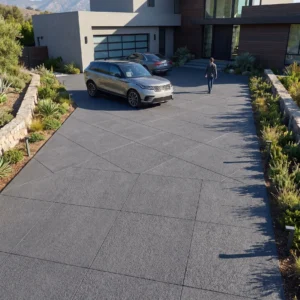
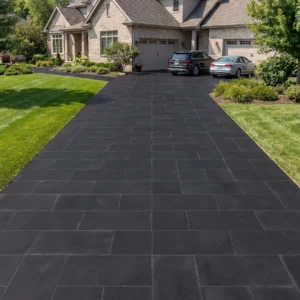
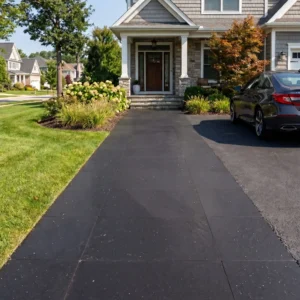
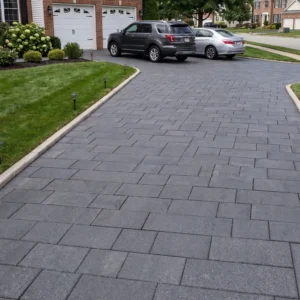
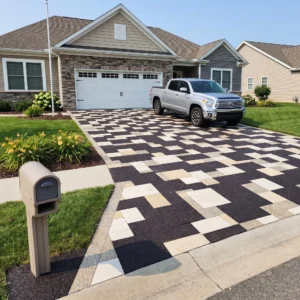
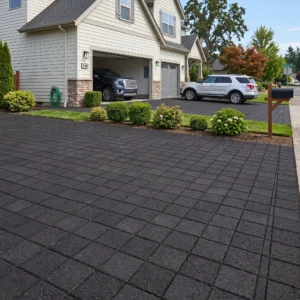
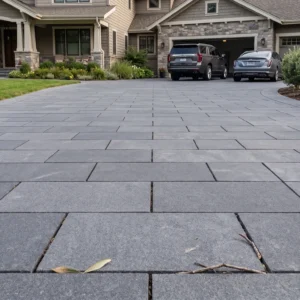
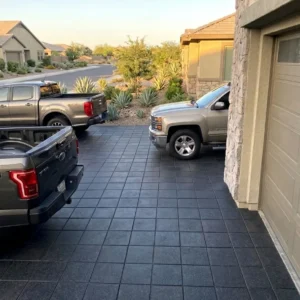
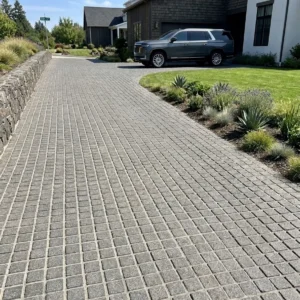
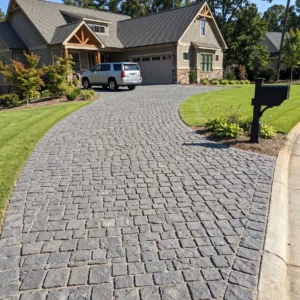
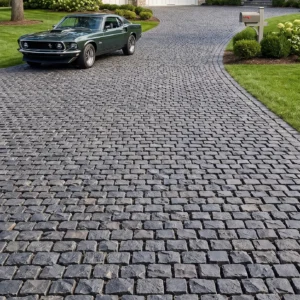
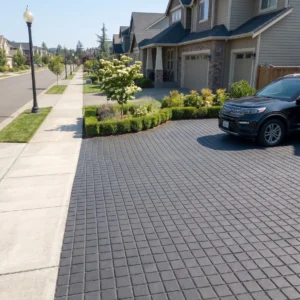
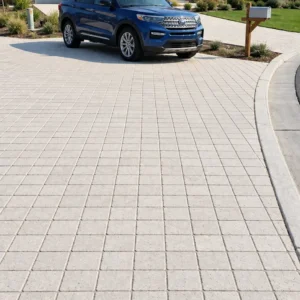
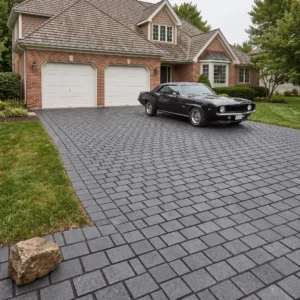
The strongest commercial case for setts in Barbados is the driveway – particularly the apron where a car turns off a parish road, brakes and reverses. That is the most punishing few square meters of any residential property, and it is precisely where small interlocked units outperform larger formats: the load spreads across many stones, no long joint line runs in the direction of travel, and the surface cannot creep the way a slab field can on a slope.
What a Barbadian sett driveway needs, in order of importance:
- Depth before face size – the stone works vertically under a wheel
- Full bedding beneath every sett, so none rock and pump water
- A genuinely restrained edge – haunched border or true curb
- Joints filled to the shoulder so the field braces itself
Specification for vehicular sett work is straightforward but non-negotiable. Depth matters more than face size, bedding must be full beneath every stone so none rock under load, and the edges need genuine restraint – a haunched border or a true curb – because a sett field without a fixed edge migrates outward over years. Get those three right and a sett drive outlives the vehicles that cross it.
Heritage Ground and Historic Settings
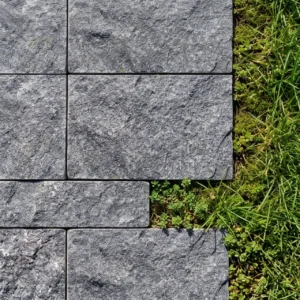
Historic Bridgetown and its Garrison carries UNESCO World Heritage inscription, and the older fabric of the island – plantation yards, church surrounds, great-house courts – has a texture that predates modern sawn stone entirely. In and around those settings a large-format contemporary slab reads as an intrusion no matter how good the material is, while split-faced setts in a muted tone continue the existing conversation.
What reads correctly beside older Barbadian fabric:
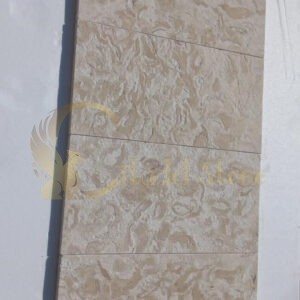
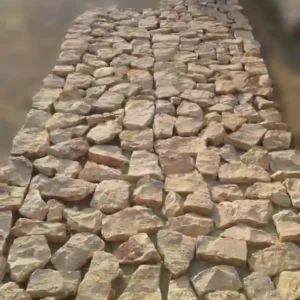
- Split faces rather than sawn – the texture is the whole point
- Muted, weathered tones rather than bright or uniform color
- Smaller units, which match the scale of historic street work
- Joint widths generous enough to look laid rather than tiled
The older street and yard surfaces on this island were not laid as decoration. They were laid because small stone was what could be worked, moved and repaired by hand, and because a surface built from many pieces survives ground that shifts. Those reasons have not expired. A modern Barbadian entrance court in setts is doing exactly what its eighteenth-century predecessor did, with better bedding beneath it and cleaner cutting at the edges, and that continuity is legible to anyone who lives here.
Two practical notes for heritage-adjacent work. Where a property sits within a protected setting, conservation guidance governs the palette and should be consulted before any stone is chosen – the constraint is real and worth respecting rather than discovering late. And matching existing historic paving is a sampling exercise rather than a catalog exercise: take a sample to the site, look at it beside the old work in daylight, and choose from what the eye confirms rather than from what a photograph promises.
Patterns, Borders and Laying
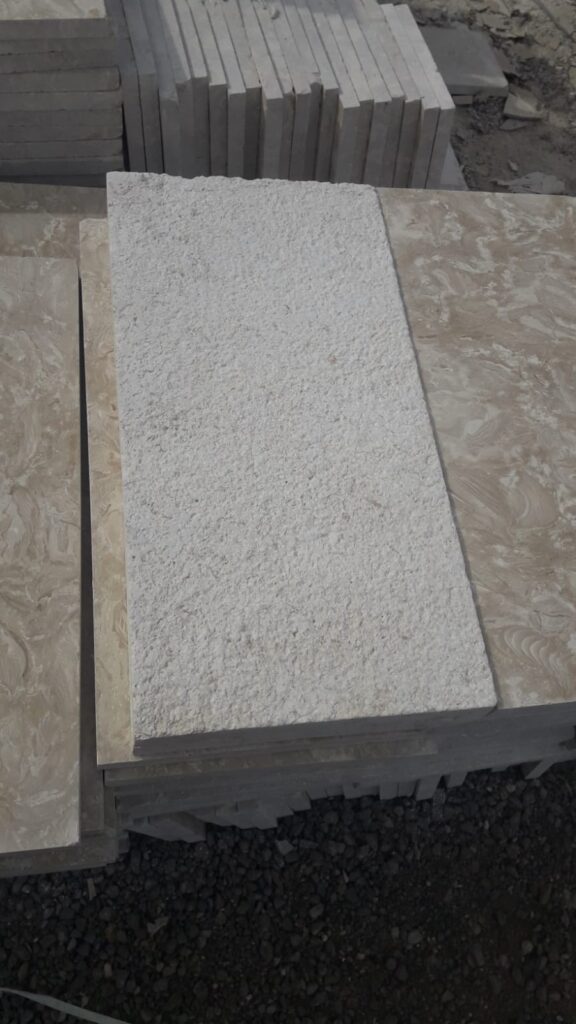
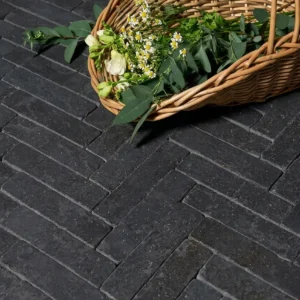
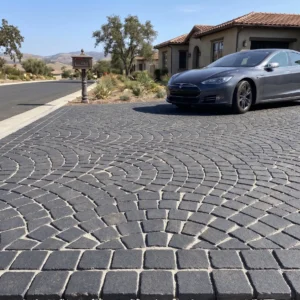
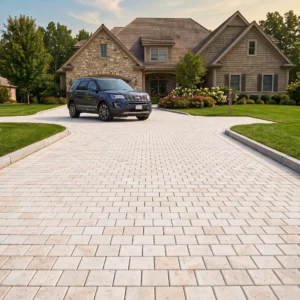
Small units carry more layout options than any other format, and the choice changes both the look and the labor. Coursed rows read orderly and lay fastest; fan and arc work is the historic European register and the most demanding; random and stretcher bonds sit between. Curved entrance courts often use arcs simply because the pattern turns naturally with the geometry rather than fighting it. the fan pattern laying guide walks the arc method step by step, and a plain border course around any sett field frames the work and absorbs the closures where the pattern meets a straight edge.
Laying pace is the number to plan around, because it drives the program more than delivery does. A sett field is placed stone by stone, with the layer selecting each piece by shape as the pattern turns, so a courtyard that would take a day in large-format slabs takes several in setts. That is not inefficiency – it is the craft being performed – but it belongs in the schedule and the labor budget from the start rather than arriving as a surprise in week two. Phasing helps: a sett apron and entrance court with plainer paving beyond reads richer than setts spread thinly everywhere.
The one discipline that separates good sett work from ordinary is joint consistency. In a field of small stones the joints are the pattern, and a wandering joint width undoes the effect faster than any variation in the stone itself. Jointing should also be filled to the shoulder so the stones brace one another rather than merely sitting side by side.
Ordering Setts for a Barbadian Project
Sett quantities are calculated by area, but ordered with a working allowance that reflects how the material is used:
- Roughly ten percent over measured area for closures, curves and selection
- Size banding, so each course or arc row draws from a consistent gauge
- Spare stones held back deliberately for future repairs in matching material
- Border and curb units quoted with the field, in the same batch and depth
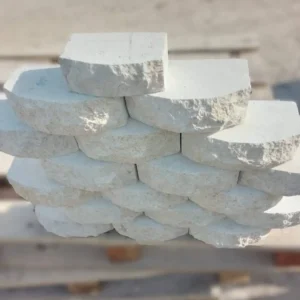
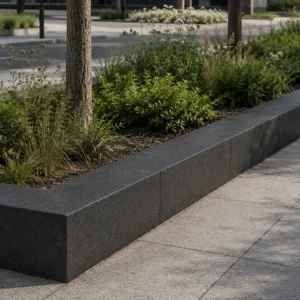
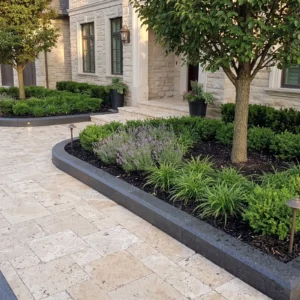
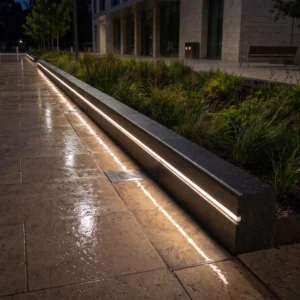
Where the edge does more than finish flat – holding a level change, meeting a parish road, closing a drive against a lawn that is mown against it – stone curbstones cut for edges take over from the border course, set deeper and in concrete because they are built to be struck.
Setts also age in a way large formats cannot. Individual stones wear at slightly different rates, joints soften, and the field acquires the mottled, settled look that makes old European courts read as permanent rather than installed. In Barbados, where so much of the built landscape is genuinely old and the newer villa architecture often reaches for that continuity deliberately, that patina is an asset rather than a maintenance problem. A sett court looks better at fifteen years than at one, which is the opposite of most hard surfaces and the reason the format keeps being chosen for entrances that are meant to say something about the house behind them.
Freight lands at the Port of Bridgetown directly from US East Coast sailings, with no transshipment leg. Duty applies at the Common External Tariff line, VAT at 17.5 percent, and environmental levies on top – itemized on the quote rather than blended, so your broker and your budget both see the same numbers.
Order Cobbles and Setts for Barbados
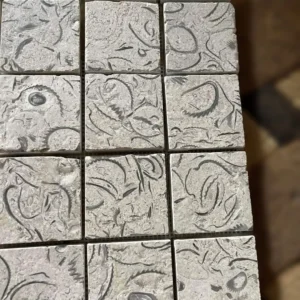
Sizing the order is simpler than it looks once the vocabulary settles. Cube setts are described by their nominal face and depth, and coverage is calculated per square meter or square foot at a given joint width rather than per piece – so the useful question to a supplier is not how many stones but how much area a pallet covers at the joint you intend to lay. From there the closure allowance, the border run and the spare stock are all straightforward additions. Ask for coverage, allowance and border as three separate lines and the quote becomes comparable against any other supplier on the island.
Send the area, the gradient and whether vehicles cross it, and the quote returns with sett sizes, depth matched to the duty, the closure allowance stated plainly, and the landed-cost lines separated. Order a handful of samples and lay them dry on the actual ground – setts are one product where five minutes on site answers more than any brochure. Then request the full quote. Citadel Stone supplies cut and split-face setts into Barbados – sized for slopes, curves and turning wheels, and honest enough in texture to sit beside the island oldest paving.