

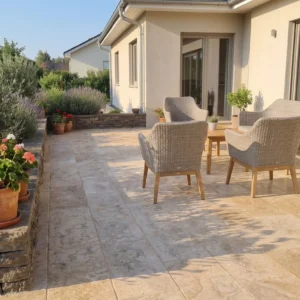

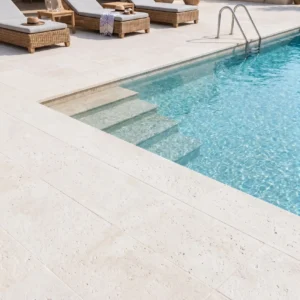


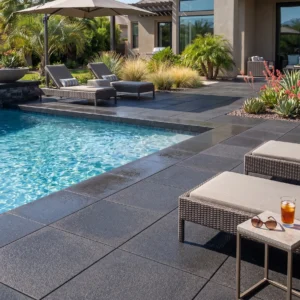
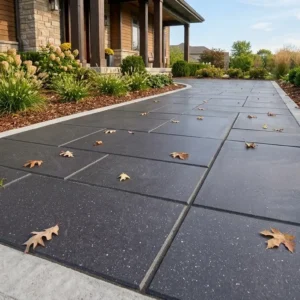









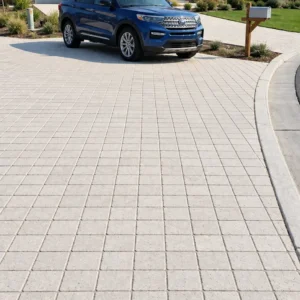
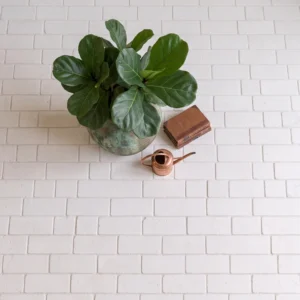
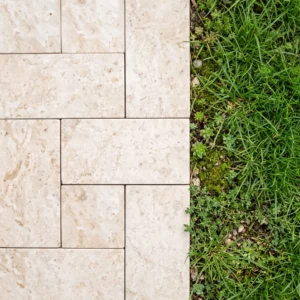
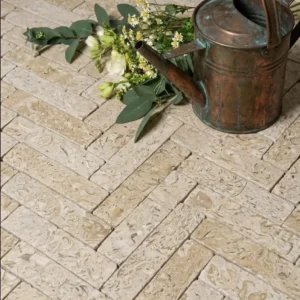

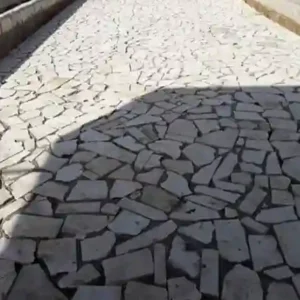

Canadian projects have always been able to buy from Citadel Stone – the difference is that the route is now built for them. Our white limestone and black basalt are cut to order and reach Ontario, Quebec, the Prairies and the coast by road, and every stage between dispatch and a Canadian site – freight, brokerage, taxes, winter specification – is coordinated from one desk. This page sets out how the supply line works: what crosses the border and how, who clears it, what the tax line looks like, and how stone should be specified for a freeze-thaw country. The catalogue behind it is the same one American builders order from; nothing is diluted for distance, and nothing is renamed for a new market.
Stone That Crosses by Road, Not by Sea
Most imported stone reaches Canada the long way – an ocean sailing, a port window, a container yard, a domestic haul. Stone from Citadel Stone crosses the border by road. Orders are palletized and crated for road vibration rather than ocean swell, and routed through the major commercial crossings – Detroit-Windsor for southwestern Ontario, Buffalo-Fort Erie for Niagara and the Golden Horseshoe, Blaine for British Columbia – with lead times quoted with your order. Before any truck is booked, we confirm the details that decide whether delivery day goes smoothly:
- Crate count, weights and a manifest that matches the commercial invoice line for line
- The delivery window your site or receiving yard can actually accept
- Access – liftgate curbside drop, dock delivery, or staging at a regional yard for tight sites
- A named contact who will be on the ground when the driver arrives
Cottage-country and rural addresses are quoted honestly: where a full trailer cannot reach, we stage the last leg rather than promise a truck that will not fit the lane.
Customs, Brokerage and the Tax Line
The border is paperwork, not mystery – and it is our paperwork to prepare. A licensed Canadian customs broker files the entry with the Canada Border Services Agency; the five per cent GST is collected at importation on commercial goods, while in harmonized provinces the provincial portion of HST is accounted for through the importer’s own GST/HST filing rather than at the border; and the duty treatment is confirmed against the stone’s HS classification before dispatch, not discovered after. One honesty note we insist on: our stone is quarried in the Middle East, so North American tariff preferences do not automatically apply to it – a supplier who waves an imported product through as duty-free without checking the classification is guessing with your budget. The paper set that travels with every Canadian order:
- Commercial invoice and packing list that agree with each other and with the crates
- HS classification worked through with the broker, not assumed
- Origin documentation stated plainly
- Broker contact and entry reference, so your records survive any audit
Buyers who prefer their own broker are welcome to nominate one – the documents are the same either way, and the coordination costs nothing extra.
Specifying Stone for a Freeze-Thaw Country
A Canadian winter asks one question of paving stone, over and over: how much water do you hold when the temperature falls through zero? Water that enters a stone and freezes expands; a stone that drinks little has little to fear, and a stone that drinks deeply is spalling by its third spring. That is why the number to read is absorption – tested under recognized laboratory methods of the kind ASTM publishes for dimension stone – and why density class matters more than a beautiful surface photograph. The stone least bothered by the cycle is basalt: basalt tiles with tested absorption figures publish the tested numbers, and dense limestone earns its winters when it is chosen by those numbers rather than by name. Two site disciplines finish the job. Bedding and drainage must move meltwater away instead of ponding it against the stone through a freeze. And de-icing should lean on traction grit rather than aggressive chloride salts, which no natural surface enjoys year after year. Specified and detailed this way, natural stone is not a southern luxury adapted to Canada – it is how cold countries have paved for centuries.
White Limestone, Chosen by the Numbers
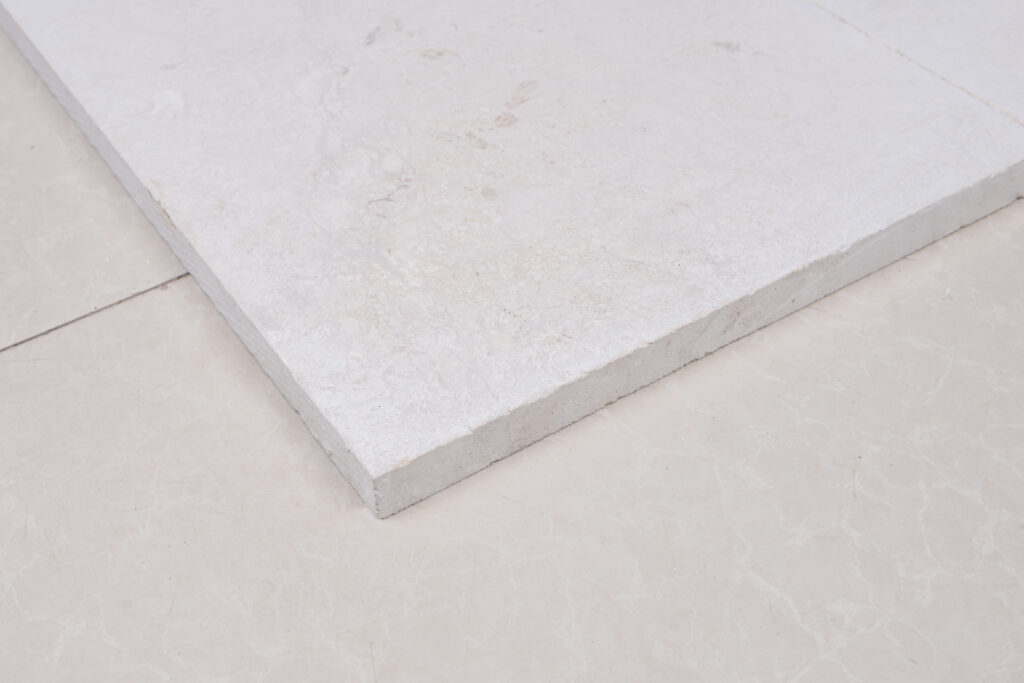
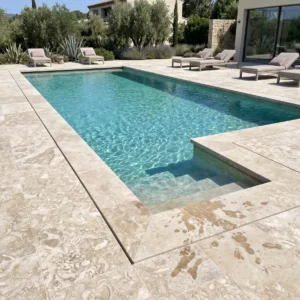
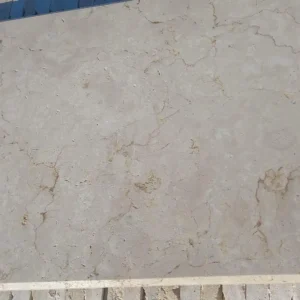
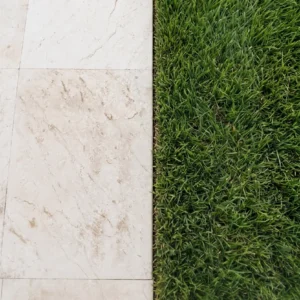
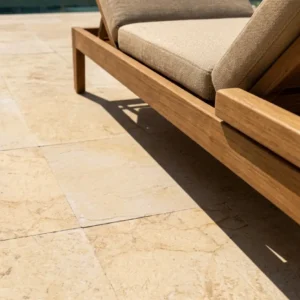
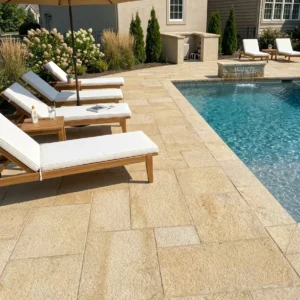
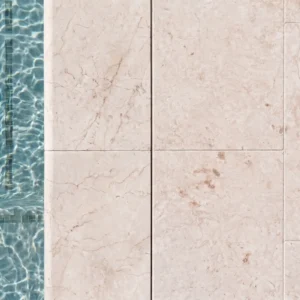
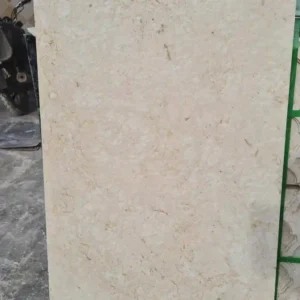
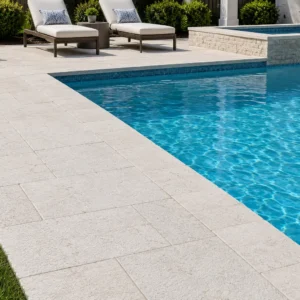
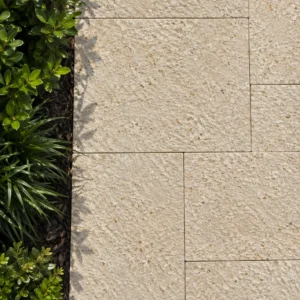
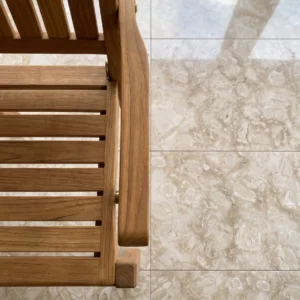
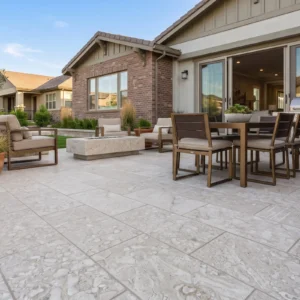
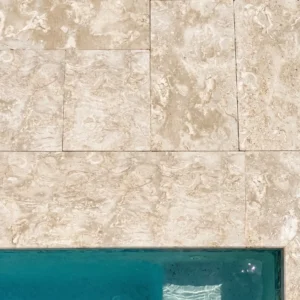
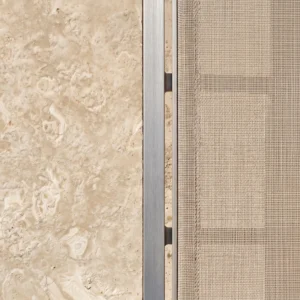
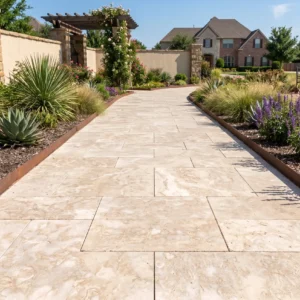
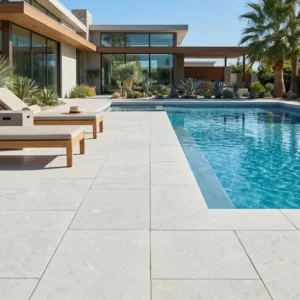
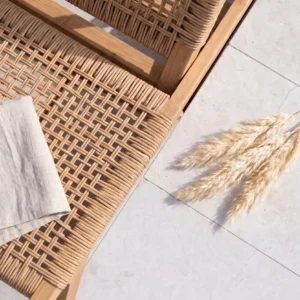
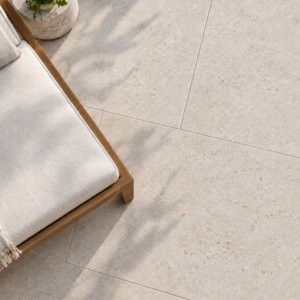
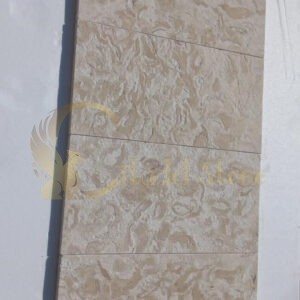
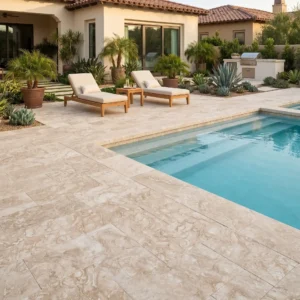
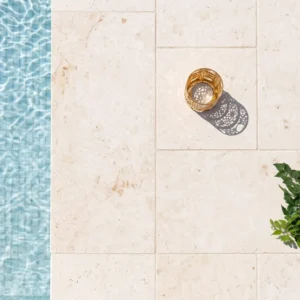
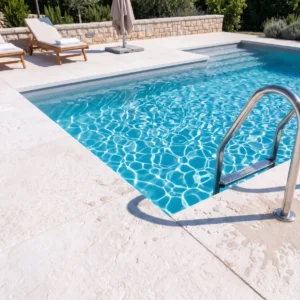
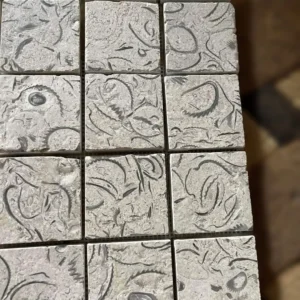
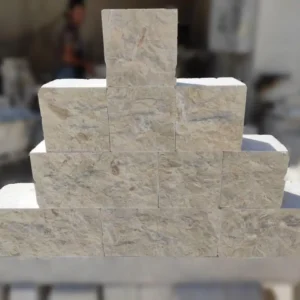
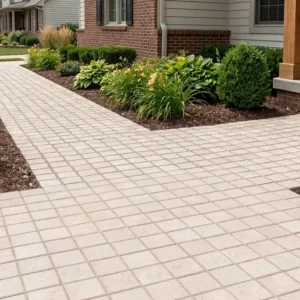
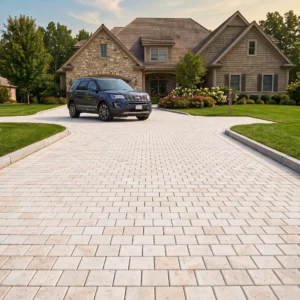
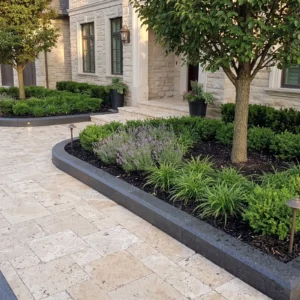
White limestone is the stone Canadians ask us about first – the pale, light-holding surface that makes a short northern summer feel longer. As a material family, limestone spans a wide spectrum – everything from soft chalky grades to dense, tight-grained stone; we select the dense end deliberately and publish the absorption and density figures, so a specifier in Calgary can defend the choice in a permit file. Formats run from interior-grade white limestone tiles to exterior pavers and cut-to-size white limestone slabs, across finishes from double-brushed softness to bush-hammered grip. Where it belongs in Canada:
- Patios and terraces with proper drainage beneath them
- Covered walks, porches and three-season rooms
- Interiors, from heated slab floors to feature walls
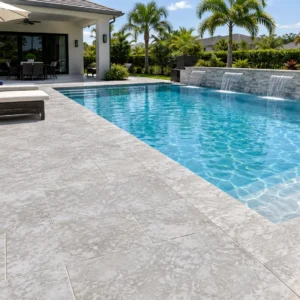
- Pool surrounds in the provinces that earn them
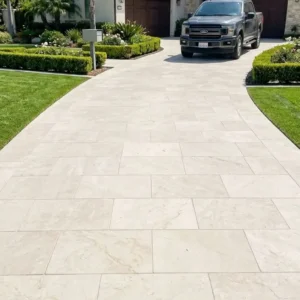
Where exposure is brutal – an unsheltered, north-facing driveway in a deep-frost region – we will often steer the conversation toward basalt instead. Selling the right stone is cheaper than replacing the wrong one.
Basalt for Canadian Ground
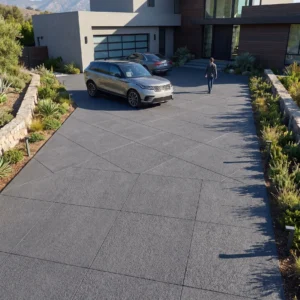
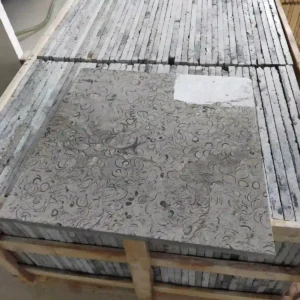
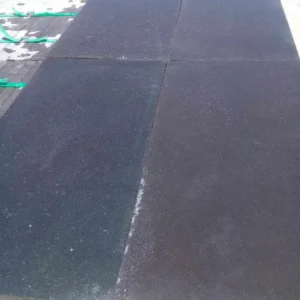
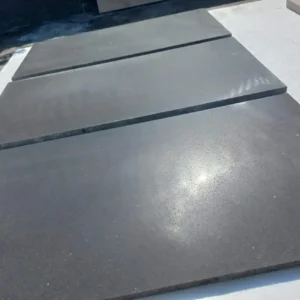
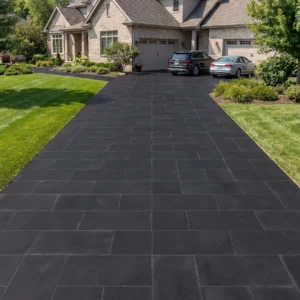
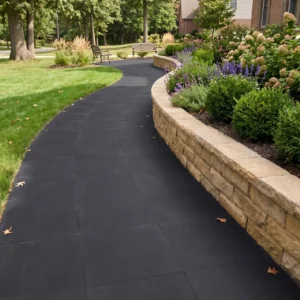
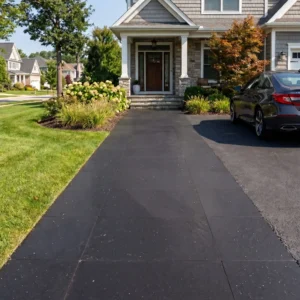
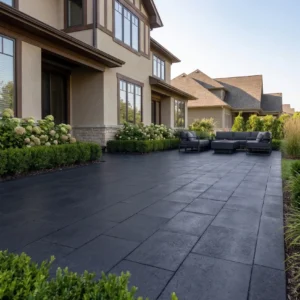
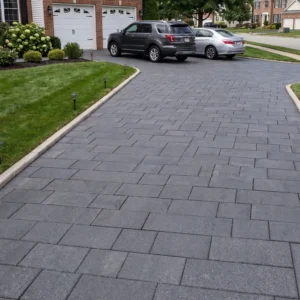
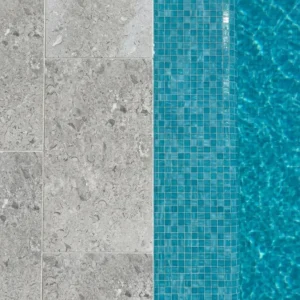
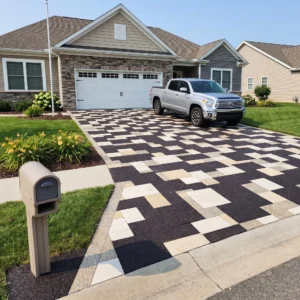
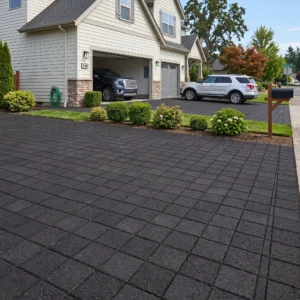
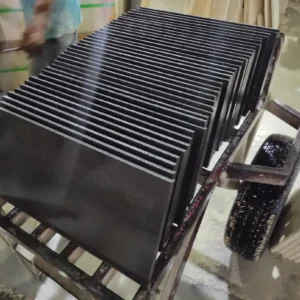
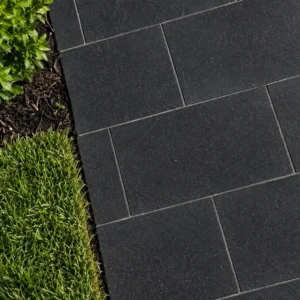
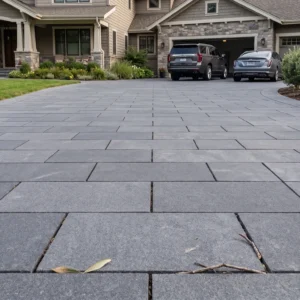
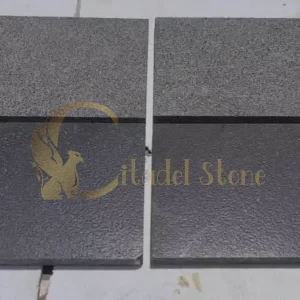
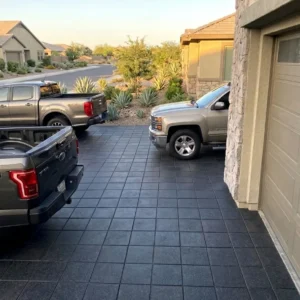
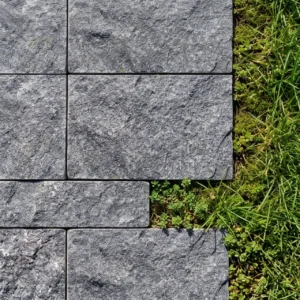
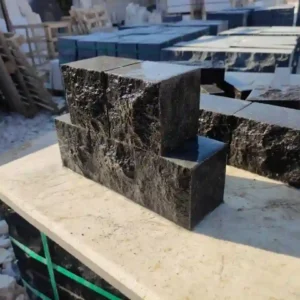
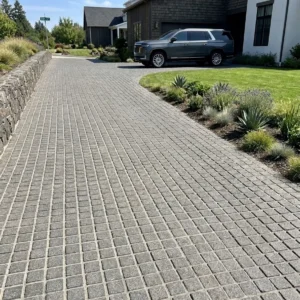
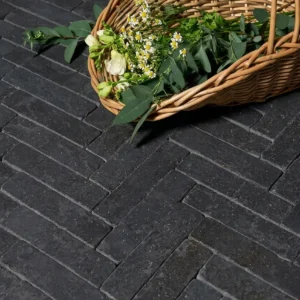
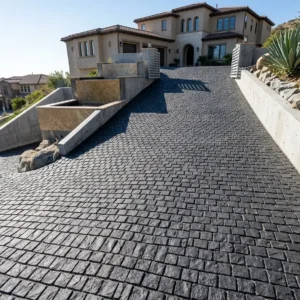
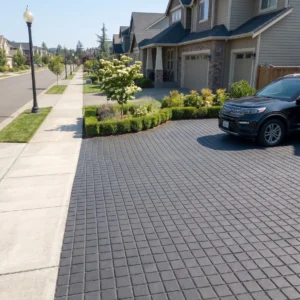
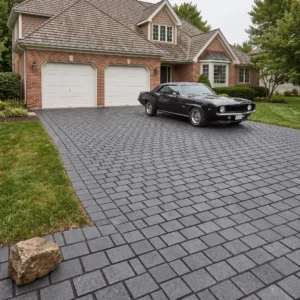
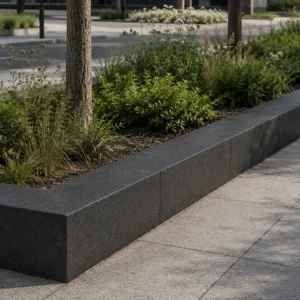
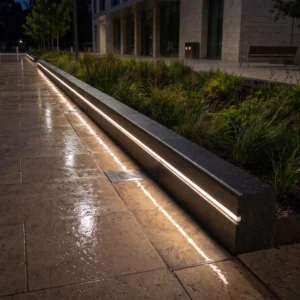
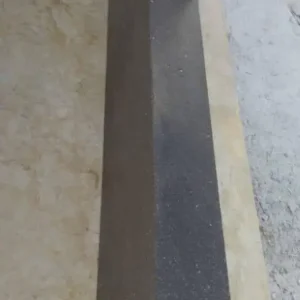
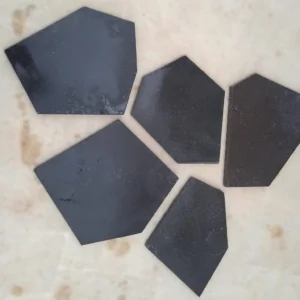
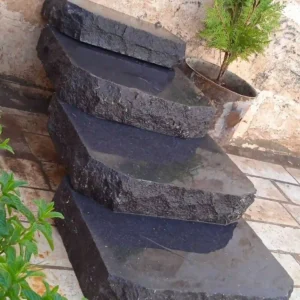
Basalt is the winter workhorse of the range – a dense volcanic stone whose absorption is so low that freeze-thaw cycling has very little to work with. The basalt paver range and the black basalt paving line cover driveways, walks, courtyards and pool decks, and the Natural Stone Institute varieties guide is a fair independent primer on how the volcanic family differs from sedimentary stone. What Canadian buyers value in it:
- Bush-hammered and coarse textures that keep grip through the icy months
- Charcoal and grey tones that read sharply against snow and pale winter light
- Vehicular-grade thicknesses for driveways and aprons
- Colour that runs through the body of the stone, so a chip does not advertise itself
Basalt is also the range we point to when a project cannot compromise: commercial entries, sloped walks, anywhere a slip or a spall carries consequences beyond aesthetics.
Metric Sizing, Cut to Order
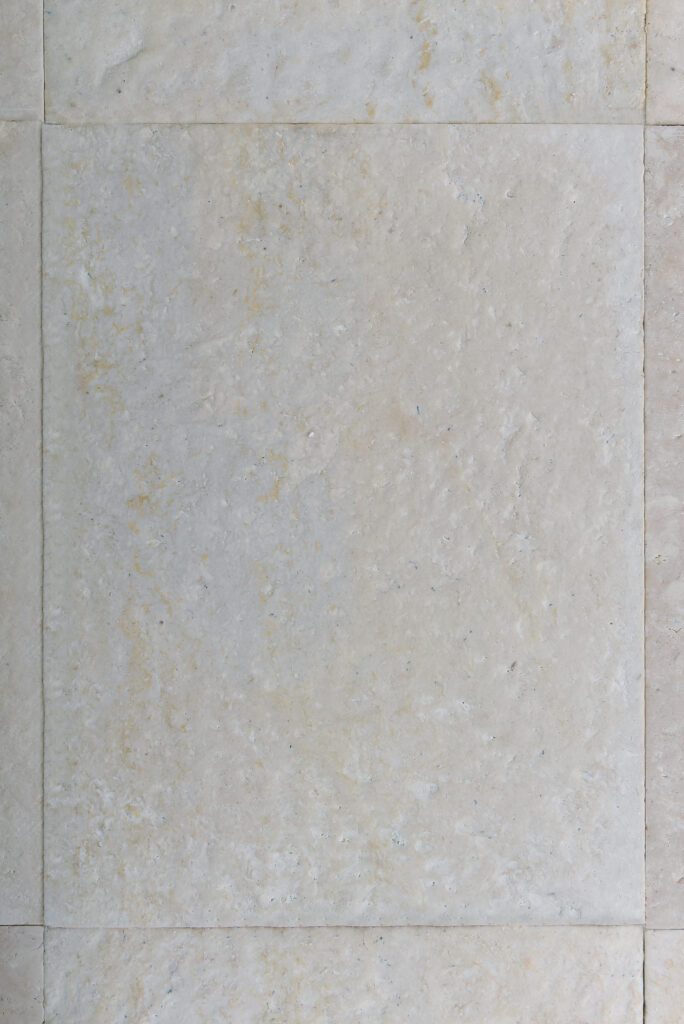
Canada draws in millimetres and buys in square metres, and quoting should meet you there. Common formats – 300 x 600, 600 x 600 and 600 x 900 millimetres – are cut to order, custom dimensions are available across the thickness range, and pedestrian and vehicular surfaces carry different thickness guidance that we confirm against your build-up rather than defaulting to the thinnest sheet that ships cheaply. Finish selection follows the same logic: the full finish library shows every texture we produce, from polished interior faces to the coarse grip textures a Canadian ramp wants in January. Send the drawing’s numbers as they are – conversion between metric and imperial is our job, not yours.
From the GTA to the Island
Delivery experience concentrates where Canada builds: the Greater Toronto Area and the 401 corridor, Ottawa, Montreal and its off-island suburbs, Calgary and Edmonton, the Lower Mainland and Vancouver Island. Two Canadian realities are planned for rather than discovered. Spring load restrictions – the weeks when secondary roads limit axle weights during thaw – shift delivery windows, and we schedule around them instead of arguing with them. And the cottage-and-acreage last mile is treated as its own leg: staging at a regional yard beats forcing a 53-foot trailer up a gravel lane, every time. Projects further out – island sites, the North, resource towns – are quoted with the extra legs stated plainly, because a surprise in a freight quote is a defect in the quote, not in the geography.
Samples Before Pallets
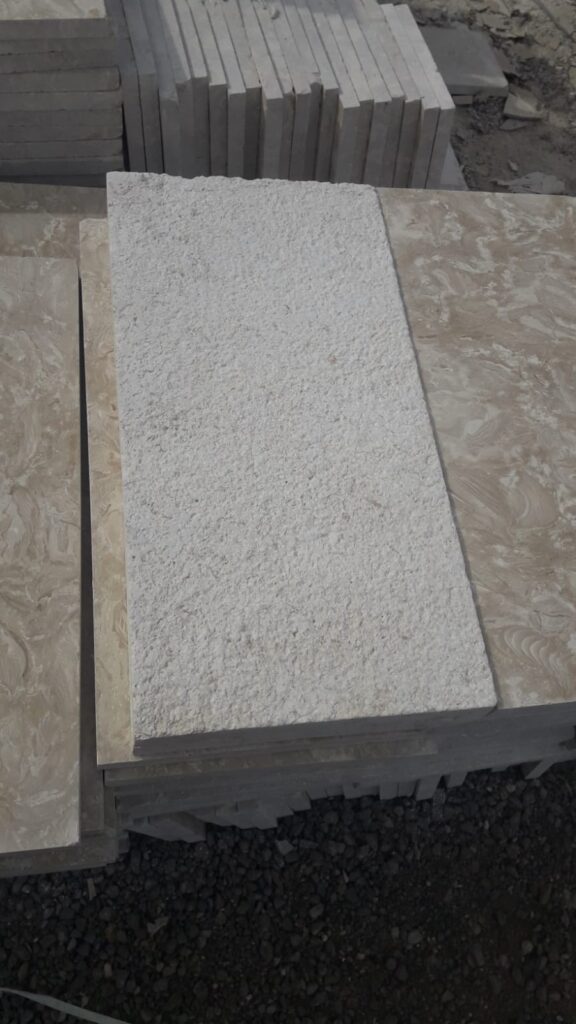
Every Canadian order should start the way an American one does: with stone in hand. Request a sample and small-format pieces travel to Canadian addresses. Then test them harder than a showroom would – leave a piece outside through a freeze, wet the face and watch how fast it drinks, drag a boot heel across the finish you plan to walk on in January. Stone that earns the order in those conditions will keep earning it for decades, and stone that fails a sample test has cost you a few days instead of a terrace.
Pricing Without Currency Surprises
Quotes are itemized in US dollars with every leg visible – stone, crating, road freight, brokerage, and the tax line your province applies – so the landed cost in Canadian terms is arithmetic, not archaeology. The natural stone price index publishes our per-square-foot ranges if you want to sanity-check a budget before a conversation, exchange-rate timing stays in your hands, and quotes stay valid long enough for that timing to be chosen calmly rather than under a deadline.
Source Your Stone for Canada
The route is built and the absorption numbers that decide a winter are published where you can read them. Send the drawing, the postal code and the season you want to build in: request your Canadian quote and it comes back with freight and brokerage already thought through. Or start from the stone itself – white limestone pavers and the basalt lines above – and work outward to the logistics. Citadel Stone supplies white limestone and basalt to Canadian projects, cut to order – one quote, one truck, one paper trail, from dispatch to your site.