














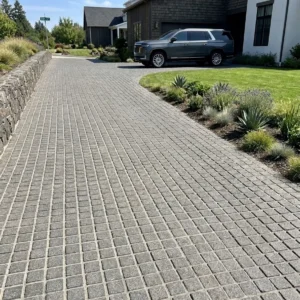
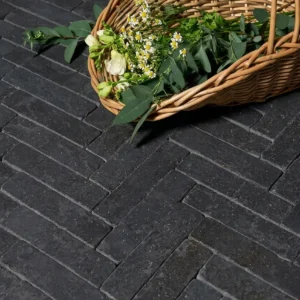
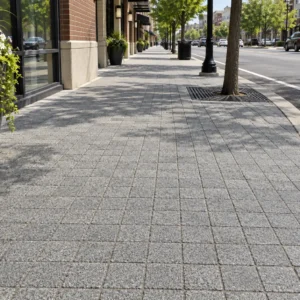
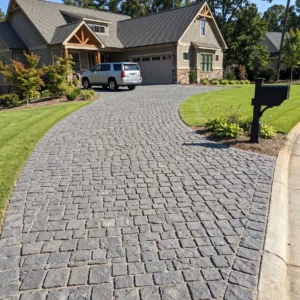
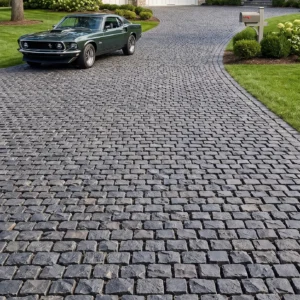
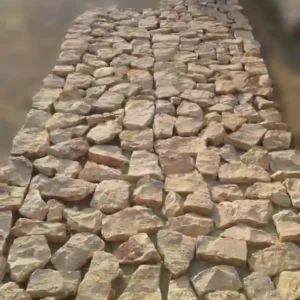
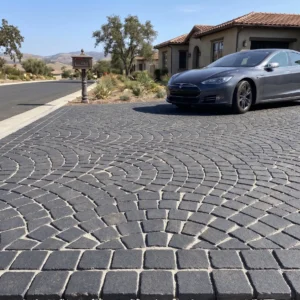
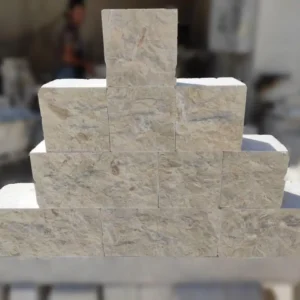
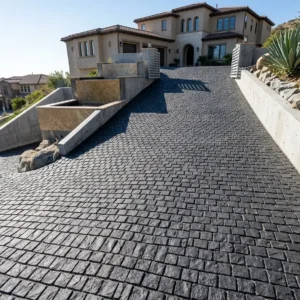
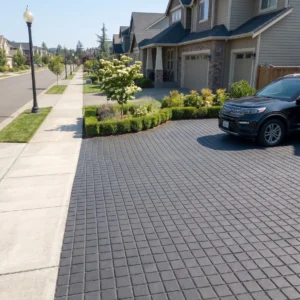
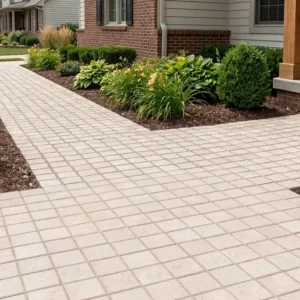
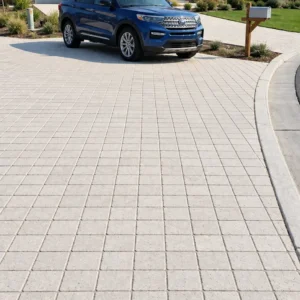
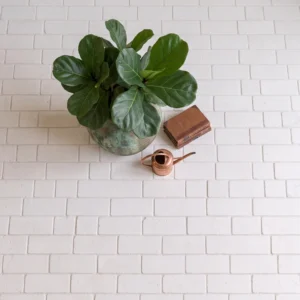
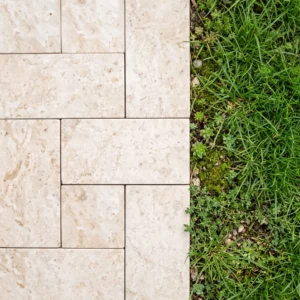
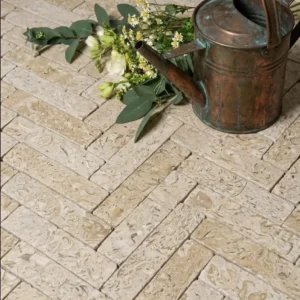
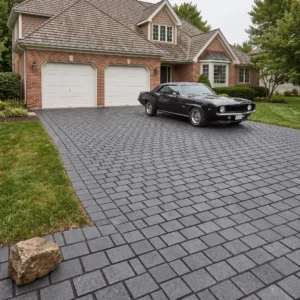


This page is about the material rather than the logistics. Limestone is the obvious outdoor stone for Bermuda because the island itself is limestone and every eye here is trained on it, but the word covers a wide range of densities, pore structures and behaviors, and the difference between a good outdoor unit and a poor one is measurable rather than aesthetic. The climate that decides which end of that range you need is a subtropical North Atlantic one: humid bright summers, cool damp winters, salt carried well inland on the wind, and periodic hurricanes.
What follows is the technical case. What absorption and density actually do to a paving unit here, how pale stone behaves through a compressed pool season, what genuinely gives grip where water lands, where limestone is the wrong choice, and how imported dimension paving sits alongside the island’s own stone and the concrete most new construction uses. Freight routes, duty and delivery are covered on the broad pavers page and interiors on the tiles page, so this one stays on the material. If you are specifying for a client rather than for yourself, the last two sections are the ones worth reading twice.
Absorption and density, and why the figures matter here
Absorption is the proportion of water a stone will take into its pore structure, and it is the single most useful number on a paving datasheet, because almost everything that damages exterior stone travels in water: salt, dirt, organic staining and the pressure of repeated wetting and drying. Bermuda supplies all of those. Summer is humid and bright. Winter is cool and damp, so a surface stays wet for longer at low temperature than it would nearer the equator. Salt arrives on the wind a long way inland of the shore.
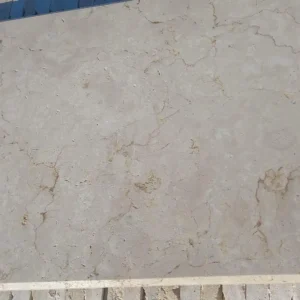
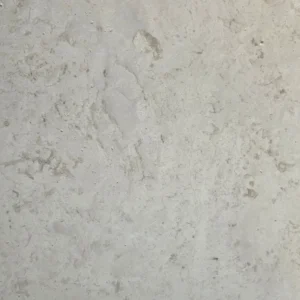
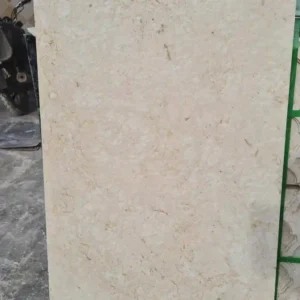
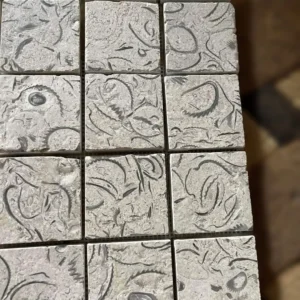
Density is the other half of the pair. A denser, tighter-grained limestone takes less water in, gives it up more predictably, holds an arris better under traffic and resists the slow surface loss that turns a crisp edge into a rounded one. That is why we quote absorption and density on the material rather than describing stone with adjectives, and why we would rather send a small sample with a figure attached than a photograph. Ask for the data on the batch you are actually buying, not on the range in general.
- Ask for absorption and density figures on the specific material and keep them in the project file.
- Expect exposed frontage, pool surrounds and driveways to need a tighter stone than a sheltered courtyard does.
- Remember that salt travels; an inland terrace still sees salt on a windy week.
- Wetting and drying at low temperature is the Bermuda cycle, not constant heat and not hard frost.
- A stone that performs in a dry climate has not yet been tested by anything Bermuda will do to it.
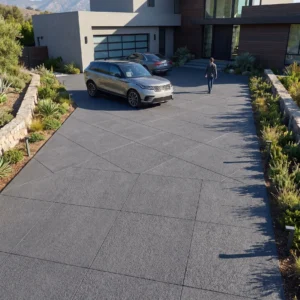
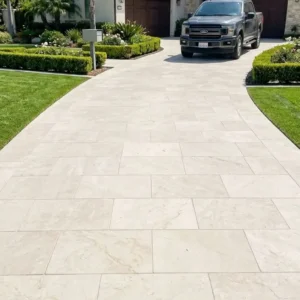
Where exposure is real, specify denser limestone for exposed ground and keep the more open, softer material for covered or sheltered areas. It is a much cheaper decision at specification stage than at replacement stage.
Pale stone through a compressed season
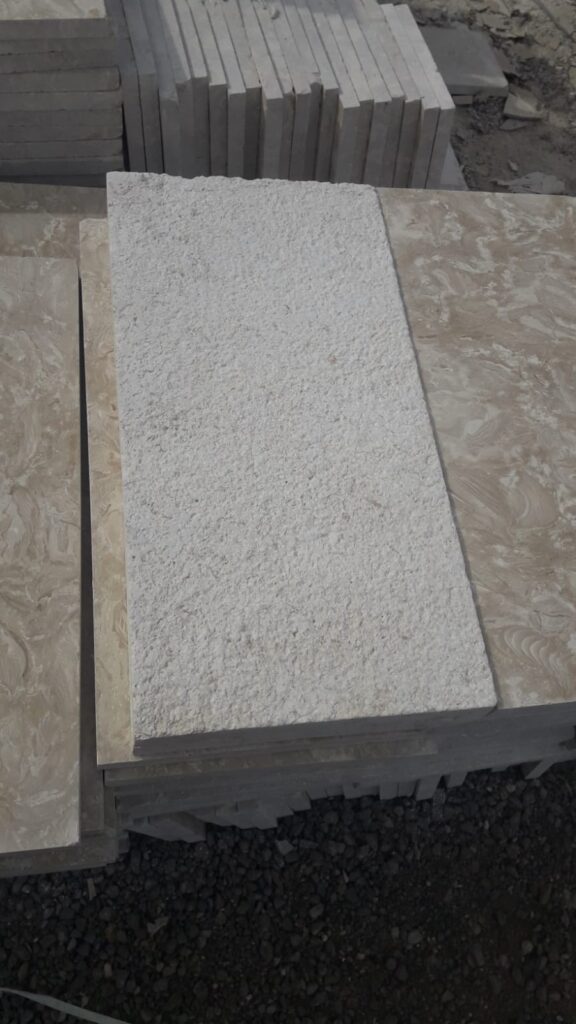
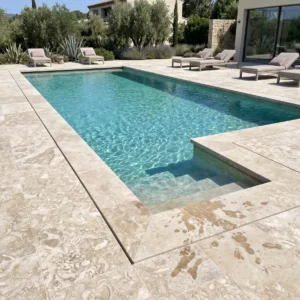
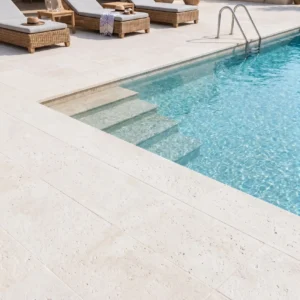
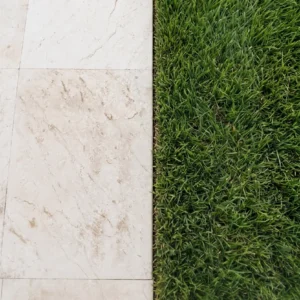
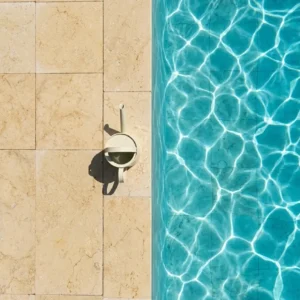
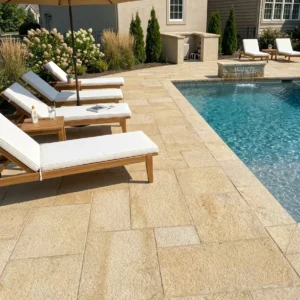
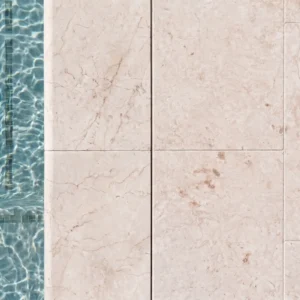
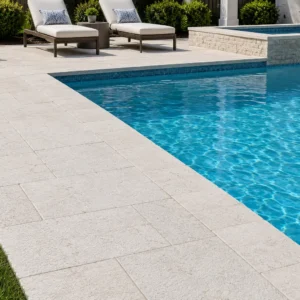
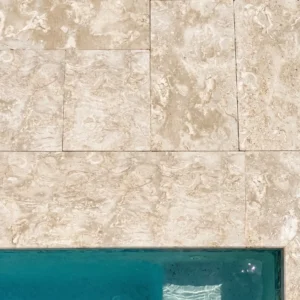
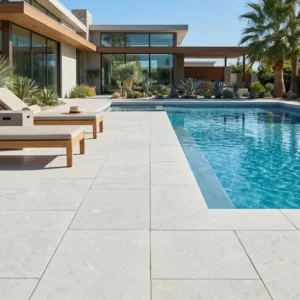
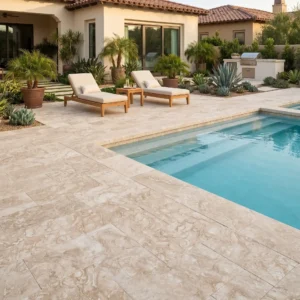
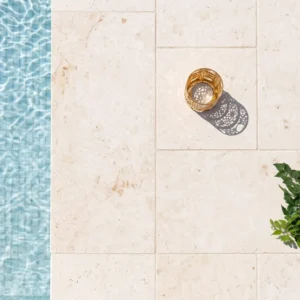
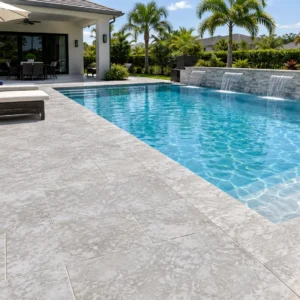
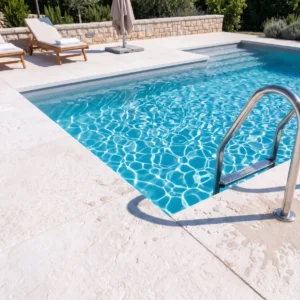
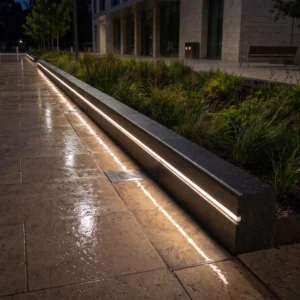
Light-toned limestone stays noticeably more comfortable underfoot in strong sun than a dark surface does, and around a pool that is the whole argument. Bermuda’s pool season, though, is genuinely seasonal: a year of barefoot traffic, sunscreen, chlorinated splash and furniture dragging is concentrated into a few months rather than spread across twelve. The surface takes a heavy, short, repeated workout and then a long damp quiet period, and both halves of that cycle need thinking about.
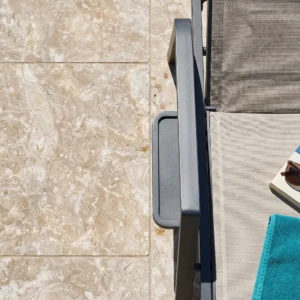
- Pale stone reflects rather than stores heat, which is why it suits a pool surround and a sun-facing terrace.
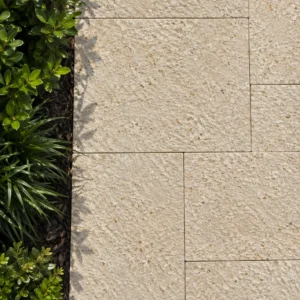
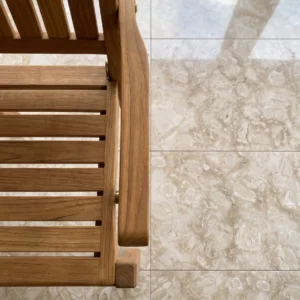
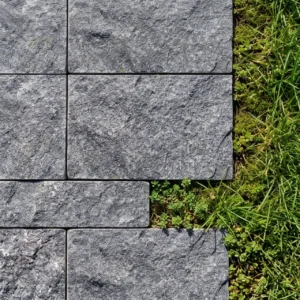
- Reflected glare is the trade-off; a brushed or bush-hammered face scatters light where a honed one bounces it back.
- Sunscreen and body oils are the real staining risk in a compressed season, and they arrive faster than rain washes them away.
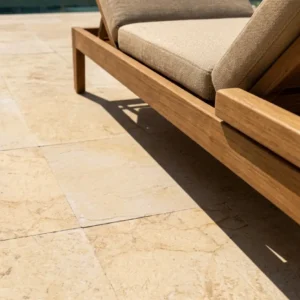
- Furniture feet concentrate load on a small area, and pads cost nothing while saving an edge.
- Plan a proper wash-down at the end of the season rather than a heroic clean the following spring.
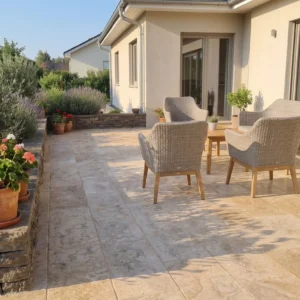
Winter behavior deserves a mention because most paving copy ignores it entirely. A pale terrace in a cool damp February stays wet longer, and a shaded corner beneath a tree will grow a green film in a way the same stone in full sun will not. That is a maintenance fact rather than a material defect, and it is dealt with by fall, by air movement and by an occasional wash, not by choosing a different stone. Clients who are told this in advance treat it as normal; clients who are not treat it as a fault.
Grip where the water lands
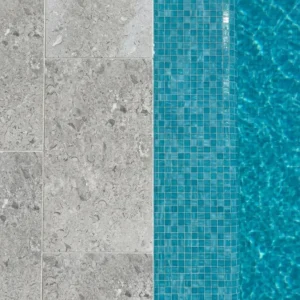
Wet grip is a finish question first and a material question second. The same limestone behaves very differently honed, brushed, bush-hammered or tumbled, and finish is the variable you should be adjusting rather than the stone itself. Around water – pool copings, steps down to a terrace, outdoor shower areas, the run from a door out onto a deck – texture is not optional and no amount of good drainage substitutes for it.
- Use a textured face wherever bare wet feet are expected, and keep honed surfaces to areas that stay dry.
- Increase joint length by using a smaller module on steps and around pool edges.
- Design falls so water leaves quickly, because standing water defeats any finish.
- Ease or round the nose on step treads so the edge does not become the slip point.
- Test the actual finish wet, with a wet foot, before it goes down across a whole area.
Grip is also a maintenance variable rather than a fixed property. A textured face that has filled with sunscreen residue, sand and algae is no longer a textured face, and the loss happens gradually enough that nobody notices until somebody slips. On an island where surfaces stay damp for weeks at a time in winter, a simple annual clean does more for safety than any single specification decision, and it costs a fraction of what a remedial treatment costs. Build it into the handover notes rather than assuming the client will work it out.
Where limestone is the wrong answer
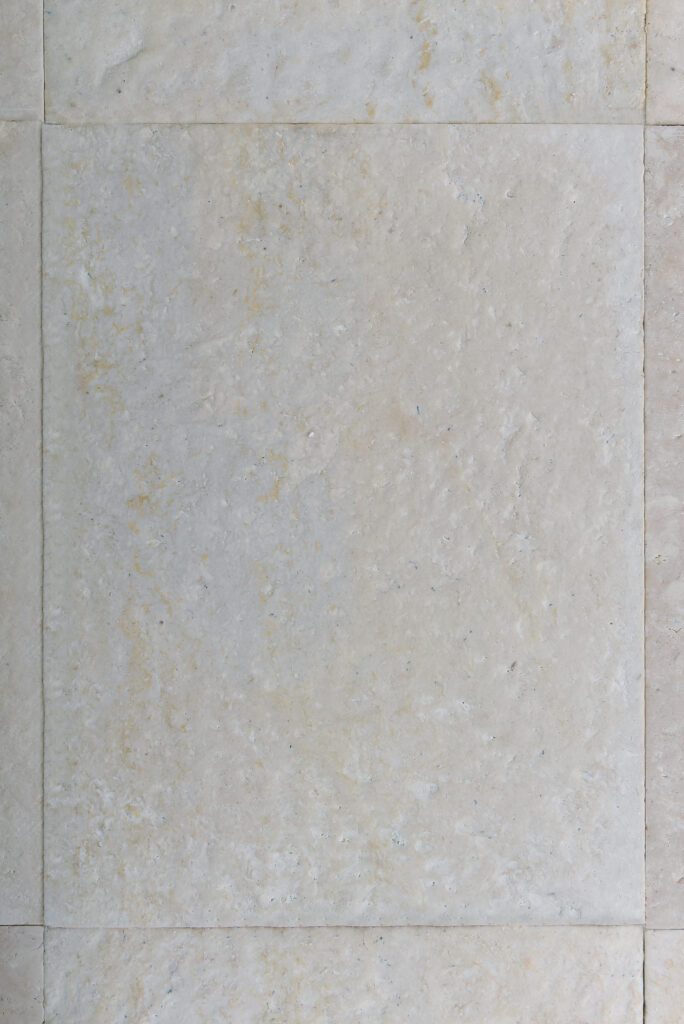
An honest supplier tells you where a material stops. Limestone is a calcium carbonate stone, which means it is chemically vulnerable to acid and mechanically finite under concentrated load, and there are places on a Bermuda property where those two facts should send you somewhere else. Saying so is not modesty; it is the difference between a surface that lasts and one that gets lifted.
- Areas needing routine acidic or aggressive chemical cleaning, such as certain service yards and washdown zones, will etch and dull.
- Heavy commercial turning and loading areas, where point loads and steering scuff concentrate on a handful of units.
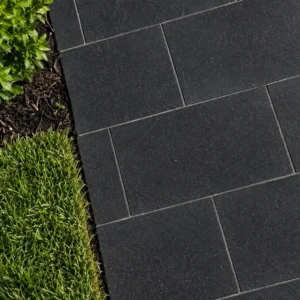
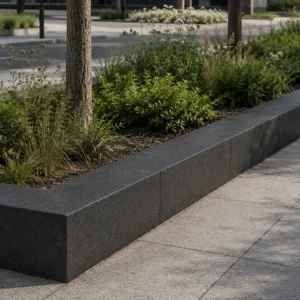
- Surfaces taking relentless direct salt spray with no rinse, where a denser, darker stone gives a longer quiet life.
- Anywhere a client wants a surface that will not change at all, because natural limestone weathers and that is part of the point.
- Ground where the base cannot be built properly, since no stone rescues a bad sub-base and limestone shows the failure first.
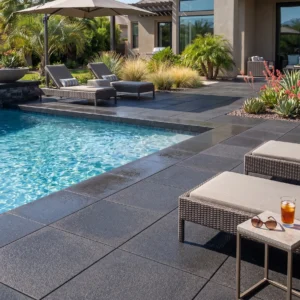
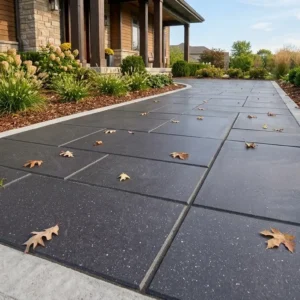
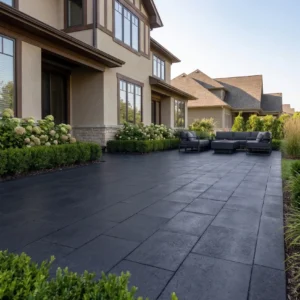
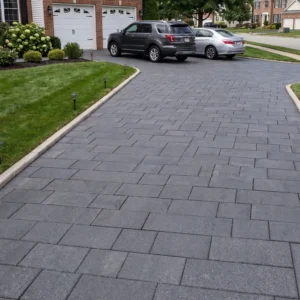
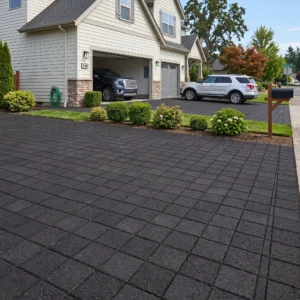
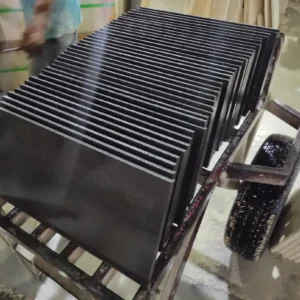
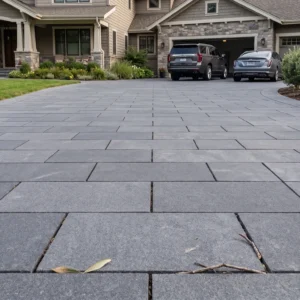
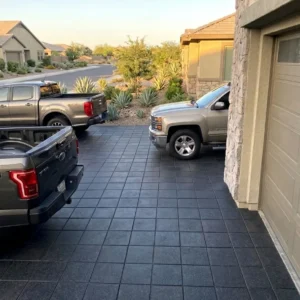
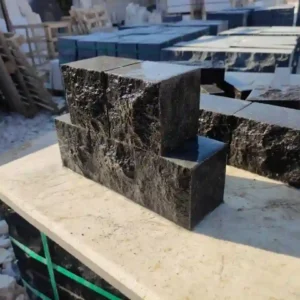
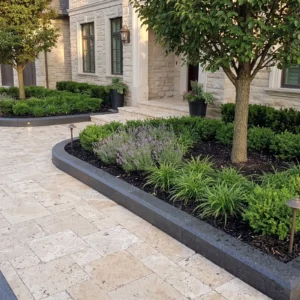
In those situations we move to basalt where limestone should not go and let each material do the work it suits. A property can carry pale limestone across the terrace and pool surround and dark basalt through the service apron and turning area, and the contrast almost always reads as a deliberate design decision rather than a compromise. Saying this plainly costs us an order occasionally and saves a client a rebuild considerably more often, which is a trade we are happy to keep making.
The island's own stone, and where imported paving fits
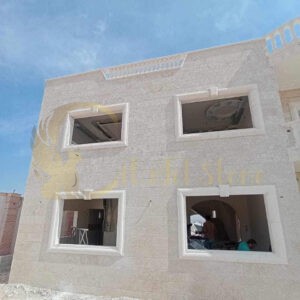
Bermuda built itself from its own aeolianite limestone over centuries, and this deserves to be said carefully. The Town Hill Formation is the stone masons here have preferred for its cohesiveness. The Rocky Bay and Belmont Formations are described in the literature as extensively quarried for building stone. Much of that historic quarrying tradition has wound down, only a few operations remain, and most new structures are built in concrete – but the fabric that tradition produced is protected, valued and visible in every parish.
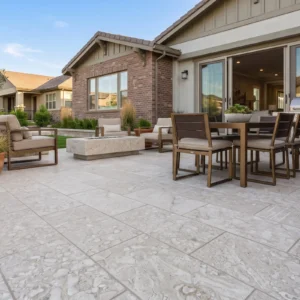
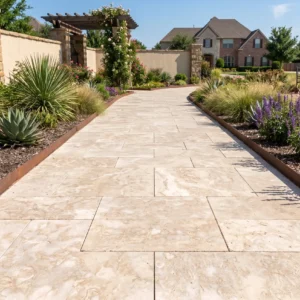
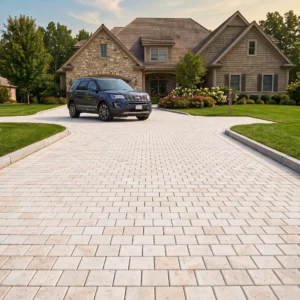
Imported dimension paving is not a rival to any of that, and framing it as one would be both rude and wrong. The island’s stone is the wall, the roof and the identity. What no local operation produces today is factory-flat, thickness-consistent, finish-controlled dimension paving with documented absorption, cut to a size schedule for a particular terrace. That is the gap imported stone fills: a calibrated wearing course laid over the concrete and aggregate base that Bermuda construction already runs on.
- Local aggregate and concrete build the base; imported dimension stone is the surface that goes on top of it.
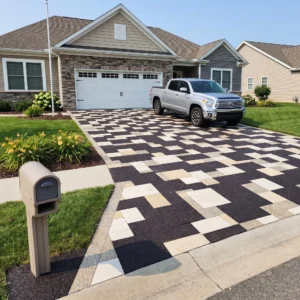
- Poured or precast concrete paving is the usual local alternative, and it is a fair one for large plain areas.
- Natural stone is chosen where the tone of the finished surface is the point; local concrete paving is chosen where a large plain area has to be covered economically.
- A natural unit can be lifted and reset individually, which suits phased work and later alterations to a terrace.
- Where a project touches historic fabric, defer to what is already there and take the quieter option.
Bedding, jointing and restraint for a stone that stays wet in winter
The bed decides how long a good stone stays good. On a Bermuda terrace over a concrete slab, a full mortar bed with no voids is the reliable detail, because a void under a unit fills with water, and water under a slab through a cool damp season is patient. On compacted base, a properly graded sub-base with a route for water to leave matters more than the bedding layer itself. Neither detail is exotic; both are routinely skipped.
- Bed fully; spot-bedding leaves voids that fill, and the failure shows up as a hollow-sounding unit two winters later.
- Give the bed somewhere to drain rather than trapping water between stone and a sealed slab.
- Choose a jointing product suited to a surface that stays damp, and follow its cure conditions honestly.
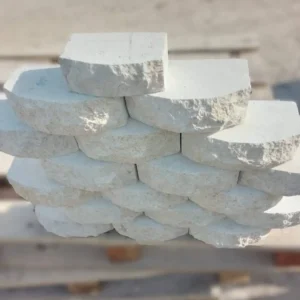
- Restrain the perimeter with curbstones or a haunched edge, because a free edge is where storm water starts lifting units.
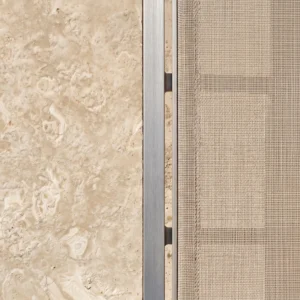
- Allow movement where a terrace runs against a building or crosses a structural joint.
Jointing choice has a second dimension on this island. If the terrace drains toward rainwater collection, the jointing compound, any additive and every subsequent cleaning product become part of that conversation. It is a small extra question at specification stage and an expensive one to ask after the surface is laid and connected. Raise it with the client and with whoever maintains the tank while the drawing is still on paper, and the answer usually takes ten minutes rather than a remedial visit.
One more Bermuda-specific point belongs with the bedding decision. Because roof rainwater is harvested for domestic supply here, the ground around a house is not a convenient place to send everything that falls on it, and a terrace detailed to shed water straight at a tank surround or a catchment channel creates a problem the paving did not have to create. Agree with the builder early where terrace runoff actually goes, and keep it clear of anything feeding the tank.
Specify with numbers, not adjectives
Most disappointing stone jobs trace back to a specification written in adjectives. Dense, hard-wearing and suitable for exterior use are claims, not data. Absorption and density figures, a named finish, a stated thickness per area and a physical sample from the batch are data. Where a job matters, ask for all four, and be suspicious of any supplier who offers a photograph and a mood board instead of a number.
- Absorption and density figures for the material actually being supplied.
- A named finish per area rather than one finish across a whole property.
- Thickness assigned by what crosses each surface, not by what looks generous on paper.
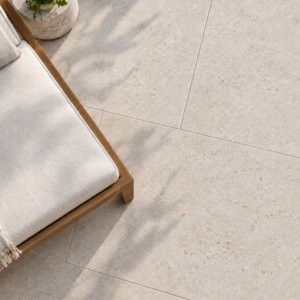
- A small physical sample, viewed wet and dry, in Bermuda light rather than showroom light.
- A delivered figure that separates stone, freight, handling and duty.
We would rather lose an order at specification stage than replace a terrace in its third season, so we will say when a job wants a different material, a heavier thickness or a different finish from the one that was drawn. That advice is free and it is usually short. Send the exposure, the traffic and the drainage for each area, and we will match the stone, the thickness and the finish to what that ground actually does.