

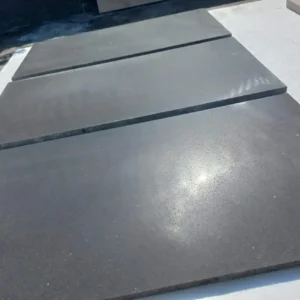
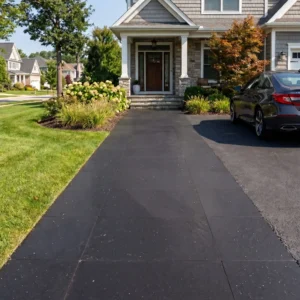
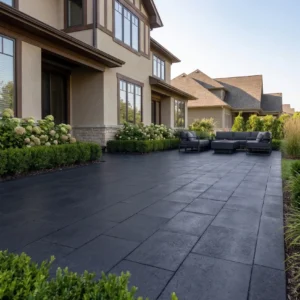


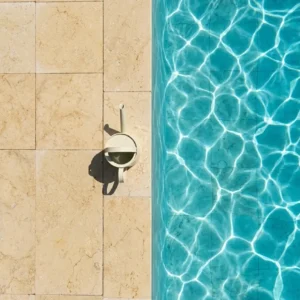


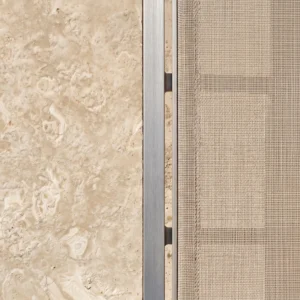
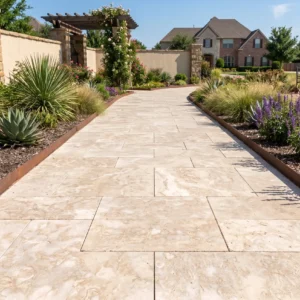
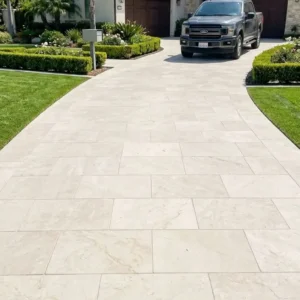
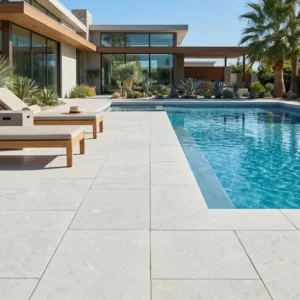
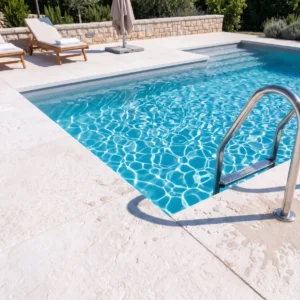
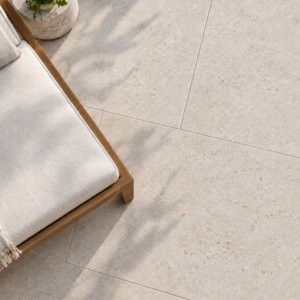
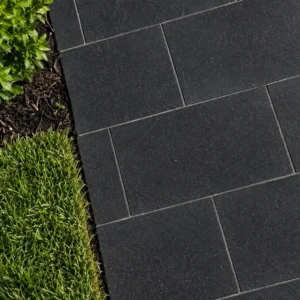
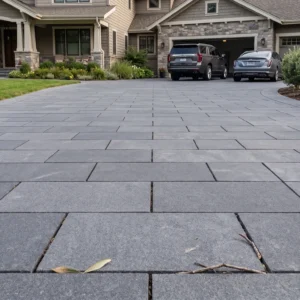
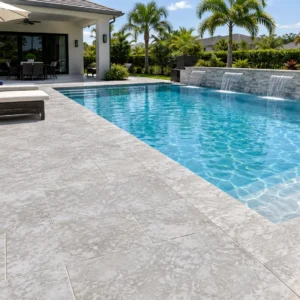

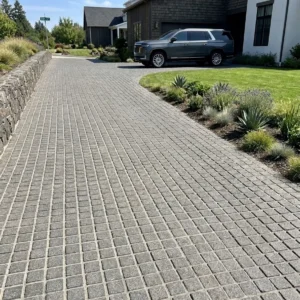
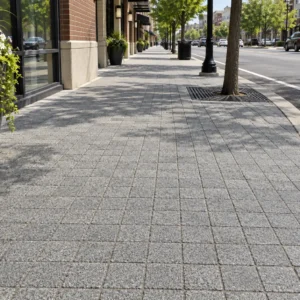
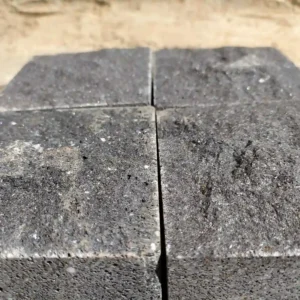

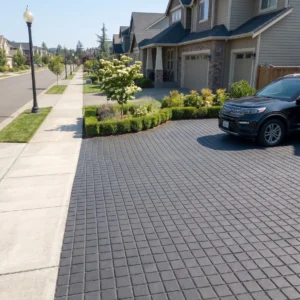
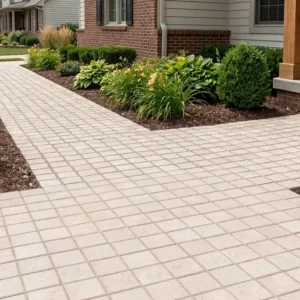
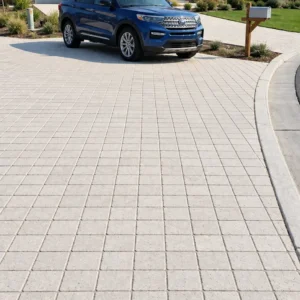
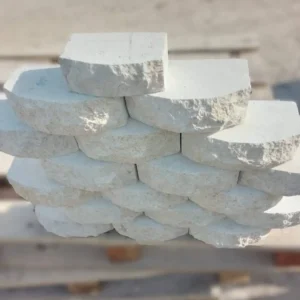
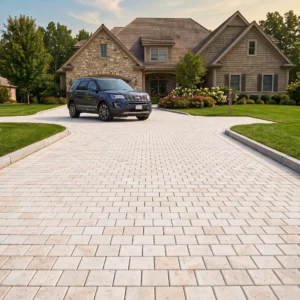
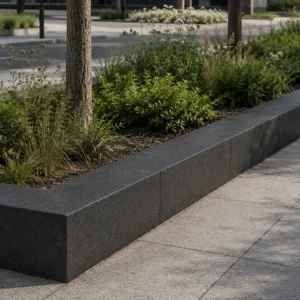
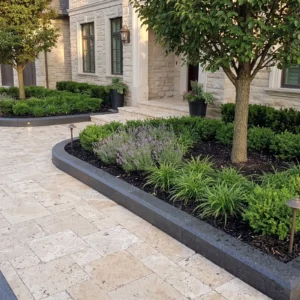
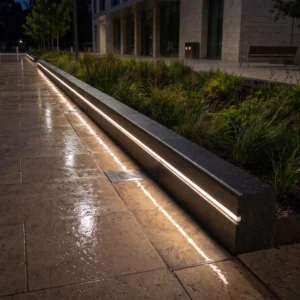
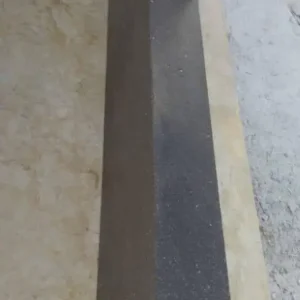
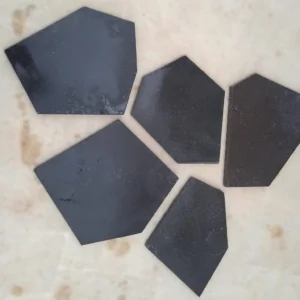
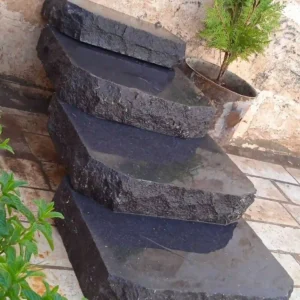
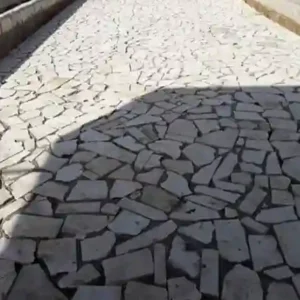
Large Limestone Pavers behave differently at scale than any sample board suggests — the single variable that determines whether a 4,000-square-foot terrace reads as one continuous surface or a patchwork is calibrated tonal batching across the pallet run, not the individual stone’s beauty. You’ll rarely hear this discussed in showrooms, but the difference between a project that photographs well and one that looks amateur comes down to how the quarry sorts shade lots before the material ever hits a truck. Batch consistency is the professional’s first specification concern, long before finish or format. Get that wrong and no installation skill recovers it.
The material’s density varies with the deposit, and that variance directly affects both cutting behavior and load handling on site. You’re not just buying a stone — you’re buying a predictable performance envelope that lets you plan aggregate depth, joint width, and sealing schedules with confidence. That predictability is what separates a specification you can defend to a client from a guess.
Material Properties That Drive Selection
Compressive strength varies with the quarry bed, so check the tested figure against your pedestrian or light vehicular loading before the base is engineered — request the test report for the batch you are buying. Here’s what most specifiers miss: the porosity figure matters more than the strength figure for outdoor work. A stone at 3% absorption behaves radically differently through freeze-thaw cycles than one at 8%, and the quarry origin tells you which you’re getting.
You’ll want to evaluate these properties before committing to a format or finish:
- Water absorption rate, which predicts freeze-thaw durability in cold-winter regions
- Flexural strength, which governs how thin you can safely spec large-format units
- Surface hardness on the Mohs scale, affecting long-term wear under foot traffic
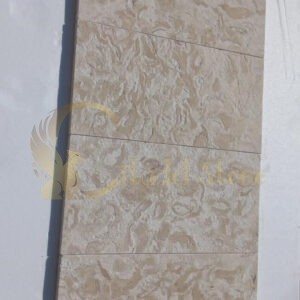
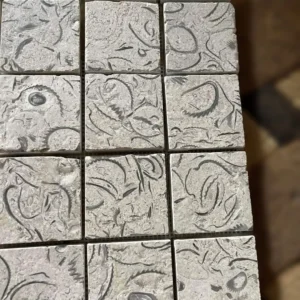
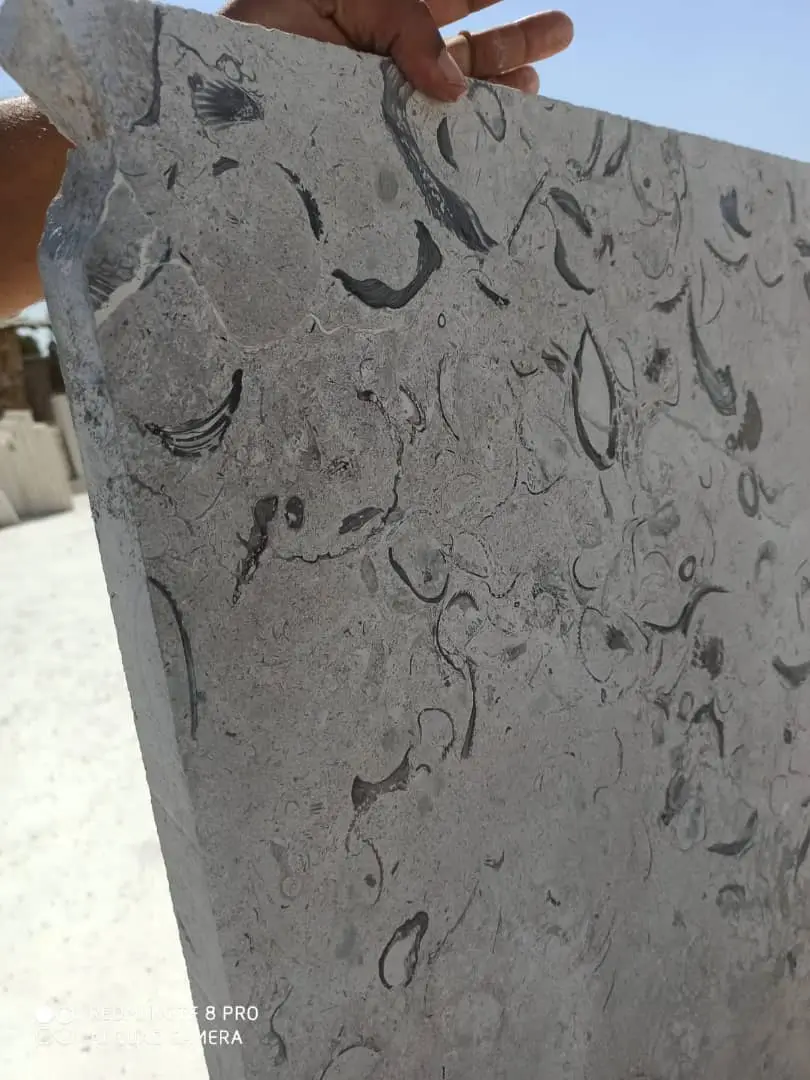
- Fossil and vein density, which changes both aesthetics and cutting predictability
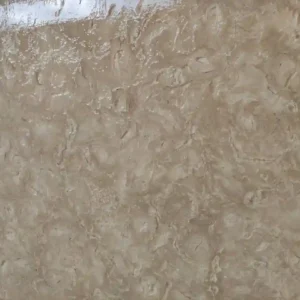
- Tonal range within a single quarry block, the real driver of finished uniformity
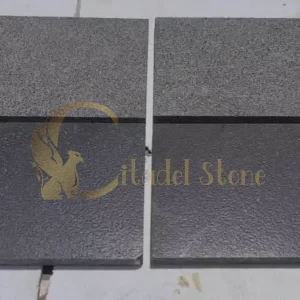
According to industry limestone specifications, the material’s sedimentary structure gives it a naturally consistent tone within a deposit — but that consistency only holds if the supply chain honors the batching. At Citadel Stone, we inspect each incoming batch against reference samples precisely because a single mismatched pallet can compromise an entire terrace. You can request sample tiles or full thickness specifications before committing, which lets you verify tonal range against your design intent rather than trusting a photograph.
Color Palettes and Design Integration
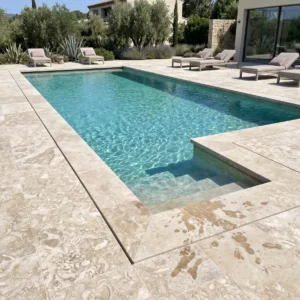
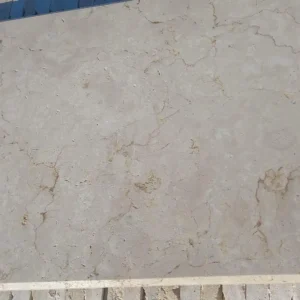
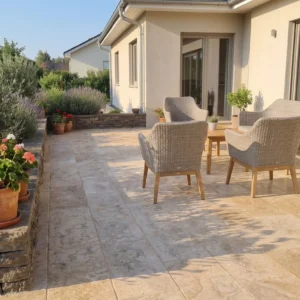
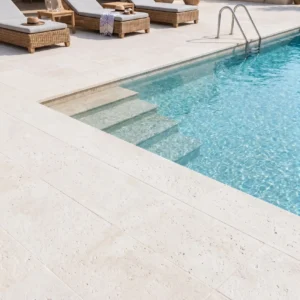
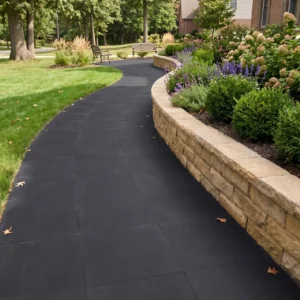
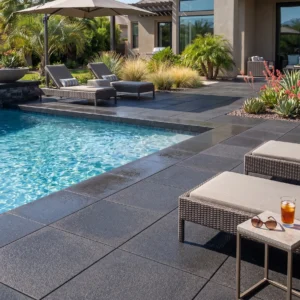
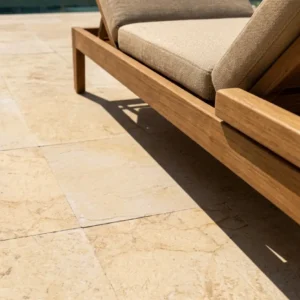
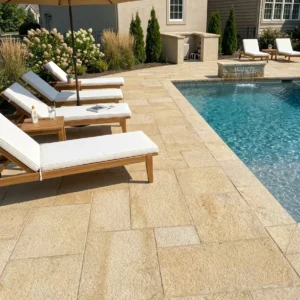
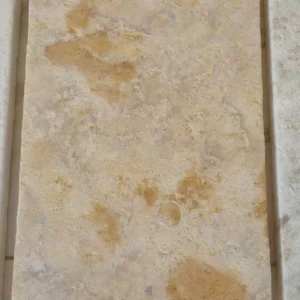
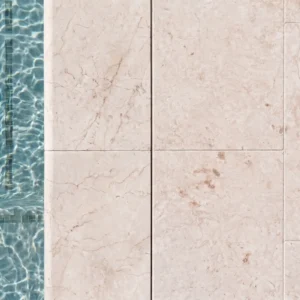
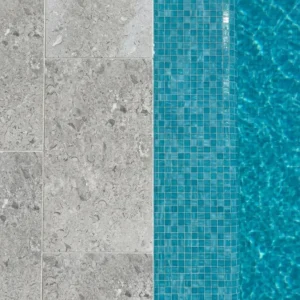
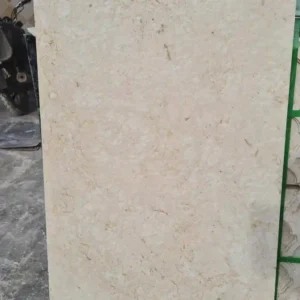
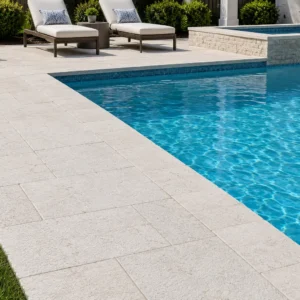
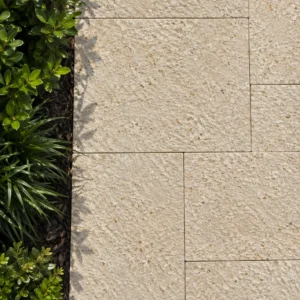
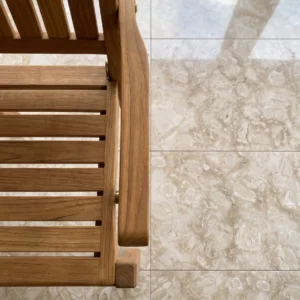
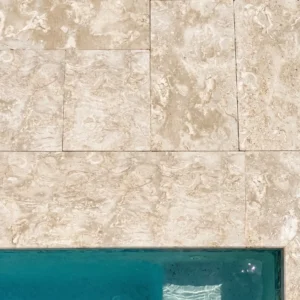
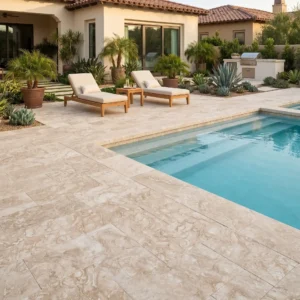
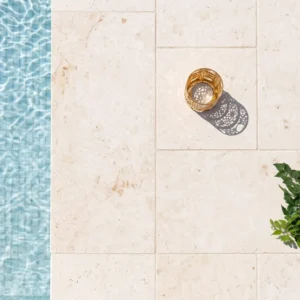
The tonal family you choose does more heavy lifting for the finished design than the format itself. Limestone’s natural palette spans warm cream and ivory through cooler grey, and each reads completely differently against different architectural traditions. You’ll find that a warm cream stone flatters Mediterranean and traditional masonry, while a cooler grey or silvered tone anchors contemporary minimalist schemes where the stone should recede rather than announce itself.
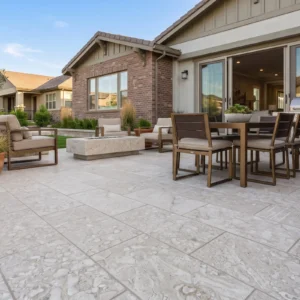
Consider how your surrounding materials influence the decision. A cream limestone beside charcoal steel and dark timber creates deliberate contrast; the same stone beside warm brick reads as a harmonious extension. Here’s the design insight that separates experienced specifiers: sample the stone wet and dry, at the actual time of day the space gets used. Limestone shifts tone noticeably when damp, and a terrace that looks perfect at midday can read cold and grey at dusk.
Different landscape styles pull toward different formats and palettes:
- Formal and classical gardens favor square limestone pavers in ivory or cream, laid in regular grids
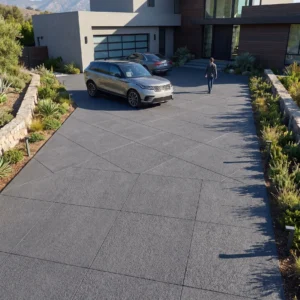
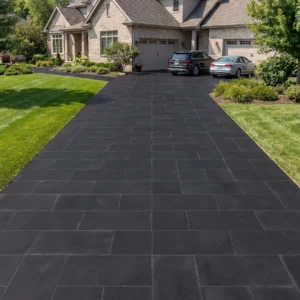
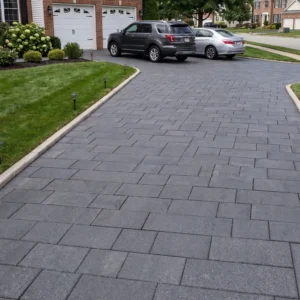
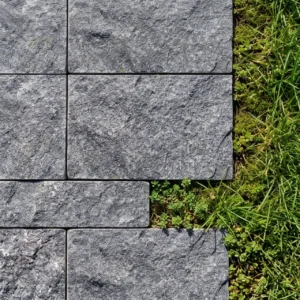
- Contemporary courtyards suit large format limestone pavers in cool grey, with tight minimal joints
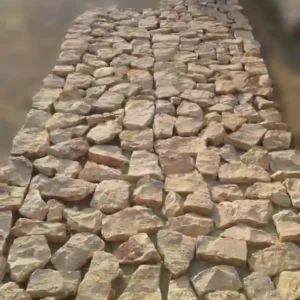
- Naturalistic and cottage landscapes work beautifully with irregular limestone pavers that echo organic geometry
- Transitional designs blend rectangular limestone pavers with softer planting to bridge formal and relaxed
- Rustic and courtyard schemes often incorporate limestone brick pavers for texture and human scale
The tonal integration extends to how the stone ages. Cream and ivory tones develop a soft patina that many designers actively want; cooler greys hold their appearance longer but show organic staining more readily in shaded, damp conditions. You should factor the site’s sun exposure into the color decision, not just the design mood board.
Format and Size Selection
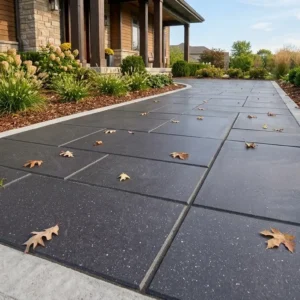
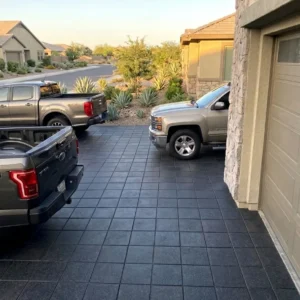
Large format limestone pavers create the seamless, expansive look that drives so much contemporary specification, but they demand more from your base and your installer than smaller units. The larger the individual unit, the less tolerance you have for base settlement — a 600mm slab telegraphs a 3mm subgrade dip that a 200mm unit would absorb invisibly. That’s the trade-off nobody mentions when they fall in love with the look.
Citadel Stone supplies large limestone paving slabs in standard modular formats, and the format range gives you real flexibility to match design intent:
- Rectangular limestone pavers for linear, directional layouts that lead the eye
- Square limestone pavers for formal grids and symmetrical courtyards
- Irregular limestone pavers for organic, naturalistic pathways and transitional zones
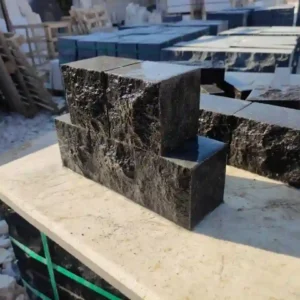
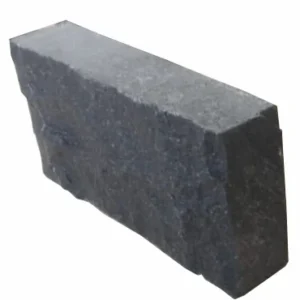
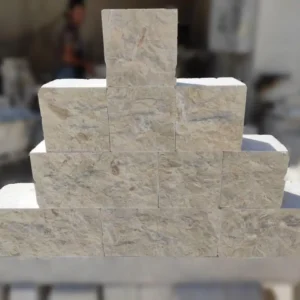
- Limestone brick pavers for smaller-scale texture, edging, and detail banding
- Large limestone slabs for open terraces where minimal joints are the design goal
Available in a range of finishes and calibrated thicknesses to match your project requirements, the format decision should follow the traffic and the base you can realistically build. For a project mixing formats, what type of stone is limestone covers the material behavior that applies across all sizes, and understanding that foundation helps you decide where large limestone slabs earn their premium and where a smaller unit serves better. The rule of thumb: reserve the largest formats for the flattest, best-prepared subgrades.
Base Preparation for Large-Format Work
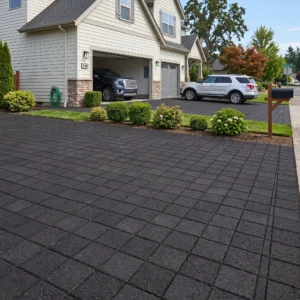
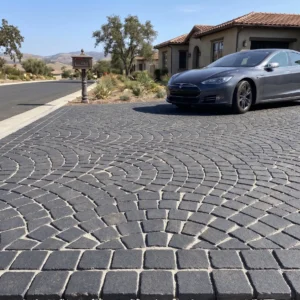
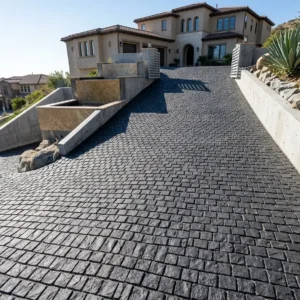
Your installation’s lifespan is decided in the base, not the stone. The larger the paver, the more critical this becomes — point loading on an unsupported corner cracks a large slab where it would never trouble a small one. For large limestone paving slabs carrying vehicular loads, you’ll want a compacted aggregate base of 150 to 200mm minimum, and in clay-heavy or expansive soils that number climbs.
The detail that matters most: compaction in lifts. Dumping 200mm of aggregate and running a plate compactor over the top gives you a compacted crust over loose fill, and the loose material settles unevenly within two seasons. Compact in 75mm lifts, each one separately, and you build a base that actually holds the geometry your large slabs demand.
Base best practices for large format limestone pavers:
- Excavate to full depth accounting for slab thickness plus base plus bedding layer
- Compact aggregate in lifts no greater than 75mm for genuine density throughout
- Build in a consistent fall of 1 to 2% for surface drainage away from structures
- Use a rigid bedding method for vehicular loads rather than a sand-set approach
- Account for regional soil expansion coefficients in clay-dominant sites
The interaction between compacted aggregate and expansive clay is where most premature failures originate. In clay-heavy soils, seasonal moisture swings move the subgrade, and a rigid mortar-set surface with an inadequate base will crack along the movement lines. You should either engineer a deeper, well-drained base or design in movement joints — pretending the clay won’t move is the expensive mistake.
Jointing, Drainage, and Thermal Behavior
Limestone’s thermal expansion coefficient sits lower than most concrete alternatives, which works in your favor for large surfaces — but large slabs still need respect for movement. On a broad terrace, you should design continuous movement joints roughly every 6 meters in each direction, and never lock a large-format field rigidly against a fixed structure. The stone won’t move much, but the substrate beneath it does.
Drainage geometry matters more with large slabs because their flat, wide surface sheds water differently than a jointed small-unit field. Where a cobble or brick surface lets water find joints across the whole area, large slabs channel it to the perimeter joints and falls. Your fall calculation has to be right, because standing water on limestone in freeze-thaw regions is the single fastest route to surface spalling.
Jointing considerations that affect long-term performance:
- Joint width scaled to unit size — larger slabs tolerate and benefit from slightly wider joints
- Polymeric or resin jointing for stability on large-format vehicular installations
- Perimeter drainage detailing to move water off broad flat surfaces efficiently
- Movement joint placement aligned with structural lines and surface transitions
- Permeable joint options where surface runoff needs managing, per landscape guidance
The landscape design guidance on permeable surfaces is worth reviewing when your site has runoff constraints, because joint strategy can turn a paved surface into part of the drainage solution rather than a problem. In practice, the first 30 minutes after a rain shower reveal whether your falls were calculated correctly — that’s when you see whether water sheets off cleanly or pools at low spots.
Sealing and Long-Term Maintenance
Sealing protocols for limestone differ meaningfully from concrete maintenance because you’re managing a porous, reactive natural material, not an inert one. Limestone is calcium carbonate, which means acidic staining agents — citrus, wine, some fertilizers — etch the surface chemically rather than just staining it. A penetrating sealer buys you reaction time to clean spills before they etch, which is the practical value most homeowners don’t grasp until it’s too late.
You’ll get the best results from an impregnating, breathable sealer rather than a topical film. Topical sealers on outdoor limestone trap moisture vapor and can cause the surface to cloud or peel through freeze-thaw cycling. The breathable impregnator lets vapor escape while repelling liquid staining, and you should plan to reapply every 2 to 4 years depending on traffic and exposure.
Realistic maintenance expectations:
- Initial penetrating seal before or immediately after installation, on fully dry stone
- pH-neutral cleaners only — never acidic products, which etch calcium carbonate
- Reseal every 2 to 4 years, more frequently in high-traffic or high-UV areas
- Prompt spill removal on unsealed or heavily used surfaces to prevent etching
- Periodic joint inspection and refill on large-format polymeric-jointed fields
You can expect 25 to 40 years of service from a properly installed and maintained limestone surface, which is where the material earns its specification premium over shorter-lived alternatives. That longevity assumes the base was right and the sealing was consistent — neglect either and you’re looking at replacement in half that time.
Comparing Limestone to Alternatives
The honest comparison is where good specification decisions live. Limestone sits between the workability of sandstone and the hardness of granite, and that middle position is exactly why it dominates high-end residential and commercial hardscape. You get a stone that cuts and finishes predictably, holds fine detail, and offers a tonal warmth that harder igneous stones can’t match — at the cost of requiring more diligent sealing.
Federal geological data on limestone composition and construction applications confirms the sedimentary structure that gives the stone its consistent tone and reliable cutting behavior. Against granite, limestone loses on raw hardness and acid resistance but wins decisively on aesthetic softness and ease of fabrication. Against concrete pavers, it wins on longevity, authenticity, and the fact that it ages gracefully rather than fading.
Where limestone is the right call:
- Projects prioritizing natural tonal warmth and design authenticity over maximum hardness
- Formal and traditional landscapes where cream and ivory tones suit the architecture
- Contemporary schemes using cool grey tones for understated, receding surfaces
- Applications where a 25-to-40-year lifespan justifies the material and maintenance investment
- Sites where the buyer will commit to a realistic sealing and cleaning routine
Where you should think harder: heavy-acid environments, extreme freeze-thaw exposure with poor drainage, or projects where nobody will maintain the surface. Being honest about maintenance willingness at specification time prevents disappointment later.
Sourcing and Supply Planning
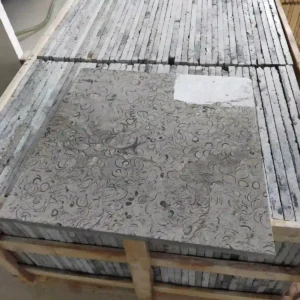
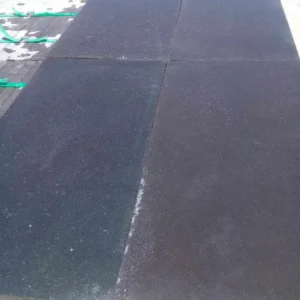
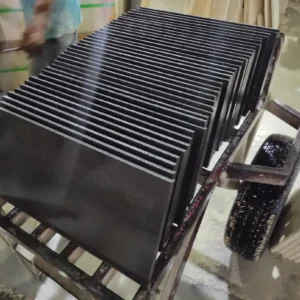
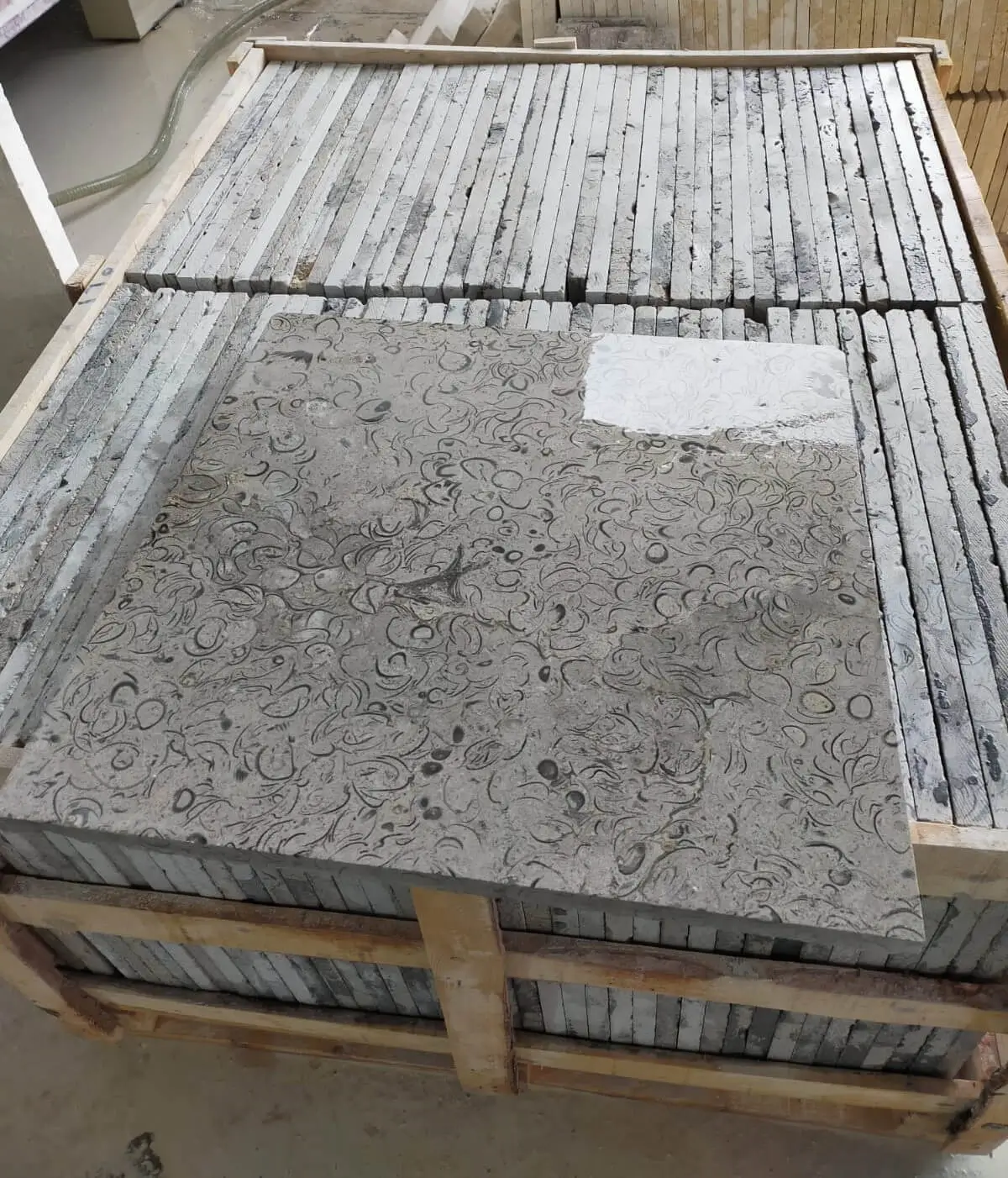
Supply logistics make or break a large-format schedule more often than installation problems do. A slab of limestone in large formats is heavy freight, and coordinating delivery against site readiness matters as much as the material quality. You should confirm batch and shade-lot continuity before committing to project timelines, because a mid-project shade-lot change from a fresh quarry block can ruin the tonal continuity you specified. A single slab of limestone rejected for shade mismatch is cheaper to catch at intake than after it’s laid.
Citadel Stone cuts large-format limestone to order, with lead times quoted with your order. Sourced from our selected premium quarries, each batch is inspected for consistency, and that inspection is where tonal batching problems get caught before they reach your site. For projects requiring custom cuts or non-standard formats, our team can advise on realistic lead times so your truck deliveries align with your installation sequence.
Practical supply planning steps:
- Confirm total quantity plus a 5 to 10% cutting and wastage allowance up front
- Verify all material ships from a single shade lot for tonal continuity
- Coordinate truck access and offload equipment for heavy large-format pallets
- Stage delivery to match installation phases on large multi-zone sites
- Request thickness and finish confirmation in writing before the order ships
The heavy nature of large limestone slabs means your site access dictates the delivery method — narrow access or upper-level terraces need planning that a standard truck-and-forklift approach won’t handle. Raise access constraints early, and the logistics can be solved before they become delays.
Buy Large Limestone Pavers — Get Trade Pricing from Citadel Stone
Citadel Stone supplies Large Limestone Pavers in standard modular formats — rectangular limestone pavers, square limestone pavers, and irregular limestone pavers — across a range of calibrated thicknesses and surface finishes to match commercial and residential specifications. You can buy in project quantities and request samples or full thickness and absorption specifications before committing, which lets you verify tonal range and performance against your design intent. Trade and wholesale enquiries are handled directly by our specification team, who can advise on custom cuts, single-shade-lot batching for large limestone paving slabs, and cheap project-scale pricing without cutting corners on quality.
Lead times are quoted with your order, with nationwide delivery coordinated to your installation schedule. To move forward, request a quote with your quantity and format requirements, and the team will confirm availability, pricing, and delivery logistics. Before you finalize the hardscape, related applications can inform your material decisions — a closer look at limestone paving slab options provides additional specification detail worth reviewing alongside your paver selection. Builders source travertine vs limestone, a sedimentary stone valued for its even, consistent tone, for projects across the country.
Related guides: how to identify limestone · how to remove limestone stains · limestone planter large · limestone retaining wall blocks · large limestone rocks landscaping · limestone mantel design ideas.