What Limestone Brings to Mantel Design
Limestone mantel design ideas tend to look deceptively simple on the page — clean profiles, neutral tones, natural texture — but what you’re actually specifying is a material with compressive strengths ranging from 1,800 to 12,000 PSI depending on formation density, and that range matters enormously when you’re anchoring a surround to a masonry chase or a stud-framed wall. The decisions you make about finish, thickness, and edge profile determine not just aesthetics but structural performance over decades. Most specifiers focus on style first, which is fine, but the ones who get the best outcomes are the ones who let material properties guide their style selections — not the other way around.
Style Directions for Limestone Mantels
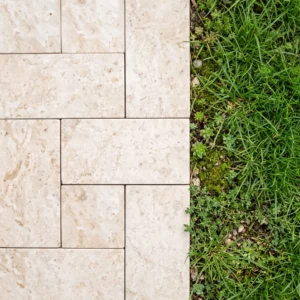
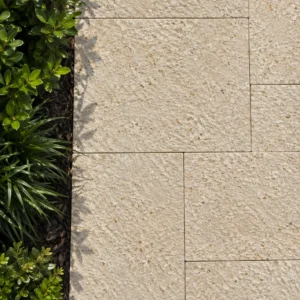
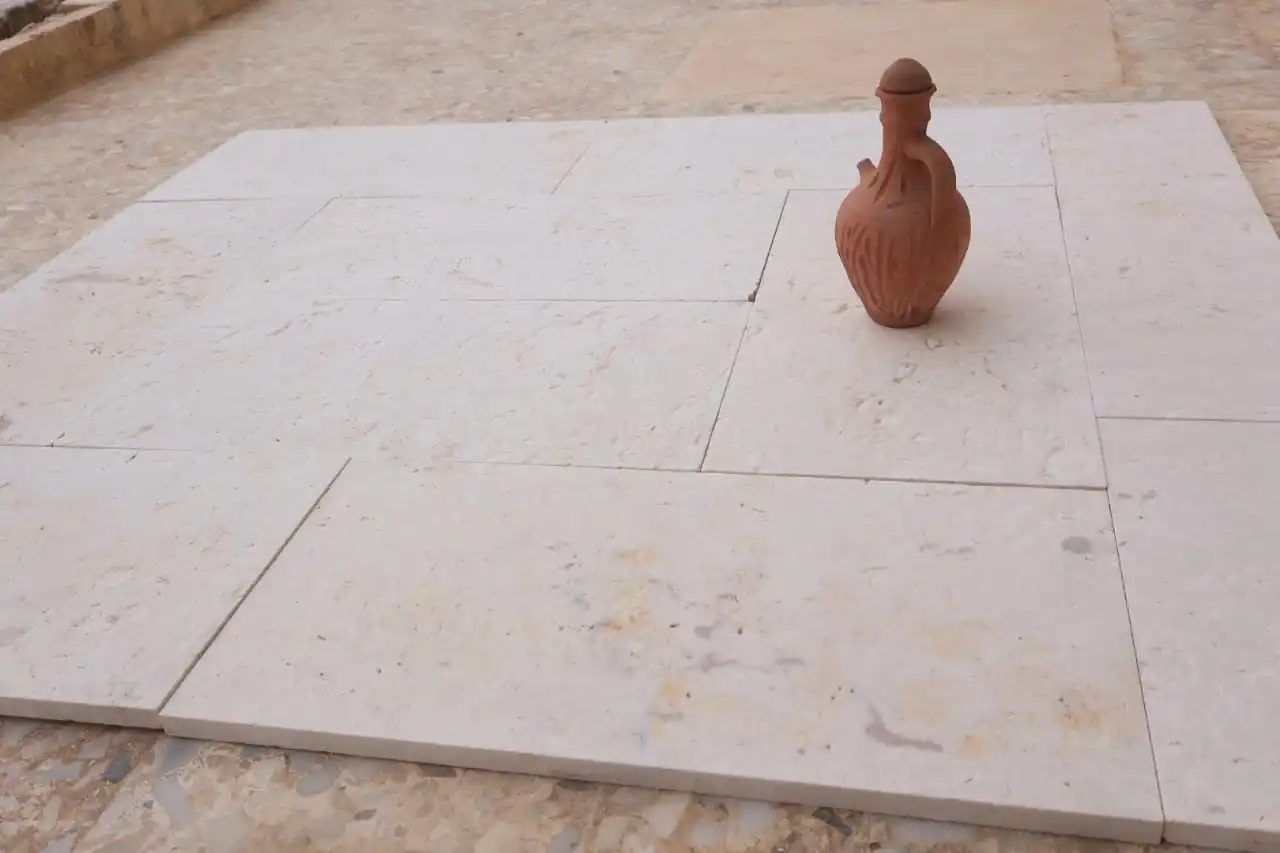
The breadth of limestone mantel design ideas available today is wider than most homeowners and designers expect. Limestone isn’t a single visual identity — it’s a material family, and your finish choice alone can shift the entire character of a room.
- Honed limestone reads as understated and contemporary — a flat, matte surface that absorbs light rather than reflecting it, making it the go-to for minimalist interiors and Scandinavian-influenced spaces
- Brushed or aged limestone surfaces introduce linear texture that catches raking light, creating depth that suits transitional and arts-and-crafts settings without the formality of carved stone
- Polished limestone (less common for mantels, but effective in high-gloss contemporary schemes) reflects ambient firelight dramatically — bear in mind that soot and heat cycling will eventually dull polished surfaces closer to the firebox
- Split-face or rough-hewn limestone delivers a rustic, organic presence suited to lodge-style and farmhouse interiors, and it hides small thermal stress marks better than smooth finishes
- Carved classical profiles — egg-and-dart, dentil moulding, fluted pilasters — remain the dominant choice for formal traditional interiors, and limestone’s relatively soft carving properties make it more economical for custom profiles than granite
Your interior’s existing architectural language should drive the finish decision. A honed limestone mantel in a room with shaker-style cabinetry and white oak floors looks considered and precise. The same mantel with carved acanthus capitals would feel like a period-piece mismatch.
Limestone Mantel Thickness and Structural Sizing
Here’s a detail that catches a surprising number of projects off guard: the leg and shelf thicknesses you see in inspiration photographs don’t always translate directly to your wall assembly. A limestone mantel surround installed against a drywall-over-stud wall requires backing that masonry installations don’t, and that backing depth affects how far the mantel projects into the room.
For leg pieces (the vertical pilasters flanking the firebox opening), 2-inch nominal thickness handles most residential applications cleanly. The shelf — especially if it’s cantilevered — is where you need to be more careful. According to NSI limestone specifications, flexural strength for dense limestone typically runs 900–1,200 PSI, but shelf spans beyond 60 inches at 2-inch thickness start to introduce risk under point loads (decorative objects, candles, seasonal displays). For longer spans, either step up to 3-inch thickness or specify a steel angle support concealed behind the front face.
- Leg thickness: 1.5 to 2 inches for standard residential applications
- Shelf thickness: 2 to 3 inches depending on span and anticipated load
- Shelf overhang depth: 8 to 12 inches is the conventional range; deeper overhangs require support verification
- Firebox clearance: confirm minimum clearances with your installer and local code — combustible framing proximity rules apply regardless of stone thickness
Hearth Stone Slab Selection and Coordination
Your hearth stone slab is doing different physical work than your mantel surround, and that distinction matters for material selection. The hearth platform absorbs foot traffic, dropped tools, thermal radiation from the firebox, and — in many homes — the occasional log that overshoots the grate. It needs abrasion resistance and thermal stability simultaneously.
Dense limestone performs reliably in this role. The key variable is porosity: higher-porosity limestone (absorption rates above 6–7% by weight) will show heat cycling effects faster and requires more frequent sealing. For hearth platforms, target limestone with an absorption rate below 4%, which the denser oolitic and reef varieties typically deliver. According to USGS data on limestone composition, denser carbonate formations have the absorption characteristics and compressive strengths that suit high-traffic, high-heat applications in structural contexts.
The design opportunity here is intentional coordination between your hearth stone slab and mantel components. Matching the finish — both honed, for instance — creates a unified surround system. A deliberate mismatch (honed mantel, brushed hearth) can also work well if the textural contrast reads as intentional rather than accidental. The finish decision affects maintenance, too: brushed surfaces on the hearth hide scratches and soot marks considerably better than polished or honed equivalents.
Color and Tone Selection Across Limestone Varieties
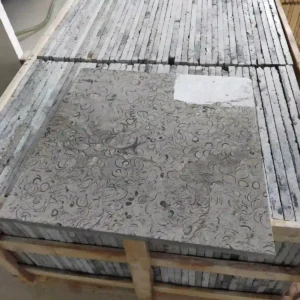
Limestone’s color palette runs from near-white through warm cream, buff, honey, silver-grey, and blue-grey, with individual slabs carrying veining, shell fossils, or grain patterns that can be striking or barely perceptible depending on formation origin. The tone you select changes how the limestone mantel interacts with the room’s light conditions — something that’s easy to underestimate on a sample chip but impossible to miss at full scale.
- Warm buff and honey tones read as inviting and organic — they complement wood floors, terracotta accents, and warm-white walls naturally
- Cool blue-grey limestone creates a more architectural, restrained effect — it pairs cleanly with matte-black firebox surrounds, concrete, and pale linen palettes
- Near-white limestone maximizes the visual lightness of a surround — effective in rooms where the fireplace is the primary architectural feature, but it shows soot staining more readily near the firebox opening
- Fossil-rich limestone varieties add inherent visual interest without relying on surface finish — useful in spaces where you want texture and character without carved ornament
Check your limestone samples in the room’s actual light before committing to a full order. Natural stone reads differently under north-facing daylight, south-facing afternoon sun, and artificial warm-white lighting — and a mantel is a large enough surface that the shift matters.
Limestone Hearth Slabs: Installation and Substrate Considerations
The substrate beneath your limestone hearth slab has more influence over long-term performance than most design discussions acknowledge. Limestone’s relatively low flexural strength means it needs continuous, even support — any void or soft spot beneath the slab will eventually translate to a crack, regardless of stone thickness. Ground-floor fireplaces built over poorly compacted fill are a known problem category. The substrate movement that unstable subgrades generate during wet-dry cycles transfers upward through the slab, and a limestone hearth with no flex tolerance is exactly the wrong material to put over an unstable base.
For ground-floor installations, verify subgrade stability before specifying slab thickness. A 3-inch limestone hearth slab over a properly compacted, stable base will outperform a 4-inch slab over poorly prepared subgrade every time. For upper-floor hearth platforms over wood framing, deflection control is the critical factor — your framing engineer should confirm that the floor system meets L/360 deflection limits under combined live and stone dead loads before any limestone is ordered. You can review how limestone formation and structural characteristics relate to its behavior under load to better understand why continuous support is non-negotiable for this material.
At Citadel Stone, we routinely consult with specifiers on thickness requirements before orders are placed — because getting a limestone hearth slab back to the warehouse for a replacement is a project delay no one wants.
Finish Options and Their Practical Implications
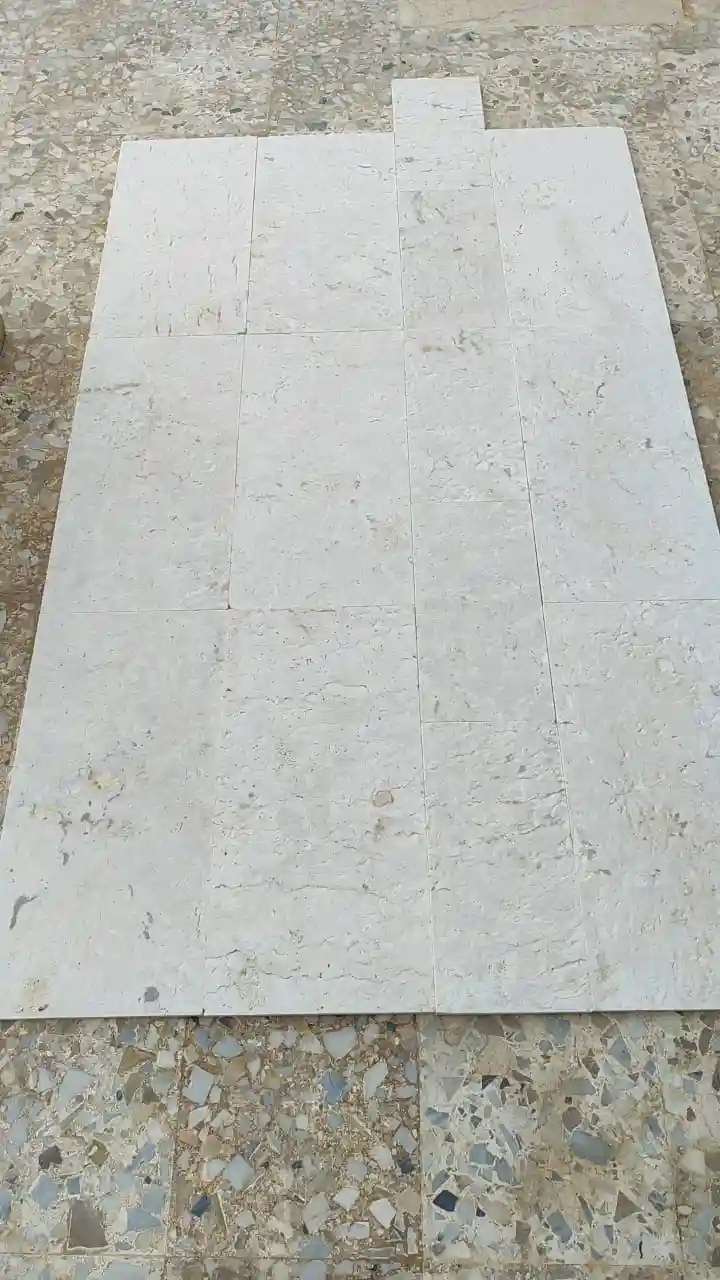
The finish you specify for your limestone mantel and hearth affects maintenance intervals, slip resistance on the hearth platform, and how the material ages over time. Understanding these trade-offs before specifying prevents the post-installation regret that comes from choosing on aesthetics alone.
- Honed finish: produces a smooth, low-sheen surface with good stain resistance when sealed — requires resealing every 2–3 years on the hearth platform, less frequently on the mantel surround where foot traffic isn’t a factor
- Brushed finish: slightly textured, hides wear marks well, and provides better slip resistance on the hearth surface — a practical upgrade if small children or pets are part of the household equation
- Polished finish: highest sheen, most demanding maintenance on a fireplace hearth — soot and heat proximity will affect the polish near the firebox opening over time, and re-polishing in place is not straightforward
- Antiqued or tumbled finish: intentionally aged appearance — masks new scratches and wear almost invisibly, making it the most forgiving choice for actively used hearths
For the mantel surround itself, finish durability requirements are lower than for the hearth platform. The shelf and legs primarily need to resist dust, occasional polish, and the minor impacts of rearranged décor. Almost any finish works well in that context — the decision can be driven by aesthetics without significant practical trade-off.
Planning Your Order and Matching Elements
One practical challenge with limestone mantel design ideas and hearth coordination is batch matching — ensuring that your mantel surround components and your hearth stone slab come from the same production run or the same quarry lot. Limestone’s natural variation means that two slabs from different lots can carry noticeably different undertones even when they share a material name and finish specification.
The practical solution is to order all elements together from a single source with confirmed warehouse stock on hand. Ordering the mantel surround now and the hearth slab three months later introduces real risk of tone mismatch — natural stone inventory turns over, and the next pallet from the same quarry may read differently under your room’s light. Review our limestone mantel selection to confirm current stock availability and coordinate both elements in a single order.
Citadel Stone maintains warehouse inventory that allows you to cross-reference mantel and hearth material in the same order cycle, which significantly reduces the mismatch risk that split orders create. Truck delivery scheduling can be coordinated around your installation timeline so both components arrive when your mason is ready — not three weeks before or after.
Getting Your Limestone Mantel Specification Right
The best limestone mantel design ideas share a common thread: they start with material understanding, not inspiration images. Your finish selection, thickness specification, hearth stone slab density, and substrate preparation all combine to determine whether the installation looks as good in fifteen years as it does on day one. Get those variables right, and limestone rewards you with a material that actually improves with age — developing a patina that manufactured alternatives can’t replicate. For a broader look at how limestone performs across different outdoor and architectural contexts, limestone landscaping applications and design approaches covers additional ways this material works across a property’s hardscape. Citadel Stone carries limestone in slab form suitable for both mantel surrounds and hearth platforms, allowing buyers to match finish and tone across both elements in one order.
Related reading: how to identify limestone · how to remove limestone stains · Large Limestone Planters: A Complete Buyer’s Guide.