

How Limestone Is Classified as a Rock Type
Limestone sits firmly in the sedimentary rock category — and understanding what type of stone limestone is starts with how it actually forms, not just what it looks like on a pallet. Sedimentary rocks build up through the accumulation and compression of material over geological time, and limestone is one of the most widespread examples of this process on Earth. The dominant mineral is calcite (calcium carbonate), which gives limestone its characteristic reaction to dilute acid — a field test that’s been used for decades to distinguish it from similar-looking stones on job sites.
The classification matters practically, not just academically. Sedimentary formation means limestone has a layered internal structure, variable density between beds, and a porosity profile that behaves very differently from igneous or metamorphic alternatives. You’re working with a rock that was once a seabed, and its physical properties reflect that origin in ways that directly affect how you specify, handle, and install it.
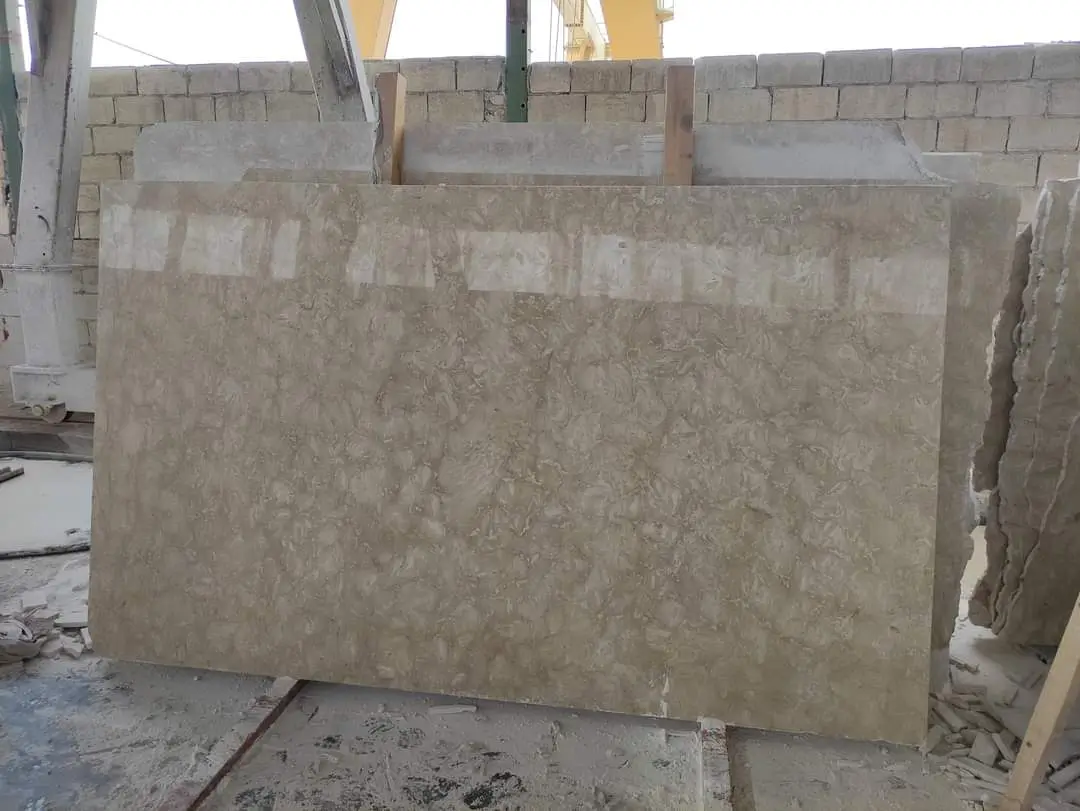
The Formation Process Behind Limestone’s Properties
Limestone forms primarily through two mechanisms: biological accumulation of marine organisms — shells, coral, and skeletal fragments — and direct chemical precipitation from calcium-rich water. Both pathways produce calcium carbonate as the dominant mineral, but the resulting stone textures differ significantly depending on the source. Bioclastic limestone, packed with visible fossil fragments, tends to have a coarser, more variable texture than chemically precipitated varieties like travertine, which forms in freshwater spring environments.
According to Britannica’s overview of limestone formation and characteristics, the rock typically contains over 50% calcium carbonate by weight, with secondary minerals including dolomite, quartz, and clay minerals that influence hardness and absorption rates. This mineral mix is what makes limestone geology and rock classification so nuanced — two slabs from different quarry beds can have measurably different compressive strengths even within the same quarry.
Here’s what that means for your project specification: always request quarry-specific test data, not generic species averages. Compressive strength in sedimentary limestone can range from around 4,000 PSI in softer chalky varieties to over 15,000 PSI in dense, well-cemented formations. That’s a three-fold difference within the same rock type, and it has real consequences for load-bearing applications and freeze-thaw performance.
Is Limestone Metamorphic? Clearing Up a Common Confusion
The question of whether limestone is metamorphic comes up constantly, and the short answer is no — but the longer answer explains why marble exists. Limestone itself is sedimentary. However, when limestone is subjected to intense heat and pressure during tectonic activity, its calcite crystals recrystallise into a denser, interlocking structure — and the result is marble, a metamorphic rock. The parent material is limestone; the transformed product is marble.
This distinction matters for specifiers because the two stones behave very differently in service. Marble has a tighter crystal structure, higher reflectivity, and lower absorption than most limestone varieties. Limestone retains the open, often interconnected pore network inherited from its sedimentary formation, which affects both sealing requirements and long-term maintenance cycles. Confusing the two at the specification stage leads to mismatched performance expectations and misapplied maintenance products.
- Limestone is sedimentary — formed from compressed marine material and calcium carbonate precipitation
- Marble is metamorphic — formed when limestone recrystallises under heat and pressure
- The two share a calcium carbonate base but differ in density, porosity, and surface hardness
- Sealing protocols, cleaning products, and maintenance intervals differ significantly between them
- Specifying marble maintenance products on limestone — or vice versa — accelerates surface degradation
The Main Varieties of Limestone You’ll Encounter
What type of stone limestone is in commercial practice isn’t a single uniform category — you’ll find meaningful variation across the grades most commonly used in construction and landscape architecture. Understanding the distinctions helps you match the right variety to your project’s demands before the stone leaves the warehouse.
The Natural Stone Institute’s limestone technical specifications outline the core grade classifications, but field experience adds important context. Dense, fine-grained varieties — sometimes called lithographic limestone — are your best performers in high-traffic and freeze-thaw applications. Open-structured varieties like oolitic limestone offer good workability and aesthetic warmth but require more aggressive sealing programs in wet or contaminated environments.
- Oolitic limestone: small spherical grains, warm tone, moderate density — common in architectural cladding and flooring
- Bioclastic limestone: visible fossil content, variable texture, good character — popular in landscape applications and flagstone formats
- Lithographic limestone: fine-grained, dense, low-porosity — strongest performer for paving under load or traffic
- Travertine: chemically precipitated limestone from spring environments — distinctive banded voids, requires filling for smooth surface applications
- Chalk: soft, highly porous end of the limestone spectrum — rarely used in structural or paving applications
Porosity, Absorption, and Why They Define Limestone Performance
Porosity is the specification variable that separates a well-selected limestone from a problematic one — and it’s directly tied to how the stone formed. Most sedimentary limestone carries an absorption rate between 2% and 12% by weight, depending on how tightly the original material was compacted and cemented. Dense lithographic varieties sit at the low end; softer chalky or oolitic grades at the high end. Knowing this number before you define limestone for any exterior application is non-negotiable.
High absorption rates create two practical problems. First, the stone becomes a sponge for contaminants — oils, biological staining, and mineral deposits penetrate more deeply and require more aggressive remediation. Second, in freeze-thaw regions, water that enters open pore structures expands on freezing and can fracture the stone from within over repeated cycles. Limestone with absorption above 7% should carry a minimum of two sealer applications before exterior service, with resealing on a 12-to-18-month cycle rather than the more common 24-month schedule applied to denser stones.
According to USGS data on limestone composition and construction applications, the variation in physical properties across limestone types is significant enough that project-specific testing is consistently recommended over species-average assumptions. This is the kind of detail that separates well-specified projects from ones that need remediation within five years.
Defining Limestone in a Construction and Design Context
To define limestone in practical terms: it’s a sedimentary rock composed primarily of calcium carbonate, exhibiting a wide range of densities, textures, and finishes that make it one of the most versatile natural stones in construction. Its applications span flooring, wall cladding, pool surrounds, landscape paving, and architectural detailing — each requiring a different grade and finish selection based on loading, exposure, and maintenance expectations.
The material’s workability is one of its most valued attributes. Limestone cuts, hones, and profiles more easily than granite or basalt, which keeps fabrication costs lower and allows for detailed edge profiles and custom sizing without the tool wear associated with harder igneous stones. This workability also means that limestone type of rock characteristics directly influence fabrication yield — tighter-grained varieties produce cleaner cuts with less wastage than coarser bioclastic grades.
For landscape and hardscape applications, limestone pavers in the 2-inch nominal thickness range handle typical pedestrian and light vehicular loads reliably when properly bedded. Your base preparation remains the critical variable — a poorly compacted aggregate base will cause differential settlement regardless of stone quality, while a correctly prepared 6-inch compacted base extends service life by decades. Sourcing natural limestone sourced by Citadel Stone with documented quarry provenance gives you the material consistency to build those long-term performance expectations into your specification with confidence.
Finish Options and Their Effect on Performance
The finish you select on limestone changes its surface characteristics dramatically — and not just aesthetically. A polished limestone has a tighter, more contamination-resistant surface than a tumbled one, but it also carries a higher slip risk when wet. A honed finish splits the difference: smoother than brushed or tumbled, but with enough surface texture to maintain safe friction coefficients in wet conditions.
- Polished: high reflectivity, low slip resistance when wet — suitable for dry interior flooring only
- Honed: smooth to the touch, moderate slip resistance — versatile for interior and sheltered exterior use
- Brushed: textured surface with natural character — good outdoor friction performance, shows wear over time
- Tumbled: rounded edges, aged appearance, good grip — popular for informal landscape and pool surrounds
- Bush-hammered: aggressive texture, high slip resistance — ideal for ramps, pool decks, and commercial exterior paving
The finish also affects sealer penetration. Polished surfaces require penetrating sealers formulated for low-absorption substrates, while tumbled or bush-hammered finishes accept sealers more readily but consume more product per square foot. Factor this into your maintenance cost projections, particularly for large-format installations where resealing labour and material costs add up quickly.
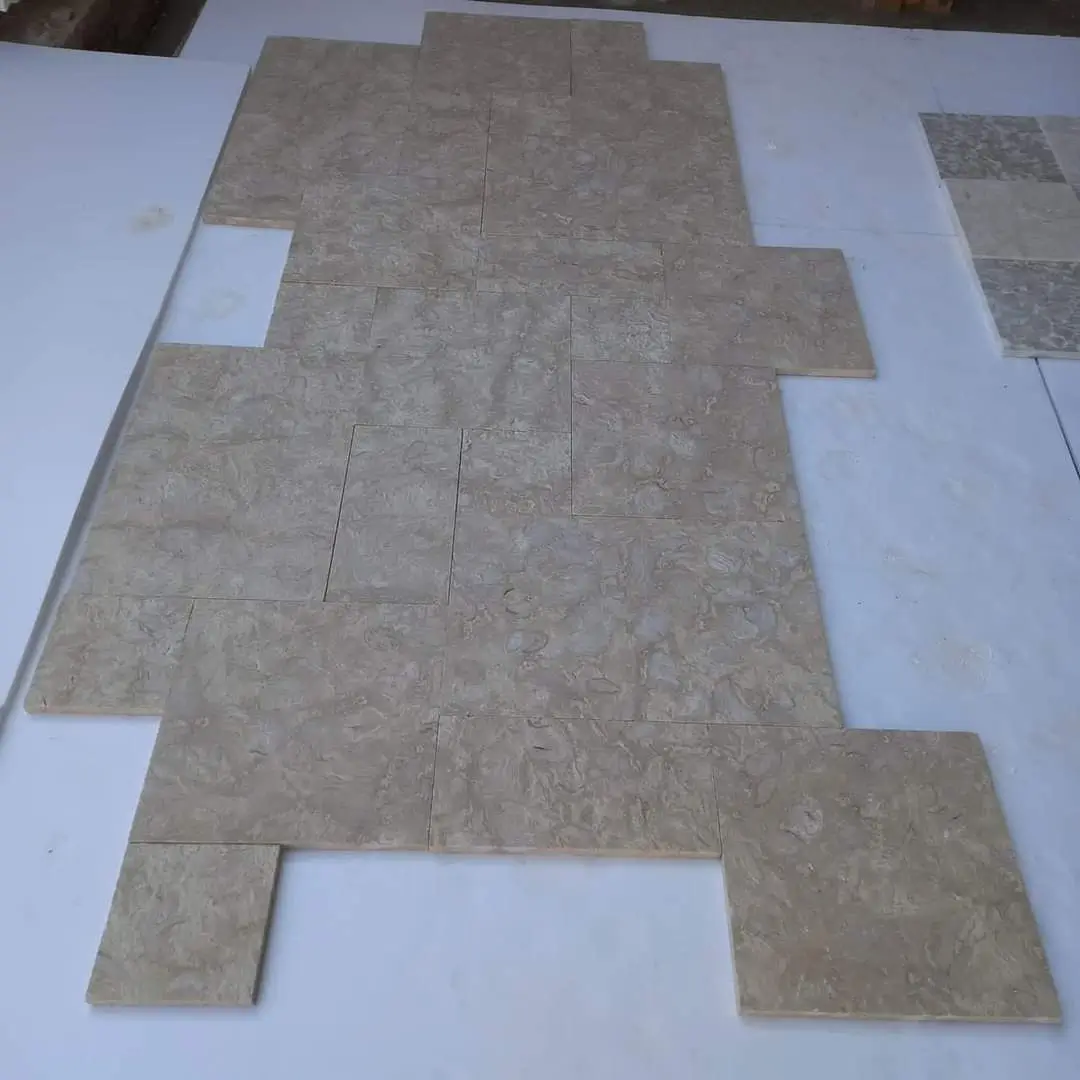
Installation Timing and Environmental Considerations for Limestone
Limestone installation has a narrower optimal window than most specifiers account for. Setting mortars and adhesives used beneath limestone pavers are temperature-sensitive: most cementitious bedding products perform best when ambient and substrate temperatures sit between 50°F and 85°F. Outside that window, you’re either fighting extended cure times in cold conditions or accelerated moisture loss in hot ones — both of which compromise bond strength before the stone is loaded.
For projects scheduled in spring or autumn — typically the most reliable installation windows in temperate regions — morning installation is preferable for large-format limestone slabs. Substrate temperatures are more stable in the morning hours before solar gain builds through the day. Afternoon work in warm periods risks rapid moisture evaporation from the mortar bed, which can leave voids under large slabs that only become apparent months later when point loads expose the unsupported sections.
- Avoid setting limestone on substrate temperatures below 40°F without heated enclosure and extended cure time
- In warm periods, schedule mortar mixing and laying in cooler morning hours to extend workability time
- Protect freshly laid limestone from direct sun for the first 24–48 hours to control cure rate
- Adhesive pot life drops significantly above 85°F — mix smaller batches more frequently rather than large batches that skin over before use
- Allow newly delivered limestone from a cold storage environment to acclimatise for several hours before cutting or laying in warm conditions to minimise thermal shock cracking
Scheduling around these conditions isn’t overcautious — it’s the difference between an installation that performs on its first inspection and one that starts showing hollow spots and lippage within 18 months.
How Limestone Compares to Other Sedimentary Stones
Sandstone, slate, and limestone are all sedimentary, but their mineralogy creates very different performance profiles. Sandstone is silica-based, making it harder and more acid-resistant than limestone but more prone to delamination in freeze-thaw conditions because of its layered cleavage planes. Slate is fine-grained and naturally cleft, offering exceptional durability but limited design flexibility due to its restricted colour range and rigid splitting behaviour.
Limestone occupies a useful middle ground: softer than granite and harder igneous stones, easier to work than sandstone, warmer in tone than most slate, and available in a wider range of densities than any of its sedimentary peers. The trade-off you accept with limestone is acid sensitivity — the calcium carbonate base reacts to acidic cleaners, acidic rainfall over time, and organic acids from leaves or biological growth. This is manageable with the right sealer and maintenance protocol, but it’s a genuine limitation that distinguishes limestone type of rock from silica-based alternatives in chemically aggressive environments.
Sourcing, Supply, and What Geological Consistency Means in Practice
One of the most practical implications of understanding what type of stone limestone is comes down to sourcing consistency. Because limestone is sedimentary, properties can shift between quarry beds — sometimes within the same quarry face. Colour, density, absorption rate, and fossil content all vary with bed depth and location. A project that orders from multiple production runs without quarry traceability may receive stone that differs measurably in tone and performance between deliveries.
At Citadel Stone, we source limestone from quarries with documented production consistency, verifying material against specification benchmarks before it moves through our warehouse to your project. This isn’t a small operational detail — on large-format paving projects or continuous wall cladding runs, colour and density variation between batches is one of the most common causes of costly remediation. Confirming that your supplier has quarry traceability and batch-matching capability before placing an order saves significant frustration downstream.
Delivery logistics also matter more than most project managers anticipate. Limestone slabs in larger formats are heavy and require access planning that accounts for site conditions. Standard flatbed delivery works for most accessible sites, but tight residential access or elevated decks may need crane-assisted off-loading — a detail worth confirming with your supplier well before the delivery arrives on-site. Our technical team advises clients on delivery logistics during the ordering phase so these decisions don’t become last-minute problems.
What Matters Most When Specifying Limestone
Understanding what type of stone limestone is — sedimentary, calcium carbonate-based, variable in density and porosity, and formed through biological or chemical accumulation — gives you the foundation to make every downstream specification decision correctly. The rock classification isn’t academic trivia; it directly predicts how the material will respond to loading, sealing, cleaning chemistry, freeze-thaw cycling, and long-term exposure. Get that foundation right, and your material selection, installation sequencing, and maintenance program all follow logically from it.
Your specification process should move from geological type to grade selection to finish to installation method — in that order. Skipping the geological context and jumping straight to aesthetics is how projects end up with beautiful stone that fails within a few years because the absorption rate wasn’t matched to the sealing protocol, or the density wasn’t matched to the freeze-thaw exposure. As you refine your understanding of limestone’s place in the stone spectrum, it’s also worth exploring how it compares to its closest metamorphic relative — how travertine and limestone differ in practice covers key material differences that affect specification decisions across similar applications. Citadel Stone’s limestone inventory is drawn from quarries producing consistent sedimentary stone, giving specifiers confidence in the material’s geological background before installation.



