Pavers for Hot Climates: The Cool-Surface Guide
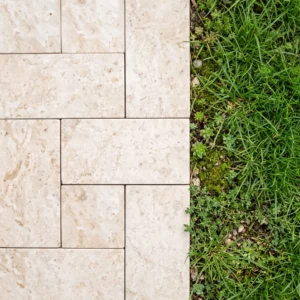
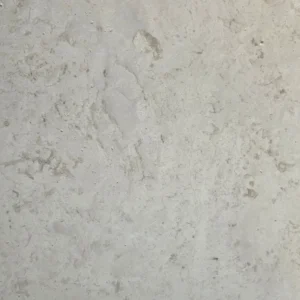
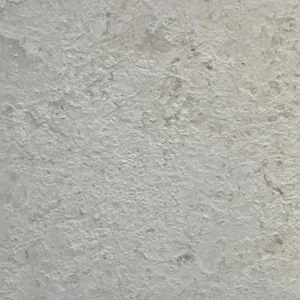
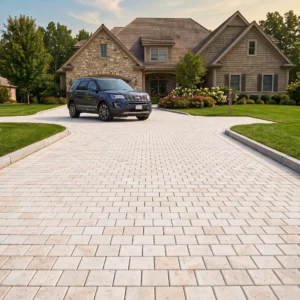
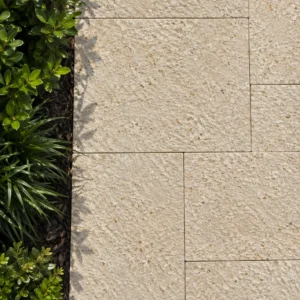
Pure White Limestone — The Coolest Surface We Cut
Bright white pavers, tiles and copings — the most reflective, barefoot-friendly surfaces in the range.
Showing all 17 resultsSorted by popularity
-

White Limestone Tiles – Various Finishes
$2.06 -
White Brushed Limestone
$2.28 -
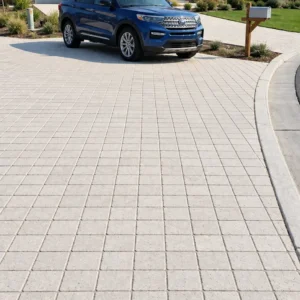
White Limestone Rough-Finish
$2.34 -
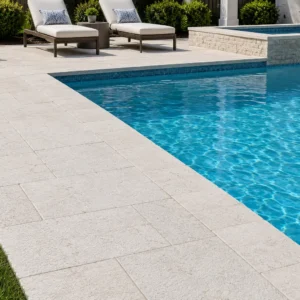
White Limestone Bush-Hammered
$2.34 -
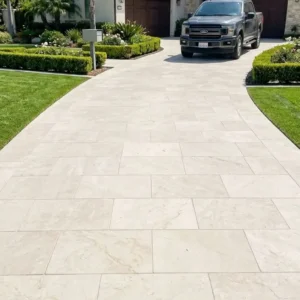
White Limestone – Polished
$2.30 -
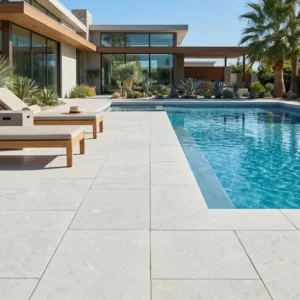
White Limestone Polished 24″ x 12″
$2.30 -
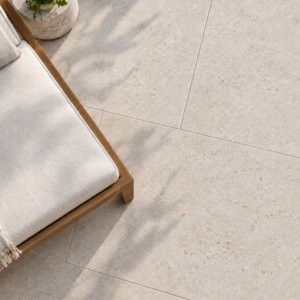
White Limestone Polished & Filled
$2.30 -

White Limestone Polished Large Format 36″ × 24″
$2.30 -

Citadel Alabaster 36″ — White Limestone Pavers 36″ x 36″
$3.10 -
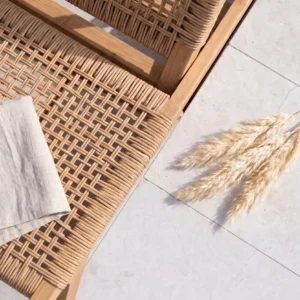
Pearl White Limestone Pavers – Natural Finish
$2.50 -
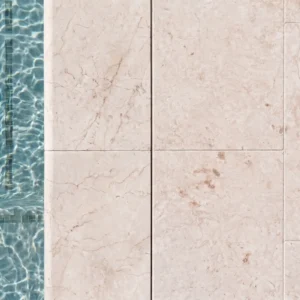
Royal Cream Limestone Pavers – Polished Finish
$2.50 -

Bianco Velo – Brushed 24 Grit
$3.20 -

Bianco Velo – Brushed 60 Grit
$3.20 -

Crema Aurora – Brushed 60 Grit
$3.20 -
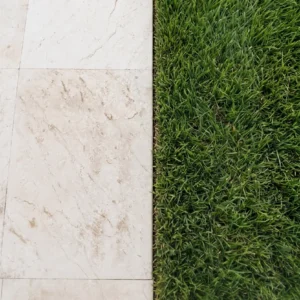
Crema Aurora – Brushed 24 Grit
$3.20 -

Crema Aurora – Sawn / Natural Finish
$3.20 -
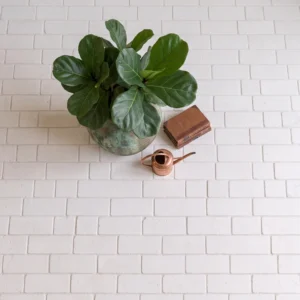
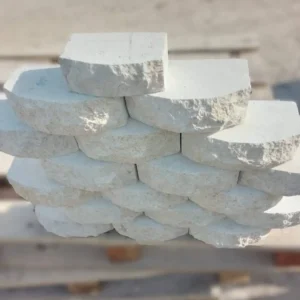
White Limestone Walling Blocks
$2.30
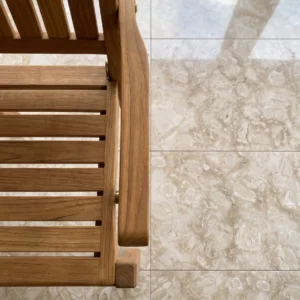
Shellstone & Ocean Reef — The Barefoot Pool-Deck Classic
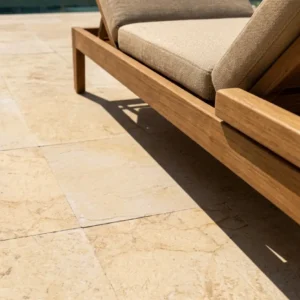
Coral-born texture with certified 1.02 mm Böhme abrasion — natural grip when wet, comfortable in full sun.
Showing all 16 resultsSorted by popularity
-

Ocean Reef Shellstone – Polished
$2.30 -
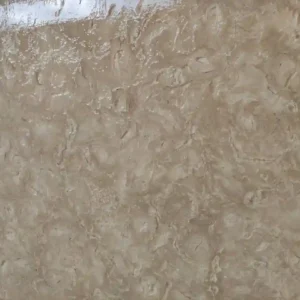
Ocean Reef Shellstone Slabs
$2.52 -
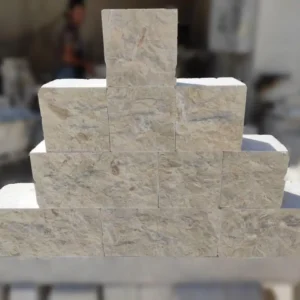
Ocean Reef Shellstone – Polished Large Format
$2.30 -
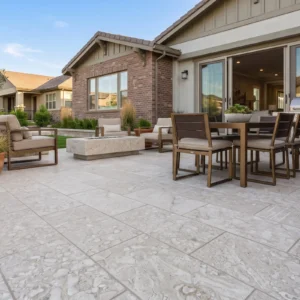
Ocean Reef Shellstone – Sawn
$2.30 -
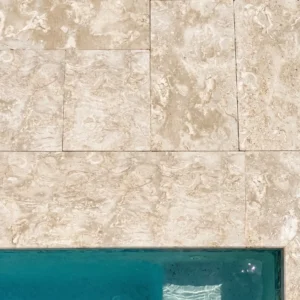
Ocean Reef Shellstone – Brushed 24″ × 12″
$2.30 -
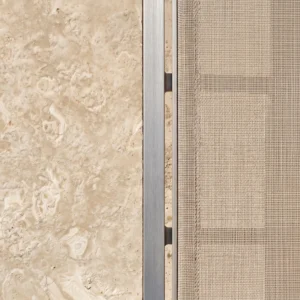
Ocean Reef Shellstone – Antique 24″ × 12″
$2.30 -
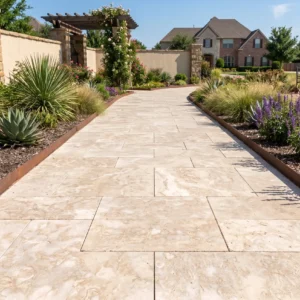
Ocean Reef Shellstone – Brushed
$2.30 -

Ocean Reef Shellstone Brushed
$2.30 -
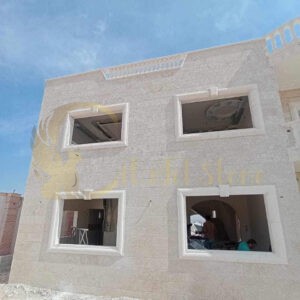
Ocean Reef Shellstone Wall 24″ × 12″
$2.30 -
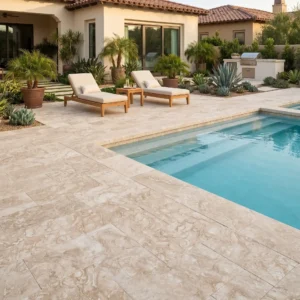
Ocean Reef Shellstone Polished Finish
$2.30 -
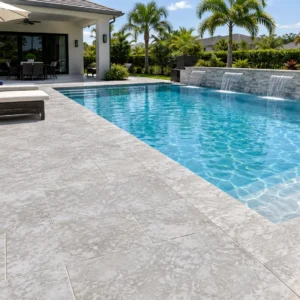
Ocean Reef Shellstone Slabs Large Format
$2.52 -

Ocean Reef Leathered Shell Stone Pavers
$2.30 -
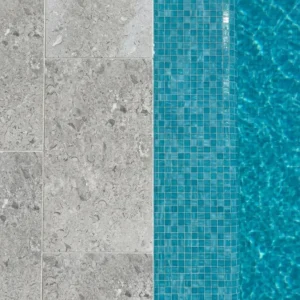
Ocean Reef Shellstone – Brushed 60 Grit
$3.20 -

Fossil Beige – Brushed 24 Grit
$3.20 -

Fossil Beige – Brushed 60 Grit
$3.20 -

Ocean Reef Shellstone – Brushed 24 Grit
$3.20
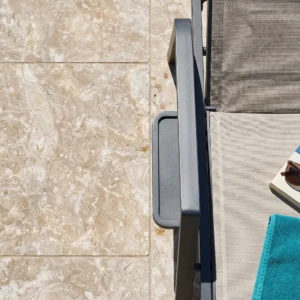
Yellow & Fossil Limestone — Warm Tones, Same Cool Physics
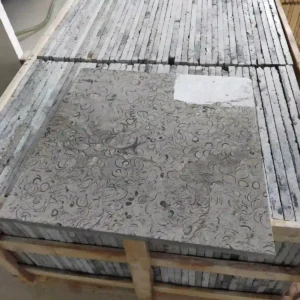
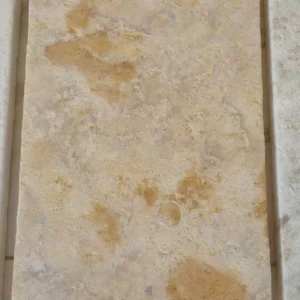
Soft golds and fossil-figured stone — light enough to stay comfortable in the sun, distinctive enough to define the space.
Showing all 8 resultsSorted by popularity
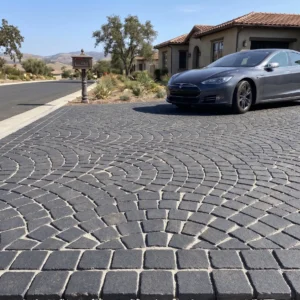
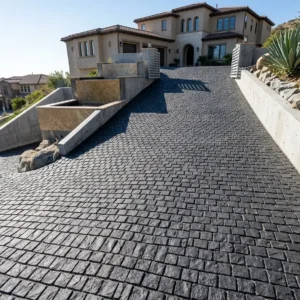
Dark Stone for Hot Climates — Driveways, Borders & Accents
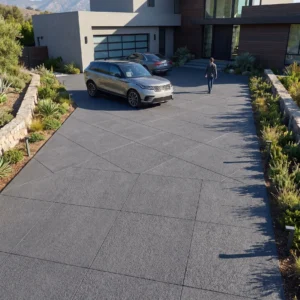
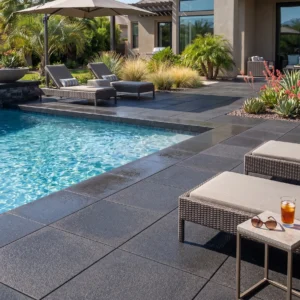
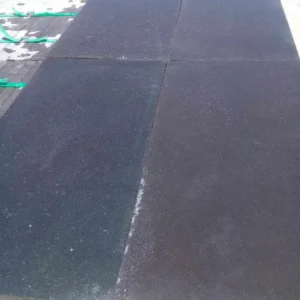
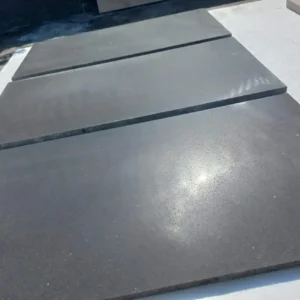
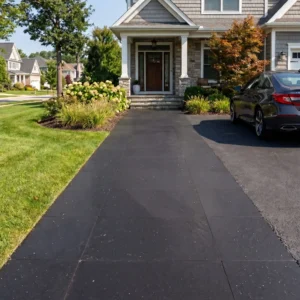
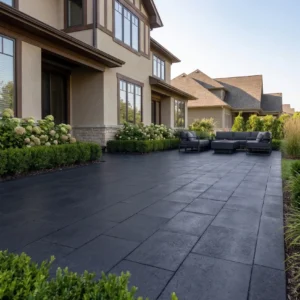
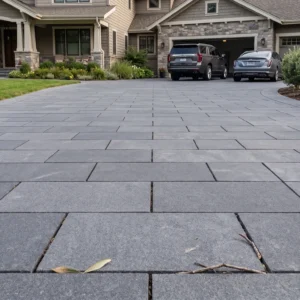
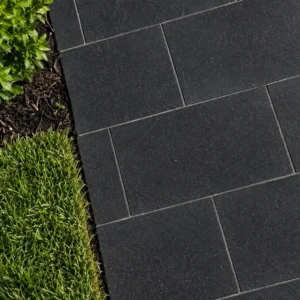
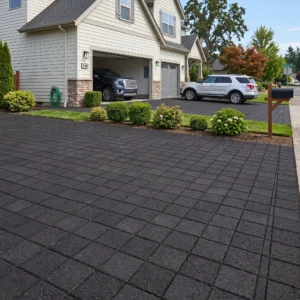
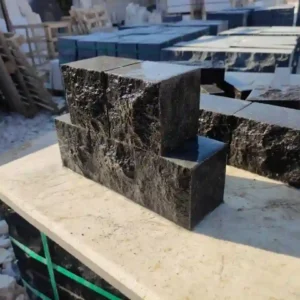
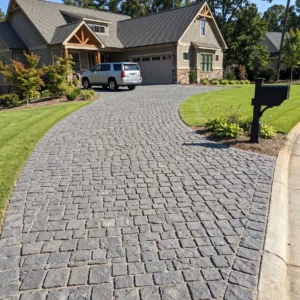
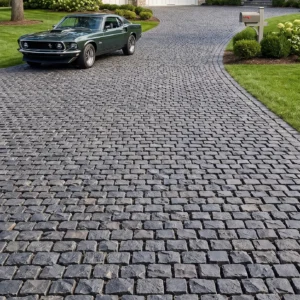
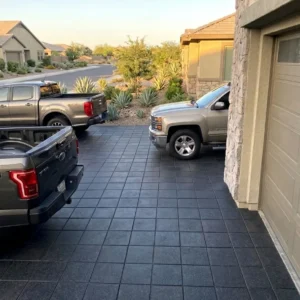
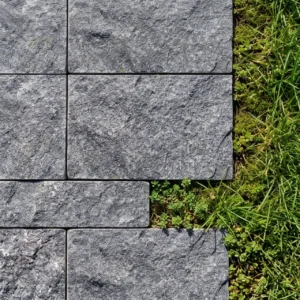
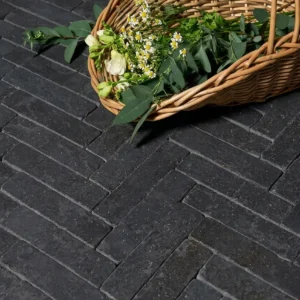
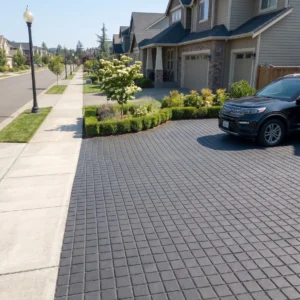
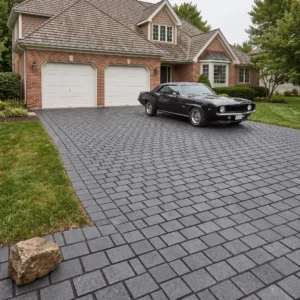
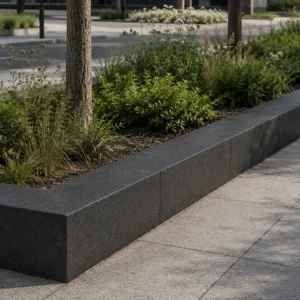
Black basalt runs hot in full sun — the wrong choice for bare feet, and an excellent one for driveways, edging, water features and shaded or high-contrast zones. Same certified stone as our freeze-thaw guide.
Showing all 36 resultsSorted by popularity
-

Black Basalt Bush-Hammered Stone
$2.38 -
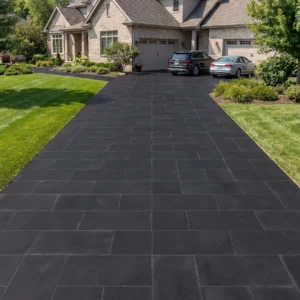
Grigio Stellato Grey Basalt – Brushed 60 Grit
$3.20 -

Nero Stellato – Brushed 24 Grit
$3.20 -

Black Basalt Bush-Hammered Stone 24″ × 12″
$2.33 -

Black Basalt Honed Stone
$2.07 -

Black Basalt Sawn Slabs
$2.05 -

Black Basalt Polished
$2.05 -

Nero Stellato – Brushed 60 Grit
$3.20 -

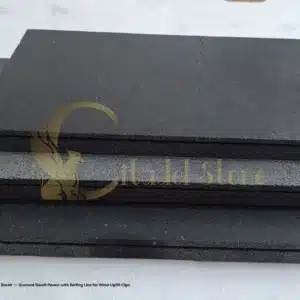
Citadel KerfLock Basalt — Grooved Basalt Pavers with Kerfing Line for Wind-Uplift Clips
$3.10 -

Basalt DuoFinish Paver – Honed & Bush-Hammered
$2.30 -

Black Basalt Antique 8″ × 8″ × 2″
$2.30 -

Black Basalt Sawn 24″ × 12″ × 3cm
$2.30 -

Black Basalt Honed 12″ × 24″ × 3cm
$1.99 -

Black Basalt Bush-Hammered 24″ × 12″ × 3cm
$2.33 -

Black Basalt Bush-Hammered 12″ × 12″
$2.30 -

Black Basalt Bullnose Coping
$2.99 -

Black Basalt French Pattern – Bush-Hammered
$2.34 -

Black Basalt Natural Slabs
$2.05 -

Grigio Stellato Grey Basalt – Brushed 24 Grit
$3.20 -
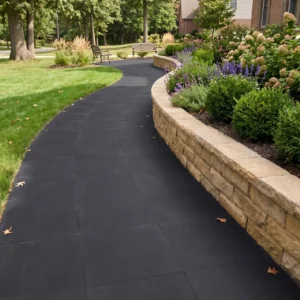
Black Basalt Bush-Hammered Cobblestones
$2.82 -

Black Basalt Split-Face Cobble Setts
$2.90 -

Black Basalt Chiseled Cobblestones
$2.90 -

Black Basalt Split-Face Cobblestones
$2.90 -

Black Basalt Cobbles – Sawn Finish
$2.80 -

Black Basalt Split-Face Belgian Block
$2.90 -

Graphite Grey Setts
$2.90 -

Black Basalt Plank Setts – Brushed (8″ × 2″ × 2″)
$3.20 -

Black Basalt Belgian Block – Natural
$2.80 -

Black Basalt Natural Cobblestones
$2.80 -
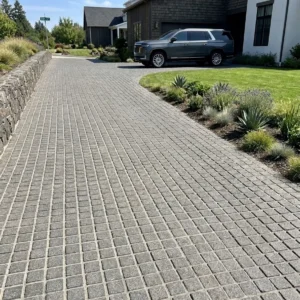
Stone Landscape Edging & Curbing
$2.06 -
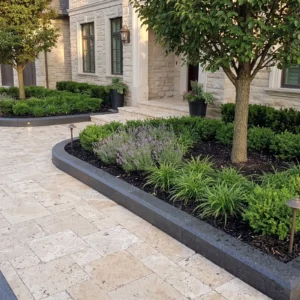
Basalt Curbstones
$2.14 -
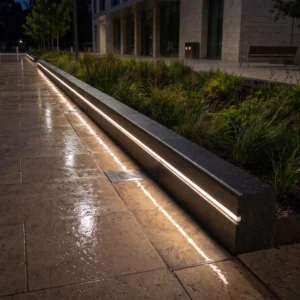
Black Basalt Landscape Curbing
$2.24 -
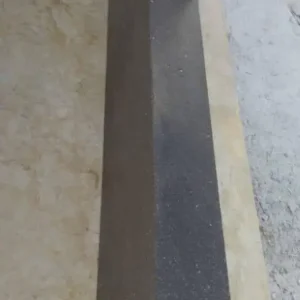
Natural Stone Landscape Curbing
$2.06 -
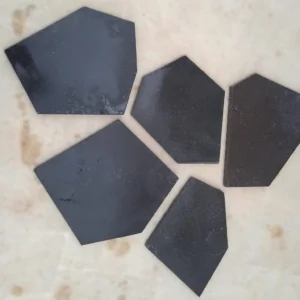
Black Basalt Hexagon Pavers
$1.96 -
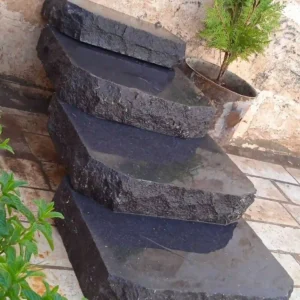
Black Basalt Paver Steps – Hex Pavers – Garden Stepping Pavements
$2.82 -

Citadel ForgeCrush™ — Crushed Basalt Aggregate
$20.00

Feel the Difference — Order a Cool-Surface Sample
Plan Your Hot-Climate Project With an Expert
Every summer, homeowners across the Sun Belt and the Caribbean make the same discovery the hard way: at two in the afternoon, some paved surfaces will blister bare feet while the surface next to them stays walkable. That difference is not luck and it is not marketing — it is physics you can choose in advance. Surface color and stone type decide most of it before the first paver is laid.
The short version: our white limestone and shellstone stay markedly cooler underfoot than any dark surface in the same sun — light, mineral color is the one specification no coating or sealer can fake.
This guide explains how to pick paving for serious heat: the color physics, certified data on our light-colored stones, pool-deck and barefoot comfort, salt and chlorine chemistry, sun fade, and the installation details that matter when the ground bakes. If you are paving a pool deck in Phoenix, a courtyard in Las Vegas, or a villa terrace in the Caribbean, read this before you choose a material.
Table of Contents
Why some pavers burn bare feet: the color physics
A paved surface in full sun is an energy budget: sunlight arrives, and the surface either reflects it or absorbs it as heat. Dark surfaces absorb most of what arrives and climb far above air temperature by mid-afternoon; light surfaces reflect a large share of it away and stay markedly closer to the air around them. That is the whole story in one sentence: in hot climates, color is the first specification. Texture matters too — a honed or tumbled surface spreads contact differently than a polished one — but no finish rescues a dark stone in an Arizona July.
This is the honest flip side of our own cold-climate advice. Dark basalt is a winter asset precisely because it absorbs sun and sheds snow — the same physics that argues against it for a barefoot pool deck in Palm Springs. One company, both truths: if your problem is ice, read our freeze-thaw performance guide; if your problem is heat, stay right here.
The light-stone lineup: certified numbers, not adjectives
Citadel Stone’s hot-climate range is built on naturally light, dense sedimentary stone, tested across production batches in the same laboratory:
| Stone | Density (g/cm³) | Water absorption | Böhme abrasion | Character |
|---|---|---|---|---|
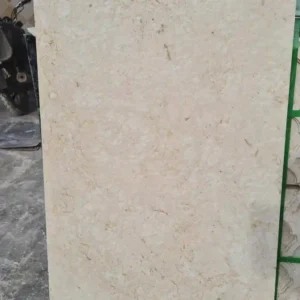
| White limestone | 2.48 (S.N.S 1393) | 1.61% (S.N.S 1393) | 2.68 mm | Bright white-cream, the coolest color class available |
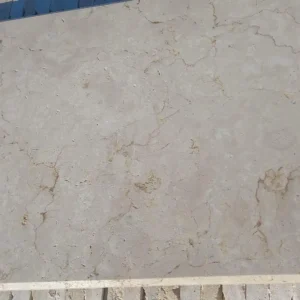
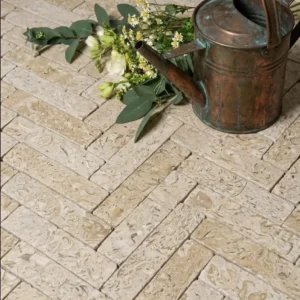
| Ocean Reef shellstone | 2.49 (S.N.S 1393) | 1.34% (S.N.S 1393) | 1.02 mm | Light beige coral stone, exceptional barefoot texture |
| Black basalt | 3.01–3.06 | 0.59–0.69% | 0.87–0.91 mm | Dark — superb stone, wrong color for barefoot heat; see the freeze-thaw guide |
Two honest notes. First, these absorption figures are higher than our basalt’s — and in a hot climate that is fine, and in one respect useful: a little porosity helps splash water evaporate off a pool surround instead of filming on the surface. Second, shellstone’s 1.02 mm Böhme result is the quiet star of the table — wear resistance close to basalt’s, in a light-colored stone, which is why it holds its surface on stairs and pool copings that see decades of wet feet.
Pool decks and barefoot comfort
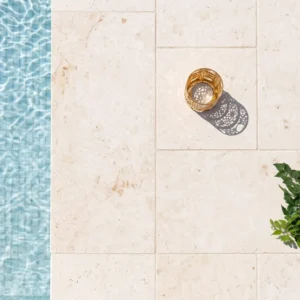
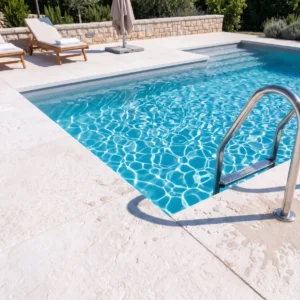
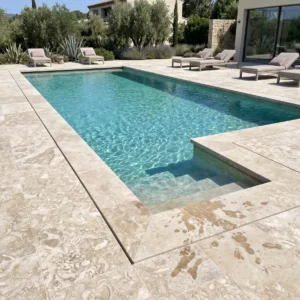
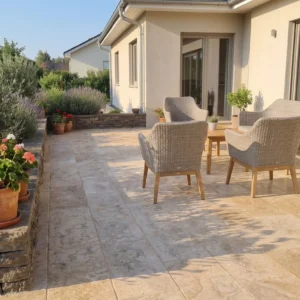
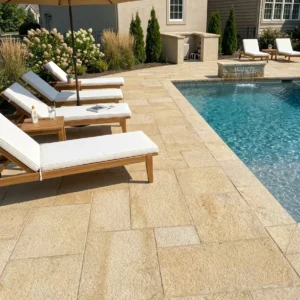
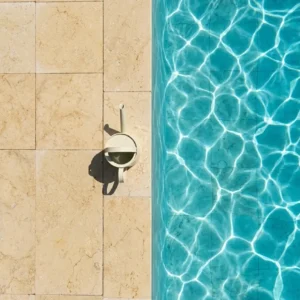
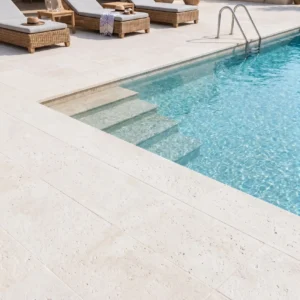
The pool deck is where hot-climate paving succeeds or fails, and it asks for three things at once: a surface that stays comfortable in sun, traction when wet, and a material that shrugs off constant splash. Light color answers the first. For the second, Ocean Reef shellstone’s natural fossil texture provides grip without aggression — comfortable to lie on, secure to walk on wet. For the third, both stones handle splash-and-dry cycling as a matter of geology; they formed in water.
Specification advice we give every pool client: choose a honed, brushed or tumbled finish rather than polished (polished stone plus water equals a slide), use light-colored jointing sand so the joints do not become hot stripes, and carry the same stone up the coping so edges match the field in both color and temperature.
Salt, chlorine and the carbonate question — the honest part
Limestone and shellstone are carbonate stones, and we will tell you plainly what that means: salt is not their friend. Saltwater pool systems and coastal spray deposit salts that can slowly stress any carbonate surface. This is manageable — coastal builders have used coral stone and limestone around salt water for centuries — but it is managed, not ignored: rinse the deck with fresh water on a regular schedule, keep a breathable penetrating sealer on splash zones (never a film-forming sealer, which traps moisture and turns slippery), and top up joints so water drains instead of ponding. Around chlorinated pools the demands are milder; normal rinsing and drainage cover it.
If your project is directly on salt water and low maintenance is the priority, talk to us about the right stone and finish for the exposure before you order — that conversation is free and it prevents the one mistake this stone family can make.
Sun, UV and color stability
The color in our limestone and shellstone is mineral, not applied. It does not depend on a pigment or a surface coating, which is why natural stone in hot, high-UV climates keeps its character while dyed concrete pavers visibly chalk and fade within years. Weathering in natural stone reads as patina — a slight softening of tone — rather than the blotchy color loss that forces concrete replacement. That difference compounds: the surface you like in year one is still recognizably itself in year fifteen.
Heat and the hardscape: installation in hot climates
Heat stresses the system around the stone as much as the stone. The essentials for hot-country installation: allow for thermal movement with correct jointing — long uninterrupted runs in full sun need movement accommodation the same way any hardscape does; bed on a properly compacted, well-drained base (monsoon-season downpours in the desert Southwest are brief but violent, and drainage failures show up as settlement); and in extreme heat, schedule mortar and adhesive work for morning hours so bedding cures rather than flash-dries. For driveways and commercial work, have the base designed by a qualified contractor or engineer for your soil and loads — no supplier’s web page, ours included, replaces that.
Care in the heat: the short list
Light-colored stone in a hot climate is a low-maintenance proposition. Rinse dust and any salt residue periodically, keep joints topped up, re-apply a breathable penetrating sealer on pool surrounds and spill zones every three to five years if staining risk warrants it, and sweep organic debris off shaded corners before it composts in place. That is the list. No annual coatings, no color restoration treatments — the stone’s appearance is its mineralogy, not a finish you have to maintain.
Where this matters most: from the Desert Southwest to the islands
Hot-climate buying is not one climate — it is at least five. The physics of light stone applies to all of them; what changes is the second factor you plan around.
The Desert Southwest — Phoenix, Tucson, Scottsdale, Las Vegas, Albuquerque. The hardest barefoot test in the country: extreme dry heat, relentless UV and monsoon cloudbursts. Light color is non-negotiable for pool decks here, and the base must drain fast enough to shrug off a July storm that drops a month of rain in an hour.
Texas and the Gulf Coast — Houston, San Antonio, Austin, Dallas. Heat plus humidity: choose honed or tumbled surfaces for wet-weather grip, and sweep shaded corners before organic debris settles in. The stone itself does not mind humidity; the maintenance rhythm changes.
☀ Building in Texas or on the Gulf Coast? The region now has its own delivery guide — cool-surface stone selection, coastal salt care and landed-cost quoting from Houston to New Orleans.
Florida — Miami, Orlando, Tampa and the Keys. Tropical sun, salt air and a daily summer storm. This is historic coral-stone country — shellstone paving is a return to form here, and the saltwater guidance above is the checklist for coastal installs.
☀ Building in Florida? The state now has its own delivery guide — shellstone and white limestone selection, saltwater and coastal-air care, and landed-cost quoting from Miami to the Keys.
Southern California — Los Angeles, San Diego, Palm Springs. Year-round outdoor living with coastal salt spray on one side and desert heat on the other; the same light-stone logic covers both.
The Bahamas and the Caribbean. We deliver to more than twenty island markets, where every factor above — heat, UV, salt, storms — arrives at once. Coral-derived shellstone has paved these islands for centuries for a reason.
Citadel Stone delivers door-to-door across all fifty U.S. states, Canada and the Caribbean; request a free quote with your ZIP or postal code for delivered pricing.
Proof, not promises
Our two flagship deliveries are both hot-climate projects. Read how we shipped two full containers — 6,884 sq ft in 32 crates — of Ocean Reef white limestone to a Las Vegas contractor in our delivery case study, and how we supplied Creative Environments in Arizona with 21 containers across a 70,000+ sq ft installation: white limestone pavers and tiles, shellstone and Ocean Reef pavers. Desert projects, delivered and installed. We publish only real projects.
The fastest way to judge a stone for heat is to test it yourself: order a sample of white limestone pavers or shellstone pavers, leave it on your patio until mid-afternoon, and put your hand on it next to whatever you are replacing. The stone will make the argument for us.
Get a Delivered Quote for Your Hot-Climate Project
Frequently Asked Questions
If your question is not listed, please email us at kareem@citadelstone.us
Which pavers stay coolest underfoot in hot climates?
Light-colored, natural-finish stone — white limestone and light shellstone are the coolest practical choices because color drives surface temperature: light surfaces reflect a large share of solar energy that dark surfaces absorb as heat. Finish matters secondarily; honed, brushed or tumbled surfaces are more comfortable than polished. Dark stones like black basalt are excellent materials but the wrong color class for barefoot areas in serious heat.
Is white limestone a good choice for pool decks?
Yes — it is one of the classic pool-deck stones for hot climates: light color for comfort, natural texture for wet traction in honed or tumbled finishes, and mineral coloring that keeps its appearance in constant sun. Pair it with light jointing sand, carry the same stone onto the coping, and keep a breathable penetrating sealer on splash zones.
Will light-colored pavers fade in strong sun?
The color in natural limestone and shellstone is mineral rather than applied, so there is no pigment layer to fade the way dyed concrete pavers chalk and lighten. Natural stone weathers toward a gentle patina instead of blotchy color loss — the surface stays recognizably itself over decades of UV exposure.
Are limestone and shellstone safe around saltwater pools?
They are carbonate stones, so salt exposure needs managing rather than ignoring: rinse splash zones with fresh water regularly, maintain a breathable penetrating sealer (never a film-forming one), and keep joints topped up so water drains. Coastal builders have used these stones around salt water for generations with exactly that routine. For projects directly on the ocean, ask us about stone and finish selection for the exposure before ordering.
Do white pavers cause too much glare?
Bright surfaces reflect more light — that is why they stay cool — and in full desert sun a honed or tumbled finish moderates glare far better than a polished one. Most clients find off-white and cream tones, like Ocean Reef shellstone, the comfortable middle: distinctly cooler than dark stone without the glare of a polished pure white.
What installation details matter most in hot climates?
Allow for thermal movement in long sun-exposed runs, bed on a compacted well-drained base that can take sudden monsoon-grade downpours, schedule mortar work for cooler morning hours so it cures properly, and use light-colored jointing sand. For driveways and commercial work, have the base engineered for your soil and loads.