






























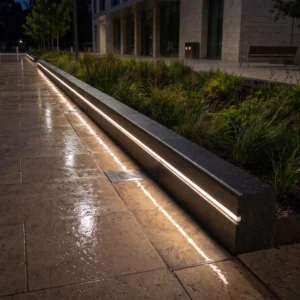





A Curacao interior is not a temperate interior with the heating switched off. The island runs a hot semi-arid climate, the sun sits high for most of the day, and for much of the year the wind does not stop. Houses here were historically built to manage exactly that. Thick walls of coral stone and quarry stone finished in lime plaster, with brick used for detailing, gave mass against the heat. Tall openings and deep shaded galleries moved air. High gabled roofs tiled in red gathered rainwater and channeled it into stone reservoirs, because on an island this dry the water was worth keeping. Every one of those decisions was about temperature, light and water, and a floor specification that ignores them will feel wrong in the room.
Limestone tile suits this setting for reasons that are physical rather than decorative. It holds a temperature instead of swinging with the air. It takes a matte, low-glare face. It can be finished several different ways from the same stone, so a bathroom and a living room read as one continuous floor rather than as two purchases. And it can be carried outdoors at a heavier gauge, so the interior and the terrace stop being separate projects. What it asks from you is honest attention to three things: the finish, the thresholds and the cleaning routine. This page works through all three in that order, and then covers ordering.
How A Stone Floor Behaves In A Curacao Room
Thermal mass is the first reason people lay stone here. A tiled floor in a shaded room sits close to the room’s average temperature rather than following the air, so it feels cool underfoot in the afternoon and never turns cold at night in a climate that does not really cool down. In an air-conditioned room the same mass works the other way, holding the conditioned temperature through the door-opening cycles that a busy family house or a small hotel generates all day long. That stabilizing effect is worth more here than any insulation argument, because the problem is not keeping heat in but keeping a surface comfortable.
Humidity behaves differently from the wet tropics, and this catches out specifications imported from elsewhere in the region. Curacao’s annual rainfall is low; depending on which record you use, roughly 450 to 650 mm a year. The dry season runs from about January through September, with the wet months arriving in October to December and sometimes stretching into January. So the interior problem here is usually not persistent damp. It is salt-laden air moving through open houses, dust and grit carried in that air, and short violent wetting events when the wet season does arrive. A floor specified for a rainforest island would be over-engineered in one direction and under-prepared in another.
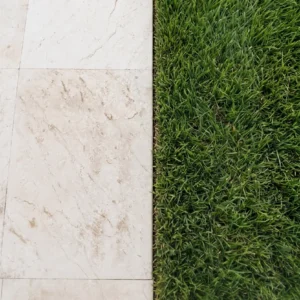
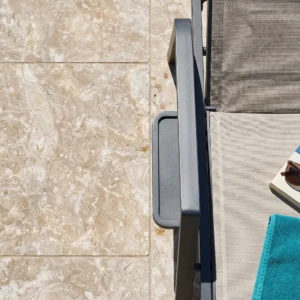
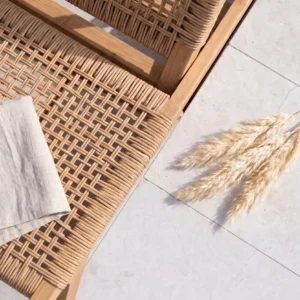
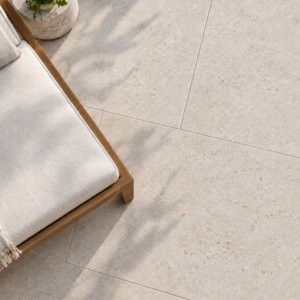
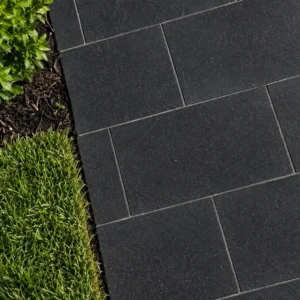
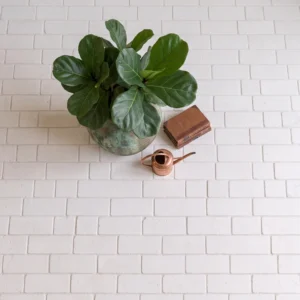
The third factor is light. The sun is intense and the openings in these houses are tall, so a glossy interior floor turns into a mirror at certain hours of the day. That argues for honed and brushed faces rather than polished ones indoors, and for a pale stone that carries some tonal movement across the tile rather than a flat uniform sheet that shows every reflection and every footprint. Pale is right; pale and mirror-flat is not.
The Grit Problem Nobody Specifies For
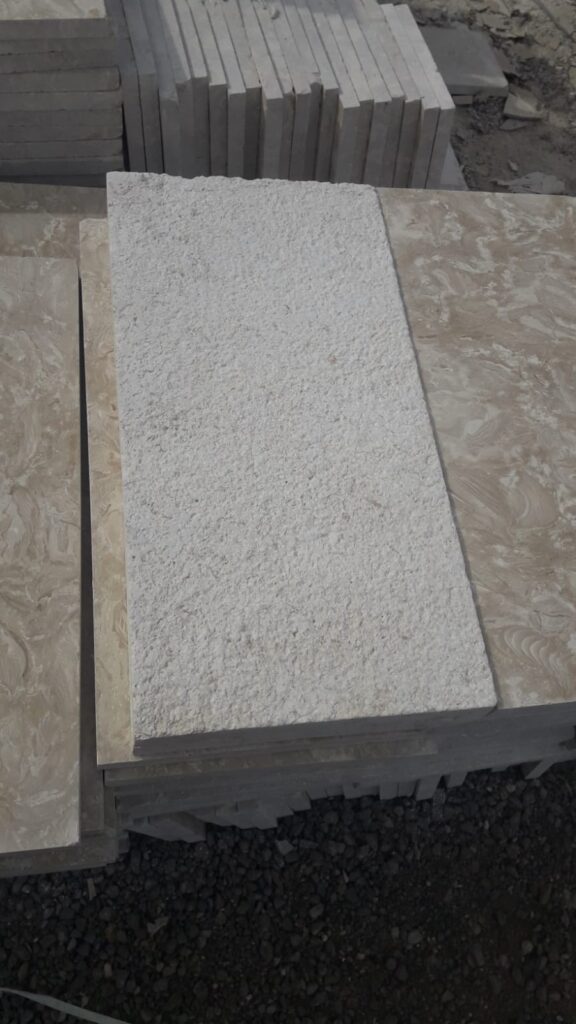
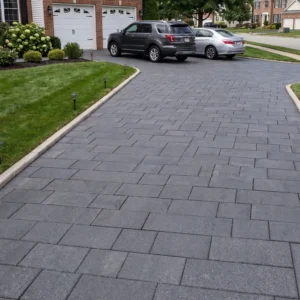
The most underrated interior wear factor on this island arrives from outside. Trade winds run at roughly fifteen to twenty-five knots for most of the year, and from February to August they come off the South American landmass dry. That wind carries fine grit, and grit is what actually wears a stone floor. Feet do not. Every barefoot walk in from a terrace, every sandal, every dog and every delivery brings abrasive particles onto the face of the tile, and a polished surface records them as a dull path within a couple of seasons. The design answer is a transition strategy rather than a harder stone.
- Build a proper entry zone at every door that opens to outside air, long enough to take several steps, with a mat well recessed into the floor rather than a loose mat sitting on it.
- Choose a face with some texture in the high-traffic runs, because a honed or lightly brushed surface hides fine scratching that a polished face would show as a visible track.
- Keep the high-gloss faces for rooms that do not open directly onto a terrace, a gallery or a yard.
- Set the sweeping routine before the client moves in, because dry grit left lying on a floor does the damage, not the occasional mop.
- Where a floor runs straight out through a full-height opening, plan a change of texture at that line rather than pretending both sides live in the same conditions.
None of this is exotic maintenance advice. It is the same logic that puts a boot scraper outside a farm door, applied to an island where the abrasive is delivered continuously and free of charge by the wind. Get the entry zones right and the rest of the floor ages slowly and evenly.
Finishes For Wet Feet
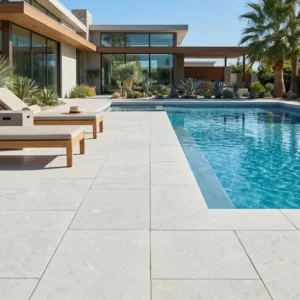
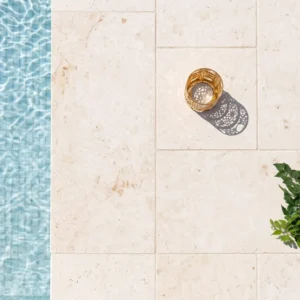
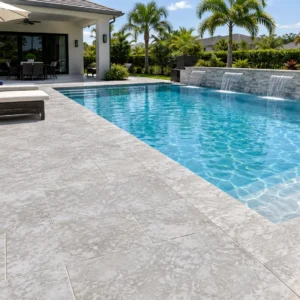
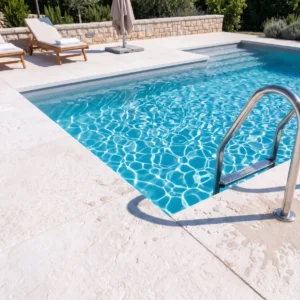
Bathrooms, shower floors, outdoor showers and the strip of floor between a pool and a living room are where finish selection stops being a matter of taste. Wet limestone under a bare foot behaves very differently depending on how the face was worked, and the gap between a comfortable floor and a dangerous one is a decision made at order stage that cannot be corrected afterwards without lifting the floor.
- Honed: matte and even, comfortable in a dry room, acceptable in a bathroom when the format is small enough to give useful joint lines.
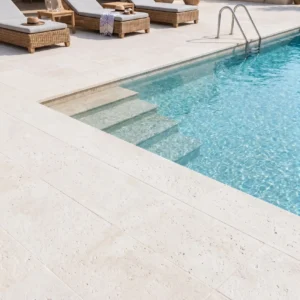
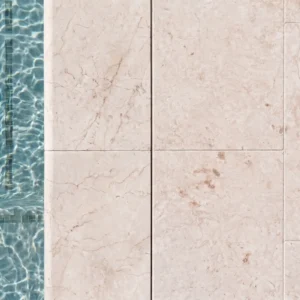
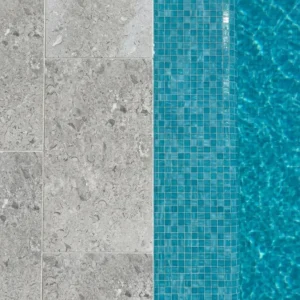
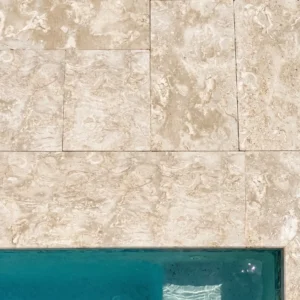
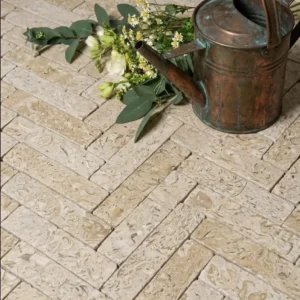
- Brushed or antiqued: a softened face with slight relief that keeps grip when wet while still feeling smooth to a bare foot, which is why it suits shower floors and pool thresholds.
- Bush-hammered and flamed: strongly textured, right for outdoor steps and ramps, generally too aggressive for an interior barefoot floor.
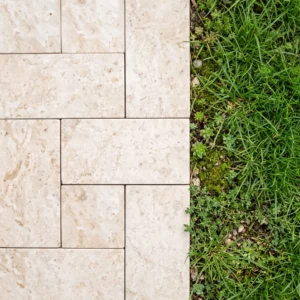
- Tumbled: rounded edges and an aged face, good in small formats and in rooms where a degree of irregularity is wanted.
- Polished: keep it for vertical surfaces and low-traffic dry rooms, and expect it to dull wherever grit is tracked in.
Ask for a wet slip figure rather than a written description. A dynamic coefficient of friction measured wet to ANSI A326.3 gives you something to compare between finishes and something to put on a drawing, which matters as soon as a hotel, a restaurant or a rental villa is involved. Small format helps too. More joints across a wet area means more edges for a foot to catch, and it lets falls be built into a shower floor without carving a slab into a dish.
Formats For The Rooms You Actually Have
Room shapes on Curacao are not neutral. Older houses and restored landhuizen carry long proportions, tall openings and thick walls with deep reveals. Newer villa work runs to open plans that flow through sliding walls onto a terrace. Both punish a badly chosen module, and they punish it in opposite directions, so the module is worth deciding before the stone is.
- Long rooms: run the long dimension of the tile with the room and keep the joint count down, rather than laying a square module that reads as a grid fighting the walls.
- Open plans running out to a terrace: pick a module that divides cleanly into the opening width so the threshold does not land on a sliver cut.
- Small wet rooms: drop to a smaller format so falls can be set properly and the joint pattern contributes grip.
- Thick-walled older rooms with deep reveals: allow for the reveal returns in the take-off, because they are easy to forget and expensive to add later.
- Galleries and covered outdoor rooms: treat them as exterior rather than interior, and gauge the tile accordingly.
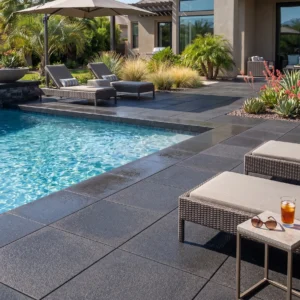
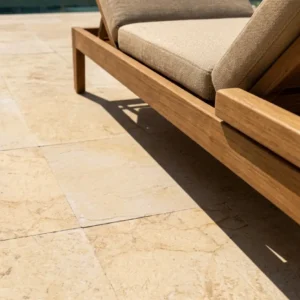
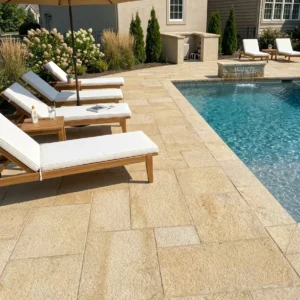
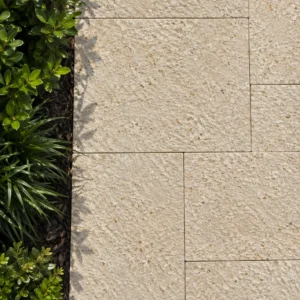
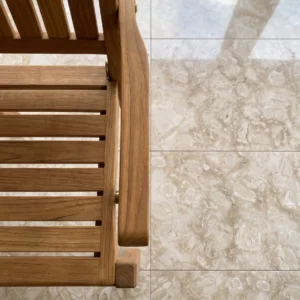
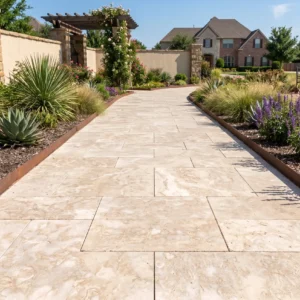
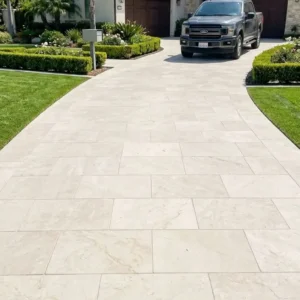
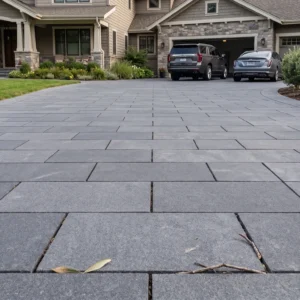
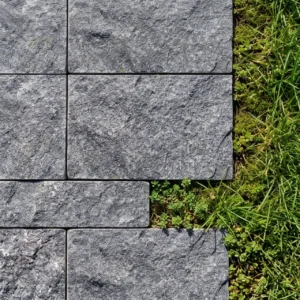
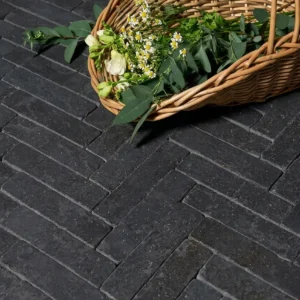
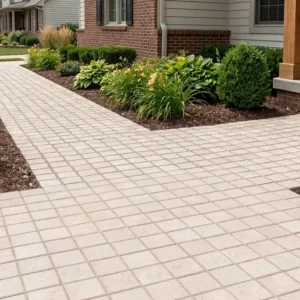
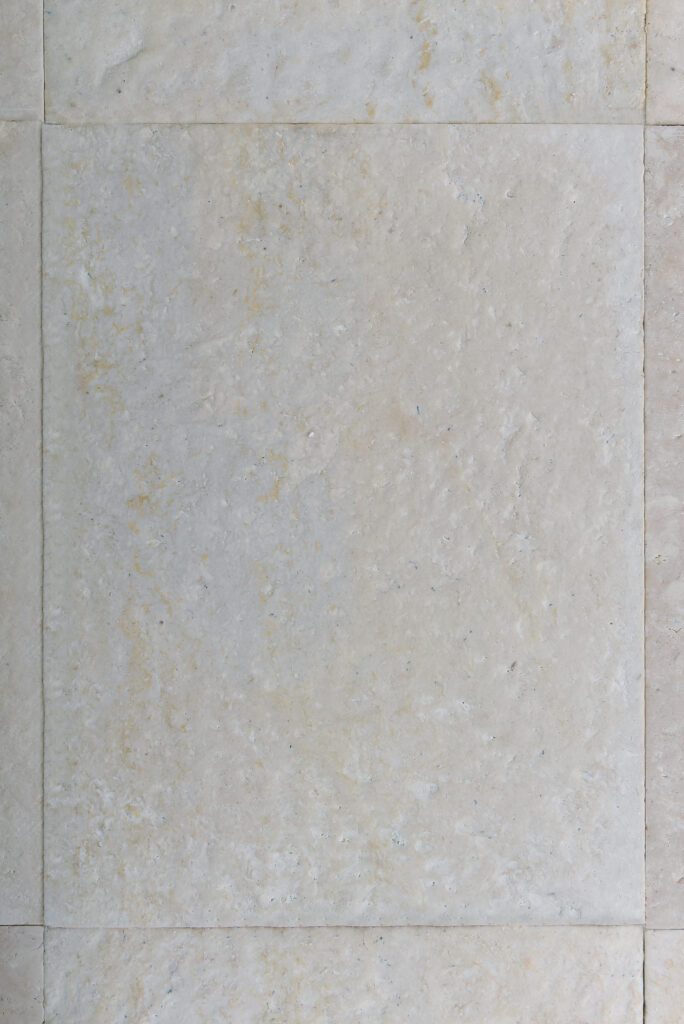
Pale stone does the most work in shaded interiors, where it bounces the little light that gets past a deep gallery without adding glare. Our pale tile for shaded rooms is available in the modular sizes that suit these proportions, and the same stone can be supplied at a heavier gauge for the terrace so the two surfaces genuinely match. Where a room has to read as one continuous plane, agree the batch at order stage. Natural stone varies from lot to lot, and a floor topped up six months later from different material will show it.
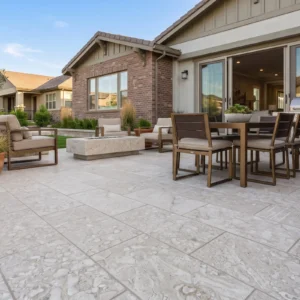
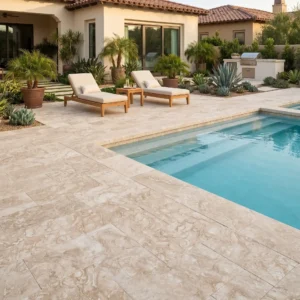
Carrying The Floor Out To The Terrace
The inside-outside line is the detail that separates a good Curacao floor from an ordinary one, and here it has to be resolved for water as well as for appearance. The wet season is short but it can be violent. In 2010 Hurricane Tomas dropped 265 mm of rain on Curacao in a single day, close to half of what the island receives in an average year. A threshold detailed for an ordinary shower of rain will not hold that, and the water it fails to hold goes indoors.
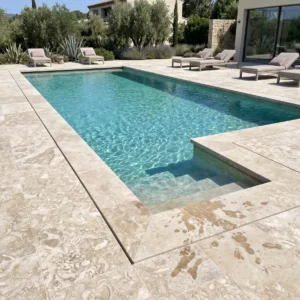
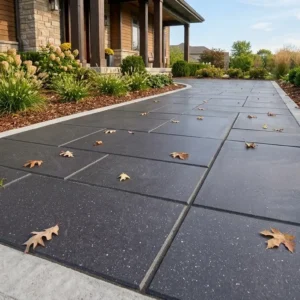
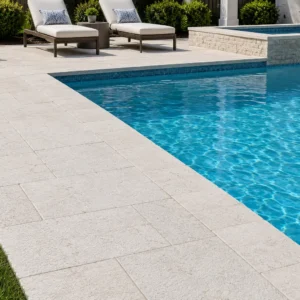
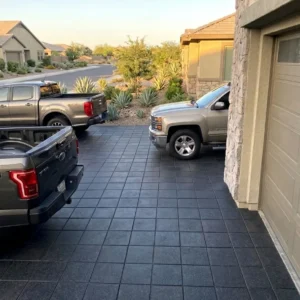
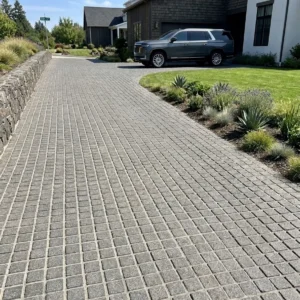
- Use the same stone inside and out but change the finish and the thickness: honed inside, brushed or textured outside, heavier gauge outdoors.
- Set a fall away from the opening and put a drainage channel outside the line, sized for a cloudburst rather than for average rainfall.
- Hold the finished floor level consistent across the threshold where the client wants a flush line, and take up the difference in the channel and the terrace fall instead.
- Detail the door track so wind-driven rain and blown grit both have somewhere to go, because on this island they arrive together.
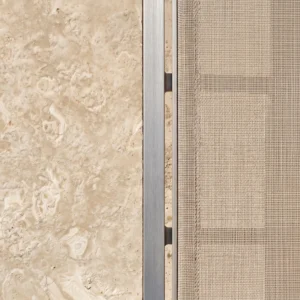
Two more things belong on the threshold drawing. First, movement: a floor running from a conditioned room into full sun crosses a real temperature difference, so the joint on that line should be a movement joint, not a decorative one. Second, the build-up underneath: an exterior terrace bed and an interior bed are different constructions, and the transition between them is where a lazy detail turns into a cracked tile in the second year. Draw it properly rather than leaving it to be improvised on the day.
Cleaning And Sealing On A Salt-Dusted Island
Limestone is calcium carbonate, and that single fact sets the whole maintenance regime. Acid attacks it. That rules out a long list of ordinary household products capable of etching a face in one application, and it is the piece of advice most worth writing into a handover pack for a client or a villa manager.
- Use pH-neutral cleaners made for natural stone, and avoid vinegar, citrus cleaners, descalers and anything sold for removing limescale.
- Sweep or dry-mop more often than you wash, because the damage here is dry abrasion rather than dirt.
- Expect water spotting if the supply is hard or if anything brackish reaches the floor, and wipe it rather than letting it dry on the face.
- At coastal properties, rinse salt off exterior and threshold areas after windy spells instead of letting deposits build up in the joints.
- Test every cleaner and every sealer on an offcut or a sample piece first, using your own water, before it goes anywhere near the finished floor.
Sealing is a judgment call rather than a rule. An impregnating sealer slows staining and buys wiping time on a kitchen or bathroom floor, but it is not a shield and it will need renewing. How much difference it makes depends heavily on how a face is finished, because an open textured surface takes and holds sealer quite differently from a tight honed one, and the same product can read as invisible on one face and as a slight sheen on another. Try it on a sample under the light the floor will actually live in, and try it on the wet areas separately, since a sealer that improves a kitchen can reduce grip in a shower.
Ordering Tile For A Curacao Interior
Interior tile is usually the smaller half of a stone order, which is exactly why it should be planned alongside the outdoor work rather than after it. Consolidating interior and exterior stone into one shipment saves a second set of freight and clearance charges, keeps the material from the same production run, and means the terrace and the living room genuinely match instead of nearly matching. On an island supplied by sea, a second small shipment is rarely a small cost.
Send a room-by-room schedule with areas, the finish wanted in each, the module you have in mind and the threshold details you are trying to hold. Add a note on which rooms open directly onto outside air and which do not, because that single distinction changes the finish recommendation more than anything else on the list. Allow a sensible overage for cuts and keep a small reserve stored on site afterwards, since matching a natural stone floor years later is the one repair that is genuinely difficult to get right.
Samples are small hand pieces. Wet one, walk a hand across it, leave it on the floor of the actual room for a day and look at it in morning and afternoon light before committing. It is a very cheap way to avoid the only mistake in this trade that cannot be quietly corrected later. Send us the room schedule and the threshold details, and we will match a finish to each space.