





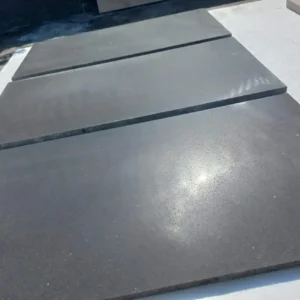
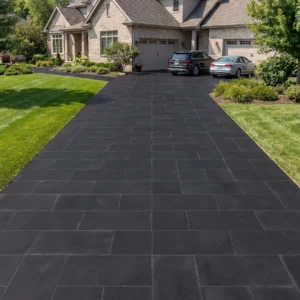
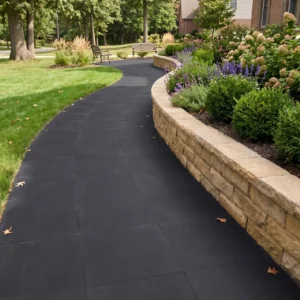
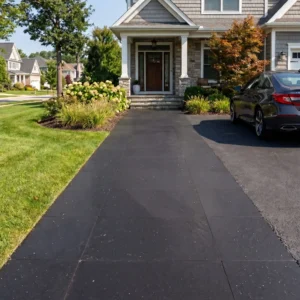




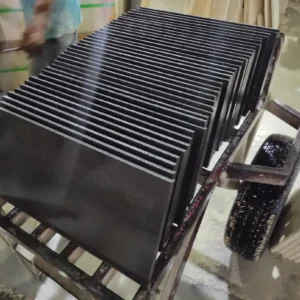
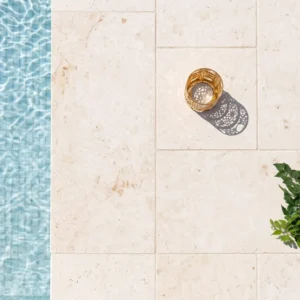
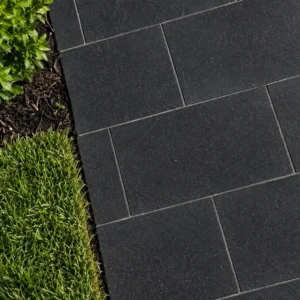
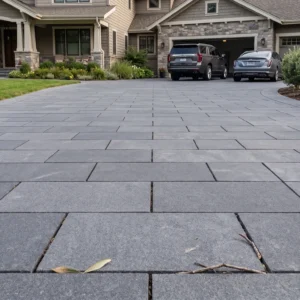

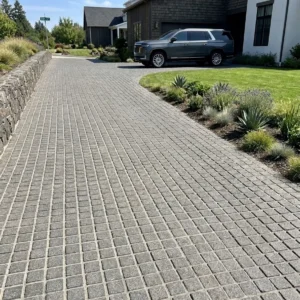
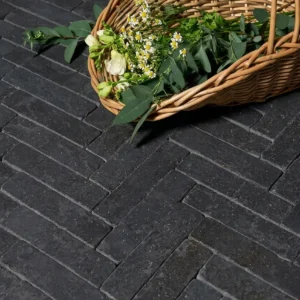
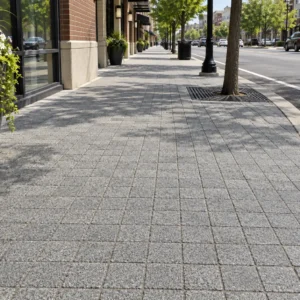
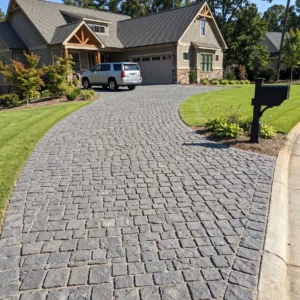
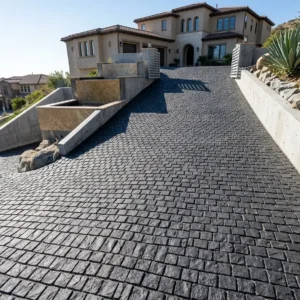
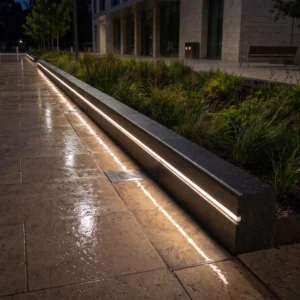
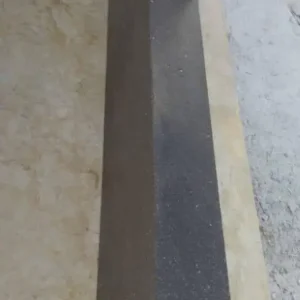
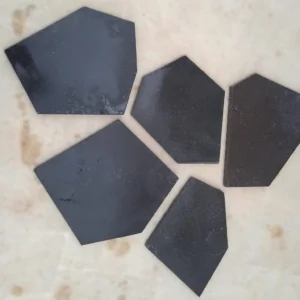
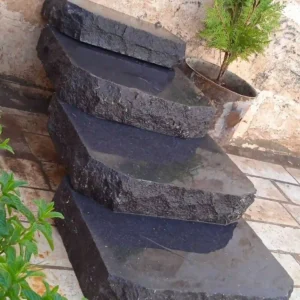
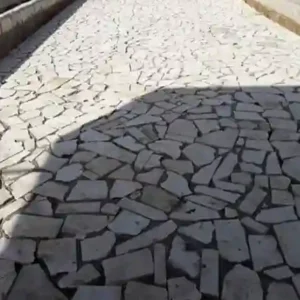
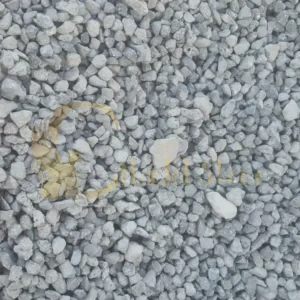
The Dutch side of this island is 34 square kilometers of mostly uneven ground. It rises into the Sint Maarten Hills and the Cole Bay Hills, with Sentry Hill at roughly 341 meters, or 1,119 feet, and a great deal of the property worth paving sits on a gradient, on a curve, or on ground that was shaped by whatever the excavator could reach. Large paving slabs are made for flat, rectangular areas. A lot of what needs paving here is neither.
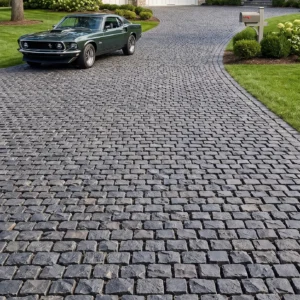
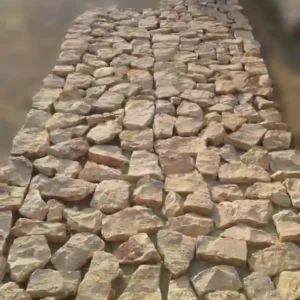
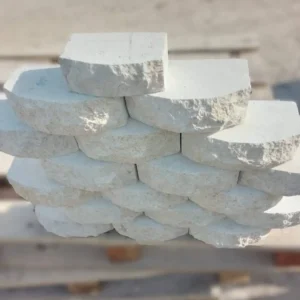
That is the case for small units. Setts and cobbles handle slope, curvature and irregular boundaries by taking each change of direction in small steps rather than in one cut. They carry vehicle loading well when bedded properly, they can be lifted and reset individually if a service run below needs attention, and they turn an awkward apron at a gate into an ordinary piece of work. This page covers where small units earn their place on Sint Maarten, how the construction differs from slab paving, how to handle older and sensitive settings honestly, which coursings suit which shapes, and the cost balance between stone and labor, which is not what the usual industry saying claims it is.
Why Small Units Suit Sloping Ground
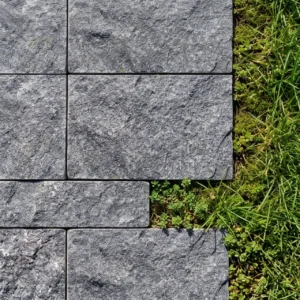
A paving slab is a rigid plane. Ground on a hillside site is rarely a plane at all: it falls in two directions at once, it warps around a driveway entry, and it changes gradient where a retaining structure begins. Laying large units on ground like that means cutting, packing, or accepting a visible mismatch. Small units absorb the same geometry across many joints and nobody sees the compromise.
- A warped surface, falling in two directions at once, is built up course by course without any tapered cuts.
- Changes of gradient are taken across a few courses rather than at one hard line where a slab edge would show.
- Falls to a channel or a gully can be shaped directly in the setting out instead of forced afterward.
- Small units give a textured surface that helps on a sloping approach, which is worth having on a wet driveway.
- A single damaged unit is lifted and replaced by hand, without disturbing the surrounding work.
For a steep entry, order small units cut for gradients rather than trying to make large formats behave on a slope they were never intended for. The other advantage on a hillside site is handling. A slab large enough to cover meaningful ground can be too heavy and too awkward to carry down a narrow set of steps or around a wall, whereas setts move in bulk bags, buckets and barrows and can be placed by hand wherever a machine cannot reach. Where the last stretch to a site is a footpath rather than a road, that is not a small point.
Curves, Radii and Ground That Refuses to Be Square
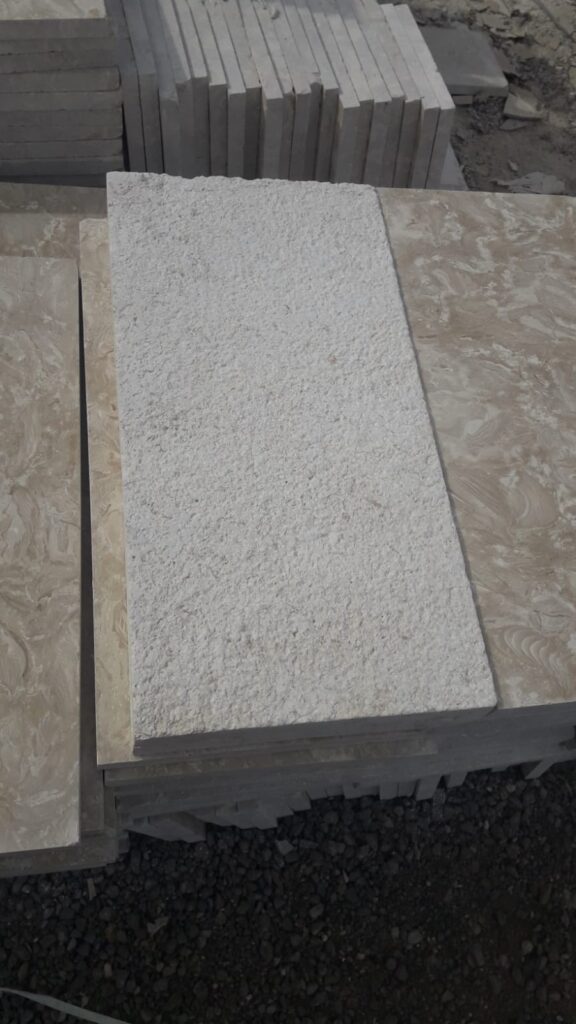
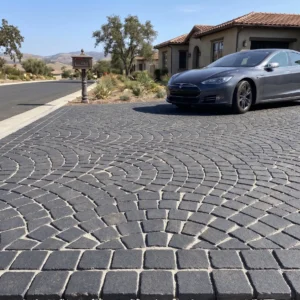
Curves are where small units stop being an alternative and start being the only sensible answer. A turning circle, a swept driveway entry, a path around a pool, a tree pit, a bed edge that follows a contour rather than a boundary line: all of these are radial geometry, and radial geometry punishes rectangular paving.
With slabs, a curve is produced by cutting every unit along the arc, which is slow, wasteful and leaves a line of tapered pieces that the eye reads immediately. With setts, the curve is produced by rotating each course slightly and letting the joint widths take up the difference. Nothing is cut, the waste is negligible, and the geometry looks intentional because it is. The same logic covers awkward junctions, where a path meets a step, a wall returns at an odd angle, or an old building line refuses to be parallel to anything modern.
Two practical points matter more than the theory. First, joint width has to be controlled deliberately on a curve, because it is the mechanism doing the work: too tight and the arc will not close, too open and the surface loses its interlock. Agree the intended joint width with the installer before setting out and hold it. Second, set out from the arc itself rather than from a wall. Establish the radius, strike the first course from it, and work outward in both directions. Curves that were set out from a straight edge and forced into an arc later always show it.
Driveway Aprons and Turning Loads
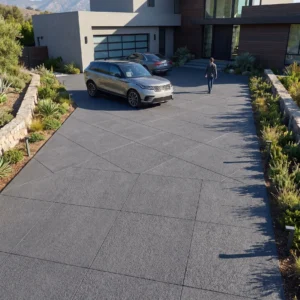
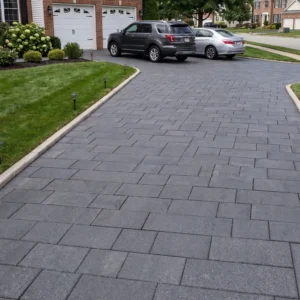
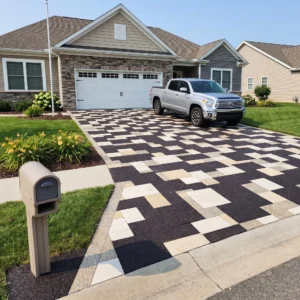
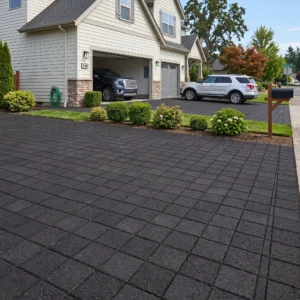
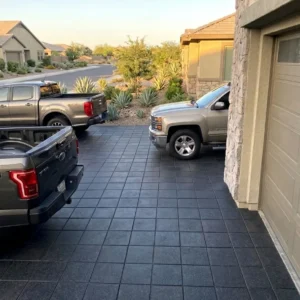
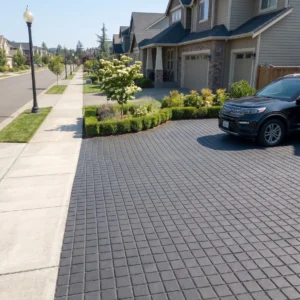
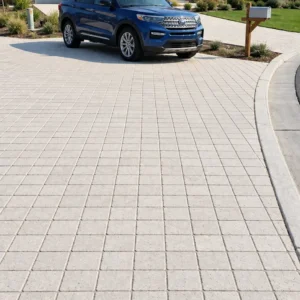
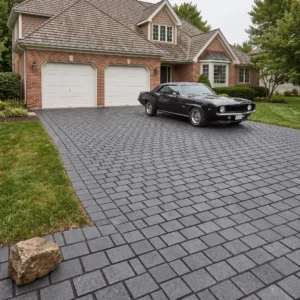
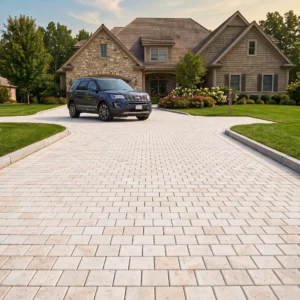
The apron is the piece of paving between a gate or a road and the property, and it takes the worst loading of any surface on a residential site. Every vehicle stops there, turns there, and pulls away there. A turning wheel does not roll: it drags a point load in an arc, and the surface has to resist both the vertical force and the rotation working across it. This is the classic application for setts, and it is worth building properly.
- Bed and joint an apron rigidly, on a bound base designed for vehicle loading rather than on a pedestrian build-up.
- Set the apron’s course direction across the line of travel so wheels cross joints instead of tracking along them.
- Haunch the edges properly, because an unrestrained edge under turning traffic will creep and open joints.
- Keep the transition to the public road detailed as a deliberate junction, not as whatever the two surfaces happen to meet at.
- Bring the drainage into the design from the start so water sheds off the apron rather than sitting in the joints.
Aprons also work hard in weather. The wettest months here, September through November, coincide with peak hurricane risk, so an entrance takes wind-driven rain and running surface water at exactly the moment it is least convenient to inspect it. Small units help here for the same reason they help on slopes: many joints mean many places for movement to distribute, and a well-restrained sett field is difficult to lift as a whole. What fails on an apron is almost never the individual stone. It is the edge, the base or the jointing, all three of which are choices made before delivery.
Older and Sensitive Settings
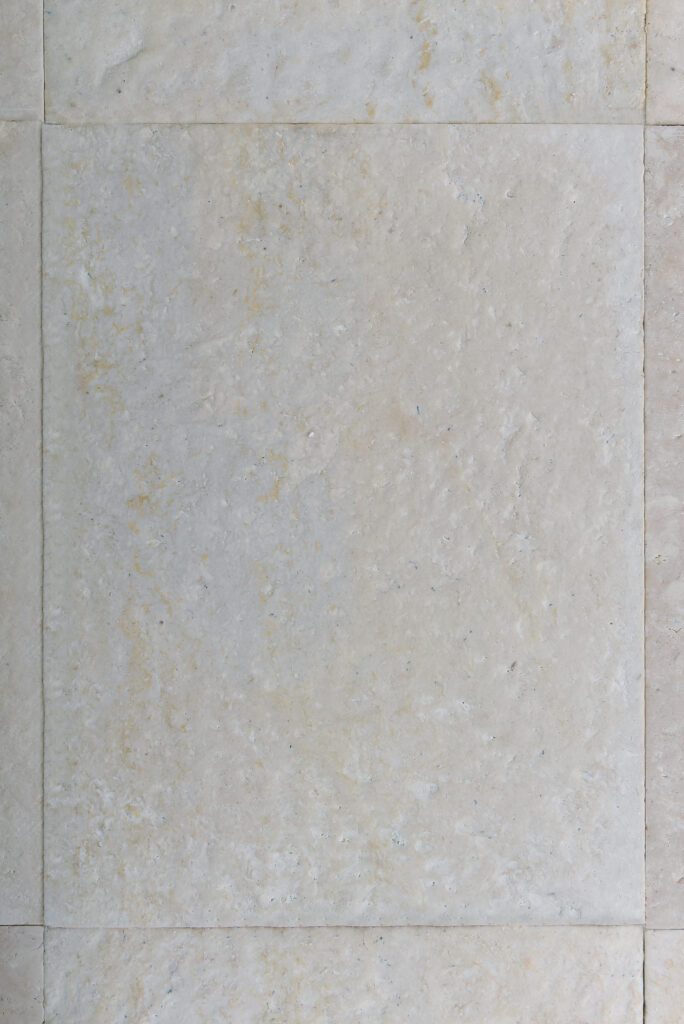
Sint Maarten maintains a list of designated monuments, with Fort Amsterdam, Fort Willem and Belvedere Plantation among the recognized sites, and the Sint Maarten National Heritage Foundation and Museum acts as the custodian body. Work in or beside a setting like that is a different conversation from work on a new villa, and it should start earlier.
We will not tell you what those settings were historically surfaced in, because that is not ours to assert. The right people to ask are the custodian body and the professionals who file permits here regularly, and the answer will be specific to the site rather than general to the island. What we can say is what a small unit does well around old fabric: it can be laid to follow an existing level rather than imposing a new one, it can be lifted again without breaking anything, it changes direction without cutting, and it puts far less weight on any single point of a fragile edge or an old wall footing.
The permitting dimension is real and it deserves early attention. VROMI requires civil works permits for activity that alters terrestrial, coastal or marine terrain, excavation included, and those permits are prerequisites for building permits. Approved permits are published biweekly in the National Gazette with a six-week objection window. On a sensitive site the sequencing of groundworks is therefore a scheduling matter as much as a construction one, and it is better handled at design stage than discovered at the point the excavator is booked.
Coursings and Patterns for Small Units
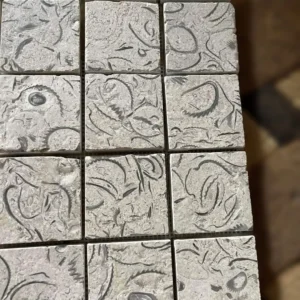
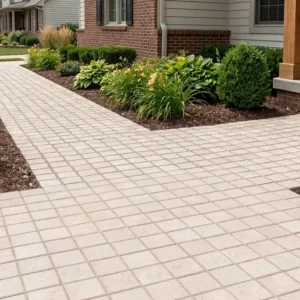
Pattern in sett paving is not decoration. It is structure. The way courses run relative to traffic determines how loads are transferred between units, where movement wants to go, and how much cutting the installer has to do at every edge.
- Running bond, with courses across the line of travel, is the straightforward choice for driveways and aprons.
- Herringbone interlocks in two directions and resists lateral creep, which suits areas where vehicles brake and turn.
- Radial and fan coursing suits open forecourts and circular areas, and turns a curve into the pattern’s logic rather than its problem.
- Coursed arcs following a path’s centerline keep a winding route reading deliberately rather than as a series of corrections.
- A contrasting border or a soldier course frames a field, hides the meeting with an irregular edge, and gives the installer a clean line to work to.
Settle the coursing choices for small units before the first crate is opened, because pattern changes coverage, waste allowance and labor hours all at once. A herringbone field generates more cut units at every edge than a running bond does, and that shows up in both the order quantity and the day rate. Decide the pattern, then calculate the quantity, then order. Doing it in the other order is how a site ends up short by half a crate with a ship to wait for.
The Real Cost Balance Between Stone and Labor
There is a well-worn saying in the paving trade that setts are cheap stone and expensive labor. Half of that is true. The other half does not survive a sea crossing, and repeating it on an island is how budgets end up wrong.
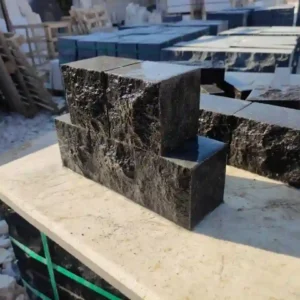
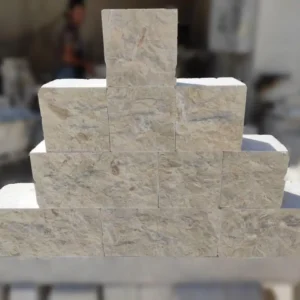
Setts weigh considerably more per unit of covered area than slabs do, because they are much deeper relative to the surface they cover. On any route where freight is charged by weight, that additional mass is paid for twice: once in material and once in shipping. So on an imported consignment, sett paving lands at a higher material and freight cost per square meter than slab paving of the same stone. It is not the cheap option on arrival, and any budget built on the mainland version of the saying will be short.
Labor is still the largest line, and that part of the saying holds. A sett field is placed one unit at a time, set to level, aligned to a course, and jointed. That is skilled, slow work, and it is the reason sett paving costs more to install than slab paving covering the same area. On Sint Maarten the arithmetic is at least clean in one respect: with no import duty applied at Point Blanche, the extra weight is not taxed on top of being shipped, so the material premium is freight and handling only rather than freight plus a tariff calculated on a higher value.
- Budget setts as the higher material cost per covered area, not the lower one.
- Budget labor hours generously, and generously again for curves, radii and detailed edges.
- Count the crates and their weight early, since offload equipment and site access depend on it.
- Offset some of the cost against a long service life and piece-by-piece repairability, which slabs do not offer.
- Phase large schemes by area so cash flow and installation capacity move at the same pace.
Ordering Setts for a Sint Maarten Site
Sett orders are calculated by coverage, not by piece count, and coverage moves with joint width. A field laid to a wider joint covers more ground with the same number of units than a tightly jointed one, so the joint decision has to be made before the quantity is fixed. Tell us the pattern, the joint width you intend and the area by shape, and the quantity comes out right the first time.
- Give areas separately for flat fields, slopes, curves and the apron, because waste allowance differs across all four.
- State the intended joint width and the coursing pattern before quantities are calculated.
- Ask for crate weights as well as coverage, so the offload plan is made before the truck is booked.
- Order the whole scheme in one lot where possible so tone and size stay consistent across the site.
- Keep a small reserve from the same lot, stored dry, for future repairs and service trenches.
Delivery deserves its own thought on this island. Crates of setts are dense, and the last leg to a hillside property can be the hardest part of the whole journey. Confirm what size of truck can reach the site, whether there is room to turn, whether a crate can be set down near where the work starts, and who is providing the offload equipment. Where access is genuinely tight, staged drops of smaller quantities usually beat one large delivery that has to be broken down by hand at the roadside and carried in.
Send us a drawing or even a clear sketch with the areas marked, note which parts take vehicles and which are for feet, and tell us how steep the worst part of the site is. We will come back with unit sizes, depths, coverage, crate counts and a delivered cost, and small hand samples so a decision on face and color is made outdoors in daylight. Plan a sett job around labor hours and crate weights rather than around the price per stone, and the budget you set at the start will still be the budget at the end.