

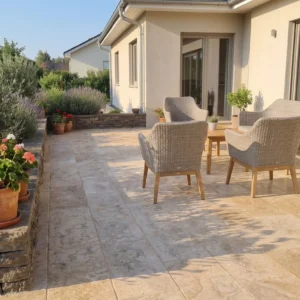









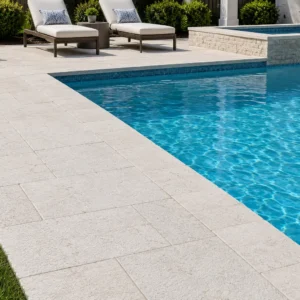
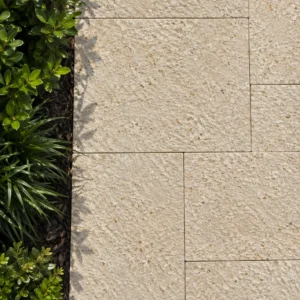
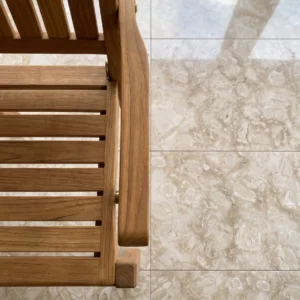
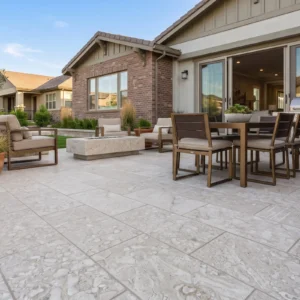
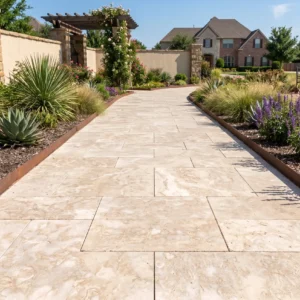
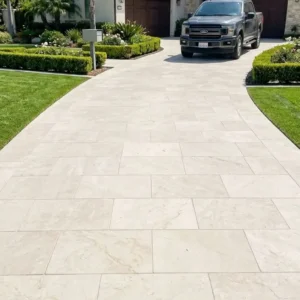

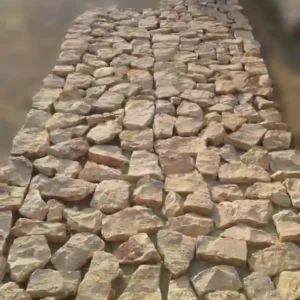
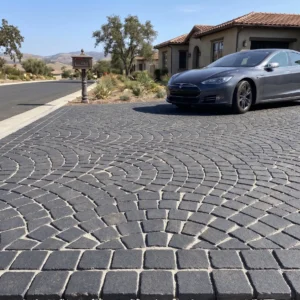
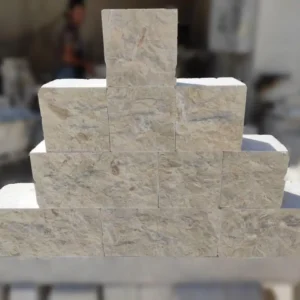
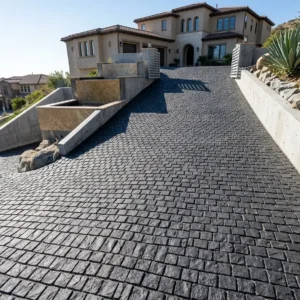
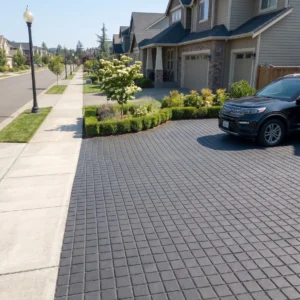
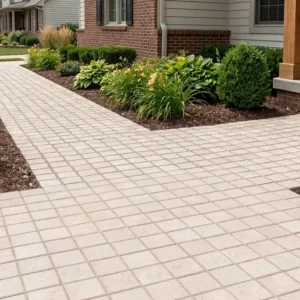
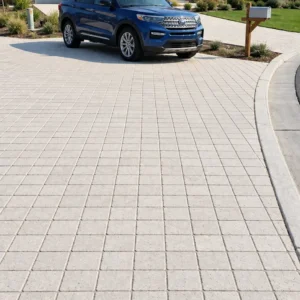
Most paving arguments on this island are settled with a photograph, which is exactly the wrong tool. A photograph tells you what a terrace looked like on the day it was finished. It says nothing about how the same stone behaves after salt has cycled through its pores for three wet seasons, or how it feels underfoot at two in the afternoon in June, or whether it still grips when a child runs out of a pool onto it. Those are material questions with material answers, and they are answerable before anything is ordered.
This page deals with limestone as a material rather than as a category. What absorption and density actually do in a hot, salty, storm-prone climate. How pale stone behaves in direct sun. What keeps grip where water lands. Where limestone should honestly not be used, and what to use instead in those places. And how imported paving relates to the rock this island is made of, which is a question of processing and supply rather than one of quality. Freight, import mechanics and site access are covered on the broader paving page; here the subject is the stone.
What Absorption and Density Do in a Salt Climate
Two numbers matter more than any other on a coastal site: how much water the stone takes up, and how tightly its grains are packed. Everything else follows from them. Water absorption is measured as a percentage of dry weight and it tells you how much of the stone is open pore space that liquid can enter. Density tells you how much solid material sits in a given volume. A low-absorption, high-density limestone has fewer and finer paths into it, which is exactly what you want where the liquid arriving is salt water.
The mechanism worth understanding is salt crystallization. Salt-laden water enters the pore network, the sun and wind drive the water back out, and the salt left behind crystallizes inside the pores. Crystals occupy more space than the dissolved salt did, so each cycle applies a small pressure from within the stone. On a shore-facing terrace at Dawn Beach or Oyster Pond, that cycle runs continuously through the dry months, when spray arrives and evaporates the same day. A dense stone with limited pore volume simply has less to work with, and it is the single most useful property to specify on an exposed site.
- Ask for a water absorption figure by test standard, not a description like low or dense.
- Ask for bulk density, and treat the two figures as a pair rather than in isolation.
- Ask for abrasion resistance where the surface will carry commercial foot traffic.
- Ask for flexural or breaking strength if units will span a pedestal or a partly supported edge.
- Ask whether the figures come from the same material you are being quoted, not a family average.
Start any exposed job from limestone paving with test data behind it, and treat a supplier who cannot produce figures as a supplier who has not tested. Numbers are not a formality. On a shoreline site they are the whole argument, and the season makes them sharper still: the wettest months here, September through November, coincide with peak hurricane risk, so the stone is at its most saturated exactly when the weather is at its most violent.
How Pale Stone Behaves in Direct Sun
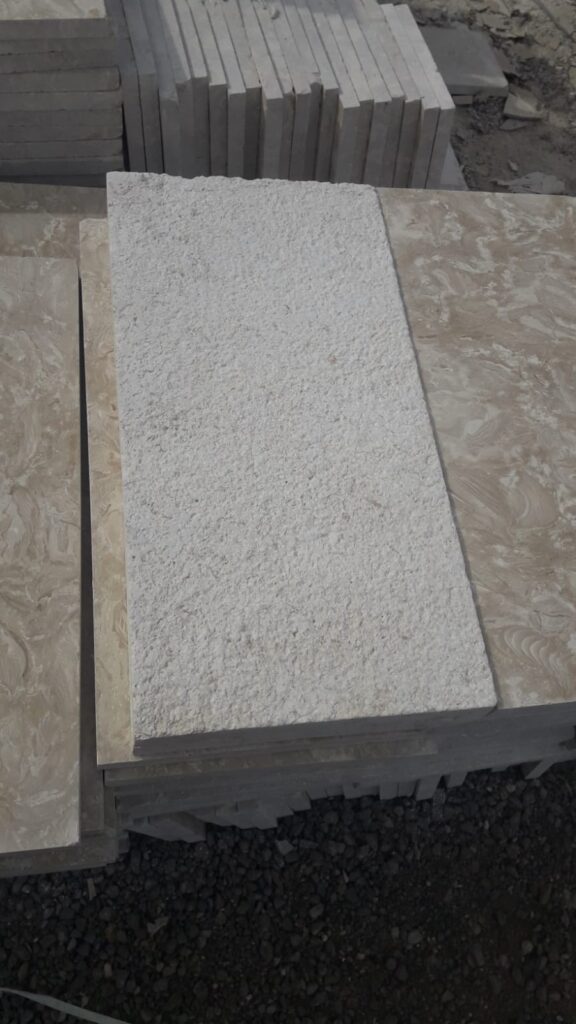
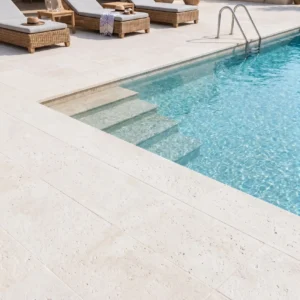
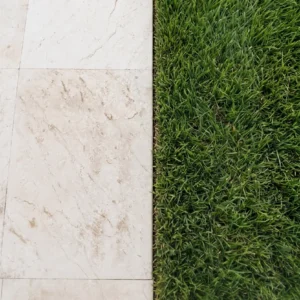
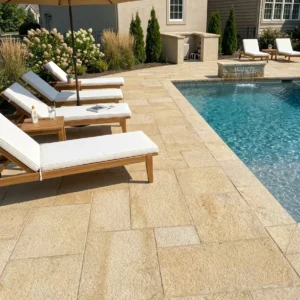
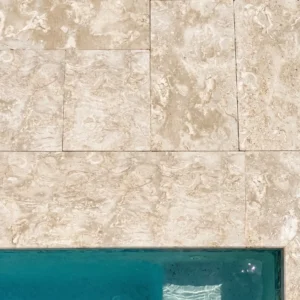
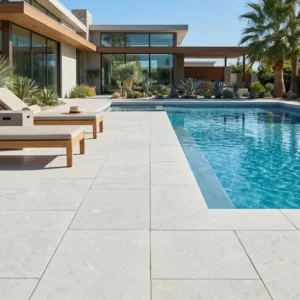
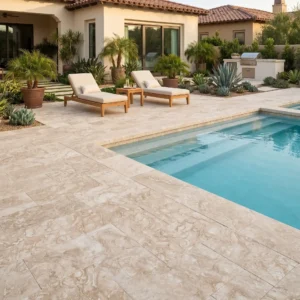
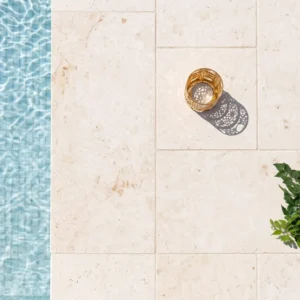
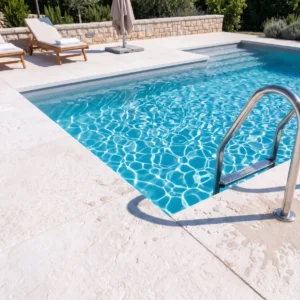
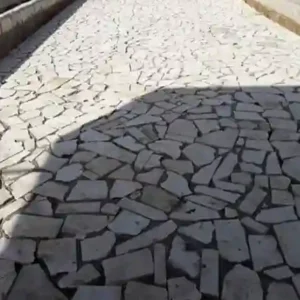
Pale limestone stays cooler in sun than dark paving does, and that is a genuine, physical advantage around a pool where people walk barefoot. It is also routinely overstated. No paving material is comfortable at midday in unshaded tropical sun in the middle of the dry season, and a supplier who implies otherwise is setting up a complaint. What pale stone buys you is a real reduction in surface temperature compared with a dark surface in the same position, which often makes the difference between a deck that is usable in the late afternoon and one that is not.
Three things modify that in practice. Shade does more than color: a pergola, a deep overhang or a mature tree changes surface temperature far more than any material choice. Thermal mass means a stone deck heats slowly and cools slowly, so the peak arrives later in the afternoon than people expect. And finish matters, because a textured face presents more surface to the air and reads differently underfoot than a smooth one at the same temperature.
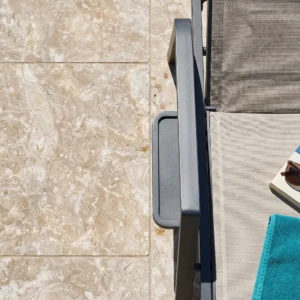
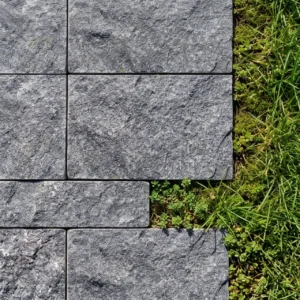
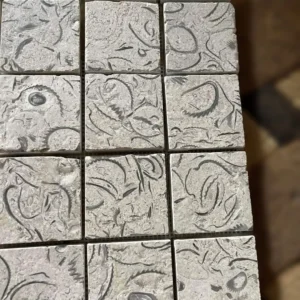
Glare is the other side of pale stone, and it is worth designing for rather than discovering. A large expanse of light paving next to bright water throws a lot of light, and in a room facing that expanse the effect can be tiring. A textured or brushed face scatters light where a smooth one reflects it, so finish selection is doing double duty here: grip when wet, and glare control when dry. If a terrace sits directly outside a main glazed opening, look at a sample in that position at the time of day the room is actually used.
Grip Where the Water Lands
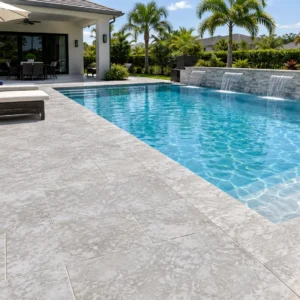
Wet slip resistance is the property that produces incidents, and it deserves to be specified rather than assumed. The relevant question is never how the stone feels dry in a warehouse. It is how it behaves under a wet bare foot, with a film of water, sunscreen residue and fine sand between skin and stone, which is the actual condition on a pool surround here.
- Specify a textured face for pool surrounds, steps, shower and outdoor rinse areas, and every route between water and door.
- Keep any smoother face for areas that stay dry and are walked in shoes.
- Build a positive fall so water leaves the surface rather than sitting in a film across it.
- Detail steps with the most textured face available, since a step is where a slip becomes an injury.
- Test a wet sample with a bare foot before ordering, because that test is more informative than most published figures.
Biological growth is the slower half of the problem. In shaded, damp corners, and particularly through the wet months from September to November, a thin biofilm can develop on any paving material and it changes the surface underfoot without changing how it looks. Design against it with airflow and drainage rather than chemistry: keep planting from crowding a terrace edge, make sure water actually leaves, and wash shaded areas periodically rather than waiting until they feel different.
Pool chemistry deserves one honest note. Chlorinated and salt-system water splashing onto limestone is normal and manageable, but concentrated dosing chemicals landing directly on a calcium carbonate stone are not. Dose at the plant, not on the deck, and rinse anything that spills immediately.
Where Limestone Is the Wrong Choice
A supplier who says a material suits every application is describing a sales target rather than a stone. Limestone is a fine choice across most of a residential or hospitality property here, and there are specific places where it should not be the answer. Naming them is more useful than pretending they do not exist.
- Service yards, delivery bays and any surface worked by pallet trucks or repeated heavy turning, where abrasion and point loading are constant.
- Positions taking direct wave impact or regular surge, as opposed to spray, where the loading is hydraulic rather than merely wet.
- Areas cleaned with acidic products as routine, since acids etch calcium carbonate and no sealer changes that chemistry.
- Grill, outdoor kitchen and workshop zones where oils and fuels are spilled regularly onto an absorbent surface.
- High-abrasion commercial runs where machine sweeping and constant footfall demand a harder wearing surface than a soft grade will give.
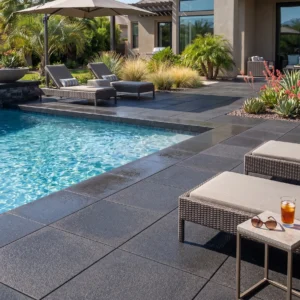
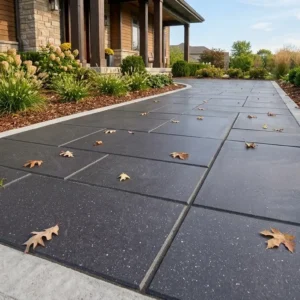
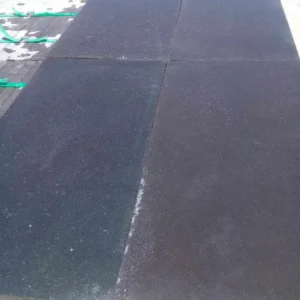
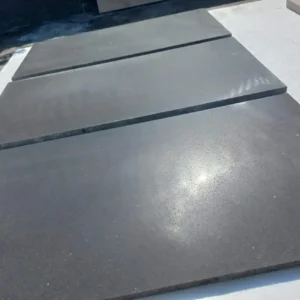
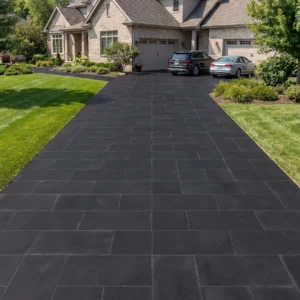
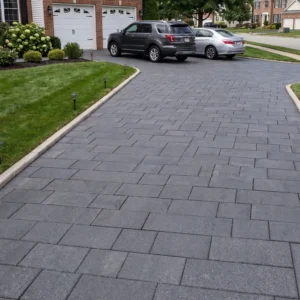
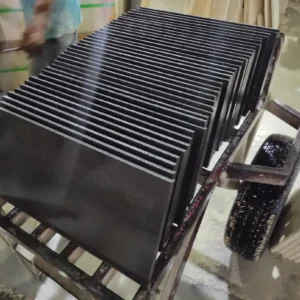
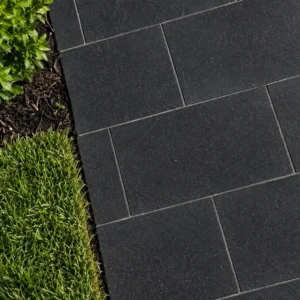
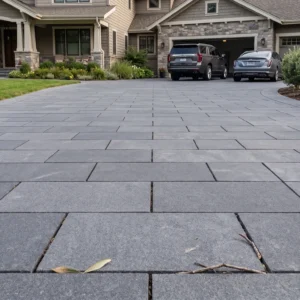
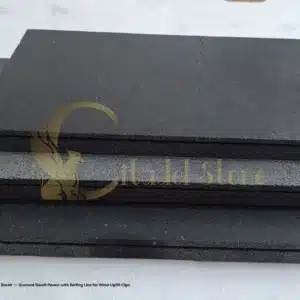
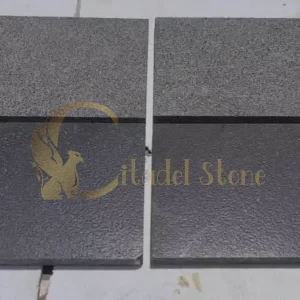
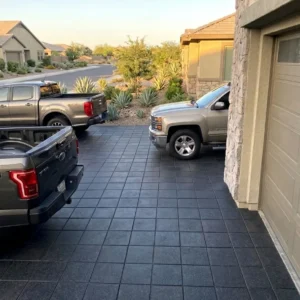
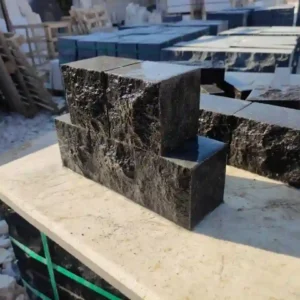
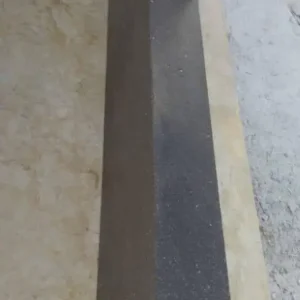
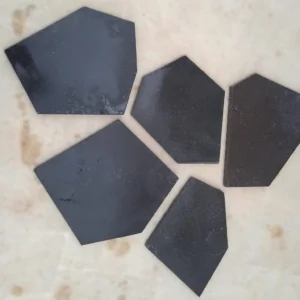
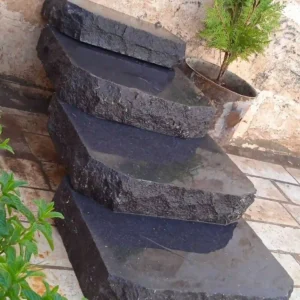
For most of those positions the sensible move is dark basalt for the service side of a property, kept to the working areas and out of the barefoot zones where its heat gain would count against it. That is a durability and function argument, not a hierarchy of rocks. It is also worth saying plainly on this island: Sint Maarten’s own bedrock is volcanic and includes basalt, and nothing here suggests imported material is a better rock than what lies under the hills. The difference is that a sawn, calibrated, graded paving unit in a repeatable format is a manufactured product, and that is what is being supplied.
Concrete and Cut Stone, Compared Fairly
Concrete, cast in place or precast, and block products are the other surfaces specified across a property here, and they are a perfectly reasonable choice for many areas. Anyone pretending otherwise has never priced a large back-of-house yard. The comparison worth making is honest and specific rather than promotional.
Concrete is placed wet, which means it can be formed to any shape and finished in one operation, and it is usually cheaper for a large plain area. Its weaknesses are equally well known: shrinkage cracking, joint patterns that must be designed rather than hoped for, and a surface that is difficult to repair invisibly. Cut stone arrives as discrete units, which means a damaged piece is a local repair rather than a slab replacement, movement is accommodated at joints, and the surface appearance does not depend on the weather on the day it was placed.
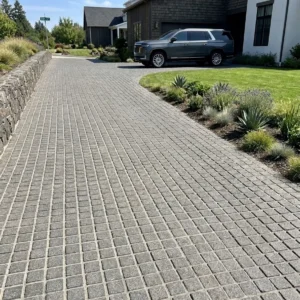
The material relationship is complementary and worth stating clearly. The island’s geology is volcanic, andesite tuff and breccia intruded by basalt, with limestone and marl deposited on top, and the layered Point Blanc stone at the headland where the port sits, a sample of which is held in the Sint Maarten Museum. Local rock has been quarried here for aggregate. That aggregate, and the concrete made from it, is what forms the sub-base and the bedding under an imported paving unit. The two materials are in the same construction, not in competition. What a small island cannot produce for itself is dimension-sawn stone in repeatable lots, gauged thicknesses and matched finishes, and that is a processing and supply distinction rather than a claim about the rock.
Detailing That Decides How Long It Lasts
Material selection gets the attention, and detailing decides the outcome. Several of the failures blamed on limestone are actually failures of what was put under it or around it, and they are avoidable with decisions taken before the first unit is laid.
- Match the bedding to the stone: a dense unit on an unsuitable bed will suffer at the interface long before the stone itself is troubled.
- Keep iron out of the build. Ferrous contamination in bedding sand or aggregate can produce rust staining that migrates up through a pale stone.
- Expect some efflorescence on any new cementitious build; it is salts moving out of the bedding, it usually weathers off, and it is not the stone failing.
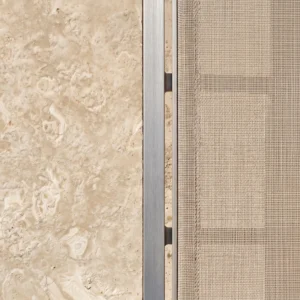
- Choose a jointing material that stays put under wind-driven rain, and detail the joint width for the unit size rather than defaulting to a habit.
- Restrain every free edge, since scour on this island starts at an open margin and works its way inward.
Whether to seal exterior limestone is a genuine judgment call rather than a rule. Outdoors, sealers are mostly about resisting staining from organic matter, cooking and planting, since weather will clean a paved surface far more thoroughly than any indoor floor gets cleaned. Test on a spare unit from the same lot, look at it wet and dry in sunlight, and be sure the appearance is what you want before it goes on the whole terrace. A sealer changes maintenance; it does not change absorption class, and it will not rescue a stone specified too soft for its position.
A Specification Checklist Worth Using
Before committing to any limestone for outdoor use on this island, work through a short list and insist on answers. A supplier who can answer all of it quickly is one who has thought about the material. A supplier who deflects is telling you something too.
- Water absorption and bulk density, quoted against a named test standard, for the specific material offered.
- Abrasion resistance where the surface carries commercial or high-volume foot traffic.
- Available thicknesses, and which thickness is recommended for each of your areas by duty.
- Available finishes, with a wet sample of the face proposed for the pool surround and the steps.
- Lot consistency: what is held on thickness and face dimension, and whether the quantity you need comes from one production run.
Then test in place. Put a sample on the actual terrace, in the actual orientation, and leave it there. Wet it and stand on it barefoot. Look at it at the hour the adjacent room is used, to judge glare. Splash pool water on a corner. Leave it out through a rainy week and see how it dries. This costs almost nothing and it settles arguments that would otherwise be settled after the whole terrace is laid, which is the expensive way to learn.
Send us the areas broken out by exposure and by duty, tell us which side of the island the property sits on and how close it is to open water, and we will match material, thickness and finish to each. Specify limestone on its absorption, its density and its wet grip, and it will earn its place on this island; specify it on a photograph, and the climate will find the weakness within a few seasons.