


























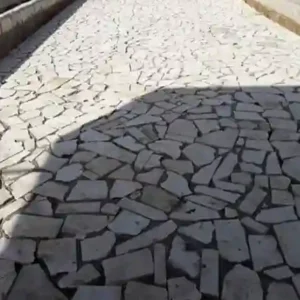

Interiors on Sint Maarten are built around a door that spends most of the year open. Villas above Cupecoy and Dawn Beach, condominium and timeshare units under refurbishment, guest houses in Lower Prince’s Quarter and small commercial spaces off Front Street all share the same habit: people come in from a pool, a beach or a hot street, and the floor has to cope with that hour after hour. Salt is in the air, sand is on every foot, humidity sits high through the second half of the year, and rooms are shut and reopened around the seasons. A floor here has a harder life than the same floor in a temperate climate, and it shows the difference within a couple of years.
This page is about interior work and the thresholds where inside meets outside. It covers why a stone floor suits a warm, humid, salty climate, which finishes hold grip under wet feet, which formats actually fit the rooms people build here, how to carry a floor through to a terrace without creating a water trap, and how to clean and seal limestone when the abrasive on the floor is beach sand rather than street grit. Freight and import mechanics are handled elsewhere. What matters for tile is the one line that changes buying behavior: with no import duty to pay on arrival, ordering the whole floor plus spares in a single lot costs nothing extra in tariff, and lot matching is worth far more to a finished room than a small saving on box count.
Why a Stone Floor Suits This Climate
Stone has thermal mass, which in a tropical room is a quiet advantage rather than a technical footnote. A limestone floor sitting in shade or under air conditioning holds its temperature and gives it back slowly, so the floor feels cool to a bare foot when the air outside is not. In a room that has been closed for a week, stone does not swell, cup, delaminate or grow a wave down the middle the way sheet materials and some timber floors will. It also does not off-gas as it warms.
Humidity is the other half of the argument. Rainfall averages roughly 1,047 mm a year and the wet stretch runs from September to November, which is also the stretch when a property may sit closed or lightly used for weeks. A mineral floor tolerates that cycle. It can be soaked, mopped, dried and soaked again without a dimensional change worth measuring, and it does not host the kind of adhesive failures that appear when moisture works under a resilient covering.
- Thermal mass keeps a shaded floor cool underfoot through the hottest part of the day.
- No swelling, cupping or seam lifting when a closed room runs humid for weeks.
- Wet cleaning is routine rather than a risk, which matters when sand comes in daily.
- Repairs are local: a damaged tile can be lifted and replaced without redoing the room.
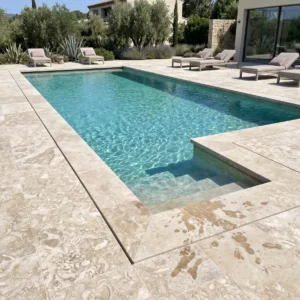
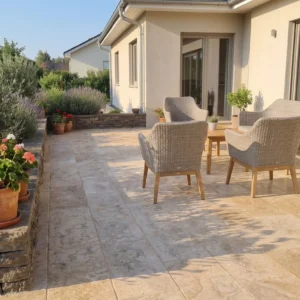
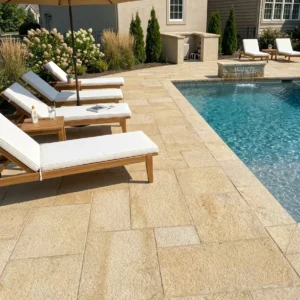
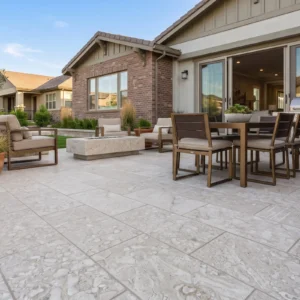
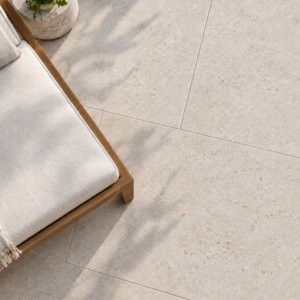
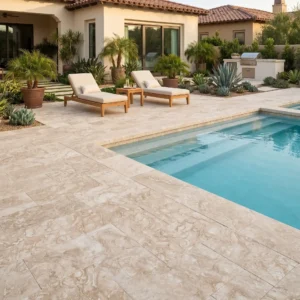
- The same material can run inside and out, which simplifies an open-plan layout.
None of this makes stone maintenance-free, and anyone who tells you otherwise has not lived with it. Limestone is a calcium carbonate stone, which means acids etch it, and there are plenty of acids in a household: lime juice, wine, some descalers and a great many bathroom cleaners. The trade is a floor that ages honestly in exchange for cleaning discipline, which most owners here find an easy trade once someone explains it up front rather than after a mark appears.
Finishes for Wet Feet and Salt Air
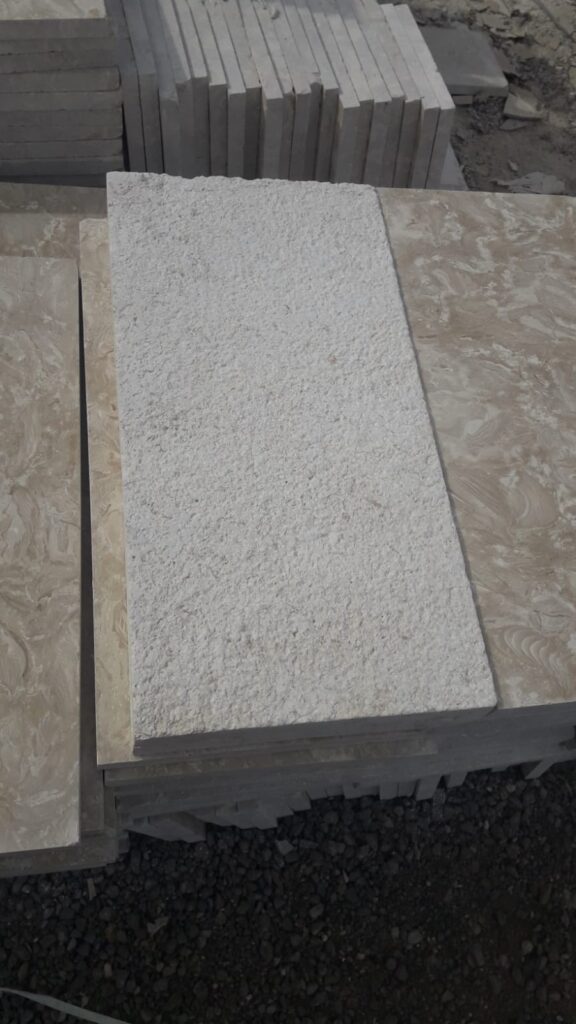
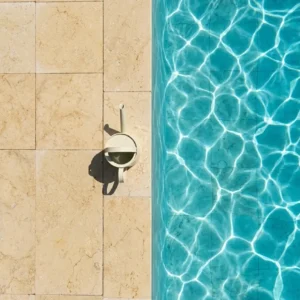
Finish is the decision that determines whether a floor is a pleasure or a problem, and it should be made before size, color or pattern. The difference between one face and another is not decorative here. It is the difference between a confident step and a careful one when somebody walks in from a pool with wet soles and sand between their toes.
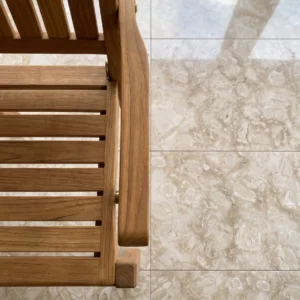
- Honed faces read smooth and calm, suit bedrooms and living rooms, and are best kept away from the routes people use while dripping.
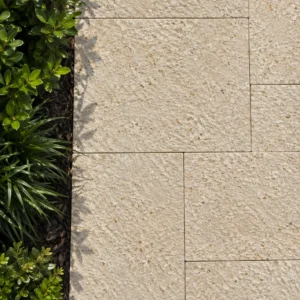
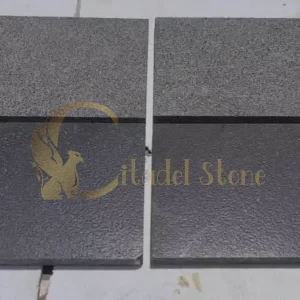
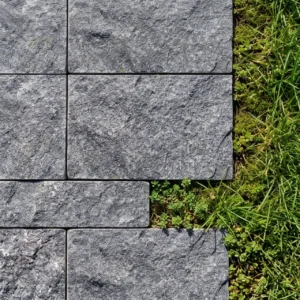
- Brushed and lightly textured faces keep a soft appearance but give the foot something to hold, which is what you want on entry runs and kitchen floors.
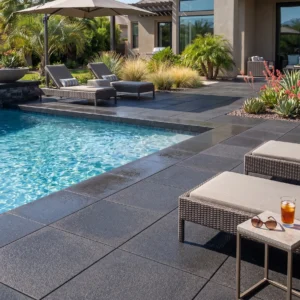
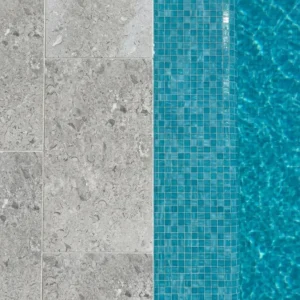
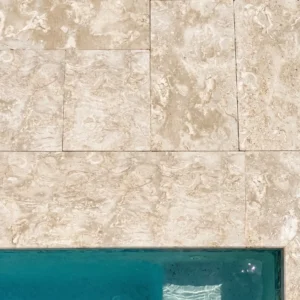
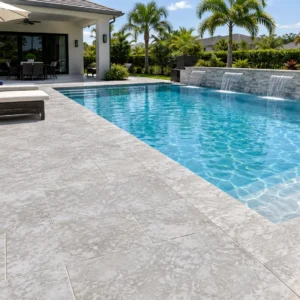
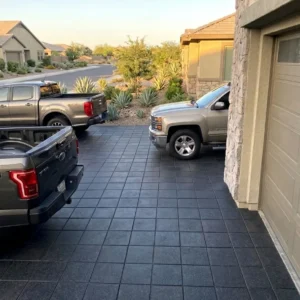
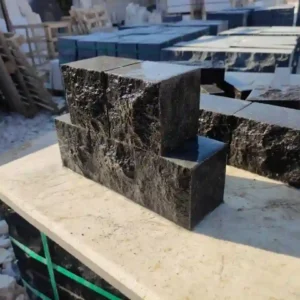
- Bush-hammered and heavily textured faces belong outside and at the immediate threshold, where the water arrives.
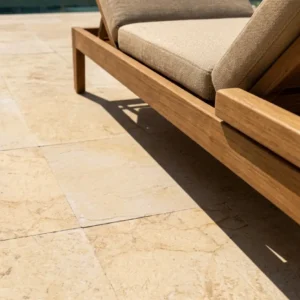
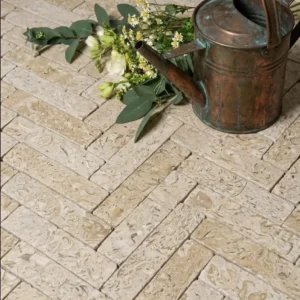
- Tumbled edges soften the look of a modular floor and hide the small chips that a busy holiday rental will collect.
- Low-gloss surfaces scatter light instead of throwing it, which matters in a room with a large glazed opening facing bright water.
Deciding which face suits a wet floor is ten minutes well spent, and it is easier with samples in hand than with a description. Salt is the other factor. Air near the shore carries it, and it comes indoors on skin, on towels and on the breeze. Salt is mildly abrasive and it will dull a highly polished surface faster than it will touch a textured one, so a low-sheen face keeps its appearance longer in a coastal room. That is a maintenance observation, not a durability claim: the stone underneath is the same either way.
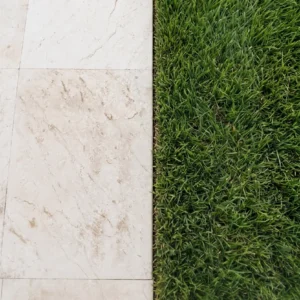
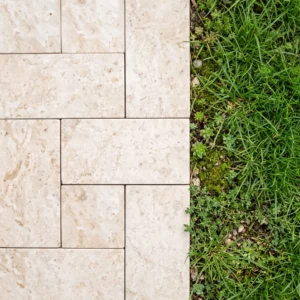
Do not mix too many finishes in one property. Two is usually right. One face for the dry interior, one for the wet zones and the outside, with the same stone underneath both so the tone reads continuous even where the texture changes.
Formats That Fit the Rooms Built Here
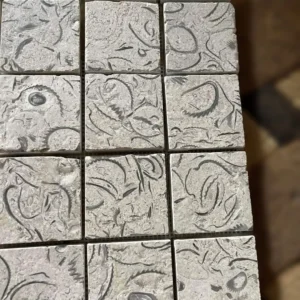
Room shapes on this island push in two directions at once. Living space in villas and refurbished resort units tends to be open and wide, aimed at a view, which suits larger tile modules and fewer joints. Bathrooms, kitchens, hallways and the small service rooms behind them tend to be tight, which suits smaller modules that can be set out without a run of awkward slivers along one wall.
- Large modules in open living areas reduce joint lines and make a modest room read larger.
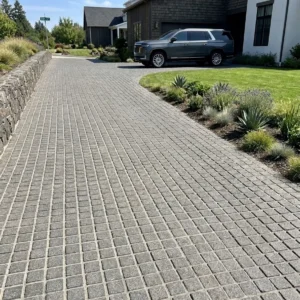
- Modular and mixed-size patterns suit irregular plans and older buildings where no two walls are parallel.
- Smaller formats in bathrooms let you build a fall to the drain without lipping between tiles.
- Consistent calibrated thickness across a floor keeps the bed even and the installation quick, which matters when labor is booked by the day.
- Stair treads and thresholds want purpose-cut pieces rather than field tiles trimmed on site.
Calibration is the unglamorous specification that saves the most money. Tiles cut to a consistent gauge sit on a uniform bed and go down faster. Tiles of varying thickness force the installer to build up and pack every piece, which is slow, and slow is expensive when the installer has traveled to a hillside site. Ask what tolerance a supplier holds on thickness before you ask about anything else, and be skeptical of an answer that avoids a number.
Plan the setting out on paper before ordering. Decide where the full tile sits and where the cuts land, run the layout from the main sightline rather than from the least visible corner, and add the cutting allowance to the order at that point. On an island, a short order is not a trip to the store. It is another crossing.
Carrying the Floor Through to the Terrace
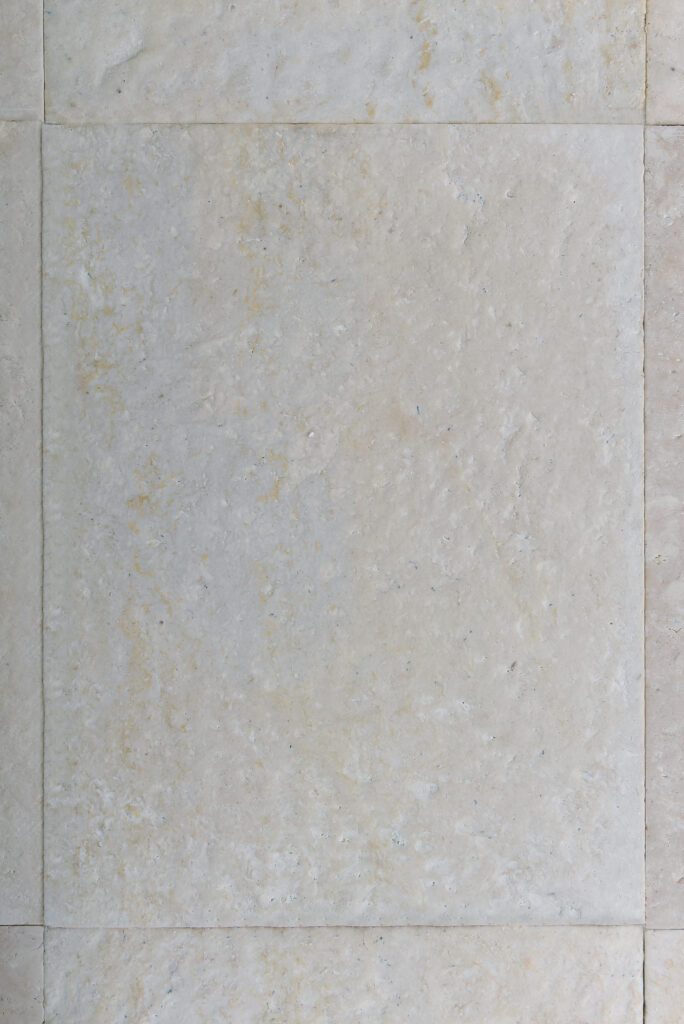
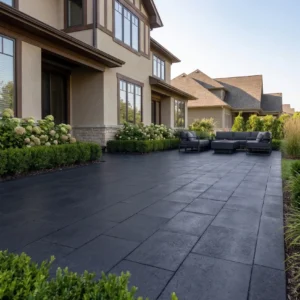
The most-used detail in a Caribbean house is the one where the interior floor meets the terrace. Get it right and the room and the outside read as a single space. Get it wrong and you have created a water trap that will find its way indoors during the first serious squall of the season.
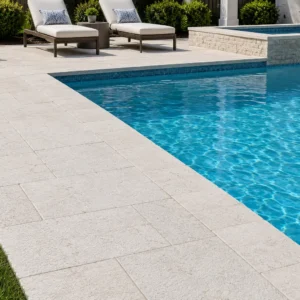
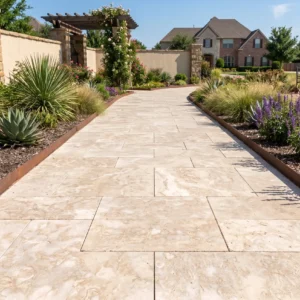
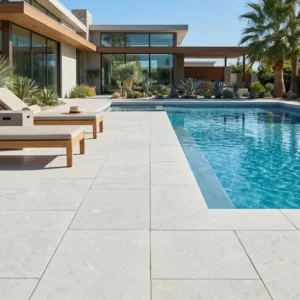
The instinct is to run the same tile straight through at the same level for a flush transition. That works, with two conditions. First, the outside face must be a different, more textured finish than the inside face, because the outside face is where the water and the wet feet are. Second, the drainage must be real: a positive fall away from the opening, a slot or channel drain at the door line if the terrace is enclosed by a parapet, and a route for water to leave that does not depend on it evaporating. Wind-driven rain does not respect a shallow fall.
Two other details are worth resolving early with your installer. Movement needs somewhere to go: a stone floor that runs from a cool interior to a sun-exposed terrace crosses a real temperature difference, so a movement joint at or near the threshold line is sensible rather than optional. And the door track itself has to be set with the finished floor thickness known, which means the tile choice has to be made before the joinery is ordered rather than after. That sequence gets reversed on plenty of sites, and the fix is always uglier than the plan would have been.
Wet Rooms, Showers and Splash Zones
Bathrooms are where a stone floor is tested hardest, and where the specification changes most. Water sits, soap and shampoo run across the surface daily, and everyone in the room is barefoot. Design for those facts rather than for a photograph.
- Use smaller modules on a shower floor so the falls to the drain can be built without lipping between pieces.
- Specify a textured face inside the wet area and keep the smoother face for the dry side of the room.
- Detail the waterproofing under the stone as its own layer, and treat the stone as a wearing surface rather than as the barrier.
- Keep the fall consistent and generous enough that water leaves quickly; standing water is what causes marks over time.
- Use larger, purpose-cut pieces for thresholds and shower curbs so there are fewer joints in the wettest line.
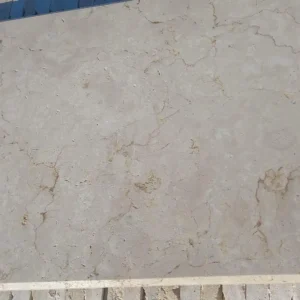
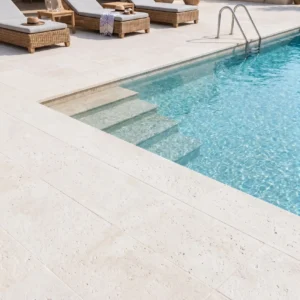
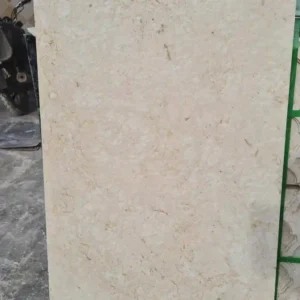
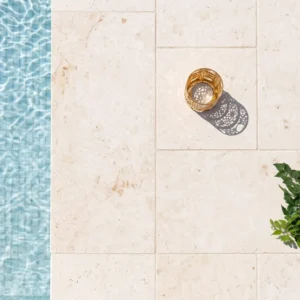
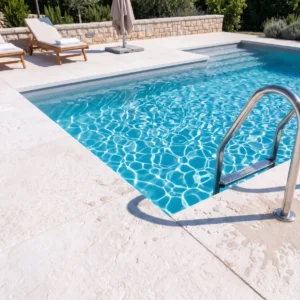
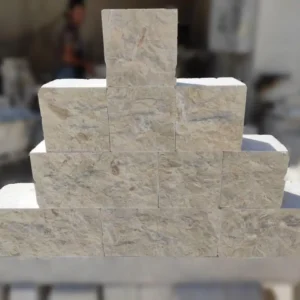
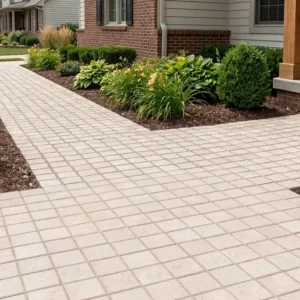
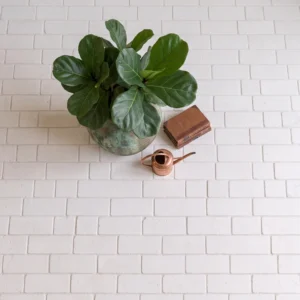
The pale tones do a lot of work in a small bathroom, which is why pale limestone tiles in stock sizes are worth looking at first for villa and resort refits. Light stone bounces daylight around a room with one small window, and it keeps the space from feeling like a cave when the shutters are closed against weather.
Two honest cautions. Limestone in a shower will need a sealer suited to constant wetting, and the products people use on their bodies are not always kind to a calcium carbonate stone. Rinse the walls and floor after use, keep acidic cleaners out of the bathroom cupboard entirely, and accept that a shower floor will develop a patina over years. That is a used surface, not a failed one, and it is the same trade every natural material asks you to make.
Cleaning and Sealing Where Sand and Salt Come Indoors
The main threat to an interior stone floor on this island is not water. It is the grit that arrives on feet. Fine sand from a beach behaves like a mild abrasive underfoot, and over years it does more to change how a floor looks than any single spill will. Most of the cleaning strategy therefore happens before anyone reaches the stone.
- Put proper matting at every entrance from the outside, sized so a couple of steps land on it, not a token square.
- Sweep or dust-mop before wet cleaning, because mopping grit around a floor is scouring it.
- Use pH-neutral cleaners made for natural stone, and keep vinegar, citrus and acidic bathroom products away from limestone entirely.
- Deal with spills quickly; oils and colored liquids are more of an issue on a porous stone than plain water ever is.
- Rinse and dry rather than letting cleaning water dry in place, especially in a humid room with poor airflow.
Sealing is a separate decision from cleaning and it is worth taking seriously in a coastal, humid house. An impregnating sealer sits within the surface and slows liquid absorption; it does not make stone bulletproof and it is not a coating that changes the look, unless you choose one that does. Test any product on a spare tile from your own lot before it goes near the floor, follow the maker’s application and reapplication guidance rather than a number picked off the internet, and reapply when water stops beading in the busiest areas rather than on a fixed calendar.
Keep half a box of spare tiles from the original lot somewhere dry. It is the single most useful thing you can do for a floor you intend to keep. Test cleaners on it, test sealers on it, and if a tile is ever damaged you have an exact match rather than a near one.
Ordering Tile for an Island Project
Natural stone varies. That is the point of it, and it is also the thing that has to be managed on an order. Tiles cut from one block or one production run will sit within a tone and vein range; tiles from a run six months later will not necessarily match. On a mainland job that is an inconvenience. On an island it is a shipping problem attached to an inconvenience.
- Order the whole floor, including thresholds and stair pieces, in one lot rather than in stages.
- Add a cutting and breakage allowance up front, and add spares on top of that allowance rather than out of it.
- Ask for the tolerance held on thickness and on face size, and get it in writing on the quotation.
- Have boxes opened and blended across the room during laying rather than laid box by box, so natural variation reads as texture rather than as patches.
- Store boxes flat, dry and off a concrete slab, and let them acclimatize in the building before laying.
Because there is no import duty here, spares carry no tariff penalty and the only cost of ordering a little extra is freight on the weight and the space to keep it. That is a genuinely different calculation from a duty jurisdiction, where every extra box is taxed as well as shipped, and it is the one place where the island’s import regime should visibly change how you buy tile.
Send us the room schedule with areas, room types and wet zones marked, and tell us which finishes you are considering for each. We will come back with formats, thickness and a delivered cost, and small hand samples so the decision is made with stone in the room rather than an image on a screen. A tile floor specified for wet feet, humid air and beach sand will still look deliberate long after a floor chosen from a photograph has started to look tired.