

















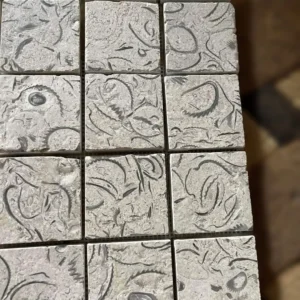




Anguilla’s geology is island-arc volcanic rock capped by reef limestone laid down through the Oligocene, Miocene and Pliocene, and that limestone covers effectively the whole island apart from two small outcrops of tilted tuffs and basalt. The Anguilla Formation is a named geological unit, and its fossil content records a marine world of roughly twenty to twelve million years ago. Anybody selling limestone paving into Anguilla should say that out loud and early. The island is built of limestone, its old walls and dressed masonry are limestone, and no imported pallet improves on that fact.
What the island does not have is a commercial dimension-stone industry producing calibrated, gauged, sawn paving in graded lots that can be matched again next season. That is a processing and supply-chain difference rather than a quality claim, and it is the only honest reason to import anything. The rest of this page is about the technical properties that decide whether a given limestone survives an exposed maritime site here, and about the situations where it will not survive and something else should be specified instead. Every figure below that we cannot stand behind is left out rather than guessed at.
Absorption, Density and Why the Numbers Matter Here
Water absorption and bulk density are the two properties that decide how a limestone behaves on this island, and they matter for a specific mechanism rather than as general quality markers. Salt-laden moisture enters the pore structure of the stone. During a long dry spell that water evaporates and the salt recrystallizes inside those pores, and the growing crystals exert pressure against the pore walls. Repeat that often enough and a porous stone begins to lose its face, first as a fine dusting, then as spalling at edges and arrises. Freeze and thaw is irrelevant in Anguilla; salt crystallization cycling is the durability stress that replaces it.
Anguilla makes that mechanism unusually active. The island receives the least rainfall in the Lesser Antilles, somewhere around 35 to 40 inches a year and highly erratic, because there is no high ground to trap cloud. February and March are genuinely dry, September and October are the wet months, and the pattern is long dry runs punctuated by intense bursts. That is a classic wetting and drying cycle, delivered with salt already in solution. A dense stone with low absorption and a tight, well-cemented matrix will shrug it off, while an open, chalky one will not. Ask for measured absorption and density figures for the lot you are actually buying, not for a species average lifted from a catalog page.
- Ask for measured water absorption on the production lot rather than a generic figure for the stone type.
- Ask for bulk density and compressive strength, and for abrasion resistance wherever an area takes real traffic.
- Check flexural performance where units span an unbonded bed or sit on a pedestal system.
- Design against salt crystallization cycling, not frost, because frost never arrives here.
- Request the test report with the quotation so the numbers stay attached to a lot reference in the project file.
Pale Stone on an Island With Almost No Shade
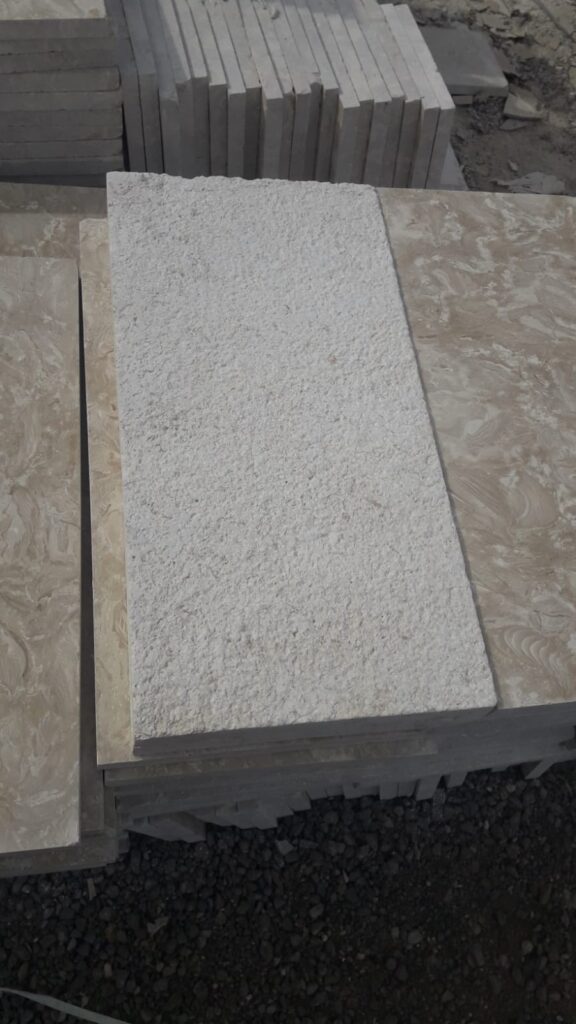
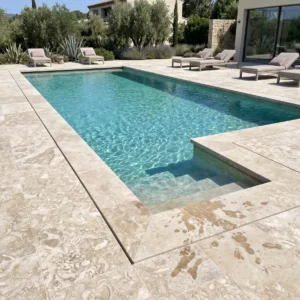
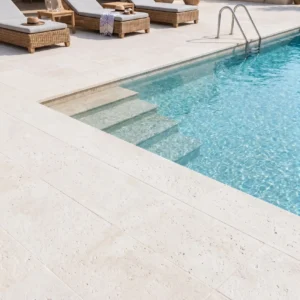
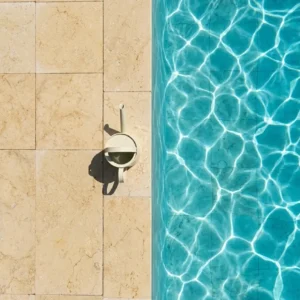
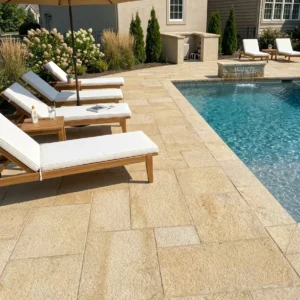
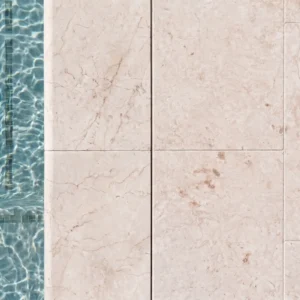
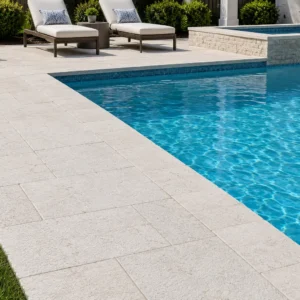
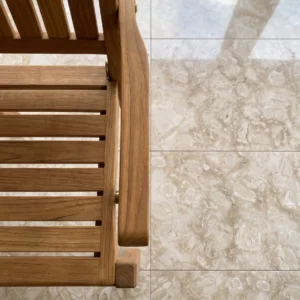
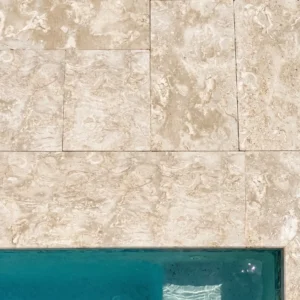
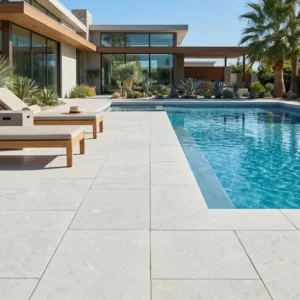
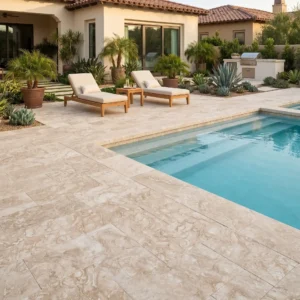
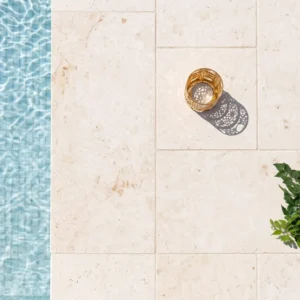
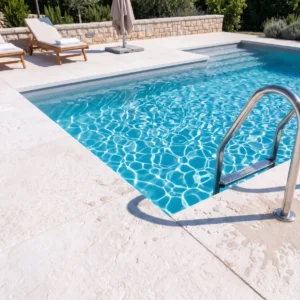
Anguilla is low, flat and thinly soiled, and mature shade canopy is scarce outside established planted gardens. A terrace here sits in full sun for most of the day, which makes surface temperature a real design constraint rather than a comfort footnote. Pale limestone is the traditional answer across the Caribbean for a straightforward physical reason: a light surface reflects a much larger share of incoming solar radiation than a dark one and therefore runs cooler underfoot. On a pool deck walked barefoot at two in the afternoon, that difference is the whole argument and it is not a subtle one.
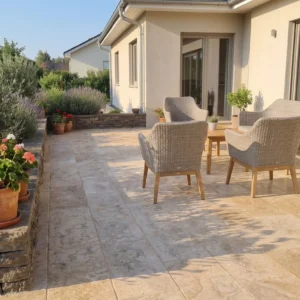
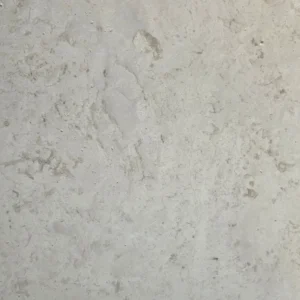
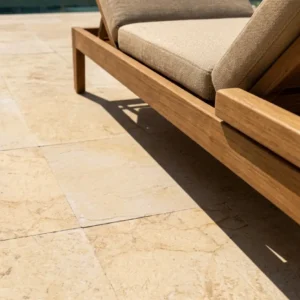
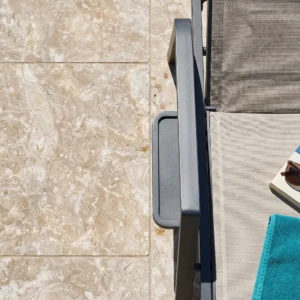
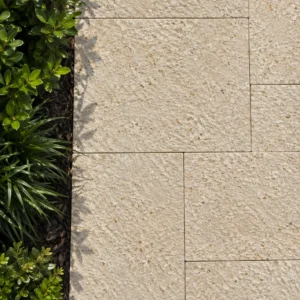
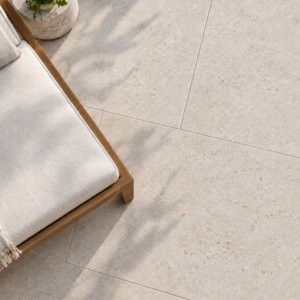
The trade-off is glare. A very smooth pale floor beside a pool can throw uncomfortable light back into the living space behind it, especially in a house designed to open along its entire face. Texture is the control. A brushed, sandblasted or lightly bush-hammered face scatters light rather than reflecting it as a sheet, cutting glare while keeping the thermal benefit intact. Colder white tones read harder in bright island light, and a warmer, slightly sandy limestone usually sits better against the water and against the local vernacular of white render and bare stone walling.
- Choose pale tones for barefoot areas, because reflected radiation is the reason they stay usable at midday.
- Use a textured face rather than a smooth one to control glare on pool decks and west-facing terraces.
- Test a sample in position before committing, in both morning and late afternoon light.
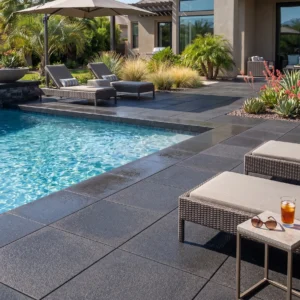
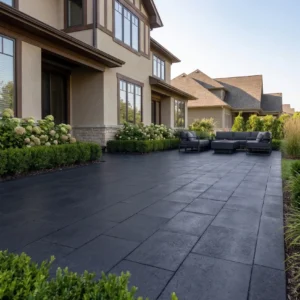
- Keep the darkest materials for shaded courtyards, thresholds and detail bands instead of open field areas.
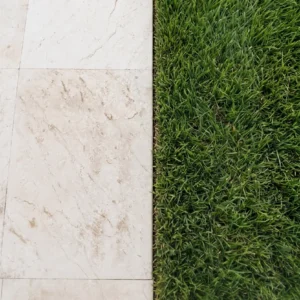
- Accept that a light surface shows salt film sooner, which is a maintenance question rather than a defect.
Grip Where the Water Actually Lands
The slip case on this island is specific, and it is not the one most slip-resistance data addresses. The dangerous condition in Anguilla is a surface that has been dry for weeks, has collected a fine film of salt and airborne dust, and is then wetted suddenly, by a swimmer climbing out, by an outdoor shower, or by the first heavy burst of a September squall. That thin slurry is far more slippery than clean water on clean stone, and it explains why a finish that tests acceptably in a laboratory can still feel wrong at a pool edge here.
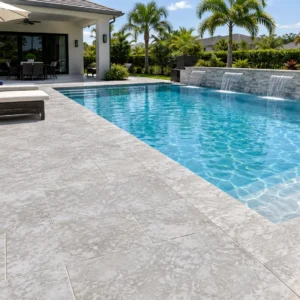
Practical grip comes from an open, mechanically textured surface that holds its profile: sandblasted, brushed, bush-hammered, or a fine flamed and brushed combination, rather than a polished or heavily honed face. Coping is the critical component. A pool edge takes wet feet at the exact moment the user is least stable, so the coping unit should carry a slightly more textured face than the field paving, with a profile that sheds water back into the pool or into a channel instead of letting it run out across the deck. Steps deserve the same attention: consistent riser heights, a nosing that stays visible in hard light, and a texture that does not change halfway up a flight.
- Specify a mechanically textured face for pool surrounds, shower areas and step treads.
- Give coping a slightly more open texture than the field, with a profile that controls run-off.
- Keep texture consistent along a route, because a change in grip underfoot is itself a hazard.
- Test the finish wet, on site, with dust on it, before signing off the specification.
- Reserve smoother faces for covered terraces and areas that never take direct water.
Where Limestone Is the Wrong Answer
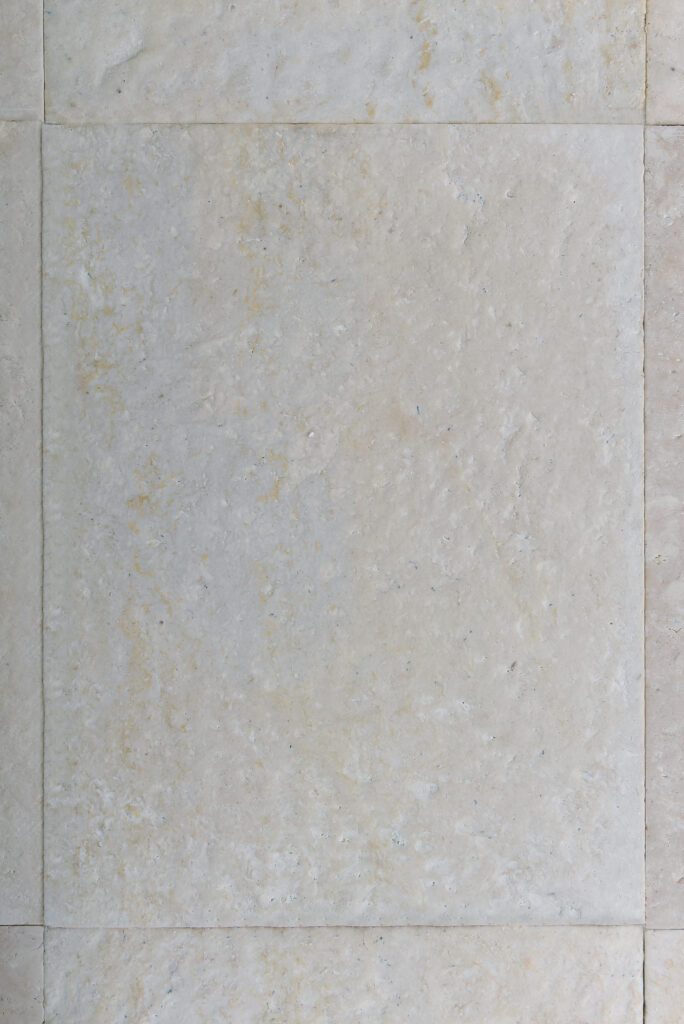
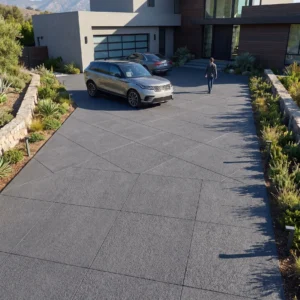
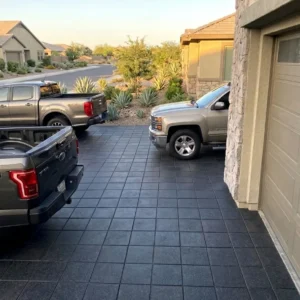
An honest supplier tells you where not to use the product. Limestone is a calcareous stone of moderate hardness, and there are situations on an Anguillian property where it will disappoint no matter how carefully it is specified. Heavy point loading is the first. The turning wheels of a loaded water truck, a concrete truck or a crane outrigger will find the weakest unit in an apron, and a large-format slab bedded over a flexible base is simply the wrong construction for that duty. Chemical exposure is the second, since pool acid, descalers and plant-room cleaning products etch a calcareous surface on contact.
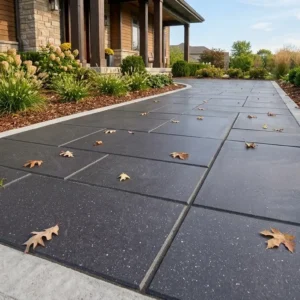
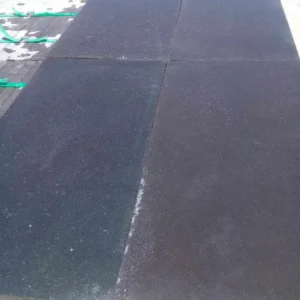
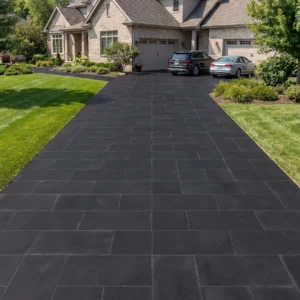
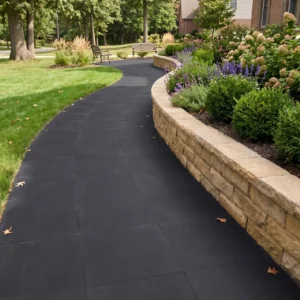
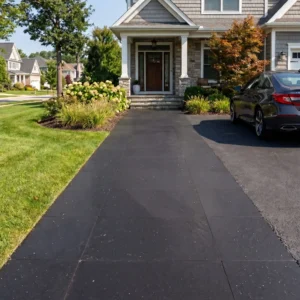
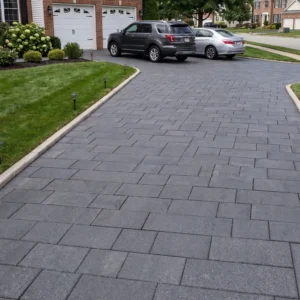
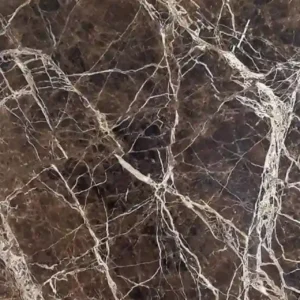
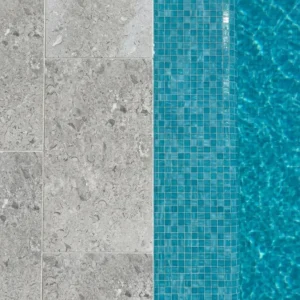
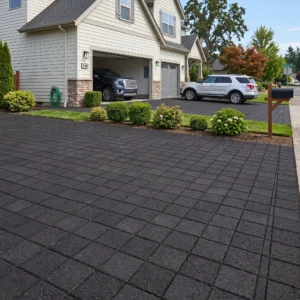
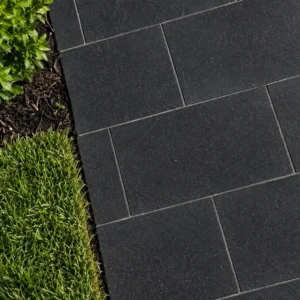
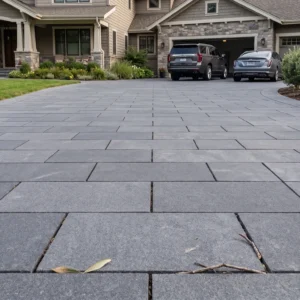
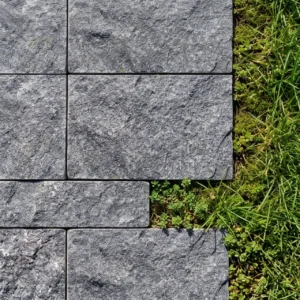
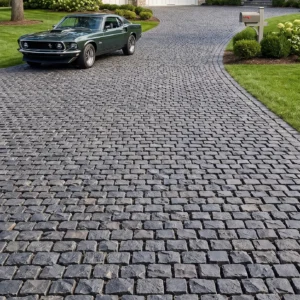
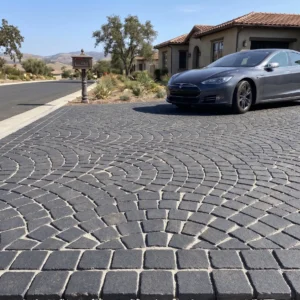
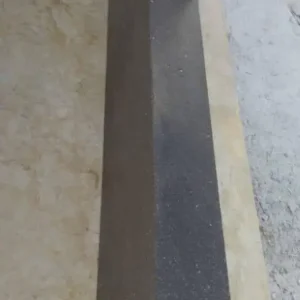
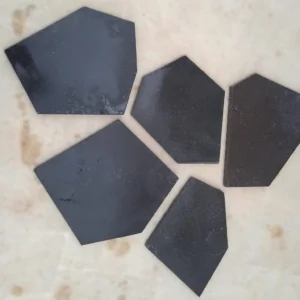
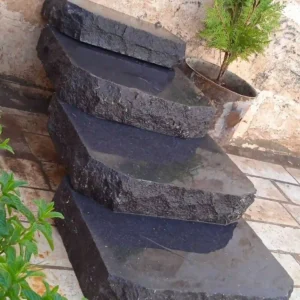
Where those conditions exist, change the material or change the unit. Small setts on a bound base spread turning shear far better than slabs do. For service yards, generator enclosures, mechanical areas and the outer apron where a delivery truck swings in, a harder and darker stone is usually the better specification, and our basalt paving range is the usual companion product on villa projects that use limestone across the terraces. Using two materials deliberately is a mark of competent specification rather than a sign of a compromised design.
- Not for heavy vehicle turning circles, crane pads or areas taking outrigger loads over a flexible base.
- Not for plant rooms, wash-down bays or anywhere acidic cleaning chemicals are in regular use.
- Not directly in a splash zone taking wave overtopping and standing salt water.
- Not as a thin gauge over an uncompacted or poorly drained base on thin island soils.
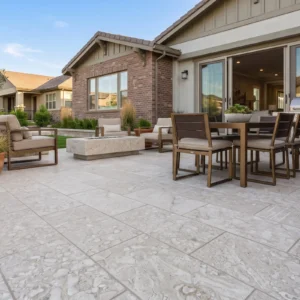
- Excellent for terraces, pool decks, garden paths, thresholds and pedestrian courtyards, which is most of a villa.
How Imported Paving Sits Alongside What Anguilla Already Builds With
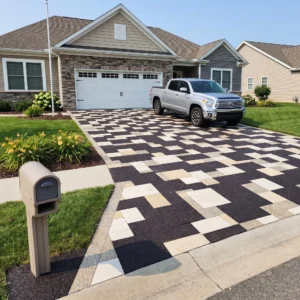
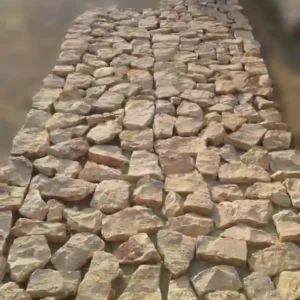
The default hard landscape on this island is poured concrete, brushed or broomed to a texture, sometimes with a terrazzo or tiled finish where the budget allows, alongside rubble stone walling that uses the material the ground gave up when the foundation was dug. There is real craft in it, and the historic dressed masonry in The Valley, with Wallblake House the best known example, carries genuine national pride. None of that is in competition with an imported pallet of paving, and copy that pretends otherwise has misread the market completely.
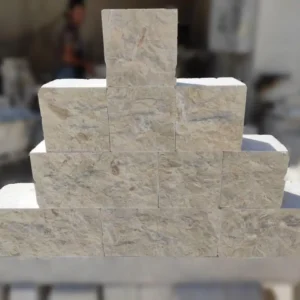
The distinction that matters is product category. Reef limestone in the ground is a building material; calibrated paving is a manufactured product made from stone, sawn to a gauge, sized to a tolerance, graded for appearance and produced in lots that can be matched again. It is the same reason construction aggregate moving by barge around the Leewards is not a substitute for architectural paving, even where both come from the same rock family. Specify imported stone where you need repeatability, tolerance and a matching second delivery, and specify local construction where local construction does the job better, which on many sites means the walls, the base and the retaining work.
- Calibrated thickness and square edges make laying faster and joint lines consistent.
- Graded lots mean a terrace laid next season still matches the one laid this season.
- Sawn units allow proper coping, step and threshold profiles instead of site improvisation.
- Imported paving complements local walling and concrete work rather than replacing it.
- Construction aggregate and architectural paving are different products whatever the rock type.
Bases, Bedding and Thin Soil Over Reef Rock
Anguillian soils are thin and poor and rock is often close to the surface, which cuts both ways. Excavation can meet hard reef limestone at shallow depth, so a design assuming a deep formation may need breaking out that nobody priced. On the other hand the sub-base is frequently better than the equivalent on a wet, clay-bound island, and drainage through the profile can be good until a sudden downpour arrives faster than the ground can absorb it. Base design here has to handle a violent short burst rather than a slow, steady soak.
Edge restraint is the detail that keeps everything else honest. Without proper restraint a flexible pavement creeps under thermal movement and traffic, joints open, and the wind-driven rain that arrives almost horizontally in a squall scours those joints out. Bound construction with mortared joints is often the right answer at aprons and around pool decks, while permeable, sand-jointed construction has its place in garden paving where run-off is being routed deliberately. Because the island harvests its own water, deciding where hard-surface run-off goes is part of the water strategy of the property rather than an afterthought. For an overview of how material and specification advice come together on a project here, see our Anguilla natural stone sourcing page.
- Survey for shallow rock before pricing excavation, because thin soils hide a hard formation.
- Design the base for an intense short burst rather than for continuous saturation.
- Install proper edge restraint on every flexible pavement without exception.
- Decide deliberately where run-off from paved areas is routed, then detail it on the drawing.
- Choose bound or unbound construction by duty rather than as a site-wide default.
A Specification Checklist for Anguillian Sites
Pull the technical decisions together before the order goes in. Confirm absorption and density for the actual lot. Confirm the finish by walking a wet sample rather than by looking at a photograph. Confirm thickness against the loading of each area instead of applying one gauge everywhere. Confirm the base and edge detail with whoever will lay it, and confirm the drainage strategy with whoever manages water on the property. None of that costs anything at design stage, and all of it is expensive to fix once a container has cleared and a crew is standing on site waiting.
Then plan for the storm. Hurricane season runs from July to November, and the reference events here are Luis in 1995, Lenny in 1999 and above all Irma, the Category 5 storm of 6 September 2017 that damaged homes, public buildings and roads across the island. Nothing built is hurricane-proof, and pretending otherwise is not a claim any credible supplier should make on this island. What good stone paving offers instead is repairability: individual units can be lifted, cleaned and relaid, bases can be reinstated locally, and a small reserve of matching stone held in store means a damaged terrace is made good in days rather than after a sailing.
Keep the reserve, keep the lot reference and keep the test data in the project file. Specification you can prove is worth more on this island than any adjective a supplier can offer.