

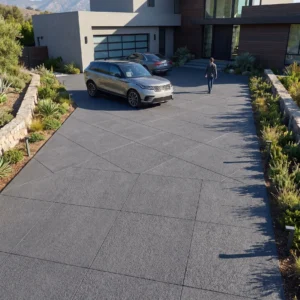
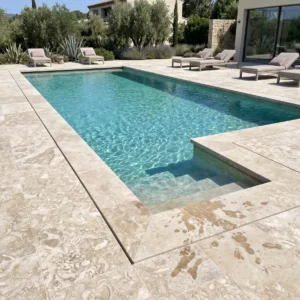
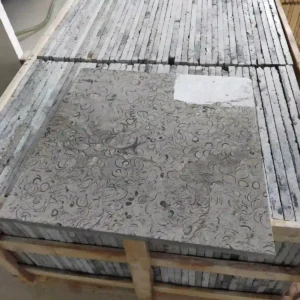
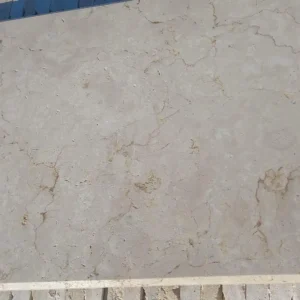
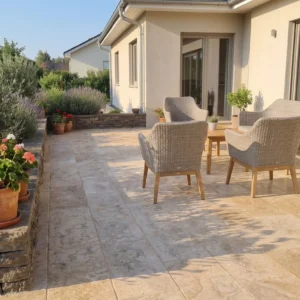

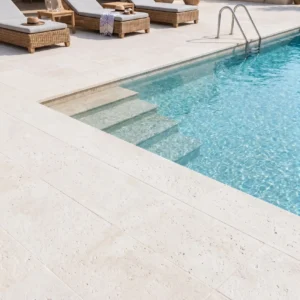


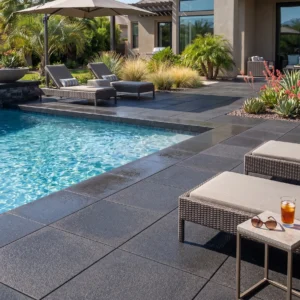
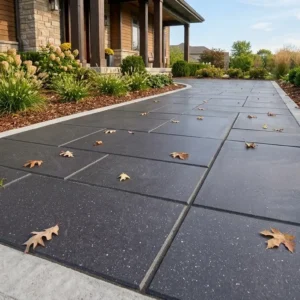
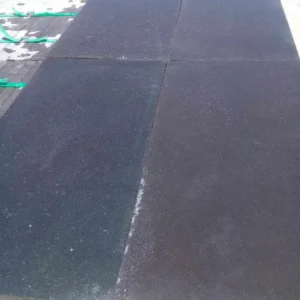
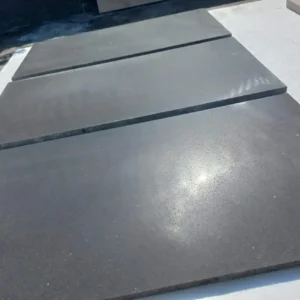
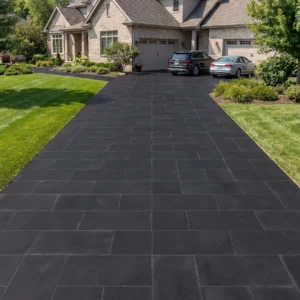
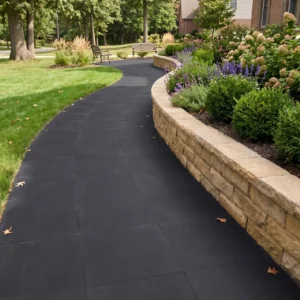












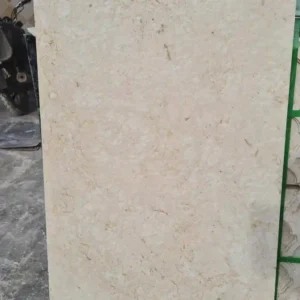
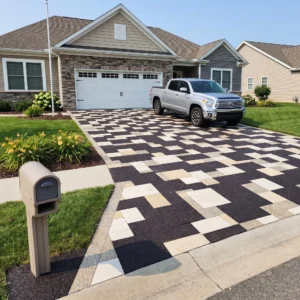
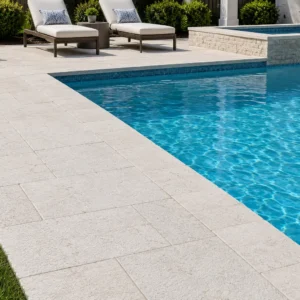
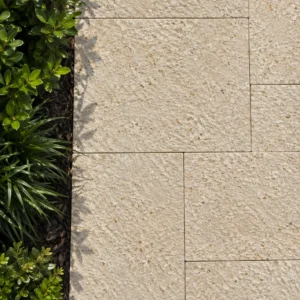







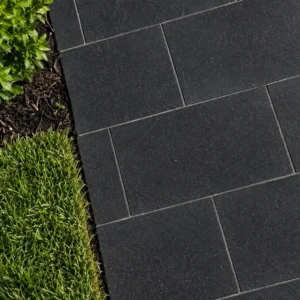
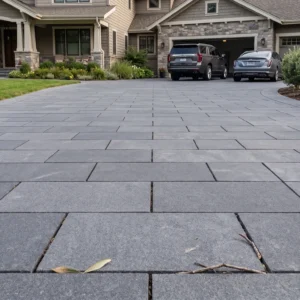
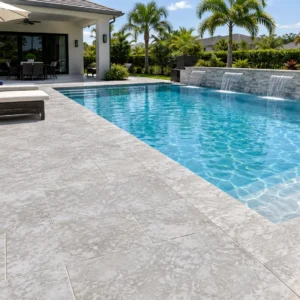

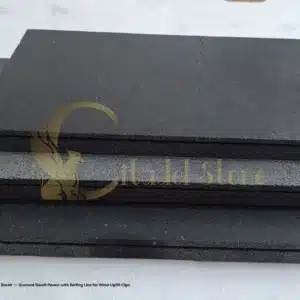
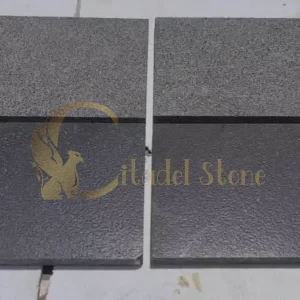
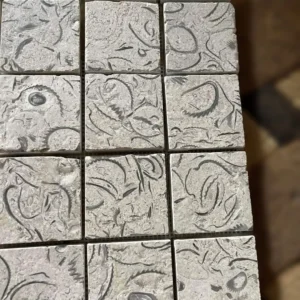
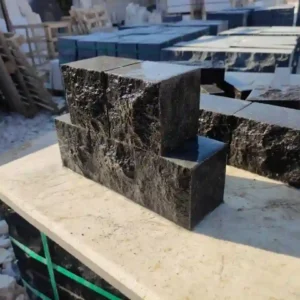
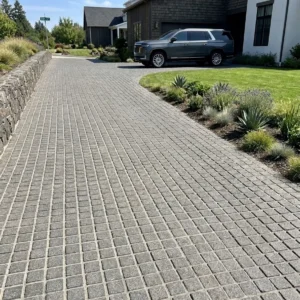

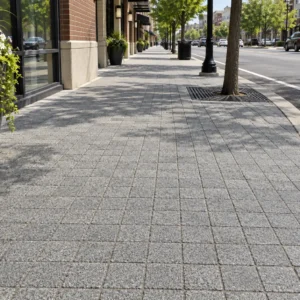
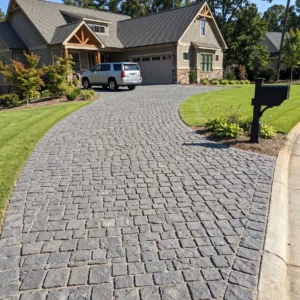

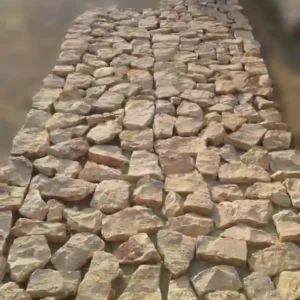
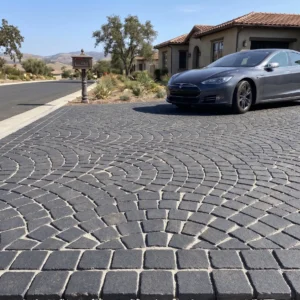
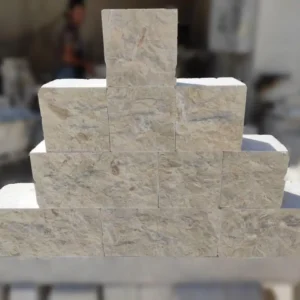







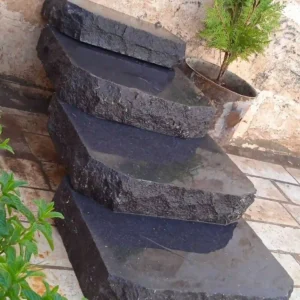
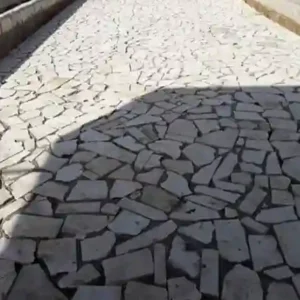
Paving specified for Grenada, Carriacou and Petite Martinique has to answer three questions before anyone discusses appearance: how it gets here, what it costs once the customs entry is assessed, and how it behaves on steep, wet, volcanic ground. A tri-island state with coastal rainfall near 1,500 mm a year and highland rainfall around two and a half times that does not forgive a surface chosen from a photograph. Citadel Stone supplies limestone, basalt and shellstone into this market as calibrated dimension stone, sawn to consistent thickness and delivered in mixed loads so that a single clearance can cover a villa or a resort terrace end to end.
What follows is the practical overview rather than a sales sheet. It covers the ocean route and what the Port of St George’s can physically handle, the sequence in which duty and VAT are applied, the formats and thicknesses that make sense once freight is charged by weight, the exposure differences between the Atlantic east coast and the sheltered Caribbean west, and the last-mile realities of getting stone onto a hillside site or across to a sister island. Where a figure could not be confirmed, it is named as something to verify with your broker rather than printed as a fact.
The Ocean Route Into The Port Of St George's
Grenada has direct ocean freight from Florida, which is a genuine advantage for a market of this size. Tropical Shipping operates from the Port of Palm Beach and keeps a presence in St George’s at the PWU Building on Port Highway in Tanteen, with agent operations on the Carenage. King Ocean runs an Eastern Caribbean service into the same port. Whether a specific sailing runs direct or relays through a regional hub varies by string and by season, so ask the line to confirm the routing on your booking instead of assuming a fixed transit time.
The port is operated by the Grenada Ports Authority, which also holds jurisdiction over Prickly Bay, St David’s Harbour and Grenville on the mainland and Tyrrel Bay on Carriacou. For dense cargo the relevant question is lifting capacity, and St George’s is properly equipped for it.
- The main quay runs 335 m long with 8.3 to 9.8 m alongside and a quay height of 2.1 to 2.7 m; a separate 76 m schooner berth carries 5.5 m.
- Four transit sheds total roughly 49,200 sq ft, with 25 reefer plug-in points serving other traffic sharing the yard.
- Handling equipment includes two reach stackers rated at 41 t and 45 t, a 35 t top lifter, fourteen forklifts from 1 t to 6 t, and five terminal tractors.
- Container yard capacity is over 1,500 TEU and the port turns over in the region of 100,000 TEU a year.
- The Melville Street cruise terminal works two 375 m berths at 10.3 m and 10.5 m for vessels up to 325 m and 10.0 m draft, so cruise days shape traffic on the waterfront and are worth checking before booking a collection.
One detail saves east-coast projects a wasted phone call. The Port of Grenville is not a container alternative: it has a single pier with only 3.0 m alongside at the head, vessels drawing more than that anchor within the outer reefs, and pilotage is compulsory for anything over 150 grt. It serves fishing vessels and small cargo craft. A build at Grenville, Bathway or Levera still clears at St George’s and trucks across the island, and that road leg belongs in the schedule and the budget from the first estimate rather than appearing as a surprise line at delivery.
How Duty And VAT Are Assessed On Imported Stone
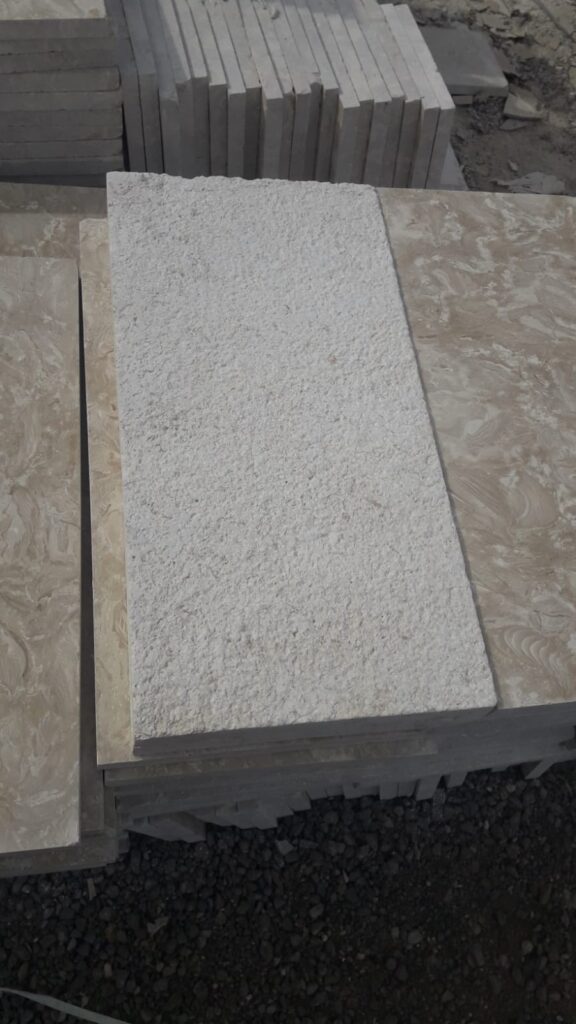
Grenada is a full member of CARICOM, so extra-regional stone is dutiable under the Common External Tariff, which runs from 0% to 45% depending on the ten-digit tariff line and is assessed on the CIF value. Goods of CARICOM origin travel duty free against a Certificate of Origin; stone arriving from outside the region does not, and the exact rate belongs to your classification rather than to any general rule of thumb. Agree the tariff line with your broker before the container sails, not while it sits on the quay accruing storage.
The Comptroller of Customs administers several charges by name, and the order in which they stack matters more than any single rate.
- Duty is calculated as CIF multiplied by the tariff rate applicable to your line.
- VAT is then charged at the standard rate of 15% on CIF plus duty, under the Value Added Tax Act No. 23 of 2009, administered by the Inland Revenue Division.
- The reduced 10% VAT rate attaches to hotel accommodation, tourism-related services and dive operations, not to imported building materials, so never model a resort budget as though it applied to the stone.
- A Customs Service Charge also applies to imported merchandise; figures circulate in freight commentary, but confirm the current rate with Grenada Customs and Excise or your broker before it goes anywhere near a budget.
- An Environmental Levy exists and applies to specified categories of goods; whether it touches a cut-stone tariff line is a question for your broker rather than an assumption in either direction.
Entries are prepared and lodged electronically through ASYCUDA World on the customs declaration form, and the declarant self-assesses. A broker is not strictly mandatory: an importer registered as a declarant can lodge directly, and declarations can be stored and assessed at any time of day. In practice a first shipment from overseas moves more smoothly through a licensed customs broker, and the importer stays responsible for the accuracy of the entry either way. Domestic construction is usually quoted in East Caribbean dollars while resort and villa contracts often run in US dollars, so agree which currency the landed-cost model uses before comparing bids. For a Grenadian business, VAT registration begins at EC$300,000 of annual taxable supplies.
Formats And Thicknesses Once Freight Is Charged By Weight
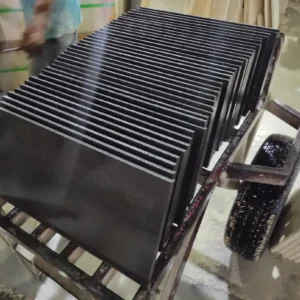
Stone is dense cargo, so a container reaches its weight limit long before it runs out of space. That single fact should drive format selection. Thickness is the biggest lever available: every extra millimeter specified multiplies across the whole area and lands in the freight cost and the duty base together, because both move with weight and value. The discipline is to specify the thickness the application genuinely needs, then spend the saving on finish quality, jointing and the crew laying it.
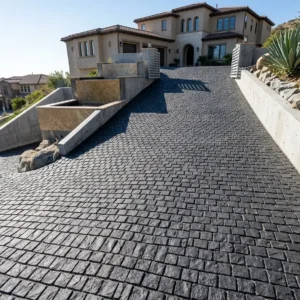
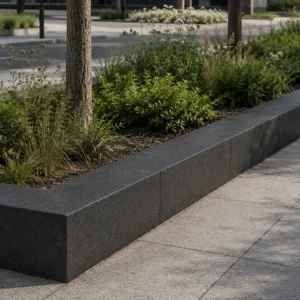
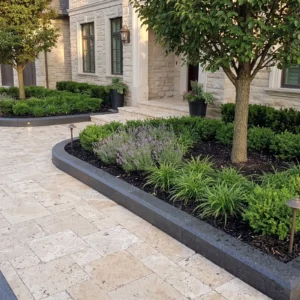
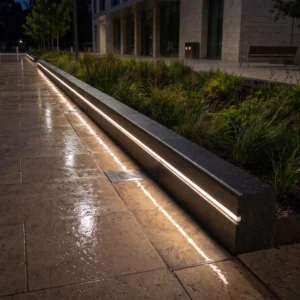
A sensible Grenadian load is mixed rather than uniform. One booking can carry interior tiles, terrace paving, pool coping, setts for the driveway and curbstones for the entrance, all cleared on one entry and delivered on one truck movement to a site that may not be easy to reach twice.
- Interior floor tiles are usually the thinnest element on the job and the easiest to over-order; measure room by room and add cutting waste rather than rounding up by eye.
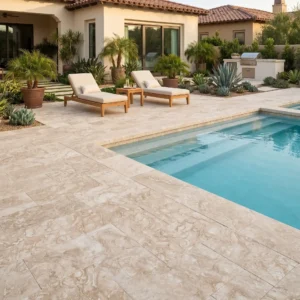
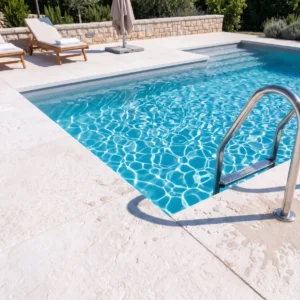
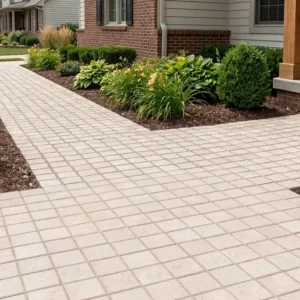
- Pedestrian terraces, pool surrounds and garden walkways take a mid-range paving thickness laid on a properly constructed base.
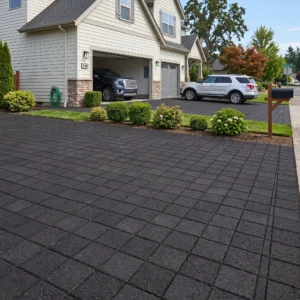
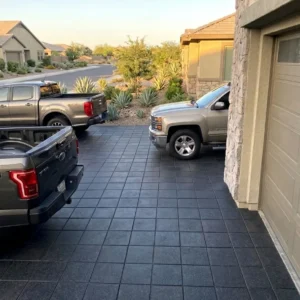
- Anywhere a vehicle turns, reverses or parks needs a thicker unit or a small-format sett, because point loads concentrate along the wheel path.
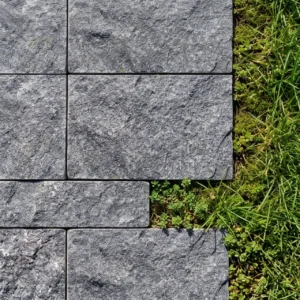
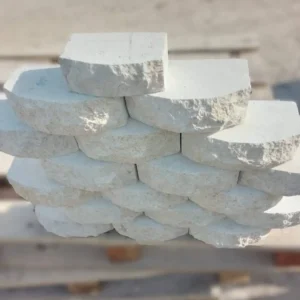
- Setts and curbstones weigh far more per covered square meter than slabs do, so put them on the packing list early and let the loading plan work around them.
- Calibrated units cost more at the quarry gate and less on site, because consistent thickness lets a setter work to a screed instead of packing every unit individually.
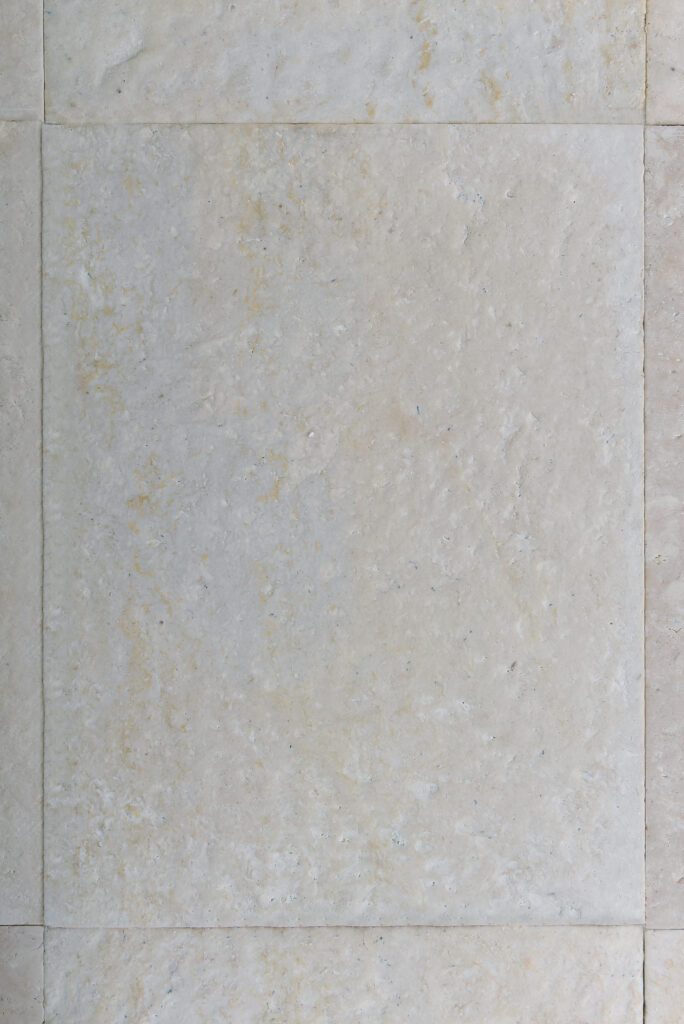
Ask for the packing list before the container is stuffed. Knowing which pallet carries which format lets the site team stage material in laying sequence rather than double-handling it on a slope, and it tells the haulier what the axle loads look like on the way up the hill. You can review the natural stone paving range and mark the formats worth quoting against your drawings before anything is booked.
Exposure Zones: East Coast, West Coast And The Highlands
Grenada is small enough to drive across in an afternoon and varied enough that one specification will not serve the whole island. Rainfall on the northern and southern coastal belts runs at roughly 1,500 mm a year, while the central highlands around Grand Etang receive something closer to 3,800 mm. The dry season runs approximately January to May and the wet season June to December, with the heaviest monthly totals falling between June and November. A terrace detail that drains perfectly at Grand Anse can be badly under-drained at elevation.
- The Atlantic east, taking in Grenville, Levera, Bathway and the La Sagesse side of St David’s, receives onshore wind, salt-laden air and surf spray, so fixings, restraints and jointing all need choosing for that.
- The sheltered Caribbean west, from the Carenage through Grand Anse, Morne Rouge, Point Salines, True Blue, Lance aux Epines and Port Louis Marina, has calmer water and a gentler salt load but far more foot traffic and pool splash.
- The interior is wet, shaded and slow to dry, which makes biological growth and drainage capacity the governing issues rather than salt.
- Carriacou and Petite Martinique are markedly drier than the mainland and can face severe drought in the dry season, so a highland drainage detail should not simply be copied across, and planting or irrigation assumptions do not transfer either.
- Storm season is a design input on every coast: specify edge restraint, jointing and drainage that will still be doing their job after a heavy event, not only on a calm afternoon.
Ground movement belongs in the same conversation, handled calmly. Kick ’em Jenny, the submarine volcano roughly 8 km north of the island, is monitored continuously by the University of the West Indies, which maintains four working seismic stations in northern Grenada, and a 1.5 km exclusion zone is kept around the summit at sea in cooperation with the Government of Grenada. For a paving designer this is simply context. Seismic detailing is normal practice in Grenada, and hardscape details that accommodate small movements, such as flexible jointing, honest movement joints and edge restraints that are genuinely restrained, are the sensible default rather than an extra.
Site Access, Last-Mile Delivery And The Sister Isles
The port can lift and stack without difficulty; the constraint is usually the last two kilometers. Grenadian building sites are frequently on slopes, up narrow private access, or behind a gate sized for a car rather than a delivery truck. Confirm access with the haulier before booking the container, not after it lands, and be honest about gradient, turning space and overhead lines. Where access is genuinely tight, split the load into smaller drops and accept the extra movements, because a pallet dropped in the wrong place on a hillside gets handled three times before it is laid.
- Stage pallets on firm, level ground clear of surface runoff, and keep them banded and covered until the setter is ready for them.
- Plan storage around the wet season: soaked packing timber and stone stacked in a watercourse ruin the first day of laying.
- Keep the packing list and the laying sequence in the same hand, so the first pallet opened serves the first area laid.
- Agree who unloads and price it. Handling dense stone on site is a different job from delivering light building goods, and it should never be an assumption.
Carriacou and Petite Martinique are separate islands with separate freight, and treating them as an extension of the mainland is the fastest way to strand a delivery. Tyrrel Bay is Carriacou’s only port, while the ferry dock sits at Hillsborough, about fifteen minutes by taxi from Tyrrel Bay and the Lauriston airstrip. The Osprey is a fast power catamaran carrying passengers and light cargo only, running two round trips each Monday, Wednesday and Friday. Vehicles and heavy cargo travel on vessels such as the Dolly C and the Tyrrel Bay Express, which means banded pallets of stone must be booked onto a cargo boat rather than the Osprey. Petite Martinique adds a further leg again, and that scheduling should be agreed before the container ever leaves Florida.
Where Imported Paving Sits Beside Grenadian Basalt
Grenada produces its own basalt. The principal quarry is at Telescope in the parish of St Andrew, worked by the state-owned Gravel, Concrete and Emulsion Corporation, with a smaller gravel operation at Mon Rush in St George’s. The rock is a high-quality, durable basalt used for high-strength concrete and asphalt road surfaces, produced at home and to a standard that has carried the island’s infrastructure for decades. It is the structural bone of Grenadian roads and buildings.
Imported paving is not a competitor to that, and any supplier who suggests otherwise has not looked at a section drawing. Crushed aggregate and dimension stone are different product classes doing different jobs in the same build-up. What Citadel supplies is a calibrated wearing surface, sawn and finished to a consistent thickness so that it can be laid to a level, and it sits on top of a base course. On a Grenadian site that base course is very likely to be Telescope material. The honest description of an imported stone terrace here is a Grenadian foundation carrying an imported finish.
That framing also settles the practical question of where the money goes. Local aggregate, local concrete and local labor build the platform; the imported component is the visible surface, the coping, the setts and the thresholds. It lets a specifier stay genuinely local in the substructure while still getting the format consistency and finish range that a resort operator or a villa client is asking for, and it keeps each part of the supply chain doing what it does best.
Planning Consents, Heritage Ground And Starting An Order
Development control rests on the Physical Planning and Development Control Act No. 25 of 2002, Cap. 241A, which sets the framework for land use, subdivision and the protection of natural and cultural heritage. A further Act, No. 23 of 2016, makes provision for orderly and progressive development and the regulation of building construction. Published sources are not consistent about exactly how the two sit together, so confirm with the Physical Planning Unit which applies to your file rather than relying on a summary. S.R.O. 42 of 2016 adopted a building code, and Grenada is one of four territories covered by the OECS Building Code alongside St Vincent and the Grenadines, St Lucia and Montserrat. The Land Development and Control Authority is the development-control body, with the Ministry of Infrastructure Development and the Physical Planning Unit handling enforcement.
Heritage deserves its own line. The St George Historic District has been on Grenada’s UNESCO Tentative List since 5 August 2004. That is the Tentative List rather than full inscription, and getting the distinction right matters in any conversation with an authority. The district covers both the planned late-eighteenth-century grid with its central square and Georgian architecture adapted to Caribbean conditions, and the unplanned nineteenth-century quarter of wooden vernacular buildings. Fort George and the restored Fort Frederick are the landmarks. The Physical Planning Department has been developing a listing and categorization system toward a Conservation Zone for St George’s, so paving in that core is a discussion before it is a purchase order.
Starting an order is deliberately unglamorous. Send drawings or a measured area, say which coast the site faces and roughly what elevation it sits at, and take a small sample so the stone can be seen wet, in Grenadian light, next to the render color and the joinery. Samples are small pieces rather than pallets, and they settle more arguments than any photograph. From there a specification and a landed quote can be built around your tariff line and your delivery point; ask for delivered pricing once the areas are settled. Get the route, the tariff line and the coast right, and the stone itself becomes the easy part of a Grenadian project.