


















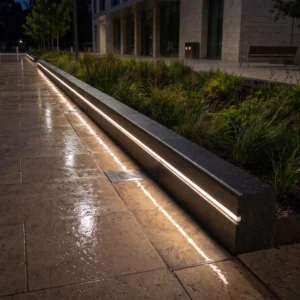
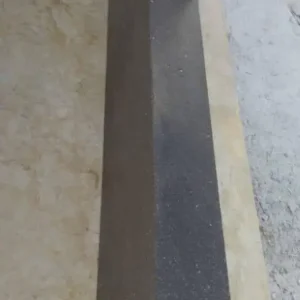
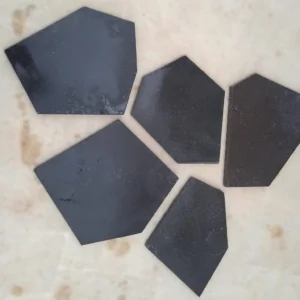



A Turks and Caicos villa does not use its floor the way a mainland house does. The sliders spend most of the year open, the great room and the covered gallery function as one space, and the traffic across the threshold is barefoot, wet and carrying beach sand. Air conditioning cycles on one side of that opening and does not on the other, so the same floor plane sits at two different temperatures and two different humidity levels within a few feet of itself. Any interior material chosen without accounting for that will tell you about it within a season.
This page is about the inside of the building and the line where inside becomes outside. It covers which finishes hold up under wet feet and abrasive sand, how to size formats for the room proportions that island architecture actually produces, what the substrate and the salt air demand of trims and fixings, how to carry a single stone through the threshold without it looking like two different floors, and how to clean and seal limestone in a climate where the enemies are sunscreen, salt and sand rather than mud and frost. It never freezes in the Turks and Caicos Islands, so none of the usual cold-climate flooring advice applies. What does apply is a set of island-specific details that are easy to get right at specification stage and expensive to fix afterward.
How an Island Villa Actually Uses Its Floor
Start with the traffic. In a Provo villa the busiest square yards of floor are the ones between the pool, the gallery and the kitchen, and they see the same feet twenty times a day. Those feet arrive wet from the pool or salty from the beach, and they bring sand with them. Sand is the single most damaging thing on an island interior floor, because it is loose angular grit trapped underfoot, and it turns every footstep into a light grinding action.
Then consider comfort. Stone is the coolest floor surface available for a house that stays open, it does not off-gas in heat, it does not swell in humidity, and it does not become a termite question the way timber flooring can. Termites are common across the Islands, which is why pressure-treated lumber is standard construction practice, and it is one reason a stone floor on a poured slab is the low-maintenance choice for a house that may sit empty between owner visits.
- Map the sand path from every beach or pool entry and treat those runs as the highest-wear zones in the house.
- Expect wet feet as the normal condition on kitchen, bathroom and gallery transitions, not the exception.
- Plan for the house being closed and hot for weeks at a time between visits, then cooled hard on arrival.
- Keep the floor plane continuous where you can, because level changes collect sand and become trip points for barefoot traffic.
- Choose a floor that a caretaker can maintain with a mop and a neutral cleaner rather than a specialist product flown in.
There is a rental dimension too. Many villas on Providenciales are also rented out for part of the year, which means guests rather than owners are walking the floor, and guests do not take their shoes off, rinse their feet or think about what a wet towel does when it sits in one place all afternoon. A floor specified for a family home and a floor specified for a property that turns over weekly are not quite the same brief, and the difference shows up in finish choice more than anywhere else.
Finishes for Wet Feet and Open Doors
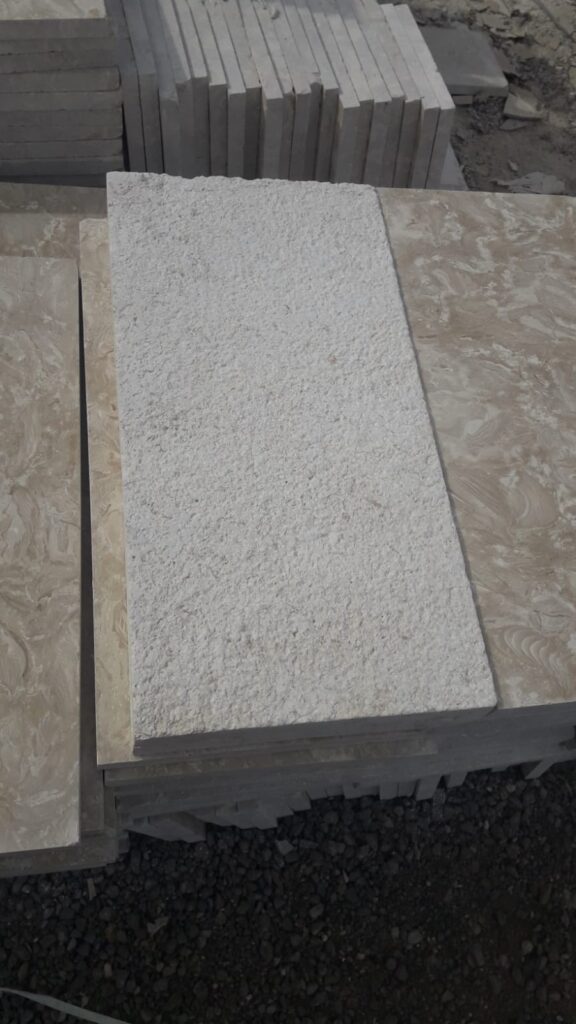
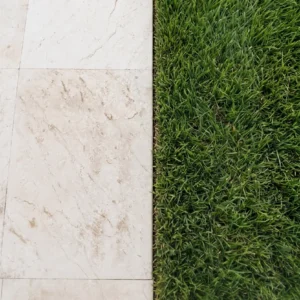
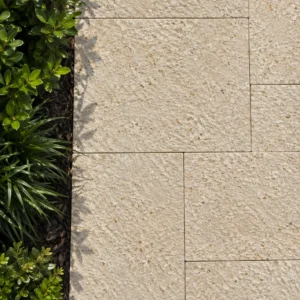
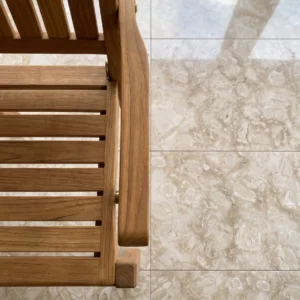
Finish does more work than color in this climate. A honed surface is the default for island interiors: it reads soft and calm, it hides the fine scratching that sand causes far better than a polish does, and it gives usable traction when a wet foot lands on it. A polished limestone floor can be beautiful in a formal dining room set well back from the doors, but in any room within reach of the pool or the beach path, sand will dull the polish unevenly and the repair is a whole-floor job rather than a spot job.
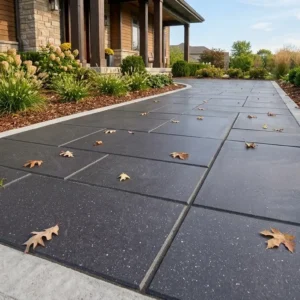
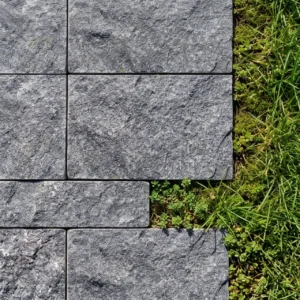
At the threshold itself, and through wet rooms, step the texture up. A light brushed or lightly textured face gives the extra grip that bare wet feet need without introducing a surface so open that sand lodges in it and grit builds up in the texture. Heavily textured faces belong outside. Inside they trap the very abrasive you are trying to keep moving toward the door.
- Honed for main living areas, bedrooms and corridors, where comfort and easy cleaning matter most.
- Lightly brushed for thresholds, shower floors, outdoor kitchens and any run that stays wet.
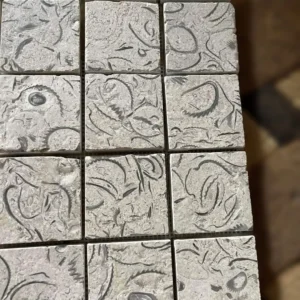
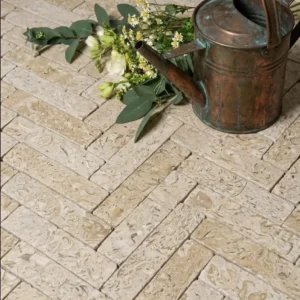
- Tumbled or softened edges where a relaxed, older look suits the architecture and hides minor chipping.
- Polished only in dry, protected rooms well away from the sand path, and only where a caretaker can keep it clean.
- Match the sheen across a floor before you match it across rooms, because an uneven sheen in one plane is far more visible than a change between spaces.
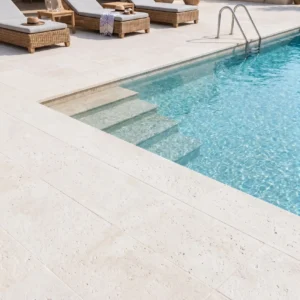
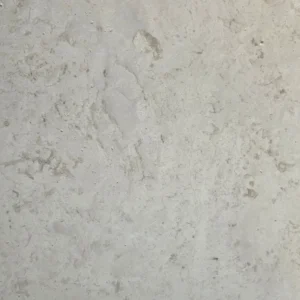
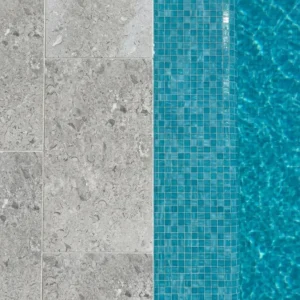
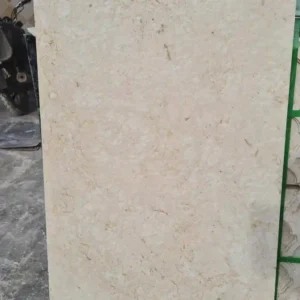
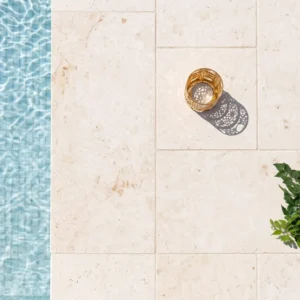
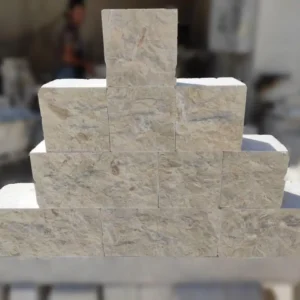
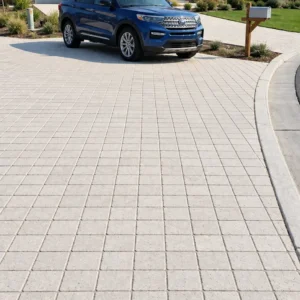
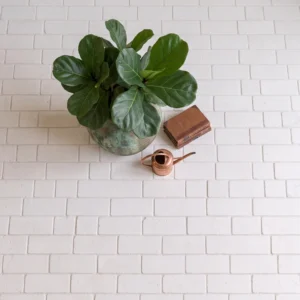
Wet slip performance should be checked on a sample with the sealer you intend to use actually applied, because a sealer changes the surface. Ask for the sample early, wet it, and stand on it barefoot. Design teams working through a full white limestone tile selection for a villa usually settle the finish question first and the format question second.
Formats That Suit Island Room Proportions
Island architecture tends to produce long, wide, low rooms with a full glazed wall on the seaward side. Those proportions want larger modules and fewer joints, because a busy grid fights the horizon line that the whole building was designed around. Larger formats also mean less grout, and less grout means less of the surface that discolors first in a house that gets sand and sunscreen walked into it.
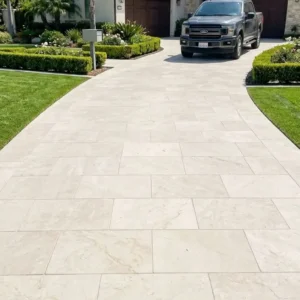
- Great rooms and open galleries: large modules such as twenty-four by twenty-four or twenty-four by thirty-six inches, laid with the long dimension running toward the view.
- Corridors and connecting spaces: rectangular formats such as twelve by twenty-four inches, which give a sense of direction without dominating.
- Bathrooms and shower floors: smaller units with more joints, because the joints supply grip and let the floor fall properly to the drain.
- Outdoor kitchens and covered terraces: match the interior module but change the face texture so the eye reads one floor and the foot reads two.
- Stair treads and thresholds: specify these as their own pieces with a finished edge rather than cutting them from field tile at the last minute.
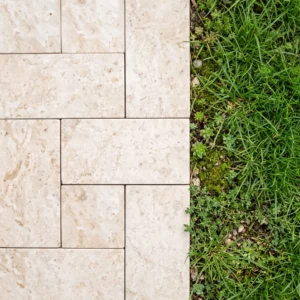
Rectified edges give tight joints and a calm modern floor. Softened or tumbled edges give a wider joint and a more forgiving installation, which can be the right call on a slab that is not perfectly flat. Whichever you choose, keep the joint width consistent across the whole ground plane. Nothing gives away a rushed island installation faster than a joint that narrows in the corridor and widens in the room.
Substrate, Movement and the Metal Problem
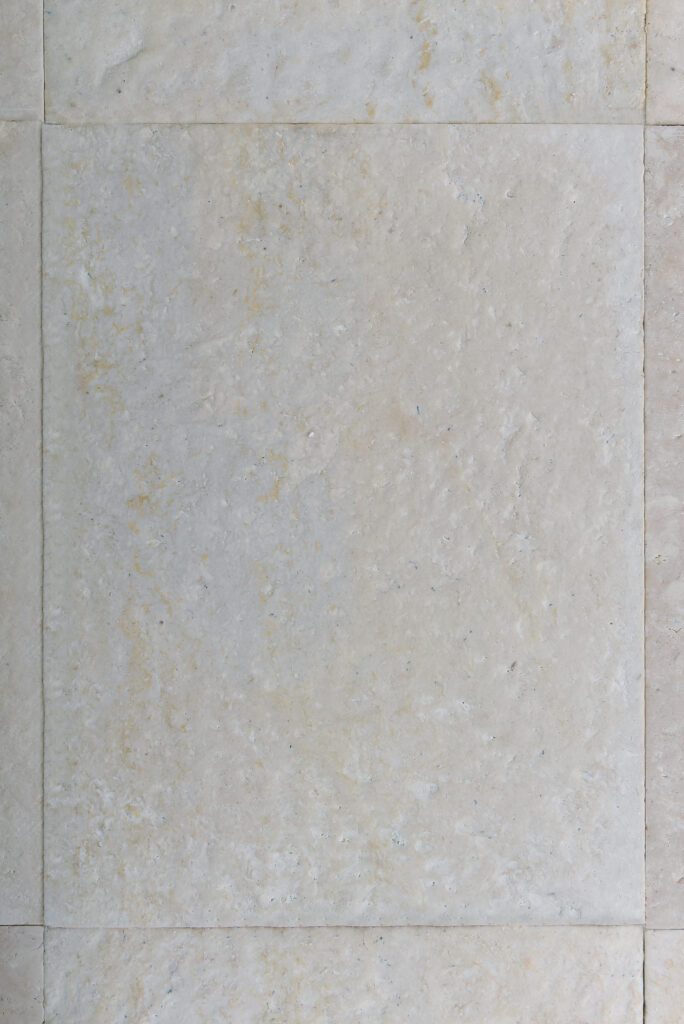
Reinforced poured concrete is recommended as the most durable structure on these islands, and concrete block is the everyday wall material, largely imported. For a tile installer, that is good news: a properly cured, flat poured slab is the ideal base for a stone floor and it is what most quality villa construction here already provides. Check flatness before ordering large formats, because a large module is unforgiving of a slab that dips, and lippage on a barefoot floor is not a cosmetic complaint, it is a stubbed toe.
Where a floor sits over a timber structure, treat it as a different job. Use an uncoupling membrane, confirm the deflection limit, and remember that termites are a live consideration in any timber element on these islands, so pressure-treated material and proper detailing are not optional extras.
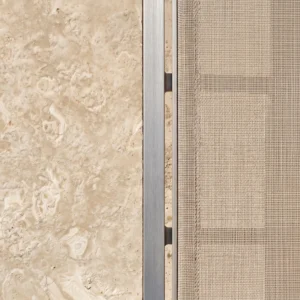
The metal question is the one that catches visiting specifiers. Salt-laden air corrodes standard metals rapidly here. Stainless steel fasteners are advised across island construction, cast zinc alloys are to be avoided, and stainless railings are popular precisely because of corrosion resistance. That advice extends to everything in and around your floor: transition profiles, shower drains, threshold strips, door tracks and any bracket set into the stone. A plated trim will bleed rust into a pale limestone joint within a season, and the stain is in the stone, not on it.
Carrying the Same Stone Through the Threshold
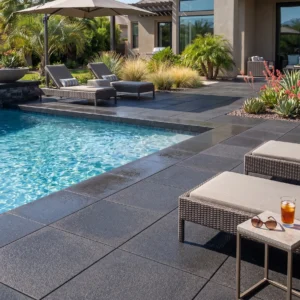
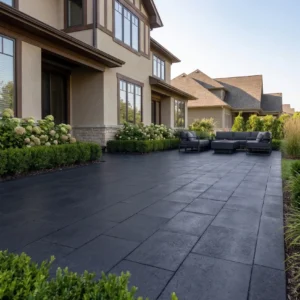
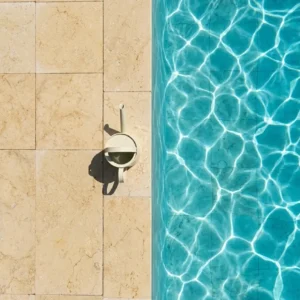
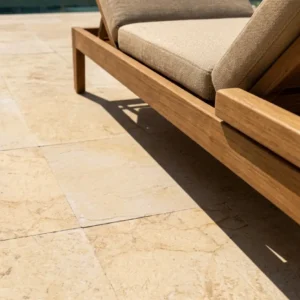
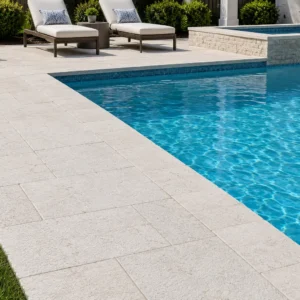
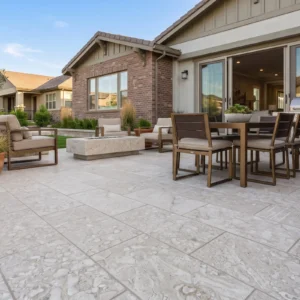
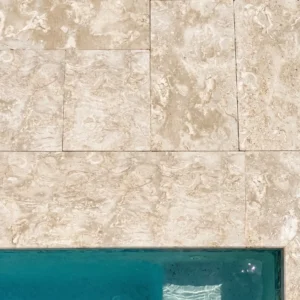
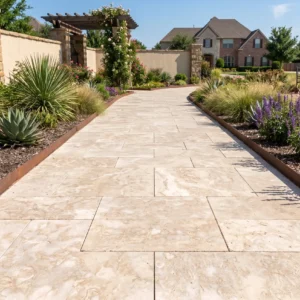
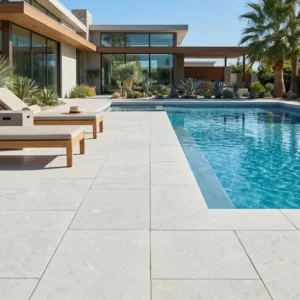
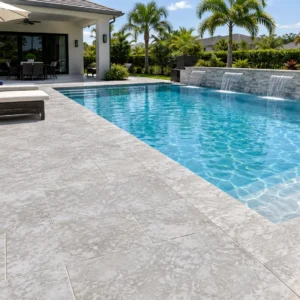
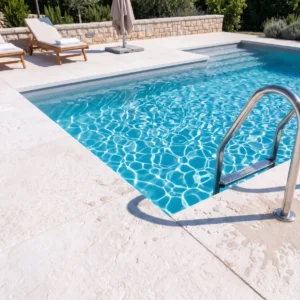
The most valuable thing a single stone selection can do in a Turks and Caicos house is make the interior and the terrace read as one continuous plane. It visually pushes the room out toward the water, which is the whole reason the building is oriented the way it is. The technique is simple: one stone, one shade run, two finishes and two thicknesses. A thinner honed tile inside, a thicker and more textured paver outside, cut from the same material so the color and the veining agree.
Detail the threshold properly or the effect collapses. Rain in the Islands arrives in heavy concentrated bursts rather than as steady drizzle, so a flush threshold needs a linear drain immediately outside it with capacity sized for the burst, not the average. Set the outdoor level slightly below the interior, run the fall away from the opening, and keep the drain accessible because sand will find it.
- Same stone, two finishes: honed inside, brushed or lightly textured outside, so grip changes but appearance does not.
- Linear drain at the opening with a removable grate, sized for burst rainfall on flat ground.
- A movement joint at the threshold line, not a rigid grout joint carried straight through the opening.
- Shade the first few feet of the outdoor run if you can, because the temperature difference across a sunlit threshold is what bare feet actually notice.
- Order interior and exterior material together from one production run so the shade match is real rather than approximate.
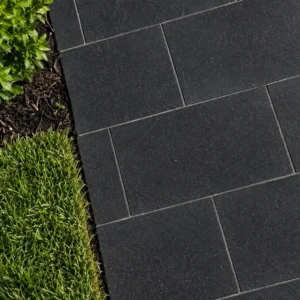
Specifiers comparing surface options across a project often review the available honed and brushed finish options side by side on the same stone before committing to the inside and outside pairing.
Cleaning and Sealing in Salt, Sand and Sunscreen
Limestone is calcareous, which means acid attacks it. That single fact should govern the whole cleaning regime. Vinegar, descalers, acidic bathroom cleaners and many general-purpose products will etch the surface, leaving dull patches that no amount of mopping will restore. Give the housekeeper or caretaker a neutral cleaner and a clear written instruction, and put the same instruction in the villa manual, because rental turnover staff will otherwise use whatever is under the sink.
Seal with a breathable impregnating sealer rather than a surface coating. A coating traps moisture in a climate where humidity and salt both want to move through the stone, and it will eventually cloud or peel. An impregnator sits inside the pore structure, slows staining, and lets the stone breathe. Re-application intervals depend on traffic and product, so keep a note of the date and the product used.
- The real stains here are sunscreen, tanning oil and suntan lotion transferred from skin and towels, not mud or leaf litter.
- Sand is abrasive, so sweep or dust mop before wet cleaning rather than pushing grit around with a mop.
- Put a proper sand trap and a coarse mat at every beach and pool entry, and rinse feet outside rather than inside.
- Rinse salt off thresholds and any floor within reach of spray, because 43 inches of rain a year falls in bursts and never touches a covered gallery.
- Deal with spills quickly on a floor that may sit unattended between visits, and brief the caretaker to check after every rental turnover.
Buying Interior Tile for a TCI Project
The ordering discipline for tiles is different from paving because shade matching matters more indoors, where the eye reads a continuous plane in raking light from a glazed wall. Order the whole floor in one shipment from one production run. Reordering later does not simply mean a delay, it means a new sailing, a new clearance and a genuine risk of a visible shade step in the middle of a room.
Then over-order deliberately and keep the surplus. Attic stock is worth more in the Turks and Caicos Islands than almost anywhere else, because a replacement box for a cracked tile is not a trip to a store, it is a boat trip, a broker and a wait. Store the spares flat, dry, banded and labeled with the room and the production run, somewhere a future caretaker will actually find them.
On cost, remember what the Islands do and do not charge. There is no VAT and no general sales tax on the material itself, but duty and a processing fee apply at import, assessed on the value including freight and insurance. Building materials attract a reduced duty rate, though published figures conflict, so confirm the rate and the correct classification with the TCI Customs Tariff Finder rather than assuming. Ask us for small hand samples first, look at them in the actual room at the hour you care about most, and only then commit the order. An interior floor chosen from a photograph is a gamble, and on an island the correction costs a sailing.