





This is the technical page. It is not about shipping schedules or customs entries, which are covered on our broader paving page for the country, and it is not about interiors, which sit on the tiles page. It is about what limestone actually does when it is laid outdoors on a Leeward island: how much water it takes up, how heavy it is, how hot it gets under a Caribbean sun, how much grip it keeps when a swimmer walks off a pool step onto it, and where its performance runs out. A contractor who has laid stone in a temperate market will find that half of what he knows transfers directly and half of it does not, and the half that does not is mostly about frost, which is irrelevant here, and salt, which is not.
Everything below is written for the specific exposures of Antigua and Barbuda: an island pair with no permanent streams or rivers, extremely high water stress, cisterns under a great many properties, rainfall that arrives in short violent bursts, salt aerosol carried in on a near-constant wind, and a hurricane season that has already proved what it can do. Read it alongside your own site: an inland courtyard in the Central Plain and an exposed north-coast terrace are two different projects, and the same stone can be exactly right on one and a compromise on the other.
Absorption and Density: What the Numbers Actually Do Here
Two figures on a test report govern almost everything about outdoor limestone performance: water absorption by weight, and bulk density. Absorption tells you how much of the stone’s volume is open pore, and therefore how much water, and anything dissolved in that water, can get inside. Density is the counterweight; a dense, tightly cemented limestone with low porosity has less internal space for water to occupy, less internal surface for salts to crystallize against, and more mass resisting impact and abrasion.
In a northern market, low absorption is sold as frost protection, because water inside a pore expands when it freezes. That argument has no application in Antigua and Barbuda and we will not make it. Low absorption still matters enormously here, but for four completely different reasons, and it is worth being explicit about each of them because they drive different details.
- Salt. Airborne sea salt lands on the surface, dissolves in rain or dew, migrates into open pore, and crystallizes as the stone dries. A denser stone with fewer, finer pores gives that cycle less to work with.
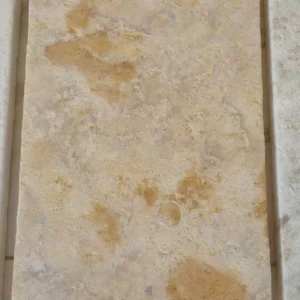
- Staining. A porous pale stone parked under a flamboyant tree, beside a rusting fixing or under a barbecue absorbs what lands on it. Lower absorption buys time to clean before a mark becomes permanent.
- Drying and growth. Stone that holds water stays damp longer in shaded, humid positions, and damp stays green. A denser surface sheds and dries faster.
- Weight and freight. Density cuts both ways. A heavier stone costs more to ship and is taxed on a CIF basis, so density has to be justified by exposure rather than assumed.
Ask for the actual test data for the batch you are buying rather than a category average. Limestone is not one material; the range between a soft, high-absorption stone and a tight, low-absorption one is wide enough that they behave like different products on the same terrace.
Salt Crystallization Is the Weathering Engine, Not Frost
If you want to understand what will eventually age paving on an exposed Antiguan coast, watch what happens over a single dry week. Sea spray and salt-laden mist land on the surface. A light shower or overnight dew dissolves that salt and carries it a short distance into the stone. Then the sun comes out, the water evaporates from the surface first, and the dissolved salt travels back toward the face and crystallizes just below or at the surface. Crystals occupy more space than the solution did. Repeat that cycle a few thousand times and the outermost fraction of a millimeter begins to shed as fine powder or small flakes.
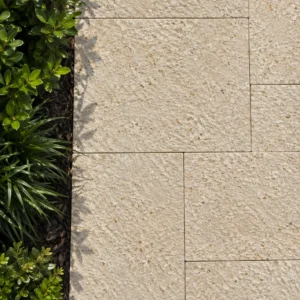
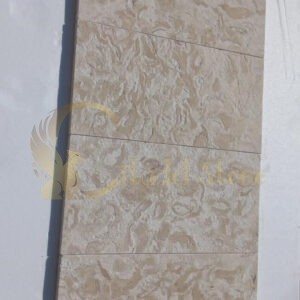
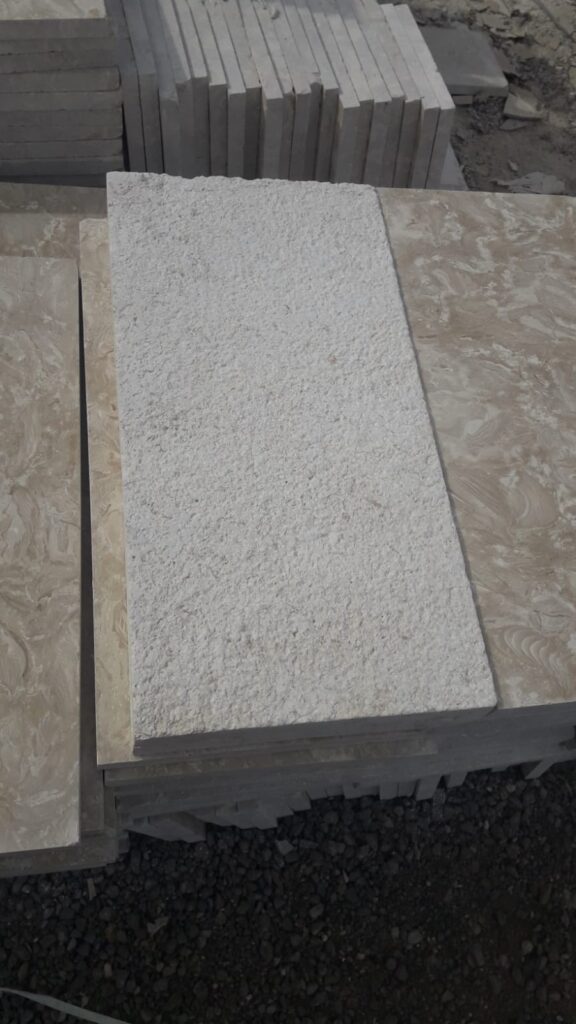
This is the tropical equivalent of frost damage, and the defenses against it are similar in principle and different in practice. Low absorption limits how far the salt can travel in. A texture that is already slightly open, such as a brushed or shot-textured surface, hides the earliest stages far better than a polish, which shows every micro-flake as a dull spot. Free drainage stops standing water from concentrating salt in one place. Regular rinsing with fresh water, where fresh water can be spared on a water-stressed island, simply washes the salt off before it gets a chance to migrate.
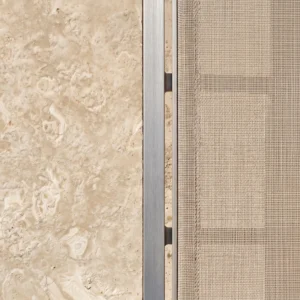
What amplifies the problem is metal. Ferrous cramps, dowels, angle restraints, reinforcement too close to the surface and cheap fixings on adjacent joinery all corrode in salt air, and corroding steel does two things at once: it stains pale stone with rust that is extremely difficult to remove, and it expands, splitting the stone or the bedding around it. Every fixing in contact with or adjacent to external stone on these islands should be non-ferrous or a suitable grade of stainless. That single specification line prevents more callbacks than any product claim on any data sheet.
How Pale Limestone Behaves in Direct Leeward Sun
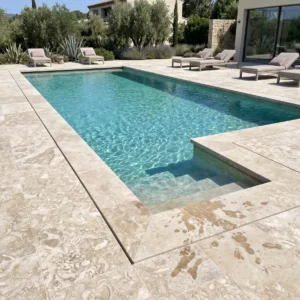
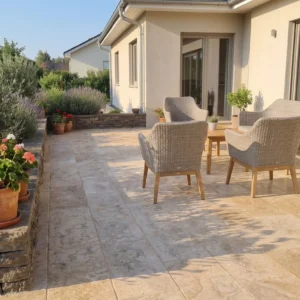
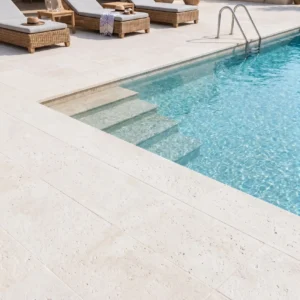
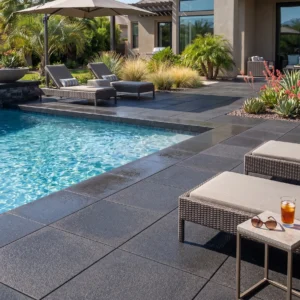
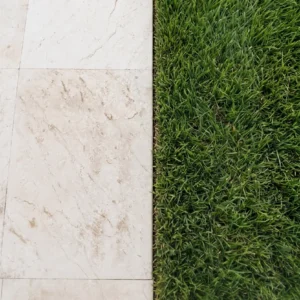
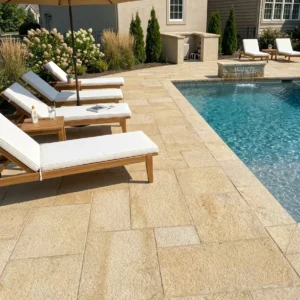
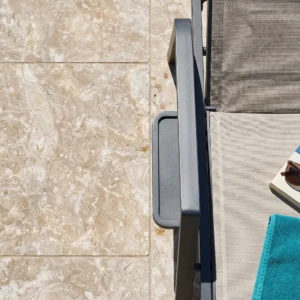
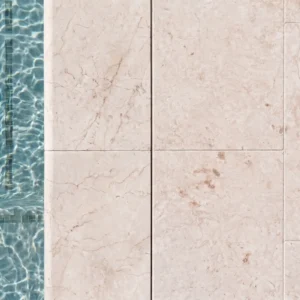
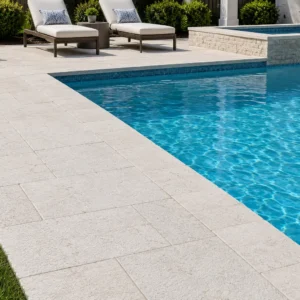
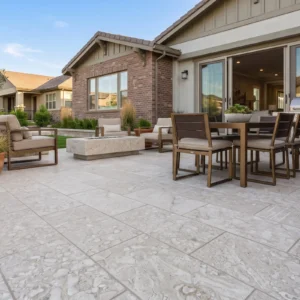
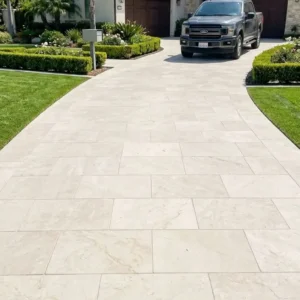
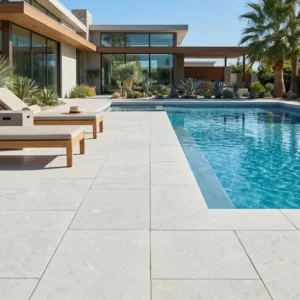
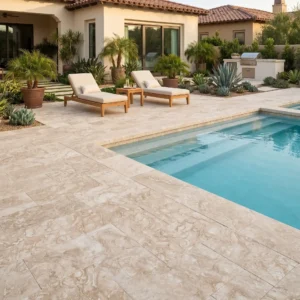
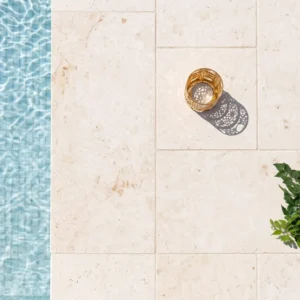
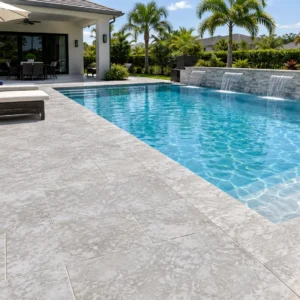
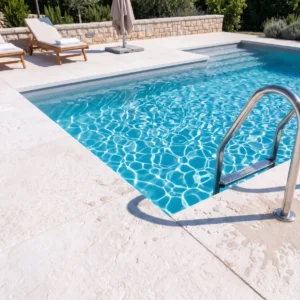
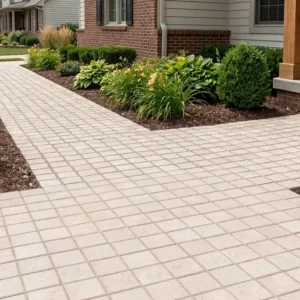
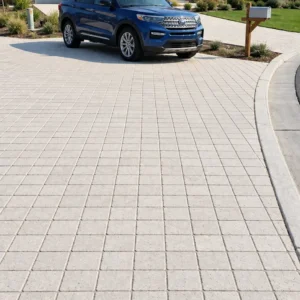
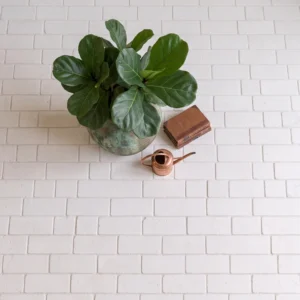
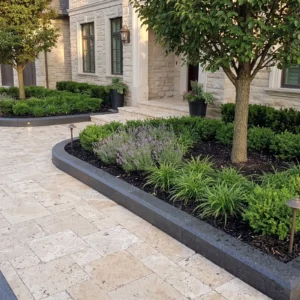
The main reason pale limestone dominates high-end Caribbean hardscape is thermal. A light-toned surface reflects a large share of incident solar radiation instead of absorbing it, and the practical result is a pool surround that a barefoot guest can cross at two in the afternoon in June. Dark stone in the same position is not a design preference, it is a hazard, and anyone who has walked across a dark deck at midday knows it within about four steps. That is the honest, boring reason pale stone is specified here so often.
The consequences run further than comfort. A cooler surface means less heat radiating back into a shaded veranda in the late afternoon, so an outdoor living area stays usable earlier in the evening. It means less thermal movement in the paving itself, which means bedding and joints under less cyclic stress. It also means a cooler mass in contact with the building, which matters where a terrace runs right up to a glazed wall.
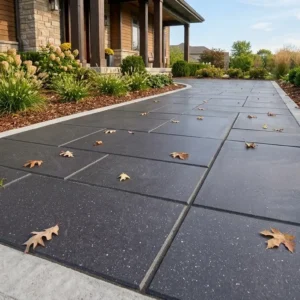
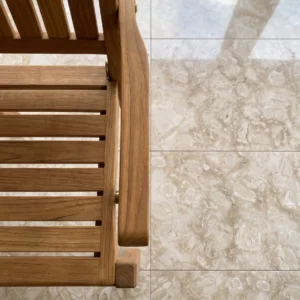
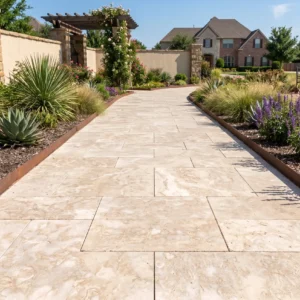
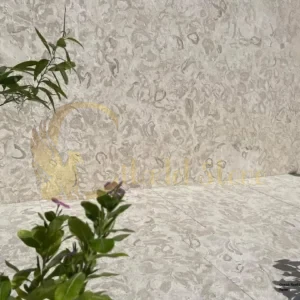
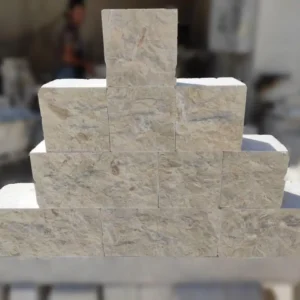
Pale stone has two costs to be honest about. The first is glare. On a broad unshaded terrace with a white or near-white stone in full sun, reflected light can be genuinely uncomfortable, and the answer is to break the plane with planting, shade structures or a slightly warmer tone rather than to pretend it does not happen. The second is that pale surfaces show organic marks, leaf tannins and rust more readily than mid-tone ones do. Both are manageable, and both are better discussed at specification stage than discovered on handover. Full technical data, format ranges and thickness options for the material are set out with our limestone paving in stocked formats, which is the place to check what is available before the schedule is fixed.
Grip Around Pools, Showers and Sea Steps
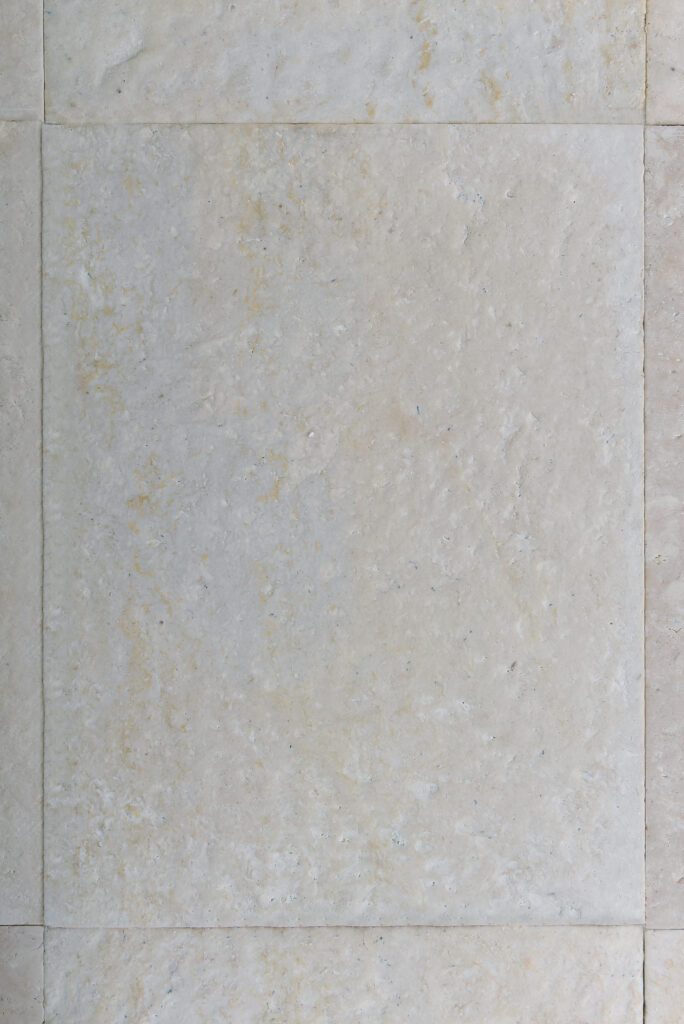
Slip resistance outdoors on these islands is not one number applied everywhere. It is a zoning exercise, because the water arrives differently in different places, and so does the traffic. A dry terrace under a roof, a pool coping walked on by wet feet, a set of external steps down a slope after a rain burst and an outdoor shower base are four separate risk conditions, and specifying one finish for all of them either overspecifies most of the site or underspecifies the dangerous parts of it.
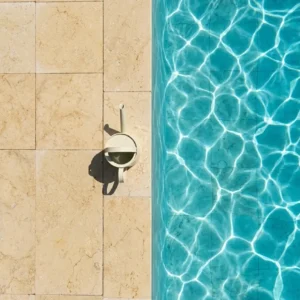
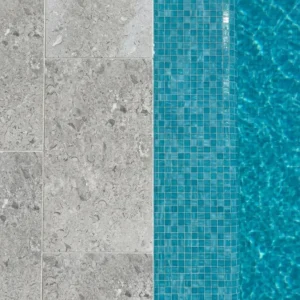
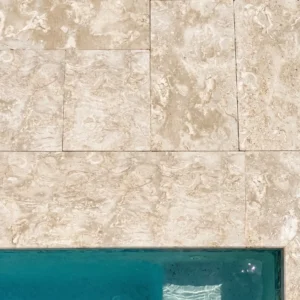
- Pool copings and the first band of deck: a brushed, sandblasted or shot-textured surface, with a rounded or bullnose edge that is kind to skin and to a swimmer’s hand on the coping.
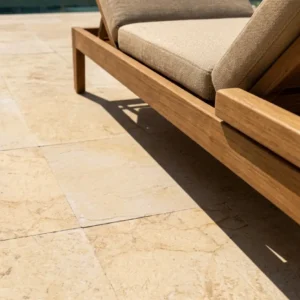
- General deck and terrace: a lightly textured surface is normally enough, and it keeps the deck comfortable to lie on and easy to sweep clean of sand.
- External steps and sloping paths: increase the texture, keep riser heights uniform, and consider a contrasting nosing detail so the step edge is visible in low evening light.
- Outdoor showers and changing areas: the most textured option on the site, with generous falls, because these surfaces are wet, soapy and used barefoot at the same time.
- Anywhere sand is tracked across regularly: remember that a film of dry sand on a smooth stone behaves like a layer of tiny ball bearings, so texture is protecting against the sand as much as against the water.
Beach sand deserves a paragraph of its own because it is the most under-considered variable in Caribbean hardscape. It is abrasive, so it wears finishes along the traffic lines. It is a slip hazard on smooth surfaces. It fills open joints and shallow textures. And it is genuinely unavoidable on a coastal property. Design for it: choose textures that keep grip with sand present, size joints so they can be brushed rather than picked out, and put a proper grit-shedding transition, whether a slatted deck section or a coarse-textured band, between the beach and the paving.
Where Limestone Should Not Be Used
A supplier who tells you their material suits every position on your site is not giving you a specification, they are giving you a sales pitch. Limestone is a carbonate rock, which means it is chemically vulnerable to acids and mechanically softer than an igneous stone. There are places on an Antiguan or Barbudan project where those two facts should send you elsewhere, and saying so plainly is more useful to you than an unqualified claim.
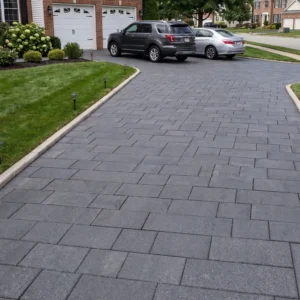
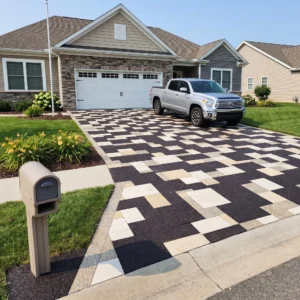
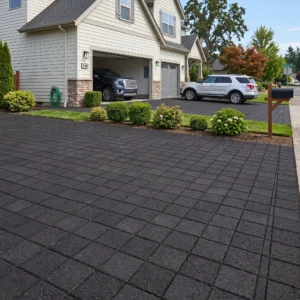
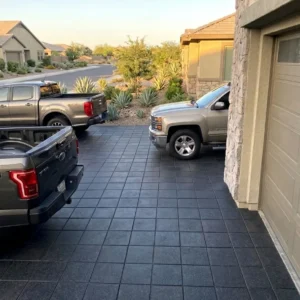
- Heavy commercial vehicle areas. A service yard taking loaded trucks, a container hardstand or a fuel dock apron is a job for concrete, for a heavy-duty unit paver or for basalt, not for a limestone terrace flag.
- Direct wave splash and shoreline revetment. Permanently wetted stone in the surf zone lives a hard life and needs a material chosen for that specific exposure, not a paving flag.
- Areas with regular acid exposure. Boat maintenance aprons, battery or workshop areas and any surface routinely washed with acidic cleaners will etch. So will paving under a citrus tree that drops fruit onto it every week.
- Direct discharge of untreated pool backwash. Highly chlorinated or acidic water running repeatedly across the same band of carbonate stone will mark it; route backwash properly rather than blaming the paving.
- Barbecue and outdoor kitchen zones without protection. Hot fat on porous pale stone is the single most common permanent stain we see, and it is entirely preventable with a mat, a tray or a different material under the appliance.
None of these rule limestone out of a project. They rule it out of specific squares on the drawing, and the professional answer is a mixed material palette in which each surface is given the stone that suits it. That approach also tends to look better than a single material carried relentlessly across a whole site regardless of use.
Limestone Against the Local Alternative
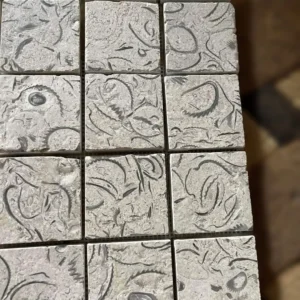
The mainstream outdoor surface in Antigua and Barbuda is concrete: cast in place, or as manufactured unit paving, generally made with locally worked aggregate. That industry is well established and it deserves respect. Antigua quarries limestone and volcanic rock, and Burma Quarry and Bendals Quarry produce subbase, base materials and crushed stone for road surfacing. The Basal Volcanic Suite in the mountainous south-west gives dacite, quartz basalt and andesite; the Antigua Formation in the north-east is a fossil-rich limestone. There is real rock here and the country knows it.
What that domestic output does not include is calibrated dimension paving. Local production is aggregate, base course and blockmaking feedstock, and it is good at those roles. So the comparison is not imported stone against Antiguan stone. It is a natural cut wearing surface against a manufactured one, laid on a base that will be Antiguan material in either case. Put that way, the trade-offs are straightforward.
- Natural limestone holds its tone because the color runs through the stone, whereas pigmented concrete surfaces fade under ultraviolet light and rarely fade evenly.
- Concrete unit paving is cheaper delivered, is made close to the site, and needs no customs entry, which is a genuine advantage on a budget-driven job.
- Natural stone wears by losing a fraction of its surface and revealing more of the same material; concrete wears by exposing its aggregate, which changes how it looks.
- Manufactured units come in exact dimensions with no variation, which some clients want; natural stone carries variation, which other clients pay for.
- For heavy vehicle loads or an unshaded service area, a manufactured unit or a dense igneous stone is often the more sensible answer.
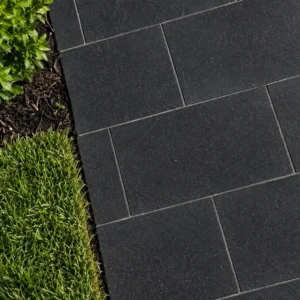
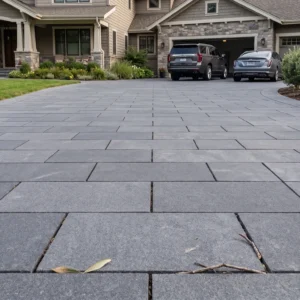
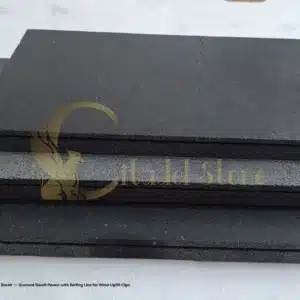
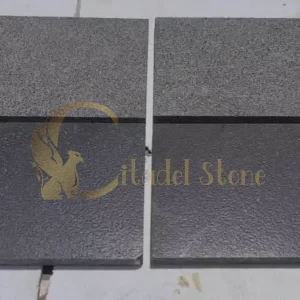
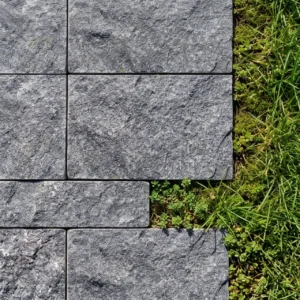
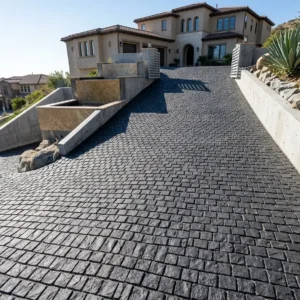
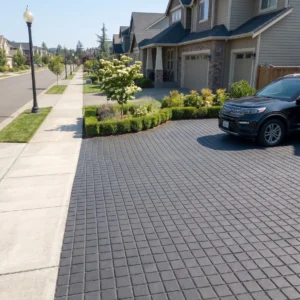
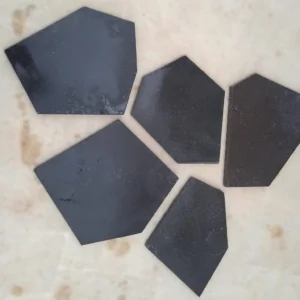
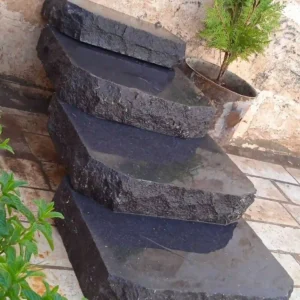
Where a project needs the durability of an igneous rock in a dark tone, our dark basalt paving alternative covers driveways, service areas and contrast banding, and it pairs well with pale limestone in a mixed palette that puts each material where it performs best.
Bedding, Jointing and Restraint on an Island Base
The best stone in the world fails on a bad base, and island bases have their own character. Soils across Antigua vary with the underlying geology, from the volcanic south-west to the mixed plain to the limestone north-east, and Barbuda is flat coral limestone with reef and lagoon deposits over the top. Base design should follow a site investigation rather than a habit brought from somewhere else. What is nearly universal is the drainage brief: rainfall here arrives concentrated, so a base has to shed a large volume quickly and then dry out, and a base that holds water under paving in a humid climate will move.
Bedding method follows exposure. On a sheltered inland courtyard, a well-executed unbound or semi-bound construction is perfectly reasonable. On an exposed terrace, a coastal deck or a roof-level surface, bed and bond. In a severe wind event loose units become airborne, and that risk is not theoretical on an island where Hurricane Irma removed almost everything on Barbuda in a single night in September 2017 and forced the whole population to evacuate. Bonding also resists the uplift and scour that arrive with wind-driven rain long before a storm reaches that severity.
Jointing needs one island-specific decision made consciously. Where paving drains to a cistern or contributes to a catchment, keep resin binders, chemical jointing compounds and surface sealers off it and use a compatible mortar or a clean sand joint instead. Stored water is drinking water on properties across both islands, and no aesthetic gain is worth compromising it. Elsewhere the usual rules apply: restrain every free edge, use non-ferrous restraint, set falls generously, and give the surface somewhere to send water in a burst.
Finally, order a modest surplus and store it. Storms damage paving, delivery trucks chip corners, and a replacement pallet is a shipment, a clearance and a wait. On these islands the cheapest repair you will ever make is the one you bought at the same time as the original order.