
















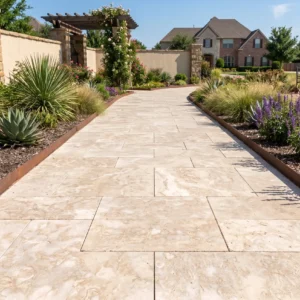
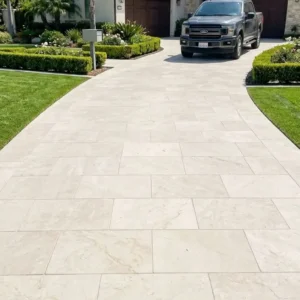
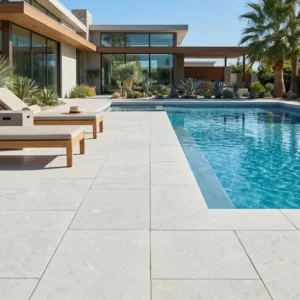
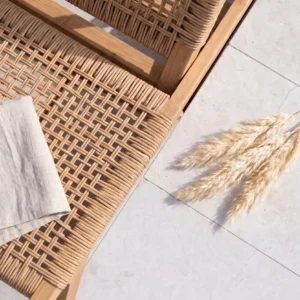
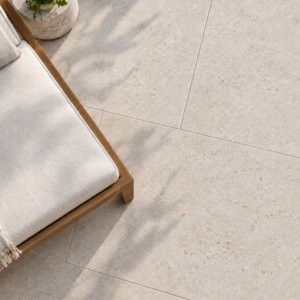


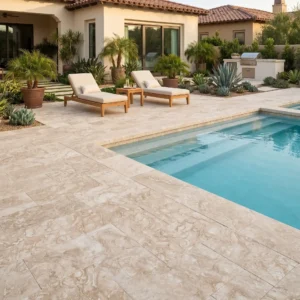

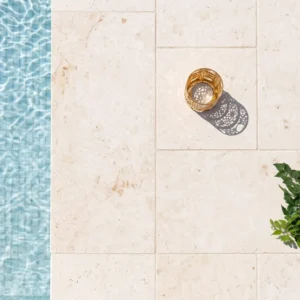














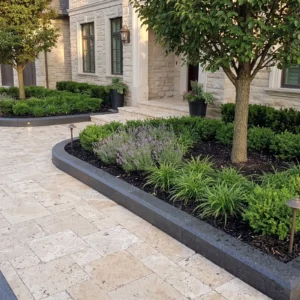
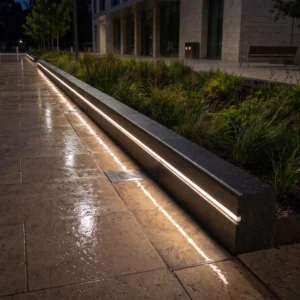





Interior stone in Antigua and Barbuda has a specific job description, and it is not the job the same tile does in a temperate house. Rooms here are open. Doors stand open to the trade wind for most of the year, sliding walls disappear into pockets, and the boundary between the living room and the terrace is a line on a drawing rather than a line in the building. That means an interior floor in a villa above Jolly Harbour, a guest suite near Falmouth Harbour or a rebuilt house in Codrington is exposed to salt-laden air, wind-blown grit, bare wet feet arriving from a pool, and a humidity level that never fully drops away. It also means the floor is read in full tropical daylight, which is unforgiving about tone variation and about anything with a shine on it.
This page deals with limestone tiles for interiors and for the threshold zone where inside becomes outside. It covers thermal comfort in a house that is rarely sealed, the finishes that stay safe under wet feet, formats that suit the room proportions people genuinely build here, how to carry a floor across a threshold without creating a water trap, and how to clean and seal stone on islands where hard surfaces may be feeding a cistern. Freight, duty and clearance are covered in full on our broader paving page for the country, and the outdoor technical questions of absorption, density and grip sit on the limestone paving page. What follows is about the inside of the house and the two feet either side of the door.
Cool Floors in a House That Is Always Open
The first thing limestone does well here has nothing to do with looks. A dense stone floor bedded on a screed over a ground slab carries thermal mass, and thermal mass in a naturally ventilated tropical house behaves like a flywheel. The floor stays a little below the daytime air temperature, it takes the edge off the afternoon, and it gives the trade wind something cool to move across. Barefoot, the difference between limestone and a timber or vinyl floor in the same room is immediate and it is the thing clients comment on first.
The second thing is less commonly discussed and catches people out. In a room that is air conditioned hard and then thrown open to warm humid air, a cool dense floor can develop surface condensation, exactly as a glass of iced water does. It is not a defect in the stone; it is physics, and it happens to tile, terrazzo and polished concrete alike. It is worth designing around, because a thin film of water on a glossy floor is a genuine hazard in a rental villa where nobody knows the house.
Practical measures that work in this climate:
- Prefer honed or lightly textured surfaces over high polish anywhere the room can be opened to outside air, so a brief film of moisture does not turn into a slip.
- Keep ceiling fans running rather than chilling a room hard and then opening it; moving air is the cheapest condensation control there is.
- Zone the cooling so bedrooms with tight envelopes are chilled and open-plan living space is ventilated, rather than fighting both battles in one room.
- Detail thresholds so any water that does form has somewhere to go, instead of pooling against a door track.
- Where a client insists on a reflective floor, put it in a room that stays closed and conditioned, and use a textured version of the same stone in the circulation space.
Finishes for Wet Feet, Beach Sand and Bare Skin
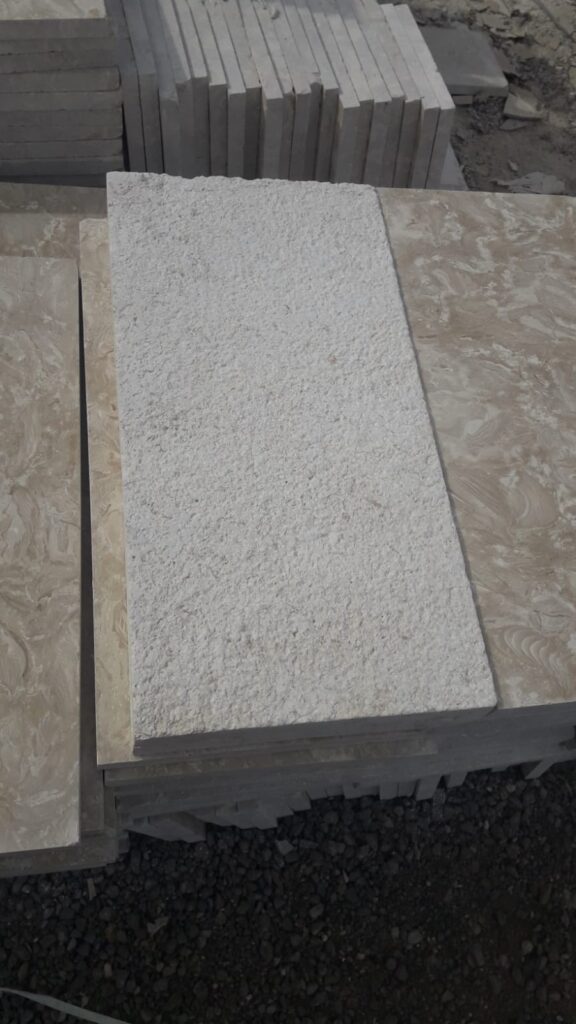
Finish is the single most consequential decision on an island interior, and it is where imported specifications most often go wrong. Polished limestone photographs beautifully and behaves badly here. Water arrives constantly, from the pool, from the shower, from an afternoon squall blown through an open door, and a polished surface under water has very little to offer bare feet. Beyond safety, there is wear: wind-blown sand tracked in from a beach is a fine abrasive, and it will scuff a polish into a dull patch along the traffic lines within a couple of seasons while leaving the edges of the room bright. The floor then reads as worn rather than as aged.
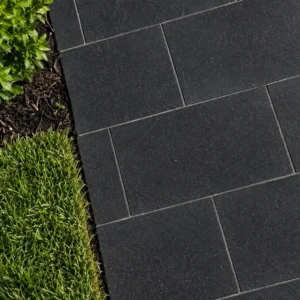
A honed surface is the sensible default for living space. It is smooth enough to feel refined underfoot, matte enough to hide the light haze that salt air leaves, and it takes the abrasion of grit without developing an obvious traffic path. In bathrooms, outdoor showers, changing rooms and the first meter inside any door from the pool, step further into texture: a brushed, aged or lightly tumbled surface holds grip when wet and disguises the water marks that always appear in those places.
Edges matter as much as faces in a barefoot house. A sharp sawn arris is uncomfortable and chips; an eased or pencil-round edge is kinder to skin and far more forgiving of a slightly proud tile. Keep joints narrow and consistent so grit has less to sit in, and avoid deeply recessed joints in circulation space where they collect sand and become the thing somebody has to scrape out every week. Where a wet room meets a dry room, change the finish rather than the stone, and let the texture do the safety work without introducing a visible material break in the middle of an open plan.
Formats That Suit Antiguan Room Proportions
The rooms people build here have a shape. The high-end villa plan runs long and shallow, with the main living volume oriented at the water and glazing or folding walls down one whole side. Bedroom wings run off a gallery. Bathrooms are generous but often narrow, and outdoor showers are common. Service corridors are tight. Each of those spaces wants a different tile decision, and using one format everywhere is how you end up with awkward slivers against a door frame in the one room the client photographs.
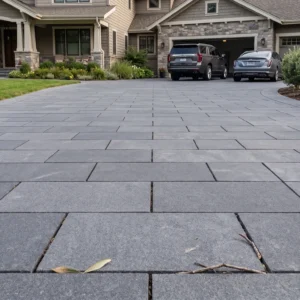
In the long open volume, larger formats read calmer. Fewer joints in strong tropical daylight means fewer lines competing with the horizon, and the eye settles. Lay the long dimension along the axis of the view rather than across it. In galleries, stairs and bathrooms, a smaller unit or a modular set of two or three sizes turns a corner and meets a fixed obstacle far more gracefully, and it wastes less material on cuts, which matters when every square foot has crossed an ocean.
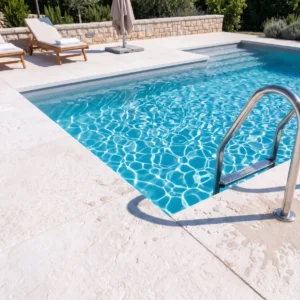
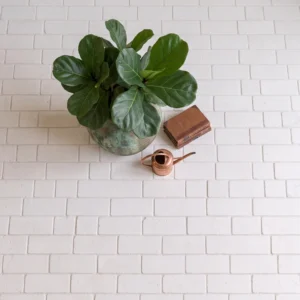
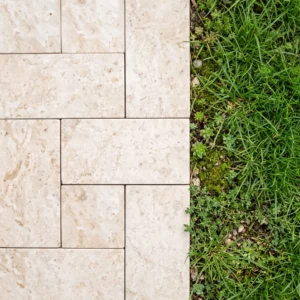
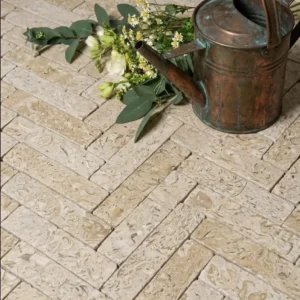
Balance that against handling reality. Oversized thin pieces are difficult to move safely on a site with limited plant, worse on a stair, and worst of all if any part of the order continues to Barbuda where there is no crane at the wharf. A modest reduction in the largest format on the schedule often removes an entire category of risk without changing how the finished floor reads. Our white limestone floor tiles are produced in a range that lets you mix a large field format with smaller companion sizes from the same batch, so the gallery, the bathrooms and the great room share one tone while each getting the format that suits the space.
Carrying the Floor Across the Threshold
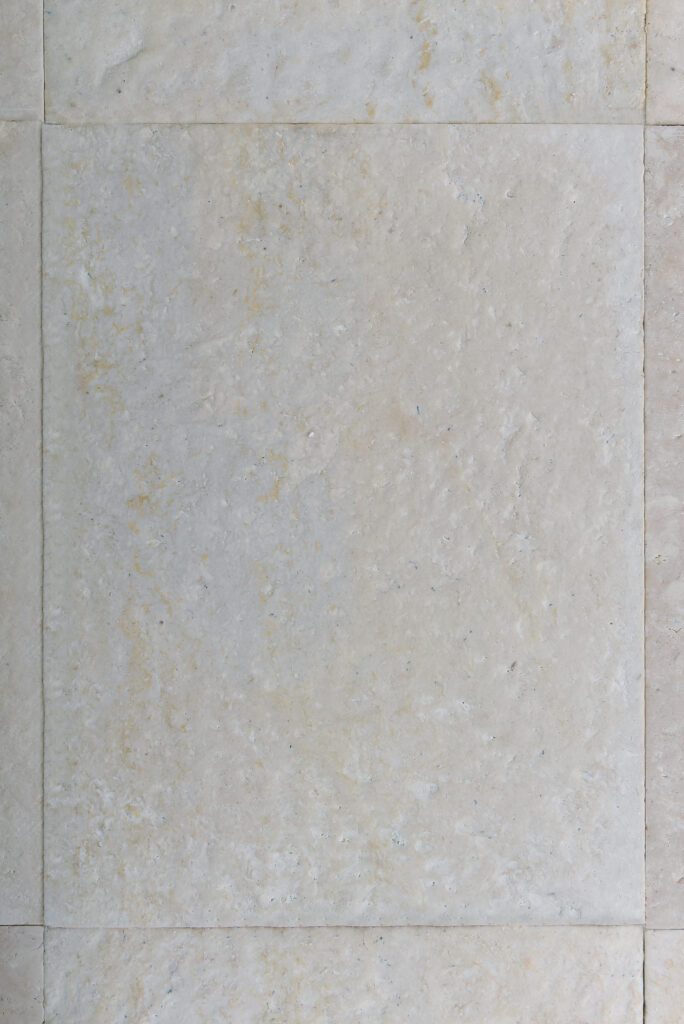
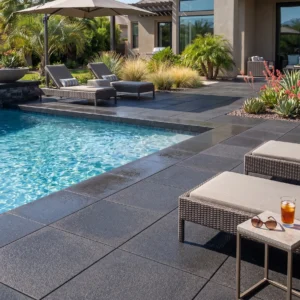
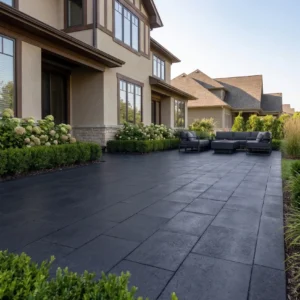
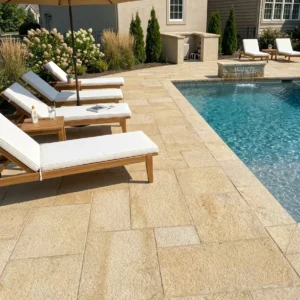
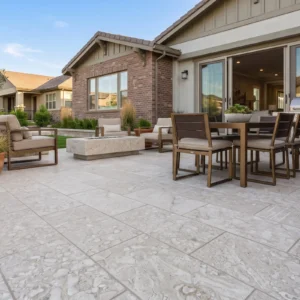
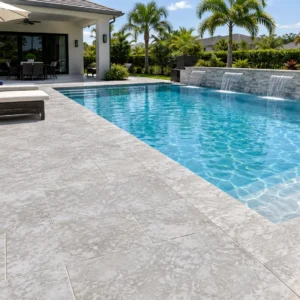
The threshold is where an island interior is won or lost. In a house that opens fully, a step down at the door line is a visual break and a trip point, and a change of material there ends the illusion the architecture is trying to create. The strongest move available is to run the same stone from the living space onto the terrace, changing only the finish, so the floor reads continuously while the outdoor portion gets the texture it needs under sun and rain.
Doing that properly needs a few details settled early, because they are almost impossible to retrofit:
- Set the terrace surface flush with the interior floor and take the water away in a slot drain or a discreet channel along the door line, rather than relying on a lip to hold it out.
- Allow a movement joint on the threshold itself. The outside slab moves under sun and the inside floor does not, and a rigid joint at that line will telegraph a crack within a year.
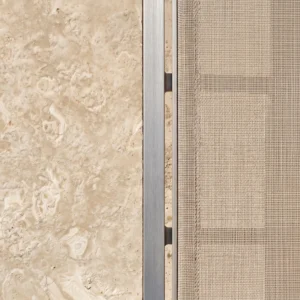
- Coordinate with the storm shutter and slider tracks before the screed goes down. Recessed tracks in a stone floor are elegant when planned and ugly when improvised.
- Expect the outdoor stone to look darker when wet and lighter when bleached by sun, so choose the pair by looking at samples wet and dry, side by side, outdoors.
- Keep the same joint width and alignment across the threshold; a floor that steps out of alignment at the door draws the eye to the very junction you are trying to hide.
One more consideration specific to this climate: the first stretch of floor inside an open door takes rain, sand and sun in a way the rest of the room never will. Treat that band as a transition zone. A slightly more textured version of the same tile, or a run of the outdoor finish carried a short distance inside, absorbs the punishment and stops the main floor from developing a weathered strip along the openings.
Humidity, Salt Haze and Growth in a Closed-Up Villa
Humidity is a constant rather than a season here, and salt haze settles on every horizontal surface within reach of the wind. Neither is a problem for a properly specified limestone floor, but both change the maintenance conversation, and the biggest single variable is occupancy. A villa lived in year-round behaves entirely differently from one that is shut up between rentals with the shutters closed and the air conditioning off. A closed tropical house with no airflow will grow things, and it will grow them in the shaded rooms first.
The stone is rarely the victim. What suffers is whatever film has been put on top of it. Film-forming sealers, waxes and acrylic dressings trap moisture, cloud in humidity, and then peel in patches that have to be stripped. On islands, that stripping operation means solvents and rinse water, on a property that may be catching its own supply. An impregnating sealer that sits in the pore and leaves the surface breathing avoids the whole cycle.
What actually works over a long ownership:
- Specify an impregnating, non-film-forming sealer and record the product and date in the property manual so the next manager reapplies the same thing.
- Leave shuttered houses with some cross-ventilation or a dehumidifier on a timer; stagnant humid air is the precondition for growth, not the stone.
- Sweep or dust-mop grit daily in occupied periods. Sand is the abrasive; water alone is not the enemy.
- Deal with salt haze with plain water and a neutral cleaner rather than anything aggressive; the haze is a deposit, not a stain in the stone.
- Keep planters and irrigation spray off the floor where you can, because constant wetting at one spot is what produces the dark rings people mistake for a material fault.
Cleaning and Sealing on a Cistern Island
There are no permanent streams or rivers on Antigua or on Barbuda. Fresh water comes from surface storage, groundwater and domestic catchment, the country is classed at extremely high water stress, and new houses are fitted with rainwater collection and storage. Around 86% of households take the public supply and the rest rely on cisterns and wells, and even connected properties normally hold an underground cistern of their own. That single fact should shape the maintenance specification of any floor that connects, directly or by runoff, to a catchment system.
In practice it rules out a whole shelf of products. Acidic cleaners etch limestone and have no business anywhere near stored water. Chlorine bleach used as a routine floor cleaner is both unnecessary and a poor neighbor to a cistern. Strong degreasers, solvent strippers and any product sold on the promise of dissolving something are the wrong tools for a stone floor in a house that drinks its own rain. Neutral pH cleaner, warm water, a mop wrung properly and a soft brush for textured surfaces will keep a limestone floor looking correct for decades.
Water discipline is the other half of the picture. Flood-mopping is a habit imported from places where water is unlimited, and it is both wasteful and slower to dry in high humidity. Damp-mopping with a neutral solution uses a fraction of the water and leaves the floor dry before the next person walks on it. Where a terrace or courtyard genuinely feeds a cistern, take the additional step of keeping jointing compounds, resin binders and surface treatments off it entirely, and clean it with water alone. If you are weighing a honed floor against a brushed or aged one for a property with heavy turnover, our guide to surface finishes explained here sets out how each texture cleans, how it wears and how much grip it keeps once it is wet.
Ordering Interior Stone for an Island Project
Ordering discipline matters more on an island than anywhere else, because the cost of being wrong is not a trip to a merchant, it is a second ocean shipment with its own duty, its own ABST and its own clearance. Order the whole floor at once, from one batch, and take the tone variation you are given rather than trying to match it later from a different production run. Limestone is a natural material; two batches cut months apart are cousins rather than twins, and in tropical daylight the difference is visible.
Allow proper overage. Ten to twelve percent on top of the net area covers cuts, waste and the pieces that do not survive handling, and a further small quantity should be set aside deliberately as attic stock and stored dry on site. On a rental villa, attic stock is what lets a manager replace a cracked tile in a week rather than in a quarter. Label it, photograph it and put its location in the house manual, because the person who eventually needs it will not be the person who ordered it.
The rest of the ordering discipline is a short checklist, and it is worth running before the container is booked rather than after it sails:
- Put the whole floor on one purchase order – great room, guest suites, galleries and the terrace face – so a single batch covers every room and every threshold.
- Carry ten to twelve percent overage on the net area, then set a further quantity aside as attic stock and write its location into the house manual.
- Appoint a customs broker early. The Customs and Excise Division requires one once a shipment runs to more than six lines or reaches EC$5,000 in value, and a pallet order of tile passes that threshold without trying.
- Have the entry filed through ASYCUDA World with the commercial invoice, the packing list and the freight documents matching one another exactly, because a mismatch holds the container rather than the paperwork.
- Budget the landed cost as CIF, then Common External Tariff duty, which applies in full to stone that is not of CARICOM origin, then ABST at 17 percent calculated on the CIF value plus duty and other government charges. A Revenue Recovery Charge and further levies sit on top of that – confirm the current rate with your broker.
Storage on site deserves five minutes of thought. Keep pallets off bare ground, out of direct salt spray and covered but ventilated, because sheeting a pallet tightly in this humidity traps moisture against the stone and can leave temporary marks. Interior tile is also the lightest part of most mixed villa orders, which makes it the best place to save weight on a shipment where duty and ABST are both calculated on CIF value. Specify the tile thickness for its bedding method rather than for reassurance, and put the saved weight into the copings and steps where the section genuinely earns its keep. An island floor has to be right the first time, so spend the extra hour on the schedule before the container is loaded rather than on a claim afterward.