

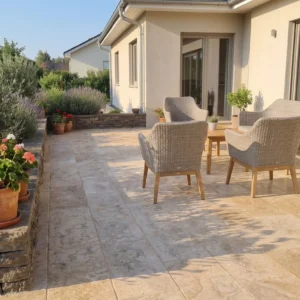
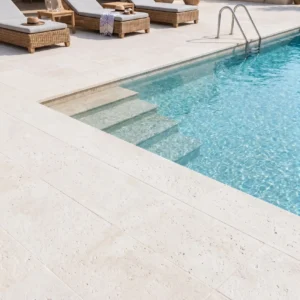
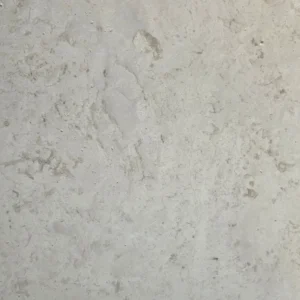
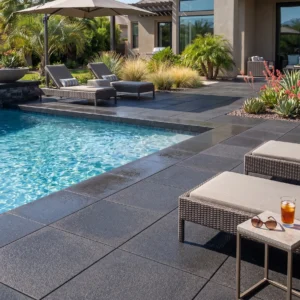



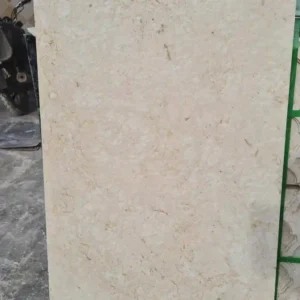
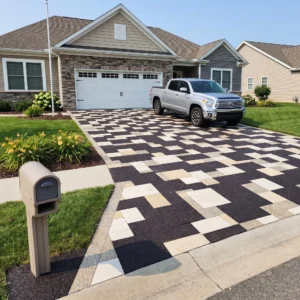
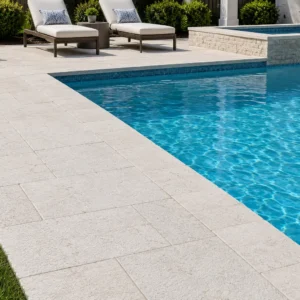
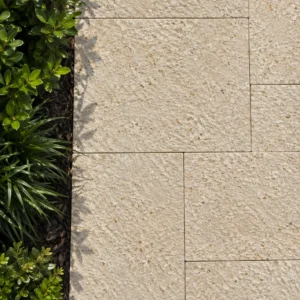
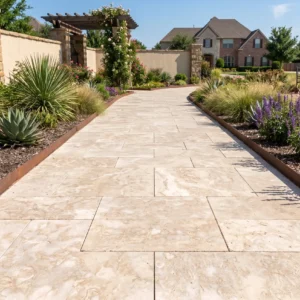
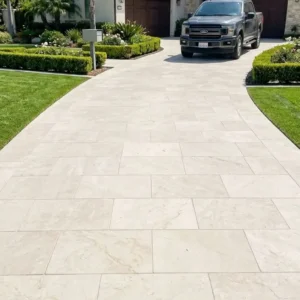
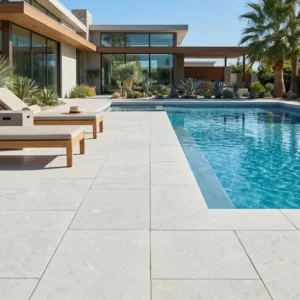
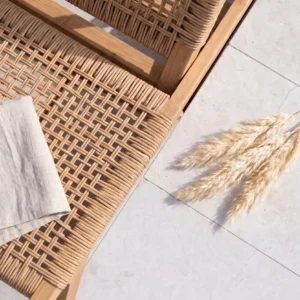


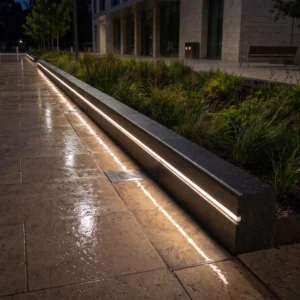
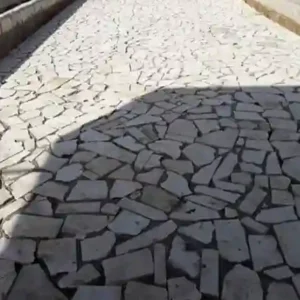
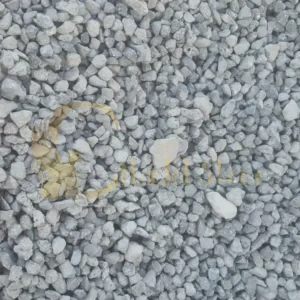
Limestone is specified outdoors in Puerto Rico for two reasons that have nothing to do with fashion. It stays cooler underfoot than dark paving under a sun that sits close to overhead, and it can be produced with a mechanical texture that keeps its grip character around water without relying on a coating. Those are measurable properties, not claims, and a buyer is entitled to see the numbers behind them before committing a terrace, a pool surround or a courtyard to a material.
This page is deliberately technical. It is about absorption, density, finish and honest limits rather than freight and paperwork, which belong on our broader Puerto Rico paver page. If you are choosing between a pale limestone, a dark basalt and the poured concrete the island reaches for by default, the questions below are the ones that actually separate them. One of the sections is about where limestone is the wrong answer, because a supplier that never says that is not being useful to anybody.
What absorption and density actually predict
Water absorption, expressed as a percentage of dry weight, is the number that predicts most of a pale stone’s outdoor behavior. A denser stone with lower absorption takes on less water in a downpour, dries faster afterward, carries less dissolved material to its surface as it dries, and gives biological growth less to work with. In a market with a genuinely wet north and a genuinely dry south, that single property behaves differently on the two coasts, which is why one specification does not fit the whole island.
Bulk density and compressive strength answer a different question: what the unit can carry and how it behaves under a point load, such as a table leg, a planter, or a car wheel turning on a driveway. Flexural strength matters wherever a unit spans rather than sits on a full bed, for example on pedestals over a roof terrace. Abrasion resistance matters where sand is tracked across a surface daily, which on this island means anywhere within a mile of the sea.
- Ask for water absorption by weight, tested to a recognized method, on the actual material you are buying.
- Ask for bulk density and compressive strength, and read them against the traffic the surface will really take.
- Ask for flexural strength if any unit will span rather than sit on a full bed.
- Ask for abrasion resistance if the terrace is coastal, because sand does the wearing, not feet.
- Ask for the test report itself rather than a marketing summary, and check that it names the material and the batch.
We do not publish one number for every stone we sell, because the honest answer varies by material and by production run. What we do is supply the test data for the specific stone you are considering, so your specification cites a document rather than an adjective.
The island then gives you two different test beds for the same number. On the wet north side, and inland toward El Yunque, a paved surface is rarely dry for long, so absorption governs how fast it sheds water after a burst and how much biological growth it has to fight off between cleans. In the dry south around Ponce and Guanica the same stone spends most of the year drying rather than wetting, and the property that starts to matter is what a repeated wet and dry cycle does to a surface that is also carrying salt. Ask which coast a project sits on before you copy a specification that was written for the other one.
Pale stone, strong sun and the barefoot test
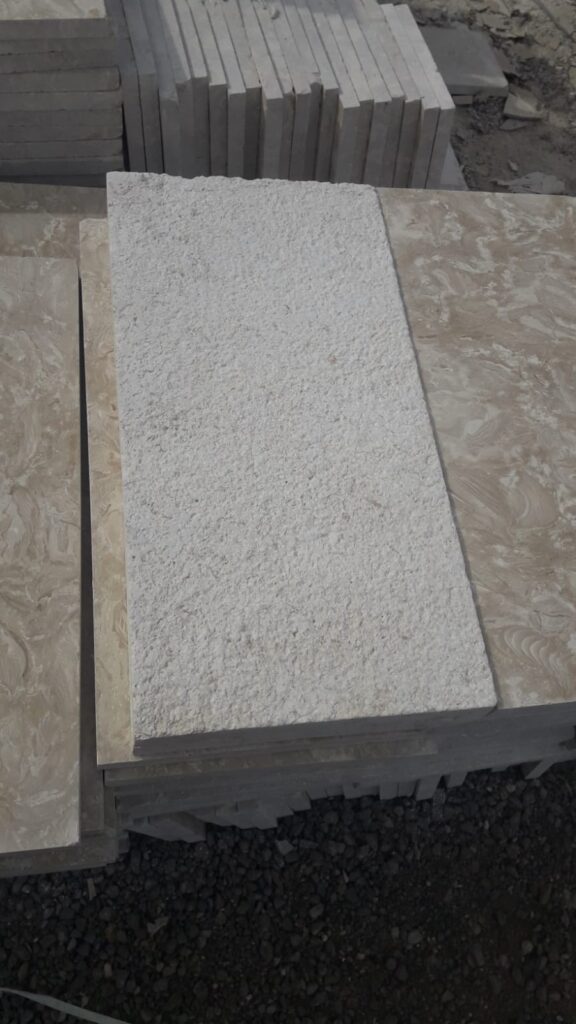
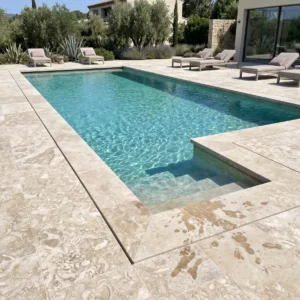
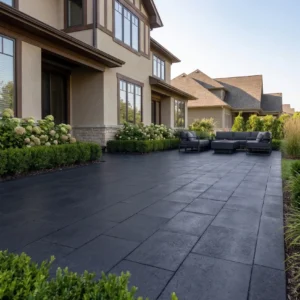
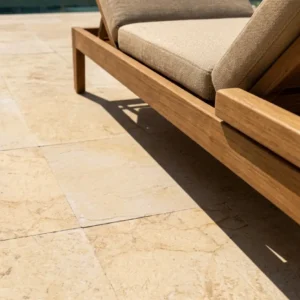
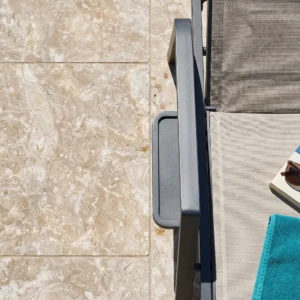
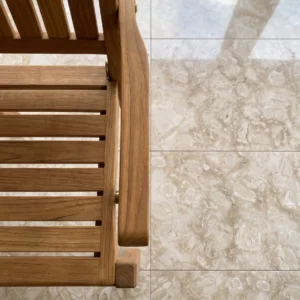
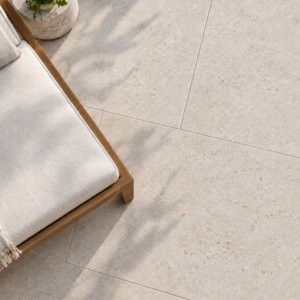
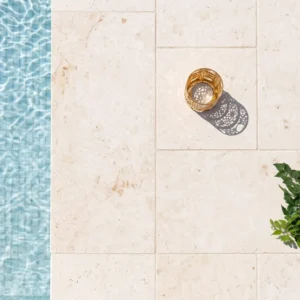
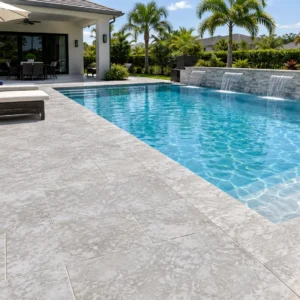
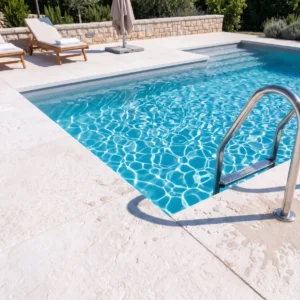
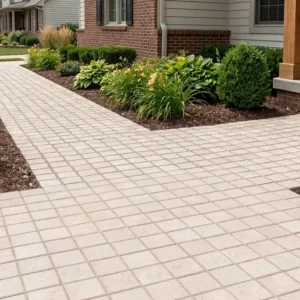
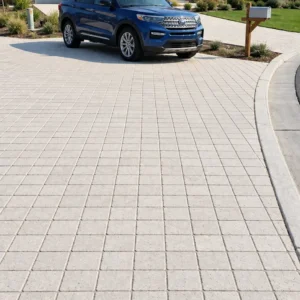
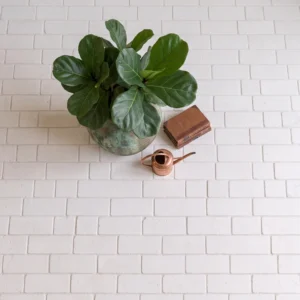
Puerto Rico sits at roughly eighteen degrees north. The sun climbs high, the light is strong, and a paving surface exposed to it in the middle of the day can get hot enough to end a pool afternoon. Surface temperature is driven mostly by how much of that light the surface reflects rather than absorbs, and color is the dominant lever. A cream or ivory limestone in full sun will read markedly cooler underfoot than a charcoal or black surface in the same position at the same hour.
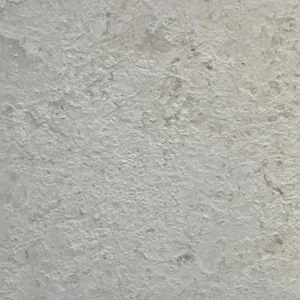
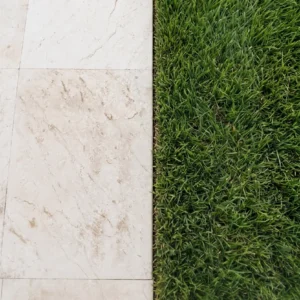
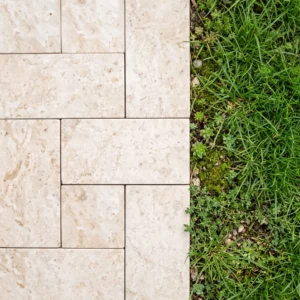
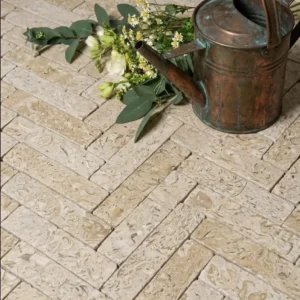
Texture is the second lever and it works in both directions. A textured face has more surface area and slightly more air movement across it, and it breaks up the reflected glare that a smooth pale surface can throw back into a room. That glare is a real complaint in the dry south, where a large pale terrace facing a wall of glass pushes uncomfortable light straight into the house.
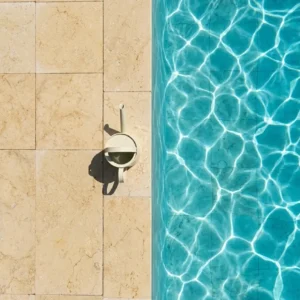
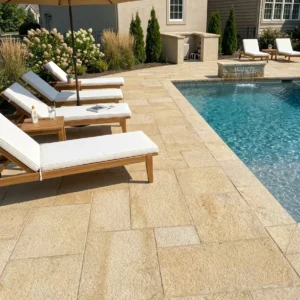
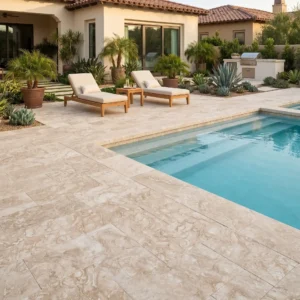
- Keep the palest limestone for pool surrounds, decks and any surface used barefoot in the middle of the day.
- Use a textured rather than a smooth face on large sunlit areas to soften reflected glare.
- Break very large terraces with planting, shade structures or a darker banding stone instead of running one unbroken pale field.
- Reserve dark paving for shaded courtyards, entry bands and vehicle areas, where surface heat is not a comfort issue.
- Test a sample underfoot on site at the hottest hour, not in a showroom, because nothing else settles the argument.
Grip around water, zone by zone
Slip resistance outdoors is a zone problem, not a single specification. The stone around a pool coping, the stone on a shaded north-facing walkway and the stone on an open sunlit terrace are asked to do different things, and using one finish everywhere means over-texturing the areas that need to be comfortable and under-texturing the areas that get wet.
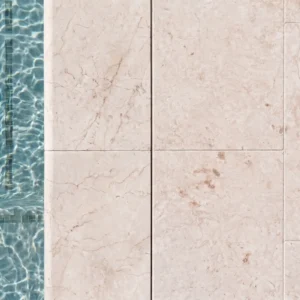
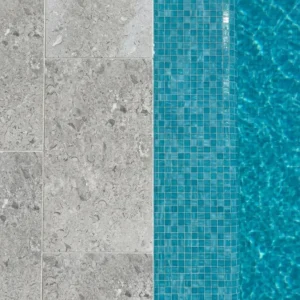
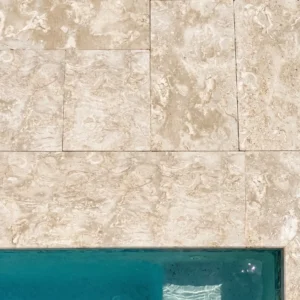
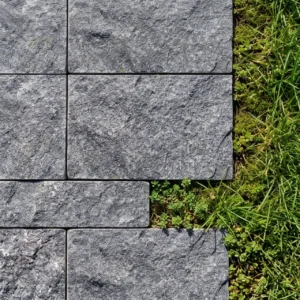
- Pool coping and the first band of deck: the most textured face on the job, sandblasted or heavily brushed, with a rounded or bullnose edge.
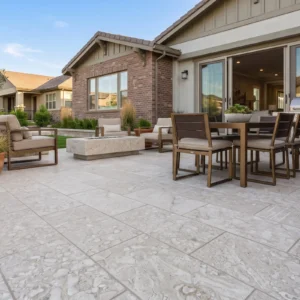
- Open terraces and dining areas: brushed or lightly textured – enough grip for wet feet, smooth enough for chairs and a table.
- Steps and level changes: textured treads with a defined nosing and consistent riser heights, because that is where falls actually happen.
- Shaded north-facing paths under trees: textured and, more importantly, reachable for cleaning, since grip lost to biofilm is grip lost regardless of finish.
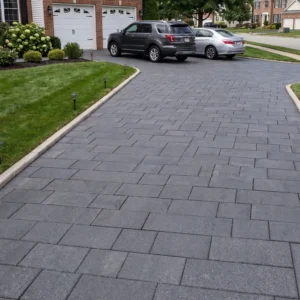
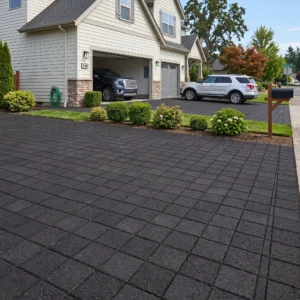
- Vehicle areas: texture matters less than thickness, bedding and edge restraint.
Two Puerto Rico specifics deserve naming. Salt aerosol on the north and west coasts leaves a film that changes how a surface feels long before it changes how it looks, so a freshwater rinse is genuine maintenance rather than housekeeping. And in the wet interior, algae and moss establish in weeks rather than seasons on any surface that never dries; specify a texture you can actually brush clean, and put a hose point within reach of it.
Where limestone should not be used
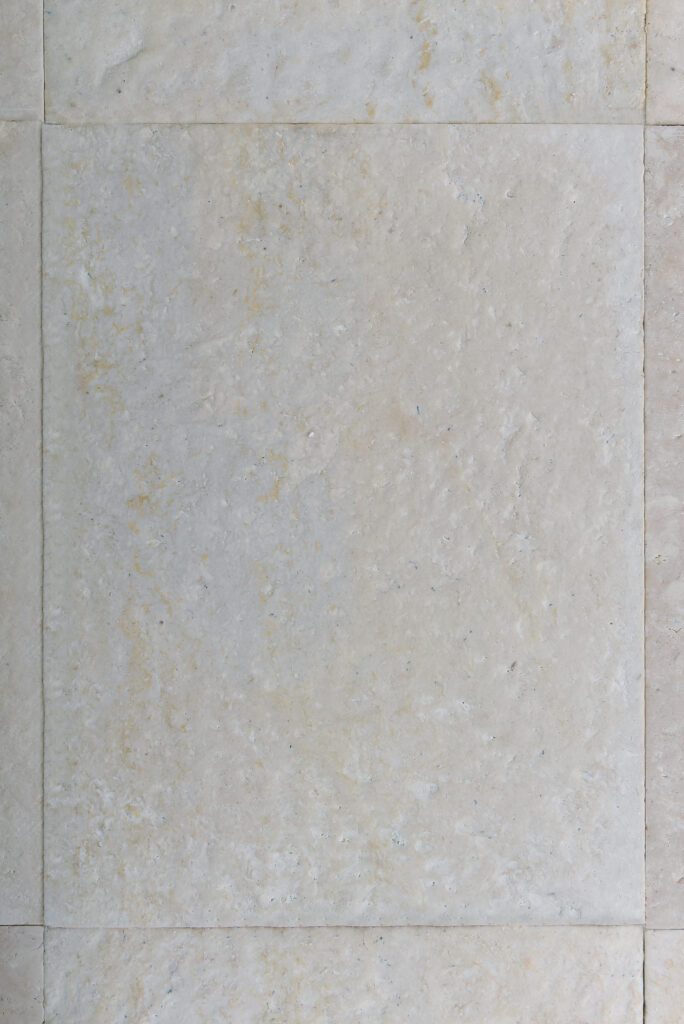
Limestone is not the right stone everywhere, and pretending otherwise costs clients money. These are the situations in Puerto Rico where we will tell you to use something else or to change the detail.
- Direct wave splash on an exposed rock shelf: constant salt saturation and impact is a punishing environment, and a dense dark igneous stone handles it better.
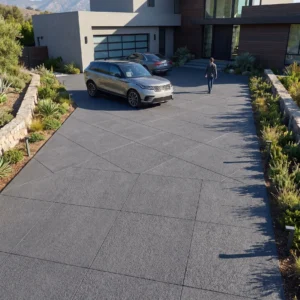
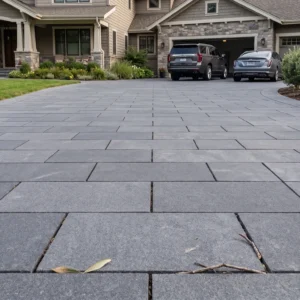
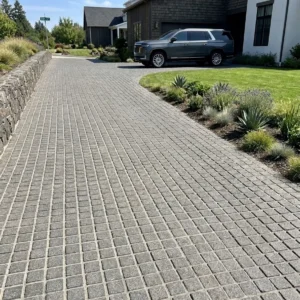
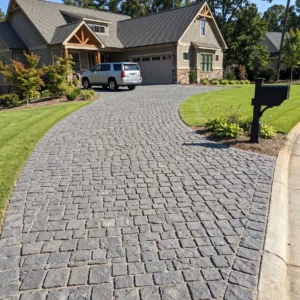
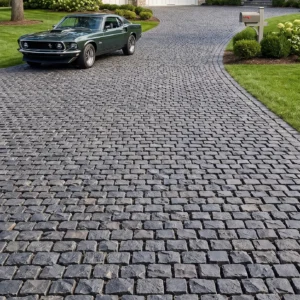
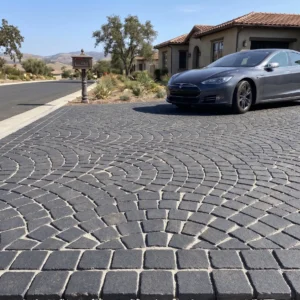
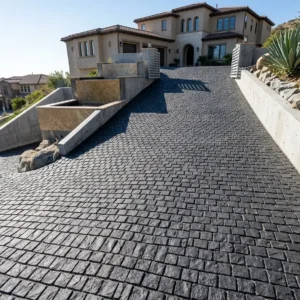
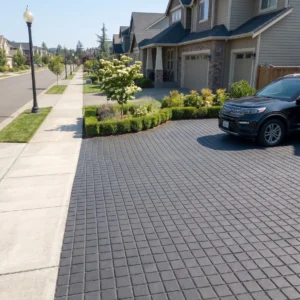
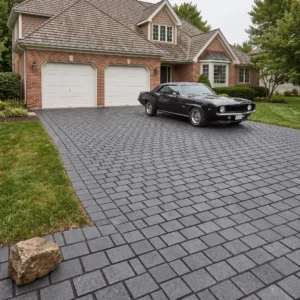
- Heavy vehicle turning areas and service yards: possible in limestone at correct thickness on a correct base, but often better answered by small-unit setts that redistribute the load.
- Surfaces that will be washed with acid: where the maintenance regime involves muriatic acid or acidic cleaners, limestone will etch, and no sealer prevents that indefinitely.
- Deck areas where pool chemicals are stored or handled: spills etch, and the mark is permanent rather than a cleaning problem.
- Ground that has not been prepared: no stone survives a base that moves, and the island has fill and expansive soils that will move if ignored.
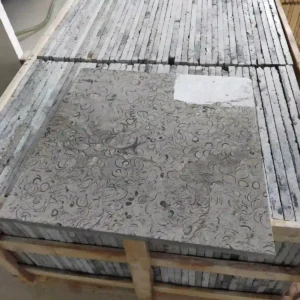
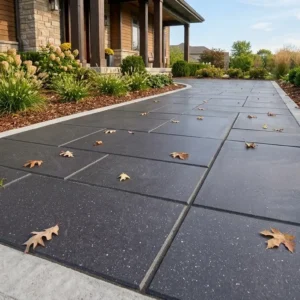
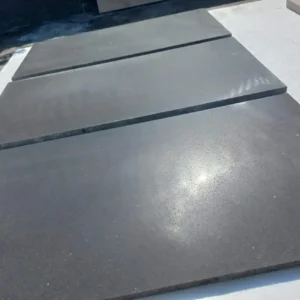
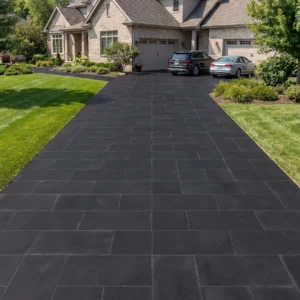
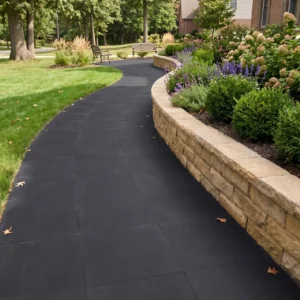
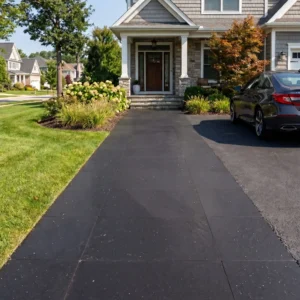
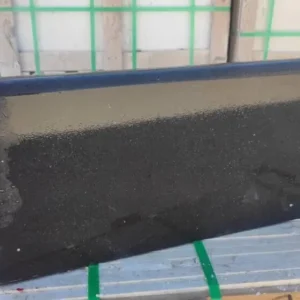
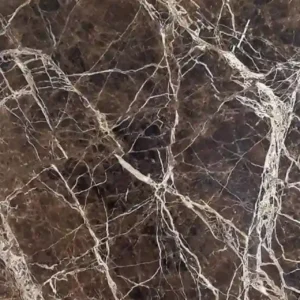
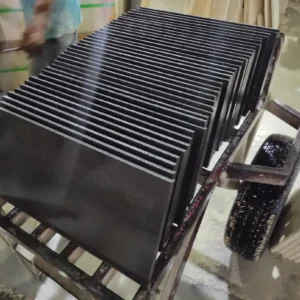
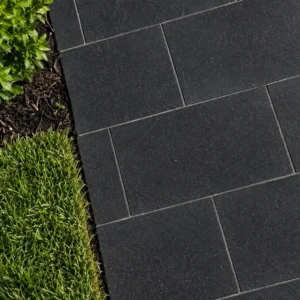
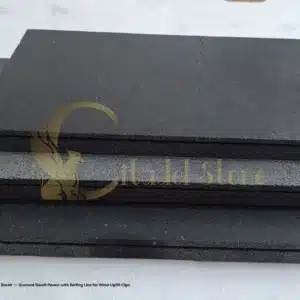
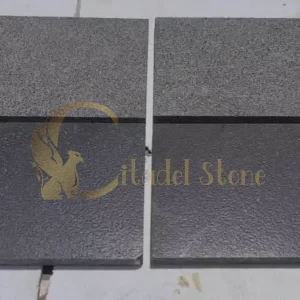
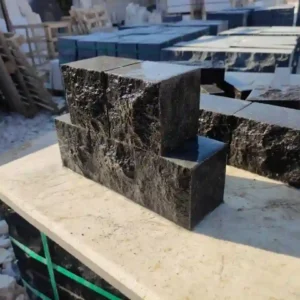
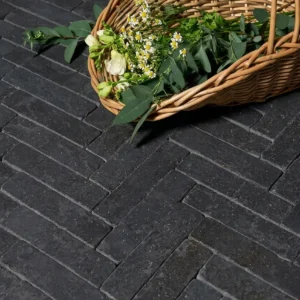
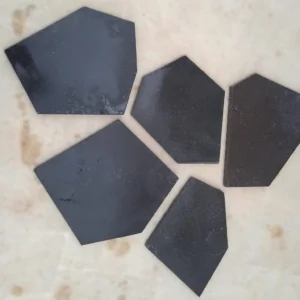
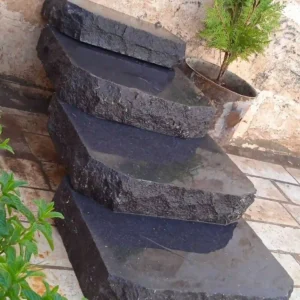
Where a darker, denser, more chemically robust surface is genuinely the better call, we would rather sell you that than sell you the wrong thing twice – which is why we also stock darker basalt paving units for the splash zones, vehicle entrances and contrast banding that pale limestone should not be asked to handle.
Limestone against the island's default surface
The default outdoor surface in Puerto Rico is poured concrete, sometimes stamped, sometimes brushed, occasionally finished with a concrete paver. It is a rational default: the material is local, the trades are everywhere, the cost is known, and the island’s whole building culture is built around it. Any comparison that pretends otherwise is not worth reading.
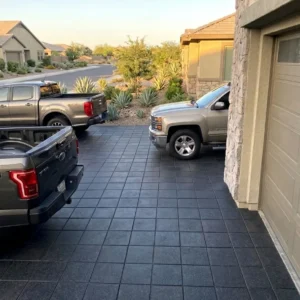
The honest differences are these. Concrete is a single monolithic surface, so it cracks rather than moves, and a crack is a repair rather than a lift-and-relay. Its color is a coating or an integral pigment, so sun and rain shift it over years. It absorbs heat according to its finish color, and a dark stamped deck can be uncomfortable barefoot. Natural limestone is a unit system: individual pieces lift and reset, the color goes all the way through, and the texture is the stone rather than a treatment applied to it. Against that, stone costs more to buy, needs a competent setter, and requires the maintenance discipline described above.
- Repairability: individual stone units can be lifted and replaced, where a monolithic slab is patched.
- Color permanence: stone color is inherent, while concrete color is usually applied or pigmented and shifts with exposure.
- Surface temperature: pale limestone typically runs cooler than dark stamped concrete in the same sun.
- Trades: concrete crews are everywhere on the island, while stone setting is a narrower skill worth booking early.
- Local aggregate: the island’s quarries supply the crushed stone and sand under both options, and that base course is the foundation of either choice.
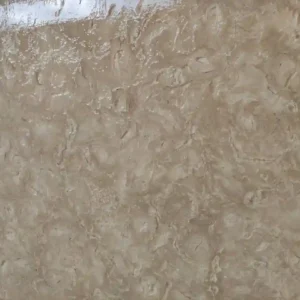
The comparison only really lands in your hand. Hold a piece of the actual stone next to the concrete you are considering, in your own light, wet and dry – order a small sample and settle it in an afternoon rather than in a meeting.
Bedding, joints and what Maria changed about fixing things down
Maria did not change what limestone is. It changed what Puerto Rico expects of the way anything is fixed down, and paving detail has followed. The Puerto Rico Building Code and Residential Code adopted in 2018 were developed from the 2018 I-Codes with local amendments and put in place after the storm on the recommendation of the FEMA Mitigation Assessment Team, with wind resistance recommendations across structure types and risk categories running roughly in the 150 to 200 mph band. Paving is not usually the certified element, but anything loose becomes a projectile at those speeds.
- Elevated terraces and roof decks: mortar-set or adhered over the structural slab, with movement joints carried through the stone.
- At-grade terraces on a compacted base: restrained edges on every free side, not only the ones that show.
- Coping and step nosings: mechanically fixed or fully bedded, never dry-laid on an exposed edge.
- Drainage: sized for a tropical downpour, with falls checked using a level rather than by eye.
- Pedestal systems on roofs: only with units rated for the span, and with a wind-uplift strategy an engineer has signed.
Thickness belongs to the same conversation, and the bed decides it rather than taste. A unit set in mortar over a sound structural slab can run thinner than the same unit on a compacted base, because the bed carries it continuously instead of in patches. A driveway or a service apron wants a heavier section than a shaded courtyard, whatever the two surfaces look like sitting side by side on a sample board. It is worth remembering where that base comes from. Puerto Rico’s quarries work the karst and mogote belt across the north of the island and produce crushed limestone, sand and cement feedstock in real volume, which is exactly the material that goes into the sub-base, the bedding layer and the haunching. The imported stone is the wearing surface; the ground underneath it is almost always island material, and that is the part that decides how long the job lasts.
Repairability is the quiet advantage in a storm-exposed market. After a bad season a unit paving system can be lifted, cleaned, re-bedded and reset with the same stone in the same pattern, without a visible patch. That is worth a great deal on an island that has had to rebuild outdoor space more than once in living memory.
Specify on paper, then confirm with a sample
The specification that survives a project is the one written into documents. Name the material, the finish, the thickness, the format and the edge detail, attach the test data for absorption and density, and state the maintenance regime the client is expected to follow. That last item prevents most of the failures we are asked to diagnose, because it is nearly always a cleaning product rather than a stone that caused them.
Write the schedule so it survives translation. The office issuing the quote and the crew setting the stone do not always work in the same language, and the words that go missing are usually the ones carrying dimensions. Name the material as piedra caliza, say whether you mean losas, losetas or baldosas so nobody has to guess at a size, and be explicit about the terraza and the conten where the local word carries the detail better than an English equivalent does.
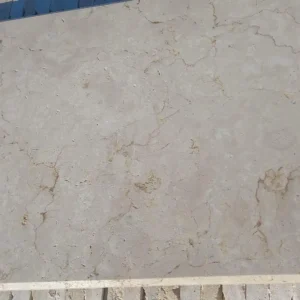
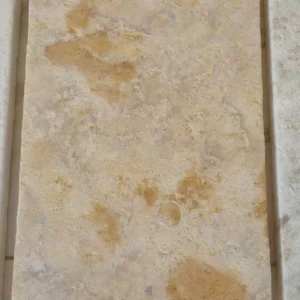
Then confirm the paper with a physical sample on the actual site. Look at it wet. Stand on it barefoot in the middle of the afternoon. Put it next to the wall color, the pool tile and the roof line. Stone is a natural material and the range within a single batch is part of what makes it worth having, so a sample tells you what a photograph never will. Order the full quantity in one production run once you are satisfied, keep a small reserve for repairs, and record the details for whoever maintains the property next. Send us the exposure zone, the square footage and the traffic the surface has to take, and we will come back with the material, the test data and the finish we would actually specify.