

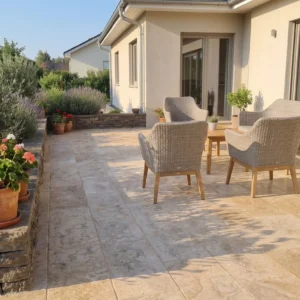





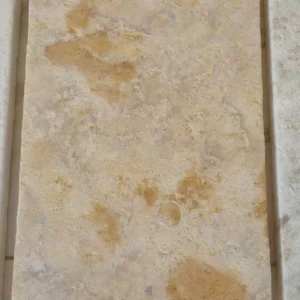
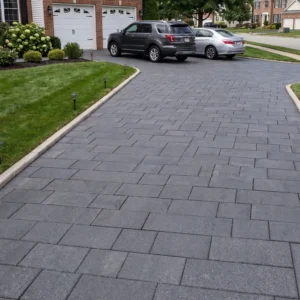
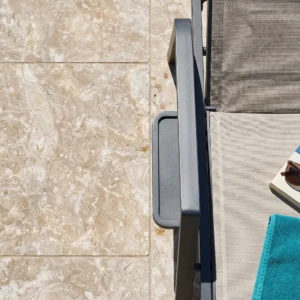
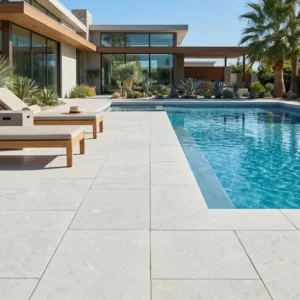
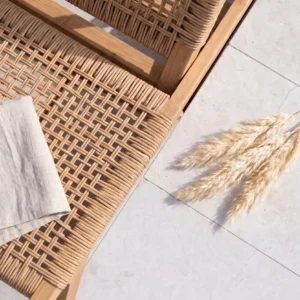
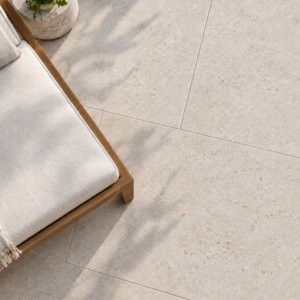
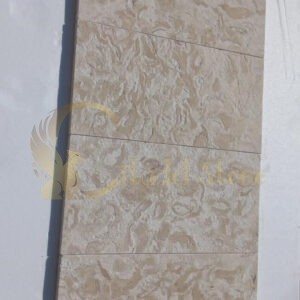


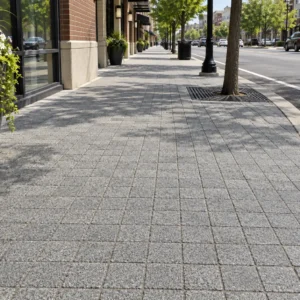
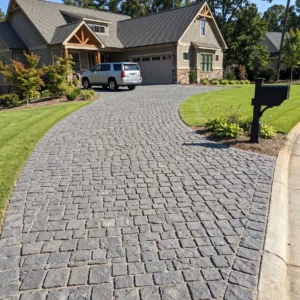
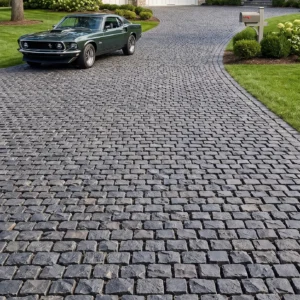
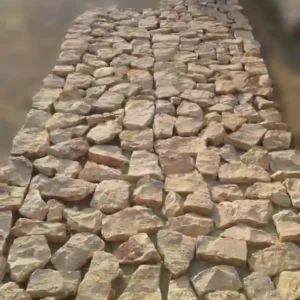
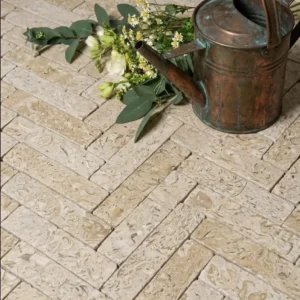
There is a reason limestone conversations go differently in Barbados than almost anywhere else in the Caribbean. This island is a limestone island – a coral cap lifted out of the Atlantic, quarried commercially for three centuries, and built into the great houses, churches and boundary walls that define its older landscape. A Barbadian client looking at a pale limestone terrace is not being introduced to an unfamiliar material. They are being shown a familiar one in a different preparation, and they will judge it against stone they have known their whole lives.
That sets the standard high and makes the specification conversation more technical, not less. The questions that matter here are about density and absorption, about how a surface behaves when salt arrives on the wind, about which finish stays safe when a pool deck is wet, and about where imported calibrated stone genuinely earns its place beside the island own material. This page works through each of them.
Density Is the Whole Specification
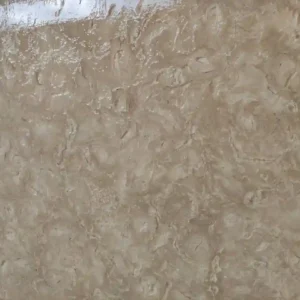
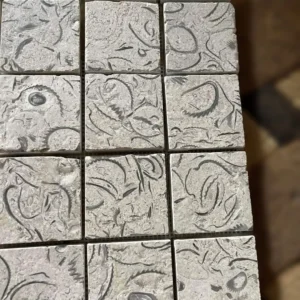
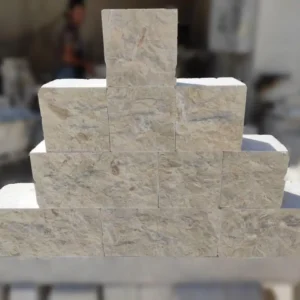
Limestone is not one material but a wide family, running from soft chalky grades that belong indoors to dense, tight-grained stone that carries traffic and shrugs off weather. On a coastal island that distinction stops being academic. Salt arrives everywhere on the trade winds, and it enters stone by exactly the route water does – through open pores. A dense limestone with a low tested absorption figure resists that; an open one drinks salt, holds it, and eventually shows the consequence at the surface.
So the specification runs on published numbers rather than adjectives:
- Tested absorption, requested as a figure rather than described as “low”
- Density class, which governs how the stone takes traffic as well as weather
- Thickness matched to duty – 30mm pedestrian, 50mm minimum vehicular, 60mm where trucks park
- Finish, which decides safety underfoot long before it decides appearance
A supplier who cannot produce those figures for a specific stone is selling a photograph. On a windward Barbadian site that is an expensive way to choose a terrace.
Pale Stone, Tropical Sun
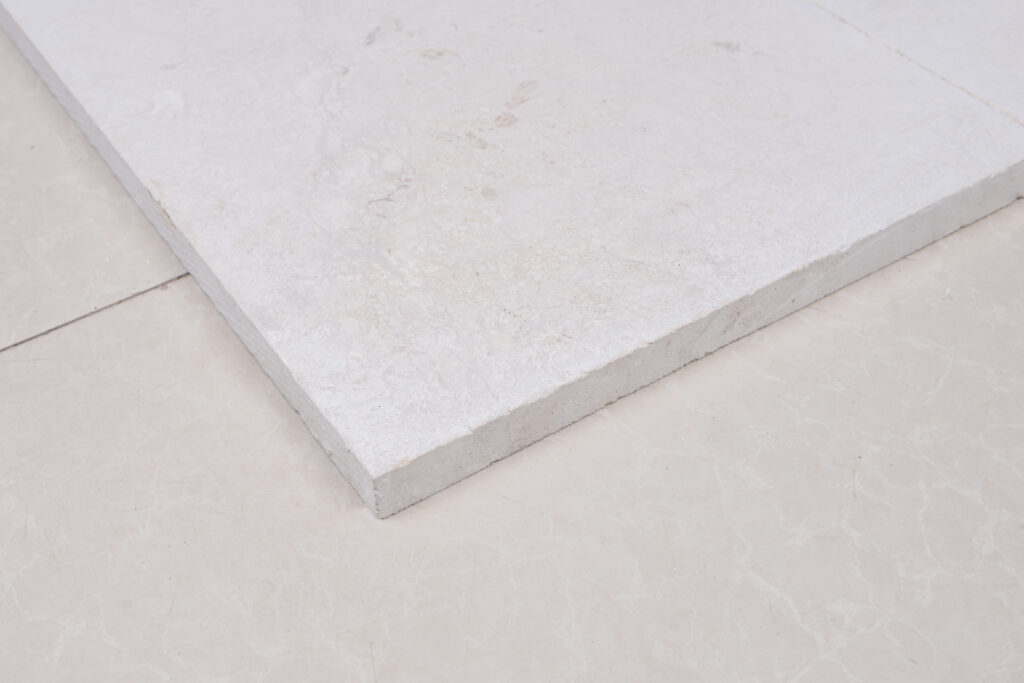
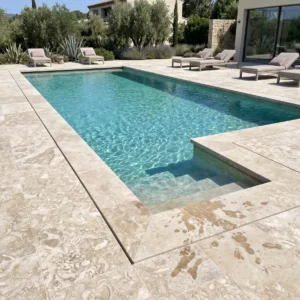
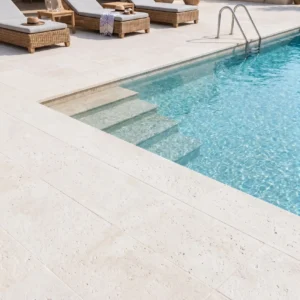
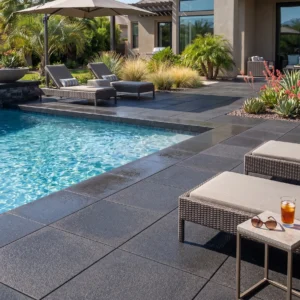
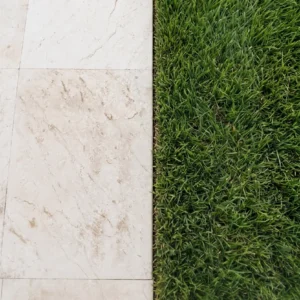
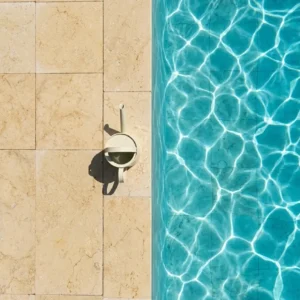
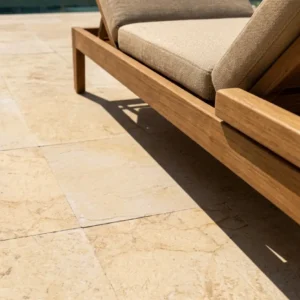
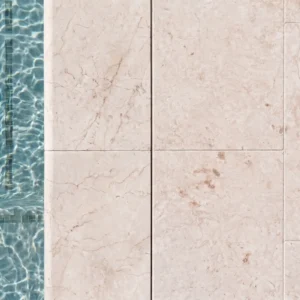
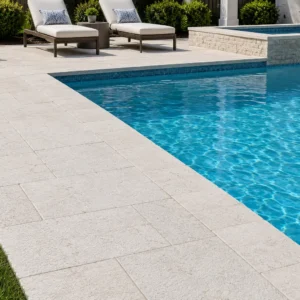
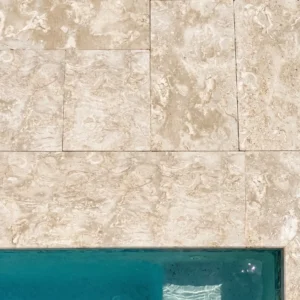
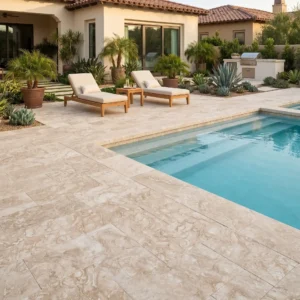
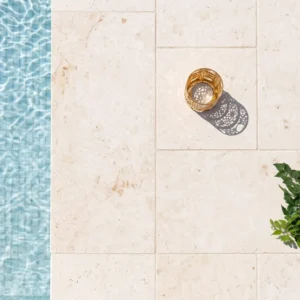
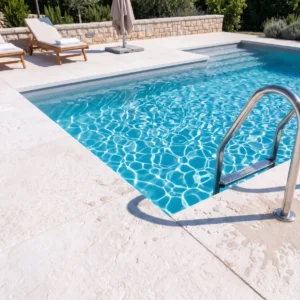
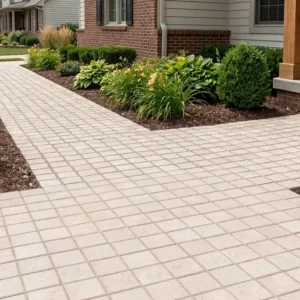
The strongest practical argument for limestone here is thermal. Pale stone reflects rather than absorbs, and the difference between a pale terrace and a dark one at two in the afternoon is the difference between a surface people cross barefoot and one they hop across. On pool surrounds, on the seaward side of a west coast villa, on any terrace that is genuinely lived on through the hot months, that decides the material before aesthetics get a vote.
The practical split most Barbadian schemes land on:
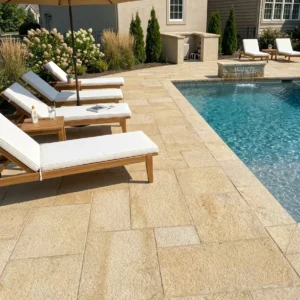
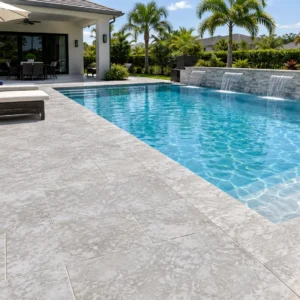
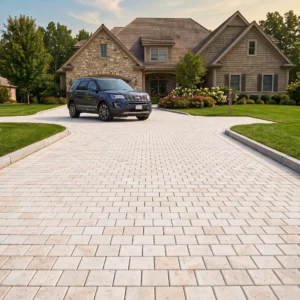
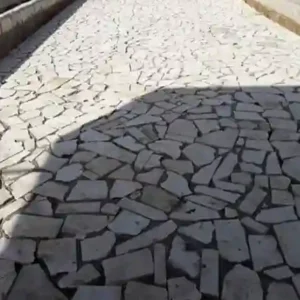
- Pale limestone for pool surrounds and any terrace crossed barefoot
- Pale limestone for west-facing terraces used through the afternoon
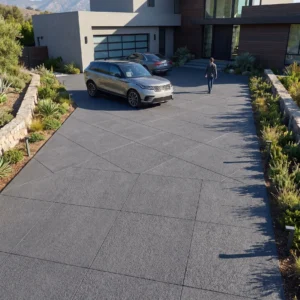
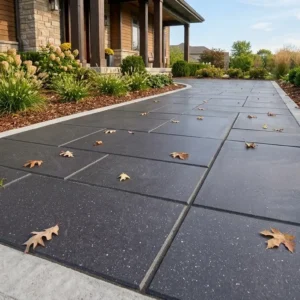
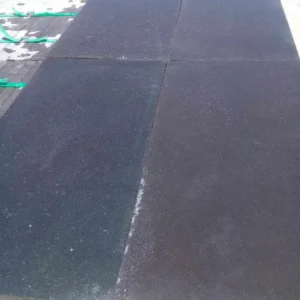
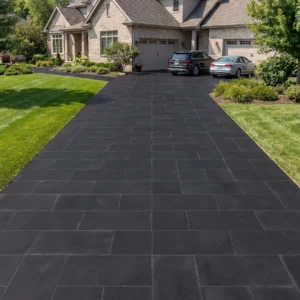
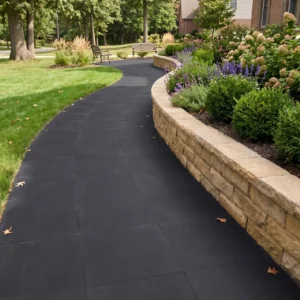
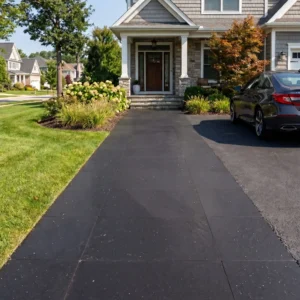
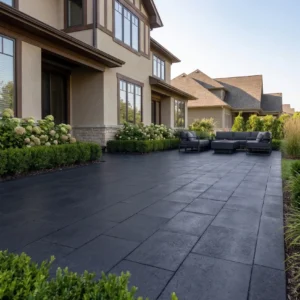
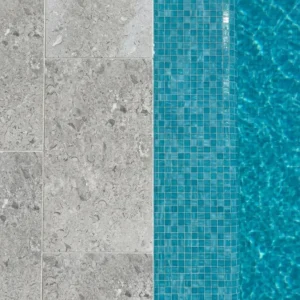
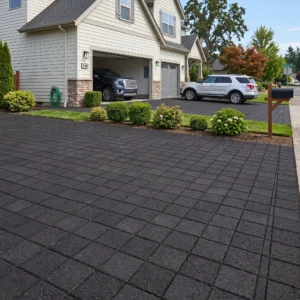
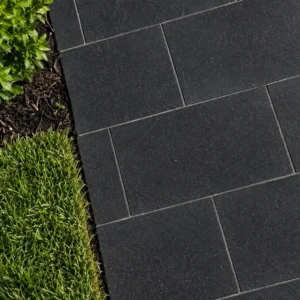
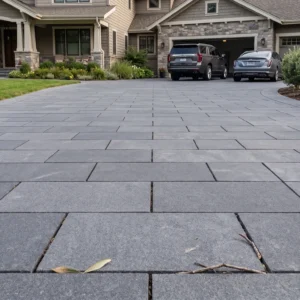
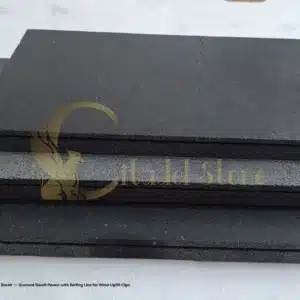
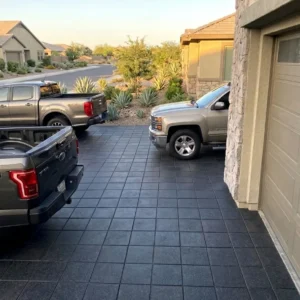
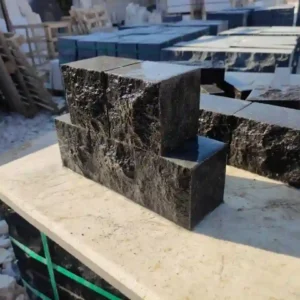
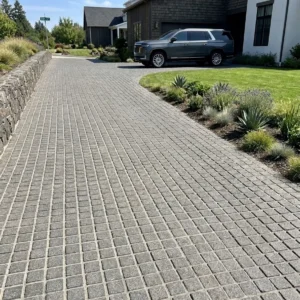
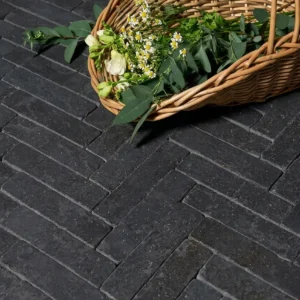
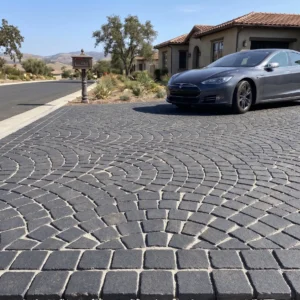
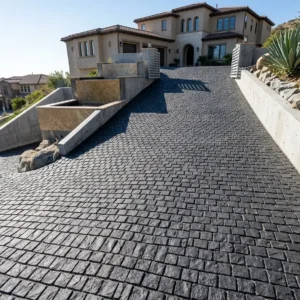
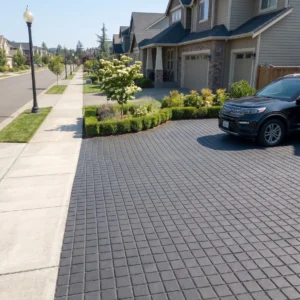
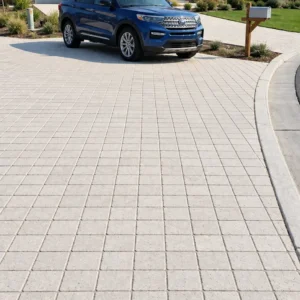
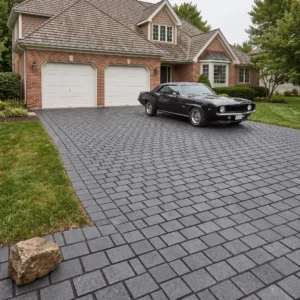
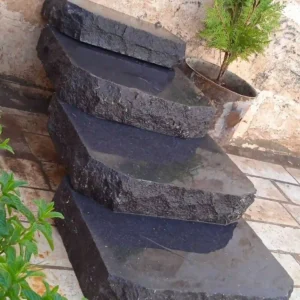
- Darker, denser stone for driveways, aprons and service courts
- Darker stone under cover, where heat underfoot never arises
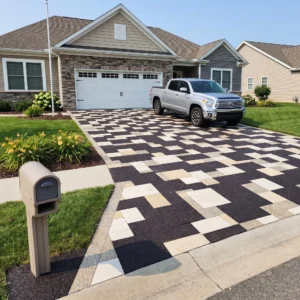
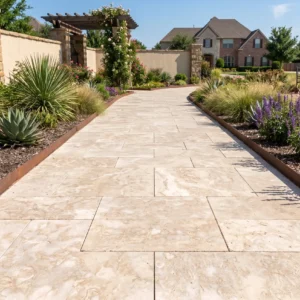
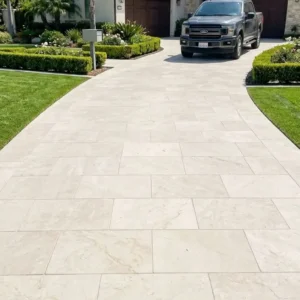
Where the calculation reverses is under vehicles and in shade. Driveways, service courts and covered areas take darker, denser stone comfortably, because heat underfoot is irrelevant where nobody walks barefoot and load-bearing matters more. Plenty of good Barbadian schemes run pale limestone across the terrace and pool surround, then switch to a darker, harder stone at the driveway – not indecision, but each material used where its properties actually pay.
Coral Limestone and Imported Limestone, Side by Side
Comparing limestone against the alternatives Barbadian buyers actually consider is worth doing plainly. Against poured concrete, limestone wins on appearance, on repairability and on the fact that it does not craze across a slab in a decade of sun; concrete wins on initial cost and on speed. Against porcelain, limestone wins on authenticity, on thermal behavior under bare feet and on the way it ages into a property rather than dating with a trend; porcelain wins on absorption figures and on price per square foot. Against darker igneous stone, limestone wins on heat and loses on hardness. None of those comparisons has a universal answer – they have a site-specific one, which is the entire argument for specifying by exposure rather than by preference.
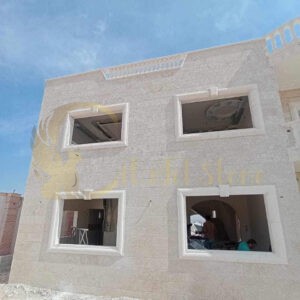
The temptation for an outside supplier is to argue that imported stone is superior. It is not a defensible position on this island, and Barbadian builders will not thank anyone for making it. Local coral limestone is a working material with a living industry and deep cultural roots, and it does things imported stone cannot: it belongs to the place, it weathers into the landscape, and its texture carries a history no calibrated slab can imitate.
The honest division is by task:
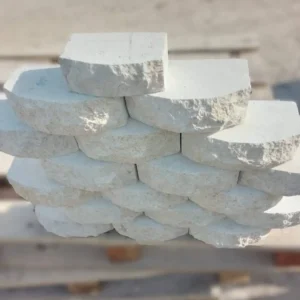
- Coral limestone for walling, heritage repair, boundary work and character texture
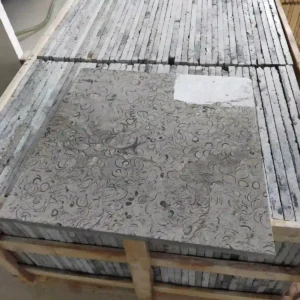
- Imported dimension limestone where thickness must be identical across a large floor
- Imported where color must repeat across phases delivered months apart
- Imported where a drawing demands specific formats, borders or step treads cut to size
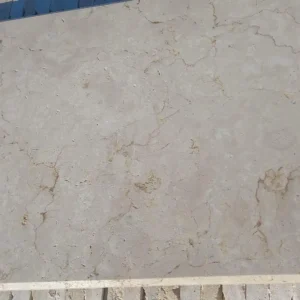
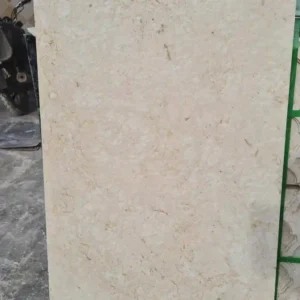
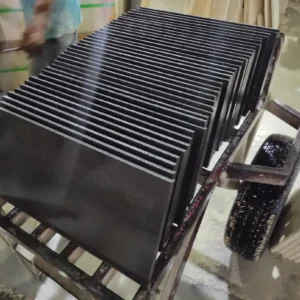
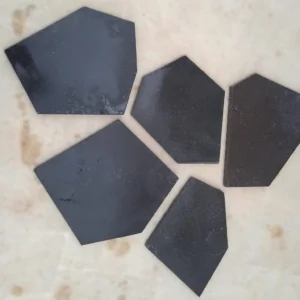
Where a scheme wants the pale register at larger scale, cut-to-size limestone slabs cover the oversized pieces – pool copings in long runs, single-piece thresholds, step treads without a joint down the middle – that standard paver formats cannot deliver.
Said plainly to a client, that division builds trust rather than costing a sale. It is also simply true, which is the more durable reason to say it.
Finish, Safety and the Pool Deck Question
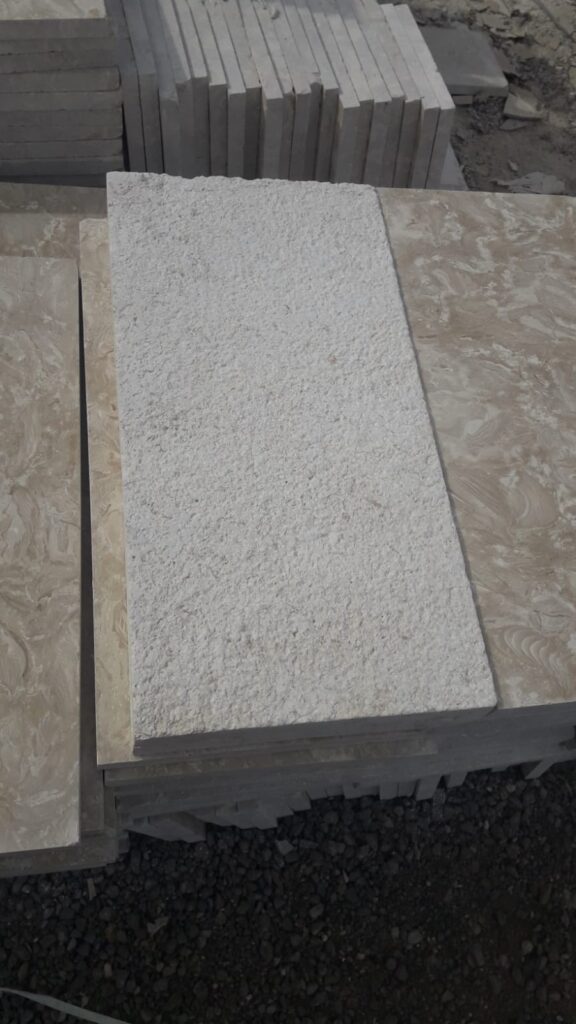
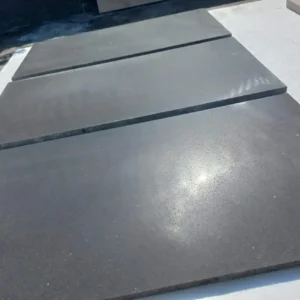
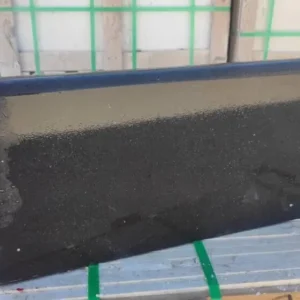
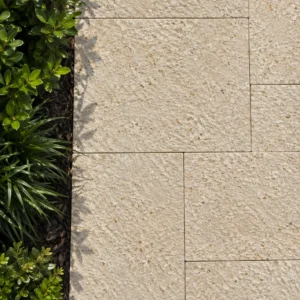
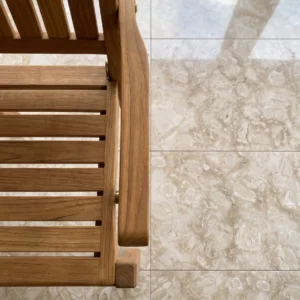
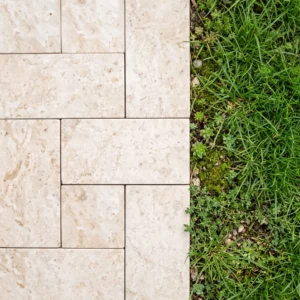
Around water the finish is a safety specification, not a style choice. Brushed and bush-hammered faces give wet feet something to hold, and they age well as the texture opens slightly with weathering. Honed faces belong under cover; polished stone has no outdoor role in this climate at all – sun, salt and wet feet arrive together here, and a polished exterior surface is an accident being scheduled.
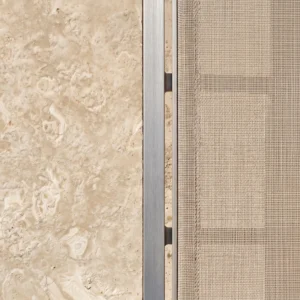
Two details separate a good Barbadian pool deck from a merely handsome one. Falls should carry splash-out away from the coping rather than back toward it, so the joint line is not permanently wet. And the coping profile – bullnose, drop-face or square – should be chosen for how swimmers actually leave the pool rather than for how it photographs. the finish library with grip textures shows each option side by side, and samples of two finishes in the same stone are worth handling together before anything is cut.
Living With Limestone on a Salt Coast
Maintenance here is straightforward and mostly about restraint. Salt film rinses off with plain fresh water, which does the job better than any product sold for the purpose. Sand, the other constant, is abrasive and should be swept rather than ground underfoot. Acidic cleaners – and the vinegar remedies that circulate online – etch limestone and should never be used on it.
The routine that actually keeps a limestone terrace well here:
- Fresh water rinse for salt film, more often on windward elevations
- Sweep sand before it is walked in and ground across the surface
- No acids, no vinegar, no supermarket descalers – limestone reacts
- Check joints annually and top up before water finds a route beneath
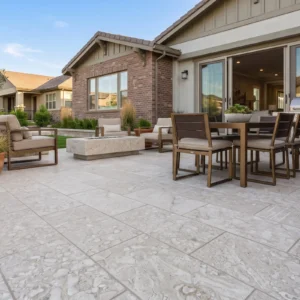
Sealing is optional and situational: a breathable penetrating sealer earns its place around dining terraces and outdoor kitchens where staining is likely, and does no harm elsewhere. What actively fails in this climate is any film-forming coating, which traps moisture beneath itself and degrades under UV until it has to be stripped. A limestone terrace maintained with fresh water, a broom and occasional patience will outlast several rounds of furniture.
Landing Limestone Pavers in Barbados
One more Barbadian specific belongs in any limestone decision: the island water. Much of Barbados draws its supply through the limestone aquifer beneath it, and rainwater harvesting into on-lot storage is a normal part of building here rather than an eco-flourish. Where a terrace or roof drains toward a tank, what gets applied to that stone matters – which is a further argument for plain water and restraint over chemical cleaners and coatings on any surface within a catchment path.
Freight runs directly into the deep-water berths at the Port of Bridgetown – no transshipment leg, which is a genuine advantage over neighboring islands that must break bulk twice. On arrival a local broker files the entry, Common External Tariff duty applies at the dimension-stone line, VAT is charged at 17.5 percent, and environmental levies are added. Those lines belong on the quote separately so that two quotes can actually be compared.
Timing is worth planning as deliberately as specification. Sailings from the US East Coast run to a schedule rather than on demand, and a west coast villa being turned around between rental seasons has a narrow window in which stone must arrive, acclimatize on site and be laid. Buyers who order against the sailing calendar rather than the builder optimism generally land their stone with a fortnight in hand; buyers who do not spend October chasing a container. The same applies to samples – allow a week for them to reach the island before any decision hangs on them.
One limestone-specific note on ordering: because absorption and density vary between quarry runs of nominally the same stone, a terrace ordered in phases can arrive in visibly different batches. Order the whole scheme together where the budget allows – field, coping, steps, borders – and ask for confirmation that it ships from one run. It is the cheapest guarantee of a terrace that reads as one surface.
Order Limestone Pavers for Barbados
A last word on where limestone should not go, because an honest supplier names the limits. An unsheltered driveway on the windward side, taking vehicle loads and continuous Atlantic salt, asks more of a pale sedimentary stone than it comfortably gives – that is basalt ground, and saying so costs a sale occasionally and saves a relationship regularly. Interior wet rooms with heavy chemical cleaning schedules are similarly better served elsewhere. Everywhere else on this island – terraces, pool surrounds, courtyards, covered galleries, garden paths – dense pale limestone is close to the ideal material, which is presumably why Barbados has been building with its own version of it since the seventeenth century.
Send the terrace dimensions, the exposure and whether a pool is involved, and the quote returns with tested absorption figures, one calibrated thickness, the grip finish the wet areas need, and the landed-cost lines itemized. Request samples before ordering and test them in Barbadian conditions – wet one, leave one in the sun, walk on the finish barefoot. Then ask for the project quote. Citadel Stone supplies dense pale limestone into Barbados, chosen by tested figures and cut to the drawing, for terraces that stay cool underfoot and honest beside the island own coral stone.