


















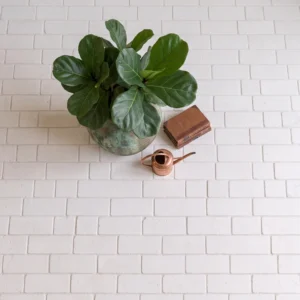
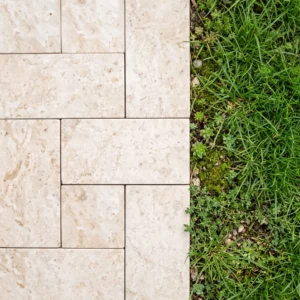
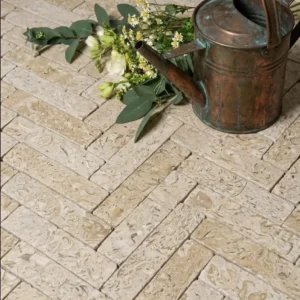
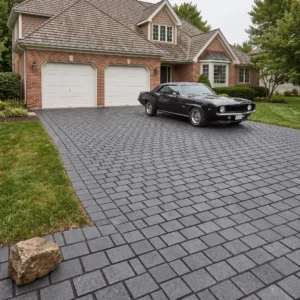




Barbadian houses are designed to be open. Louvres and jalousies, verandas deep enough to live on, rooms arranged so the trade winds can cross them – the architecture assumes air movement rather than sealed climate control, and that assumption reaches all the way down to the floor. A floor in such a house is not a decorative decision. It is the surface that stays cool when the afternoon turns still, that takes sand from every beach visit without complaint, and that runs out through open doors onto a covered terrace where half the living actually happens.
Limestone answers that brief unusually well, which is why it appears in Barbadian houses from restored plantation properties to new west coast builds. This page sets out what the tile has to be to work here: the finishes that suit an open, humid house, the formats that suit Barbadian rooms, how interior and terrace floors are specified as one, and how the material lands on the island with its paperwork in order.
Cool Underfoot, and Why That Decides Rooms
There is a second argument that matters just as much in a rental or second-home context: a stone floor does not date, and it does not wear out on a schedule. Vinyl and engineered timber in a humid, salt-adjacent house are replacement items with a predictable life; a limestone floor laid properly outlives several rounds of furniture, and its patina is generally read as character rather than damage. For owners letting a property between visits, that difference shows up as fewer turnaround surprises and a floor that photographs as well in year eight as in year one.
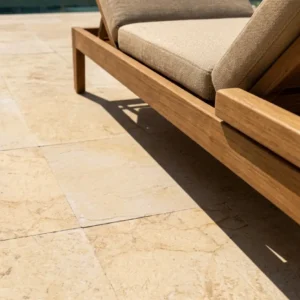
Thermal comfort is the first argument for a stone floor in this climate and the one residents notice daily. Stone holds temperature rather than generating it, so a limestone floor shaded from direct sun stays noticeably cooler than the air around it through the hot months – a genuine comfort difference in a house that relies on cross-ventilation rather than constant air conditioning. In practice that shapes where the material goes:
- Living and dining rooms, where the floor is walked barefoot for hours
- Entries and passages, which take the beach traffic that defines island living
- Covered verandas and galleries, the rooms Barbadians actually use in the evening
- Bathrooms and outdoor showers, where a cool, textured surface beats every alternative
The one place to think carefully is any floor in full, unshaded sun behind glass, where even pale stone will warm. That is a shading and orientation question more than a material one, and it is worth resolving on the drawing.
Finishes for an Open House
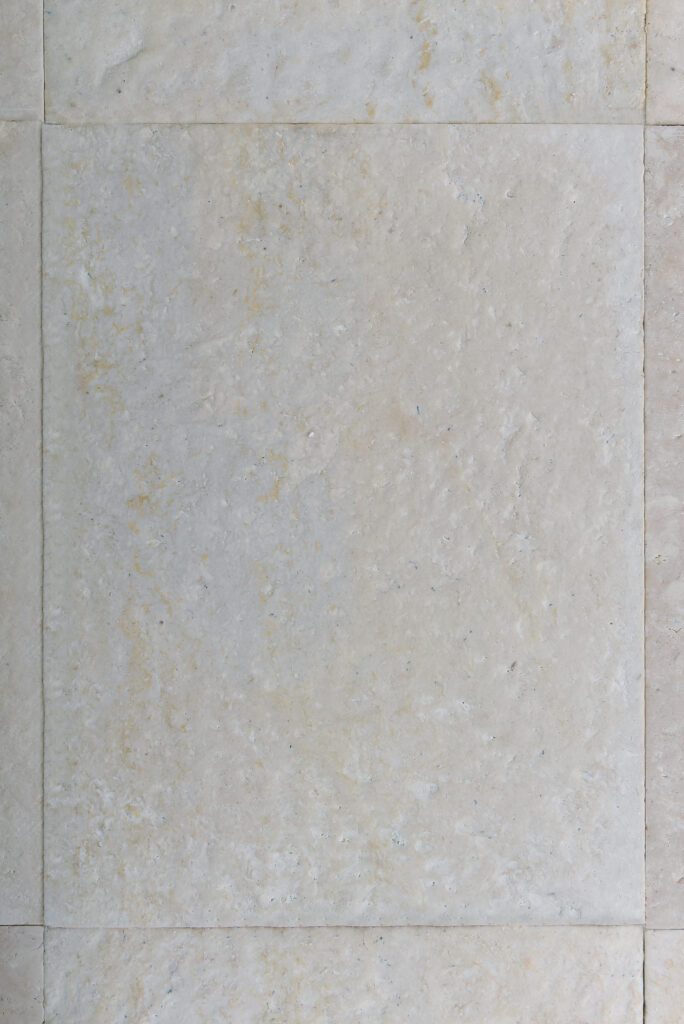
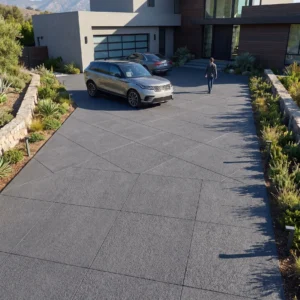
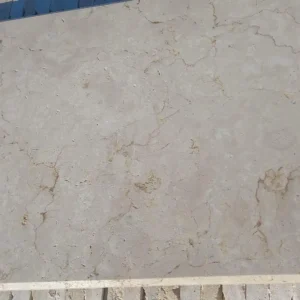
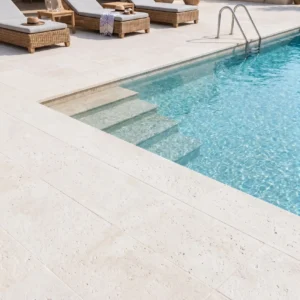
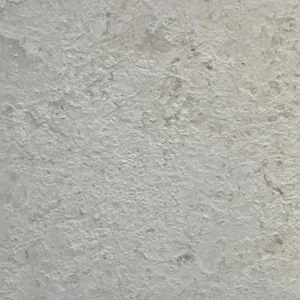
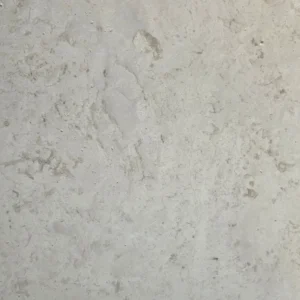
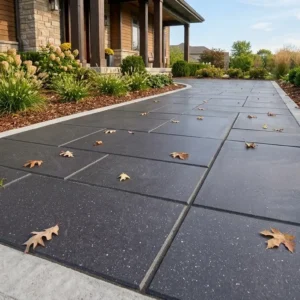
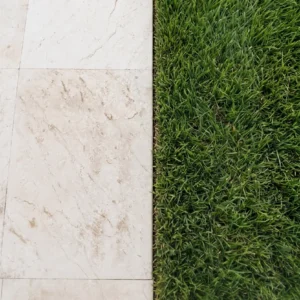
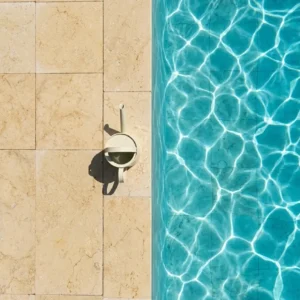
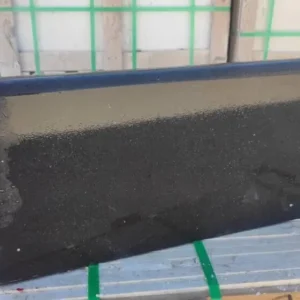
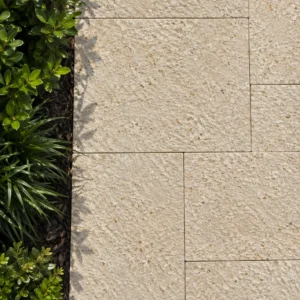
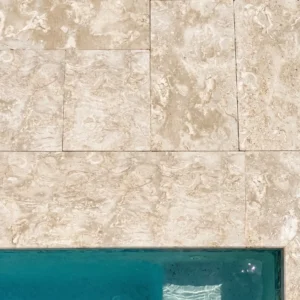
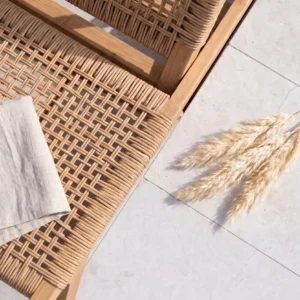
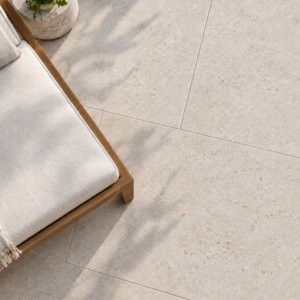
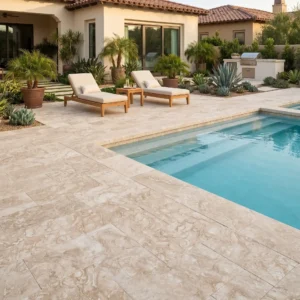
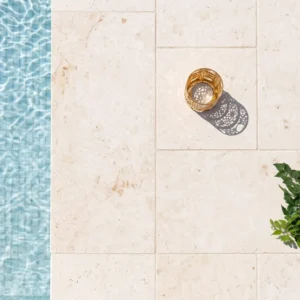
Finish decides how a limestone floor behaves far more than color does, and in a house where doors stand open and feet arrive wet, the choice is practical before it is aesthetic. Honed faces give the smooth, matte floor most interiors want: comfortable, easy to clean, quiet underfoot. Brushed and textured faces introduce grip where water arrives – entries, veranda thresholds, bathrooms, the run out to a pool. Polished stone belongs in formal interior rooms well away from water, where its reflectivity is an asset rather than a hazard.
The practical shorthand for a Barbadian house:
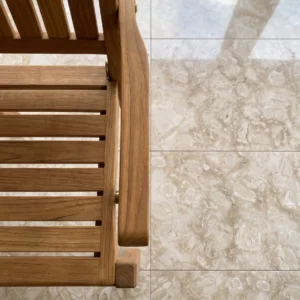
- Honed for main rooms, passages and anywhere furniture moves
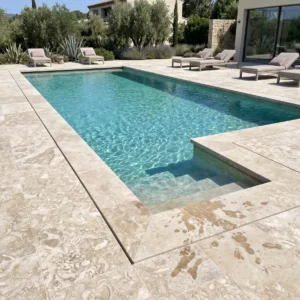
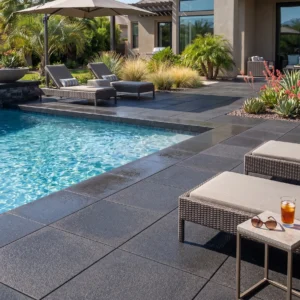
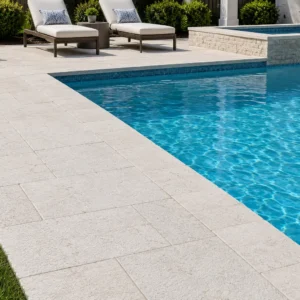
- Brushed or textured for entries, verandas, bathrooms and pool-side thresholds
- Polished only in formal interior rooms away from water and open doors
- One stone, two finishes, so behaviour changes but the floor still reads continuous
The Barbadian refinement is to use two finishes of the same stone in one scheme, so the floor reads continuous while its behaviour changes exactly where it needs to. The full finish library shows each texture side by side, and samples of two finishes in the same stone are worth requesting together – the difference is easier to feel than to photograph.
Formats and Layouts for Barbadian Rooms
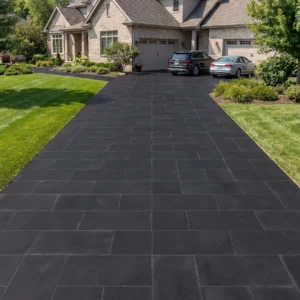
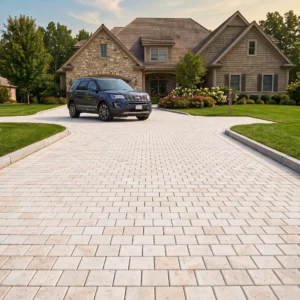
Room proportions here reward larger formats. Older Barbadian houses run generous ceiling heights and long connected spaces; newer west coast builds open rooms onto terraces through wide sliding walls. Both suit fewer, bigger tiles:
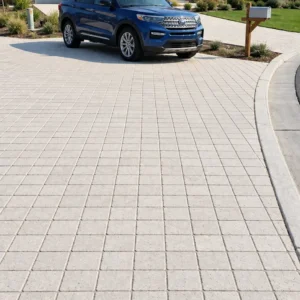
- Large-format tiles for main rooms, where fewer joints read calm and modern
- Rectangular planks laid to run with the length of a room or out toward the view
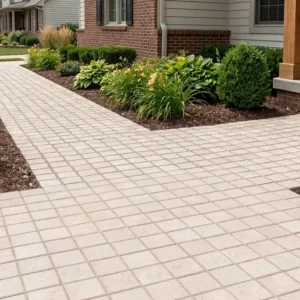
- Modular sets where a floor should read traditional rather than contemporary
- Smaller formats reserved for bathrooms and level changes, where cuts are frequent
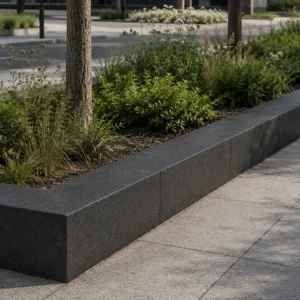
Where a scheme runs pale throughout, cut-to-size limestone slabs handle the oversized pieces – island counters, thresholds, shower trays – that a standard tile format cannot cover without a joint in the wrong place.
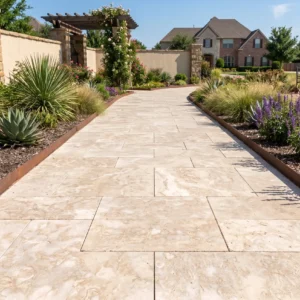
Layout carries the same weight indoors as outdoors: a floor whose courses run out through the doors toward the sea reads as one continuous room, while the same tiles laid crosswise stop the eye at the threshold. the pattern library and its diagrams covers the bonds worth considering before the cutting list is fixed.
Inside to Outside, Specified as One Floor
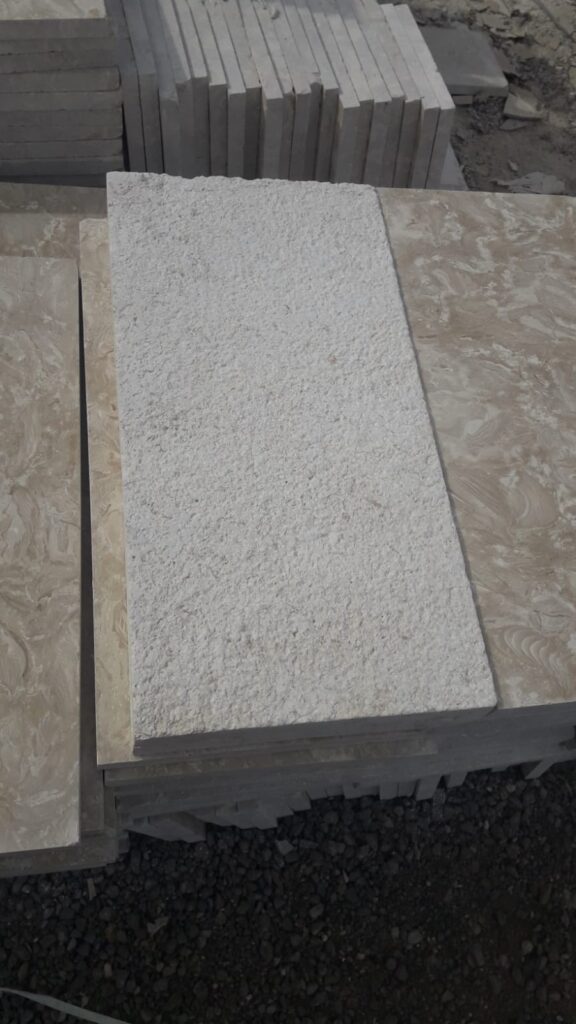
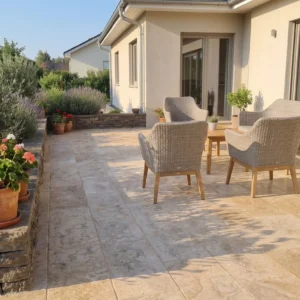
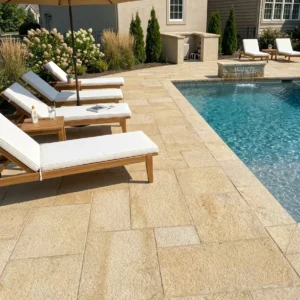
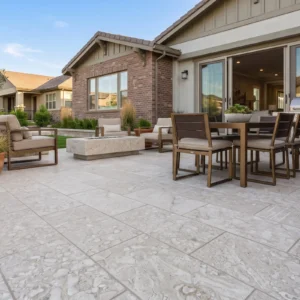
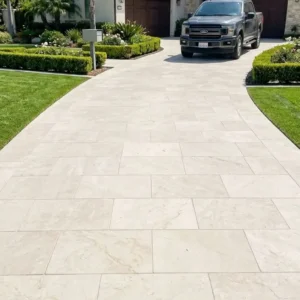
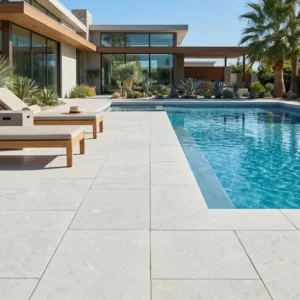
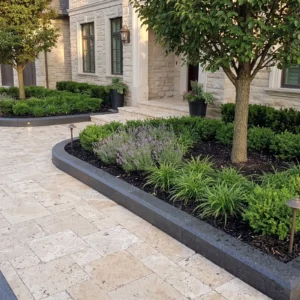
The most valuable thing limestone does in a Barbadian house is disappear across the threshold. Where an interior floor and a covered terrace share the same stone, the same thickness and the same joint spacing, the two spaces read as a single room that happens to have weather at one end – and in a climate where the veranda is genuinely inhabited, that is worth more than any decorative flourish.
Three details make it work. The finishes differ – finer inside, textured outside – while the stone stays identical. The levels are planned so water sheds away from the threshold rather than toward it, which on a windward elevation matters in every heavy shower. And both areas are ordered together, in one batch and one thickness, because matching a terrace to an interior floor cut months earlier is a gamble no supplier can honestly promise to win.
Living With a Stone Floor in the Tropics
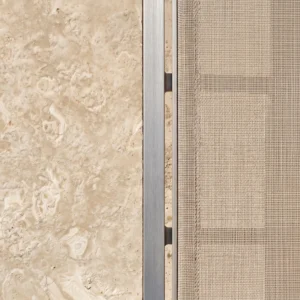
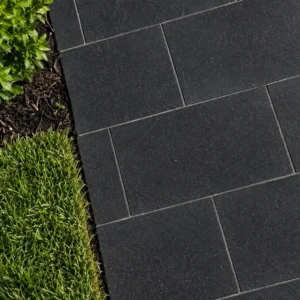
Grout and joint width deserve a decision rather than a default. Wide joints in a large-format floor break the calm the format was chosen for; joints too tight leave no room for the small dimensional variation natural stone carries even when calibrated. Three to five millimeters suits most Barbadian interior work, with a tone chosen close to the stone so the floor reads as a surface rather than a grid. Where the floor continues outdoors the joint usually opens slightly, both for movement and for drainage, and that small change is easier to accept when it was planned than when it appears.
Maintenance in Barbados is mostly about salt and sand rather than dirt. Sand is abrasive and travels indoors on every pair of feet, so mats at doors and regular sweeping do more for a floor than any product. Salt arrives as a film on coastal properties and is removed by plain fresh water more effectively than by aggressive cleaners, which limestone dislikes.
A workable routine for a coastal Barbadian floor:
- Mats at every door that opens to sand, and sweeping before mopping
- Plain fresh water for salt film – it dissolves without help from chemicals
- No acidic cleaners, ever, and no vinegar remedies from the internet
- Ventilation through the low season, which matters more than any product
Sealing is a considered decision rather than an automatic one. A breathable, penetrating sealer suits interior floors in humid conditions; heavy film-forming coatings can trap moisture in a house that spends months closed up between visits. Acidic cleaners have no place on limestone anywhere. Where a floor is left empty through the low season, ventilation matters more than any treatment – a closed house in a Barbadian summer is a humidity chamber, and floors that suffer usually suffered from stillness rather than from stone.
Landing Tiles at Bridgetown
Tile shipments follow the same route as any dimension stone into Barbados: deep-water berths at the Port of Bridgetown take containerized and palletized freight directly from US East Coast sailings, with no transshipment leg. A local broker files the entry, CET duty applies at the dimension-stone line, VAT is charged at 17.5 percent, and environmental levies are added on top – all of which belongs on the quote as visible lines rather than a single blended figure.
Lead times are the other half of the calculation. Sailings from the US East Coast run on a regular rhythm rather than daily, so a floor needed for a specific handover date should be ordered against the sailing schedule rather than the installation schedule – the two are usually a fortnight apart. Buyers renovating a west coast villa between rental seasons plan backward from the sailing, and the ones who do not are the ones chasing a container in October.
One tile-specific note: interior floors are unforgiving of thickness variation in a way exterior paving is not, so calibration matters more here than anywhere else in the order. Confirm that the whole floor – every room, every format – comes from one calibrated run, and that the terrace portion matches it. That single question prevents the most common and most expensive tiling complaint on the island.
Order Limestone Tiles for a Barbadian Floor
Send the room dimensions, the finish preference and whether the floor continues outdoors, and the quote returns with formats, one verified thickness, both finishes if the scheme runs inside to out, and the landed-cost lines itemized. Order samples first and look at them in the actual room, in Barbadian light, at the hour you use it. Then request the full quote and we will price the floor as one order. Citadel Stone supplies calibrated limestone tiles into Barbados – one batch, matched finishes, cool underfoot from the front door to the far end of the veranda.