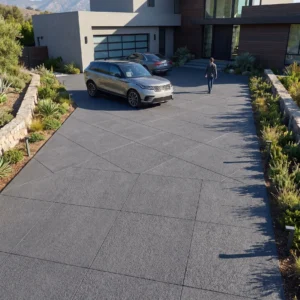
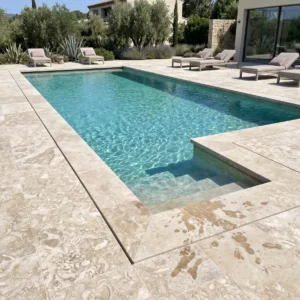

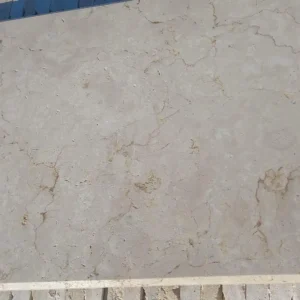
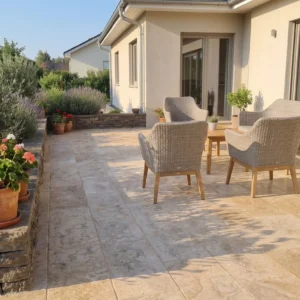
















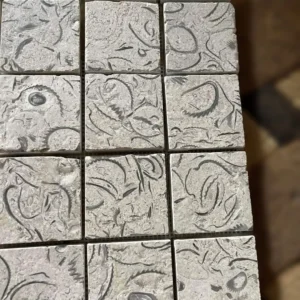
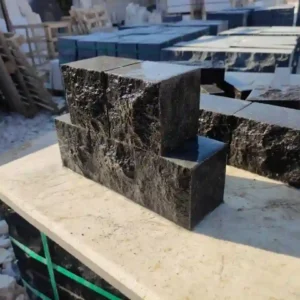
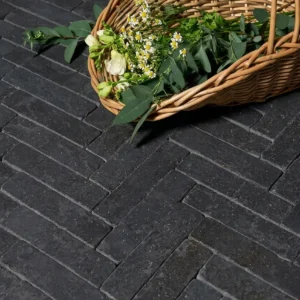
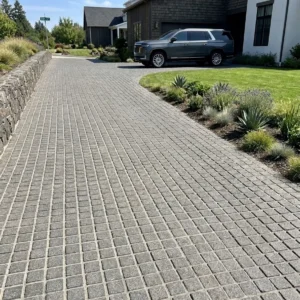
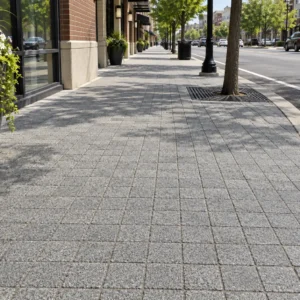
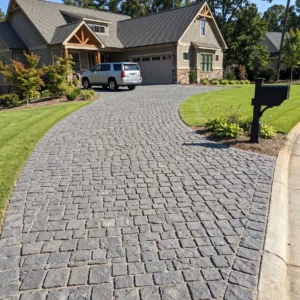
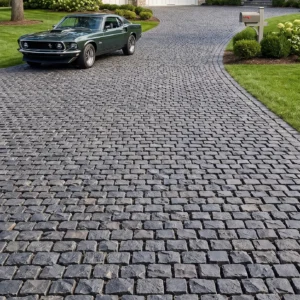
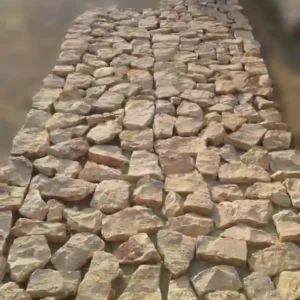
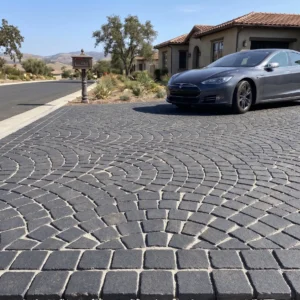
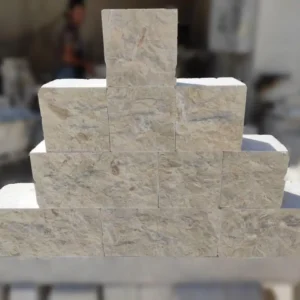
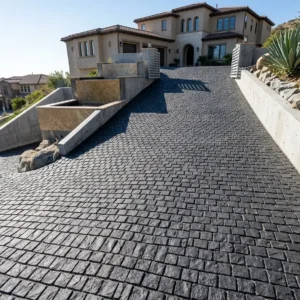
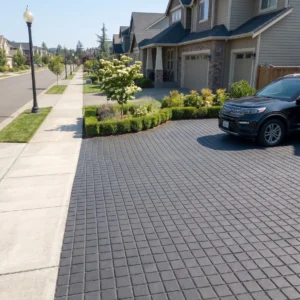
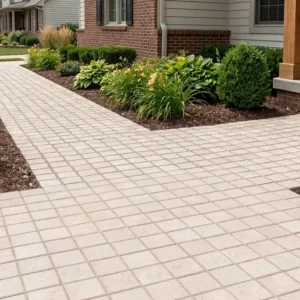
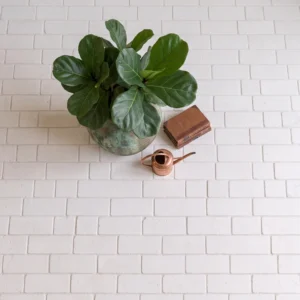
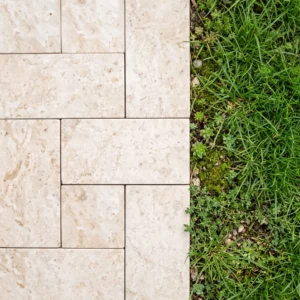
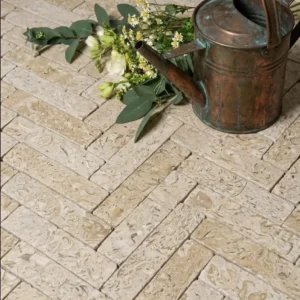




Granite cobblestones in Arizona perform differently depending on one variable most specs underestimate — cumulative UV dose. Unlike thermal cycling, which affects expansion and contraction rates, UV exposure works on the molecular surface of granite over months and years, breaking down feldspar minerals and altering the iron oxide compounds responsible for warm amber and rose tones. Understanding this mechanism changes how you select, install, and maintain granite cobblestones in Arizona’s desert environment.
UV Exposure and Granite Cobblestone Performance in Arizona
Arizona’s solar radiation index regularly exceeds UV Index 11, placing it among the highest in North America. That sustained photon bombardment affects granite differently than softer sedimentary stones — the crystalline matrix resists degradation well, but surface oxidation of iron-bearing minerals still shifts color perception over a five-to-ten-year horizon. You’ll notice this most in red and pink granite varieties, where ferrous compounds gradually bleach toward a muted terracotta tone when unprotected.
The good news is that granite’s dense interlocking crystal structure makes it among the most UV-resistant natural stones available. Compressive strength values for quality granite cobblestones are high — request the test report for the batch you are buying — and that structural integrity doesn’t degrade under UV load the way softer limestones or sandstones do. What changes is surface chemistry, not structural performance — and that’s a distinction worth holding onto when you’re evaluating material options.
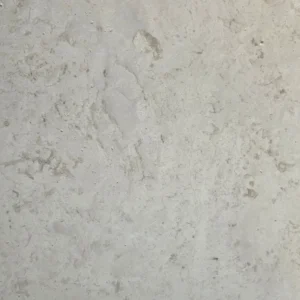
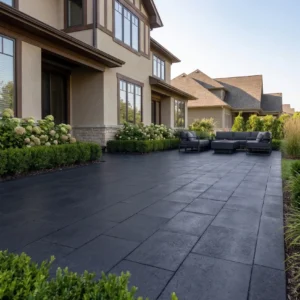
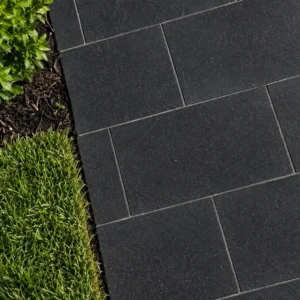
- Dark grey and charcoal granite varieties show the least visible UV-related color shift over time
- Pink and red granite cobblestones benefit from impregnating sealers with UV-inhibitor chemistry applied every 3 to 4 years
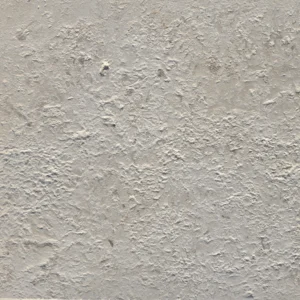
- Thermal-finish surfaces scatter incident UV more uniformly than polished faces, reducing localized bleaching
- Flamed or bush-hammered textures are preferred in direct sun applications across southern Arizona
Selecting the Right Granite Cobblestone Variety for Arizona
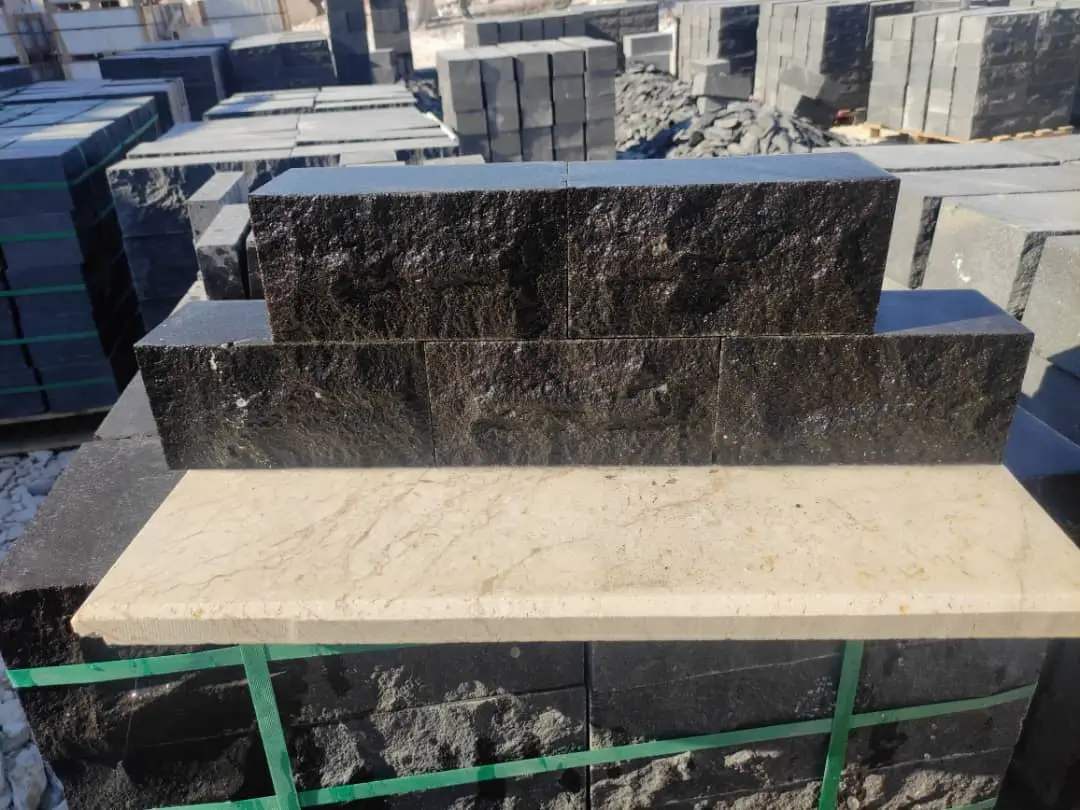
Citadel Stone stocks granite cobblestones in Arizona in multiple standard formats, including the widely specified 4x4x8 cobblestone in Arizona, as well as smaller sett profiles suited to pedestrian walkway and garden edging work. Each batch is sourced from our selected premium quarries and inspected for color consistency and dimensional tolerance before reaching the warehouse — something that matters significantly when you’re matching existing installations or running long border runs.
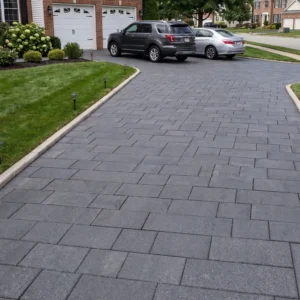
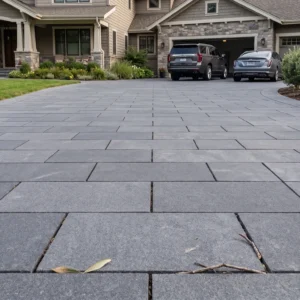
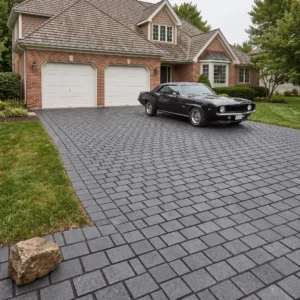
Belgian block granite cobblestones in Arizona represent the premium end of the cobblestone spectrum. Their oversized geometry — typically running 4x5x10 to 4x6x12 inches — provides a visual weight and historical character that smaller setts can’t replicate. In high-exposure zones like open driveways and commercial motor courts, the thicker cross-section also resists surface spalling better under freeze-thaw cycling at higher elevations.
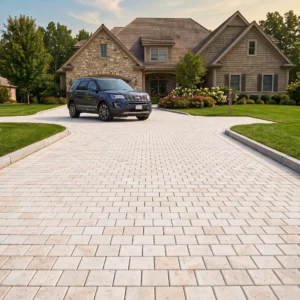
For projects where tight radius curves are involved — granite cobble borders along curved driveways, for instance — smaller sett profiles give you the flexibility to maintain smooth lines without cutting waste. A 4x4x4 sett negotiates a 10-foot radius curve cleanly; a full Belgian block profile requires cuts every third or fourth unit on curves tighter than 15 feet.
- Granite cobble setts in the 3x3x6 range offer the tightest pattern control for curved garden borders
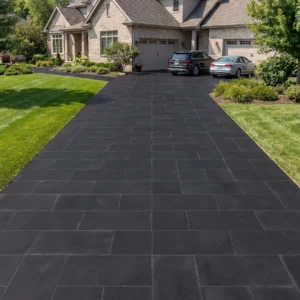
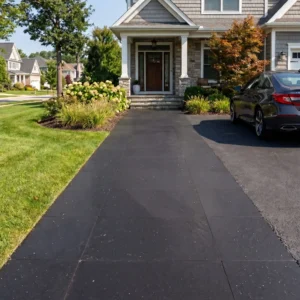
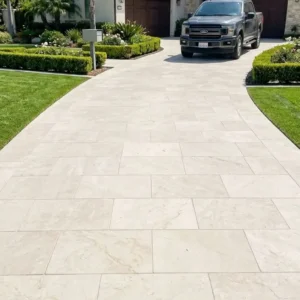
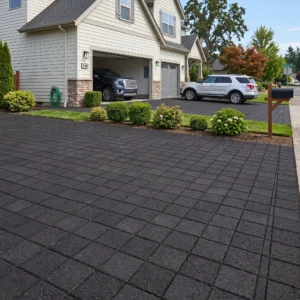
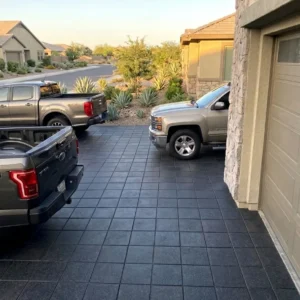
- 4x4x8 cobblestone profiles deliver the best balance of installation speed and load distribution for driveways
- Belgian block profiles are most effective in commercial entryways where visual impact drives the specification
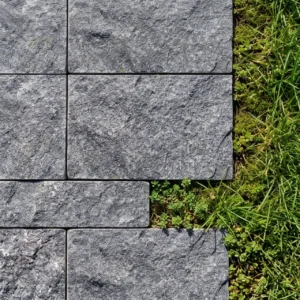
- Silver-grey and dark graphite tones hold their appearance longest under Arizona’s UV load
- Tumbled finishes add character to residential applications and reduce glare compared to split-face profiles
Granite Cobblestone Walkway Design and Layout in Arizona
Designing a granite cobblestone walkway in Arizona requires you to think about thermal mass differently than a contractor in a temperate climate would. Stone surfaces in Phoenix accumulate heat through the afternoon hours, and walkways on south or west exposures can reach surface temperatures that exceed comfort thresholds for barefoot use. Your layout decisions — specifically how much shade coverage the walkway receives — directly affect which finish texture you should specify.
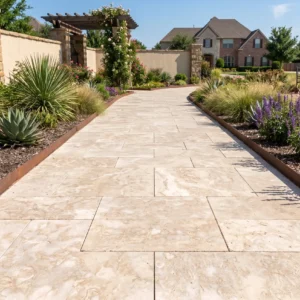
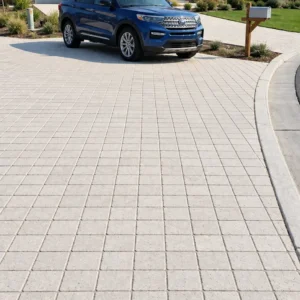
In Scottsdale, where residential landscape design frequently integrates cobblestone walkways with desert planting schemes, the most successful installations use a running bond or random ashlar pattern with gaps maintained at 3/8 to 1/2 inch, filled with polymeric sand. That joint width is narrow enough to resist weed intrusion but wide enough to allow surface drainage at the 2% cross-slope minimum required in Arizona’s monsoon season.
Pattern direction matters for water management. Running bond patterns oriented perpendicular to the slope direction channel water laterally to drainage edges. Herringbone patterns distribute runoff more uniformly but create slightly higher hydraulic resistance — useful on very low-slope walkways where you want to slow water velocity and reduce erosion on adjacent planting areas.
- Specify a minimum 4-inch compacted gravel base for pedestrian walkways; increase to 6 inches where vehicular crossings occur
- Polymeric sand in light grey or buff tones complements granite’s natural color range without visual distraction
- Edge restraints on both sides of the walkway prevent lateral migration, which is the most common long-term failure mode in sandy Arizona soils
- Maintain a 2% minimum cross-slope across the entire walkway surface for monsoon drainage compliance
Granite Cobble Border and Edger Blocks in Arizona Landscapes
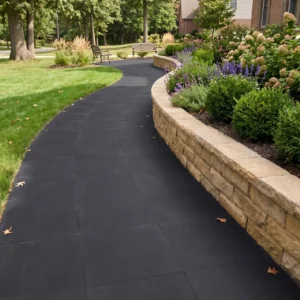
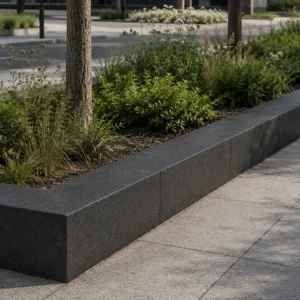
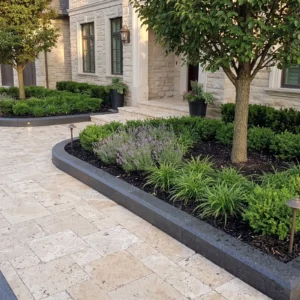
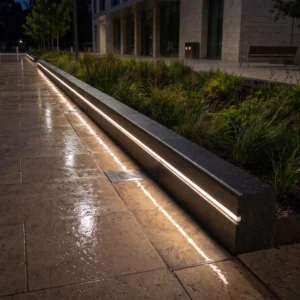
The granite cobble border application is one of the most forgiving uses of this material in terms of UV tolerance — border stones typically receive partial shade from adjacent plantings, hardscape elements, or the property structure itself. What border installations aren’t forgiving about is base preparation. A granite cobblestone edger block set into sandy desert soil without compacted aggregate backing will migrate outward over two to three monsoon seasons, regardless of how well the surface joints are maintained.
Standard practice for border installations is a concrete haunch on the back face — a 3-inch wide by 4-inch deep concrete fillet poured against the rear of each cobble edger block. You don’t need to encapsulate the entire stone; the haunch simply prevents lateral movement while allowing the face of the cobble to breathe and drain naturally. This technique extends border installation life from the typical 5-to-7-year reset cycle to 15 years or more in stable soil conditions.
You can request specification sheets and sample pieces from Citadel Stone before committing to border quantities — particularly useful when matching new border work to an existing cobblestone field installation where color consistency across batches is a practical concern. In Mesa, caliche layers at 18 to 24 inches create a natural hydraulic barrier — verify drainage paths before setting granite cobblestone edger blocks in low-lying areas to avoid water pooling behind the border face.
- Concrete haunch on rear face prevents monsoon-season lateral migration in sandy soils
- Granite cobblestone edger blocks in 4x4x8 nominal sizing provide the best visual weight for landscape borders adjacent to decomposed granite paths
- Set border cobbles 1/8 inch proud of adjacent grade to prevent turf or groundcover from burying the upper face over time
- Caliche layers common to the Mesa area create a natural hydraulic barrier — confirm drainage paths before installation in low-lying zones
Granite Cobblestone Wall Construction in Arizona
A granite cobblestone wall in Arizona serves dual functions — structural retention or decorative boundary definition — and the specification approach diverges significantly between those two applications. For structural retaining walls exceeding 18 inches in height, you’re dealing with engineering requirements that involve soil pressure coefficients, drainage layer specifications, and in many Arizona jurisdictions, a stamped engineering drawing. Decorative dry-stacked cobble walls under 18 inches are far simpler but still demand careful batter angle and drainage planning.
The standard batter for a dry-stacked granite cobblestone wall is 1 inch of setback for every 12 inches of height — a 1:12 ratio that places the wall mass over its base footprint while resisting outward soil pressure. Exceed that height without a concrete footing and proper drainage aggregate backfill, and you’re setting up the wall for progressive failure during the first heavy monsoon event. Arizona’s monsoon rains deliver high-intensity bursts — 1 to 2 inches per hour in severe events — so hydrostatic pressure behind walls builds fast.
For projects exploring multiple granite applications simultaneously, Granite Cobblestones from Citadel Stone provides detailed format and sizing specifications that apply whether you’re planning wall construction or paving field work across similar Arizona site conditions.
- Drainage aggregate backfill at minimum 12 inches behind any retaining wall face prevents hydrostatic pressure buildup
- Perforated drain pipe at the wall footing directs infiltrated water away from the structure
- Dry-stacked decorative walls under 18 inches can tolerate sandy Arizona soils without concrete footings if base material is compacted to 95% Modified Proctor
- Granite’s low water absorption rate — confirm it on the test report for your batch — makes it the preferred wall stone in freeze-thaw zones at higher Arizona elevations
Installation and Base Preparation for Granite Cobblestones in Arizona
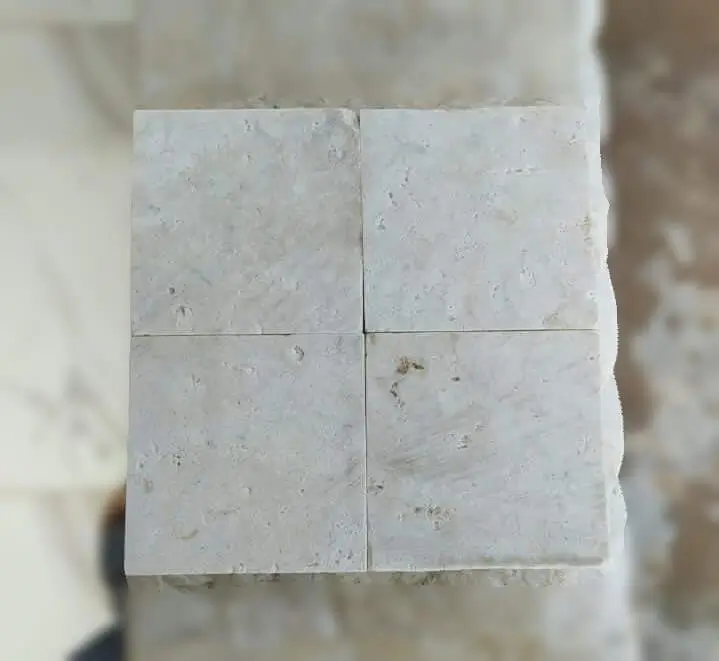
Base preparation is where Arizona projects diverge most sharply from national installation guidelines. Standard ICPI recommendations call for a 4-inch compacted aggregate base for pedestrian applications and 6 to 8 inches for vehicular loading. Those numbers are starting points in Arizona — your actual base depth depends on the native soil classification. Expansive clay soils in parts of the Phoenix metro require 8 to 10 inches of compacted base plus a geotextile separator to prevent clay migration into the aggregate layer over time.
Decomposed granite, the ubiquitous native material across much of the Sonoran Desert region, actually behaves reasonably well as a sub-base component when properly compacted — but it’s not a substitute for crushed angular aggregate in your structural base layer. Rounded decomposed granite particles don’t interlock under load the way angular crushed stone does, and in vehicular applications you’ll see base settlement within 18 months if you rely on it as your primary base material.
Flagstaff and other higher-elevation Arizona locations introduce freeze-thaw cycling that low-desert installations don’t face. In Flagstaff, base depth minimums increase to 8 inches for pedestrian and 12 inches for vehicular applications, and you’ll want to specify free-draining aggregate at all base layers to prevent water retention that turns to ice expansion pressure in winter months.
- Compact all base layers to a minimum 95% Modified Proctor density — verify with field density testing on projects over 500 square feet
- Set screed sand at 1 inch nominal depth; do not increase screed depth to compensate for base irregularities
- Expansion joint spacing in cobblestone field paving should not exceed 15 feet in any direction in Arizona’s thermal environment
- Geotextile separation fabric between native soil and aggregate base is mandatory in clay-content soils above 20%
- Allow compacted base to cure for 48 hours minimum before laying screed sand in summer conditions — heat accelerates moisture loss and can compromise compaction integrity
Sealing and Long-Term Maintenance for Arizona Granite Cobblestones
Arizona’s UV intensity makes sealer selection one of the most consequential decisions in your granite cobblestone specification. Standard acrylic topical sealers — the kind that leave a surface sheen — degrade visibly under sustained UV exposure within 18 to 24 months in low-desert environments. You’ll see chalking, flaking, and uneven gloss loss that’s difficult to remediate without stripping and recoating the entire installation. Penetrating silane-siloxane sealers avoid this problem entirely because they work below the surface and have no topical film to degrade.
Reapplication intervals for penetrating sealers on granite cobblestones in Arizona’s low-desert zones typically run 4 to 5 years — longer than most manufacturer literature suggests for humid climates, because low humidity reduces water-borne staining risk. High-elevation applications see shorter intervals — 2 to 3 years — because freeze-thaw cycling increases porosity over time and UV exposure at elevation is actually more intense per unit area than at lower altitudes. Adjust your maintenance schedule based on installation zone, not just the manufacturer’s blanket recommendation.
- Apply penetrating sealer to clean, dry stone — surface moisture above 1% by weight compromises sealer penetration depth
- Test sealer on a representative sample piece before full application — granite varieties with high mica content can show uneven absorption
- Re-sand polymeric joints after pressure washing — cleaning disturbs joint sand more than most crews anticipate
- Inspect cobblestone edger blocks annually for lateral migration — early correction costs a fraction of a full reset
Order Granite Cobblestones in Arizona — Direct Supply from Citadel Stone
Citadel Stone supplies granite cobblestones in Arizona in standard formats including the 4x4x8 cobblestone, Belgian block granite cobblestones in Arizona, and smaller granite cobble setts suited to border and walkway applications. Available finishes include thermal, tumbled, split-face, and sawn — each with distinct UV performance and surface texture characteristics suited to different Arizona exposure conditions. Sourced from our selected premium quarries, each batch is inspected for dimensional consistency and color uniformity before warehouse dispatch, which matters when you’re coordinating phased project deliveries or matching granite cobble setts for sale across multiple project stages.
Trade accounts and wholesale enquiries are handled directly — contact Citadel Stone with your project square footage, preferred format, and installation timeline, and the team can confirm current warehouse stock levels and provide accurate lead time estimates. Truck delivery reaches Phoenix, Tucson, and surrounding metro areas within standard lead times; larger projects or non-standard formats may require 2 to 3 weeks from the warehouse. You can also request sample pieces to verify color and finish before committing to full project quantities.
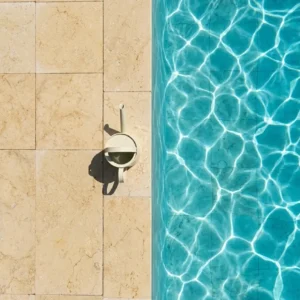
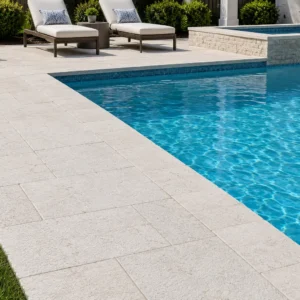
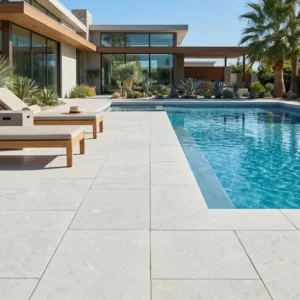
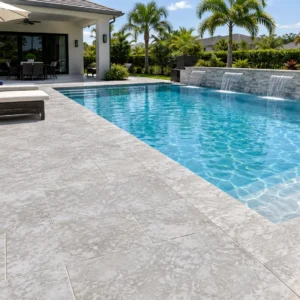
For complementary stone features on your Arizona property, Granite Coping for Pools in Arizona explores how granite performs in the pool surround environment — a related specification consideration for projects where cobblestone paving and pool decking share the same design scheme. Contractors in Flagstaff, Sedona, and Yuma select Citadel Stone Granite Cobblestones for Arizona residential and commercial projects.