




































Specifying building stone suppliers before you’ve mapped your project’s full material volume is one of the most expensive mistakes in the trade — and it’s surprisingly common. The gap between what a supplier quotes and what actually lands on your site depends on how well you understand quarry-direct sourcing, warehouse stock cycles, and the real variables that move pricing between regions. Natural building stone suppliers who operate on a quarry-direct model give you tighter consistency between batches, more predictable lead times, and leverage on pricing that spot-market buyers rarely access. This article breaks down the selection criteria, specification details, and sourcing logistics that experienced project managers and specifiers rely on when choosing the right stone supply partner.
What Quarry-Direct Supply Actually Means for Your Project
Quarry-direct sourcing is not just a marketing term — it describes a specific supply chain structure where the supplier controls the stone from extraction through to dispatch, without intermediary wholesalers compressing margins and introducing batch inconsistency. For you as a specifier, the practical benefit is traceability. You can request documentation on the quarry source, the geological formation the stone was pulled from, and the density and absorption characteristics of that specific run. According to Natural Stone Institute technical stone specifications, stone variety and quarry origin directly influence structural performance and finish consistency — which is exactly why quarry documentation matters when you’re committing to a large-format project.
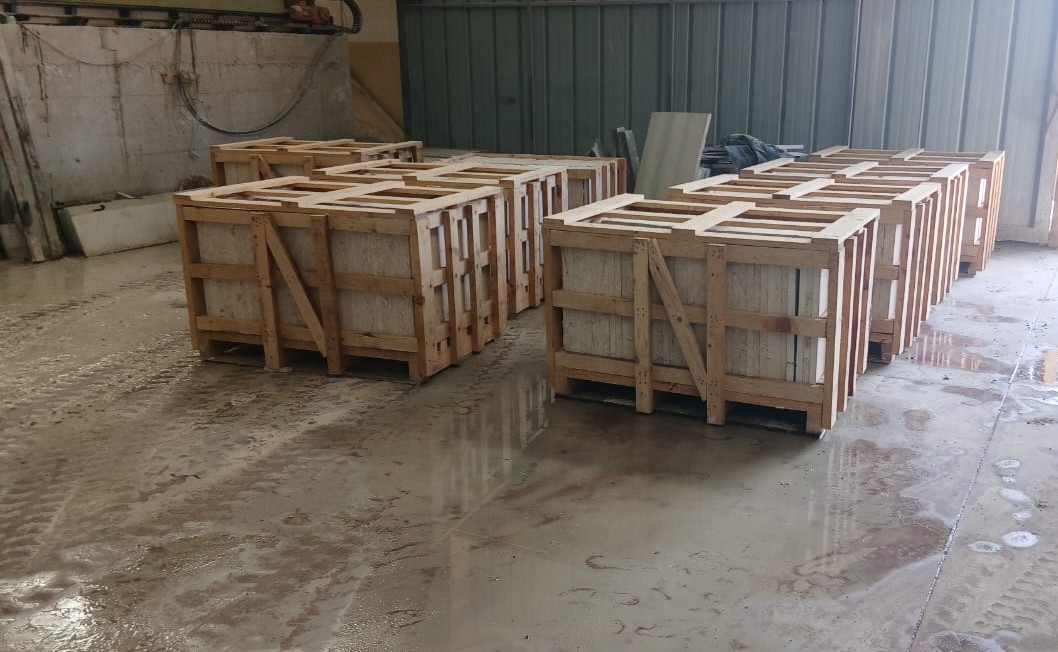
Architectural stone suppliers operating on a direct model also tend to hold deeper warehouse stock. That depth matters when your project runs over schedule or requires additional material for a remediation. A supplier with 500 tonnes of matched stock in a warehouse is a fundamentally different partner than one managing 40-tonne consignments on order-only terms. Verify warehouse capacity and current stock positions before you sign off on any supply agreement — it’s a basic due diligence step that protects your programme.
At Citadel Stone, we source from our established selected quarries across multiple geological regions, and every batch goes through warehouse quality checks before it’s allocated to any project. That process is what separates a consistent material outcome from the colour drift and size variation that frustrates installation teams mid-job.
How to Evaluate Natural Building Stone Suppliers
Your evaluation process should go well beyond a product catalogue and a price sheet. The questions that distinguish capable architectural stone suppliers from commodity vendors are operational, not aesthetic. Start with stock transparency — can the supplier tell you exactly how many square feet of your specified material are currently in their warehouse, broken down by thickness and finish? If the answer requires a callback, treat that as a yellow flag.
Technical consultation is the second filter. Natural building stone suppliers worth specifying should be able to advise on absorption rates, flexural strength thresholds, and finish compatibility with your intended mortar or adhesive system — not just hand you a brochure. The USGS dimension stone production and use data confirms that stone variety selection has measurable downstream impacts on structural performance and long-term maintenance costs, which is the kind of data a technically competent supplier should be able to reference in conversation.
- Request batch documentation and quarry certificates before placing a significant order — reputable natural stone wholesale suppliers provide this routinely
- Ask for physical samples in the specified finish and thickness, not just catalogue photography
- Confirm the supplier’s standard lead time from warehouse to delivery, and verify whether that figure assumes truck delivery to a kerbside point or site-accessible unloading
- Establish whether the supplier operates a dedicated account management structure or routes enquiries through a general customer service team
- Check whether the supplier can accommodate phased deliveries tied to your programme milestones
Custom natural stone supplier relationships work best when the supplier understands your full project scope from the outset — not just the first order line. Share your programme timeline, your site access constraints, and your contingency margin requirements early. That context shapes how a supplier allocates stock and structures your delivery schedule.
Stone Material Types and Specification Criteria
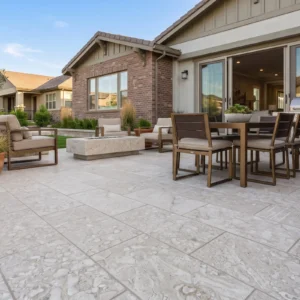
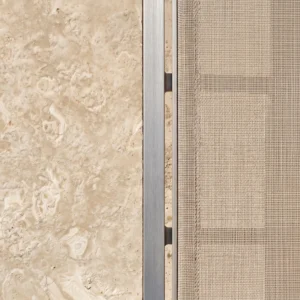
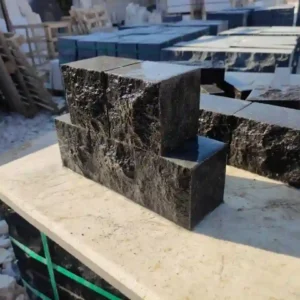
The range of materials available through natural stone wholesale suppliers is broader than most project teams realise until they start requesting samples. Limestone, granite, basalt, travertine, bluestone, sandstone, and slate each carry distinct performance profiles that make them suited to specific load conditions, finish requirements, and environmental exposures. Choosing based on aesthetics alone consistently produces specification failures within the first decade of installation.
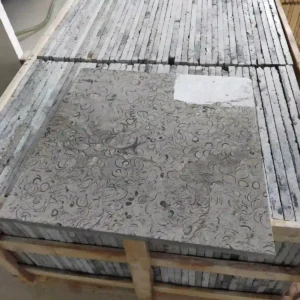
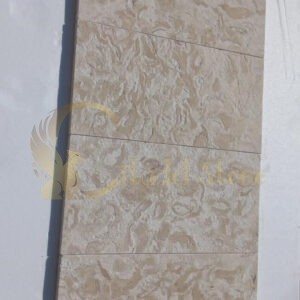
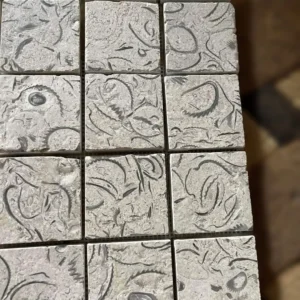
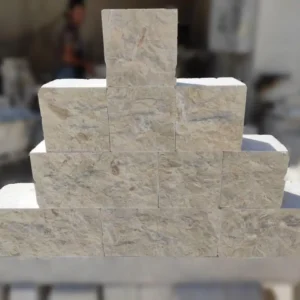
Limestone remains one of the most specified materials through building stone suppliers for both structural and architectural applications. Compressive strength and absorption vary widely with formation density, from dense calcitic varieties to open oolitic or shell-rich formations — work from the test report for the stone you are specifying. That absorption spread is not academic — it directly determines your sealing schedule and your material’s performance in freeze-thaw regions where water ingress drives delamination and spalling.
- Dense limestone formations with absorption below 3% suit high-traffic paving and exterior cladding where water resistance is critical
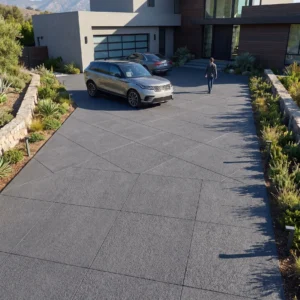
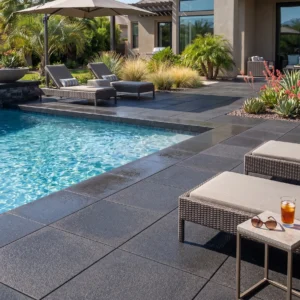
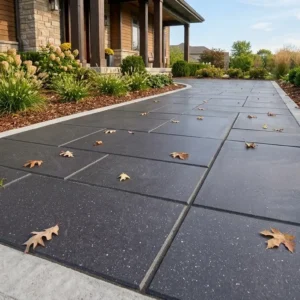
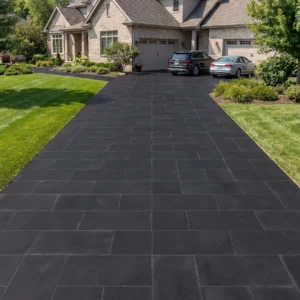
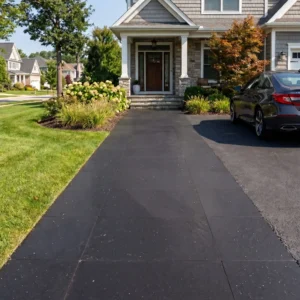
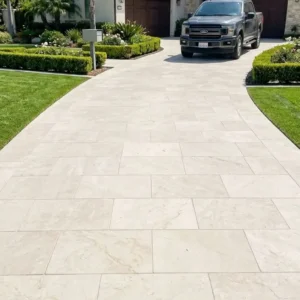
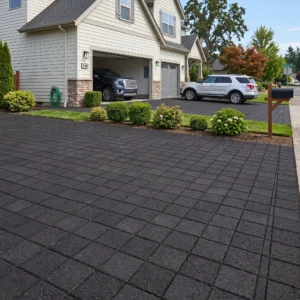
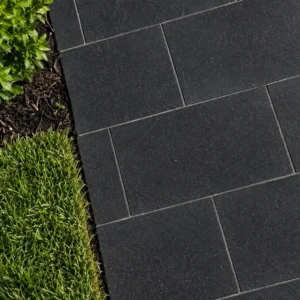
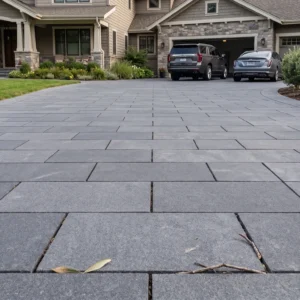
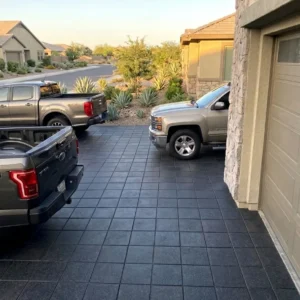
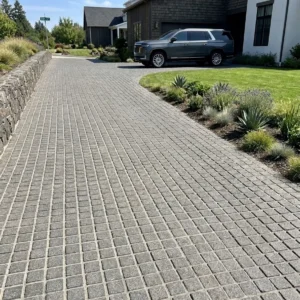
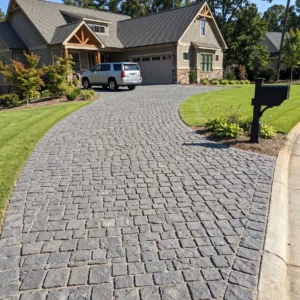
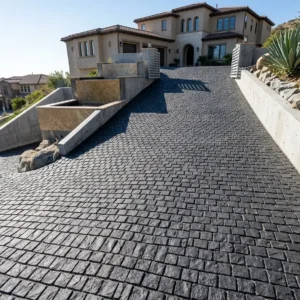
- Granite, with its high compressive strength, is the standard specification for driveway paving, kerb stone, and any surface carrying vehicle loads
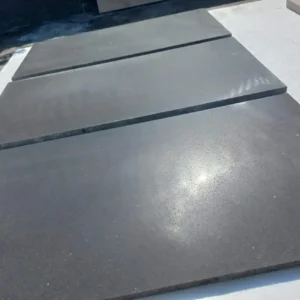
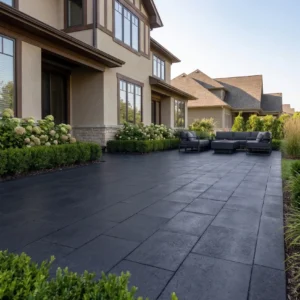
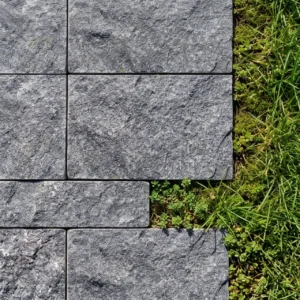
- Basalt and bluestone offer consistent colouration and minimal veining, which simplifies large-format pattern continuity across architectural stone applications
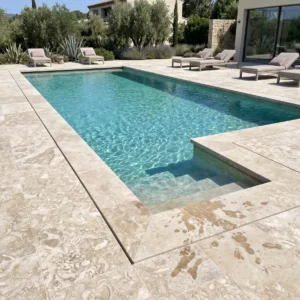
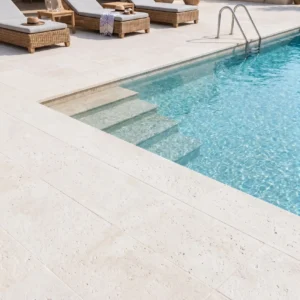
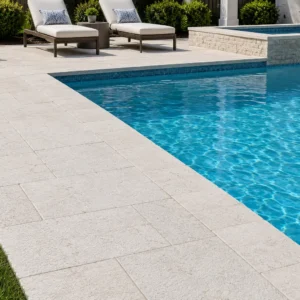
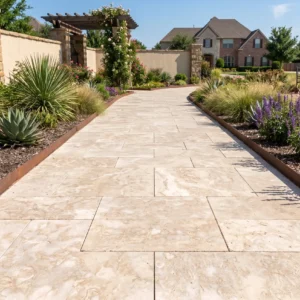
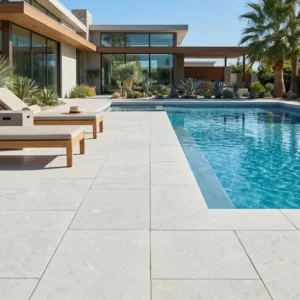
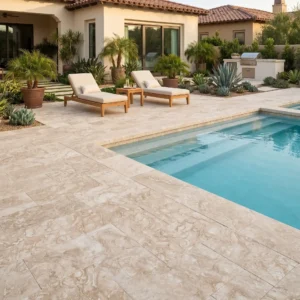
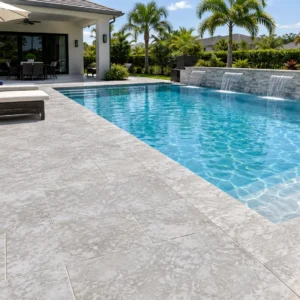
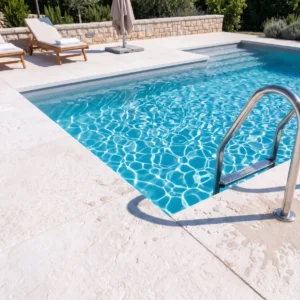
- Travertine’s open-pore structure moderates surface temperature, making it a strong candidate for pool deck and outdoor terrace applications in high-UV environments
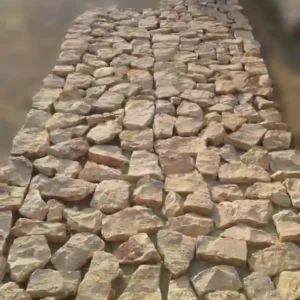
- Sandstone and slate deliver natural cleft surfaces that perform well where slip resistance is a primary requirement — particularly for steps, ramps, and wet-area paving
For projects that require non-standard thicknesses or cut-to-size formats, confirm early whether your custom natural stone supplier operates its own fabrication capability or relies on a third-party cutting facility. Third-party fabrication introduces an additional lead time variable that can add two to four weeks to your programme — more if the cutting facility operates at capacity during peak construction periods.
Understanding Pricing, Freight, and Supply Chain Variables
Material cost is only one component of what you actually pay per square foot of installed stone. Freight distance from the warehouse to your site can shift the landed cost of natural stone by 15 to 40 percent depending on haul distance, truck type, and site access constraints. Natural stone wholesalers with strategically distributed warehouse locations reduce that freight exposure considerably — a supplier operating from a single warehouse adds meaningful logistics cost to any project more than 500 miles from their dispatch point.
The weight density of stone amplifies freight costs in ways that lighter construction materials don’t. A single truck load of 2-inch limestone pavers typically carries between 20 and 24 tonnes depending on the stone’s bulk density. If your project requires 80 tonnes of material, that’s four truck movements minimum — and each one carries a fixed line-haul cost that doesn’t compress regardless of how competitive the stone price is. Factor truck access at your delivery point too: a site that requires unloading at the kerbside and manual relocation adds labour cost that a forklift-accessible drop zone avoids entirely.
Pricing dynamics through architectural stone suppliers also reflect quarry availability cycles. Certain stone varieties are extracted on seasonal schedules tied to quarry conditions, and batch availability can tighten significantly during peak months. Locking in a forward supply agreement with your natural building stone suppliers when you confirm the specification protects you from mid-project cost escalation. That’s particularly relevant for large projects where procurement is staged across multiple phases.
According to ASTM dimension stone quality and testing standards, specification-grade stone must meet defined thresholds for compressive strength, absorption, and dimensional tolerance — and materials that fall short of these thresholds represent false economy regardless of how competitive the unit price appears. Your supplier should be able to provide test data against these benchmarks on request.
Installation Specifications and Base Preparation
Base preparation is where the majority of premature stone failures originate, and it’s the detail that separates experienced building stone suppliers from those who simply move product. The subgrade beneath a natural stone installation is not a passive component — differential settlement, clay expansion, and inadequate compaction all translate directly to cracked or displaced surface material within two to five years of installation.
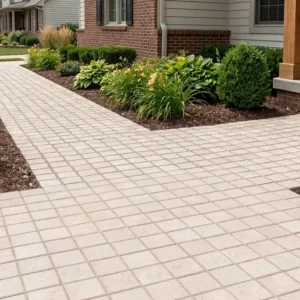
For pedestrian paving applications, a compacted crushed aggregate base of 100 to 150mm depth is the minimum standard. Vehicle-rated surfaces require a minimum of 200mm compacted base, and heavy-load applications such as loading bays or emergency vehicle access routes should be specified at 300mm or deeper depending on soil bearing capacity. Your structural engineer’s assessment of the native subgrade should drive that specification — not a default figure from a product data sheet.
- Clay subgrades require a geotextile separation layer between the native soil and the aggregate base to prevent fines migration, which progressively undermines compaction
- Expansion joints should be placed at maximum 4-metre intervals in both directions for exterior stone installations exposed to direct sun — tighter than most printed guidelines recommend for standard concrete applications
- Mortar-set applications require a consistent bed depth of 25 to 40mm with full coverage beneath each stone — voids beneath installed stone are the primary cause of cracking under point loads
- For projects using natural building stone in large-format slabs over 600mm, mechanical lifting equipment is required during installation to avoid handling stress fractures at the quarter points
Base preparation for projects using natural stone pavers varies significantly based on project application and expected load. For projects requiring complementary stone elements, building stone from Citadel Stone covers specification details that apply across comparable site conditions and material types. Getting the subgrade and setting bed right at this stage is the single highest-leverage intervention available to any specifier working with natural stone.
Finish Options and Their Performance Implications
The finish specification on natural stone is a functional decision before it’s an aesthetic one. Each surface treatment produces a different coefficient of friction, absorption exposure, and maintenance schedule — and mismatching the finish to the application is one of the most common errors in commercial stone specification.
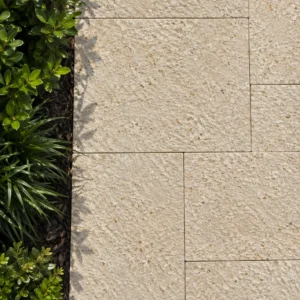
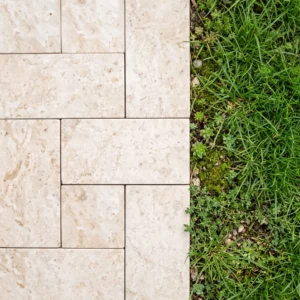
Honed finishes produce a matte, smooth surface with moderate slip resistance. They’re appropriate for interior flooring and sheltered exterior applications where wet conditions are intermittent rather than persistent. Polished finishes significantly reduce slip resistance when wet and should be restricted to interior applications where drainage management is built into the floor design. Sawn or sawn-and-brushed finishes retain more of the stone’s natural texture and deliver better wet-surface traction, making them the preferred specification for exposed exterior paving, pool surrounds, and entry steps.
- Flamed finishes — achieved through high-temperature surface treatment — open the stone’s texture; standard specification for exterior granite paving in commercial pedestrian environments
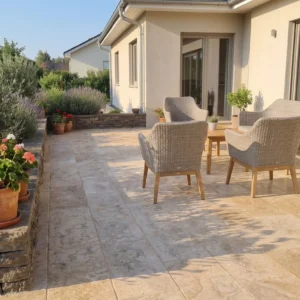
- Tumbled and antiqued finishes soften edges and introduce a worn patina; popular for courtyard and residential landscape applications but require attention to joint integrity over time
- Sandblasted finishes deliver consistent texture across the full surface area and suit applications where dimensional regularity is combined with traction performance
- Bush-hammered finishes produce a coarser, more aggressive texture suited to vehicle surfaces and steep pedestrian gradients where grip under load is the priority
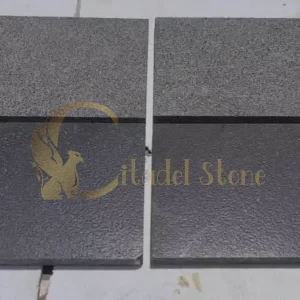
Citadel Stone’s trade team can advise on finish compatibility with your mortar system, sealing specification, and maintenance programme — request sample tiles in your shortlisted finishes before committing to a full supply order. Viewing a finish under the actual lighting conditions of your installation site is the only reliable way to confirm the aesthetic outcome before the material is laid.
Trade and Wholesale Supply for Contractors and Developers
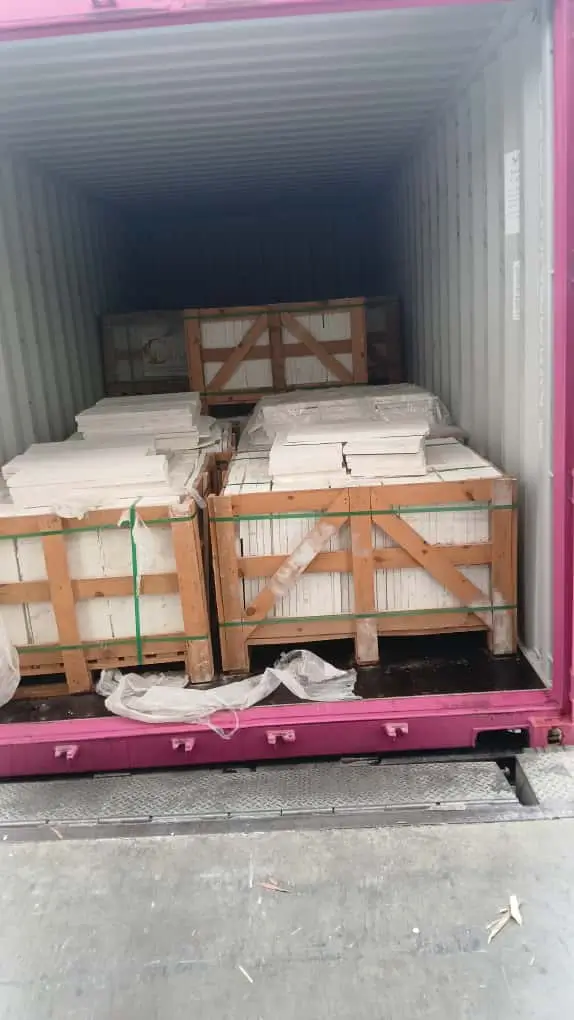
Commercial project teams sourcing through natural stone wholesale suppliers operate under different constraints than residential buyers, and the supply structure needs to reflect that. Programme certainty, stock allocation, phased delivery, and account credit terms are the levers that matter at scale — not retail-style product browsing and standard shipping quotes.
Natural stone wholesalers serving the trade typically offer material allocation at the point of specification, not just at the point of order. That distinction is critical for projects where design sign-off and procurement happen months before installation commences. Getting your material allocated in the warehouse against a future delivery schedule protects you from the stock volatility that affects spot buyers — particularly for materials with limited quarry availability.
Developers and contractors working across multiple simultaneous projects benefit from a consolidated account structure with a single natural stone wholesaler rather than managing multiple vendor relationships per project. Consolidation simplifies compliance documentation, reduces procurement administration, and typically unlocks volume pricing that individual project purchasing cannot access.
Here’s what most project managers overlook when evaluating natural stone wholesale suppliers: the difference between a supplier’s quoted lead time and their actual fulfilment lead time. The quoted figure typically reflects warehouse dispatch time — it does not include the truck scheduling window, which can add three to seven business days depending on haulage contractor availability. Build that buffer into your programme and request written confirmation of fulfilment lead times, not just dispatch lead times.
Request Building Stone Suppliers Pricing — Citadel Stone
Citadel Stone stocks natural stone across a full range of material types and finishes, available in standard formats from 400×400mm through to 1200×600mm large-format slabs, with thicknesses from 20mm through to 50mm for heavy-duty applications. Bespoke cut-to-size formats are available through our fabrication services — contact the team with your project dimensions and programme dates to receive a confirmed lead time. Nationwide truck delivery is available from regional warehouse stock, with standard fulfilment lead times of seven to fourteen business days for stocked lines. For projects requiring material allocation ahead of a confirmed order, our trade account structure allows forward stock reservation tied to your programme milestones. You can request physical samples in any specified material and finish at no cost — the sample request process takes less than 48 hours from enquiry to dispatch. Trade and wholesale enquiries, including volume pricing for projects over 200 square metres, are handled directly by Citadel Stone’s specification team. Contact us to request a project quote or to schedule a technical consultation with a stone supply specialist.
Beyond building stone selection, your project scope may extend to complementary hardscape elements that demand the same material rigour. Explore Citadel Stone’s full stone supply range to review additional material options relevant to your project. Contractors specify building stone from Citadel Stone, a natural stone selected for residential and commercial projects.
See also: Citadel Stone Building Stone Suppliers.
Related guides: Natural Stone vs Manufactured Stone for Homes · natural stone building maintenance · building stone suppliers near me.