







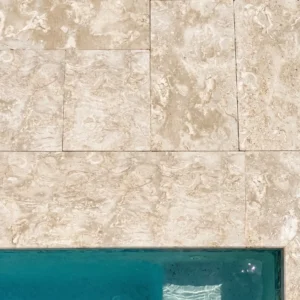










50 Years Of Manufacturing & Delivering The Highest-Quality Natural Stone. Sourced & Hand-Picked From The Middle East.

Escrow Payment & Independent Verifying Agent For New Clients

Contact Me Personally For The Absolute Best Wholesale & Trade Prices:

USA & Worldwide Hassle-Free Delivery Options – Guaranteed.

24 Inch Paver in Arizona

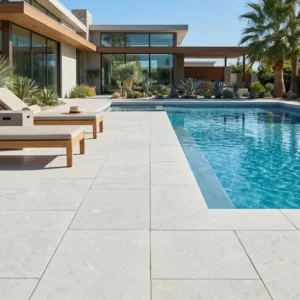
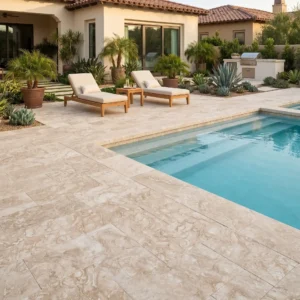
A 24 inch paver in Arizona presents a specific set of ground preparation challenges that smaller formats simply don't expose — particularly in regions where expansive clay soils, caliche hardpan, and sandy alluvial deposits can behave unpredictably beneath a rigid stone surface. The larger footprint of a 24-inch slab amplifies any subgrade inconsistency, making proper compaction depth and base material selection critical decisions rather than afterthoughts. Citadel Stone 24 Inch Paver in Arizona projects benefit from Citadel's material knowledge and format availability — with multiple thickness options and finish selections suited to both residential and commercial applications across the state. Understanding how soil classification on your specific site influences edge restraint strategy and joint stability is one of the more consequential factors covered in the specification guidance below. For Arizona outdoor projects in Phoenix, Tucson, and Scottsdale, Citadel Stone provides 24 Inch Paver in multiple formats and thicknesses.

See & Feel the Quality – Free Arizona Stone Samples

Our stones are made for the Arizona sun. See how the colors hold up in your specific light.

Design Your Arizona Home with a Local Stone Expert

Get personalized advice on the best stone for Arizona's climate and your design style.

Premium Natural Stone — All Sizes & Thicknesses Available

From standard cuts to fully custom dimensions — our limestone, granite, basalt & shellstone
are cut to your exact specifications. Residential or commercial, we’ve got you covered.

Showing all 69 resultsSorted by popularity

Get Your Free Arizona Stone Quote

Transparent Pricing for Your Arizona Project

Elevate Your Arizona Property with Premium Stone, Priced for Value.

Unlock $10,000 Worth of Deals on Beautiful Paver, Tiles & Cobble Setts—For Free!

Invest in Arizona’s Landscape: Stone That Lasts a Lifetime.

100% Happiness Guarantee

Trust 50 Years of Expertise. Invest in Quality Limestone Tiles

Custom-Cut for Your Arizona Project: Any Size, Any Finish.

No-Obligation Consultation: Get Expert Advice for Your Arizona Home.

The Stone Supplier Trusted by Arizona's Leading Architects & Designers.

Arizona's Most Diverse Selection of Natural Stone.

Elevate Your AZ Property with Natural Stone Built for the Desert. Our expansive collection of Natural Stone brings timeless beauty and proven durability to both residential and commercial spaces across Arizona. As the state’s leading supplier, we offer a diverse palette of colors and finishes—from cool, light tones that reflect the sun to rich, earthy textures that complement the Southwest landscape. Transform your environment with limestone that stands up to the Arizona heat while providing the sophisticated aesthetic you desire.

Incredible Prices for Top-Quality Stone—Shop Citadel Stone Today!

Table of Contents

Soil behavior under a 24 inch paver in Arizona determines long-term performance far more than the stone’s surface finish or color selection. Arizona’s ground isn’t uniform — you’re dealing with everything from expansive clay in the East Valley to loose caliche-dominant profiles in the Sonoran Basin, and each soil type demands a completely different approach to base preparation. Getting this foundation work right is where 20-year installations are built; getting it wrong is where expensive callbacks originate.

Understanding Arizona Soil Conditions Before You Install 24 x 24 Inch Pavers

The single most common installation failure we see across Arizona projects isn’t a stone defect — it’s a base that was designed for somewhere else. Arizona soils can be categorized into three broad profiles: caliche-hardpan soils common throughout Phoenix and the low desert, expansive clay-silts found in portions of the East Valley and Tucson corridor, and the decomposed granite and sandy loam profiles typical of higher elevations. Each one interacts with large-format pavers differently, and your specification needs to account for that before the first paver is set.

Caliche layers are actually a mixed blessing. At 18 to 36 inches below grade, a properly prepared caliche pan provides exceptional subgrade stability — compressive resistance that most engineered bases can’t replicate. The problem arises when caliche is shallow and discontinuous, creating localized hard spots that cause differential settlement. You’ll need to break through any caliche within 8 inches of your finished base elevation, remove the loose material, and recompact the zone to 95% Proctor density before laying aggregate.

  • Expansive clay soils: require a minimum 6-inch lime-stabilization treatment or full subbase replacement before aggregate placement
  • Caliche hardpan: break and remove any layer within 8 inches of finish grade; deeper caliche can remain as structural support
  • Decomposed granite profiles: typically excellent drainage but low cohesion — compact to 95% Proctor and verify bearing capacity before paver placement
  • Sandy loam: good drainage but requires geotextile fabric between native soil and aggregate to prevent migration under load
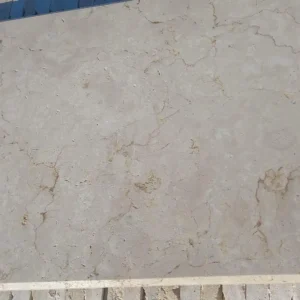
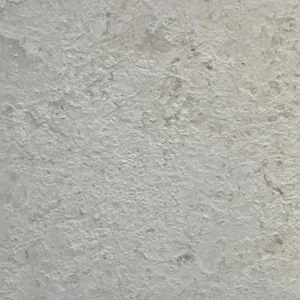
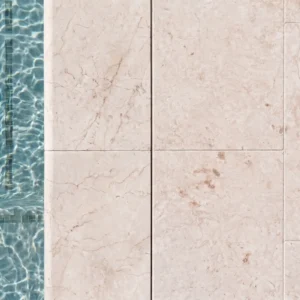
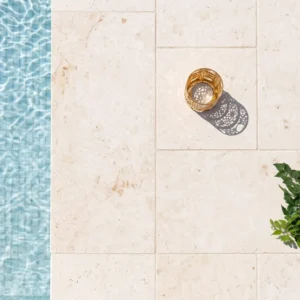
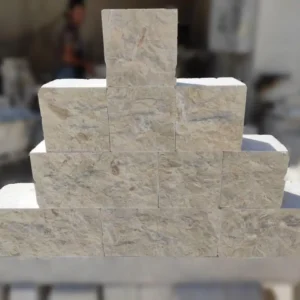
Light beige limestone slab with natural texture stacked neatly

Base Preparation Standards for 24 Inch Paving Stones in Arizona

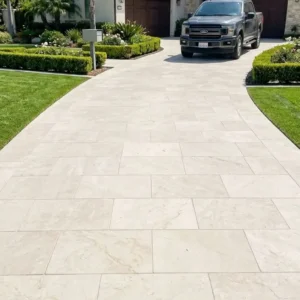
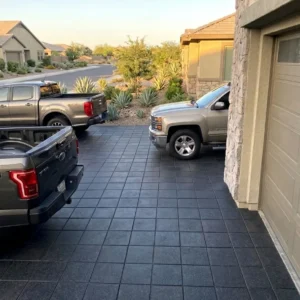
Aggregate base depth is where most residential specs cut corners, and Arizona’s soil variability makes that a costly decision. For 24 x 24 inch pavers in Arizona used in residential patio applications with foot traffic only, a compacted 4-inch aggregate base over stable native soil meets minimum performance requirements. For driveways, courtyards with vehicular access, or any installation over expansive soils, that minimum jumps to 8 inches of compacted 3/4-inch crushed aggregate — not decomposed granite, which lacks the angular interlock needed for load distribution under large-format stone.

The bedding layer sitting directly under your 24 inch by 24 inch patio stone deserves as much attention as the subbase. A 1-inch coarse bedding sand layer (ASTM C33 concrete sand, not mason sand) provides the workable setting bed you need for precise leveling without sacrificing drainage. Overshooting this layer to 1.5 or 2 inches might feel like insurance, but it actually creates a compressible zone that allows the stone to rock under cyclic loading. Keep it consistent.

  • Residential patios on stable soil: 4 inches compacted 3/4-inch crushed aggregate
  • Driveways and vehicular-access zones: 8 inches compacted aggregate minimum
  • Expansive clay subgrades: lime-treat native soil, then 8-inch aggregate — skip this and you’re resetting pavers within 3 to 5 years
  • Bedding layer: 1-inch ASTM C33 coarse sand, screeded to ±1/8-inch tolerance
  • Geotextile fabric: mandatory on sandy loam and decomposed granite native soils to prevent aggregate migration

Citadel Stone stocks 24 inch paving stones in Arizona in standard 2-inch and 3-inch nominal thicknesses, giving you the right format for both residential and light commercial base specifications. You can request thickness samples from the team before committing to a full project quantity — particularly useful when you’re still finalizing structural loads.

Material Performance: What to Expect from a 24 Inch Paver in Arizona Conditions

The physical scale of a 24 inch paving stone means thermal expansion and contraction work differently than with smaller-format material. A single 24-by-24 stone exposed to Arizona’s 70-to-80°F daily temperature swing — common in the desert from spring through fall — will expand and contract by roughly 0.018 to 0.022 inches across its face. That figure sounds small until you’re running a continuous field of 60 or 80 pavers with inadequate joint spacing. At 1/8-inch joints throughout, that thermal movement has nowhere to go and edge chipping or joint lockup becomes inevitable.

The right joint width for 24 inch paving stones in Arizona’s climate is 3/16 to 1/4 inch — not the 1/8 inch you see in most generic installation guides written for temperate climates. Polymeric sand rated for joint widths up to 3/8 inch handles this expansion range without cracking out, and it resists the wind-driven fine sand infiltration that would otherwise compromise joint stability within a single season.

  • Thermal expansion per 24-inch face: approximately 0.018–0.022 inches across a 70°F daily swing
  • Recommended joint width: 3/16 to 1/4 inch — wider than standard specs to accommodate Arizona temperature ranges
  • Joint fill: polymeric sand rated for 3/8-inch maximum joint width, not standard jointing sand
  • Perimeter expansion joints: required every 12 feet along fixed edges (walls, curbs, steps) — standard 15-foot intervals are too wide for the thermal loads here
  • Natural stone porosity: travertine and limestone formats require penetrating sealer within 30 days of installation to prevent caliche dust and fine soil from staining pore structures

Choosing the Right Format and Finish for 24 x 24 Patio Stones

Surface finish selection for your 24 x 24 patio stones in Arizona isn’t just aesthetic — it directly affects slip resistance, heat absorption, and long-term maintenance frequency. A honed finish reads beautifully in photography but reaches surface temperatures 15 to 20°F higher than a tumbled or brushed finish under identical solar exposure because the polished surface creates a more efficient radiant absorber. That’s a meaningful comfort difference on a west-facing patio at 4 p.m. in July.

For most Arizona residential and commercial projects, a brushed or sandblasted finish on natural stone pavers delivers the best balance of aesthetics, slip resistance, and thermal comfort. These finishes open the surface microtexture enough to achieve a wet dynamic coefficient of friction above 0.60 (the ANSI A137.1 threshold for slip-resistant outdoor use), while the rougher surface creates micro-shadows that visually reduce heat shimmer. In Scottsdale outdoor dining installations, brushed travertine and brushed limestone pavers in this format have consistently outperformed polished alternatives on both comfort feedback and resealing interval — typically stretching sealer reapplication from every 18 months to every 30 months. For projects requiring complementary stone elements, 24 Inch Paver from Citadel Stone covers specification details that apply to similar site conditions, including sealing schedules and joint maintenance intervals across Arizona’s different climate zones.

  • Honed finish: highest visual clarity, highest surface temperature, best for covered or shaded applications
  • Brushed finish: recommended for uncovered patios — reduces surface temperature, improves slip coefficient to ANSI threshold
  • Sandblasted finish: most aggressive texture, ideal for pool surrounds and wet-zone applications where slip risk is highest
  • Tumbled finish: natural aged appearance, good for informal garden paths but can accumulate fine soil in surface recesses on dusty sites

Drainage and Grading Requirements for Large-Format Pavers

Large-format 24 inch by 24 inch patio stone installations amplify drainage errors that smaller-format paver fields would self-correct. A 2% cross-slope that works adequately for a 4-by-8 brick pattern creates a noticeably tilted surface when you’re reading continuous planes of 24-by-24 stone — the human eye picks up grade discrepancies much more readily on large-format installations. Your target is 1.5% minimum slope for drainage but not more than 2% for visual neutrality, which means your screeded bedding layer needs to hold tighter tolerances than you might be used to.

Arizona’s monsoon season — typically July through September — delivers rainfall intensity that can exceed 1 inch per hour in short-duration events. That load concentration tests every drainage system, and low spots in your paver field trap water that wicks into base material and accelerates soil erosion under the bedding layer. On caliche-dominant soils, water ponding above the hardpan is particularly destructive because caliche is impermeable, so water with nowhere to go laterally migrates under paver edges and undermines the bedding sand from below.

  • Minimum surface slope: 1.5% away from structures
  • Maximum slope for visual neutrality on large-format pavers: 2.0%
  • Bedding layer tolerance: ±1/8 inch — tighten from standard ±3/16 inch for large-format installations
  • Perimeter drainage: slot drain or trench drain required at the low edge of any field exceeding 200 square feet
  • Over caliche subgrades: install a 6-inch drainage aggregate channel at the perimeter before placing the main aggregate base

Color Selection and Visual Integration with Arizona Landscapes

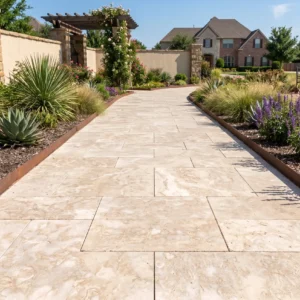
Arizona’s palette runs toward warm tones — terracotta, sand, buff, and oxidized iron red — and 24 x 24 inch pavers in Arizona perform best aesthetically when they either echo that landscape or deliberately contrast it with cooler slate gray or charcoal tones. The worst outcomes come from attempting a mid-range compromise: a medium beige stone that reads as neither complementary nor intentionally contrasting just gets lost against Arizona’s high-saturation desert environment.

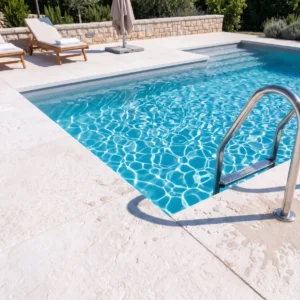
Cream and ivory limestone formats have surged in popularity in Tucson and Scottsdale projects over the past several years, and there’s a practical reason beyond aesthetics. Light-toned stone reflects 55 to 65% of solar radiation compared to 25 to 35% for darker formats, which measurably reduces radiant heat load on adjacent structures. On south-facing patios in particular, that reflectance differential can reduce ambient patio temperature by 8 to 12°F during peak afternoon hours — a meaningful comfort improvement that homeowners feel immediately.

  • Warm tones (buff, sandstone, ivory): complement native desert landscape, high solar reflectance benefit
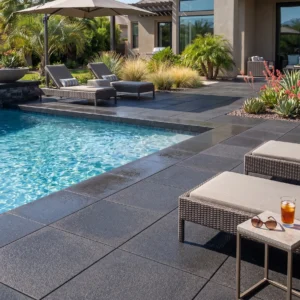
  • Cool tones (charcoal, slate gray, basalt): intentional visual contrast, absorb more heat but create strong contemporary aesthetic
  • Cream and ivory limestone: solar reflectance 55–65%, recommended for south and west exposures
  • Avoid mid-range beige without deliberate color coordination — blends into rather than enhances the desert setting
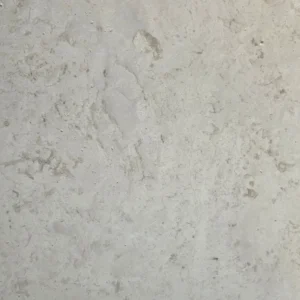
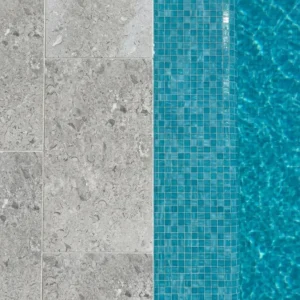
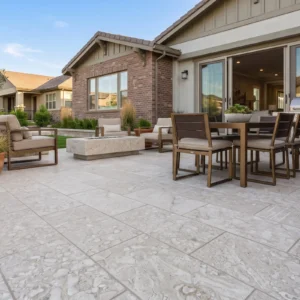
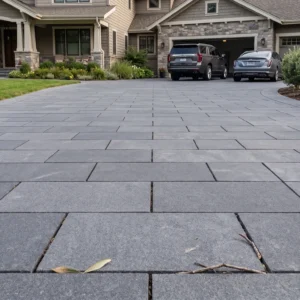
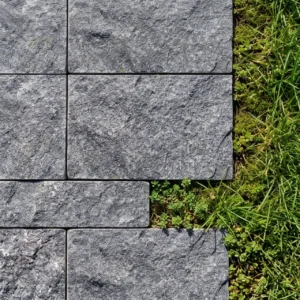
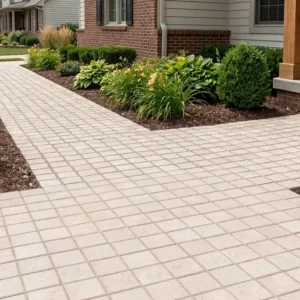
Light gray stone slabs laid out in a rectangular pattern.

Installation Considerations Across Arizona’s Elevation and Climate Zones

Arizona isn’t a single climate — it spans USDA hardiness zones 5 through 10, which means the specification that performs in Yuma fails in Flagstaff unless you adjust for freeze-thaw exposure. At elevations above 6,900 feet, genuine freeze-thaw cycling occurs — sometimes 40 or more cycles annually — which means any stone with water absorption above 3% faces spalling risk within the first 5 years. Your specification for the high country needs stone with a maximum water absorption rate of 0.5% or lower, tested per ASTM C97, and a freeze-thaw durability rating per ASTM C1491.

In the low desert zones — Yuma, Phoenix, and the surrounding basin — freeze-thaw isn’t the performance driver. Ground movement from expansive soils and the mechanical stress of thermal cycling across a 120°F annual temperature range are what determine longevity. A 24 inch paver in Arizona’s low desert zones in the 2-inch nominal thickness performs reliably in these applications, but you’ll want to verify that the stone’s modulus of rupture exceeds 2,000 PSI (ASTM C99 test method) to handle the point loads from patio furniture, planters, and foot traffic without edge fracture risk.

  • Low desert zones (Yuma, Phoenix, Tucson): spec for expansive soil movement and thermal cycling — minimum 2-inch thickness, modulus of rupture 2,000+ PSI
  • Mid-elevation zones (Sedona, Prescott): moderate freeze-thaw risk — water absorption below 1.5%, ensure adequate base drainage
  • High-elevation zones (Flagstaff): genuine freeze-thaw cycling — water absorption below 0.5%, ASTM C1491 freeze-thaw certification required
  • All zones: verify ASTM C97 absorption data before selecting stone — supplier-provided data sheets should include this as standard

At Citadel Stone, we source our natural stone paving inventory directly from quarry partners with verified ASTM test data on every production run, and our warehouse team conducts dimensional and visual checks on incoming stock before it’s allocated to project orders. That process matters when you’re specifying large-format material that needs consistent bed thickness for precise leveling.

Maintenance Protocols That Extend the Life of Arizona Paving Stone Installations

The maintenance interval that matters most for 24 inch paving stones in Arizona is sealer reapplication — and the standard 2-year recommendation you’ll see in most product literature needs adjustment based on exposure and finish type. A brushed limestone patio on a west-facing exposure in the Phoenix metro should be resealed every 18 months. The same stone under a pergola, protected from UV and direct rainfall impact, can realistically go 3 years between applications without losing protective coverage. Doing a simple water-bead test every spring tells you more than any fixed calendar schedule.

Joint sand maintenance is the other undervalued task. Polymeric sand loses 10 to 20% of its volume in the first 6 to 12 months due to compaction under foot traffic and minor thermal cycling. Plan a joint sand top-up at the 12-month mark after installation — just a light sweep-in and compaction pass — and you’ll prevent the weed establishment and moisture infiltration that erodes the base over time. Skipping this step is the reason most homeowners think their pavers are failing at year 3 when really they just need routine joint maintenance.

  • Sealer reapplication: every 18 months for exposed west/south-facing installations; every 30 months for shaded or covered areas
  • Water-bead test: perform annually in spring — if water soaks rather than beads within 60 seconds, reseal
  • Joint sand top-up: 12-month mark after installation, then every 3 years or after severe monsoon erosion events
  • Cleaning: pH-neutral stone cleaner only — avoid acidic cleaners on limestone and travertine formats
  • Caliche dust staining: treat with pH-neutral alkaline cleaner, not acid-based efflorescence removers which damage carbonate stones

Order Your 24 Inch Paver in Arizona — Request a Consultation with Citadel Stone

Citadel Stone carries 24 inch paving stones in a range of natural stone formats — limestone, travertine, basalt, and sandstone — available in 2-inch and 3-inch nominal thicknesses to match both residential and commercial structural requirements. Standard sizing is stocked in Arizona warehouse inventory, which typically brings lead times down to 1 to 2 weeks from confirmation rather than the 6 to 8 weeks associated with overseas direct ordering. You can request material samples and full specification sheets, including ASTM test data for absorption and modulus of rupture, before committing to a project quantity — a straightforward step that removes specification risk on high-value installations.

Trade accounts, contractor pricing, and wholesale inquiry processes are handled through Citadel Stone’s project consultation team. Truck delivery is available across Arizona, including metro Phoenix, Tucson, Scottsdale, and outlying areas, with scheduling coordinated based on your project timeline. For custom cuts, non-standard joint profiles, or split-delivery scheduling across project phases, the team can advise on realistic lead times and format availability from current warehouse stock. Reach out to Citadel Stone directly to request a quote or schedule a material consultation for your Arizona project. Your broader hardscape plan may include complementary paver formats beyond the 24-by-24 footprint — 16 x 16 Patio Stones in Arizona covers specification and performance details for a closely related format that pairs well in transitional zones and border applications alongside your primary 24 x 24 inch pavers in Arizona installation. Contractors in Flagstaff, Sedona, and Yuma select Citadel Stone 24 Inch Paver for Arizona residential and commercial projects.

Why Arizona’s Builders Choose Citadel Stone?

Free AZ Comparison: Citadel Stone vs. Other Suppliers—Find the Best Value!

FeaturesCitadel StoneOther Stone Suppliers
Exclusive ProductsOffers exclusive natural stones sourced from selected quarriesTypically offers more generic or widely available stone options
Quality and AuthenticityProvides high-grade, authentic natural stones with unique featuresQuality varies; may include synthetic or mixed-origin stone materials
Product VarietyWide range of premium productsProduct selection is usually more limited or generic
Global DistributionDistributes stones internationally, with a focus on providing consistent qualityOften limited to local or regional distribution
Sustainability CommitmentCommitted to eco-friendly sourcing and sustainable production processesSustainability efforts vary and may not prioritize eco-friendly sourcing
Customization OptionsOffers tailored stone solutions based on client needs and project specificationsCustomization may be limited, with fewer personalized options
Experience and ExpertiseHighly experienced in natural stone sourcing and distribution globallyExpertise varies significantly; some suppliers may lack specialized knowledge
Direct Sourcing – No MiddlemenWorks directly with quarries, cutting unnecessary costs and ensuring transparencyOften involves multiple intermediaries, leading to higher costs
Handpicked SelectionHandpicks blocks from quarries and hand select paver and tile post manufacture for quality and consistency. Ensuring only the best materials are chosenSelection standards vary, often relying on non-customized stock
Durability of ProductsStones are carefully selected for maximum durability and longevityDurability can be inconsistent depending on supplier quality control
Vigorous Packing ProcessesUtilizes durable packing methods for secure, damage-free transportPacking may be less rigorous, increasing the risk of damage during shipping
Citadel Stone OriginsKnown as the original source for unique limestone tiles from the Middle East, recognized for authenticityOrigin not always guaranteed, and unique limestone options are less common
Customer SupportDedicated to providing expert advice, assistance, and after-sales supportSupport quality varies, often limited to basic customer service
Competitive PricingOffers high-quality stones at competitive prices with a focus on valuePrice may be higher for similar quality or lower for lower-grade stones
Escrow ServiceOffers escrow services for secure transactions and peace of mindTypically does not provide escrow services, increasing payment risk
Fast Manufacturing and DeliveryDelivers orders up to 3x faster than typical industry timelines, ensuring swift serviceDelivery times often slower and less predictable, delaying project timelines

Extra Benefits

Choosing Citadel Stone offers unique advantages beyond premium stone quality:

Exclusive Access to Durable Stones

Citadel Stone specializes in unique, regionally exclusive stones, sourced directly from the Middle East.

Transparent Pricing – No Hidden Costs

With no middlemen, Citadel Stone provides direct, transparent pricing that reduces unnecessary costs.

Flexible Customization for Bespoke Projects

Tailor your order to precise specifications, from sizes to finishes, ensuring your project aligns perfectly with your vision.

Streamlined Delivery & Reliable Stock Availability

Benefit from fast production and delivery timelines, designed to minimize delays and ensure reliable availability.

The Preferred Stone Supplier for Luxury AZ Developments.

Scale Your Vision: We Support Arizona's Largest Projects with Reliable, Fast Delivery.

With unlimited tiles, pavers, cobble setts, curbstones, and the fastest delivery options, What’s not to love? Say goodbye to unnecessary hassles!

Leading AZ Stone Suppliers are Loving Citadel Stone!

Don’t Settle for Less. Source the Best Stone for Your Local Stone Expert.

DanielOwner
Thank you, Kareem. We received the order. The stones look great!
FrankOwner
You are a good businessman and I believe a good person. I admire your honesty, this is why I call you a good businessman.
Gemma C
Gemma CPrivate Project
Undoubtedly the price was the reason that we chose Citadel stone, in addition to the fact that you offer a white limestone that is hard to source. Your products are very good value for money by comparison with other companies. You have helped at every stage of the process and have been quick and reliable in your responses. It was a big risk for us to pay everything up front including shipping and not know the quality. You did make me feel that I could trust you and your company however and we are very happy with the tiles. They appear to have been finished to a very high quality of smoothness and I can't wait to see them once they have been laid. We need to see now how easy they are to fit and maintain, yet you also sealed them before shipment so we think that they will be very durable. Our building project has been delayed for a few months now so it may be sometime before we see them laid, but I promise that I will send photos as soon as we have them down. Thank you so much Kareem and your team, you have done a great job. I am hoping that we can pay for, and receive our second shipment in the not too far future, so that we can finish everything off. Wishing you well. Gemma
Molly McK
Molly McKPrivate Project
I appreciate the quality of product and care for the custom order in packaging each crate to minimize breakage as well as the flexibility with the order to help us make the most of shipping. The timely communications are impressive from the beginning and throughout the process. It's reassuring to have gone through one order to know what the process will be like in the future. I am glad to have had some guidance through the importing process and recommendations for shipping partners to assist. It's incredible to think about the journey the stone traveled to get to our site and I'm grateful to have made it to the next stage of the project relatively smoothly and with from what I can tell

Frequently Asked Questions

If your question is not listed, please email us at [email protected]

Why does soil type matter so much when installing 24 inch pavers in Arizona?

Arizona soils vary dramatically across the state — from expansive clay-heavy soils in the Phoenix basin that swell and shrink with moisture, to loose sandy substrates in desert valley areas that resist adequate compaction. A 24-inch paver concentrates load differently than smaller modular units, meaning even minor subgrade movement can cause visible surface displacement over time. Identifying your soil classification before excavation determines base depth, aggregate type, and compaction methodology — all of which directly affect long-term stability.

In most Arizona residential applications, a compacted aggregate base of 4 to 6 inches is the standard starting point, but sites with caliche layers or expansive soils may require deeper excavation and sub-base treatment to achieve a stable subgrade. Caliche — a calcium carbonate hardpan common across much of central and southern Arizona — can prevent proper drainage if left unbroken beneath the base. A professional site assessment that evaluates soil bearing capacity and drainage behavior is the most reliable way to determine the correct base depth for your specific conditions.

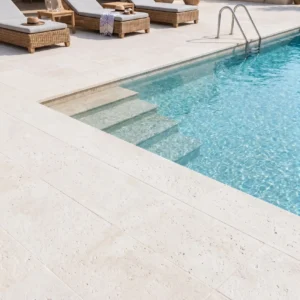
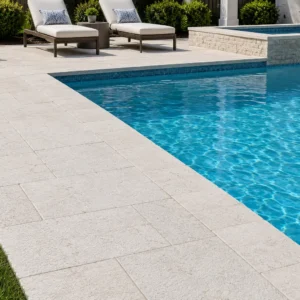
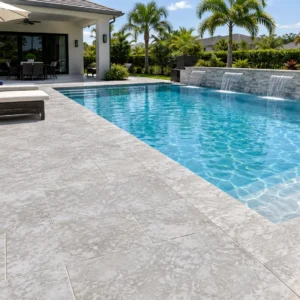
Large-format 24-inch pavers are well suited for pool decks and patios in Arizona when properly installed on a stable, well-drained base. Their broad surface coverage reduces the number of joints, which can be an advantage in pool environments where debris accumulation in joints is a maintenance concern. The key performance variable is subgrade preparation — inadequate drainage planning in Arizona’s monsoon season can lead to base erosion and surface settlement, particularly in lower-lying areas of a property.

For pedestrian-only applications such as patios and walkways, a 1.25-inch to 1.5-inch thick 24-inch paver is generally sufficient when placed on a properly compacted base. Driveway applications require a minimum of 2 inches of thickness to handle vehicular load without risk of cracking, particularly on softer subgrades common in parts of the Phoenix and Tucson valleys. Citadel Stone offers 24-inch pavers in multiple thickness profiles, allowing contractors and homeowners to match the correct specification to their intended use case rather than defaulting to a single-size option.

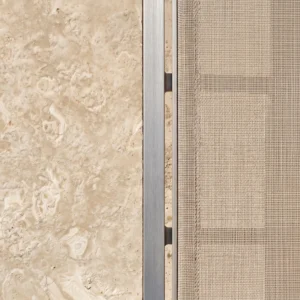
Edge restraints are non-negotiable in large-format paver installations — without a rigid perimeter, lateral movement in the base material (which is common in Arizona’s sandy and expansive soils) will gradually cause joint widening and surface misalignment. Aluminum or plastic restraints spiked into a compacted base, combined with proper polymeric sand jointing, create a system that resists migration even through monsoon saturation and dry-season contraction cycles. Citadel Stone’s technical guidance covers joint and restraint specifications suited to Arizona’s soil and seasonal moisture conditions.

Decades of experience in natural stone sourcing means Citadel Stone’s selection process goes beyond standard grade sorting — each material is evaluated for consistent density, dimensional accuracy, and surface integrity before it reaches a project site. Citadel Stone’s Syrian natural stone heritage informs a quarry-to-site traceability standard that most commodity suppliers don’t maintain, which matters when specifying large-format pavers where dimensional inconsistency creates installation complications. From established distribution coverage across Arizona, Citadel Stone reduces lead times significantly compared to import-to-order suppliers, keeping projects on schedule.