

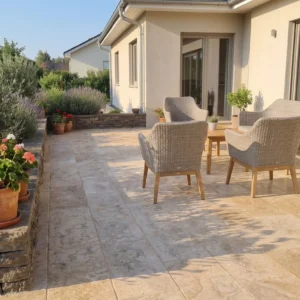

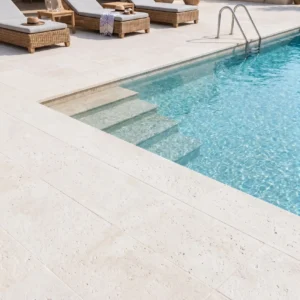

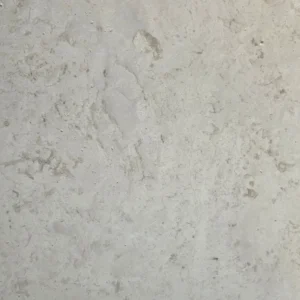
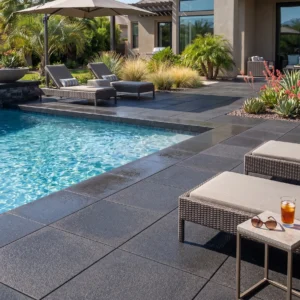
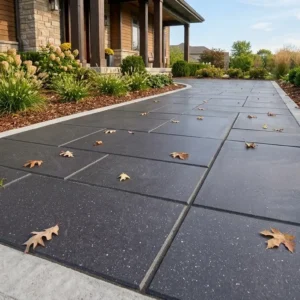
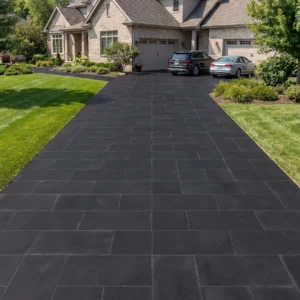



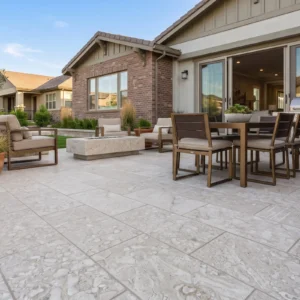
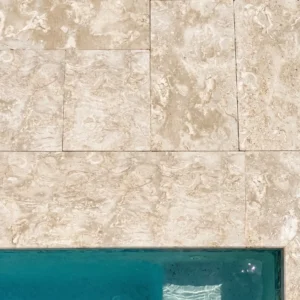
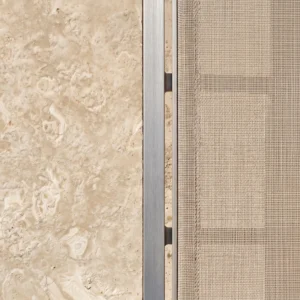
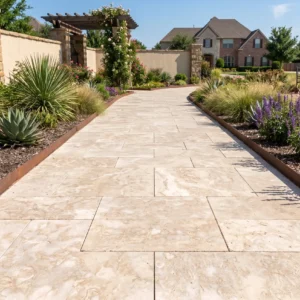
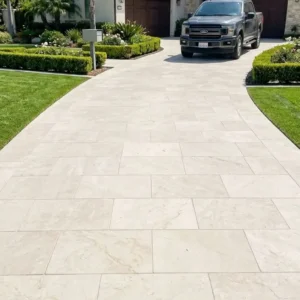
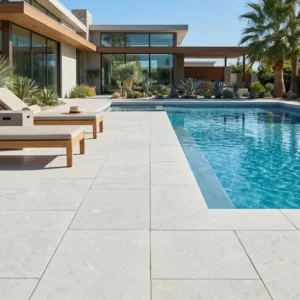
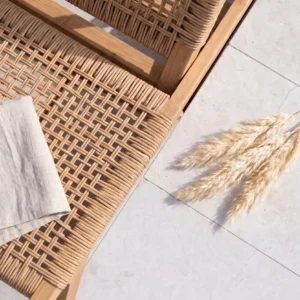
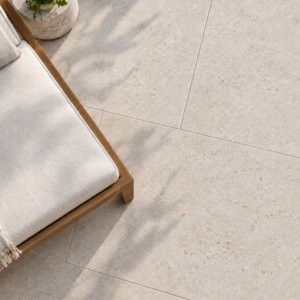



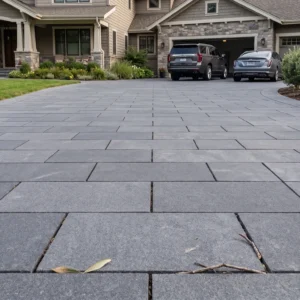
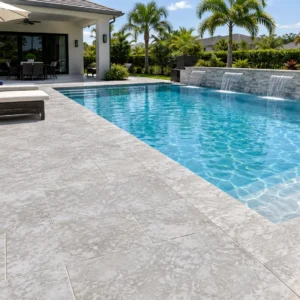
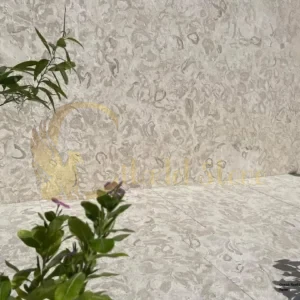


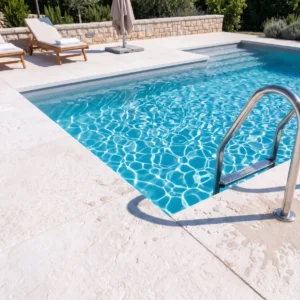
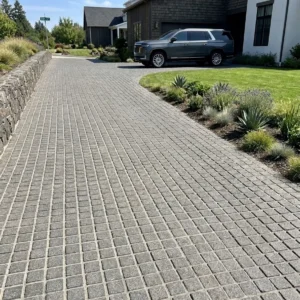
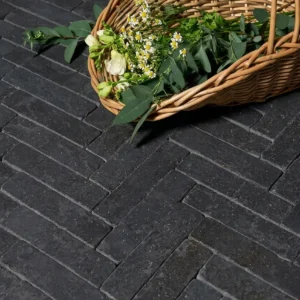
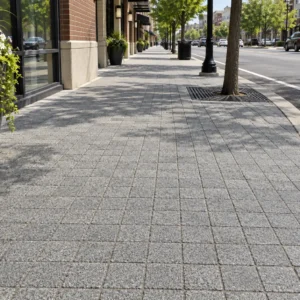
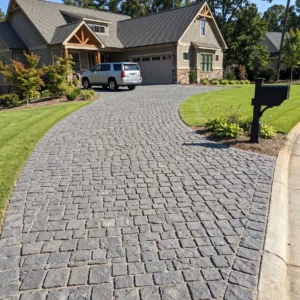



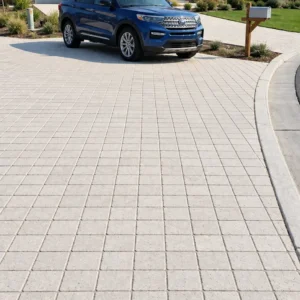
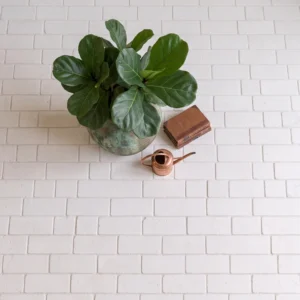
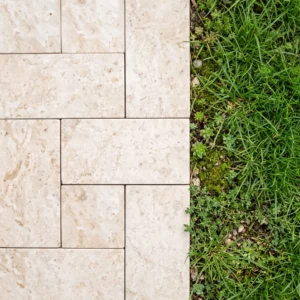
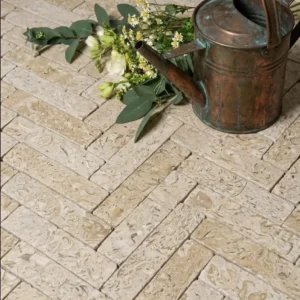

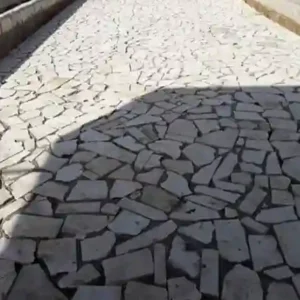

Drainage geometry determines the long-term fate of 18×18 stone pavers in Arizona more than almost any other variable — and yet it’s the specification detail that gets shortchanged on the majority of residential and commercial projects. Arizona’s monsoon season delivers intense, short-duration rainfall events that can drop two inches of water in under an hour, creating hydraulic loads that exceed what a flat, poorly-graded patio surface can handle. Getting your drainage design right before the first paver goes down is the difference between a stable, long-lived installation and one that requires costly releveling within three to five seasons.
Understanding Arizona’s Water Dynamics for Stone Paver Selection
Arizona’s precipitation profile is deceptively complex. The low desert valleys around Phoenix receive between 7 and 9 inches of annual rainfall, but roughly 50% of that total arrives in monsoon bursts between July and September. That concentration means your paver system isn’t dealing with steady infiltration — it’s handling flash-flood-scale runoff events in a compressed timeframe. The paver material you choose, and critically, the joint configuration and base permeability you spec, need to account for that hydraulic reality.
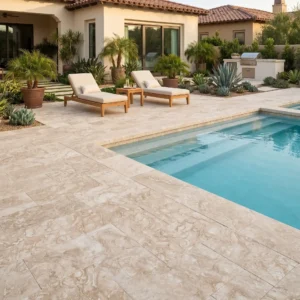
Natural stone pavers in the 18×18 inch format offer a meaningful drainage advantage over continuous concrete flatwork because the joint network creates distributed infiltration pathways. Properly designed open or semi-open joints in 18×18 patio stone in Arizona allow a meaningful percentage of rainfall to percolate rather than sheet across the surface. That said, the stone’s own porosity plays a supporting role. Materials like travertine and certain limestones carry interconnected pore structures that absorb minor moisture; denser basalt and slate function more like impervious units and rely entirely on joint drainage.
Citadel Stone sources 18×18 stone pavers in Arizona from quarry partners whose material specifications include porosity data — which is worth requesting before you finalize your selection, particularly for projects in flood-prone microwatersheds.

Choosing Genuine Stone Varieties for 18×18 Patio Stone in Arizona
The phrase “genuine varieties” matters here because the Arizona market carries a significant volume of reconstituted or cast concrete units sold under stone-adjacent trade names. For drainage performance specifically, genuine natural stone behaves differently from concrete cast products — and not always better, but with predictable, quantifiable properties that let you engineer the system properly.
Here’s a practical breakdown of the main genuine stone varieties available in the 18×18 format and how they behave under Arizona’s water management demands:
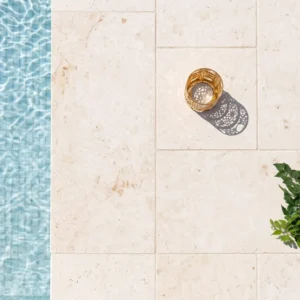
- Travertine: Water absorption rates typically between 0.5% and 3% by weight, with natural voids that can trap debris in wet conditions — specify filled and honed finishes for patio applications subject to ponding
- Limestone: Denser varieties register below 1% absorption; softer grades can reach 4–6%, which becomes relevant when calculating freeze-thaw risk in higher-elevation installations
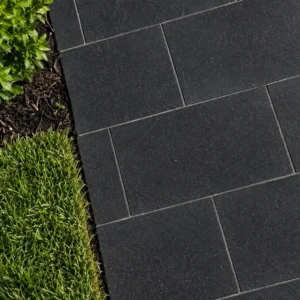
- Basalt: Essentially impervious at under 0.5% absorption — your drainage system must handle 100% of rainfall as surface runoff, so grade and joint design are non-negotiable
- Slate: Low absorption, natural cleavage planes create micro-texture that manages surface water well, though thickness variation in natural slate requires careful setting-bed work to maintain consistent fall
- Granite: Extremely low porosity, highly resistant to staining from mineral-laden Arizona runoff, and the dimensional stability makes it reliable for 18×18 paving slabs in Arizona where thermal cycling is aggressive
Confirm which variety suits your specific site’s drainage zone before ordering. Citadel Stone’s technical team can advise on material selection based on your site’s drainage profile and exposure conditions — that consultation is part of the pre-order process, not an add-on.
Base Preparation and Drainage Engineering for 18×18 Outdoor Pavers in Arizona
The base system under your 18×18 outdoor pavers in Arizona carries more responsibility than the stone itself when it comes to water management. A correctly engineered base intercepts infiltrating water, directs it laterally to drainage outlets, and prevents the hydrostatic pressure buildup that heaves and destabilizes paver installations over time.
Standard practice calls for a compacted aggregate base of crushed rock with a nominal 3/4-inch gradation — this provides void space for water movement while maintaining structural load capacity. Depth requirements vary: residential patio applications in stable soils typically need 4 to 6 inches of compacted aggregate; areas subject to occasional vehicle access or heavy furniture loads should go to 8 inches minimum.
In Scottsdale and the broader northeast Valley, the caliche hardpan layer that sits 12 to 30 inches below grade in many areas creates a hidden drainage problem. Water infiltrates through the aggregate base, hits the impermeable caliche, and has nowhere to go — leading to subsurface saturation and eventual paver movement. The fix is either mechanical penetration of the caliche layer with a ripper attachment before base installation, or the installation of lateral drain pipes within the base at the caliche interface. Skip this step and you’re building a bathtub, not a patio.
For setting bed materials, a dry-pack sand or compacted granite screenings layer of 1 to 1.5 inches sits between the aggregate base and the pavers. This layer must maintain consistent thickness — variations beyond 3/8 inch create low spots that become ponding zones during monsoon events.
- Minimum base depth for residential patios: 4–6 inches compacted aggregate
- Minimum base depth for light vehicle or heavy load areas: 8 inches compacted aggregate
- Setting bed thickness: 1 to 1.5 inches dry-pack or compacted screenings
- Surface fall minimum: 1/8 inch per foot (approximately 1% grade) away from structures
- Caliche layer: must be pierced or drained — never left as an unmanaged barrier
- Edge restraints: required to prevent lateral creep under hydraulic load, especially on slopes
Joint Design and Water Infiltration in 18 by 18 Pavers in Arizona
Your joint configuration for 18 by 18 pavers in Arizona directly governs how much of your rainfall load becomes surface runoff versus infiltration. This matters for two reasons: first, higher infiltration reduces the hydraulic gradient across your paver field, protecting adjacent foundations and planted areas; second, properly filled joints prevent the lateral migration of fines from the setting bed, which is the primary mechanism behind long-term settlement.
Polymeric sand has become the industry default for joint filling, and it’s a reasonable choice when installed correctly. The critical detail most installers miss is moisture activation — polymeric sand requires a precise initial wetting sequence. Under-wetting leaves binder unactivated; over-wetting during a monsoon event before the sand has cured fully can wash the material out entirely. Schedule polymeric sand installation during a dry weather window of at least 48 hours post-placement, and verify your weather forecast extends through the curing period.
For projects prioritizing infiltration — permeable paver designs, water-sensitive landscapes, or sites where stormwater management is a code requirement — a clean aggregate joint fill (typically 1/4-inch clean chip or coarse sand) maintains open drainage pathways. The trade-off is that these joints require periodic replenishment as fines migrate downward over time. For a deeper technical comparison of how stone joint systems differ from standard concrete installations, the specification differences relevant to Arizona site conditions are covered in useful detail for 18×18 outdoor pavers in Arizona — particularly how joint design interacts with base permeability and surface grade across different installation contexts.
Joint width for 18 inch patio stones typically runs between 1/8 inch and 3/8 inch for tight-set installations, or up to 3/4 inch for intentionally permeable configurations. Wider joints introduce more infiltration capacity but also more maintenance burden over a 10 to 20-year service life.
Rainfall Patterns, Slope Management, and Flooding Risk with 18×18 Paving Slabs
Arizona’s rainfall map is not uniform, and the variation is significant enough to affect how you spec 18×18 paving slabs in Arizona across different parts of the state. The low desert below 2,500 feet elevation — Yuma, the Phoenix metro, lower Tucson basin — receives brief, high-intensity events. Monsoon cells can produce rainfall intensities exceeding 2 inches per hour for 15 to 30 minute periods. The high desert and transition zones above 4,500 feet — Flagstaff, Sedona’s upper elevations — also receive monsoon moisture but add winter precipitation including snow and the associated freeze-thaw cycles that low desert installers never have to consider.
For sloped installations using 18×18 inch pavers in Arizona, the paver field must be graded consistently to prevent flow concentration. Slopes between 1% and 5% handle most residential conditions well. Above 5%, you start accumulating velocity that can undermine joint sand and erode the setting bed at low edges. On steeper grades, step the paver field with integrated drainage channels or use a fully mortared setting on structural concrete — floating paver systems on slopes above 8% are high-risk without specialized engineering.
In Tucson and the surrounding Sonoran Desert basin, the combination of monsoon intensity and the city’s regional topography creates localized flooding corridors that even experienced contractors sometimes underestimate. If your project site sits near a natural wash or in a low point between ridgelines, a basic hydrological assessment before finalizing paver grade and drainage outlet locations is worth the investment.
Surface Finish and Slip Resistance for Wet-Condition Performance
The finish specification on your 18 inch paver stones directly affects safety performance during and after Arizona’s rain events. A paver field that drains adequately but presents a slick surface when wet creates a liability condition — and wet stone is more dangerous than wet concrete in many finish categories.
The relevant performance standard is ASTM C1028 (static coefficient of friction) and the more current DCOF (Dynamic Coefficient of Friction) testing per ANSI A137.1. For exterior paved surfaces in wet conditions, you’re targeting a DCOF of 0.42 or higher. Here’s how common 18 inch square pavers compare under wet conditions by finish type:
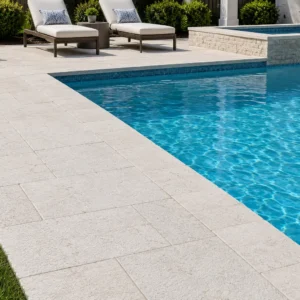
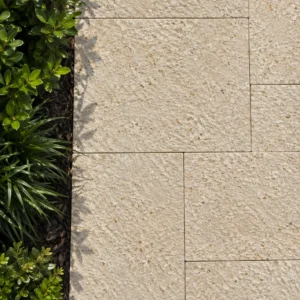
- Natural cleft or split-face finish: highest slip resistance, COF typically 0.6–0.8 wet, recommended for pool surrounds and sloped applications
- Sandblasted or brushed finish: good wet performance at 0.5–0.65 COF, better aesthetic uniformity than natural cleft
- Honed finish (matte): moderate wet performance at 0.45–0.55 COF, acceptable for flat patios with adequate drainage fall
- Polished finish: COF drops to 0.35–0.45 wet — marginal for exterior use, not recommended for areas subject to monsoon exposure without anti-slip treatment
- Tumbled finish: variable COF depending on stone type, generally 0.5–0.6 wet, with micro-texture that handles standing water reasonably well
Specify finish type in conjunction with your drainage design — a polished 18 inch square paver on a properly graded surface that sheds water quickly may perform acceptably; the same finish in a low-gradient zone where water pools is a hazard.

Sealing and Long-Term Moisture Control for 18 Inch Square Pavers
Sealing protocols for 18 inch square pavers differ from standard concrete maintenance because natural stone’s porosity and mineral composition create specific penetration and reaction dynamics. The goal of sealing in Arizona isn’t primarily UV protection or color enhancement — it’s moisture management. A correctly sealed paver surface reduces the absorption of monsoon water into the stone body, which limits efflorescence, mineral migration, and the salt crystallization damage that is common in Arizona’s mineral-rich groundwater environments.
Penetrating silane-siloxane sealers are the professional standard for exterior stone pavers in the Southwest. They bond into the pore structure rather than forming a film on the surface, which means they don’t change the surface’s slip resistance characteristics significantly, and they don’t peel or delaminate the way topical film sealers do under UV exposure and thermal cycling.
Application timing matters more than most installation guides acknowledge. Applying sealer to stone that retains construction moisture — even 2 to 3 weeks after installation — traps water vapor that will eventually force the sealer to release from below. In Arizona’s low humidity, most natural stone pavers reach equilibrium moisture content within 3 to 4 weeks of installation during summer months. In cooler, wetter periods, allow 6 weeks minimum before sealing.
- Initial seal: 3–6 weeks post-installation, after full moisture equilibration
- Resealing interval: every 2–3 years for high-traffic or fully exposed surfaces; 4–5 years for covered or low-traffic areas
- Sealer type: penetrating silane-siloxane for exterior applications — avoid film-forming acrylics in Arizona’s UV environment
- Application method: low-pressure spray or roller for large formats; back-rolling prevents pooling in natural stone surface variation
- Pre-seal cleaning: remove all efflorescence and mineral deposits with appropriate pH-neutral cleaner before sealing — sealing over deposits locks them in permanently
At Citadel Stone, we recommend confirming the specific sealer chemistry with your stone variety before purchase — some silane formulations are optimized for high-silica materials like granite and basalt, while others perform better on carbonate stones like limestone and travertine.
Thickness, Load Bearing, and Format Consistency in 18×18 Stone Pavers
Thickness specification for 18×18 stone pavers in Arizona depends on your load category and base system. Residential patio and pedestrian walkway applications are typically well-served by 1.25-inch (30mm) nominal thickness for harder stones like granite and basalt, while softer stones like travertine and some limestones should go to 1.5 to 2 inches to handle point loads from furniture legs and concentrated foot traffic without risk of fracture.
The 18×18 format — roughly 2.25 square feet per unit — means each paver handles a meaningful distributed load. The larger the format, the more sensitive the installation is to setting bed consistency. A 6×6 paver bridges minor variations in the setting bed without issue; an 18×18 unit placed over a soft spot creates a rocking condition that cracks the stone under cyclic loading. Trowel marks in the setting bed need to be screeded out completely before placement — this is a step that experienced installers take seriously and newer crews routinely skip.
Verify warehouse stock levels at Citadel Stone before committing to a project timeline. The 18×18 format is available across multiple stone types from regional warehouse inventory, but thickness variations within a single stone type do occur between quarry batches. Confirming that your full project quantity ships from a single batch prevents the shade and thickness inconsistencies that create visible variation in a completed installation.
Buy 18×18 Stone Pavers in Arizona — Wholesale from Citadel Stone
Citadel Stone stocks 18×18 stone pavers in Arizona in standard formats across travertine, limestone, basalt, slate, and granite varieties, with thickness options from 1.25 inches to 2 inches depending on material type. Available finishes include natural cleft, sandblasted, honed, and tumbled across most stone categories. Request material samples and full specification sheets — including porosity data, DCOF wet slip ratings, and compressive strength values — before committing to a project order.
Trade and wholesale inquiries receive direct pricing from Citadel Stone’s commercial team, with volume thresholds that reflect realistic project quantities rather than retail minimums. Lead times from warehouse inventory typically run 1 to 2 weeks for standard formats; custom-cut or non-standard thickness orders require 3 to 5 weeks depending on quarry partner lead times. Truck delivery coverage extends across Arizona statewide, with your project’s truck access constraints factored into delivery scheduling at the time of order — tight urban lots and HOA-restricted neighborhoods get routed appropriately.
For projects in Mesa, Chandler, Peoria, Tempe, Gilbert, and surrounding Valley communities, regional warehouse stock typically allows shorter lead times than import-sourced material. Sourced from established quarry partners, each batch at Citadel Stone goes through a warehouse quality check for dimensional consistency and surface grade before it ships — which matters significantly for large-format 18 square patio blocks in Arizona where thickness variation across a pallet creates setting-bed complications in the field. Contact Citadel Stone directly to schedule a technical consultation, request a quote, or discuss project-specific material requirements before placing a wholesale order. As you plan the full scope of your Arizona hardscape, related stone sizes can complement your 18×18 field pavers — 16×16 Stone Pavers in Arizona covers specification details for a closely related format that works well in transition zones or border applications alongside 18-inch field stone. For Arizona projects requiring reliable material and consistent sizing, Citadel Stone offers 18×18 outdoor pavers suited to both residential and commercial applications statewide.


