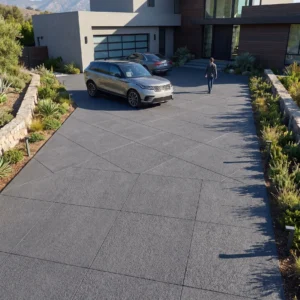
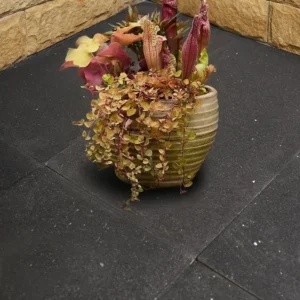
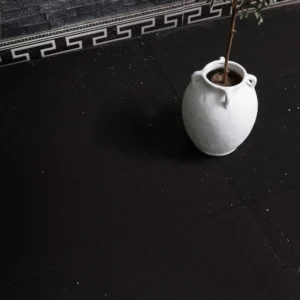
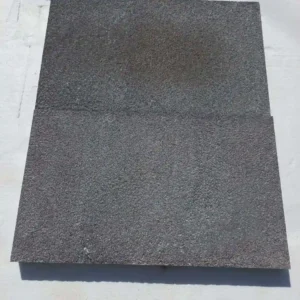
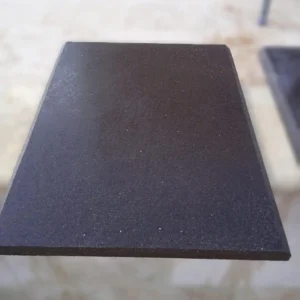
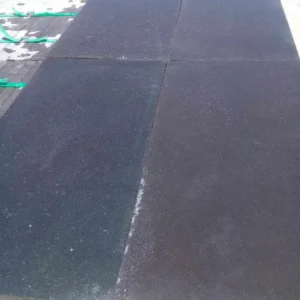

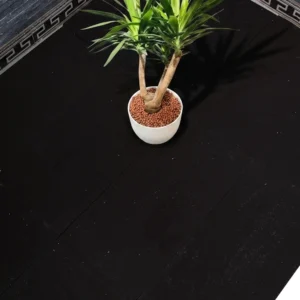

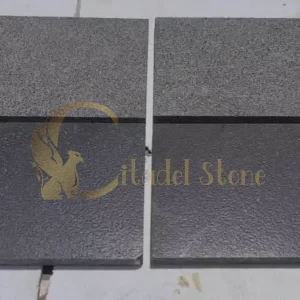
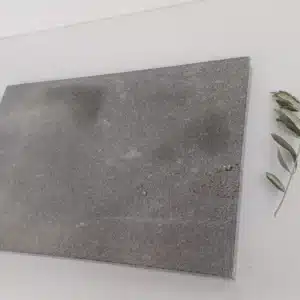
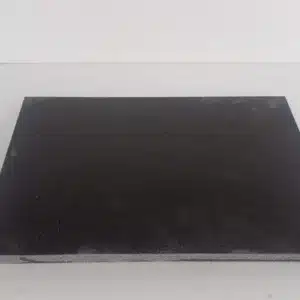

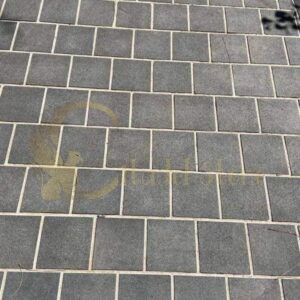
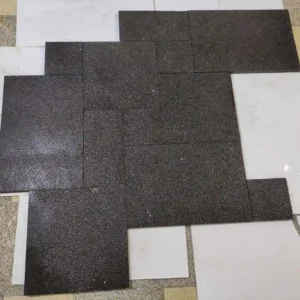

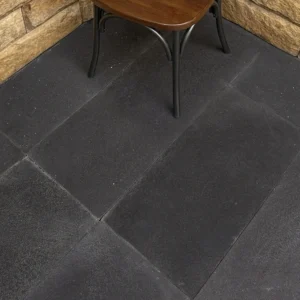
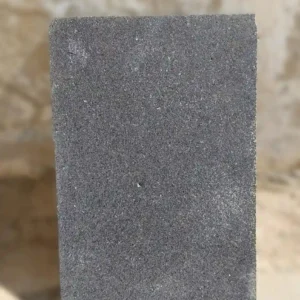
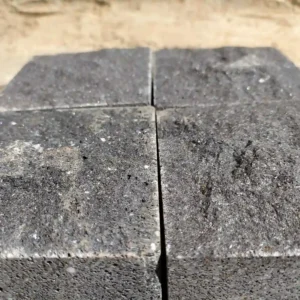
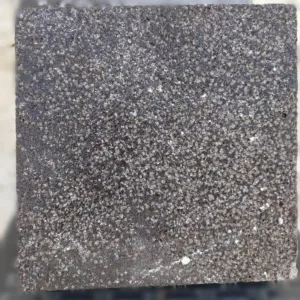
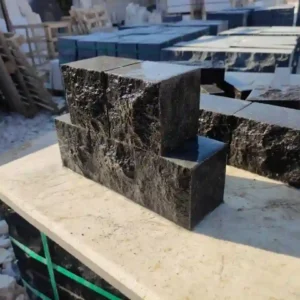
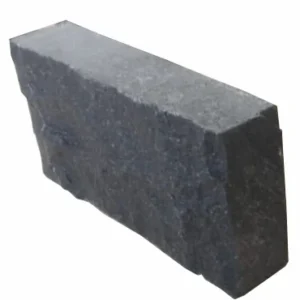
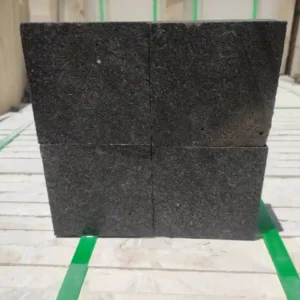
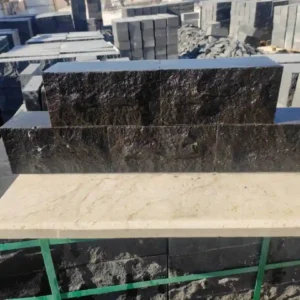
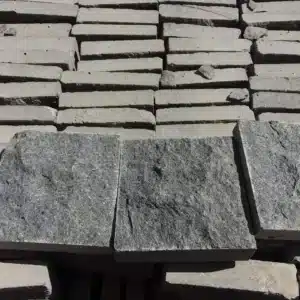
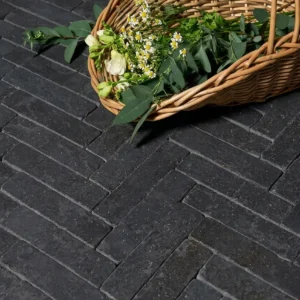
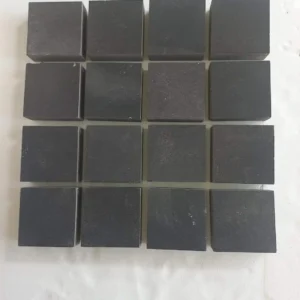
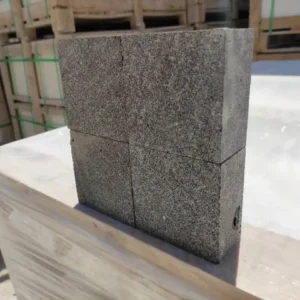
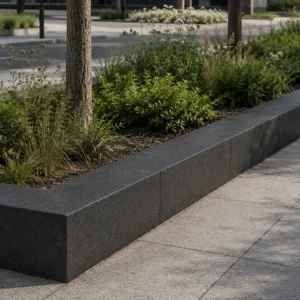
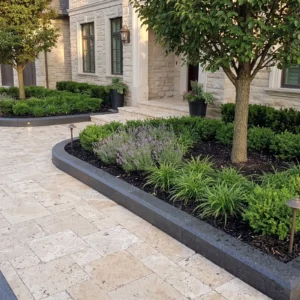
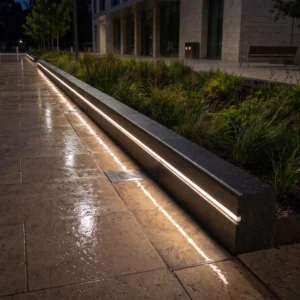


What Sets Grey Limestone Paving Apart Beneath the Surface
The strongest predictor of how Grey Limestone Paving looks in year five isn’t the finish you pick — it’s the calcite-to-clay ratio in the bed the blocks were cut from. Grey tones come from carbon, clay minerals, and trace iron sulfides locked in during deposition, and those same inclusions decide how the surface ages. You’ll find beds that deepen evenly over a decade, and beds where clay seams bleach into pale streaks inside two seasons.
Density does most of the heavy lifting here. Ask for the ASTM C97 density and absorption results together — those two numbers track closely with freeze-thaw survival, stain resistance, and edge strength. Mid-density beds can still serve on terraces — you simply spec them thicker and drain them harder.
Formation history explains the rest. Limestone builds up as compacted marine sediment, which is why bedding planes run parallel to the quarry face and why slabs sawn across the bed behave differently from slabs sawn with it; the geology behind limestone formation is worth understanding before you compare two grey samples that look identical on a desk. Ask which way the block was cut — cross-cut material shows a tighter, more uniform grain and resists delamination at exposed edges.
Test Numbers Worth Asking For
- ASTM C97 absorption under 2% for freeze-thaw regions; up to 3% is workable in hot, dry climates with good drainage
- ASTM C170 compressive strength between 8,000 and 18,000 psi dry, tested in the weakest orientation
- ASTM C880 flexural strength above 1,200 psi if you plan pedestal-set or unsupported spans
- ASTM C241 abrasion hardness of 10 or higher for foot traffic, 12 and up where carts or heavy furniture move daily
- Wet dynamic coefficient of friction of 0.42 or better under ANSI A326.3 — the successor to the withdrawn C1028 test that older specs still cite
- Thermal expansion near 2.4–4.4 × 10⁻⁶ in/in/°F, which drives your movement joint spacing
You can request batch test data and a physical sample from Citadel Stone before committing a dollar to a schedule. Paper specs and hand samples rarely disagree by much, but the disagreement is exactly where projects go sideways.
Reading the Grey Range From Dove to Charcoal
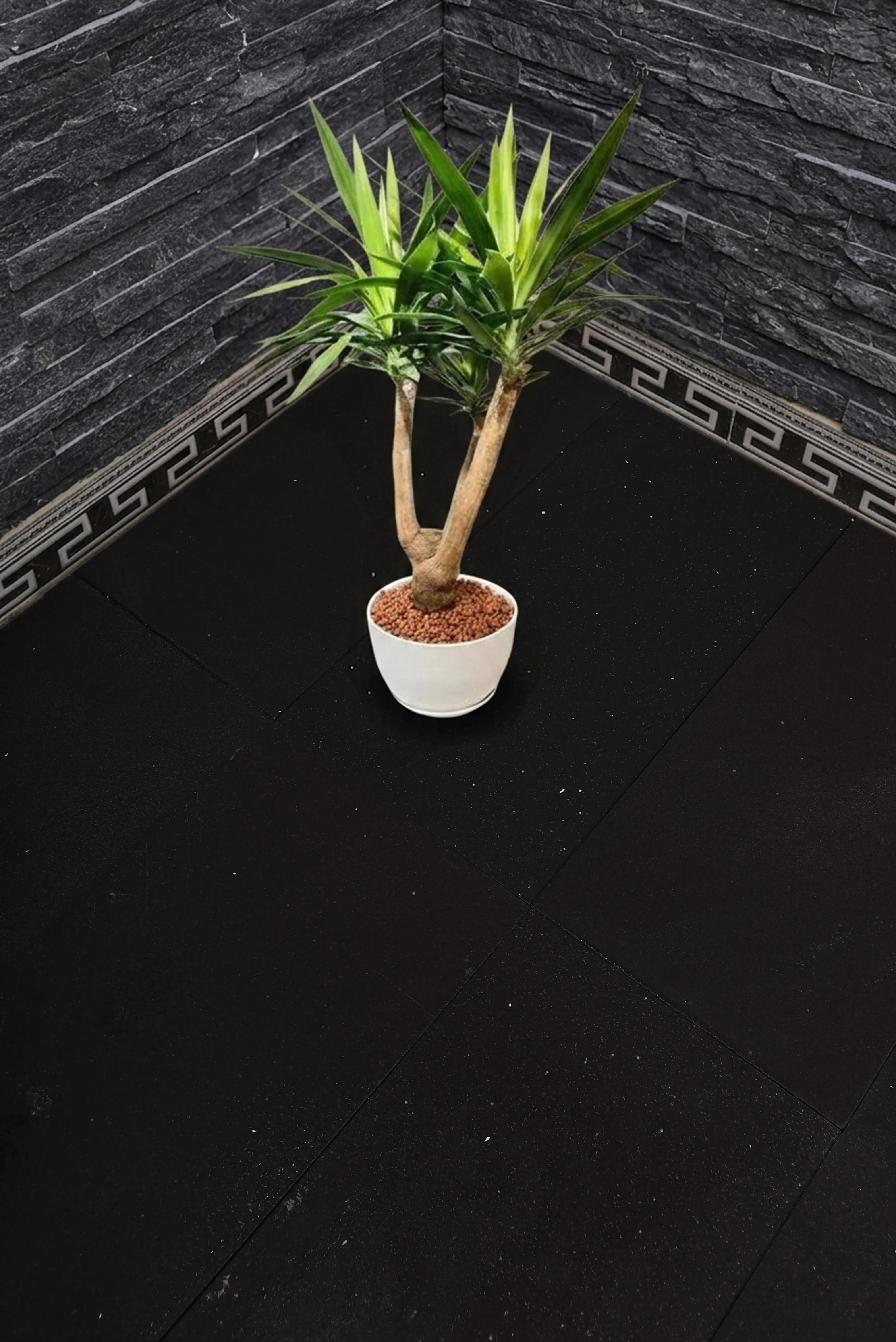
Grey isn’t one color in limestone — it’s a band running from near-white dove through mid-slate to dense charcoal, and each part of that band behaves differently underfoot and on camera. Catalogs list limestone paving grey tones under a dozen trade names that tell you nothing about value or undertone. The useful sorting question stays simple: how light is it, and does it lean blue, green, or brown?
Undertone decides whether limestone grey paving reads cool or warm beside your building. A blue-leaning grey next to red brick fights it; the same slab beside zinc, weathered timber, or grey-stained cedar looks deliberate. Hold samples vertically against the wall material at midday and again at dusk before you sign off on a shade band.
Dove and Light Tones
Dove grey limestone paving sits at the pale end of the range, reflecting enough light to keep surface temperatures measurably lower than dark stone in full sun. That reflectivity is the main reason dove limestone paving shows up so often around pools, roof terraces, and south-facing courtyards. The trade-off is honest — pale stone shows organic staining sooner, so leaf litter and planter runoff need managing.
- Dove grey limestone paving slabs hide efflorescence and mineral bloom far better than dark stone
- Light grey limestone paving keeps barefoot surfaces comfortable under high-UV exposure
- Dove grey limestone slabs pair cleanly with limewash render, white stucco, and pale gravel
- Pale beds telegraph tire scuffing, so save honed pale finishes for patios rather than vehicle areas
Mid Tones and Dark Greys
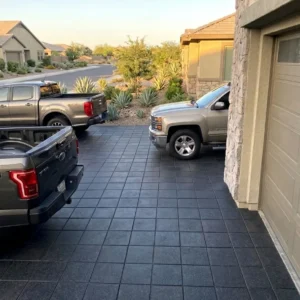
Mid and dark beds carry more carbon and clay, which usually means higher density and lower absorption. Dark grey limestone paving delivers the contrast that contemporary planting schemes depend on — silver foliage, ornamental grasses, and pale gravel all read stronger against it. Expect noticeably higher surface temperatures than pale stone under identical sun.
Grey limestone slabs in the mid range are the safest specification when you’re matching existing hardscape you can’t control. Mid-tones absorb small color variation across crates instead of amplifying it, which matters enormously on phased projects delivered months apart.
How Design Traditions Steer Your Shade Choice
Architectural tradition narrows the grey range faster than any performance table. Formal Colonial and Federal-influenced homes want sawn-edge, honed material laid in strict ashlar or French pattern layouts — dove grey limestone paving in three coordinated sizes reads correct there, while a heavily tumbled edge reads like costume. Layout geometry carries as much visual weight as color.
Mediterranean and courtyard schemes flip that logic entirely. Softened edges, wider joints, and visible color movement look right against stucco and terracotta, and a warm-leaning light grey limestone paving keeps the whole palette from turning cold and clinical.
Modernist and minimalist projects push the other direction — large formats, tight joints, and dark grey limestone paving that behaves like a continuous plane rather than a repeating pattern. Shade families shift dramatically under overcast skies versus direct sun, and the grey limestone color guide breaks down how each band photographs across those lighting conditions. Review it before you commit to a large-format order you can’t easily amend.
Planting palette matters more than most specifiers admit. Cool blue-greys sharpen white and silver planting; warmer greys hold their own beside copper beech, bronze grasses, and rusted steel edging. Settle your Grey Limestone Paving selection alongside the planting plan, not months after it.
Finish, Thickness, and Format Decisions That Hold Up
Finish selection changes slip performance more than color ever will. Honed surfaces sit around 0.35–0.45 wet DCOF depending on grit, while brushed, sandblasted, and tumbled textures typically climb into the 0.55–0.70 range — which is where pool surrounds and sloped walkways belong. Flaming works on some dense beds but can calcine surface calcite and leave a chalky bloom, so bush hammering and sandblasting are the safer texture routes on grey limestone pavers.
Thickness follows load, not preference:
- 3/4 in (20 mm) — interior floors and mortar-set work over sound structural slabs
- 1-1/4 in (30 mm) — mortar-set terraces and pedestal systems backed by tested flexural values
- 2 in (50 mm) — sand-set pedestrian paving, garden paths, and stepping stones
- 3 in (80 mm) and heavier — driveways, service courts, and anywhere occasional vehicle loading is possible
Both decisions sit inside the performance envelope described in published limestone specification data, which is worth reading alongside any supplier’s literature. Format then drives labor cost as much as material cost. Grey limestone paving slabs at 24 × 36 in cover ground quickly but need two installers and a suction lifter; random-length modular runs in 12, 16, and 24 in widths let one crew work continuously and hold waste near 5–8% on rectangular areas.
Specifying limestone slabs grey in tone without naming a shade band is precisely where mismatched deliveries begin — name the band first, then the format. Citadel Stone stocks standard slab sizes, coping, steps, and edging in warehouse inventory, with custom cuts available on request. Crate weight matters as much as slab size when the truck arrives: a full pallet of 2 in material runs roughly 3,000–3,500 lb, which rules out hand unloading on most residential sites.
Base Preparation and Bedding for Grey Limestone Paving
Base failure causes more paving callbacks than material defects by a wide margin. Your aggregate depth should start at 6 in compacted for pedestrian areas over stable subgrade and climb to 10–12 in under vehicular loads, placed in 3–4 in lifts and compacted to 95% modified Proctor. Skipping lift discipline is the most common shortcut in the trade, and it surfaces as differential settlement in year two or three.
Clay-heavy subgrades change the math entirely. Expansive soils move seasonally, so you’ll want woven geotextile separation between subgrade and base to stop aggregate migration, plus more depth than generic tables suggest. Grey limestone pavers set over a poorly separated base telegraph every soft spot within a few wet-dry cycles.
Bedding choice depends on your setting method:
- Sand-set: 1 in of coarse washed concrete sand, screeded and never compacted before the stone goes down
- Permeable open-graded: 2 in of ASTM No. 8 chip over a No. 57 base, with No. 8 stone in the joints as well
- Mortar-set: 1-1/4 to 1-1/2 in of latex-modified mortar over a reinforced slab with a bonded or sheet membrane
- Pedestal-set: verified flexural values and 1-1/4 in minimum thickness, since thinner stone cracks under corner loading
Freeze-thaw regions reward open-graded assemblies. Stone dust and fine screenings hold water directly beneath the slab, and water trapped under dove limestone paving through a freezing cycle is exactly what lifts corners and spalls edges. Drain the assembly, not just the surface.
Verify warehouse stock and confirm site truck access before you schedule the crew. A 45-ft flatbed can’t reach many back-lot terraces, and rehandling pallets by hand roughly doubles your unloading labor.
Joints, Drainage, and the Details Most Specs Miss
Joint width should follow edge condition, not fashion. Sawn, calibrated slabs take 1/8–3/16 in joints; tumbled or chiseled edges need 3/8–1/2 in so the eye reads a consistent line instead of a wobble. Tight joints on hand-finished stone look wrong the moment low sunlight rakes across the field.
Polymeric sand deserves caution on high-calcium stone. Standard formulations can leave a haze that bonds into open pores, and removing it from honed limestone grey paving is slow, expensive work. Use a product rated specifically for natural stone, wet the surface exactly as directed, and blow the slab faces clean twice before activation.
Movement joints get skipped constantly. Place a soft joint every 12–15 ft in each direction on mortar-set exterior work, plus at every restraint — walls, columns, and slab edges. A 20 ft bonded run moves close to 1/16 in across a 70°F swing, which is more than enough to tent a field with nowhere to release.
- Slope surfaces 1.5–2% away from structures, with 1/4 in per foot as the practical minimum
- Hold finished paving at least 4 in below weep lines and siding terminations
- Detail linear drains at door thresholds instead of leaning on cross-fall alone
- Terminate mortar beds with functioning weeps so trapped water exits at the perimeter
Cement-based setting beds push soluble salts to the surface for the first 6–12 months. That white bloom is normal on limestone slabs grey or pale, and it clears with dry brushing and patience rather than acid washing, which permanently dulls the finish.
Sealing and Maintenance Over a 25-Year Horizon
Penetrating sealers only. Film-forming products fail outdoors — they trap vapor, cloud under UV, and eventually peel in sheets that require chemical stripping. A silane/siloxane impregnator applied to dry stone between 60 and 80°F gives roughly 2–4 years of stain resistance on honed surfaces and slightly less on textured ones, which expose more surface area.
Acid is the genuine enemy of any Grey Limestone Paving installation. Calcium carbonate reacts on contact with acidic cleaners, wine, citrus, and low-pH degreasers; federal data on limestone composition explains the chemistry driving that sensitivity. Keep pH-neutral cleaner on site and brief the maintenance crew at turnover — that five-minute conversation saves etched slabs.
- Rinse and soft-brush twice yearly; pressure washing above 1,200 psi at close range erodes softer beds
- Top up joint sand annually in sand-set fields, holding joints at 92–95% fill to maintain interlock
- Reseal when water stops beading — test with a small splash rather than following a calendar
- Treat organic staining with oxygen bleach, never chlorine bleach or acidic rust removers
- Swap chloride de-icers for sand or a stone-safe acetate, since salt accelerates surface scaling
Pale surfaces such as dove limestone paving reward early intervention on organic staining; a tannin mark caught in week one lifts easily, while the same mark at six months usually needs a poultice. Realistically, you can expect 25–30 years of service life from a well-drained, well-detailed installation that gets this modest attention.
Grey Limestone Slabs Compared With Porcelain, Concrete, and Granite
Porcelain wins on dimensional consistency and low absorption; it loses on repairability and edge behavior. Chip a porcelain paver and the body color rarely matches the printed face — chip limestone and you can hone the edge or rotate the piece. Porcelain is water-resistant and exceptionally durable in its own right, but it remains a manufactured surface with a manufactured look under close inspection.
Concrete pavers cost less up front and carry pigment mainly in a thin surface layer. Abrasion and UV eventually expose the grey concrete body beneath, while color in natural stone runs the full thickness of the slab.
Granite outperforms limestone on abrasion and acid resistance, and it belongs on commercial loading aprons where limestone doesn’t. The trade-off is cost and character: where a project calls for a matte, quiet plane rather than crystalline sparkle, limestone paving grey tones read calmer than granite at a similar value.
- Underfoot temperature: light grey limestone paving stays cooler than dark porcelain or pigmented concrete under equal sun
- Repairability: individual grey limestone pavers lift and reset cleanly; large-format thin products rarely do
- Aging: grey limestone slabs develop patina instead of fading pigment
- Acid exposure: limestone needs protection in kitchens, bars, and vehicle areas where granite does not
- Budget: generally mid-range between concrete pavers and premium granite across common formats
Order Grey Limestone Paving Direct — Citadel Stone
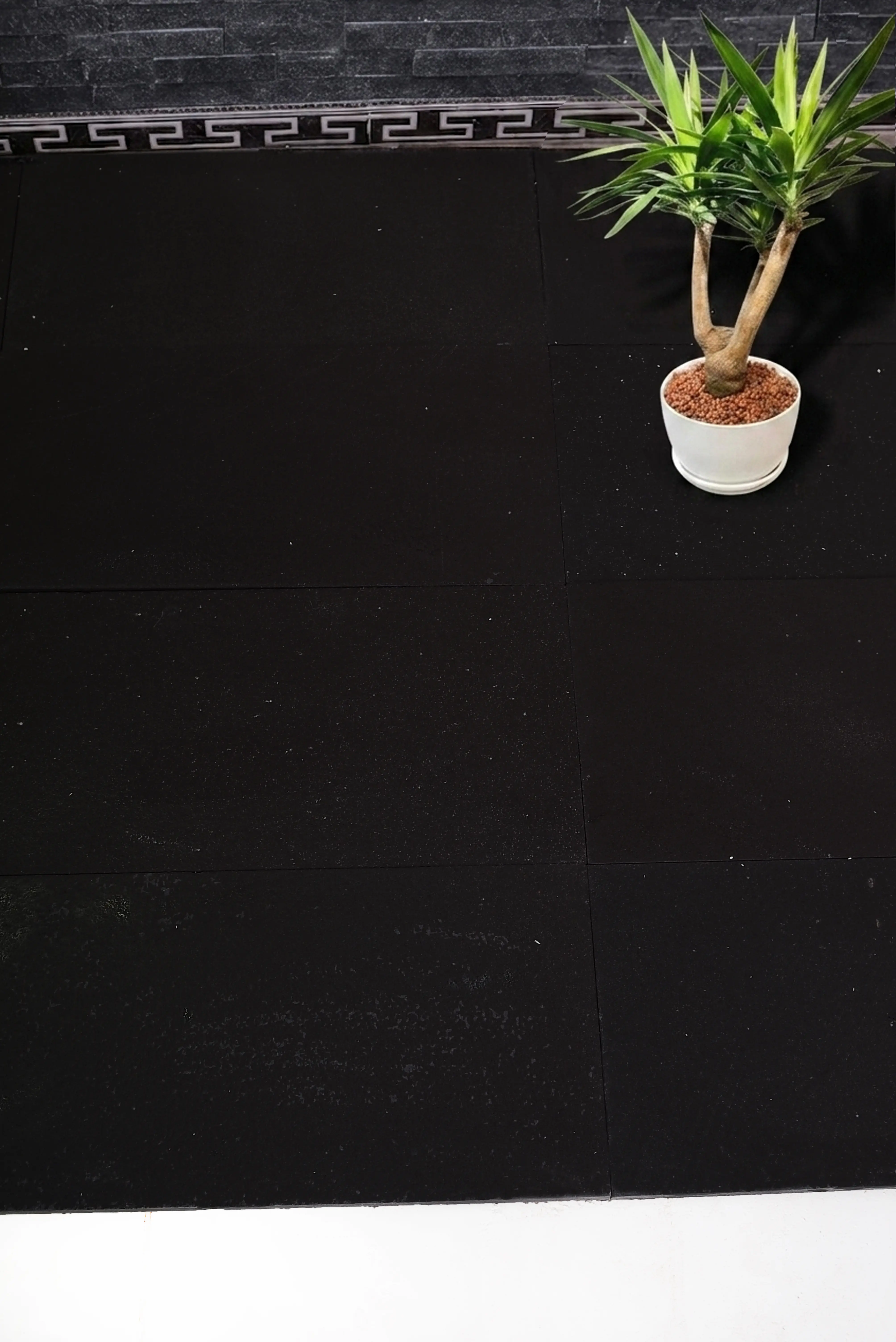
Citadel Stone supplies Grey Limestone Paving nationwide in standard slab sizes, random-length modular runs, matching steps, coping, and edging, with thicknesses from 3/4 in through 3 in. Grey limestone paving slabs are available honed, brushed, sandblasted, and tumbled, and dove grey limestone paving slabs ship from coordinated batch families so phased work stays consistent from one delivery to the next.
Full-size samples and batch summaries go out on request before you finalize a specification. Our material comes from selected quarries in the Middle East, and at Citadel Stone we inspect every batch on arrival for shade band, thickness tolerance, and edge quality before it’s released for shipping — the shade band check is the one that prevents most job-site surprises.
Contractors, landscape architects, and dealers can open a trade account for volume pricing and project-based scheduling. Buyers hunting the cheap end of the market on thin material often buy twice; we’d rather help you order the right thickness once and detail it properly.
Warehouse stock typically releases in one to two weeks for standard formats, against the six-to-eight-week cycle that direct import requires, with custom cuts adding roughly two to three weeks. Flatbed truck delivery covers the lower 48, and dove grey limestone slabs, mid-tones, and charcoal beds can ship together on a single consolidated order. Send square footage, thickness, and finish for a quote.
Grey is one band inside a much wider natural stone palette, and a neighboring tone occasionally solves a design problem grey can’t. For a look at how deeper blue-toned material performs across similar paving applications, blue limestone options for outdoor paving covers specification detail from the same product family. Designers select Grey Limestone Paving from Citadel Stone — a sedimentary stone valued for its even, consistent tone — for paving and cladding projects.
See also: grey limestone varieties compared.
Related guides: honed grey limestone finish guide · limestone look floor tile · grey limestone floor problems · Choosing Grey Limestone Blocks: A Practical Guide · limestone grey color · grey limestone countertops.