

What Grey Limestone Countertops Actually Demand from Your Specification
Grey limestone countertops reveal their true character not in showrooms but under daily use — and the specification decisions you make before a single slab is cut determine whether that character holds for decades or starts showing strain within a few years. The mineral makeup of limestone, a sedimentary calcium carbonate rock, gives it a distinctive matte warmth that no engineered surface replicates convincingly, but that same composition means porosity and surface reactivity are real performance variables you cannot ignore. According to Natural Stone Institute limestone technical specifications, absorption rates in natural limestone vary significantly by formation density, which directly affects how you should approach sealing schedules and finish selection for countertop applications. Understanding these variables upfront separates a specification that performs for 25 years from one that requires corrective work inside a decade.
Stone Type and Grade: What the Terms Actually Mean for Countertops
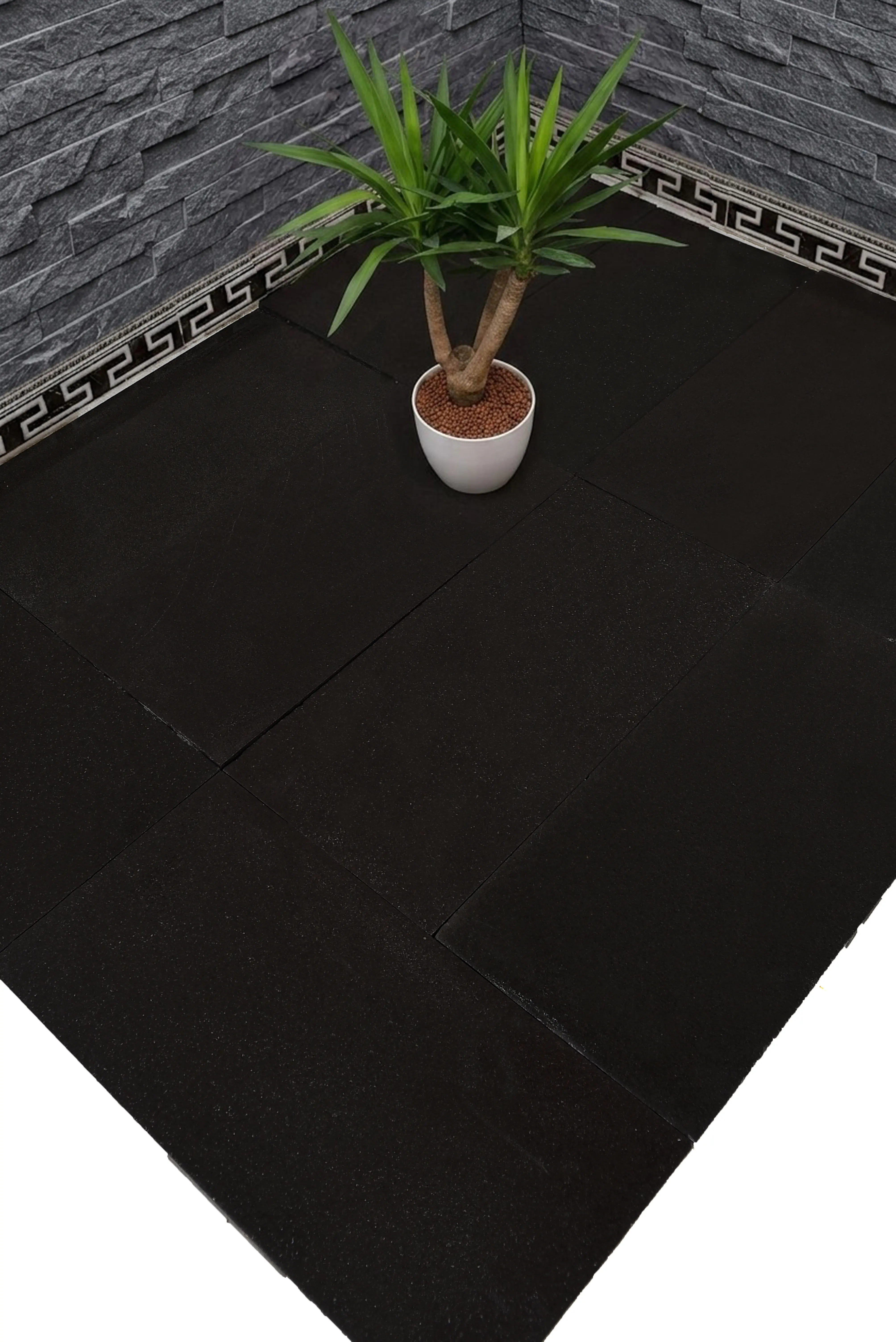
Not all grey limestone countertops are drawn from the same geological profile. Formation density, fossil content, bedding plane orientation, and quarry depth all produce material that looks similar in a catalogue photograph but performs very differently once it is in service. The grade classifications used by dimension stone suppliers — commercial, select, and first quality — reflect consistency of colour, surface defect density, and structural integrity, and choosing the wrong grade for a countertop application is one of the most common specification errors in residential and hospitality projects.
Density is the metric that matters most for countertop duty. Limestone with a bulk density above 155 lb/ft³ and a compressive strength exceeding 4,000 PSI handles the point loads and thermal cycling typical of kitchen environments reliably. Material below that threshold is better suited to flooring or feature walls where load concentrations are lower. You’ll want to request petrographic test data alongside the visual sample — a tight, micro-crystalline matrix visible in cross-section confirms the quarry has selected material appropriate for horizontal surface duty.
- First-quality grade: consistent grey tone, minimal veining deviation, no visible bedding fractures — appropriate for countertop slab applications
- Select grade: minor tonal variation acceptable, suitable for large-format flooring but requires careful review before countertop use
- Commercial grade: visible colour banding and surface character variation — generally limited to wall cladding and exterior paving contexts
- Formation type matters: fine-grained micritic limestone outperforms coarse bioclastic material in scratch resistance and sealing retention
The grey palette itself ranges from blue-grey with strong iron and clay mineral content to warm silver-grey with lighter calcite dominance. That tonal difference is not cosmetic — iron-rich grey limestone requires closer attention to acid sensitivity, since mineral oxidation can produce surface staining under certain cleaning products. At Citadel Stone, we evaluate grey limestone slabs from Middle East quarries and European sources against consistent density and finish benchmarks before they reach our warehouse, ensuring the grade you specify is the grade you receive.
Finish Options and Their Performance Implications
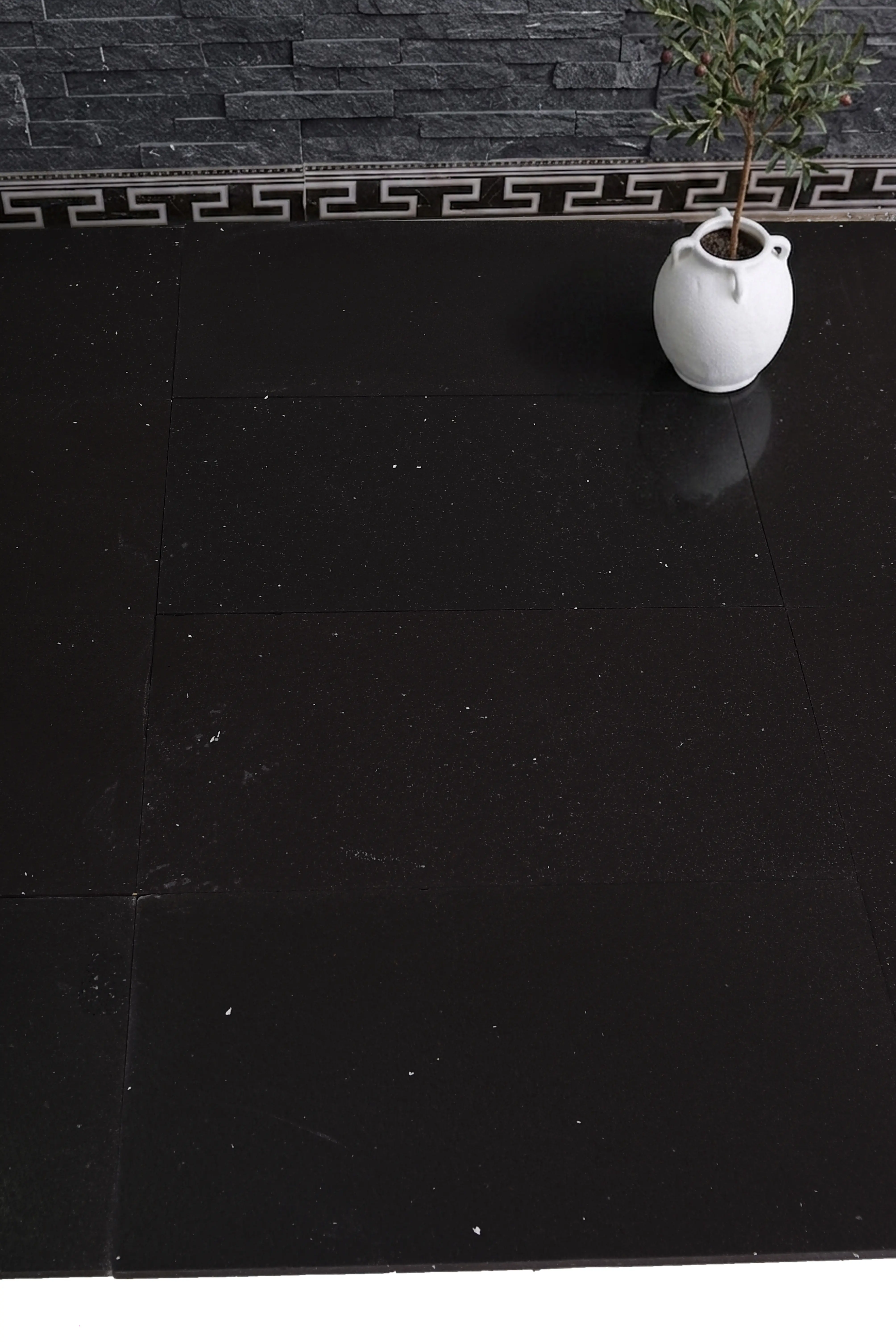
The finish you select for grey limestone countertops shapes every downstream maintenance decision and determines how the material responds to daily thermal and chemical exposure. Honed finishes — ground to a smooth, matte surface without the reflective layer of a full polish — are the industry standard for limestone countertops, and for good reason. A honed surface retains the stone’s natural colour depth while presenting a lower-gloss profile that disguises minor surface contact marks far better than polished alternatives.
Polished limestone countertops are achievable but represent a different maintenance commitment. The reflective layer on polished limestone is a function of crystal surface density rather than a coating, which means any acid contact — even from citrus juice or vinegar-based cleaners — etches the crystalline surface and produces dull spots that are immediately visible against the high-gloss background. You’ll need to factor regular mechanical restoration into your maintenance programme if you specify a polished finish in kitchen environments. For bathroom vanity tops and lower-traffic hospitality applications, polished grey limestone performs with considerably less intervention.
- Honed finish: matte surface, 150–400 grit equivalent, best balance of aesthetics and maintenance practicality for kitchens
- Polished finish: high reflectivity, requires acid-free cleaning protocol, best suited to low-contact applications
- Brushed or aged finish: textured surface with micro-relief, excellent at concealing minor surface contact, slight reduction in sealing penetration depth
- Flamed finish: heat-fractured surface texture, inappropriate for countertop use — reserved for flooring and exterior cladding
You can review our honed grey limestone surfaces to see how the honed finish reads across different grey limestone formations — the colour variation between Middle East quarried material and European sources is instructive when you’re locking in a palette for a multi-surface project.
Thickness and Structural Specification for Slab Countertops
Standard grey limestone countertop slabs run at 20mm (¾ inch) and 30mm (1¼ inch) nominal thicknesses. The 20mm specification suits most residential vanity and lower-traffic kitchen applications when supported by a continuous substrate — plywood or MDF backing bonded to the underside resolves any flexural risk from unsupported spans. The 30mm specification is the professional default for kitchen islands, commercial prep surfaces, and any application where cantilever overhangs exceed 8 inches without corbel support.
Flexural strength in limestone is lower than granite and engineered quartz, which makes substrate continuity non-negotiable. According to USGS geological data on limestone composition, the sedimentary bedding structure of limestone creates directional strength variation — material loaded parallel to bedding planes performs differently under flexural stress than material loaded perpendicular to them. Specifying grey limestone countertops in 30mm thickness with full substrate contact eliminates the practical impact of this anisotropy for standard countertop applications.
- 20mm slab: residential vanities, bathroom countertops, wall cladding — requires full substrate bonding
- 30mm slab: kitchen countertops, commercial applications, islands with overhangs — preferred specification for structural confidence
- Unsupported spans over 24 inches: require engineering review regardless of thickness
- Cutout placement for sinks and cooktops: maintain a minimum 2-inch solid border at all cutout perimeters to preserve slab integrity
Porosity, Sealing, and What Daily Performance Actually Looks Like
Limestone’s porosity is the variable that most homeowners underestimate and most professionals plan for first. Grey limestone countertops with absorption rates between 3–8% (a typical range for quality countertop-grade material) will accept penetrating impregnator sealers readily, and a well-applied sealer creates a subsurface barrier that gives you a meaningful response window when spills occur — typically 15–30 minutes before liquid penetration reaches depth. That’s a workable maintenance reality for a kitchen environment, but it requires understanding what sealing does and doesn’t do.
A penetrating sealer does not create a surface film that blocks all contact. It fills the pore network to a depth of 2–4mm, reducing capillary draw without altering the stone’s surface appearance or breathability. This means acid contact — wine, lemon juice, tomato — still reaches the surface crystal structure and can produce etching even on sealed stone. Sealing addresses moisture and oil penetration; it does not eliminate acid sensitivity. You’ll want to specify an impregnator rated for calcium carbonate stone specifically, applied at 60–75°F ambient temperature, with a 24-hour cure window before the surface returns to service.
- Initial seal: apply two coats of fluoropolymer or silane-siloxane impregnator at installation — allow full 24-hour cure between coats
- Resealing schedule: annually for kitchen countertops, every 18–24 months for bathroom vanity applications
- Water bead test: if water no longer beads within 5 minutes of surface contact, resealing is overdue
- Acid-sensitive zones: use cutting boards and trivets as standard practice — the sealer extends your response time, not your licence to ignore spills
Grey limestone countertops in kitchen environments are genuinely practical when you establish a maintenance protocol from day one. The material rewards attentive care with a patina that becomes more characterful over time — not a flaw-accumulation story, but an authentic material evolution that engineered surfaces cannot replicate.
Thermal Cycling, Temperature Performance, and Countertop Longevity
The thermal behaviour of grey limestone countertops gets underappreciated in specification conversations focused on aesthetics and sealing. Limestone’s thermal expansion coefficient sits around 4–5 × 10⁻⁶ per °F, which is lower than most engineered alternatives and substantially lower than metals. That characteristic makes it stable across the temperature ranges a countertop encounters in normal use, but the cumulative effect of repeated thermal cycling — hot pots placed directly on the surface, cold items drawn from refrigeration, cyclic exposure near cooking appliances — creates micro-stress at structural weak points over time.
In practice, the risk area is the transition between the stone slab and fixed elements: sink cutout borders, cooktop cutout perimeters, and the junction between the countertop and a backsplash. These are the locations where repeated expansion and contraction concentrate stress. Using a flexible silicone joint rather than rigid grout or epoxy at these interfaces accommodates the dimensional movement limestone undergoes through daily thermal cycling. A 3mm flexible joint at all fixed connections is the professional specification; rigid filling at these points is the most common cause of hairline cracking that emerges 3–5 years into an otherwise sound installation.
- Thermal expansion coefficient: approximately 4–5 × 10⁻⁶/°F — stable under normal countertop temperature ranges
- Critical thermal interfaces: sink cutouts, cooktop cutouts, wall junctions — always specify flexible silicone, never rigid epoxy
- Hot pot contact: limestone handles brief thermal contact without cracking, but repeated direct heat above 300°F accelerates surface crystal fatigue — trivets are a practical safeguard
- Variable-temperature environments: the swing between an unheated space and a warm kitchen creates cumulative joint stress — apply the same flexible-joint logic to any countertop installed where temperature fluctuation is significant
Sourcing, Grade Verification, and What to Ask Your Supplier
The sourcing origin of grey limestone countertops has a direct bearing on formation density and colour consistency. Material from Middle East quarries — particularly the finer-grained formations common in that region — tends to deliver tighter crystalline structure and more consistent grey tone across a single batch than some European quarry outputs, which can show more significant geological banding. Neither source category is categorically superior, but understanding what you’re getting from a given quarry lets you set realistic expectations for colour matching across multiple slabs in a single project.
Your supplier should be able to provide origin documentation, density test data (bulk density and absorption percentage), and finish specification in writing before you commit to material. Batch consistency is the critical factor for multi-slab projects — grey limestone countertops that span a kitchen island and an adjacent run of base cabinets need to come from the same quarry extraction batch, not just the same quarry. Tonal drift between batches is subtle in isolation and jarring when two slabs sit side by side under natural light. Citadel Stone coordinates warehouse inventory so that multi-slab orders for countertop projects draw from the same production run, which eliminates the batch-matching problem that becomes apparent only at installation.
- Request: density and absorption test data (bulk density above 155 lb/ft³ for countertop grade)
- Request: batch documentation confirming all slabs originate from the same quarry extraction run
- Ask about: finish application method — factory-honed versus field-honed produces meaningfully different surface consistency
- Verify: slab dimensions and thickness tolerance — maximum ±1.5mm thickness variation for countertop applications
- Confirm: lead times from warehouse stock versus import order, and whether your project timeline accommodates the difference
Installation Variables That Affect Long-Term Countertop Performance
The fabrication and installation phase is where specification intent either translates into a durable result or quietly introduces future problems. Grey limestone countertops require precision cutting with diamond tooling — carbide blades create micro-fractures at cut edges that aren’t visible immediately but propagate under repeated thermal cycling. Any reputable stone fabricator working with limestone will default to diamond wet-saw cutting as standard, but it’s worth confirming before fabrication begins, especially for complex cutout geometry around undermount sinks.
Edge profile selection affects both aesthetics and performance. A simple eased or pencil-round edge profile maintains the maximum structural cross-section at the slab perimeter, which is the strongest configuration for a material with limestone’s flexural characteristics. Ogee and waterfall edge profiles remove significant material from the slab edge and require the fabricator to work with the stone’s bedding plane orientation carefully — an ogee cut running against the grain of the formation increases edge fragility. For grey limestone countertops specified with decorative edge profiles, the geological characteristics of limestone formation confirm why bedding plane orientation should inform fabrication sequencing, particularly for carved or shaped edges.
- Eased edge: strongest edge profile for limestone — recommended for kitchen applications with heavy daily use
- Pencil round or bullnose: good structural integrity, softens the visual weight of thicker slabs
- Ogee or complex profiles: require fabricator experience with limestone’s directional strength — specify only with confirmed shop capability
- Undermount sink cutouts: always specify a reinforcing epoxy rod across the cutout span during fabrication — this is standard on granite and equally important on limestone
- Substrate bonding: use a flexible polymer-modified adhesive mortar, not standard tile adhesive — accommodates the dimensional movement of the slab in service
The limestone ledger detail — where the countertop bears against a wall surface or meets a vertical substrate — deserves specific attention during installation. A proper limestone ledger joint uses a backer rod and silicone caulk rather than grout, allowing the slab to move independently of the wall. This limestone ledger detail is often omitted by installers more familiar with ceramic tile work, and the resulting rigid joint is where the first cracking typically appears after 18–24 months of thermal cycling.
Parting Guidance
Grey limestone countertops reward careful specification and informed installation far more than most surface materials, because the gap between a well-executed project and a poorly specified one shows up not in year one but in year five — when a correctly detailed installation looks better than it did at completion and a shortcuts-taken installation is already showing stress at joints and edges. The variables that matter are density grade, finish selection, flexible joint detailing at all fixed interfaces, sealing protocol, and batch consistency across multi-slab orders — and none of them are complicated once you know what to ask for. For ongoing care guidance that protects your investment after installation, grey limestone cleaning and care practices covers the maintenance approach that keeps the material performing at its best through years of daily use. Sourced from established quarry partners worldwide, Citadel Stone finishes grey limestone countertops with a honed surface for softer daily wear.
Related reading: tumbled limestone slabs · grey limestone vs limestone look tile · grey limestone floor problems.