

What Separates Grey Limestone Varieties at the Specification Stage
Grey limestone varieties compared side by side reveal distinctions that never show up in colour swatches — they show up in absorption rates, vein density, and surface response to polishing. You’re not choosing between shades of grey; you’re choosing between fundamentally different geological formations that happen to share a colour palette. Jura, Jerusalem, and Thala each carry embedded structural characteristics that determine where they succeed and where they’ll disappoint you after five years of service. Understanding those differences before you commit to a specification is what separates a well-performing installation from one that generates callbacks.
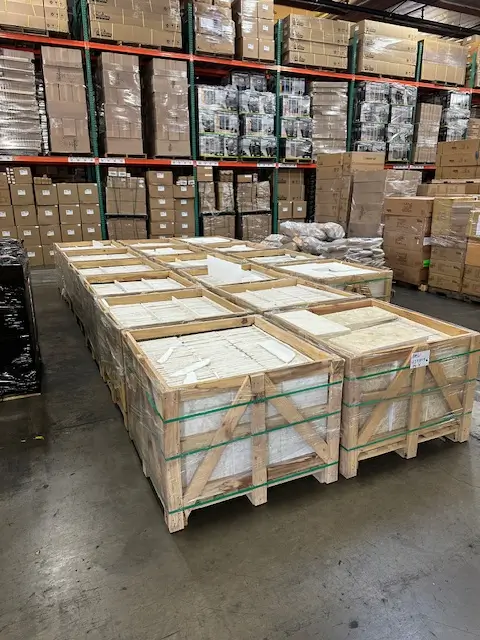
Jura Grey Limestone: Density, Finish, and Field Behaviour
Jura grey limestone originates from the Jurassic-era formations of southern Germany, and its defining characteristic is unusually low porosity for a sedimentary stone — typically 0.4–0.8% water absorption by weight. That’s closer to granite territory than most limestones, which run 3–8%. For specifiers, that number matters in two concrete ways: the stone resists staining with minimal maintenance, and it polishes to a mirror finish that holds up under sustained foot traffic better than higher-porosity alternatives.
The fossil content in jura grey limestone is dense and finely distributed, giving the surface a subtle mottled character rather than dramatic veining. You’ll see warm grey tones with occasional cream inclusions, and the overall appearance reads as refined without being visually busy. According to Natural Stone Institute limestone technical specifications, limestone porosity directly governs long-term stain resistance and surface integrity — Jura grey’s low-absorption profile positions it among the most durable grey limestones available for interior and exterior applications.
Where jura grey limestone creates specification tension is weight. Its density — typically 2.65–2.68 g/cm³ — means slabs and large-format tiles carry significant mass. Your delivery logistics need to account for this: truck access, floor loading, and lift equipment all bear on feasibility for upper-floor or rooftop installations. Citadel Stone maintains warehouse inventory of Jura grey in standard format sizes, which keeps lead times manageable, but confirm stock before finalising your programme because high-demand formats can run lean.
Jerusalem Grey Limestone: Surface Character and Structural Nuance
Jerusalem grey limestone carries a distinctly different visual DNA. Quarried in the Judean Hills, this stone shows a warm, creamy grey base populated with visible fossil shells and natural movement — each slab reads differently, and that variation is the point. For designers working on projects where material authenticity matters, jura grey limestone feels refined while jerusalem grey limestone feels genuinely ancient. That’s not a better-or-worse judgment; it’s a functional distinction that should drive where each material gets specified.
Structurally, jerusalem grey limestone runs higher porosity than Jura — expect 3–5% absorption. That opens up a specific maintenance conversation. Unsealed, this stone will take staining in kitchen or pool environments faster than a low-porosity alternative. Sealed with a penetrating impregnator on a biennial cycle, it performs reliably for 20+ years. The key field detail: always seal before grouting, not after. Grout hazing on Jerusalem grey is notoriously difficult to remove once it dries into open pores.
Jerusalem grey also exhibits natural tonal variation across a production run. Two pallets sourced from the same quarry in the same month can show meaningful tone shifts. Your specification should note that cross-mixing pallet numbers during installation is mandatory, not optional — it’s the difference between a harmonious floor and one that reads as patchwork. This is standard practice for any sedimentary stone with high fossil content, but Jerusalem grey demands it more than most.
Thala Grey Limestone: The High-Traffic Performer
Thala grey limestone from Tunisia is the workhorse of the three. Its compressive strength consistently tests above 180 MPa, and its surface density supports heavy loading scenarios that would stress a finer-grained material. For commercial paving applications — lobbies, public plazas, covered walkways — thala grey limestone holds up under sustained point loading and abrasion in ways that Jerusalem grey simply wasn’t engineered to handle.
The colour profile is cool and consistent: a neutral mid-grey with minimal fossil variation and tight, even grain. That uniformity makes large-format installation visually clean — you’re not managing tonal drift across a floor or terrace. Thala grey also reads as more contemporary and industrial compared to the warmer, character-rich surfaces of Jura and Jerusalem grey. In the broader exercise of grey limestone varieties compared across project types, Thala consistently wins the commercial exterior category on technical merit.
Surface finish options for thala grey limestone include honed, sandblasted, and flamed. The flamed finish increases slip resistance significantly — particularly valuable for external ramps and poolside applications — while maintaining the stone’s neutral grey tone. Honed Thala grey achieves a matte consistency that holds colour variation to a minimum, making it the preferred finish for large commercial floors where reflectivity control matters. As USGS limestone composition and construction data confirms, crystalline density in quarried limestone directly governs surface hardness and finish retention — Thala’s tight grain is the structural reason its finishes hold.
Side-by-Side Performance Comparison: Key Metrics
Putting these grey limestone varieties compared directly against each other reveals where each one earns its specification and where it carries risk. The metrics that matter most are absorption, compressive strength, finish range, and maintenance cycle.
- Jura grey: 0.4–0.8% absorption, compressive strength 180–220 MPa, takes polish to mirror grade, biennial sealing recommended for external use
- Jerusalem grey: 3–5% absorption, compressive strength 120–160 MPa, finishes best in honed or brushed, annual sealing recommended in high-use or wet environments
- Thala grey: 1.5–3% absorption, compressive strength 180–200 MPa, performs across honed, sandblasted, and flamed finishes, biennial sealing sufficient for most applications
- Thermal expansion coefficient across all three falls in the 5–6 × 10⁻⁶ per °F range — joint spacing recommendations of 3/16 to 1/4 inch for interior and 1/4 to 3/8 inch for exterior apply across the board
- Flexural strength matters for cantilevered coping and stair treads: Jura grey leads at 18–22 MPa, Thala runs 14–18 MPa, Jerusalem grey is best avoided for spans over 800mm without structural backing
These numbers shift how you think about each material. For a grey limestone paving project that mixes interior and exterior zones, Jura grey provides the most consistent specification across both environments. For a commercial exterior that needs texture and slip resistance, Thala grey with a flamed finish is the correct answer. For a residential interior where visual warmth and fossil character matter more than maintenance minimisation, Jerusalem grey rewards the investment in care.
You can explore the full technical range through grey limestone paving from Citadel Stone, where specification sheets are available for each variety across multiple format sizes and finish options.
Finish Selection and Application Matching
Finish choice isn’t just aesthetic — it determines slip resistance, stain susceptibility, maintenance burden, and long-term surface integrity. Each of the three grey limestone varieties responds differently to the same finishing process, and that affects your specification strategy.
- Polished Jura grey achieves a reflectivity index of 60–70 Gs — appropriate for feature walls, reception floors, and formal interior applications where light amplification is desirable
- Honed Jerusalem grey reads as warm and tactile, making it the preferred finish for residential bathrooms, kitchens, and living areas where barefoot comfort matters
- Flamed Thala grey gives a coarse, open texture suited to exterior ramps and pool surrounds, where a textured finish is the right choice
- Sandblasted Thala grey gives a contemporary industrial texture suited to public realm paving and covered commercial walkways
- Brushed Jerusalem grey softens the fossil character while maintaining absorption slightly higher than honed — suitable for feature wall applications where texture variation adds visual depth
One finish combination that gets specified incorrectly more often than it should: polished Jerusalem grey for exterior use. The porosity profile and fossil voids that give the material its character also make a polished surface vulnerable to salt weathering and freeze-thaw cycles in cold climates. Reserve polished finishes on Jerusalem grey for controlled interior environments. Honed or brushed performs reliably outdoors when properly sealed.
Installation Timing and Seasonal Scheduling
The grey limestone varieties compared in this article all share one installation requirement that’s non-negotiable: substrate temperature at application must sit between 50°F and 95°F. Below that range, setting adhesive doesn’t develop adequate bond strength. Above it, open time collapses too fast to work safely in larger format slabs. That practical window shapes your scheduling more than most specifiers account for during project planning.
For exterior installations, early morning work sessions — before ambient temperatures peak — give you the longest usable open time with modified thin-set. Jura grey’s low porosity means it doesn’t draw moisture from the adhesive bed as aggressively as Jerusalem grey does, so you have more working time with Jura in warm conditions. Jerusalem grey in particular demands attention to adhesive selection in warmer installation periods: use a heat-stable extended-open polymer-modified mortar and work in smaller sections than you think you need to.
- Spring and autumn installation windows are optimal for all three varieties — stable temperatures support consistent cure without thermal stress at joints
- Avoid large-format exterior Thala grey installation when substrate temperatures will drop below 50°F within 24 hours of placement — adhesive cure will be compromised
- For projects scheduled during warm seasons, plan primary installation work for the cooler morning hours and use that scheduling consistently across the programme
- Grout and joint filling should always follow a 24-hour cure window after tile set — never the same day, regardless of product claims
- In freeze-thaw regions, complete exterior grey limestone paving installation before the first hard frost to allow the adhesive and grout system to fully cure before thermal cycling begins
At Citadel Stone, we recommend confirming truck delivery windows at least two weeks ahead of your installation start date — warehouse dispatch to site typically runs five to ten business days, and scheduling the delivery to arrive one to two days before your installation crew avoids both rushed acclimatisation and material sitting exposed on site for extended periods.
Selecting Grey Limestone Varieties for Commercial Projects
Commercial project specifications introduce demands that residential use doesn’t replicate: sustained high foot traffic, maintenance-crew access constraints, cleaning chemical compatibility, and long-term uniformity across replacement panels. Each of those factors tips the selection between varieties differently.
Thala grey limestone handles commercial lobby and corridor environments most reliably. Its compressive strength ceiling and tight grain structure resist the point loading from luggage trolleys, equipment wheels, and high-heel concentrated loads that erode softer stones over time. For hotel lobbies and airport concourses, Thala grey in a honed finish with a penetrating sealer applied at the factory level — before shipping — provides the most maintenance-efficient surface available in the grey limestone category.
Jura grey limestone earns its place in commercial applications where the finish specification calls for a polished or semi-polished surface that must maintain its reflectivity over a 15–20 year horizon. Retail flagship stores, corporate reception areas, and premium hospitality interiors regularly specify Jura grey because its density means polished surfaces don’t develop the micro-scratching that dulls softer stones within three to five years of service. According to limestone formation and structural characteristics, the crystalline density of low-porosity limestones is a product of formation depth and pressure — Jura grey’s geological history produces the surface hardness that high-traffic commercial interiors require.
Jerusalem grey limestone is rarely the correct specification for primary commercial circulation zones. Its porosity creates staining risk under cafeteria and food-service use, and its fossil variation makes matching replacement panels difficult if sections need replacing years down the track. Where it does succeed commercially is accent walls, reception feature installations, and lower-traffic hospitality areas where its visual character justifies the higher maintenance commitment.
Ordering, Logistics, and Project Planning Realities
Grey limestone varieties compared on paper all look manageable — it’s the logistics layer that introduces real project risk. Jura grey ships from European quarries, which means lead times from order to warehouse receipt can run 8–12 weeks without prior stock. If you’re specifying Jura grey for a project with a firm install date, that timeline needs to be front-loaded into your programme before design is even finalised.
Thala grey and Jerusalem grey both ship from Mediterranean sources and typically run 6–10 weeks from quarry order to warehouse arrival for custom cuts. Standard formats in popular thicknesses — 20mm and 30mm — are more frequently held in domestic warehouse inventory, reducing that lead time to two to four weeks when stock is available. Your safest strategy: confirm stock status at the point of material selection, not at the point of specification issue.
- Always order 8–10% overage on grey limestone varieties — colour and vein matching on replacement orders placed months later is not guaranteed
- Confirm that your truck access on site can accommodate the delivery vehicle’s turning radius before scheduling — large-format Jura grey slabs often ship on flatbed trucks with limited site manoeuvrability
- Request a sample board from the production batch, not from stock, before approving a large commercial order — quarry variation between extraction phases can shift tone meaningfully
- Warehouse quality checks at Citadel Stone include dimension tolerance verification and surface inspection before dispatch, which catches edge damage from transit before material reaches your site
For projects requiring matched replacement panels within a defined programme window, discuss batch reservation with your supplier at order placement. Holding a defined quantity in warehouse through to project completion protects you against quarry variation and stock depletion on high-demand formats.
Expert Summary
The decision between grey limestone varieties is a technical one, not an aesthetic preference dressed up as specification. Jura grey’s low porosity and polishing capacity make it the premium choice for formal interiors and exteriors where finish retention over decades matters. Thala grey’s compressive strength and finish range make it the correct commercial exterior specification in the majority of high-traffic scenarios. Jerusalem grey earns its place in residential interiors and hospitality accent applications where its fossil character and warmth justify a disciplined maintenance programme. Each variety rewards the specifier who understands its geological makeup — and penalises the one who treats it as interchangeable with the others.
Your project timeline should account for the logistics realities specific to each variety: Jura grey demands the longest lead time, Thala grey offers the most reliable domestic warehouse availability, and Jerusalem grey requires the most diligent pre-installation sealing protocol. Get those details into your programme early. As your hardscape specification expands across a project, complementary materials become relevant — grey granite slab options offer a useful reference point for understanding how igneous alternatives perform alongside limestone in mixed-material schemes. Specifiers who review Citadel Stone’s grey limestone range consistently note how dramatically surface character shifts from one variety to the next.