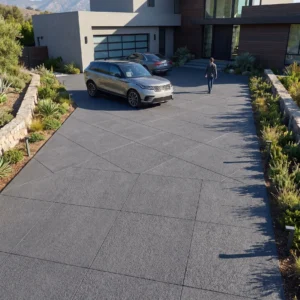
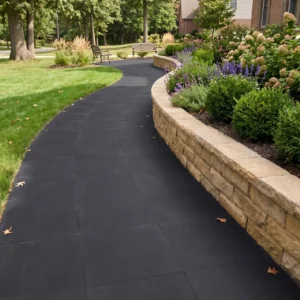
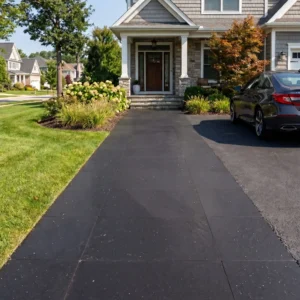
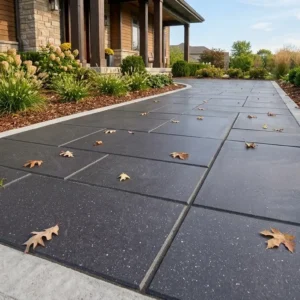
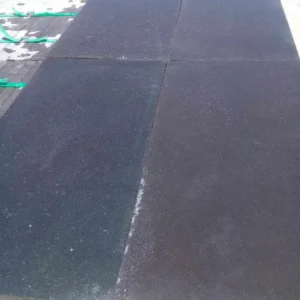

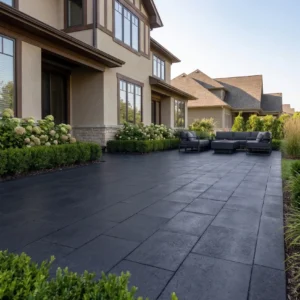


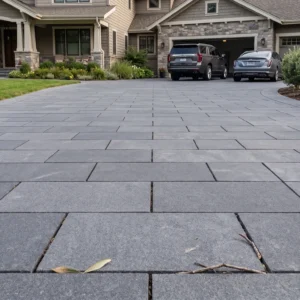

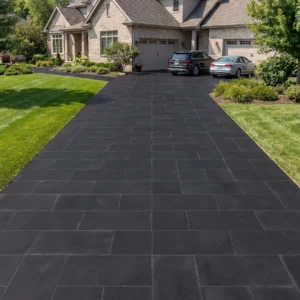
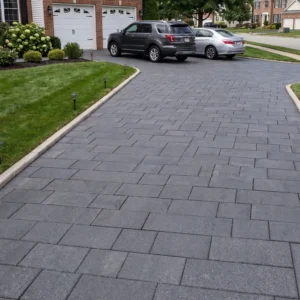
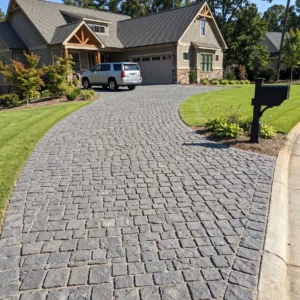
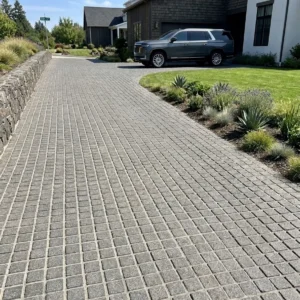

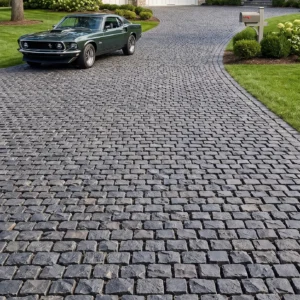
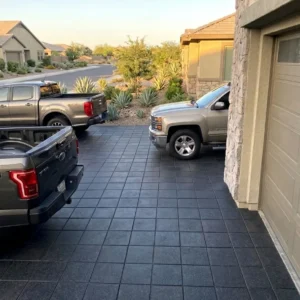
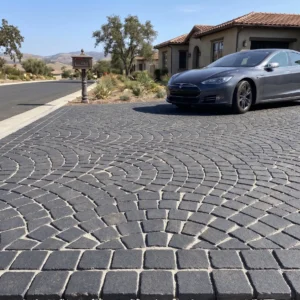
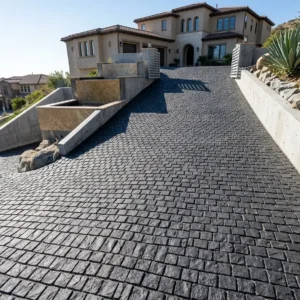
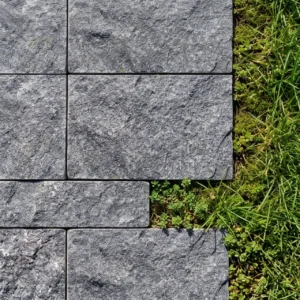
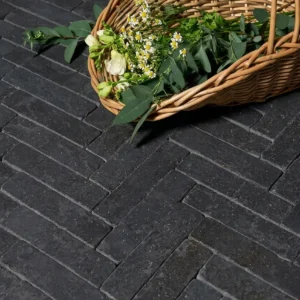
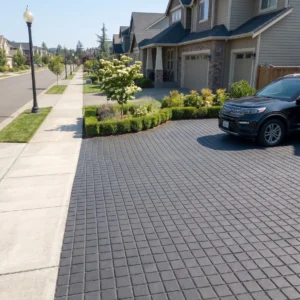
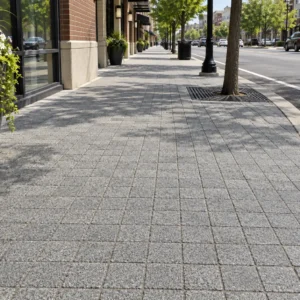



The dimensional stability of black limestone flooring hinges on a factor most specifiers overlook until a joint fails: the differential between surface and substrate temperature during rapid thermal transitions. You’ll get 20-year performance from black limestone flooring when you treat the material’s thermal response as a design input rather than an afterthought. The dark surface absorbs and releases heat faster than lighter stone, which means your joint detailing and setting-bed selection matter more here than on nearly any other paving color. Getting these three variables aligned separates installations that stay tight for decades from those that telegraph cracks within a few seasons.
Density is where black limestone earns its reputation. The stone you’ll spec for exterior flooring typically runs 2.5–2.7 g/cm³ with water absorption below 1% on the tighter varieties, which pushes it well past the porosity threshold where freeze-thaw damage becomes a practical concern. That low absorption is the single property that makes darker limestone viable in regions that swing hard between day and night temperatures. You’re not fighting water ingress the way you would with a chalkier, more porous stone.
Why Density Drives Black Limestone Flooring Performance
The performance ceiling on any dark limestone floor is set at the quarry, not on the job site. Denser blocks with tighter grain resist the micro-fracturing that comes from repeated expansion and contraction. When you evaluate a supplier’s stock, you’re really evaluating how consistent their block selection is — variation within a single pallet tells you a lot about sourcing discipline.
Here’s what most buyers miss when comparing dark limestone options:
- Absorption rate below 1% keeps freeze-thaw risk minimal even in cycling climates
- Compressive strength in the 8,000–14,000 PSI range handles typical foot and light vehicular loads
- Flexural strength matters more than compressive for unsupported spans and cantilevered treads
- Grain consistency within a batch predicts long-term color and wear uniformity
- Finish selection (honed versus tumbled versus flamed) shifts slip resistance significantly
According to industry limestone specifications, the absorption and density figures you request from a supplier should come from tested batches, not generic material claims. At Citadel Stone, we run warehouse quality checks on incoming blocks specifically for absorption consistency, because a single high-absorption run mixed into a shipment becomes the failure point that undermines an otherwise sound floor.
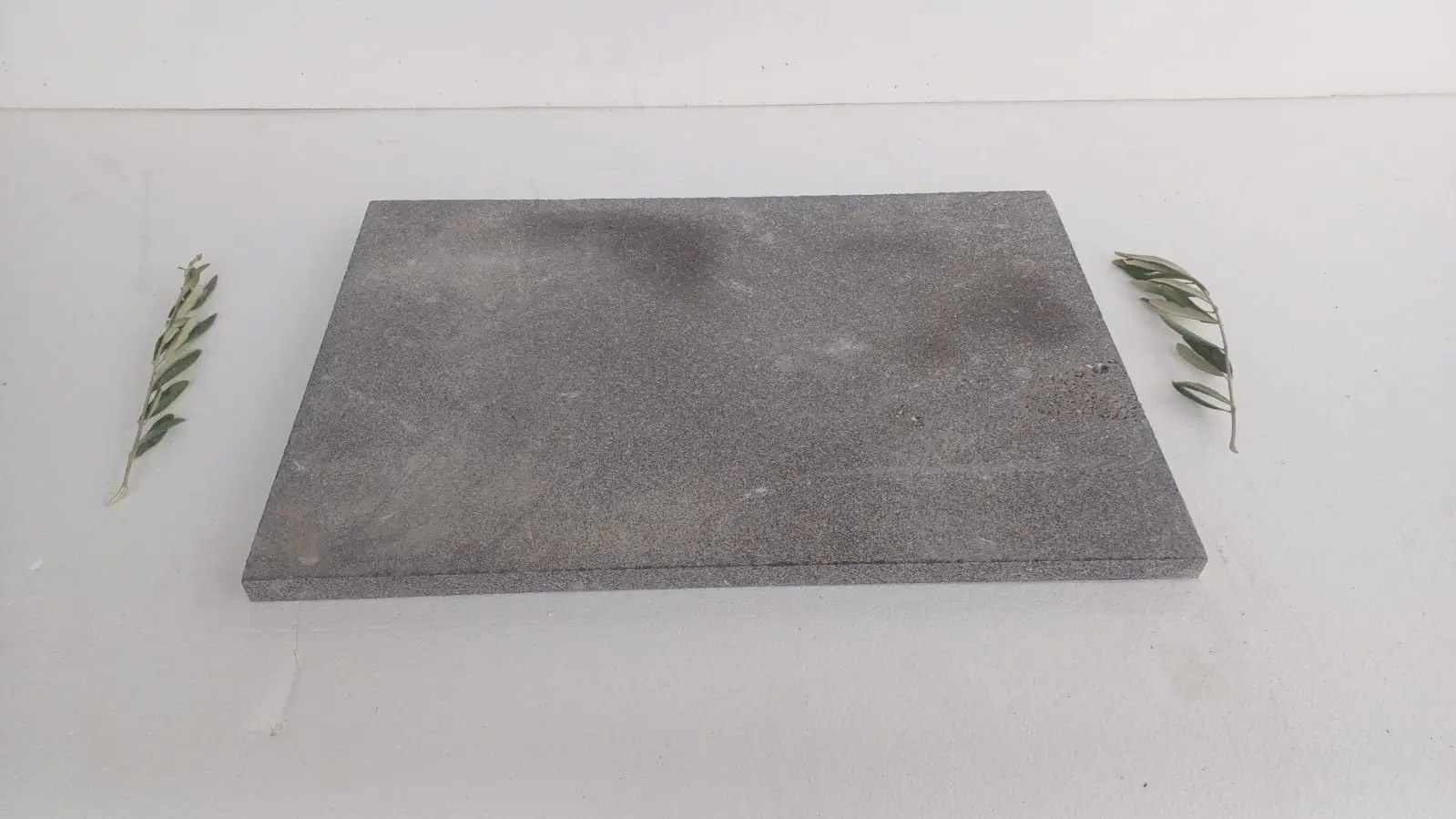
Color Depth and Finish Selection for Dark Limestone
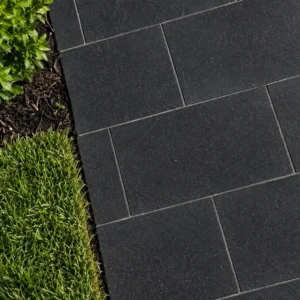
The word “black” covers a wider range than catalog photos suggest. Genuine black limestone reads as deep charcoal to true graphite depending on the quarry, and the finish you choose changes that reading dramatically. A honed surface holds the darkest, most saturated tone; a tumbled or brushed finish lifts a silver-grey character out of the same stone as light scatters across the textured surface.
You’ll want to think about finish in the context of where the floor lives:
- Honed finishes deliver the deepest color but show water spotting and require attentive sealing outdoors
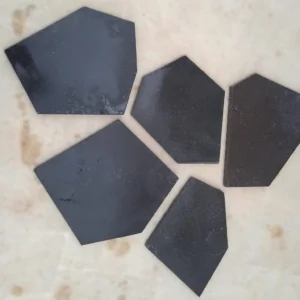
- Tumbled surfaces mask minor wear and improve wet traction, reading closer to a dark grey than pure black
- Flamed finishes maximize slip resistance for pool surrounds and sloped transitions
- Brushed finishes split the difference — some texture, strong color retention
If your project blends interior flooring with exterior grey limestone outdoor tiles on a connected terrace, you should sample both finishes side by side under natural light before committing. Dark stone shifts more between indoor and outdoor light than any other color family, and a match that looks perfect in the showroom can read as two different products across a threshold. Pairing the darker field with grey limestone outdoor tiles at borders is a common approach, and Citadel Stone can provide sample tiles in multiple finishes so you evaluate the actual color shift on your own site before a full order.
Base Preparation That Survives Thermal Cycling
The base under your black limestone flooring does more work than the stone itself when temperatures swing. Dark surfaces reach higher peak temperatures in direct sun and shed that heat fast after sunset, and that daily expansion-contraction cycle is transmitted straight into the setting bed and substrate. Your base assembly has to absorb that movement without transferring it into rigid joints.
For exterior installations over a compacted subbase, you’re building a system:
- Compacted aggregate base of 4–6 inches depending on soil bearing and load
- A drainage layer that prevents water pooling under the stone, which becomes ice-jacking risk in freeze-thaw regions
- A polymer-modified setting bed that flexes marginally rather than a rigid neat mortar
- Movement joints every 15–20 feet, and always where the field meets a fixed edge
What often gets overlooked is the interaction between compacted aggregate and clay-heavy regional soils. In expansive clay, the subgrade itself moves with moisture content independent of your stone’s thermal behavior, so you’re managing two movement sources at once. You should over-build the base rather than meet minimum spec when soil reports flag high plasticity. For limestone patio tiles set over such soils, a geotextile separation layer between subgrade and aggregate prevents the fines migration that hollows out a base over several wet seasons.
Base preparation standards shift with site conditions, and thermal detailing is only one piece of the assembly. For projects weighing complementary dark-stone elements, black limestone rock explained covers material characteristics that apply directly to these installation decisions. Getting the subgrade and drainage right at this stage prevents the failures that no amount of surface sealing will correct later.
Joint Design and Movement Detailing
Joints are where thermal cycling either gets absorbed or turns destructive. The mistake you’ll see repeatedly is joint spacing pulled straight from a generic table without adjusting for the dark surface’s amplified temperature range. Black stone can run 30–50°F hotter than a light-colored equivalent under midday sun, then drop rapidly at night — that expanded swing demands wider, more flexible joints than pale paving.
Practical joint guidance for dark limestone flooring outdoors:
- Field joints of 3–6mm for honed tile, widening slightly for tumbled formats with irregular edges
- Flexible movement joints at all perimeter conditions and any run exceeding 15 feet
- Sanded or polymeric jointing for larger-format exterior tile; the polymer resists washout and weed intrusion
- Never bond dark stone rigidly to a rigid slab without an intervening movement accommodation
The detail that matters most is the transition between shaded and sun-exposed zones on the same floor. A single limestone tile patio that runs from under a pergola into open sun experiences a temperature gradient across its own width. You’ll want a movement joint positioned at that shade line, because the differential expansion across it is real and concentrated. Temperature fluctuations during installation also affect your jointing compound cure, so adjust working times and avoid setting in the hottest part of the day when the stone itself is holding heat.
Slip Resistance and Wet-Area Safety
Dark limestone’s slip performance depends almost entirely on finish, and this is a specification decision you can’t defer. A polished or heavily honed surface becomes genuinely hazardous when wet, while a flamed or tumbled surface holds traction. For any surface that gets wet — pool surrounds, entry thresholds, sloped walks — you’re choosing texture over maximum color saturation.
Testing shows that surface finish drives the coefficient of friction far more than the underlying stone type. You should request slip-resistance data tied to the specific finish you’re ordering, not a generic material rating. Coefficient-of-friction testing under both wet and dry conditions gives you the number that matters for liability and real-world safety, and reputable suppliers can furnish finish-specific figures on request.
- Flamed and tumbled finishes for wet or sloped areas
- Honed acceptable for covered interior and low-moisture exterior zones
- Avoid polished dark limestone anywhere foot traffic combines with water
- Textured limestone outdoor tiles maintain traction as they weather, unlike sealed-smooth surfaces
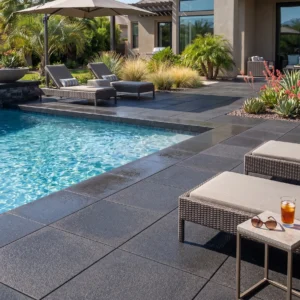
A well-detailed limestone tile patio around a pool leans on flamed or tumbled surfaces precisely because these textures keep their grip once wet. The same logic extends to sloped walks and thresholds where water collects, so match your finish to the wettest condition the floor will face rather than the driest.
Sealing and Long-Term Maintenance
Sealing protocols for black limestone flooring differ from standard stone maintenance because the dark surface shows everything — efflorescence, water spotting, sealer buildup, uneven weathering. A penetrating impregnating sealer is almost always the right call over a topical film, which sits on the surface and clouds unevenly as it wears.
Your maintenance rhythm should track the exposure:
- Penetrating sealer at installation, reapplied every 2–3 years for exterior floors in cycling climates
- pH-neutral cleaners only — acidic products etch limestone’s calcium carbonate visibly on dark surfaces
- Prompt cleanup of organic staining, which reads sharply against black stone
- Annual joint inspection, especially at movement joints and shade transitions
Here’s what most maintenance guides skip: the first 30 minutes after sunrise, when a night-cooled dark floor meets morning sun, is when you’ll spot early joint stress if it exists. That rapid warming reopens any developing hairline separations. You can expect 20–30 years of service from a properly detailed dark limestone floor with biennial-to-triennial resealing and disciplined drainage maintenance — the drainage being the variable that quietly determines whether freeze-thaw ever gets a foothold. Reference data on limestone formation and characteristics underscores why the calcium carbonate matrix responds the way it does to acidic cleaners and prolonged moisture.
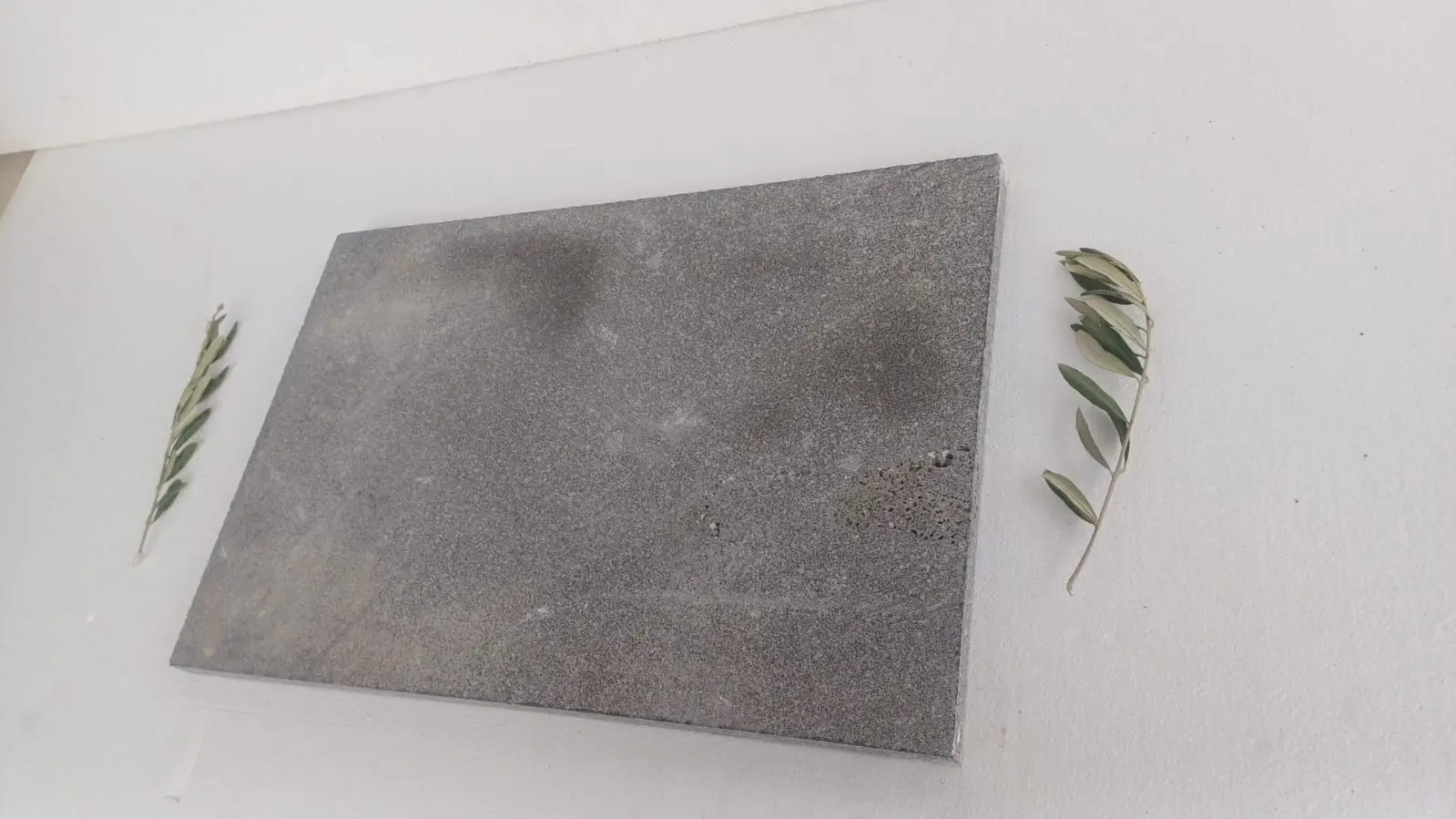
Format and Thickness Selection for Your Project
Thickness selection tracks directly to load and application. For pedestrian interior and exterior flooring, a 20mm nominal tile handles typical use over a proper setting bed. Where light vehicular loads or heavy point loads enter — driveway transitions, service areas — you should step up to 30mm or thicker to preserve flexural safety margin.
Format considerations that affect both aesthetics and performance:
- Large-format tiles minimize joint count but demand a flatter, more forgiving base — any base movement telegraphs faster
- Smaller modular formats and random-size layouts distribute movement across more joints, an advantage in cycling climates
- Consistent calibrated thickness matters for lippage control; hand-split stone needs a thicker bed to level
- Border and edge details in a contrasting grey limestone outdoor tiles run frame the darker field handsomely
Citadel Stone stocks black limestone flooring in standard tile formats and calibrated thicknesses, and for projects requiring custom cuts or non-standard sizes, our team can advise on lead times before you finalize the layout. You’ll find that ordering slightly over your calculated square footage — the standard 5–10% overage for cuts and future repair stock — saves you from a dye-lot mismatch if you need replacement pieces years later, since natural stone batches vary. The same overage discipline applies to limestone patio tiles ordered for larger terraces, where a mid-project reorder is most likely to reveal a tone shift.
Comparing Dark Limestone to Other Dark Stone
Buyers weighing black limestone often cross-shop basalt, dark granite, and slate. Each has a legitimate case, and honest comparison helps you spec the right material rather than the trendiest one.
- Basalt runs denser and more uniform but reads flatter — less natural variation in the surface
- Dark granite offers maximum hardness and abrasion resistance at a higher price and a more clinical appearance
- Slate cleaves naturally and delivers rich texture but is more prone to spalling in aggressive freeze-thaw exposure
- Black limestone balances workability, natural depth of color, and freeze-thaw resilience when properly densified and sealed
The honest trade-off with dark limestone is that it demands more attentive sealing than granite and shows acidic etching more readily than basalt. What you gain is a warmer, more organic surface that ages with genuine character rather than looking manufactured. For most residential and light-commercial flooring where appearance carries real weight, that trade lands in limestone’s favor.
Sourcing, Availability, and Project Planning
Dark limestone supply consistency is the sourcing challenge that catches unprepared buyers. Because color and density vary between quarry runs, you want your full project quantity drawn from a single batch wherever possible. Splitting an order across two shipments weeks apart risks a visible tone shift down the middle of a floor.
Citadel Stone maintains warehouse inventory nationwide, which typically compresses lead times to 1–2 weeks against the 6–8 week import cycle most projects otherwise face. When you’re planning delivery, verify warehouse stock levels against your full quantity before committing to an installation date, and confirm your site’s truck access for the palletized weight — dark limestone is dense, and a full order arrives heavier than lighter stone of the same square footage. Each batch we ship from our warehouse network is inspected for absorption and color consistency from our established selected quarries, which is where the freeze-thaw reliability actually originates.
Order Black Limestone Flooring — Nationwide Delivery from Citadel Stone
Citadel Stone supplies black limestone flooring in standard tile formats, calibrated thicknesses from 20mm through vehicular-rated depths, and multiple finishes — honed, tumbled, brushed, and flamed — to match your application and slip-resistance requirements. You can request sample tiles and finish-specific specification sheets before committing to a full order, which we recommend for any dark-stone project where color shift between light conditions matters. Trade and wholesale enquiries move through a dedicated quoting process with volume pricing, and buyers looking to keep budgets lean can ask about cheap volume runs on standard formats without sacrificing batch consistency. To buy black limestone flooring or check current stock, request a quote with your square footage, format, and finish, and we’ll confirm availability and delivery timing. As you finalize your specification, related dark-stone applications can inform your material choices — black limestone paving explores a complementary dimension of the same material family. Architects and builders choose why does limestone turn black, sourced from quarries across the Mediterranean and Middle East, for outdoor installations.
Related guides: black limestone · banded limestone · sealing black limestone · limestone black · limestone flooring pros and cons · black limestone walling.