

Black limestone floor tile sits in a performance category most specifiers underestimate — not because the material is obscure, but because its density, porosity profile, and surface finish options create a specification matrix that rewards precision and punishes guesswork. You’re working with a sedimentary stone that typically registers between 10,000 and 14,000 PSI in compressive strength, absorbs moisture at 0.2–0.8% depending on grade, and exhibits a coefficient of thermal expansion around 4.5 × 10⁻⁶ per °F. Those numbers matter the moment you start choosing between grades, finishes, and thicknesses for a real installation. This guide walks you through every decision point — stone type, grade classification, finish selection, and long-term performance — so your specification holds up well past the first inspection.
What Makes Black Limestone Different From Other Natural Stone
The dark coloration in black limestone comes primarily from organic carbon content and iron sulfide compounds locked into the sedimentary matrix during formation. This isn’t surface pigmentation — it runs through the stone’s full depth, which is why honed cuts reveal the same rich tone you see on the face. According to USGS limestone composition data, the calcium carbonate base that defines all limestone types responds predictably to acid exposure, making pH-neutral cleaners non-negotiable for black varieties where surface etching would be immediately visible against the dark background.
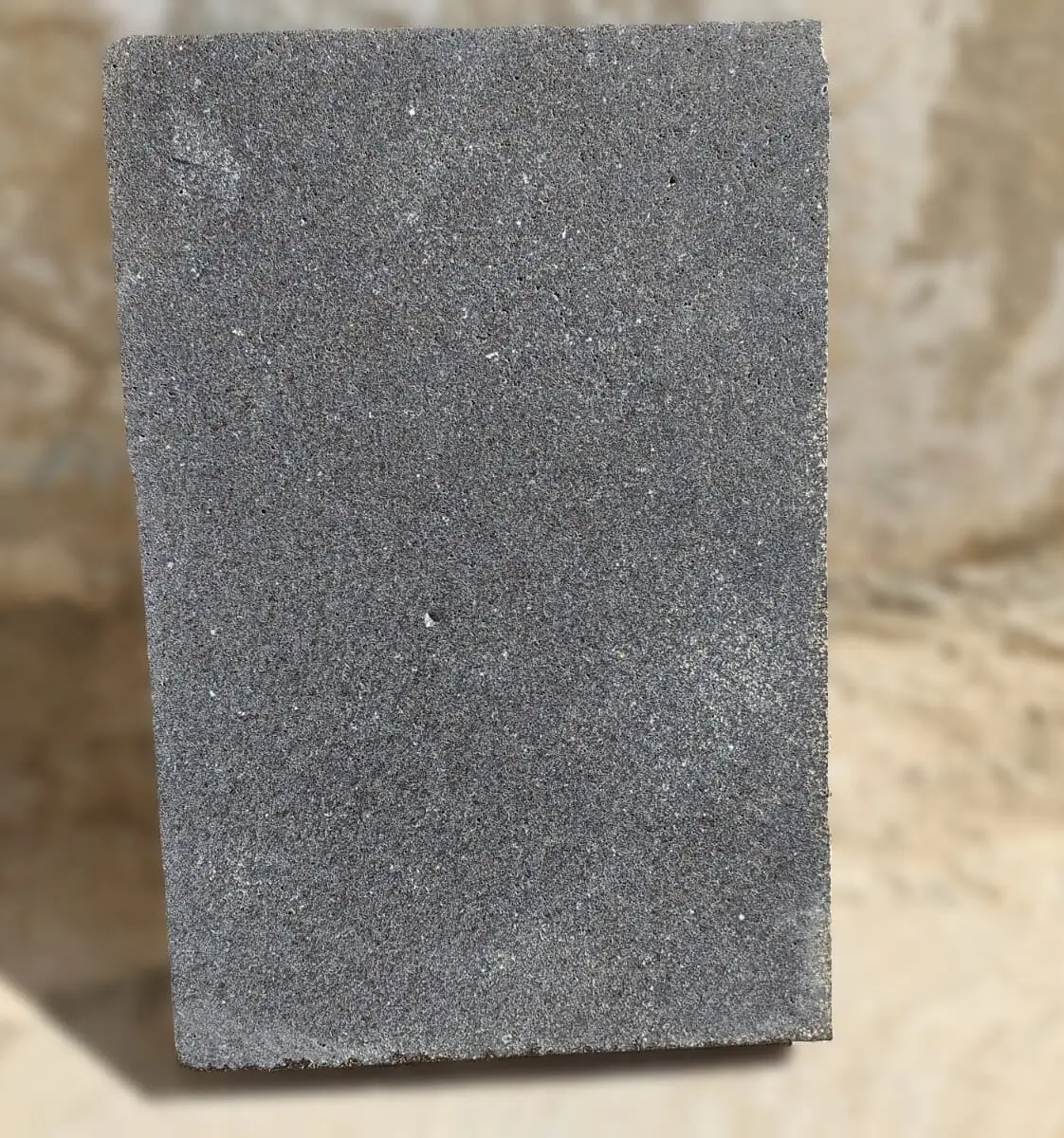
Limestone black rock sourced from different quarry regions produces measurably different material. Belgian Blue limestone, Indian Kota, and Chinese Black limestone all fall under the same broad classification but differ significantly in density, pore structure, and surface finish response. Your specification needs to name the source region, not just the color category, if you want consistent results across a project.
- Belgian and European-quarried material tends toward higher density and tighter pore structure — better for polished finishes in low-traffic interior settings
- Indian-quarried black limestone typically shows more surface variation and suits honed or brushed finishes in commercial applications
- Chinese Black limestone often tests higher in water absorption — verify supplier test data before specifying for wet areas
- Domestic sources vary widely by quarry — request ASTM C568 classification data for any source you haven’t worked with before
Grade Classification: What the Labels Actually Mean for Your Project
Grade terminology in the natural stone trade gets used loosely, and that ambiguity costs projects money. The industry recognizes three primary grade tiers for black limestone floor tile — Select (Grade A), Standard (Grade B), and Commercial (Grade C) — but the criteria behind those labels aren’t always standardized between suppliers. Here’s what you need to pin down contractually before any material ships from the warehouse.
Select-grade material specifies tight dimensional tolerances (typically ±1mm on length and width, ±0.5mm on thickness), minimal surface pitting, consistent coloration within each pallet, and calibrated or rectified edges. Standard grade permits wider pitting tolerances and slight color variation but should still meet ASTM C568 Type II or III classification for structural integrity. Commercial grade is appropriate for rustic applications where variation is part of the design intent — but you need to specify that clearly in your documents, not discover it on delivery day.
- Always request quarry test certificates confirming ASTM C568 classification — this covers compressive strength, modulus of rupture, and absorption
- Confirm whether tiles are calibrated (machine-ground to uniform thickness) or gauged (cut to nominal thickness with larger tolerances)
- For large-format tiles 24×24 inches and above, rectified edges are essentially non-negotiable for tight grout joints
- Pallet-to-pallet color variation is the most common grade-related complaint — require batch-matched pallets for projects over 500 square feet
- Verify that select-grade certification applies to the specific quarry face the material is coming from, not a generic brand designation
The Natural Stone Institute limestone specifications provide a useful reference framework for understanding what performance benchmarks separate grade classifications in practice — particularly for absorption and flexural strength thresholds that matter most in floor tile applications.
Thickness Selection for Floor Applications
Thickness isn’t just a structural variable — it affects how the tile responds to subfloor movement, point loading, and installation method. Standard black limestone floor tile comes in 3/8-inch (10mm), 1/2-inch (12mm), and 3/4-inch (20mm) nominal thicknesses, with some large-format material reaching 1-1/4 inches (30mm) for exterior or heavy-load applications. Your choice here needs to account for substrate type, expected foot traffic, and whether the installation is over a concrete slab or a wood-framed floor system.
Over concrete slabs in good condition, 3/8-inch tile performs well for residential and light commercial applications. The moment you’re over a wood subfloor, you need to take deflection seriously — the industry threshold is L/360 total deflection for ceramic and stone tile, but for black limestone in a polished finish, tighter is better. A deflection-induced crack in a 24×24 honed black tile is both expensive to replace and nearly impossible to disguise. Bump your minimum thickness to 1/2 inch and add an uncoupling membrane to manage the differential movement.
- 3/8 inch (10mm): residential interiors over concrete, low-traffic areas, standard room sizes up to 300 square feet
- 1/2 inch (12mm): commercial interiors, large-format layouts, wood subfloor applications with proper membrane
- 3/4 inch (20mm): high-traffic commercial, exterior thresholds, areas subject to heavy point loading
- 1-1/4 inch (30mm): exterior installation over compacted aggregate base without mortar bed — self-supporting pedestal systems
Finish Options and Performance Trade-Offs
Finish selection is where most black limestone floor tile decisions get made for aesthetic reasons and regretted for performance ones. The four primary finishes — polished, honed, brushed, and sandblasted — each produce a different surface texture, porosity exposure, and maintenance profile. Understanding the trade-offs before specifying saves you from a phone call six months post-installation.
Polished finish closes the surface pores under compression and heat during processing, which reduces absorption slightly and creates that signature mirror reflection. It looks extraordinary in low-traffic residential settings. The problem is that polished black limestone scratches visibly — fine abrasion from foot traffic dulls the surface unevenly, and the contrast between scratched and unscratched areas is far more pronounced on a dark stone than on lighter materials. Reserve polished finish for walls, feature floors with minimal traffic, or areas where you control shoe type strictly.
Honed finish is the workhorse of black limestone floor tile specifications. The matte surface conceals minor scratching, maintains a professional appearance under regular foot traffic, and responds well to penetrating sealer application. For commercial applications and busy residential kitchens, honed is almost always the right call. Brushed and sandblasted finishes open the surface more aggressively, which increases porosity and absorption — useful for outdoor applications where grip matters, but requiring more frequent sealing cycles indoors.
- Polished: the least underfoot texture — verify against ANSI A326.3 requirements for your application type before specifying
- Honed: more texture than polished, and more forgiving of foot traffic wear patterns
- Brushed: texture varies with brush depth — preferred for bathrooms and entry areas where wet conditions occur
- Sandblasted/flamed: highest COF, most open surface — appropriate for exterior use but demands aggressive sealing protocol
For projects where you’re considering limestone black tile in sun-exposed interior spaces — large skylights, floor-to-ceiling glazing, conservatories — UV exposure becomes a real performance factor. Sustained UV radiation doesn’t fade black limestone the way it affects some pigmented materials, but it accelerates the degradation of petroleum-based sealers, which then fail to protect the stone’s surface from moisture ingress. The sealer fails before the stone does. In high-UV interior environments and any exterior application, switch from solvent-based to UV-stable, water-based penetrating sealers and plan a resealing cycle every 12–18 months rather than the standard 24-month schedule you’d use in a shaded interior.
Sealing Requirements and Long-Term Protection
Black limestone is more porous than granite and most engineered stone alternatives, which means sealing isn’t optional — it’s the primary line of defense against staining, moisture damage, and surface degradation. The key variable most specifications miss is that dark stone shows sealer failure differently than light stone. On white marble, you notice staining immediately. On black limestone, the early warning sign is a subtle color shift — the stone looks slightly lighter in patches as the sealer degrades and the pore structure begins absorbing ambient moisture unevenly.
Penetrating (impregnating) sealers are the industry standard for black limestone floor tile in both residential and commercial settings. They work below the surface, filling pore channels without creating a film layer that can peel or scratch. Film-forming sealers are tempting because they enhance color depth, but they create a maintenance liability — once a film sealer scratches or peels, you’re refinishing the floor, not just resealing it. According to TCNA installation standards, natural stone tile installations in wet or high-traffic areas require sealer application prior to grouting as well as after, ensuring the grout joint doesn’t wick moisture into the stone edge.
- Apply sealer to dry stone — minimum 48 hours after installation before first coat
- Two coats of penetrating sealer on initial application, with 2-hour dwell time between coats
- Perform a water bead test annually — if water absorbs within 4 minutes rather than beading, reseal immediately
- In sun-exposed installations with significant UV load, schedule resealing every 12–18 months using a UV-stable formulation
- Avoid solvent-based sealers in enclosed spaces — water-based penetrating sealers perform equally well and don’t require ventilation management
- Seal grout joints separately with a dedicated grout sealer — stone sealer alone won’t adequately protect cementitious grout
UV exposure also affects finish retention on outdoor black limestone floor tile installations — patios, covered porticos, and entry approaches. Extended sun exposure oxidizes iron sulfide compounds near the surface, which can produce subtle bronzing or greying in the surface layer over several years. This isn’t a defect — it’s a natural weathering process — but you should set client expectations accordingly and specify a finish that ages with character rather than one that needs to maintain a precision appearance. Honed and brushed finishes handle surface oxidation far more gracefully than polished.
Subfloor and Installation Requirements
The substrate beneath your black limestone floor tile determines whether you get a 25-year installation or a 10-year one. This is where project failures actually originate — not in the stone itself, but in the preparation work that doesn’t show once the tile is down. Flatness, deflection control, and moisture management are the three variables that matter most.
ANSI A108.02 specifies that substrates for large-format natural stone tile must achieve FF25 flatness (no variation greater than 3/16 inch in 10 feet, or 1/8 inch in 24 inches). That tolerance tightens to 1/8 inch in 10 feet for tiles 15 inches or larger in any dimension — which includes the 18×18 and 24×24 formats most commonly specified for limestone flooring tiles on commercial and residential projects alike. Pour self-leveling underlayment to correct any variation before setting. Do not use the mortar bed to compensate for substrate irregularities — that’s a short-term fix that generates stress concentrations under the tile.
- For concrete slabs: test for moisture vapor emission (MVE) before installing — black limestone over a high-MVE slab without a vapor barrier will fail at the bond line
- Target MVE below 3 lbs per 1,000 square feet per 24 hours before proceeding with standard thin-set — above that threshold, use a moisture-tolerant epoxy mortar
- Medium-bed mortars (1/2-inch to 3/4-inch bed) are preferred for stone tile over 15 inches — they provide better coverage and accommodate minor back-surface irregularities in calibrated stone
- Back-butter every tile individually for installations requiring 95% mortar coverage (wet areas, exterior, large format) — standard trowel coverage alone won’t achieve it
- Expansion joints must follow TCNA EJ171 guidelines — every 8–10 feet in interior spaces, every 8 feet in exterior and wet areas, and at all perimeters and transitions
Citadel Stone maintains warehouse inventory of black limestone floor tile in standard and select grades, which means your project doesn’t face the 8–12 week import lead times that offshore-sourced material typically requires. For large commercial projects where phased delivery matters, confirm warehouse stock levels against your installation schedule before finalizing the specification — partial deliveries from split quarry batches introduce color variation risk that’s difficult to manage once setting begins.
Grout Selection and Joint Sizing
Grout selection for black limestone floor tile is a decision that reads purely aesthetic on paper but carries real structural and maintenance consequences. The standard guidance suggests matching grout to stone color for a monolithic appearance — and while that’s aesthetically defensible, it’s technically incomplete advice.
Dark charcoal or black epoxy grout creates a visually seamless surface with black limestone, but epoxy grout is rigid and unforgiving of substrate movement. In any installation over a wood subfloor or a slab with thermal cycling (covered exterior spaces, unconditioned garages, sunrooms), rigid grout transmits stress directly to the tile edge. Consider a dark-colored sanded cement grout with a latex additive instead — it provides the color match without the rigidity penalty. Joint sizing for limestone black tile in the 18×18 to 24×24 range should run 3/16 to 1/4 inch minimum to accommodate dimensional variation inherent in natural stone, even in select-grade material.
- Rectified tiles permit joints as tight as 1/16 inch — but only on perfectly flat substrates over concrete; never on wood subfloor systems
- Epoxy grout works well for kitchen and bathroom applications where chemical resistance matters — but it requires fast, experienced installation teams; pot life is short
- Pre-seal tile edges before grouting in any wet or exterior application — grout pigment can penetrate limestone pores at the joint interface and permanently stain the stone edge
- Dark grout shows efflorescence more visibly than light grout — use low-alkali Portland cement blends and ensure adequate curing moisture control
Maintenance and Long-Term Care
Black limestone flooring tiles demand a more attentive maintenance routine than most stone flooring types — not because the material is fragile, but because the dark surface reveals problems that lighter stones would conceal. Hard water deposits show as white calcium haze. Residual cleaning product leaves streaks. Worn sealer patches appear as differential sheen. None of these are catastrophic, but they accumulate into a floor that looks neglected within 18 months if maintenance protocols aren’t established from day one.
Daily maintenance requires nothing more than a dry dust mop to remove grit particles — the fine abrasive load from foot traffic causes more surface wear on a polished or honed limestone than almost any other factor. Damp mopping with a pH-neutral stone cleaner (pH 7–8) on a weekly basis handles the rest for most residential applications. High-traffic commercial settings benefit from a weekly spray-buffing cycle using a low-speed machine and a neutral stone conditioner, which maintains the honed appearance and redistributes any sealer that migrates under traffic.
- Never use vinegar, citrus cleaners, or ammonia-based products on black limestone — the acid etches the calcium carbonate surface and creates permanent dull patches
- Avoid steam cleaning — the high-pressure moisture forces water into pore channels faster than any surface sealer can block, and the heat accelerates sealer breakdown
- Remove food and liquid spills within 10 minutes on honed surfaces, within 5 minutes on polished — the absorption rate difference matters on a dark stone where staining is immediate and visible
- Re-honing is possible for scratched honed surfaces using diamond polishing pads starting at 200 grit and progressing to 800 grit — this is a professional refinishing operation, not a DIY task
- Annual professional inspection of grout joints and sealer condition extends installation life significantly and identifies minor issues before they become structural
The NSI stone tile specifications include guidance on maintenance frequency benchmarks correlated to tile classification and installation environment — a useful reference when setting realistic long-term care expectations with building owners or facility managers.
Ordering, Logistics, and Project Planning
Material logistics for black limestone floor tile projects require more forward planning than most specifiers allow. Unlike ceramic or porcelain tile, natural stone doesn’t come from a production run that can be reordered identically six months later. Quarry face variation means that material ordered in two separate batches — even from the same supplier — can show measurable color and tone differences that become apparent once installed side by side.
Calculate your total square footage requirement, add 10% for cuts and breakage in standard installations, and add 15% for diagonal or herringbone layouts. Order the entire project quantity in a single truck delivery from one quarry batch. For projects over 2,000 square feet, verify with your supplier that the full order can be fulfilled from a single batch before committing. At Citadel Stone, we recommend requesting batch certificates with every large order — these document the quarry face, processing date, and quality test results for the specific material shipped to your project.
- Inspect every pallet on delivery — document any visible damage or excessive variation before signing the delivery receipt; claims filed after the truck leaves are harder to resolve
- Acclimate stone in the installation environment for 24–48 hours before setting — particularly in climate-controlled commercial spaces where the stone temperature differential from warehouse to conditioned interior can affect mortar open time
- Store pallets flat on a clean, dry surface — never stand large-format tiles on edge for extended periods; stress fractures from improper storage are not covered under material warranties
- Plan for truck access to the delivery site before scheduling — large-format stone on full pallets requires a liftgate truck or forklift, and restricted access sites need to be flagged at ordering stage
- Lead time from warehouse stock is typically 5–10 business days for standard orders; custom cuts and non-standard thicknesses may extend that to 3–5 weeks
Decision Points
The specification decisions that define a black limestone floor tile installation come down to five interconnected choices — stone type and quarry source, grade classification, finish, thickness, and sealing protocol — and they need to be made in sequence, not in isolation. Your finish choice affects your sealing schedule. Your thickness affects your substrate requirements. Your grade classification affects your grout joint sizing. Treating these as independent checkboxes is how projects end up with a technically compliant specification that still fails in the field.
Limestone black tile used in sun-exposed settings — covered exterior floors, large-format glazed interiors, pool-adjacent applications — adds UV-driven sealer degradation to the performance matrix, and that means your 24-month resealing cycle becomes a 12-month one in practice. Build that into your maintenance documentation and set the expectation with the building owner before handover. Beyond maintenance planning, if your project also involves addressing existing discoloration in stone surfaces, understanding how to manage staining proactively is worth exploring — limestone stain treatment approaches covers the remediation side of long-term stone care in detail.
The material rewards precision. A well-specified, properly installed black limestone floor tile project in a residential or commercial setting delivers a visual weight and surface character that no engineered product replicates — and it does so for decades when the specification fundamentals are solid. Verify your source, confirm your grade, match your finish to the traffic reality, seal correctly, and plan your logistics as a single-batch project. Those five disciplines separate installations that look extraordinary at year ten from ones that need remediation at year three. Stone for nationwide projects arrives sorted by tone, so black limestone floor tile stays visually consistent across large rooms.
Related reading: black limestone rock explained · outdoor patio tiles · how to install patio pavers.