

What Outdoor Patio Tiles Actually Cost — and Why the Gap Is So Wide
The outdoor patio tiles cost range in the current market spans from under $2 per square foot for basic concrete composites to well over $40 per square foot for premium-cut natural limestone or basalt — and that spread isn’t arbitrary. It reflects real differences in material density, production tolerances, finish durability, and how the tile performs under sustained foot traffic and weather exposure. Most buyers come in focused on the sticker price and end up recalculating once they understand what drives long-term replacement costs.
You’ll find that the true cost of any patio tile system only reveals itself after three to five years of use. Surface delamination, color fade, and joint failure in budget options can double the total spend within a single decade. Natural stone patio tiles, by contrast, tend to hold specification integrity across 20-plus years when installed on a properly engineered base.
Budget Tile Categories: What You Get for Less
Outdoor patio tiles cheap options generally fall into three production categories: thin-pressed concrete composites, ceramic and porcelain outdoor-rated tiles, and rubber or composite decking tiles. Each has a legitimate application context, but none of them perform identically to quarried stone under demanding conditions.
- Thin-pressed concrete tiles (12mm or less) typically retail between $1.50 and $4 per square foot but are highly susceptible to surface spalling in freeze-thaw environments
- Outdoor-rated porcelain runs $3 to $9 per square foot installed and offers good compressive strength, though grout joints tend to crack when sub-base movement occurs
- Rubber and composite deck tiles ($2 to $6 per square foot) suit temporary or low-traffic applications but have no structural depth for permanent paving
- Pre-cast concrete pavers in the 40mm to 60mm range represent the most durable budget option at $4 to $8 per square foot and actually perform reasonably well when the base is engineered correctly
Here’s what most specifiers miss when evaluating budget categories: the tile’s face thickness — not its total thickness — determines how long the visible surface survives. Many composite tiles use a 3mm to 5mm wear layer over a filler core. Once that layer is compromised, the tile’s structural and aesthetic value drops sharply.
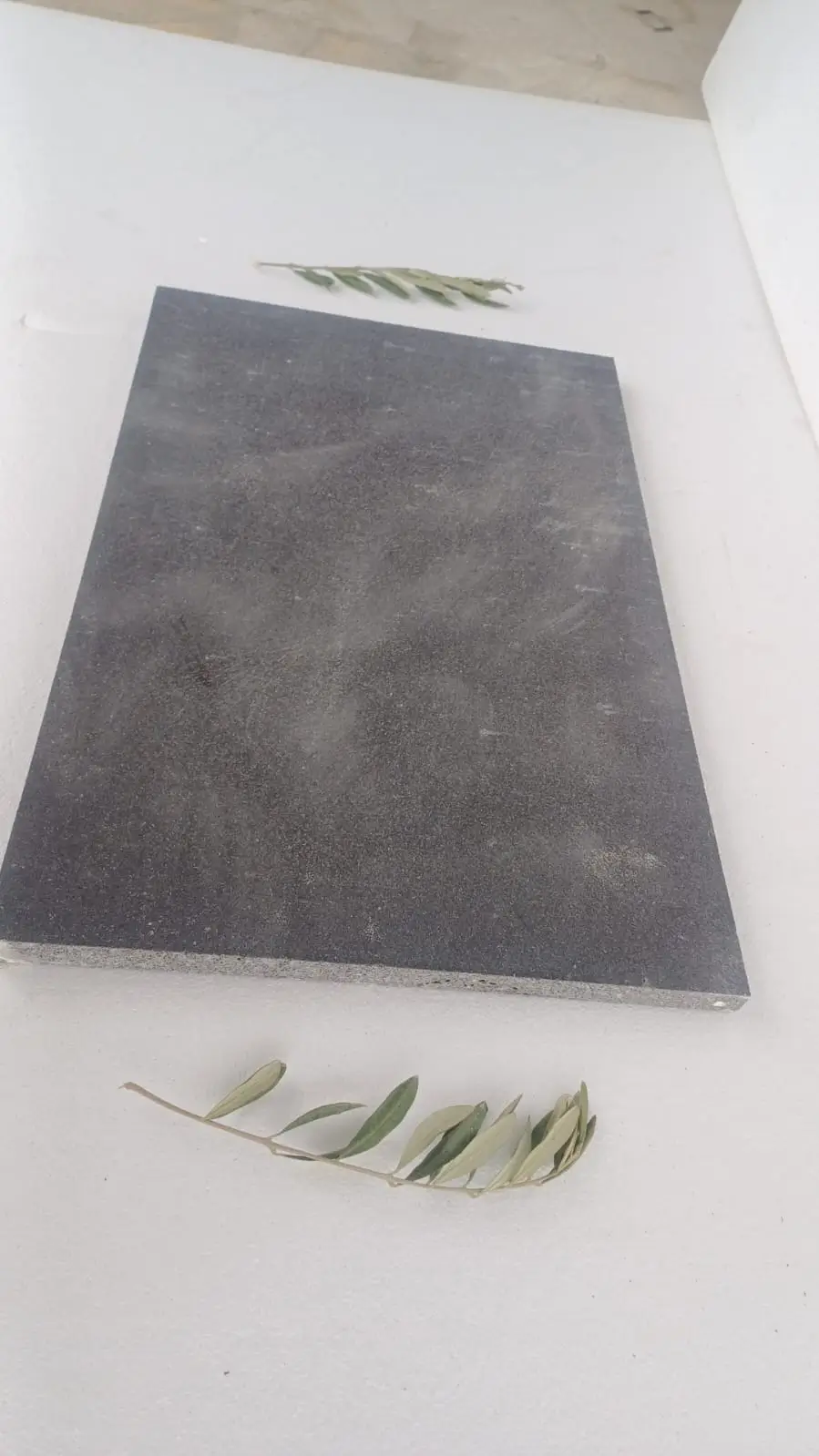
Natural Stone Patio Tiles: Cost by Material Type
Natural stone represents the upper band of the outdoor patio tiles cost spectrum, but it’s not a monolithic category. The price difference between limestone, travertine, basalt, and granite reflects quarry location, cut complexity, finish type, and available slab dimensions — not just brand premium.
- Limestone patio tiles: $6 to $18 per square foot depending on thickness, finish (honed vs. brushed vs. tumbled), and format size — large-format cuts above 600mm increase per-unit cost due to quarrying yield constraints
- Travertine tiles: $7 to $20 per square foot; filled-and-honed finishes cost more than unfilled tumbled formats; the open-pore structure requires sealing before outdoor use
- Basalt tiles: $10 to $25 per square foot; dense igneous composition means slower cutting speeds at the quarry, which pushes production costs up
- Granite patio tiles: $12 to $28 per square foot; highly resistant to water surface makes it one of the lowest-maintenance options once installed
- Bluestone formats: $9 to $22 per square foot; valued for natural cleft texture that delivers high slip resistance without additional finishing
According to Natural Stone Institute outdoor stone selection guidance, material performance across patio applications depends significantly on porosity ratings and absorption coefficients — factors that directly influence how a tile handles moisture cycling and surface staining over time. Your cost-per-year calculation improves substantially when you account for these performance metrics alongside initial price.
Installation Costs: The Numbers Behind the Numbers
Material price is typically 40% to 60% of total outdoor patio tiles cost. The remaining spend goes to base preparation, setting materials, and labor — and this is where terrain complexity starts driving project economics in ways most budget comparisons ignore.
Your site’s grade and elevation characteristics directly affect base engineering costs. A flat installation on stable compacted soil might require 100mm to 150mm of crushed aggregate base. A sloped site with 5% or greater grade introduces drainage engineering requirements that can add $3 to $6 per square foot in sub-base preparation alone — and that cost applies regardless of whether you’re setting budget porcelain or premium limestone. Hillside and terraced installations often require perimeter retention, drainage channels, and tiered base compaction that push sub-base costs above the tile cost itself on smaller patio footprints.
- Flat, stable soil: base prep $4 to $8 per square foot installed
- Moderate slope (2–5% grade): add $3 to $5 per square foot for drainage design and retention
- Steep or terraced terrain (5%+ grade): add $6 to $12 per square foot for engineered sub-base, drainage channels, and possible retaining elements
- Low-lying sites with high water tables: add $4 to $9 per square foot for French drain systems and elevated base compaction
The setting material choice also shifts with terrain. Mortar-set installations on sloped sites require full-bed adhesion because point-load stress concentrations are higher than on flat runs. Sand-set methods on slopes tend to allow lateral migration under load, which accelerates joint failure. For any site with more than 2% grade, a mortar bed or pedestal system is the professional-grade specification.
Patio Floor Tiles: Thickness and Structural Requirements
Thickness is the single most underspecified variable in outdoor patio tile selection — and it’s where the cost difference between natural stone and budget alternatives becomes most defensible. Patio floor tiles in natural stone formats are typically available in 20mm, 30mm, and 40mm nominal thicknesses. Each tier handles a different load class.
At Citadel Stone, we recommend 20mm minimum thickness for pedestrian-only patio applications, 30mm for mixed-use areas that include furniture and wheeled equipment, and 40mm for any installation that may see occasional vehicle overhang or heavy planters exceeding 200 kg per square meter. These aren’t arbitrary preferences — they’re based on flexural strength data and what we observe when installations fail prematurely in the field.
- 20mm natural stone: adequate for pedestrian load with correct base support; budget composites at this thickness are near their load limit with no safety margin
- 30mm natural stone: the professional standard for most residential patio applications; provides sufficient mass for thermal stability and point-load distribution
- 40mm natural stone: appropriate for commercial-grade patios, rooftop installations, or any project where sub-base access after installation would be difficult
- Budget tiles at equivalent nominal thickness: thinner effective wear layer means structural equivalence is misleading — a 20mm composite tile often has less usable surface life than a 20mm limestone tile by a factor of three or more
According to USGS dimension stone production and use data, natural stone dimension products used in paving applications are graded for compressive strength well above the thresholds required for residential and light commercial loading — giving you a meaningful structural safety margin that synthetic alternatives typically don’t provide.
Lifespan Comparison: Real Cost Over 20 Years
Total cost of ownership is where the outdoor patio tiles cost comparison shifts decisively toward natural stone. The initial price gap between a $3 per square foot composite tile and a $12 per square foot limestone looks significant — but run the math across two decades and the picture changes substantially.
A 50-square-meter patio installed with budget composite tiles at $3 per square foot costs approximately $1,600 in materials. Natural limestone at $12 per square foot costs approximately $6,450 in materials for the same footprint. That’s roughly a $4,850 difference upfront. However, budget composite tiles in outdoor applications typically require full replacement within 8 to 12 years due to surface degradation, while natural limestone with biennial sealing routinely exceeds 25 years without replacement. A second installation of budget tile adds another $1,600 in materials plus full labor costs — closing most of the gap by year 15 and exceeding it by year 20.
- Budget composite tile: initial material cost low, but replacement cycle of 8–12 years means two to three full replacements over 25 years
- Porcelain outdoor tile: better lifespan (12–18 years typical), but grout joint failure often requires partial re-sets by year 10
- Natural limestone: 25-plus year lifespan with biennial sealing; maintenance costs are predictable and low compared to replacement
- Granite: near-indefinite surface durability; the limiting factor is typically mortar bond and sub-base condition, not the tile itself
Factor sealing costs into your 20-year model. Natural stone sealing runs $0.50 to $1.50 per square foot every two years — about $500 to $1,500 for a 50-square-meter patio across a 20-year window. That’s a manageable maintenance cost relative to full replacement expenses.
How Site Elevation and Slope Affect Your Tile Choice
Your terrain profile doesn’t just affect installation cost — it actively influences which outdoor patio tiles will perform reliably. Slope introduces water velocity at the surface, which creates erosive stress on grout joints and tile edges. Low-lying flat sites create ponding risk that drives moisture into base layers. Each scenario demands a different material and base specification response.
On sloped installations with grade above 3%, surface texture becomes a safety-critical specification, not just an aesthetic preference. Honed finishes on smooth limestone or polished granite become genuinely hazardous when wet on a slope. Brushed, flamed, or naturally cleft finishes maintain dynamic coefficient of friction above 0.6 — the threshold most specifiers reference for outdoor paving safety — even under running water conditions. Budget smooth-face tiles on slopes are a liability specification regardless of price.
- Slopes above 3%: specify brushed, flamed, or naturally cleft stone finishes with COF above 0.6 wet; avoid honed or polished finishes
- Flat sites in areas with heavy rainfall: use tiles with open-body porosity or install with wider joint spacing to allow surface drainage; closed-body porcelain on flat sites requires very precise falls to prevent ponding
- Terraced hillside installations: mortar-set natural stone with full-bed coverage is non-negotiable; sand-set methods migrate on grade above 2%
- Low-lying installations with drainage constraints: raised pedestal systems allow sub-surface drainage to function even when surface drainage is limited by surrounding grade
Grade management should be part of your specification conversation before any tile is selected. A 1% minimum fall across the patio surface toward a designated drainage point is the starting standard — 1.5% to 2% is better practice in regions with high rainfall intensity. Getting this wrong with an highly resistant budget tile means pooling water, accelerated joint failure, and potential sub-base saturation that destabilizes the entire installation.
Specifying Natural Stone Patio Tiles for Your Project
Selecting the right natural stone format involves reconciling three variables simultaneously: tile thickness relative to expected load, finish type relative to site conditions, and format size relative to your base preparation tolerance. Larger format tiles — 600mm x 600mm and above — require flatter, more precisely leveled bases than smaller formats. A 3mm lippage tolerance acceptable for 300mm x 300mm tiles becomes a tripping hazard at 600mm formats if your base preparation isn’t tightly controlled.
For a comprehensive starting point across stone formats and finishes, explore natural stone patio tiles at Citadel Stone — the range covers multiple thickness options and finish specifications suited to varied outdoor applications. Citadel Stone maintains warehouse stock across the national range, which means your project timeline doesn’t depend on import lead times that can stretch to 10–14 weeks for specialty stone not held in domestic inventory.
Getting Outdoor Patio Tiles Cheap Without Getting It Wrong
There’s a legitimate strategy for reducing outdoor patio tile cost without compromising long-term performance — but it requires targeting the right cost variables. The biggest savings opportunities aren’t in going to a cheaper tile category; they’re in format selection, finish grade, and quantity planning.
Field experience consistently shows that 30mm honed limestone in a standard 400mm x 400mm or 600mm x 400mm format represents the best value intersection in natural stone patio tiles — it’s the format where quarry yield is highest, cutting costs are lowest, and the resulting per-tile price reflects efficient production rather than a quality compromise. Specifying an irregular format or a non-standard thickness in the same material can add 20% to 40% to the unit price with no performance benefit for a typical residential patio.
- Choose standard format sizes — 300×300, 400×400, 600×300, 600×600 — over custom cuts to access the most competitive pricing
- Honed finish is typically the most cost-efficient for natural stone; tumbled and brushed finishes add processing cost but deliver texture benefits for sloped or wet-exposure sites
- Order to include 10–12% overage for cuts and breakage on straightforward installations; complex patterns with diagonal cuts require 15–18% overage
- Verify warehouse stock availability before scheduling installation — a tile that’s available nationally from held inventory costs less in logistics than a special-order equivalent
- Reconsider porcelain outdoor tiles as a mid-range bridge: quality through-body porcelain at 20mm thickness in standard formats can perform reliably for 15 to 18 years at $5 to $8 per square foot installed
One often-overlooked cost lever: the setting system. Shifting from individual bagged mortar to pre-mixed large-format tile adhesive for natural stone reduces labor time by 15–25% on straightforward flat installations. That labor saving can offset $2 to $3 per square foot of material upgrade — making the step from cheap composite to entry-level natural stone cost-neutral over the installation as a whole.
Sealing and Maintenance: The Hidden Line in Your Budget
Every outdoor patio tile cost estimate should include a maintenance line — not as a footnote but as a scheduled capital item. For natural stone, the maintenance cycle is predictable and manageable. For budget composites, maintenance often means early replacement rather than upkeep, which reframes the cost calculus entirely.
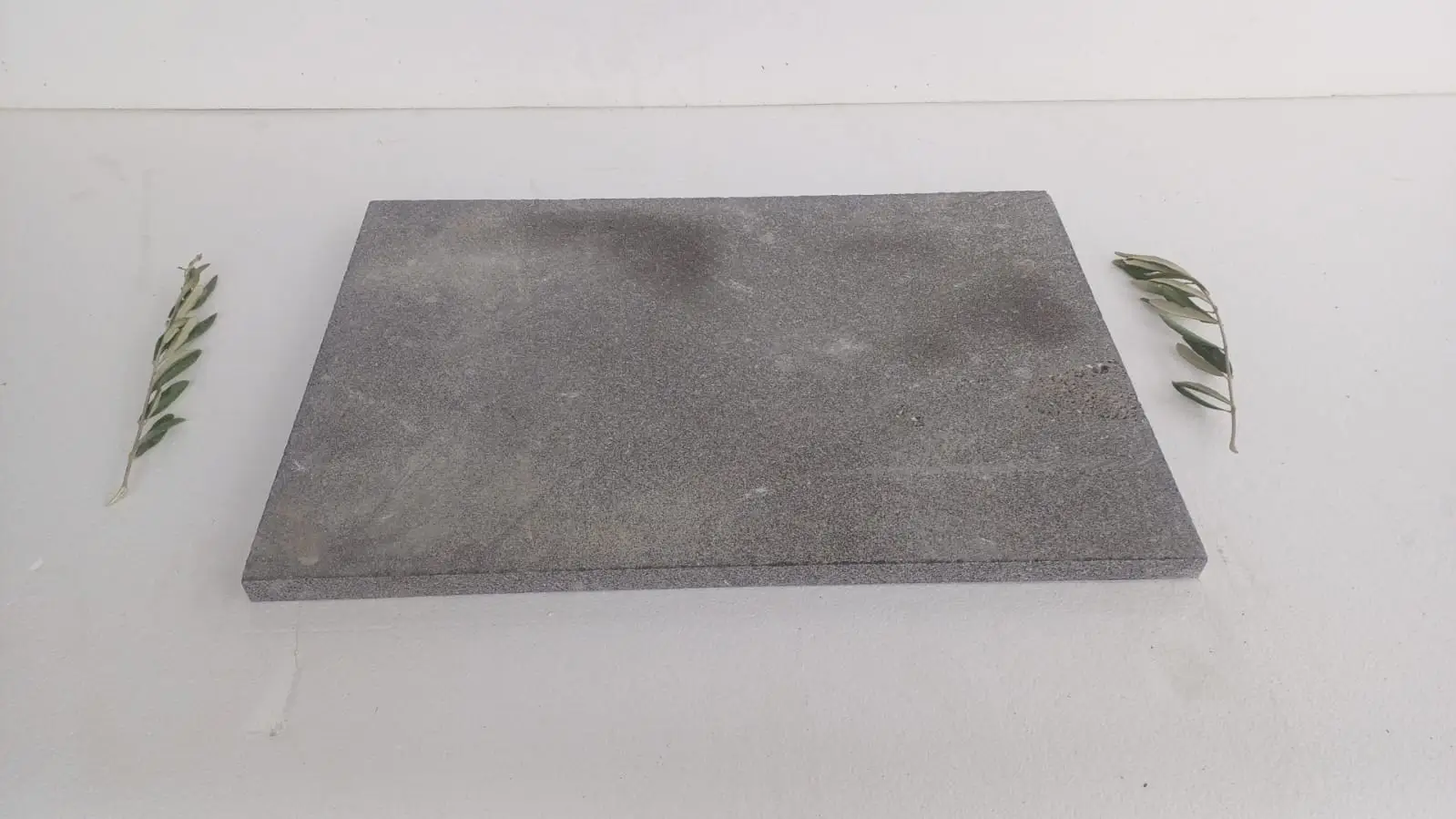
Natural limestone and travertine require penetrating sealer application before first use and reapplication every 18 to 24 months depending on surface exposure and traffic level. The sealer penetrates 3mm to 8mm below the surface in well-prepared stone, creating a moisture barrier that prevents staining and slows freeze-thaw expansion at the pore level. Skipping initial sealing on porous limestone typically accelerates surface discoloration within the first wet season — a mistake that’s difficult to reverse cleanly.
- Penetrating impregnating sealers: best for outdoor applications; don’t alter surface sheen; $0.60 to $1.20 per square foot applied professionally
- Topical sealers: create a surface film that enhances color but requires more frequent reapplication and can become slippery when worn — not the preferred specification for exterior paving
- Basalt and granite: low-porosity materials that require less frequent sealing — every 3 to 5 years is typically sufficient
- Joint sand maintenance: polymeric jointing sand should be refreshed every 3 to 5 years on sand-set installations; joint loss accelerates base water infiltration significantly
According to ASLA outdoor patio material selection guidance, natural stone surfaces managed with appropriate maintenance protocols consistently outperform synthetic alternatives in long-term durability and surface integrity across varied outdoor conditions. That performance stability directly translates to predictable cost across a 20-year ownership horizon.
Ordering, Lead Times, and Project Planning
Your outdoor patio tiles cost estimate isn’t complete until you’ve accounted for delivery logistics, lead times, and the project scheduling implications of material availability. Tile delays are one of the most common causes of cost overrun on patio projects — not because stone itself is unreliable, but because many buyers underestimate procurement timelines for specialty formats.
Truck delivery scheduling for large patio orders requires site access planning that goes beyond a standard residential driveway. A full pallet of 30mm limestone tiles weighs approximately 800 to 1,200 kg depending on format and density. Your truck access route, unloading surface, and staging area need to be confirmed before delivery is scheduled — particularly on sloped properties where a loaded pallet truck cannot safely operate on grade above 5%. Split deliveries on terraced sites add logistics cost that should be estimated before your order is placed.
- Standard warehouse lead time for held-stock natural stone: 5 to 10 business days from order confirmation to delivery
- Special-order or non-standard thickness formats: 6 to 12 weeks depending on quarry scheduling and shipping mode
- Allow 2 to 3 weeks minimum between tile delivery and installation start for acclimatization — particularly for large-format stone on covered staging areas
- Confirm truck access dimensions with your supplier before ordering; standard delivery vehicles require 3.5m clearance width and solid ground to unload safely
Citadel Stone’s nationwide warehouse coverage typically means that standard patio tile formats ship within 1 to 2 weeks — a meaningful advantage for projects operating on contractor scheduling constraints where tile delays translate directly to extended labor costs.
What Separates a Good Outdoor Patio Tiles Decision from a Great One
The outdoor patio tiles cost decision resolves clearly once you’ve moved past the per-square-foot sticker comparison and started thinking in terms of material depth, base engineering investment, maintenance schedule, and terrain-specific performance requirements. Budget options have their place — a temporary patio, a rental property with a short investment horizon, or a low-traffic decorative area where replacement is planned as part of a broader landscape update. For permanent, primary-use patios, the math consistently supports natural stone once you factor in the 20-year ownership window.
Terrain complexity is the variable that most buyers encounter late in the planning process. Whether your site is flat, sloped, terraced, or sits in a low-lying drainage zone, the sub-base specification and tile thickness need to respond to that reality before aesthetics or price enters the conversation. Getting grade and drainage right protects every dollar invested in the surface material above it. For a related perspective on natural stone investment value in another hardscape context, limestone driveway cost and value provides useful framing on how natural stone performs as a long-term hardscape material across demanding applications.
The specification decisions that hold up over time come down to material density matched to load requirements, finish type matched to surface conditions, base depth matched to site drainage, and maintenance commitment matched to the stone’s porosity class. Every one of those decisions affects your real cost more than the tile’s face price does. Budget tiles often use thinner cuts or synthetic finishes that wear through within a few seasons — Citadel Stone’s patio range focuses on full-body stone thickness.
Related reading: black limestone rock explained · why does limestone turn black.