

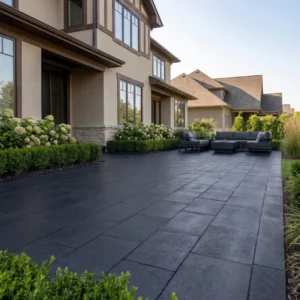
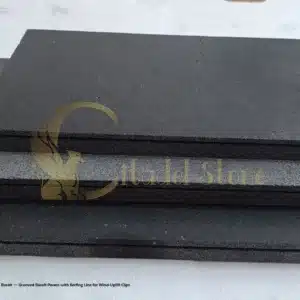
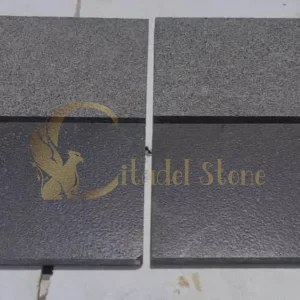
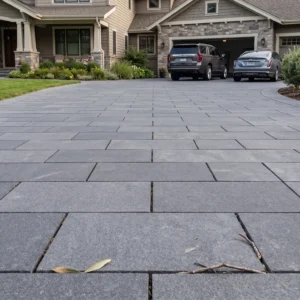
The single variable that decides whether a Basalt Hexagon Tile floor reads crisp or restless is edge calibration. Six edges per unit means six chances for a joint line to drift, and the eye tracks hex joints along three axes instead of two — wander that disappears in a square grid announces itself immediately here. Most arguments at handover on these floors trace back to that geometry, not to the stone. What follows covers the specification calls, layout discipline, and sourcing checks that separate a hex floor aging gracefully from one lifted in year three.
What Sets Basalt Hexagon Tile Apart from Square Formats
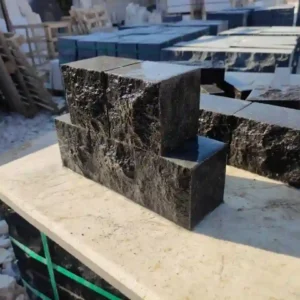
Basalt’s fine, even grain is the reason the hexagon works so well in this material. It is an extrusive volcanic rock that cooled fast at the surface, which keeps crystal size small — the USGS explanation of igneous rocks describes how cooling rate governs grain. Without a pronounced bedding plane to orient, a unit can be rotated through any of its six positions and still read the same.
That freedom matters. Rotating a bedded sandstone or slate hexagon swings the layering 60 degrees and produces a pinwheel effect nobody specified. The practical consequences:
- Rotating units freely while laying distributes tonal variation across the field instead of banding it
- Saw cuts hold a clean arris on all six edges, so perimeter cuts don’t ravel the way coarser stone can
- Shade range usually sits in a narrow band from mid gray to near-black, making blending a question of tone rather than pattern
- Request sample tiles from Citadel Stone and judge them wet as well as dry under the project’s lighting
Color, Finish, and the Design Traditions Hexagons Suit
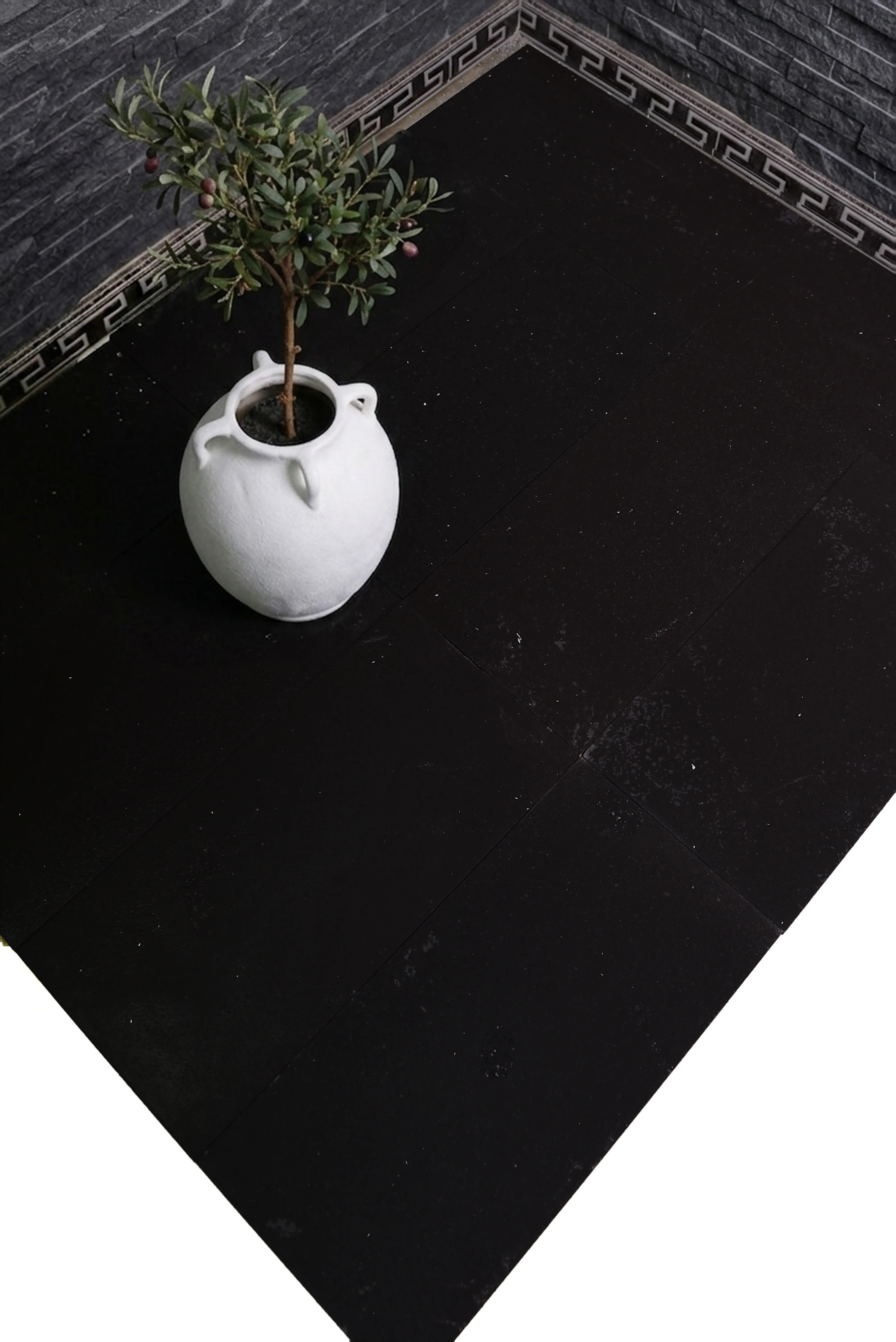
Your finish choice changes the color more than the stone does. A honed face pulls the tone toward charcoal and reads flat and quiet; a flamed or bush-hammered face lightens to a softer gray because the broken surface scatters light; a brushed face sits between the two and leaves an open, undulating texture. Basalt is the most widespread volcanic rock on the planet, as the Britannica entry on basalt notes, which is why its dark palette recurs in regional building traditions.
The hexagon carries history. Victorian and Art Deco floors made the shape a civic language, so a dark hex field in an entry hall reads as heritage rather than novelty. Mediterranean and Spanish Revival courtyards pair it with cream limestone or ochre plaster for a hard tonal break. Japanese-influenced gardens use it differently — small basalt hexagonal formats set in gravel and moss, where the joint pattern does the work.
- Dark gray against white plaster or lime render maximizes contrast and makes the hex outline the dominant graphic
- Dark gray against weathered timber, corten, or bronze softens the floor and lets planting carry the color
- A honed field with a flamed border reads as a deliberate frame without introducing a second stone
- Smaller hexagons suit courtyards and shower floors; larger ones suit open patio and loft plans where the pattern shouldn’t fight the furniture
Choosing Sizes and Thickness for a Hexagonal Basalt Floor
Hexagons are specified point-to-point or across the flats, and getting that language straight on the purchase order saves a week. Common interior formats run from about 4 in across the flats up to 12 in, with 6 in and 8 in doing most of the work. Interior floor and wall thicknesses typically sit in the ⅜ to ⅝ in range, while exterior work on a bedding course moves to 1¼ in and heavier depending on loading.
Citadel Stone cuts Basalt Hexagon Tile to order, so a non-standard size across the flats, a thicker exterior run, or a matching bullnose for a step edge is a production question. Lead times are quoted with the order once the cut list is fixed.
Where Herringbone Borders Fit Alongside Hexagons
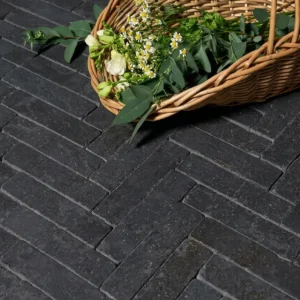
Rectangles and hexagons work together better than most people expect, provided you pick one to lead. A basalt herringbone tile border around a hex field gives you directional movement at the perimeter and a clean transition into doorways, and the herringbone absorbs out-of-square walls that would force ugly slivers in a hex cut. The reverse also holds — a herringbone hall running into a hex alcove makes the alcove feel intentional.
Setting Out a Hex Floor Without Chasing the Grid
The hexagon isn’t an arbitrary motif for this stone. Cooling lava contracts into polygonal columns, and how basalt columns form walks through the mechanism behind those natural six-sided shapes. On the floor, geometry becomes layout discipline: set out from a snapped baseline through the center of a run of flats, not from a wall, and dry-lay at least two full courses before anything goes into mortar.
Perimeter cuts get overlooked. A hex field meeting a wall produces alternating half and quarter shapes, far more visible than a square border because each cut is a different silhouette. Plan the baseline so the cuts fall on the least-viewed wall, and keep a diamond blade with a fresh rim for the visible side.
- Dry-lay from the center out and mark the baseline on the substrate, not on the protection board
- Check joint alignment on all three axes every few courses — drift compounds quickly
- Blend from several crates at once rather than emptying one crate at a time
- Keep offcuts sorted by shape — most perimeter cuts repeat, and waste drops sharply
Substrate, Bedding, and What Goes Underneath
Interior work lives or dies on substrate flatness. Small hexagons telegraph lippage because the eye reads six edges at once, so the substrate needs to be flatter than you’d accept for a large-format square, with full back-buttering to get real coverage under every point. Hollow spots under hex points crack units later under furniture loads.
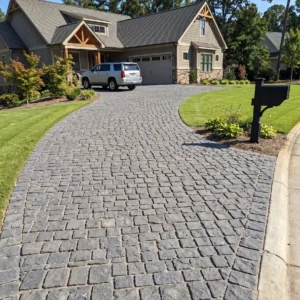
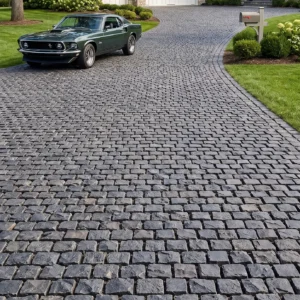
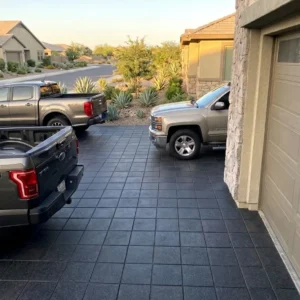
Exterior work is a different discipline. For patios and walkways, basalt pavers and thicker hexagonal units go over a compacted crushed-stone base with a bedding course, falls set at roughly ¼ in per foot (about 2%) away from the structure. In freeze-thaw regions, drainage under the base does more for long-term performance than any surface treatment: water that can’t sit under the stone can’t lift it.
Joint Width, Movement, and Edge Details
Joint width is an aesthetic decision with a structural consequence. Tight joints make the hex pattern read as a single dark plane and flatter the stone; slightly wider joints forgive dimensional tolerance and give the setting material room to work. Pick the width from your own measurement of a sample batch, not from a catalog default.
Movement joints are where hex floors most often get shortchanged. Perimeter gaps behind the baseboard, joints at every change of substrate, and field joints on long interior runs all need designing in rather than discovering. Exterior fields over a bedding course need a restrained edge — a haunched curb, a steel edge, or a flush concrete toe — because hexagons have no interlocking shoulder to resist spread at the perimeter.
Sealing Basalt Hexagon Tile and Keeping It Looking Right
Dark stone shows two things: dust in dry climates and water marks in wet ones. A breathable impregnating sealer slows oil absorption and keeps cement grout haze off the face during installation; sealing before grouting saves the most remedial work on a honed dark floor.
Resealing intervals come from the sealer manufacturer, not a rule of thumb, and shift with traffic and exposure. Routine care is simple:
- Use a pH-neutral cleaner; acidic products attack grout long before they touch the stone
- Rinse and lift the dirty water rather than letting it dry on a dark honed face
- Keep grit off interior hex floors with a mat at every exterior door — fine grit abrades a honed surface fastest at the joint edges
- Spot-test any new product out of sight before using it across the field
Judging Quality and Specifications Before Your Order Ships
Ask for data rather than adjectives. Absorption, compressive strength, flexural strength and abrasion each have a named ASTM method, and the NSI standards page for design professionals maps which test covers which property. Specify the method in your submittal and ask the supplier for the test report rather than accepting a number on a brochure.
On slipperiness, the current standard is ANSI A326.3 and it is measured wet; the finish is the variable, which is why a honed sample and a flamed sample of the same stone behave differently underfoot. Request samples in both and walk them wet on a slope before deciding.
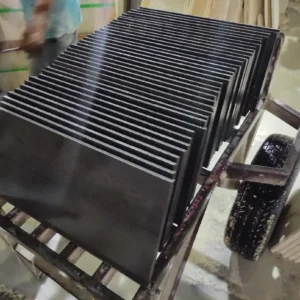
Practical logistics deserve the same attention. Crated stone is heavy, so confirm truck access, turning room, and who offloads before the delivery date is set — a site that only takes a box truck should be flagged at quoting, not on arrival. Citadel Stone quarries and cuts to order at our selected quarries in the Middle East, and each order is checked against the agreed specification before it ships.
Order Basalt Hexagon Tile Direct from Citadel Stone
Order Basalt Hexagon Tile cut to your project’s format, with standard sizes across the flats, interior and exterior thicknesses, and honed, flamed, or brushed faces. Matching rectangles for herringbone borders, step treads, and wall cladding can be cut from the same production run so tone carries through. Request samples and a specification sheet before you issue the purchase order, with the relevant test reports in the submittal package.
Trade and wholesale buyers can send drawings or a tile schedule for pricing; custom cuts and large square footages get a cut list and a quoted lead time with the order. Delivery is arranged and managed to the jobsite, with offloading confirmed in advance. For straightforward pricing on a repeat format, buy by square footage and keep a modest overage for cuts.
As you plan the wider scheme, lighter paving around a dark hex field is a common and effective pairing — gray limestone paving for surrounding areas covers how that contrast works and what it asks of the base build-up. Citadel Stone handles Basalt Hexagon Tile orders for floor and wall installations, sourced at our selected quarries in the Middle East.
See also: why basalt forms hexagons.
Related guides: outdoor basalt hexagon tile · basalt hexagon tile install · How to Clean and Seal Basalt Hexagon Tile · choosing basalt hexagon tile · basalt hexagon grout color · basalt herringbone tile ideas.