




Executive Snapshot — Quick Facts & Reasons to Choose
- Quarry-Direct Supply: Guaranteed provenance, quality control, and supply-chain integrity from a single, exclusive U.S. source.
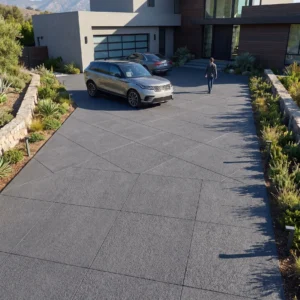
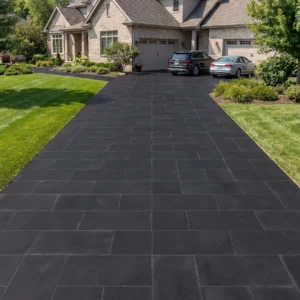
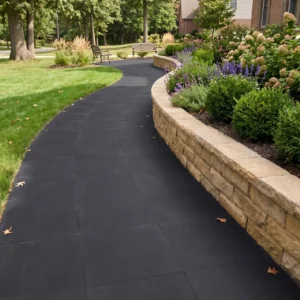
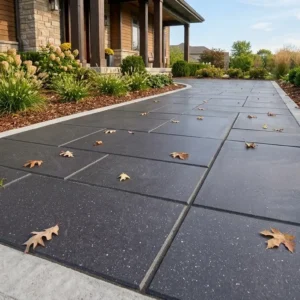
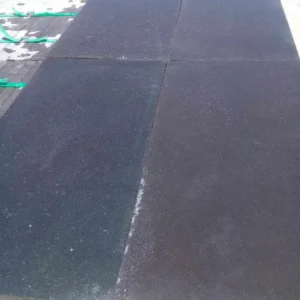
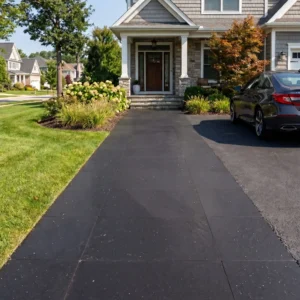
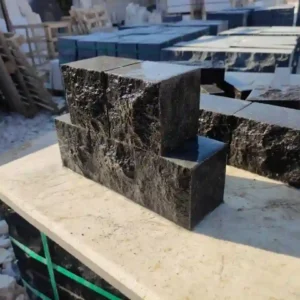
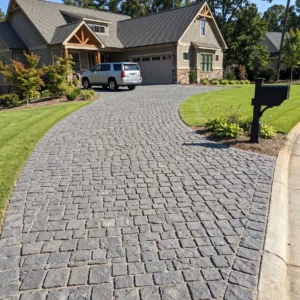
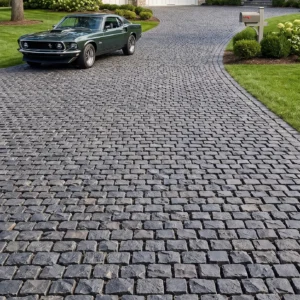
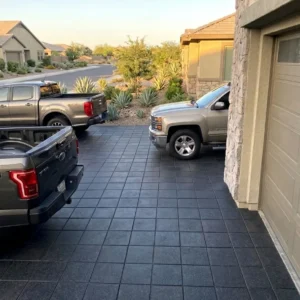
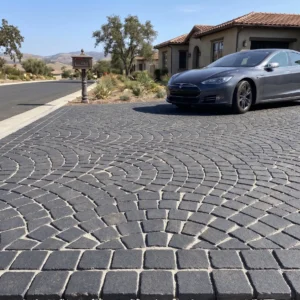
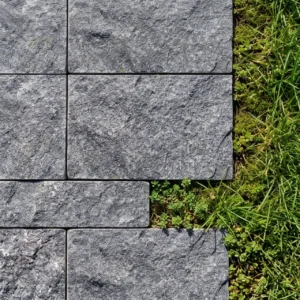
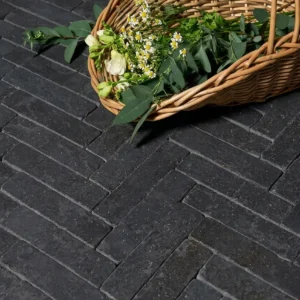
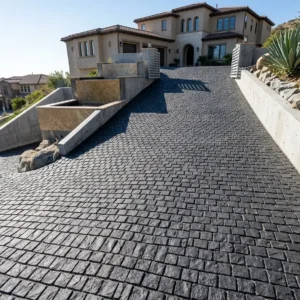
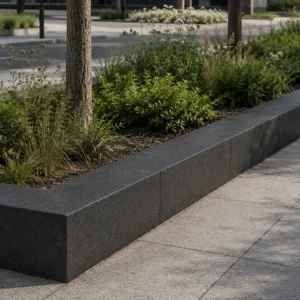
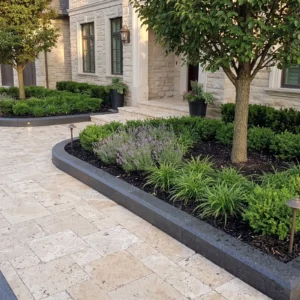
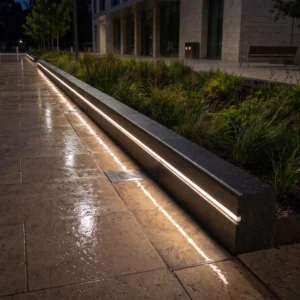
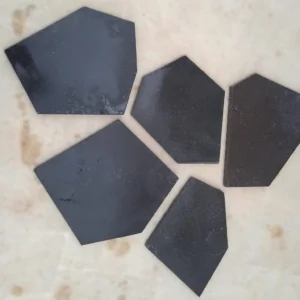
- Architectural & Landscape Products: A complete range of black basalt tiles, durable basalt pavers, coping, wall caps, and large-format slabs.
- Industrial Feedstock Products: High-purity industrial basalt aggregate crushed and graded for mineral wool production, melting, and refractory applications.
- Unmatched Durability: Extremely durable natural stone: among the hardest natural paving stones available.
- Superior Hardness: Significantly harder than limestone and sandstone, and in the same hardness class as granite.
- Lasting Performance: It will serve for generations keeping its original condition.
- Total Customization: We hand-select the most durable & beautiful black basalt tiles for our customers. Citadel Stone supply in all thicknesses, sizes, and finishes.
- Extreme Climate Suitability: With exceptionally low water absorption basalt, our products resist freeze-thaw cycles and extreme weather, making them ideal for any U.S. climate.
- Low Maintenance: Requires minimal upkeep, offering a low total cost of ownership for commercial and residential projects.
- Procurement Flexibility: Available by the tile, by the pallet, or in bulk truckload/container quantities for industrial buyers.
- Aesthetic Consistency: A deep, uniform black color that provides a sleek, modern, and sophisticated finish for any design.
- Expert Support: Backed by Citadel Stone’s technical team for specification, installation, and procurement guidance.
Material & Source Profile — Geology, Provenance & Quarrying
Geological Summary
Quarry Sourcing & Quality Control
Architectural & Landscaping Applications — Why Architects Specify Our Basalt
Durability Claims for Heavy-Use Commercial Projects
Finishes & Formats
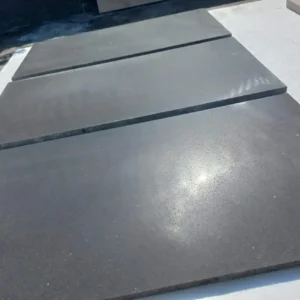
- Honed: A smooth, matte finish that offers a sleek, contemporary look, ideal for interior flooring and wall cladding.
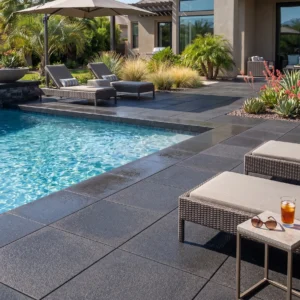
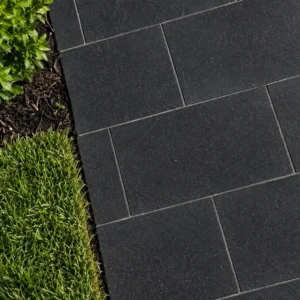
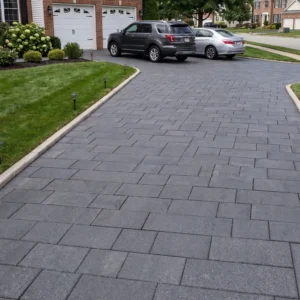
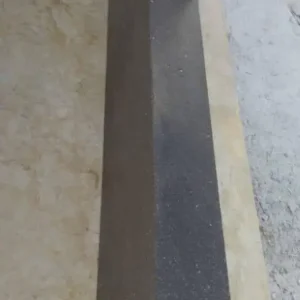
- Flamed (Thermal): A textured surface created by exposing the stone to high heat, perfect for exterior paving, pool surrounds, and walkways.
- Sawn: A clean, uniform surface that showcases the raw character of the stone.
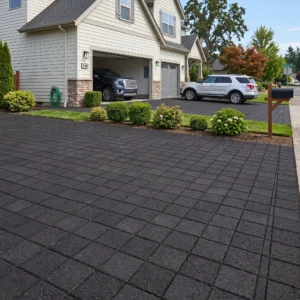
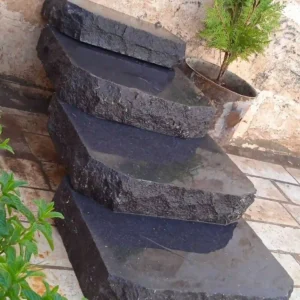
- Bush-Hammered: A highly textured, slip-resistant finish suitable for heavy-duty exterior applications.
Design Suggestions
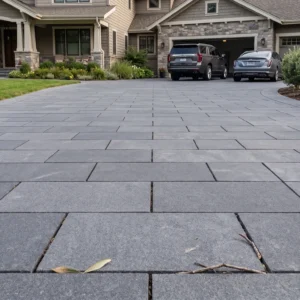
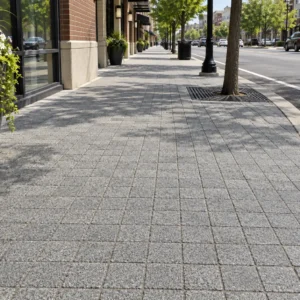
- Modern Plaza: Large-format (900x900mm) flamed basalt pavers with light grey granite or concrete seating elements.
- Luxury Retail Interior: Honed black basalt tiles in a large format, paired with brass or bronze fixtures and warm wood accents.
- Infinity-Edge Pool: Flamed basalt coping and surrounds for a sleek, textured, and heat-resistant deck.
- Corporate Entrance: A combination of honed basalt wall cladding and flamed exterior pavers for a seamless indoor-outdoor transition.
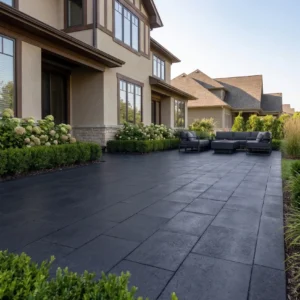
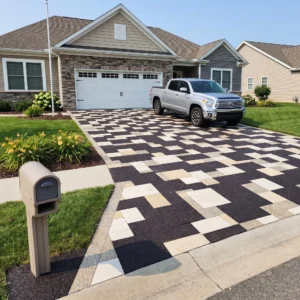
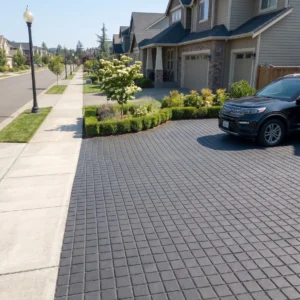
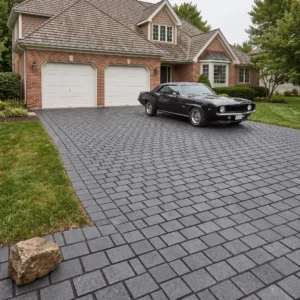
- Residential Patio: Hexagonal basalt pavers for a contemporary, patterned hardscape.
- Historic Restoration: Sawn or bush-hammered basalt to complement traditional brick or stone masonry.
- Water Features: The dark color of basalt creates beautiful reflections and enhances the visual depth of fountains and ponds.
- Kitchen & Bath: Honed basalt tiles offer a durable and sophisticated alternative to ceramic for floors and walls.
Industrial & Manufacturing Uses — Crushed Basalt for Wool Processing, Melting & Refractory Feedstock
Overview: Basalt for Mineral Wool (Rock Wool) Production
Crushed Basalt Gradations
- 0–4mm
- 4–8mm
- 8–20mm
Basalt for Melting & Refractory Applications
Handling, Storage, and QC for Industrial Buyers
- Stockpile Management: We manage stockpiles to prevent contamination and segregation, ensuring consistent quality from the first truckload to the last.
- Moisture Control: Aggregate can be supplied with guaranteed maximum moisture content, reducing energy costs for pre-heating.
- QC & Lab Testing: Every batch of industrial aggregate is tested for key parameters. We provide a full suite of documentation with every order.
Industrial Buyer QC Checklist: For every industrial purchase, demand the following documents from your stone supplier to ensure quality and consistency:
- Material Safety Data Sheet (MSDS)
- Chemical Assay (XRF or equivalent)
- Sieve Analysis (Particle Size Distribution)
- Moisture Content Certificate
- Loss on Ignition (LOI) Test Report
- Batch Photos
- Certified Weighbridge Ticket / Delivery Manifest
Specification & Supply Options — Sizes, Thicknesses, Finishes, and Packaging
Architectural SKUs
- 300 x 300 mm (12″ x 12″)
- 300 x 600 mm (12″ x 24″)
- 600 x 600 mm (24″ x 24″)
- 900 x 900 mm (36″ x 36″)
- Large-Format Slabs (e.g., 1200 x 2400 mm)
- 20mm (3/4″)
- 30mm (1 1/4″)
- 40mm (1 1/2″)
- 50mm+ (2″+) for heavy-duty pavers and custom applications.
Industrial SKUs
- 0–4mm (Fine Aggregate / Sand)
- 4–8mm (Coarse Aggregate)
- 8–20mm (Coarse Aggregate)
Packing & Logistics
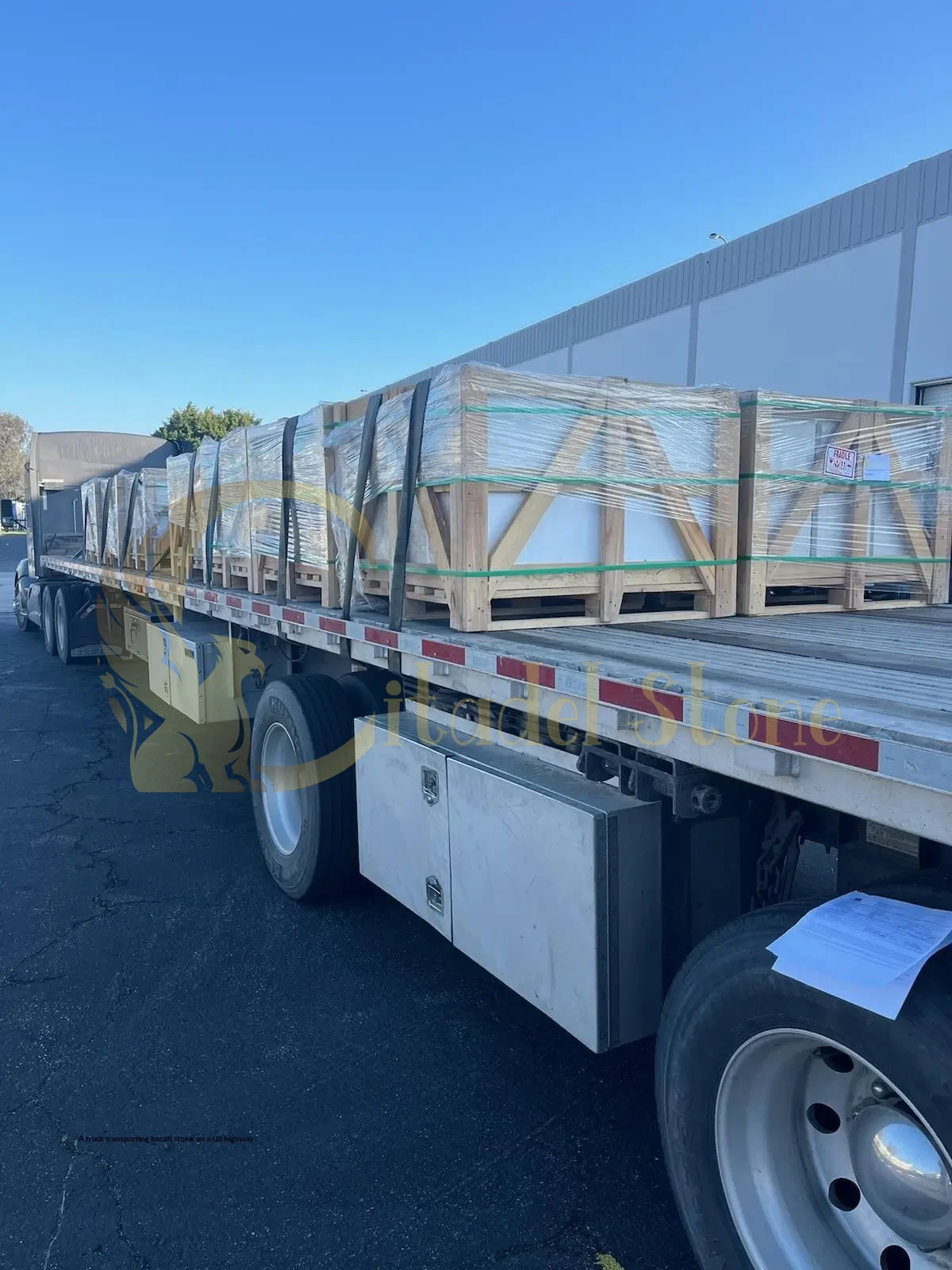
- Architectural Products: Tiles and pavers are carefully packed in wooden crates, palletized, and shrink-wrapped for secure transport.
- Industrial Aggregate: Crushed basalt is available for bulk loading into tipper trucks or can be packed into super sacks for containerized shipping.
- Logistics: We can arrange for truckload (FTL/LTL) or container shipments to any location in the USA and worldwide.
Installation, Handling & Maintenance
Best-Practice Installation for Architectural Uses
- Substrate: Ensure the substrate is clean, stable, and properly prepared according to TCNA (Tile Council of North America) guidelines.
- Adhesives/Mortars: Use a high-quality, polymer-modified thin-set mortar suitable for natural stone and the specific application (interior/exterior, wet/dry).
- Joints: For large-format tiles, maintain a minimum joint width of 3mm (1/8″). Always include movement joints in large installations as specified by the project engineer.
- Pedestal Systems: For rooftop terraces, basalt pavers are compatible with adjustable pedestal systems, allowing for drainage and service access.
Maintenance
- Cleaning: For daily cleaning, use a pH-neutral cleaner. Avoid acidic or highly alkaline cleaners.
- Sealing: Basalt has very low water absorption basalt, but sealing can provide additional stain protection in high-traffic areas like kitchens. We recommend a high-quality penetrating sealer.
- Stain Handling: Address spills promptly. Most common stains can be removed with targeted cleaners.
- Long-Term Care: With proper installation and basic cleaning, basalt will retain its color and texture for decades.
For Industrial Users
- Handling Safety: Use appropriate PPE (gloves, masks) when handling dry, crushed aggregate to avoid irritation from dust.
- Moisture Control: Store aggregate in dry, covered conditions to prevent moisture ingress, which can affect furnace performance.
- Conveyors & Handling: Basalt is abrasive. Ensure conveyor belts and handling equipment are specified for abrasive materials to minimize wear.
- Dust Suppression: Employ water misting or other dust suppression techniques at transfer points to control airborne dust.
Comparative Positioning — Basalt vs Granite, Sandstone, Limestone & Other Basalt Sources
| Feature | Citadel Stone Basalt | Granite | Limestone / Sandstone |
| Abrasion Resistance | Excellent | Good to Very Good | Fair to Good |
| Water Absorption | Very Low (<0.5%) | Low (<0.8%) | Moderate to High (1-8%+) |
| Compressive Strength | Very High | High | Low to Medium |
| Aesthetic Consistency | Excellent (Uniform Black) | Variable (Grains, Veins) | Variable (Bedding, Fossils) |
| Stain Resistance | Very Good | Good | Poor to Fair |
| Freeze-Thaw Resistance | Excellent | Good | Poor to Good (Varies) |
| Verification Note | See TDS for ASTM values | See supplier TDS | See supplier TDS |
Sustainability, Life-Cycle Value & Cost Considerations
- Lifecycle Benefits: The extreme durability of basalt means a lower replacement frequency, significantly reducing the long-term environmental impact and total cost of ownership in commercial settings.
- Recyclability: At the end of its life, basalt can be crushed and recycled as a high-quality aggregate for construction projects, contributing to a circular economy.
- Embodied Carbon: As a durable, long-lasting natural product, basalt can offer embodied carbon benefits compared to materials that require frequent replacement. (Note: Any specific carbon numbers are illustrative/typical and require project-specific LCA.)
- Cost: While premium natural stone represents an initial investment, Citadel Stone’s quarry-direct basalt USA pricing is highly competitive. We recommend requesting a line-item quote to see how affordable our basalt can be for your project.
Procurement Checklist — What Specification & QC Documents to Demand
Procurement & Delivery Checklist: To ensure you receive exactly what you specified, use this checklist for any large architectural or industrial stone purchase:
- Technical Data Sheet (TDS): The master document for all performance specs.
- Material Safety Data Sheet (MSDS): For industrial handling.
- Current Lab Test Reports (ASTM): For strength, absorption, abrasion, and COF.
- Chemical Assay: Essential for industrial feedstock buyers.
- Sieve Analysis: For all crushed aggregate orders.
- Chain-of-Custody / Provenance Docs: To verify the origin of the stone.
- Batch Photos: Request photos of the current block or stockpile for approval.
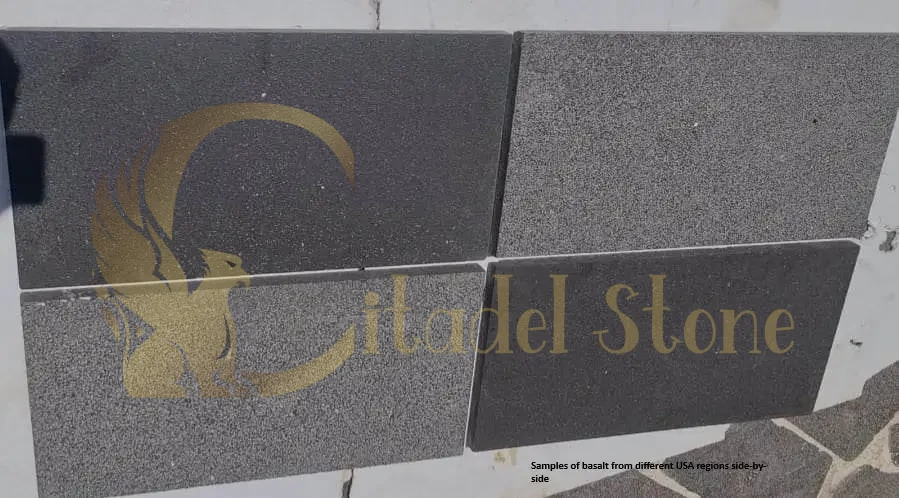
- Sample Approval: Sign off on a physical control sample that represents the agreed-upon color and finish.
- Warranty Document: A clear warranty from the supplier.
- Transport Manifest & Certified Weight: Ensure the delivery manifest matches your order exactly.
- Inspection Upon Delivery: Check for damage and consistency before accepting the shipment.
- Hold-Back Clause: For large contracts, include a retention or hold-back clause pending final inspection and acceptance.
Risk Management & Warranties
- Warranty: We provide a clear, written warranty covering material defects. Request a copy for review.
- Delivery Inspection: All clients should conduct a thorough inspection of materials upon delivery, before installation. Note any damage on the bill of lading before signing.
- Claims Process: In the unlikely event of a material issue, we have a documented claims process to ensure swift resolution. This may involve site inspection and re-testing of materials.
- Contractual Protections: For large industrial or commercial orders, we recommend including clear contractual protections, such as defined inspection windows and acceptance criteria. A legal review of the supply contract is recommended for major purchases.
Case Selection & Sample Request
- Request a Sample: Contact us to request architectural sample boards showing different finishes, or trial batches of our crushed basalt for wool processing.
- In-Showroom Inspection: Schedule an appointment to view large-format slabs and discuss your project with our technical experts.
Basalt Quarrying Market in the USA: Size, Regional Hubs & Short-Term Outlook
The U.S. basalt quarrying market is maturing from a niche dimensional-stone segment into a broader industrial supply chain, with recent estimates placing national basalt-rock revenues in the low hundreds of millions and steady mid-single-digit CAGRs through the late 2020s. This growth is driven by demand for both traditional architectural stone and industrial derivatives such as crushed aggregate.
Geography shapes supply: the Pacific Northwest (the Columbia River Basalt province across eastern Oregon, Washington and adjacent states) remains the primary domestic source for large, consistent basalt flows used in slabs, pavers and heavy aggregates. Fabricators close to these quarries can offer faster lead times and larger formats than distant import options.
Demand is diversifying. Basalt fiber and basalt-reinforced composites are expanding downstream markets (infrastructure reinforcement, bridge overlays and specialty composites), increasing pressure on upstream quarry capacity and encouraging producers to explore higher-value processing lines (tiles, flamed surfaces, and precision slabs).
Key market risks and buyer strategies: raw-material availability fluctuates with regional quarry output and export competition, so specifiers should require dual sourcing, reserve-slab programs, and EPD/mill-reports for certification projects. For architects and contractors, verifying lab data (water absorption, freeze-thaw, slip ratings) and choosing quarry-proximate fabricators reduces schedule risk and improves lifecycle performance.