





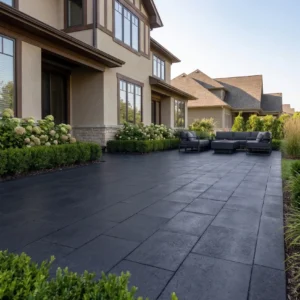

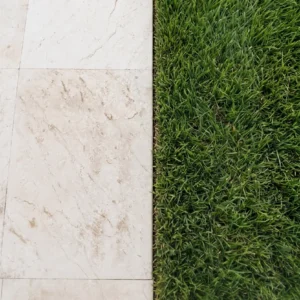



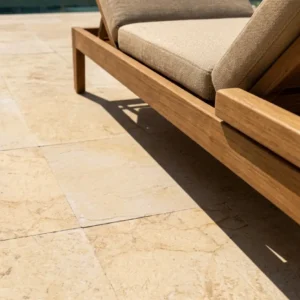


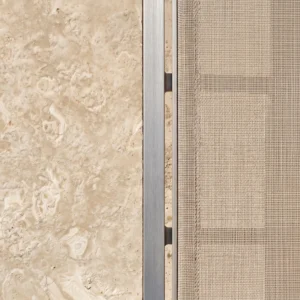
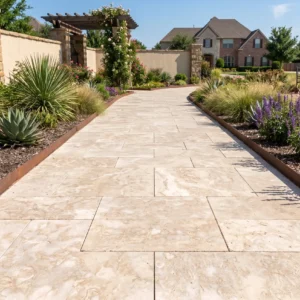
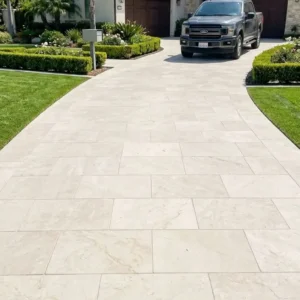
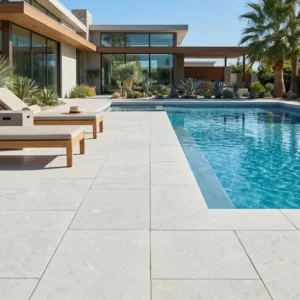

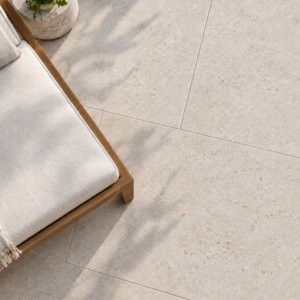
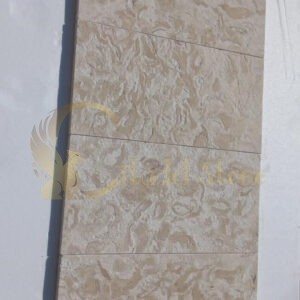

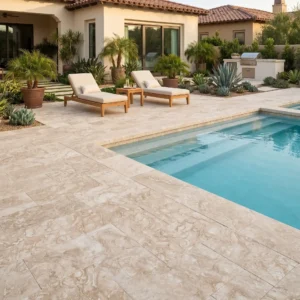
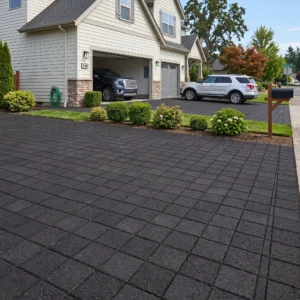






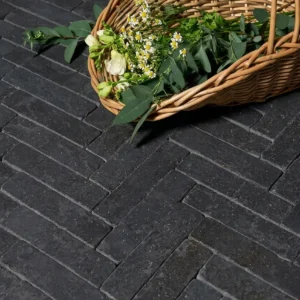
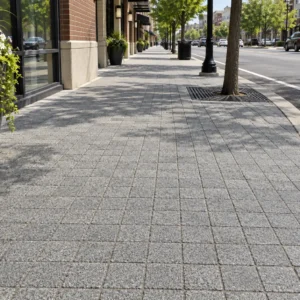
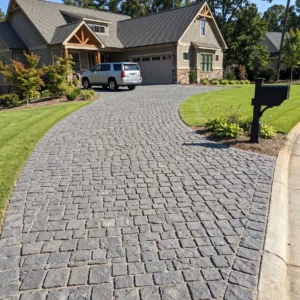
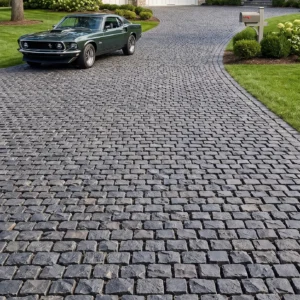





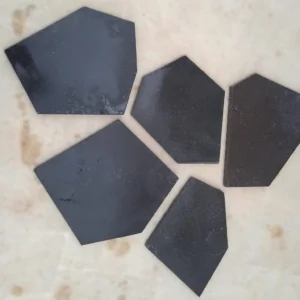



Stone supply decisions that fail on-site almost always trace back to one overlooked variable: the gap between what a supplier catalogs and what actually arrives at your project. Sourcing natural stone through a professional stone supply company means you’re not just buying material — you’re buying consistency, batch-matched stock, and the logistical infrastructure that keeps large-scale projects on schedule. The difference between a stone supply yard with genuine quarry relationships and a general distributor shows up in ways that matter: color uniformity across pallets, dimensional tolerances within 2–3mm, and documentation that supports code submissions.
What Quarry-Direct Supply Means for Your Project
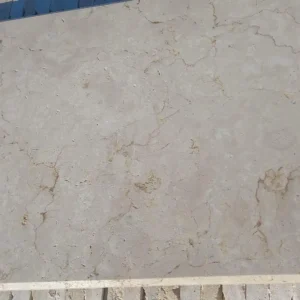
Quarry-direct sourcing eliminates the intermediary markup that inflates stone prices by 20–35% at the retail tier, but the real advantage isn’t cost — it’s traceability. Your specification documents gain a verifiable chain of custody when material ships directly from an established selected quarry through a national stone supply operation with documented quality checkpoints. At Citadel Stone, we inspect each shipment at the warehouse before it reaches your project, checking for color drift between batches and confirming dimensional tolerances match the approved sample.
You’ll find that quarry-direct stock also means faster response to large volume orders. Retail stone supply stores often hold limited pallet quantities — adequate for residential scopes but undersized for commercial work. When your project requires 2,000 square feet of matched material, warehouse inventory depth matters more than per-unit price.
- Batch traceability supports material submittals and architect approval processes
- Warehouse stock levels allow phased deliveries aligned with your installation schedule
- Direct quarry relationships reduce lead times from the typical 6–8 week import cycle to 1–2 weeks for stocked formats
- Consistent finish standards across large quantities prevent mid-project shade variation
Understanding Stone Supply Grades and Specification Formats
Commercial grade stone and first-quality stone often arrive from the same quarry block — what separates them is the tolerance review conducted at the stone supply yard. First-quality material undergoes dimensional checks to within ±1.5mm on face size and ±2mm on thickness; commercial grade allows ±4–5mm variation. That difference sounds minor until you’re dry-laying 18×18 tiles across a 3,000-square-foot lobby floor and your grout joints start drifting by the third row.
Your specification should define grade explicitly. Referencing ASTM dimension stone quality and testing standards in your material submittal gives the stone supply company a clear benchmark to source against and gives your project legal defensibility if material arrives outside tolerance.
- Specify nominal thickness with an allowable tolerance range, not just a target
- Request calibrated vs. natural cleft finish on the same stone type — they perform differently under foot traffic
- Confirm whether your supplier’s stone supply yard stocks honed, flamed, or brushed finishes on-site or orders them to spec
- For load-bearing applications, request flexural strength data (minimum 6.5 MPa for foot-traffic paving)
Natural Stone Pavers: Base Preparation and Structural Requirements
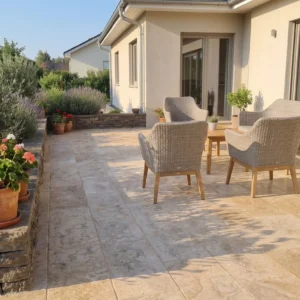
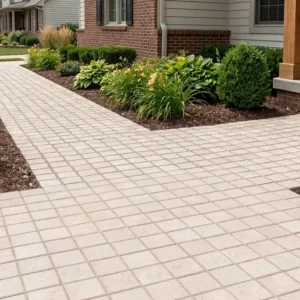
The structural performance of natural stone pavers depends less on the stone itself and more on what sits beneath it. A 1.25-inch travertine paver over a correctly prepared 4-inch compacted aggregate base with a 1-inch bedding sand layer will outlast a 2-inch granite paver set over unstable subgrade. Your base preparation protocol needs to reflect actual soil conditions, expected load class, and — where relevant — local frost line depth.
Freeze-thaw regions present specific challenges for stone supply specifications. In areas with documented frost penetration, the aggregate base must extend below the frost line to prevent differential heave from undermining bedding continuity. This is where building code requirements intersect with material selection: many jurisdictions in freeze-thaw regions require base depths of 12–18 inches minimum for exterior hardscape, with compaction verified at 95% Proctor density. Your stone supplies need to include appropriately sized and finished material that accommodates thermal expansion joints every 10–12 linear feet — not the 15–20 foot spacing listed in generic installation guides.
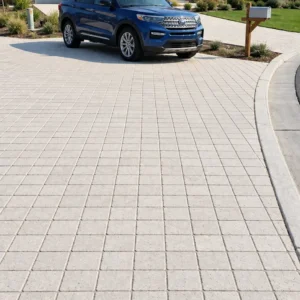
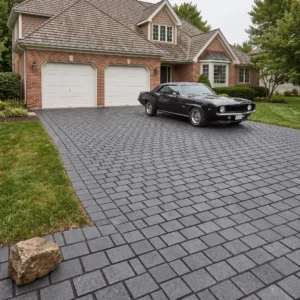
- Aggregate base: minimum 4 inches for pedestrian traffic, 8–12 inches for vehicular loads
- Bedding sand layer: 1 inch compacted, not screeded loose
- Thermal expansion joints: 3/8-inch minimum width at perimeter and field intervals
- Edge restraints must be mechanically anchored — not relying on adjacent stone weight for lateral stability
Stone Supply Material Selection Across Product Types
A complete stone supply catalog covers more than one or two stone families. The right material for your project depends on application-specific performance requirements that vary significantly between limestone, granite, travertine, bluestone, and slate. Understanding how each performs under your actual conditions matters more than aesthetic preference at the specification stage.
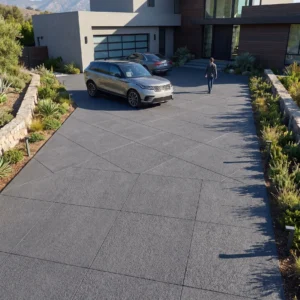
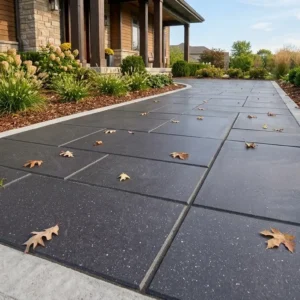
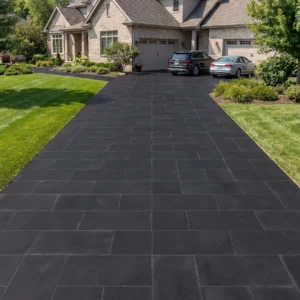
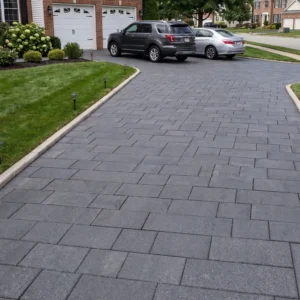
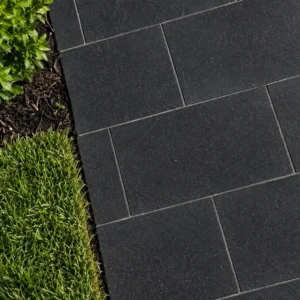
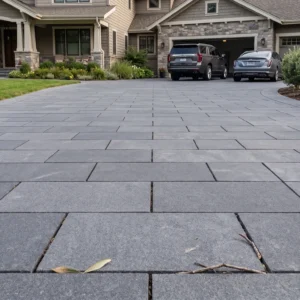
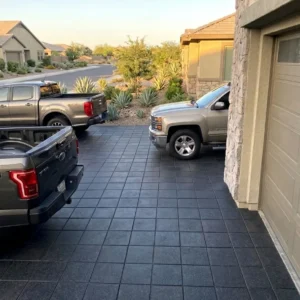
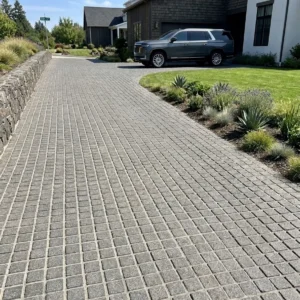
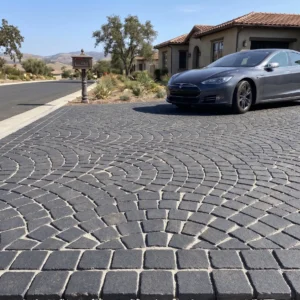
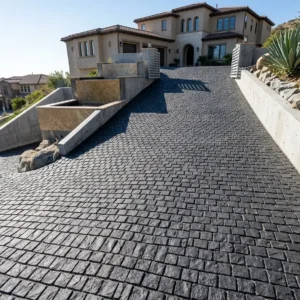
Granite supplies sit at the top of the compressive strength range, making granite the correct choice for high-traffic commercial driveways, vehicular plazas, and load-bearing applications. Limestone performs well in pedestrian applications and offers excellent workability for custom cuts, but its lower compressive strength means you’ll need to increase thickness specifications for vehicle-rated installations — work from the test report for the stone you specify. The Natural Stone Institute technical stone specifications provide material-specific performance data that should inform your specification before you finalize a stone supply order. For detailed technical guidance on stone veneer and cladding applications alongside your hardscape selections, our stone veneer supply guide covers specification details that apply to complementary site conditions and material coordination across a single project.
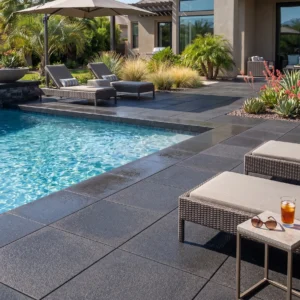
- Granite: highest compressive strength of the common paving stones — driveways, plazas, high-traffic commercial
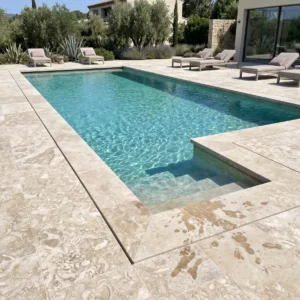
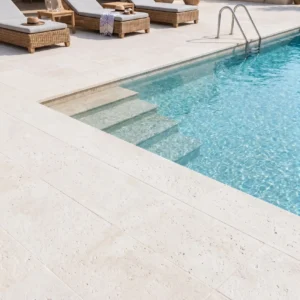
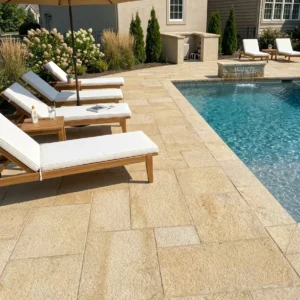
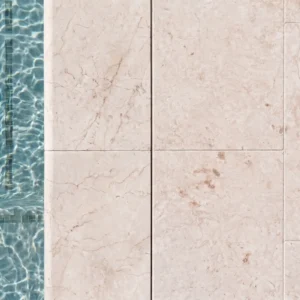
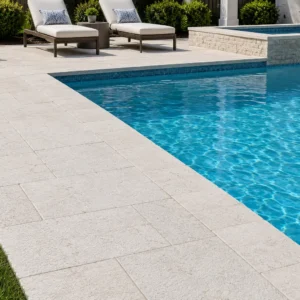
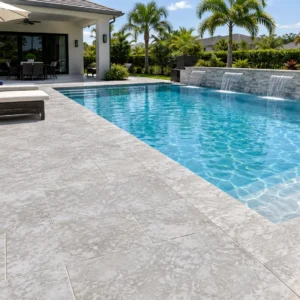
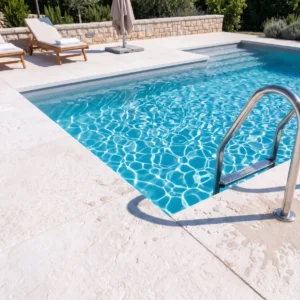
- Limestone: moderate compressive strength — pedestrian paths, patios, pool surrounds
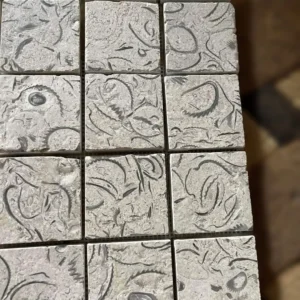
- Travertine: open pore structure — requires sealing in wet applications, excellent thermal mass
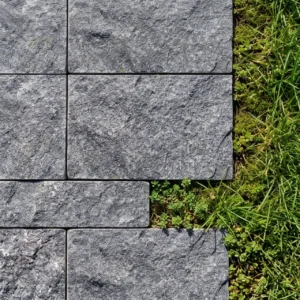
- Bluestone: dense, low-absorption — reliable in freeze-thaw climates without additional sealing
- Slate: high flexural strength, natural cleft surface — suited to walkways and wall cladding
All Stone Supply: Formats, Sizes, and Finish Options
Your installation sequence and budget both benefit from selecting a stone supply company that stocks multiple formats in the same material family. Coordinating field pavers, coping, stair treads, and edge details from a single stone and supply source eliminates shade mismatch and simplifies logistics — one truck delivery, one quality check, one submittal package.
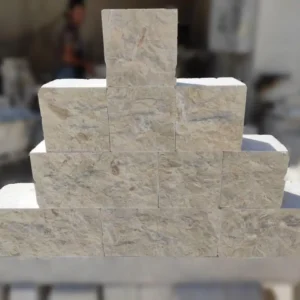
Citadel Stone stocks natural stone in formats including modular tiles (12×12, 16×16, 18×18, 24×24 inches), large-format slabs (24×48 and 36×36 inches), irregular flagstone, cobbles, and dimensional cut treads. Available finishes across the stone supplies range include honed, flamed, brushed, tumbled, and natural split — each affecting both slip resistance and visual character. You can request sample tiles or thickness specification sheets from Citadel Stone before committing to a full project quantity, which is standard practice for commercial submittals.
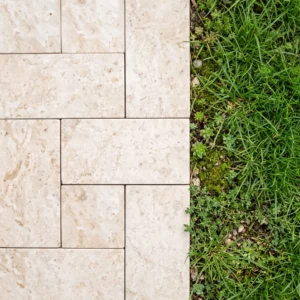
- Modular formats suit grid-pattern installations with consistent grout joint alignment
- Irregular flagstone reduces cut waste on organic layouts but requires skilled installation labor
- Honed finishes present a smoother surface — request the wet DCOF test report before specifying them for dry interior and covered exterior zones
- Flamed and brushed finishes are more heavily textured and are the usual choice for wet exterior and pool-adjacent applications — request the wet DCOF test report for the finish you specify
Sealing and Maintenance Specifications for Long-Term Performance
Sealing protocols for natural stone supplies differ fundamentally from concrete maintenance because you’re dealing with a crystalline or carbonate matrix that absorbs at the pore level, not a surface coating. Applying an acrylic topcoat sealer to limestone or travertine traps moisture below the surface — in freeze-thaw regions, that retained moisture expands during freeze cycles and spalls the face of the stone from within. Penetrating impregnator sealers that allow vapor transmission are the correct specification for exterior natural stone in any climate zone.
Plan for resealing on a 2–4 year cycle depending on foot traffic and UV exposure. High-traffic commercial stone supply installations benefit from water-based fluoropolymer impregnators that resist both oil and water penetration without altering surface texture. For polished interior stone, solvent-based silicone impregnators maintain the reflectance value while providing stain resistance. According to USGS dimension stone production and use data, the majority of natural stone performance failures in the field are attributed to maintenance deficiencies rather than material quality issues.
- Use penetrating impregnator sealers — never topcoat acrylic on exterior stone
- Apply sealer to clean, dry stone — residual moisture beneath sealer causes clouding and delamination
- Re-seal on a 2–4 year cycle; high-traffic zones may require annual maintenance
- Polished finishes lose gloss faster than honed finishes under foot traffic — factor refinishing into your lifecycle cost estimate

Coordinating Stone Supplies with Code Compliance and Structural Review
Code compliance intersects with stone supply specification at several technical checkpoints that often get deferred until project review — at which point material changes become expensive. Building departments in seismically active zones require that stone cladding and hardscape materials meet specific anchorage and weight-per-square-foot limits defined in the local adoption of the IBC. Stone veneer weight typically runs 12–18 lbs per square foot depending on thickness; seismic zones 3 and 4 often require mechanical anchoring systems rated to specific shear and tensile loads rather than relying on mortar bond alone.
Your structural engineer’s review should precede final stone supply ordering, not follow it. Specifying 1.5-inch travertine coping for a retaining wall application in a frost-affected region may require a supplemental engineering review if the wall exceeds 4 feet in retained height. Getting this resolved before your truck delivery arrives prevents material returns, respecification costs, and schedule delays. Stone supply yards that maintain technical consultation staff — rather than just order-taking teams — can flag these conflicts during the specification phase.
- Confirm cladding weight limits with your structural engineer before ordering large-format panels
- Seismic zones 3–4 typically require mechanical anchorage for stone cladding over 30 inches above grade
- Frost line requirements affect both base depth specifications and joint design for exterior hardscape
- Accessible routes call for slip-resistant exterior walking surfaces — request the wet DCOF test report for the finish you specify before finalizing your stone and supply order
Planning Delivery Logistics and Warehouse Lead Times
Delivery planning is where stone supply projects most commonly lose time. A truck delivering 20 pallets of 24×24 limestone to a tight urban site requires confirmed crane-off or forklift access, a laydown zone rated for pallet weight, and a delivery window that doesn’t conflict with adjacent trades. Your project’s truck access constraints should be communicated to your stone supply company at the time of order — not on delivery day.
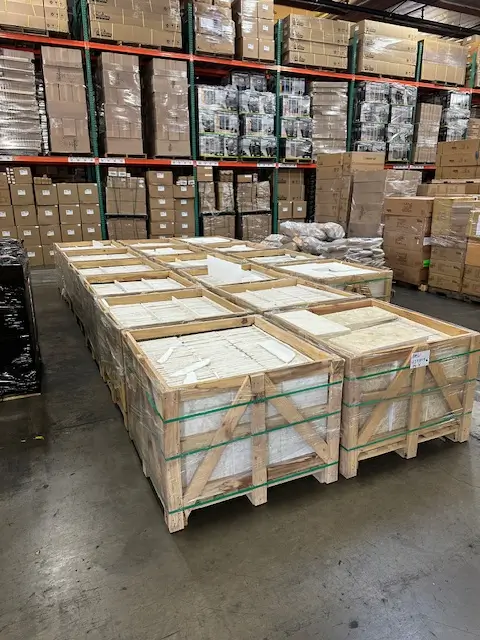
Warehouse stock levels vary by format and material family. Standard modular formats in limestone, travertine, and granite are typically available from Citadel Stone’s warehouse within 1–2 weeks. Specialty formats, custom cuts, and non-standard thicknesses may require 3–5 week lead times depending on quarry production cycles. Verify current warehouse inventory before locking in your installation start date, particularly for large commercial orders where partial deliveries can stall the installation sequence.
- Confirm truck access requirements with your site supervisor before scheduling delivery
- Request a phased delivery plan for projects exceeding 1,000 square feet to reduce on-site storage risk
- Standard warehouse formats: 1–2 week lead time; custom formats: 3–5 weeks
- Plan for a 10% overage order to cover cuts, breakage, and future repairs without reordering from a different batch
Buy Stone Supply Wholesale — Nationwide Delivery
Citadel Stone supplies natural stone in trade quantities nationwide, with warehouse inventory covering limestone, granite, travertine, bluestone, slate, and basalt across modular, large-format, irregular, and dimensional product types. Available formats include 12×12 through 36×36 modular tiles, 24×48 large-format slabs, random flagstone, cobbles, setts, coping profiles, and stair treads — all stocked in multiple finish options including honed, flamed, brushed, and tumbled. You can request specification sheets, sample tiles, and batch reference photos before committing to a quantity. For projects requiring custom cuts, non-standard thicknesses, or specialty finishes, the Citadel Stone team provides lead time estimates and technical guidance at the inquiry stage — no minimum order required for specification consultation. Trade and wholesale accounts receive direct warehouse pricing, and nationwide truck delivery is coordinated from regional inventory to reduce transit time. Contact Citadel Stone for project-specific pricing, format availability, and delivery scheduling.
Your hardscape and cladding projects benefit from exploring the full range of natural stone options available through a supplier with genuine quarry relationships and technical depth. If your project scope extends into complementary paving applications, flagstone paving options from Citadel Stone offer additional material and specification detail worth reviewing alongside your primary stone selection. Contractors and designers rely on Citadel Stone Stone Supply, sourced from quarries across the Mediterranean and Middle East, for commercial work.
Related guides: paving stone supply cost · how to vet stone supply yard · natural vs engineered stone supply · stone supply store ordering problems · stone supply for outdoor climates.