Most stone supply company comparison efforts stall at the surface level — price lists, sample images, and a quick website scan. The real evaluation happens when you start asking questions that most buyers don’t think to ask until a project goes sideways: How does a supplier handle a mid-project variance in material tone? What’s their actual warehouse stock depth versus what’s listed online? How do their materials perform after a severe storm event subjects the installation to wind-driven rain infiltration and joint stress? These are the questions that separate a two-year supplier relationship from a twenty-year one.
What a Real Stone Supply Company Comparison Actually Covers
A stone supply company comparison that only benchmarks price is incomplete by definition. You’re evaluating a supply chain partner — and that means looking at material traceability, consistency across batches, logistics reliability, and technical depth. The supplier who can answer a specific question about absorption rates or flexural strength without putting you on hold is fundamentally different from one who reads the same spec sheet you already have.
Your comparison framework should cover at least six dimensions: material sourcing transparency, grading standards, stock depth, lead time reliability, technical support capacity, and delivery logistics. Miss any one of these and you’ll discover the gap at exactly the wrong moment — usually when truck access to your site is scheduled and the material hasn’t arrived.
- Material sourcing transparency — can the supplier trace stone back to the specific quarry and extraction layer?
- Grading consistency — do they sort by colour variation, thickness tolerance, and surface finish before palletising?
- Warehouse stock depth — is the inventory shown online actually on-hand, or is it a catalogue with 8-week import lead times?
- Lead time reliability — do quoted timelines reflect current warehouse levels, or optimistic estimates?
- Technical support quality — can staff answer specification questions beyond basic product descriptions?
- Delivery logistics — do they coordinate truck scheduling, offload requirements, and site access constraints proactively?
Sourcing Transparency and Grading Standards
Sourcing transparency is the first real differentiator you’ll encounter in any stone supply company comparison. Suppliers who can tell you the quarry region, the extraction method, and the processing facility for each material have an entirely different level of quality control than those who simply repackage imported stone without documentation. That traceability matters when you’re specifying material for a high-visibility project and need to defend your selection to an architect or owner.
Grading standards are equally critical and far less standardised across the industry than buyers typically assume. The Natural Stone Institute technical stone specifications outline grade classifications that distinguish calibrated from uncalibrated thickness tolerances, and colour consistency ranges — but not every supplier applies these standards rigorously. Ask directly: does the company grade at the warehouse, or does grading happen at the quarry before shipping? The answer tells you everything about how much thickness variation and colour drift you can expect in the field.
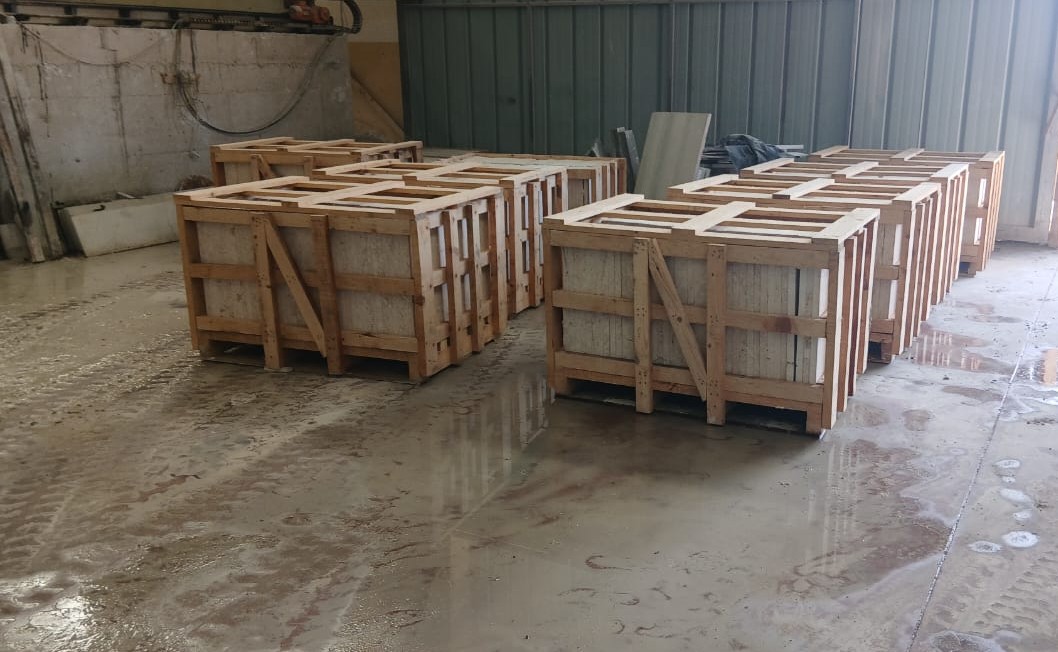
At Citadel Stone, we conduct slab-level quality checks at our warehouse before any material ships — verifying thickness tolerances, surface finish consistency, and tone matching against the approved sample. That’s a step many suppliers skip entirely because it requires hands-on time and trained staff, not just a logistics system.
Stock Depth vs. Lead Time: The Gap Most Buyers Miss
The difference between a supplier showing 5,000 square feet of material online and actually having 5,000 square feet in a warehouse ready to palletise is enormous. Stock depth is one of the most consequential factors in any stone supply company comparison, and it’s one of the easiest for suppliers to obscure. Ask for real-time inventory confirmation — not a catalogue listing — before committing to a project timeline.
Lead times also need context. A six-week lead time from a supplier whose warehouse is domestically stocked means a different thing than a six-week lead time that includes container shipping from overseas. The latter carries weather delay risk, customs clearance variability, and port congestion exposure that domestic stock doesn’t. For projects with fixed installation windows, that difference can mean schedule disruption that costs more than the stone supplies themselves.
- Confirm whether quoted stock is in a domestic warehouse or in a supply pipeline
- Ask for the batch date on warehouse inventory — older stock may have colour variation from current production
- Verify that truck delivery scheduling can accommodate your site access timeline before ordering
- Request a contingency lead time — what happens if your specified material is partially depleted before your full order ships?
Technical Depth: The Specification Support Test
Here’s a reliable test you can use in any stone supply company comparison: call the supplier’s technical line and ask about the water absorption rate of a specific material and how that interacts with freeze-thaw cycling. A supplier with genuine material expertise will give you a number range, reference an ASTM standard, and explain the threshold below which absorption becomes a structural concern in freeze-thaw regions. A supplier with catalogue-level knowledge will tell you the stone is suitable for outdoor use.
Specification support matters most when your project has performance requirements beyond standard residential applications. Commercial installations, high-traffic pedestrian areas, and projects in demanding climates all require material decisions grounded in measurable data — not marketing descriptions. The USGS dimension stone production and use data provides baseline performance context that technically competent suppliers will already be familiar with and can speak to directly.
Your comparison should include a direct technical conversation with each supplier’s staff — not just a review of their product pages. The quality of that conversation is one of the clearest signals of whether their team has field-level knowledge or is operating purely as a logistics channel.
Material Performance Under Wind and Storm Conditions
Severe weather performance is a dimension of stone and supply evaluation that rarely appears in comparison frameworks — but it should, particularly when you’re specifying natural stone for exterior applications. Wind loads, storm events, and wind-driven rain create mechanical stresses that expose installation vulnerabilities: inadequate edge restraint, joint degradation, and surface impact damage from storm debris. The material your supplier provides is only part of the equation — but it’s the foundational part.
Stone density and surface integrity directly affect how well an installation holds up under these conditions. Dense, low-absorption materials resist joint infiltration from wind-driven rain more effectively than high-porosity alternatives. For edge-exposed installations — coping, perimeter pavers, and retaining wall capstones — the stone’s flexural strength and impact resistance become critical selection criteria. These are specifications your supplier should be able to provide in writing, not estimates.
- Request flexural strength data for any stone specified in wind-load-exposed positions
- Verify absorption rates for materials used in applications where wind-driven rain will reach joint interfaces
- Ask whether the supplier’s stone has been tested or field-validated in high-wind installation scenarios
- Confirm edge quality and corner integrity — storm impact resistance begins with how cleanly the stone is cut and finished at the yard
- For hail-risk regions, ask specifically about surface hardness ratings and whether the finish type affects impact resistance
The ASTM dimension stone quality and testing standards include flexural strength and impact resistance test methods that credible suppliers should reference when providing performance data for exterior applications. If a supplier can’t point you to these standards, that’s a meaningful data point in your comparison.
Comparing Delivery Logistics and Site Coordination
Delivery logistics is one of the most underweighted factors in a stone supply company comparison, and it tends to only get the attention it deserves after a project has already experienced a disruption. Your site access conditions — truck clearance height, weight-bearing capacity of access roads, unloading equipment availability, and scheduling windows — all need to be communicated to a supplier before an order ships, not after the truck arrives.
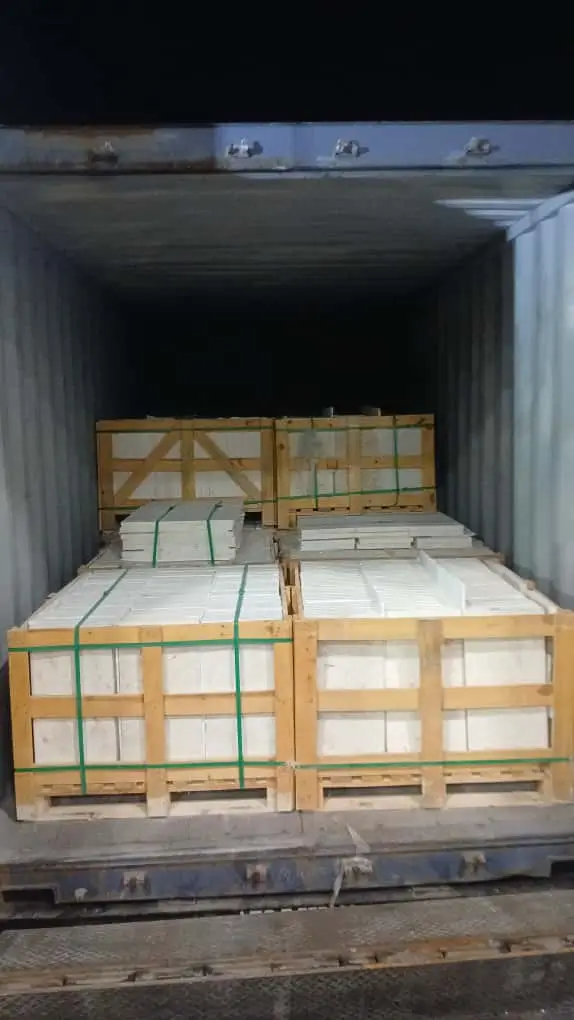
Natural stone supplies are heavy. A pallet of 2-inch limestone pavers can exceed 3,500 pounds, and a full project order may require multiple truck deliveries coordinated with installation crew availability. Suppliers who proactively ask about site access constraints and coordinate truck scheduling accordingly are demonstrably more reliable than those who leave logistics entirely to the buyer.
When comparing stone and supply options across multiple vendors, add a logistics scenario question to your evaluation: describe your site access constraints and ask how they would handle the delivery. The response tells you a great deal about operational sophistication. Citadel Stone coordinates national deliveries with site-specific logistics details confirmed in advance, which eliminates the day-of surprises that can stall an installation crew for hours.
Pricing Structure and the Hidden Costs in Stone Supplies
Comparing stone supply companies on price requires more precision than most buyers apply. A lower per-square-foot price with higher waste factor, thinner nominal thickness, and no warehouse quality sorting can easily cost more than a slightly higher unit price from a supplier with tighter tolerances. The total material cost of a project includes waste percentage, overage buffer, and — critically — the cost of any remediation required when material doesn’t match the approved sample.
Evaluating how suppliers handle pricing for add-on quantities is equally important. Projects that run over material estimates need fast reorder capability at a consistent price point. A supplier with deep warehouse stock can fulfil a late-stage reorder from the same batch, maintaining colour and thickness consistency. A supplier running on import lead times may fulfil the reorder from a different production batch — at a different price and with potential variation from the original material.
- Compare per-square-foot pricing alongside nominal thickness — a thinner product at the same price is not equivalent
- Factor waste percentage into total cost — tighter tolerance material typically yields 8-12% waste versus 15-20% for less consistent product
- Confirm reorder pricing policy — is the quoted price locked per batch or subject to market fluctuation at reorder?
- Ask whether volume discounts apply at project scale — suppliers with genuine warehouse depth often have tiered pricing that smaller distributors don’t offer
Evaluating Product Range and Material Specificity
A stone supply company’s product range matters beyond simple selection variety. Suppliers who carry multiple finishes — honed, tumbled, brushed, polished — within a single material family typically have deeper relationships with source quarries and processing facilities. That relationship translates into more consistent material and better access to matched product when projects require continuity across phases or spaces.
For projects specifying natural stone pavers in multiple applications — exterior paving, pool surrounds, wall cladding — a supplier who can provide material from the same quarry batch across product types delivers a cohesion that’s genuinely difficult to achieve when sourcing from multiple vendors. That cohesion is worth evaluating explicitly in your stone supply company comparison, not just assumed. You can explore the full range of natural stone from Citadel Stone to see how material families extend across finish types and applications.
Natural stone pavers in particular benefit from supplier-level consistency because the material is inherently variable — quarry runs differ, processing batches differ, and finish depth varies with stone hardness. Suppliers who manage these variables actively, rather than simply passing variability through to the buyer, are the ones worth a long-term supply relationship.
The Questions Every Buyer Should Ask in a Stone Supply Comparison
Structured evaluation questions make a stone supply company comparison far more actionable than general impressions. You’re looking for suppliers who can answer these questions specifically — not generically — because specificity signals depth of operational knowledge.
- What is the current on-hand warehouse inventory for this material, and what is the batch date?
- What thickness tolerance does this material ship to, and how is it verified before palletising?
- What is the water absorption rate, and what does that mean for freeze-thaw performance?
- Can you provide flexural strength data for this material in the specified thickness?
- What is the realistic lead time from confirmed order to truck dispatch?
- How do you handle a mid-project reorder if the original batch is depleted?
- What is your grading process for colour consistency within a pallet?
- Can you confirm the quarry source and processing facility for this material?
Suppliers who respond to these questions with concrete answers — specific numbers, process descriptions, and honest acknowledgment of limitations — are demonstrably more reliable partners than those who deflect to brochure language. The quality of the answers correlates strongly with the quality of the stone supplies you’ll receive.
What Matters Most in a Stone Supply Company Comparison
The stone supply company comparison that serves your project best isn’t the one that finds the lowest price — it’s the one that identifies the supplier with the depth, consistency, and technical knowledge to support your project from specification through final installation. Price is one input into that decision, not the primary one. Reliability, grading consistency, stock depth, and logistics precision collectively determine whether your project runs smoothly or spends time recovering from avoidable supply problems.
Stone supplies sourced from a company with genuine warehouse operations and hands-on material knowledge reduce the specification risk that every project carries. You deserve to work with a supplier whose team can answer technical questions, confirm real-time stock, coordinate truck deliveries around your site constraints, and back their material with traceable sourcing documentation. Those aren’t premium features — they’re baseline expectations for professional supply. As you refine your evaluation criteria, you may also find it useful to consider how material-specific factors play into your selection — off-white versus pure white limestone differences covers one such specification decision in detail that can affect both aesthetic and performance outcomes across a project. When evaluating suppliers, Citadel Stone offers transparent sourcing details and slab-level grading information that help buyers make confident purchasing decisions.