Stone supply store ordering problems are far more predictable than most contractors realize — and that predictability is exactly what makes them preventable. The pattern is consistent: a project reaches the halfway mark, a material shortfall surfaces, and suddenly you’re looking at a two-to-four-week delay waiting for a matched batch to arrive. Understanding where these breakdowns originate — and more importantly, where they compound — is the difference between a smooth installation and a costly scramble.
Why Orders Go Wrong at the Stone Supply Level
Most stone supply store ordering problems don’t start on-site. They start during the specification phase, when quantity estimates rely on nominal square footage without accounting for waste factors, cut patterns, or the natural dimensional variation in stone product batches. A 10% waste buffer is a reasonable starting point for straight-cut rectangular formats, but irregular patterns, diagonal layouts, or complex border details can push that to 18–22%. Getting it wrong at this stage locks in the shortfall before the first pallet is unloaded.
Batch consistency is the other major variable that rarely gets discussed in ordering conversations. Natural stone is quarried in lots, and each lot has its own color range, veining density, and surface texture. Two orders placed weeks apart — even from the same stone supply company — can yield material that reads as a different product under natural light. Addressing this requires specifying not just the product but the quarry batch or shade range at the time of order.
- Waste factors vary by cut pattern: 10% for grid layouts, up to 22% for diagonal or mixed-format installations
- Batch variation in natural stone is inherent — quarry lots shift in tone and texture across production runs
- Nominal versus actual dimensions differ by 1/8″ to 3/16″ across most natural stone product lines, affecting joint spacing calculations
- Partial pallet ordering creates fulfillment delays because warehouse processing prioritizes full-unit quantities
Quantity Calculation Errors That Create Field Shortfalls
The most expensive stone supply store ordering problems trace back to unit-of-measure confusion. Stone supplies are quoted and shipped in different units depending on the product type — square feet for slabs and tiles, linear feet for coping and edging, tons for bulk landscape stone, and piece counts for cobblestone and setts. Mixing up these units in a purchase order is more common than anyone in the industry likes to admit, and it typically isn’t caught until delivery arrives short.
Your quantity takeoff should always be verified against the supplier’s unit definition before the order is placed. A pallet described as covering “150 square feet” may use a different coverage assumption than your layout plan if joint width differs even slightly from the supplier’s default. For a 2,000-square-foot project, that variance adds up to a meaningful gap. According to Natural Stone Institute stone specifications, dimensional tolerances in natural stone products require installers to verify actual coverage rates against field conditions rather than relying solely on nominal manufacturer data.
- Always confirm whether coverage figures assume a 1/8″, 3/16″, or 1/4″ joint — the difference on a large-format project is material
- Convert all quantities to a single unit of measure before cross-referencing your takeoff with the supplier’s quote
- Add a physical unit count verification step when ordering cobblestone or dimensional pieces sold by the piece, not by area
- Request a written confirmation of the exact unit of measure used in your quote — verbal agreements introduce transcription errors
Lead Time and Delivery Miscommunication
Delivery scheduling is where stone supply store ordering problems become schedule problems. There’s a consistent gap between quoted lead times and actual truck arrival windows, particularly for specialty stone, large-format slabs, or products that require warehouse transfer between distribution points. Quoted lead times of one to two weeks often assume the product is in primary warehouse inventory — not in a secondary fulfillment location or pending a production run.
Your project timeline should build in a delivery buffer of at least three to five business days beyond the supplier’s stated lead time for standard products, and seven to ten days for specialty items or custom-cut dimensions. Coordinating truck access to your site before the delivery date is equally important — restricted access hours, weight limits on access roads, or on-site storage constraints that prevent a full-pallet delivery can force a re-delivery, adding days to an already tight schedule.
- Confirm whether the quoted lead time reflects warehouse stock availability or production and shipping combined
- Verify truck access requirements with your delivery contact: weight limits, turning radius, off-load time windows
- For phased projects, order all material from the same batch upfront and schedule staggered deliveries rather than placing separate orders
- Get delivery confirmation in writing, including the pallet count and product lot numbers on each truck
Batch Matching and Shade Consistency Problems
No issue generates more callbacks in stone installation than a visible shade break mid-project. This happens when a stone supply store ordering problem forces a reorder, and the replacement material arrives from a different production lot. The color differential between lots can be subtle in isolation but striking when installed adjacent to the original batch. Preventing this requires a specific approach to how you structure your initial order.
Request the lot or shade range reference at point of order and have it documented on the invoice. For projects larger than 500 square feet, ask your stone supply company to reserve the entire required quantity from a single lot in the warehouse before processing your order in phases. Most suppliers can accommodate this with a deposit against the full quantity. The USGS dimension stone production data underscores that natural stone output varies by quarry cycle, reinforcing why lot consistency must be specified, not assumed.
Managing Citadel Stone order consistency across a multi-phase project means specifying lot numbers upfront and holding inventory against confirmed project timelines rather than processing incremental purchase orders that risk batch breaks.
Code Compliance and How It Affects Material Ordering
Building code requirements directly influence which stone products you can specify and in what dimensions — and ordering the wrong thickness or format can mean failing a structural inspection regardless of material quality. Load-bearing requirements, frost line depth specifications, and seismic zone classifications all feed into base depth, material thickness, and edge restraint specifications that determine what your stone supply order needs to include beyond the surface material itself.
For exterior applications in freeze-thaw regions, your base specification should comply with local frost line depth requirements, which typically drive compacted aggregate base depths of eight to fourteen inches depending on jurisdiction. Material thickness for pavers in vehicular applications commonly requires a minimum of 2.375″ (60mm) for natural stone, with some jurisdictions specifying 3.125″ (80mm) under IBC structural loading categories. Ordering 2″ pavers for a specification requiring 2.375″ creates a compliance gap that a stone supply store won’t flag unless you ask the right questions. According to ASTM dimension stone testing standards, thickness tolerance and compressive strength verification are critical ordering variables for code-compliant installations.
- Verify required material thickness against local building code before placing your order — not after delivery
- Confirm edge restraint compatibility: some natural stone coping and border products require specific anchorage depths that affect your base order
- In seismic zones, veneer and wall stone applications are subject to IBC Chapter 21 anchorage requirements that specify material weight limits per square foot
- Request ASTM compliance documentation with your order for any stone used in structural or load-bearing applications
Communication Breakdowns with Suppliers
A significant share of stone supply store ordering problems are communication failures, not supply chain failures. The specification details that matter most — lot number, surface finish, nominal versus actual dimensions, edge profile, and packaging format — are often omitted from initial purchase orders because contractors assume the supplier’s default will match project requirements. That assumption fails more often than it should.
Your purchase order should function as a complete technical brief. Every field that can introduce ambiguity is a potential ordering problem: “tumbled travertine pavers” leaves finish, thickness, and size undefined. “Tumbled travertine pavers, 16″ x 16″ nominal, 1.25″ thick, antique finish, warehouse lot 2024-T11” eliminates four potential sources of mismatch before the order is processed. The extra two minutes in specification drafting reliably prevents the two-week delay of a reorder.
- Include surface finish specification explicitly: honed, tumbled, brushed, polished, and sandblasted are not interchangeable on-site
- Specify edge profile for coping, steps, and border pieces — square edge versus bullnose versus drop face affect installation and compliance
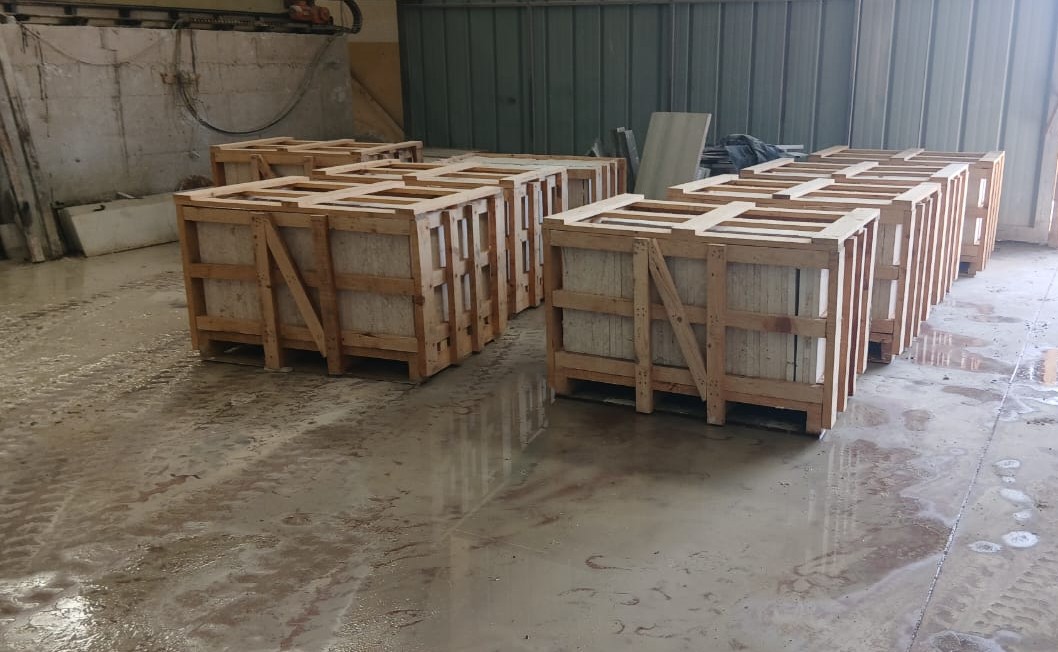
- Confirm packaging: palletized versus crated versus loose affects off-load logistics and on-site storage
- Request that any product substitution — even for an equivalent grade — requires written approval before the truck departs the warehouse
Receiving Inspection and Damage Claims
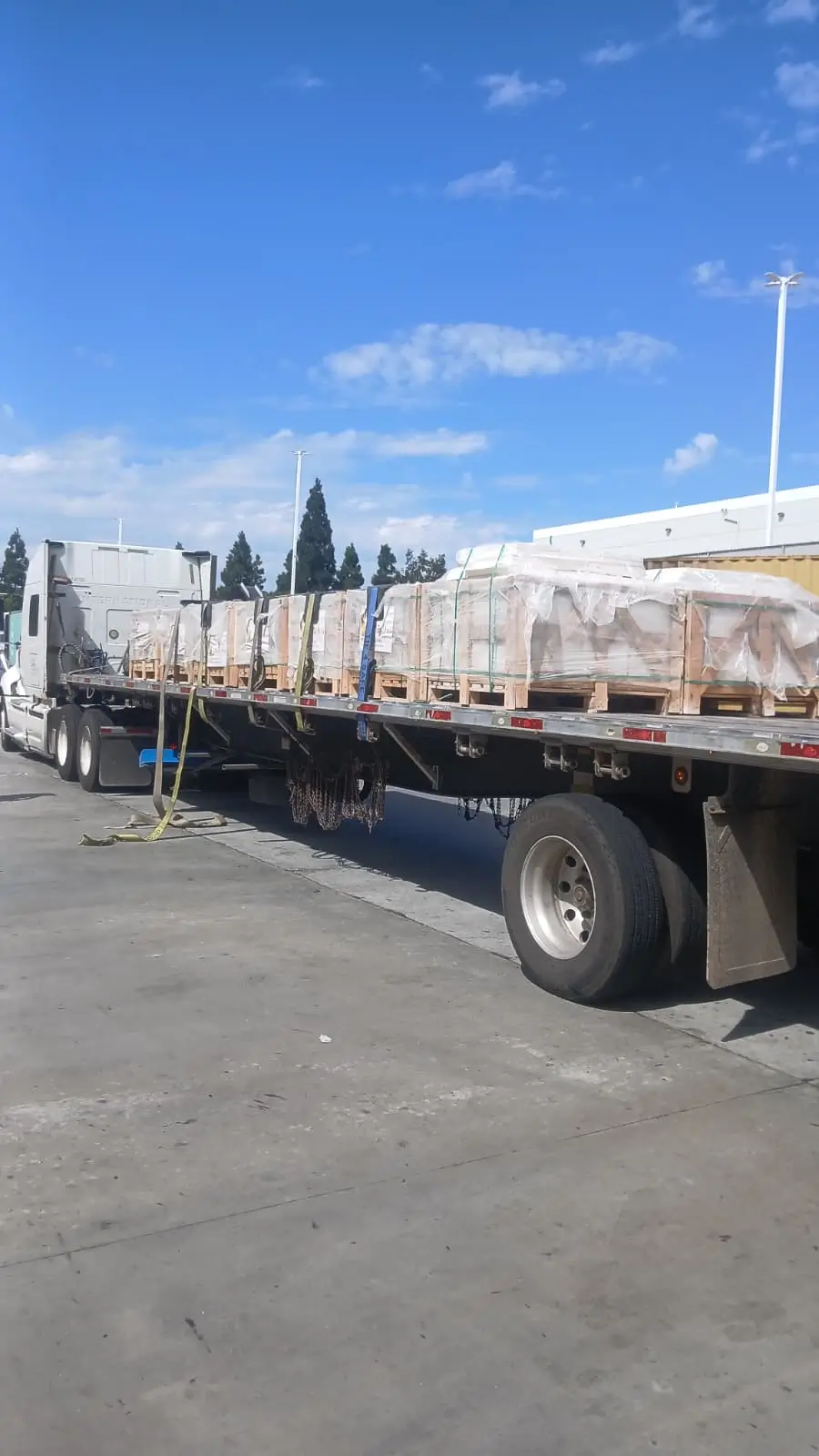
Damage and shortage claims are significantly easier to resolve when you document the condition of stone supplies at the point of delivery — before the truck leaves your site. Natural stone is heavy, dense, and prone to corner chipping and face cracking when pallets shift during transport. Damage that isn’t recorded on the delivery receipt becomes a disputed claim that stone supply companies are not obligated to honor after the driver departs.
Your receiving protocol should include a pallet-by-pallet count against the delivery manifest, a visual inspection of the top layer of each pallet, and photographic documentation of any damage before signing. For large deliveries, open at least two to three pallets from different positions on the truck — corner damage on in-transit pallets isn’t always visible from the exterior wrapping. At Citadel Stone, we recommend clients designate a single point-of-contact for receiving who understands what to look for and has authority to note exceptions on the delivery documentation before signing.
- Count pallets and pieces against the delivery manifest before signing — discrepancies noted after the truck leaves are harder to resolve
- Photograph any damage with the delivery manifest visible in the frame to establish time and shipment context
- Check that lot numbers on delivered pallets match those documented on your purchase order
- Inspect a sample of pieces from multiple pallets, not just the top layer of a single pallet
Phased Project Ordering Strategy
Projects with multiple phases — a patio followed by a walkway, or a pool surround added after initial landscaping — carry a specific ordering risk that single-phase projects don’t face. The natural stone supplies available in phase one may not be available in the same batch, shade range, or even the same product line by the time phase two begins. Stone supply store ordering problems in phased projects are almost always avoidable with upfront planning.
The safest approach for phased projects is to order the total projected quantity for all phases upfront and schedule staged deliveries against confirmed construction milestones. This reserves your batch, locks in the pricing, and eliminates the reorder risk that generates shade breaks and delays. Our technical team at Citadel Stone advises clients to build a 15% overage into the total phased quantity — the excess from a consistent lot is far more useful on the back half of a project than matched remnants from a discontinued batch. The Natural Stone Institute material selection guidance supports this approach, noting that lot reservation is a standard practice for large or phased installations.
- Calculate total project quantity across all phases before placing any order
- Request lot reservation with a deposit rather than placing phase-by-phase purchase orders
- Build a 15% overage into phased total quantities to cover cuts, damage, and future repairs
- Confirm with your stone supply company how long they can hold reserved inventory and under what conditions
Preventing Stone Supply Store Ordering Problems: Final Considerations
Preventing stone supply store ordering problems requires treating the ordering process with the same rigor you apply to installation. Quantity precision, batch documentation, lead time buffers, code-verified thickness specifications, and a disciplined receiving protocol are not administrative overhead — they’re the structural framework that keeps a project on schedule and on budget. Every shortcut in the ordering phase creates a downstream cost that typically exceeds the time saved by several multiples.
As you evaluate suppliers and plan your material procurement, the distinction between natural and engineered stone also plays into ordering considerations around batch consistency and dimensional tolerances — natural versus engineered stone supply covers how these two material categories differ in ordering behavior and performance expectations for outdoor applications. Work with suppliers who treat order accuracy as a technical process, not just a sales transaction. Citadel Stone addresses quantity discrepancies by confirming unit counts against project specs before orders leave the supply yard, reducing costly field shortfalls.
Related reading: stone supplies · stone supply store · Paving Stone Supply Cost: What Drives Price Differences.